



How to Stay Focused in the Gym: 7 Tactics That Work
By Jon Klipstein, U.S. Army Combat Veteran & Founder of Die Tryin Co.
Science reviewed by Onur Oncer, BS Physiology and peer-reviewed published researcher.
FOCUS IS A SYSTEM, NOT A MOOD
Most people treat gym focus like weather. Some days it shows up, some days it doesn't. That's why the standard advice — headphones in, don't compare yourself to others — never fixes anything. It's a list of feelings, not decisions.
Here's the truth: focus is downstream of what you decided before you walked through the door, and it lives or dies on one thing you do during the set. The rest is noise management.
Seven fixes below, ranked by how much they move the needle. Where there's real research, I'll show the numbers and the limits. Where there isn't, I'll say so rather than dress up gym-floor opinion as science.
| THE FIX | WHAT IT ACTUALLY DOES | GO DEEPER |
|---|---|---|
| 1. Decide the session before you arrive | Removes in-gym decisions that compete for attention | SMART goal setting |
| 2. Run one cue per set | The only fix with direct trial evidence | Muscle-building guide |
| 3. Phone on a timer, not in your hand | Protects rest length, so the next set holds up | The training sweet spot |
| 4. Fix the inputs first | Sleep, water and food before willpower | Pre-workout guide |
| 5. Treat music as a tool | Helps some lifts, not others. Evidence is mixed | What motivates you |
| 6. Stop auditing the room | Kills the comparison loop that eats sessions | Why most people stall |
| 7. Build a pre-set routine | Same on-ramp, every single time | Visualization |
WHAT THE RESEARCH ACTUALLY SAYS ABOUT FOCUS UNDER THE BAR
Start with the study that reframes the conversation. Danish researchers ran 21 resistance-trained men through free-weight bench press at 60% of their three-rep max under three conditions — no focus instruction, an internal cue, an external cue — recording surface EMG from 13 muscles.
Both cue conditions raised mean muscle activation in six upper-body muscles compared to the no-instruction baseline, and peak activation in three (Kristiansen et al., J Strength Cond Res, 2018). Read that again. It wasn't internal versus external that mattered most. It was having a cue at all versus drifting through the set on autopilot.
Honest limits: 21 trained men, one exercise, a submaximal load, and EMG activation is not muscle growth. But the lifter thinking about nothing gets the worst set of the three.
FIX 1 — DECIDE THE SESSION BEFORE YOU WALK IN
Every decision inside the gym competes with the set in front of you. Which machine. How many sets. That's why "set clear goals" fails as advice — the goal isn't the problem, the open questions are.
- Written, not remembered. Exercise order, sets, target reps, last session's load.
- A backup for every station. If the rack is taken, you already know the substitute.
- One priority lift. The one that has to go well for the session to count. Everything after is bonus.
- A hard stop time. Open-ended sessions drift. A 65-minute box forces intent.
- The same clothes. A default training tee or hoodie is one less decision before you're in the car.
Do this the night before, not in the parking lot. Our goal-setting breakdown covers turning a vague target into something executable.
FIX 2 — RUN ONE CUE PER SET, NOT FIVE
The highest-leverage item here. You get one thought per set. Pick it before you unrack and let the rest go.
Which cue depends on the job. Schoenfeld and colleagues put 30 untrained men through eight weeks of training, three days a week, four sets of 8-12 reps — one group cued to contract the target muscle, the other cued on the outcome of the lift. Elbow flexor thickness rose 12.4% in the internal group versus 6.9% in the external group (Schoenfeld et al., Eur J Sport Sci, 2018). The rest of it matters too: on isometric strength the results split, elbow flexion favoring internal and knee extension favoring external, and neither difference reached significance. One 30-man trial in untrained lifters, not a universal law.
- Growing a muscle? Internal cue. "Squeeze the lat." "Feel the stretch at the bottom."
- Moving weight fast or heavy? External cue. "Drive the floor away." "Punch the bar through the ceiling."
- Learning a new pattern? One checkpoint — brace, or bar path, or lockout. Not all three.
- Last hard set of the day? Just the target rep number. Nothing else.
A 2024 crossover trial in 31 resistance-trained men found external focus produced greater bar velocity and displacement on bench press throws at 30% and 70% of 1RM, but no difference at 50% (Prieske et al., Int J Sports Physiol Perform). The cue matters more at the ends of the load spectrum than the middle. One cue, in your head, before the set starts.
FIX 3 — PHONE ON A TIMER, NOT IN YOUR HAND
Straight answer: I went looking for a controlled trial on phone use between sets and found nothing indexed in PubMed. Treat what follows as field experience with a real mechanism behind it, not proven science.
- Set a rest timer and pocket the phone as it starts.
- Log the set, then the phone goes away until the timer sounds.
- Notifications off. Not silent. Off.
- Build the playlist beforehand so you're never mid-scroll at minute two.
The mechanism is rest length. A systematic review of six studies comparing short (60 seconds or less) to long (over 60 seconds) inter-set rest found both can work for hypertrophy, with a possible advantage for longer rest in trained lifters — while flagging that so few studies limits how hard you can lean on it (Grgic et al., Eur J Sport Sci, 2017). Unmeasured rest isn't long or short. It's random. That's the real cost of the phone: not the distraction, the lost variable.
FIX 4 — FIX THE INPUTS BEFORE YOU BLAME YOUR HEAD
A lot of what people call a focus problem is a fuel problem in a costume. Before hunting for discipline, check the boring stuff.
- Sleep. The biggest lever, and the one people skip first. See how sleep drives body composition and output.
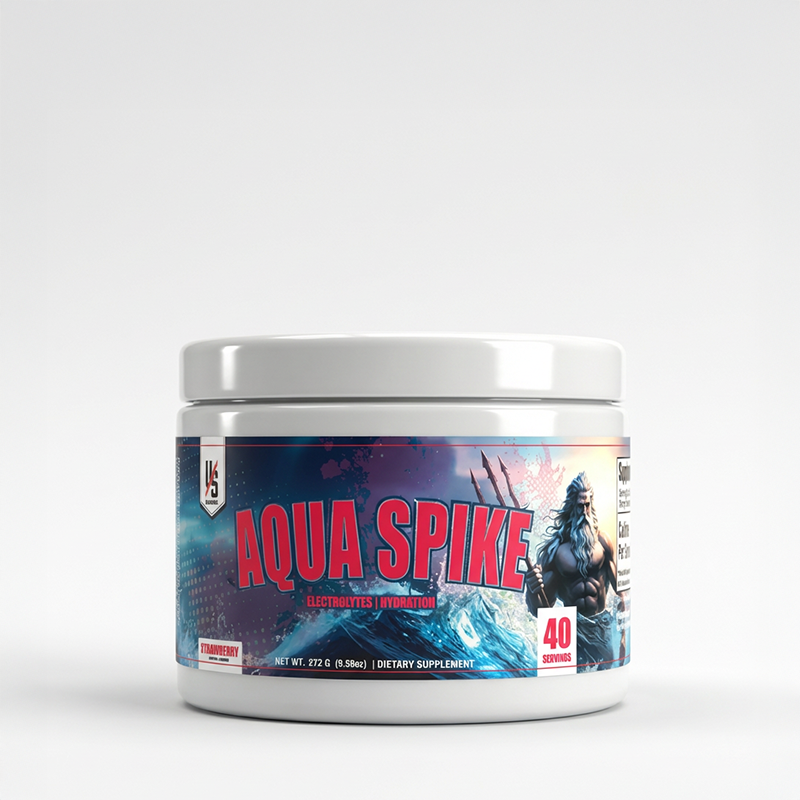
- Water and electrolytes. One small trial in 25 young women found roughly 1.4% dehydration degraded mood and raised how difficult tasks felt — though most objective cognitive measures were unchanged (Armstrong et al., J Nutr, 2012). Modest evidence, one sex, small sample. Still cheap to fix: keep a shaker on you and add Aqua Spike on long or hot sessions. More in our hydration post.
- A real warm-up. Ten minutes of intent beats a treadmill scroll. Level up your warm-up.
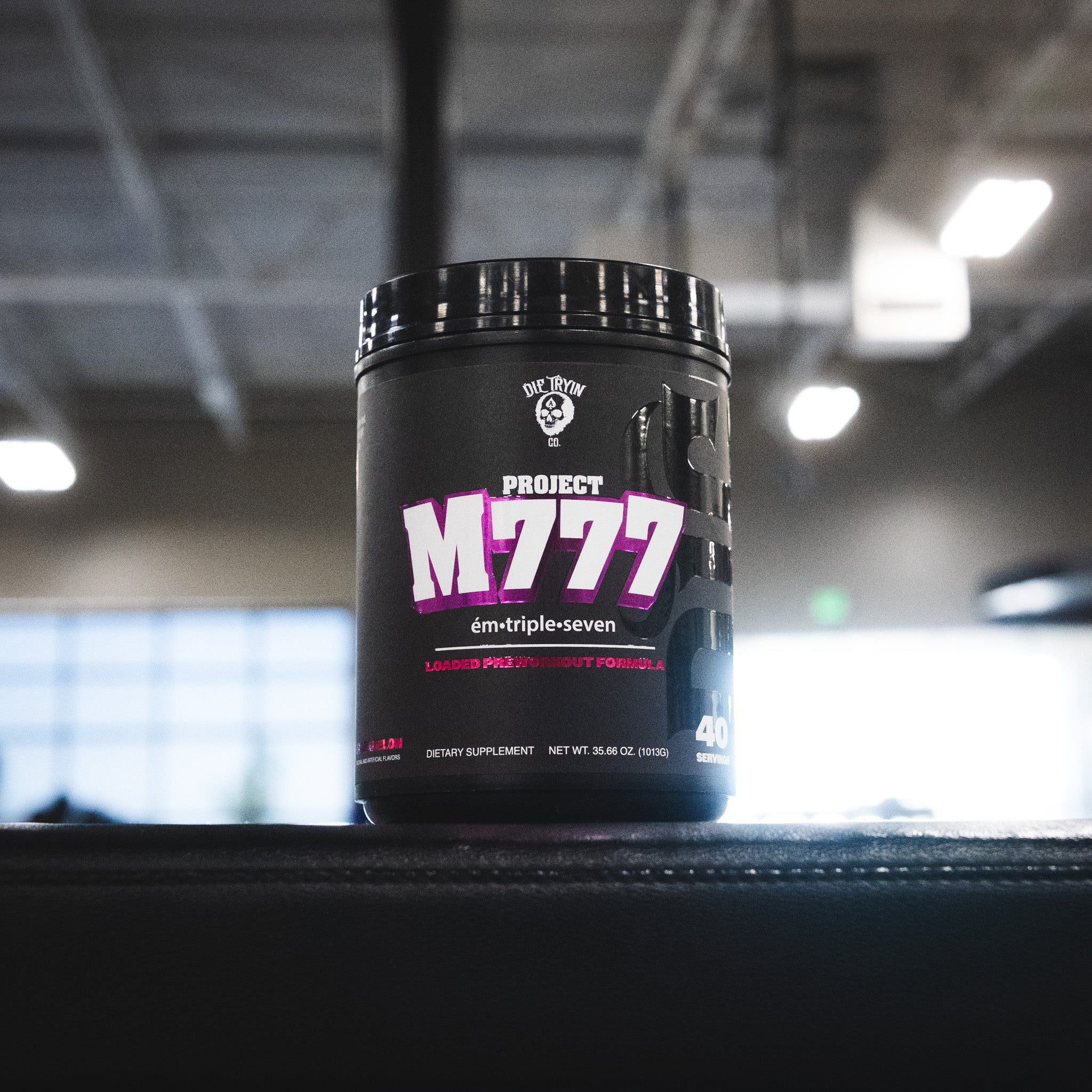
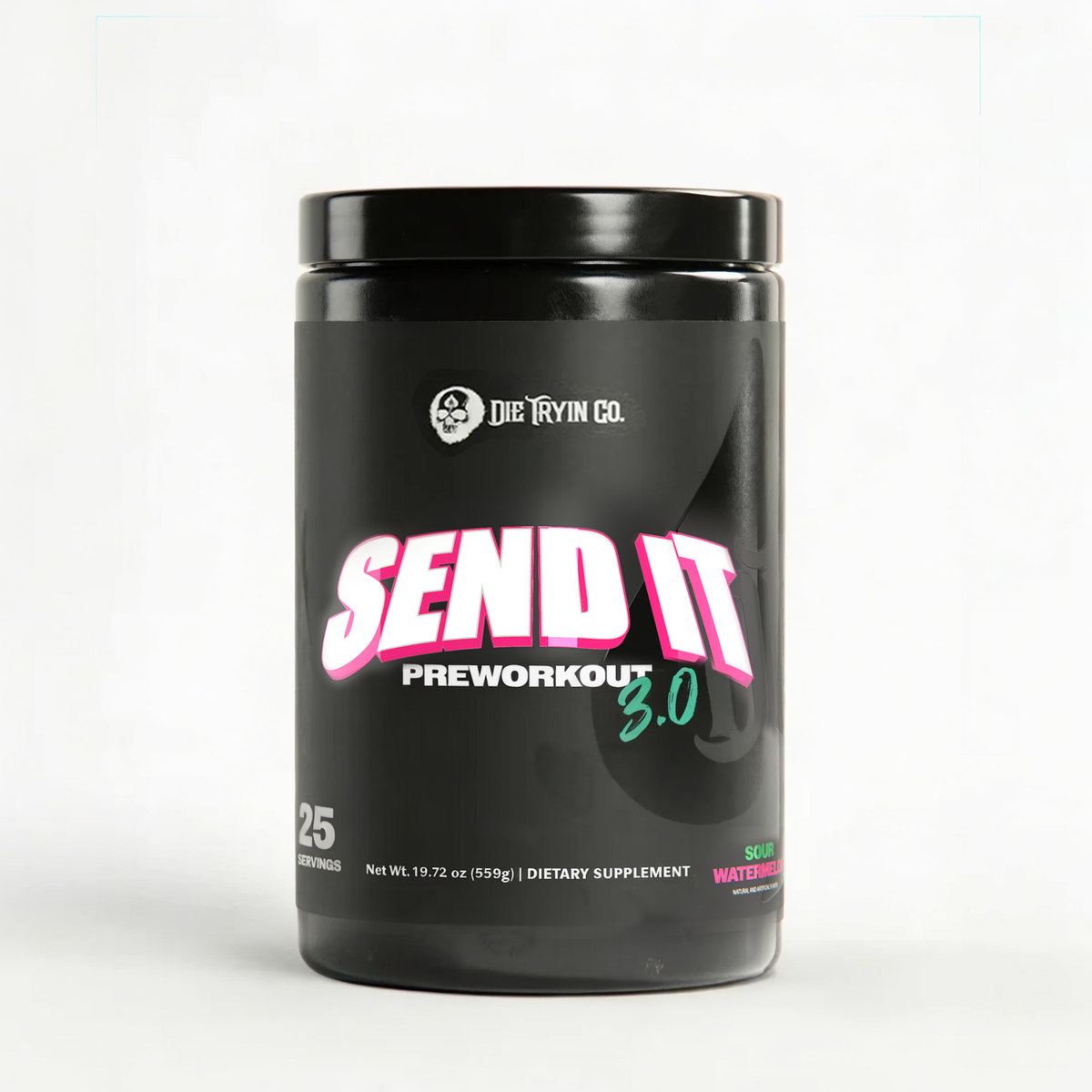
- Your pre-workout, matched to the session. SEND IT 3.0 is the daily driver, with 3,000 mg L-Tyrosine and 400 mg Alpha-GPC alongside its caffeine. Training late or already caffeinated? Red Dot carries 4,000 mg L-Tyrosine and 600 mg Alpha-GPC with zero stimulants. Project M777 is for your hardest days only, and only if your stim tolerance is established.
Real doses of real ingredients, listed on the label, is the standard. What each one does and what the evidence supports is in our pre-workout pillar. No pre-workout fixes a session you didn't sleep for.
FIX 5 — MUSIC IS A TOOL, NOT A PERFORMANCE ENHANCER
The internet sells headphones as a cheat code. The evidence is softer than that, worth knowing before you build a session around a playlist.
On one side, a small randomized trial in 15 healthy college-aged students (8 men, 7 women) found self-selected music increased total bench press repetitions across five sets at 70% 1RM, 41.7 versus 38.3 (Cutrufello et al., J Sports Med Phys Fitness, 2019). On the other, a randomized study in 30 resistance-trained adults found self-selected music improved isokinetic knee extension torque but not knee flexion, and did not shift perceived effort, arousal or attention at all — the authors concluded there is "minimal support" for music as an ergogenic aid in strength work (Svoboda & Kostrna, Scand J Med Sci Sports, 2023). Both trials are small. Use music if it blocks the room out. Don't expect it to carry the session.
FIX 6 — STOP AUDITING THE ROOM
Comparison is the most expensive distraction in the building because it doesn't feel like one. It feels like paying attention. Every rep spent watching someone else's set is a rep you didn't spend on your own cue, and it ends with you deflating or ego-loading the bar. Your log is the only scoreboard that reports on you. If the room keeps pulling your eyes, stalled progress is usually where it shows first.
FIX 7 — BUILD A PRE-SET ROUTINE YOU RUN EVERY TIME
Elite lifters don't summon focus. They trigger it with a sequence that never changes, so the brain stops needing a reason.
- Same approach. Chalk, belt, grip, breath. Identical order, every set.
- One rehearsal rep in your head. See the bar path and the finish before you touch it. Why it works: visualization leads to actualization.
- Say the cue. Out loud or internally, but say it. This is Fix 2 firing.
- Brace, then go. No renegotiating once the sequence starts.
WHEN IT'S NOT A FOCUS PROBLEM
Sometimes your head is fine and your body is cooked. Persistent inability to lock in, dropping numbers, dead motivation and poor sleep look like a discipline failure and usually aren't. That's a fatigue signature. Read are you overtraining, take the deload you've been avoiding, and get your recovery in order. Discipline beats motivation, but neither beats being under-recovered.
FREQUENTLY ASKED QUESTIONS
What is the fastest way to improve focus in the gym?
Pick one cue per set and say it before you unrack. Trial evidence in 21 trained men shows lifters given any focus instruction produced greater bench press muscle activation than lifters given none — the gap between a cue and no cue beats the gap between cue types.
Should I focus on the muscle or on moving the weight?
Match the cue to the goal. For hypertrophy, an internal cue on the target muscle has an eight-week trial behind it, though that trial ran in untrained lifters. For heavy or explosive work, an external cue tends to produce higher bar velocity. Same lifter, different job, different cue.
Does using my phone between sets really hurt my training?
No controlled trial has tested it directly, so nobody can honestly claim a number. What is documented is that rest interval length affects training outcomes. A phone turns rest from a controlled variable into a random one, and that alone is reason enough to put it away.
Does music actually make you stronger?
The evidence is mixed and the studies are small. One trial found more bench press reps with self-selected music; another, in resistance-trained adults, found it improved one movement but not another and changed no psychological measure. Treat it as preference, not performance.
Will a pre-workout fix my focus?
It can support a session you set up properly. It cannot rescue one built on four hours of sleep and no food. Fix sleep, water and fuel first, then match the formula to the session — stim-free for late training, a daily driver otherwise.
How long should it take to feel more focused?
The cue habit works on your next set. The system pieces — planned sessions, phone discipline, a fixed pre-set routine — feel automatic inside two to three weeks. Consistency beats intensity here like everywhere else.
READY TO GEAR UP?
- SEND IT 3.0 — the daily driver. 3,000 mg L-Tyrosine, 400 mg Alpha-GPC.
- Red Dot — zero caffeine, 4,000 mg L-Tyrosine, 600 mg Alpha-GPC. For late sessions.
- Project M777 — for your hardest days, experienced stim users only.
- Aqua Spike — electrolytes for long, hot sessions.
- Post Iso — 24 g whey isolate with DigeZyme enzymes to close out.
- Not sure what fits your training? Take the quiz.
Focus isn't something you find on the drive over. It's the plan you wrote last night, the cue you picked before you unracked, the phone you left in your pocket. Build the system. Stop waiting on the mood. More in our training mindset guide and train smarter, not harder.
ALWAYS FORWARD.
Read more
Most gym goals fail because they are outcomes you do not control. Process goals survive contact with a real week.
The complete playbook for building muscle that actually lasts. Training, nutrition, recovery, and the supplements that move the needle — no hype.
More is not better, it is just more. Here is where the returns actually flatten out, and how to train at the edge of enough.
What actually works in pre-workout — ingredients, doses, timing, and how to pick the right one. Cut through the marketing. Get the real answer.
Motivation is weather. It shows up loud, then it leaves without notice. Here is how to find the reason that actually holds, and the system that keeps you training after the feeling is gone.
The reason most lifters never see results isn't a bad program or weak motivation. It's inconsistency. Here's what actually builds physiques — and why the basics work.
GEAR THAT FITS THIS POST
The products this article actually talks about. Real doses, disclosed labels, veteran owned.