




How to Warm Up Before Lifting: The 4-Phase Ramp
By Jon Klipstein, U.S. Army Combat Veteran & Founder of Die Tryin Co.
Science reviewed by Onur Oncer, BS Physiology and peer-reviewed published researcher.
A WARM-UP IS A RAMP, NOT A RITUAL
Most people get this wrong. The warm-up gets treated like a toll booth. Five minutes on a treadmill, a couple of arm circles, a hamstring stretch you hold while scrolling your phone, then straight into working weight. That is not a warm-up. That is a delay with extra steps.
A real warm-up is a ramp. Every phase moves you closer to the exact demand of your first hard set. Temperature up. Joints moving through the ranges you are about to load. The right muscles switched on. Then weight added in stages until your working set feels like the next logical rep instead of a shock to the system.
This post is the how. If you want the case for warming up at all, the benefits and the research behind them, read Why Is Warming Up Important? first. What follows is the protocol: four phases, in order, with the broscience cut out.
| PHASE | WHAT YOU DO | TIME | WHY IT'S THERE |
|---|---|---|---|
| 1. Raise the temperature | Easy full-body movement: bike, rower, sled drag, brisk incline walk | 3-5 min | Blood flow and muscle temperature climb, so everything after it works better |
| 2. Mobilize | Dynamic drills through the ranges today's lifts actually demand | 3-5 min | Range of motion without gutting your output |
| 3. Activate | Light, deliberate sets for the stabilizers you tend to shut off | 2-4 min | The right muscles are firing before real load shows up |
| 4. Ramp | Prep sets of the actual lift, adding load in stages | 5-15 min | Nervous system rehearsal in the exact groove you are about to load |
PHASE 1: RAISE THE TEMPERATURE
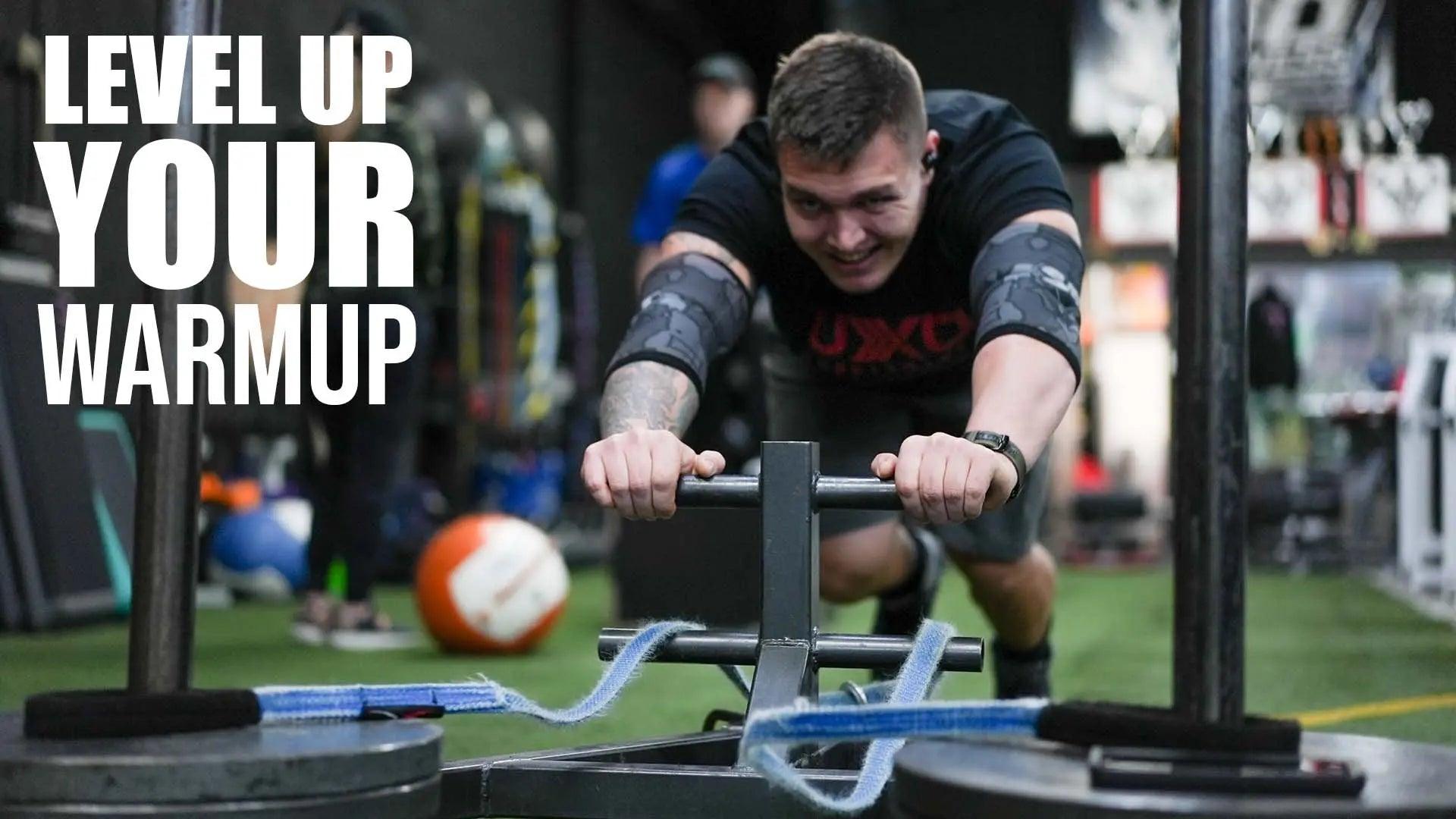
Start general. Three to five minutes of easy, continuous movement that gets your whole body involved and your breathing slightly elevated. You are not building conditioning here, and you are definitely not trying to burn calories. You are trying to stop being cold. Pick anything that moves a lot of tissue at once:
- Bike or rower at a conversational pace
- Incline treadmill walk
- Empty sled push or drag, down and back
- Jump rope, if your calves and ankles tolerate it
- Two or three easy rounds of bodyweight squats, hip hinges and arm swings
This is also the smart window for your pre-workout. Drink it, start Phase 1, and let absorption happen while you move instead of standing around waiting on it. By the time you reach your ramp sets, the formula is working and your body is already warm. Same clock, two jobs.
PHASE 2: MOBILIZE WHAT YOU'RE ABOUT TO USE
Mobility is not flexibility. Flexibility is how far a joint can be pushed. Mobility is how far you can move that joint under your own control, which means strength and coordination are attached to it. Warm up the mobility, not the slack. Keep it specific to the session too. Leg day does not need shoulder work, and bench day does not need ankle drills. Match the drills to the demand:
- Squat or deadlift day: deep bodyweight squat holds, banded hip openers, ankle rockers against a wall, walking lunges with a rotation
- Bench or overhead day: banded shoulder pass-throughs, wall slides, thoracic rotations, scap push-ups
- Pull day: dead hangs, band pull-aparts, cat-cow, controlled lat stretches with movement
Move through these. Do not park in them. Ten to fifteen controlled reps beats one long hold every time. For a deeper breakdown of building range you can actually use under load, read 5 tips to increase mobility.
PHASE 3: ACTIVATE THE WEAK LINKS
Everyone has muscles that go quiet. Desk posture, old tweaks, a dominant side quietly doing the work for a lazy one. When those stabilizers stay asleep, the big movers overcompensate, and overcompensation is where nagging tweaks get born. Two minutes of deliberate light work handles most of it.
Pick one or two drills for the day's weak links. Glute bridges and banded lateral walks before squats. Face pulls and external rotations before pressing. Bird dogs or dead bugs before anything heavy on the spine. Light weight, slow tempo, full intent. You want the muscle to talk back, not to chase a burn. Skipping this step is one of the quiet errors on our list of 5 common workout mistakes.
PHASE 4: RAMP YOUR WORKING SETS
This is the phase most lifters skip, and it is the one that matters most. Your first working set should never be the first time your nervous system sees that movement pattern today. Rehearse it under progressively heavier load until the groove is locked in. A clean ramp toward a 315 lb squat looks like this:
- Empty bar, 8-10 reps, slow and full range
- 135 lb, 5 reps
- 185 lb, 3 reps
- 225 lb, 2 reps
- 275 lb, 1 rep, fast and sharp
- 315 lb, first working set
Reps drop as the weight climbs, so you never accumulate fatigue on the way up. Rest 60 to 90 seconds between prep sets. The heavier and more technical the lift, the more steps it earns. That same ramp logic is what makes progressive overload work week to week. If squats are where your sessions fall apart, pair this with 5 tips to avoid injury while squatting.
WHERE FOAM ROLLING ACTUALLY FITS
Here's the truth: foam rolling is optional, not mandatory. The old rule that you must roll before you stretch or the warm-up does not count has not held up. A 2024 systematic review and meta-analysis of 38 studies found that foam rolling and stretching produced no greater acute improvements in range of motion or tissue stiffness than other warm-up activities that simply raise muscle temperature. Be honest about the limits: the authors rated the included study quality as fair, with low to moderate certainty of evidence. It is not a takedown of the roller. It just means rolling is one option among several, not a required first step.
So keep it if you like it. If a specific area feels restricted and 60 to 90 seconds on a roller makes the next drill move better, roll it. If you would rather spend those minutes on the bike and on ramp sets, you are not leaving results on the table. Basics beat hype, and the basics here are temperature, movement and load.
THE STATIC STRETCHING TRAP
Long static stretching right before heavy work costs you output. A meta-analysis pooling 104 studies found pre-exercise static stretching reduced strength by roughly 5.4% on average, and the authors concluded that static stretching as the only activity in a warm-up should generally be avoided. The cost scales with how long you hold. A later systematic review put the average performance drop near 4.6% when holds ran 60 seconds or longer per muscle group, versus roughly 1.1% under 60 seconds.
That does not make stretching the enemy. That same 2016 systematic review found dynamic stretching produced small performance improvements, and that when dynamic activity followed the static work, no clear performance penalty remained. Practical version: keep static holds short, put them early, and never finish your warm-up on one. Save the long holds for after training or a dedicated mobility day.
PAIN SITE ISN'T ALWAYS PAIN SOURCE
One idea from old-school prep work is worth keeping. Where you feel a restriction is not always where it comes from. Knees that bark on squats often trace back to stiff ankles or hips. A low back that lights up on deadlifts is frequently a hamstring and glute mobility problem. Shoulders that pinch on press day usually want thoracic spine rotation, not more shoulder stretching.
The move is to test upstream and downstream of wherever you feel it, mobilize there, then retest the movement and see if anything changed. Know the line, though: a stiff joint is a warm-up problem, and sharp or persistent pain is a medical problem. Do not stretch your way through that one. Go see a qualified professional.
HOW LONG SHOULD THIS TAKE?
Ten to fifteen minutes on a normal training day. Twenty to thirty before something heavy, explosive or maximal. Five is plenty when the session itself is light and you are already moving well. The harder and faster the work, the longer the ramp it earns. Discipline beats motivation, and that includes the boring part at the front of the session.
FREQUENTLY ASKED QUESTIONS
How long should a warm-up be before lifting?
Ten to fifteen minutes for a normal session, twenty to thirty before heavy or explosive work, and about five on a genuinely light day. Most of that time belongs to Phase 4, the ramp sets, not to cardio.
Should I stretch before or after lifting?
Do dynamic, movement-based drills before. Save long static holds for after training or a separate mobility session. Research links long static holds right before heavy work to a measurable drop in strength output.
Do I need to foam roll before every workout?
No. Current research does not show foam rolling beating other warm-up activities for acute range of motion. Use it on specific restricted areas when it helps you move better, and skip it when it does not.
What is the difference between mobility and flexibility?
Flexibility is how far a joint can be pushed passively. Mobility is how far you can move it under your own control, with strength and coordination attached. A warm-up should build mobility, not just stretch tissue.
How many ramp sets should I do before a heavy lift?
Three to five for most lifters, dropping reps as the weight climbs, with 60 to 90 seconds of rest between them. Heavier and more technical lifts earn more steps. You should never arrive at your working set already fatigued.
Can a pre-workout replace my warm-up?
No. A pre-workout supports energy, focus and blood flow, but it does not raise your muscle temperature or rehearse the movement pattern. Take it, warm up while it kicks in, then train.
READY TO GEAR UP?
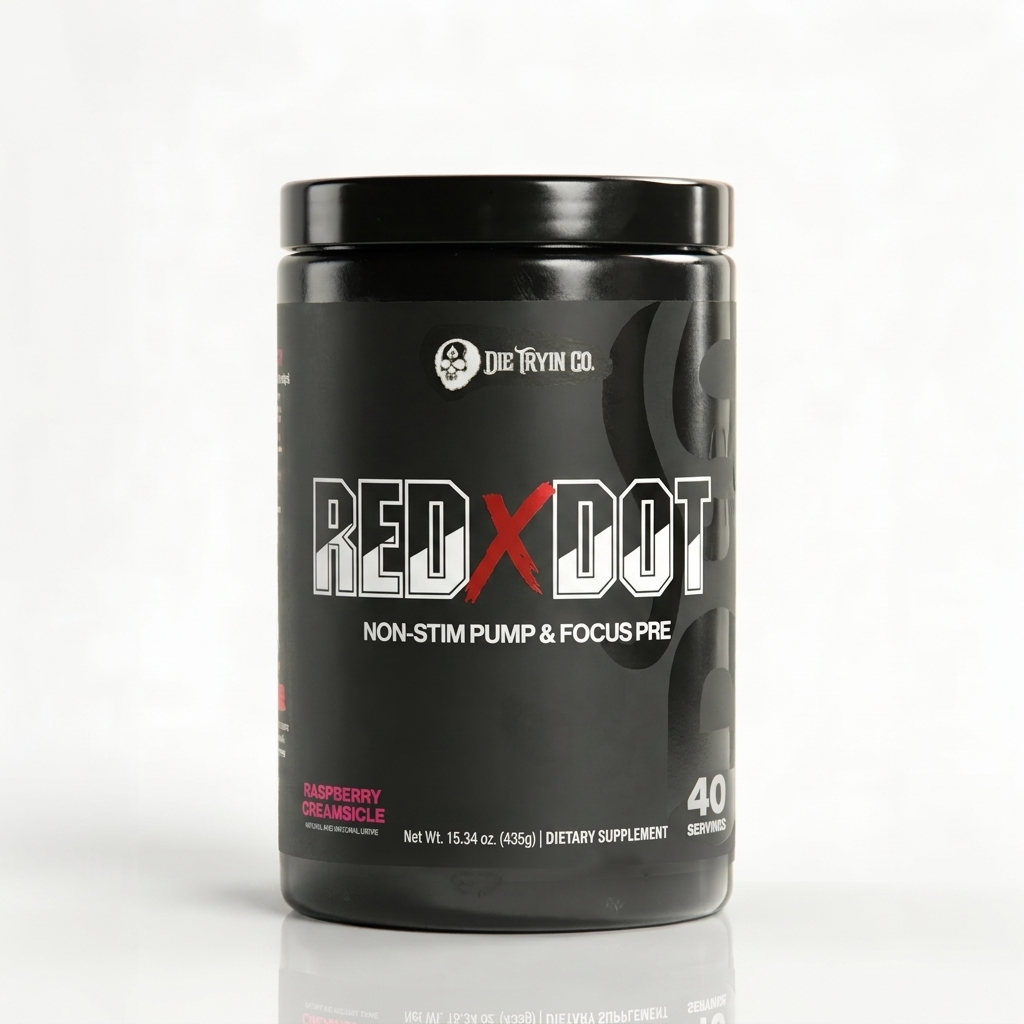
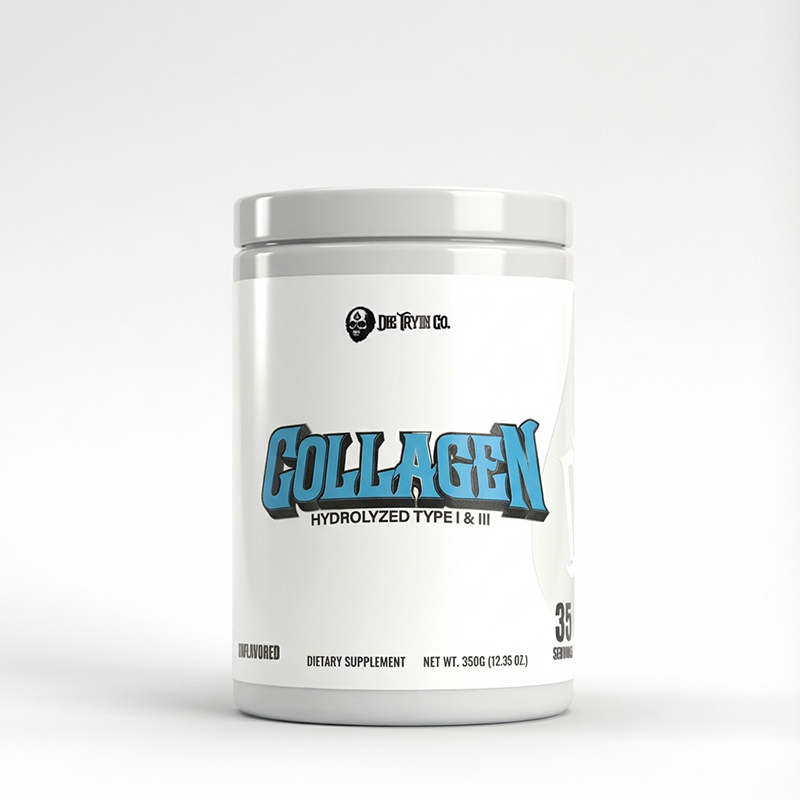
Warm up first, then let your gear carry an already-prepped body further. SEND IT 3.0 is the daily driver, and Phase 1 is exactly the window it needs to come online. Training at night or cutting stimulants? Red Dot is the stim-free pump and focus option. Start hydrated with Aqua Spike, because a heavy-sweat session pulls fluid and sodium faster than most lifters replace it, and no ramp protocol fixes showing up dehydrated. For long-haul joint and connective tissue support, Collagen Peptides earns its spot in the stack.
Not sure what fits your training? Take the quiz and we will point you at the right tools. Then close the loop on the other end of the session with the science of recovery, because the work only counts if you can repeat it. Show up. Do the work. Repeat.
ALWAYS FORWARD.

GEAR THAT FITS THIS POST
The products this article actually talks about. Real doses, disclosed labels, veteran owned.


Read more

Most people skip the warm-up. Don't. Here are 5 research-backed reasons warming up earns its 5-30 minutes — plus the lactic-acid myth, finally put to rest.

Mobility is not warm-up, and the foam roller is not training. Five research-backed moves that expand the range you own, starting with the barbell.

Most plateaus aren't a programming problem — they're execution. The 5 most common workout mistakes (poor form, overtraining, lack of variety, no warm-up, bad nutrition) and the practical fixes.

Muscle grows when demand grows, everything else is detail. The load-vs-reps research, the double progression method, and how to escape a plateau without wrecking recovery.

Knees caving, weight on the toes, losing the brace. The five squat errors that hurt people, and the fix for each one.
Recovery is not a feeling, it is a clock. What your muscles are doing at hour 3, hour 24 and hour 48 after you train, and what to do in each window.