




Tools / Protein
Protein Calculator
How much protein do you actually need? Enter your weight and your goal. Real numbers from the research, no guessing.
Science reviewed
Science reviewed by Onur Oncer, BS Physiology and peer-reviewed published researcher. Last reviewed September 20, 2026.
Enter your email to see your numbers (required)
Loading the signup form…
Your daily target
Enter your weight and hit calculate.
Your daily target
Research range
0 to 0 g 0.0 g/kg for your body weightWhere that lands
- RDA minimum (0.8 g/kg)0 g
- Stay strong (1.4 to 1.8 g/kg)0 g
- Build muscle (1.6 to 2.2 g/kg)0 g
- Lose fat, keep muscle (1.8 to 2.4 g/kg)0 g
Per meal
0 g across 4 meals
Research suggests about 0.4 g/kg per meal, four times a day, does more for muscle than the same total in one or two sittings.
One scoop of Post Iso
24 g = 0% of your day
Whole food first. A whey isolate covers the gap on training days and the meals you would otherwise skip.
Ready to gear up?
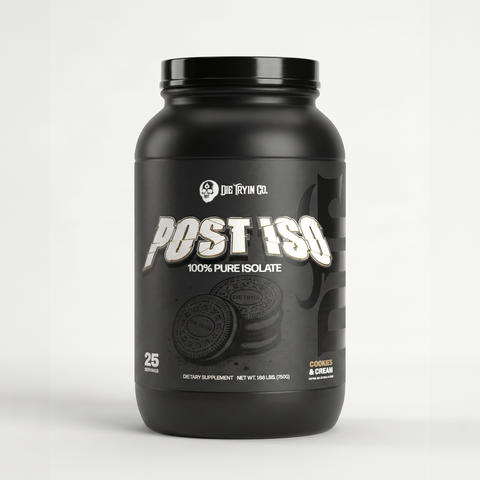
Post Iso 100% Whey Isolate Protein with Digestive Enzymes
Whey isolate with digestive enzymes. Fills the gap on training days without the bloat.
Also in the stack
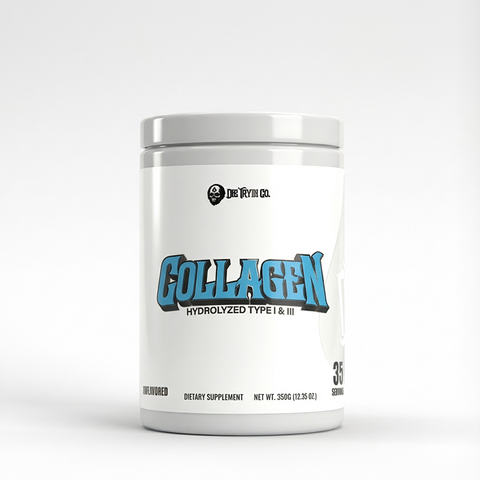
Grass-Fed Collagen Peptides, Hydrolyzed Type I & III
For the joints and connective tissue your training beats up. It does not count toward the number above: collagen is not a complete protein (9 g of protein per serving, no tryptophan, low leucine).
These numbers are estimates drawn from published research on healthy adults and are not medical advice. Talk to a physician or registered dietitian before changing your diet, especially if you are pregnant, under 18, or managing a medical condition.
How much protein should you take per day?
Short answer
If you train, 1.6 to 2.2 grams of protein per kilogram of body weight a day (0.73 to 1.0 g per pound). Cutting? Stay at the top of that range or a little above it, up to about 2.4 g/kg, because protein is what keeps muscle while fat comes off.
The 0.8 g/kg RDA is a floor for sedentary adults, not a target for anyone who lifts. For a 180 lb lifter that works out to roughly 130 to 180 g a day, split into four meals of 35 to 45 g. Enter your own numbers above for an exact target.
Daily protein by body weight (grams per day, rounded to 5 g)
| Body weight | Stay strong1.4 to 1.8 g/kg | Build muscle1.6 to 2.2 g/kg | Lose fat, keep muscle1.8 to 2.4 g/kg |
|---|---|---|---|
| 120 lb (54 kg) | 75 to 100 g | 85 to 120 g | 100 to 130 g |
| 140 lb (64 kg) | 90 to 115 g | 100 to 140 g | 115 to 150 g |
| 160 lb (73 kg) | 100 to 130 g | 115 to 160 g | 130 to 175 g |
| 180 lb (82 kg) | 115 to 145 g | 130 to 180 g | 145 to 195 g |
| 200 lb (91 kg) | 125 to 165 g | 145 to 200 g | 165 to 220 g |
| 220 lb (100 kg) | 140 to 180 g | 160 to 220 g | 180 to 240 g |
| 240 lb (109 kg) | 150 to 195 g | 175 to 240 g | 195 to 260 g |
| 260 lb (118 kg) | 165 to 210 g | 190 to 260 g | 210 to 285 g |
Carrying more than about 25% body fat? Body-weight math overshoots. Use the calculator with your body fat % (the fat-loss number is then figured from lean mass, the way the research was run) or use your goal weight.
WHERE THESE NUMBERS COME FROM
Most protein calculators pull a number out of the air. Ours uses the ranges the research actually landed on:
- Build muscle: 1.6 to 2.2 g per kg of body weight (0.73 to 1.0 g per lb). A 2018 meta-analysis of 49 trials found that muscle gains from extra protein plateau at about 1.6 g/kg/day, with the upper end of the confidence interval near 2.2 (Morton et al., British Journal of Sports Medicine).
- Stay strong: 1.4 to 1.8 g/kg. The International Society of Sports Nutrition position stand on protein and exercise puts most exercising adults at 1.4 to 2.0 g/kg/day.
- Lose fat, keep muscle: 1.8 to 2.4 g/kg of body weight, or 2.3 to 3.1 g/kg of lean mass. A systematic review of dieting, resistance-trained athletes (Helms et al., 2014) landed on 2.3 to 3.1 g per kg of fat-free mass, scaled up with leanness and how hard the deficit is. In a 2016 McMaster trial (Longland et al., American Journal of Clinical Nutrition), men eating 2.4 g/kg in a 40% deficit with hard training gained 1.2 kg of lean mass while losing 4.8 kg of fat; the 1.2 g/kg group held lean mass flat.
- Per meal: about 0.4 g/kg, four times a day (Schoenfeld and Aragon, 2018, Journal of the International Society of Sports Nutrition). Spreading protein across the day beats loading it into one sitting.
The RDA of 0.8 g/kg is the floor for a sedentary adult, not a target for anyone who trains.
Want the full picture on food sources, timing and the common myths? Read our complete guide to protein.
WHY FAT LOSS GETS MORE PROTEIN THAN BUILDING
Counterintuitive, but not a mistake. In a surplus, calories are plentiful and protein past about 1.6 g/kg buys you nothing extra. In a deficit, the body pulls back on muscle protein synthesis, and higher protein is the lever that keeps muscle on the frame while fat comes off. Training does most of the protecting; protein makes sure the raw material is there.
Honest caveat: not every study agrees you need the top of the range. A 2025 trial in college athletes on a moderate 25% deficit (Kanaan et al., European Journal of Clinical Nutrition) found 1.2, 1.6 and 2.2 g/kg all preserved lean mass equally over six weeks. The higher numbers matter most when you are already lean, the deficit is aggressive, or the diet runs long. That is why the calculator gives you a range and places you inside it based on how hard you train, instead of pretending one number fits everyone.
The full cutting playbook: How to Maintain Muscle While Cutting.
IS MORE PROTEIN BETTER?
Not past the top of your range. In the trials behind these ranges, healthy trained adults showed no harm at these intakes, and the ISSN position stand notes that intakes above 3 g/kg have been studied in resistance-trained people. But protein above your range is just expensive calories that could have gone to carbs for training. If you have a kidney condition or any diagnosed illness, get your doctor's read before pushing intake up.
Two more rules we use ourselves: whole food first, powder second. And collagen does not count toward this number. Collagen Peptides are low in leucine and are not a complete protein; they have their own job (joints, tendons, connective tissue). Count whey, meat, fish, eggs, dairy, and complete plant proteins.
Frequently asked questions
How much protein do I need per day to build muscle?
1.6 to 2.2 g per kg of body weight, which is 0.73 to 1.0 g per lb. A 180 lb lifter lands between about 130 and 180 g a day. The 2018 Morton meta-analysis found no extra muscle gain above roughly 1.6 g/kg, so the top of the range is a margin for hard training, not a bonus.
Do I need more protein when I am cutting?
Yes. In a calorie deficit the body slows muscle protein synthesis, and higher protein is what keeps muscle while fat comes off. Research on dieting, resistance-trained athletes points to 2.3 to 3.1 g per kg of lean mass (roughly 1.8 to 2.4 g per kg of body weight for someone at average body fat). The leaner you are and the harder the deficit, the closer to the top you go.
Should I calculate from body weight or lean mass?
If your body fat is in the normal range for a lifter (roughly 10 to 20% for men, 18 to 30% for women), body weight works fine. If you are carrying a lot more than that, body weight overshoots. Enter your body fat % in the calculator and the fat-loss number is figured from lean mass instead, or simply use your goal weight.
How much protein should I eat per meal?
About 0.4 g per kg of body weight per meal, across four meals, gets you to the 1.6 g/kg daily mark (Schoenfeld and Aragon, 2018). For a 180 lb person that is around 35 g per meal. Eating more in one sitting is not wasted, but four solid feedings spread across the day do more for muscle than the same total in one or two. For more on timing, read our anabolic window breakdown.
Is a high-protein diet bad for your kidneys?
For healthy adults, the studies behind these ranges, including trials in resistance-trained people above 3 g/kg, have not shown kidney harm. If you have kidney disease or another diagnosed condition, your protein target is set by your doctor, not by a calculator. This page is an estimate, not medical advice.
Does a protein shake count toward my number?
Yes. One scoop of Post Iso is 24 g of whey protein isolate, so it covers a meal's worth for most people on a training day. Build the rest of your total from whole food: meat, fish, eggs, dairy, and complete plant proteins. Collagen does not count; it is not a complete protein.
ALWAYS FORWARD.