



How Much Protein Do You Need? The Complete Guide
By Jon Klipstein, U.S. Army Combat Veteran & Founder of Die Tryin Co., and Kyle Panela, NCSF-CPT, NASM-CES & NPC Men's Physique Competitor
Science reviewed by Onur Oncer, BS Physiology (Phi Beta Kappa) and peer-reviewed published researcher.
PROTEIN, DECODED
Protein is the one macro almost everyone agrees matters. It's also the one almost everyone gets wrong.
Some people eat barely any and wonder why they're not recovering or building. Others choke down a gram per pound religiously but cram it into two meals and lose half the benefit. The supplement industry sells the confusion — anabolic windows, exotic protein forms, BCAA tubs, "fast" versus "slow" protein marketing — most of it noise designed to move powder.
Here's the truth: protein needs are well understood. The research is mature and consistent. You don't need exotic products or perfect timing. You need to hit a daily target, distribute it reasonably across your meals, and prioritize quality sources. That's the entire game.
This guide breaks down exactly how much protein you need, when it actually matters, which sources deliver, and the myths costing you money and progress.
Built for men and women, lifters and endurance athletes, beginners and veterans. The science is the same. No hype. No shortcuts. Just protein, decoded.
HOW MUCH PROTEIN DO YOU NEED — AT A GLANCE
Quick answer before the deep dive. Match your situation to the target.
| YOUR SITUATION | DAILY PROTEIN | PER MEAL | KEY DTC PRODUCT |
|---|---|---|---|
| Building muscle (surplus or maintenance) | 1.6-2.2 g/kg (~1 g/lb) | 30-50g × 3-5 meals | Post Iso |
| Cutting (deficit) — protect muscle | 2.0-2.4 g/kg (high end) | 40-50g × 4-5 meals | Post Iso + EAAs |
| Maintenance (general fitness) | 1.6 g/kg | 30-40g × 3-4 meals | Post Iso |
| Endurance athletes | 1.4-1.8 g/kg | 30-40g × 3-4 meals | Post Iso |
| Over 50 — overcome anabolic resistance | 2.0-2.4 g/kg (high end) | 40-50g × 4 meals (leucine-rich) | Post Iso + EAAs |
| Not sure where to start | Quiz-matched | Quiz-matched | Take the 60-second quiz |
Now the deep dive on each piece.

WHY PROTEIN MATTERS — WHAT IT ACTUALLY DOES
Protein is the structural raw material of your body. Skip it and nothing else works the way it should.
Most people think of protein purely in terms of muscle. That's the headline role, but not the only one.
Muscle protein synthesis. Every time you train, you damage muscle tissue. Protein provides the amino acids that repair and rebuild it — and over time, build it bigger and stronger. This is the process that turns hard training into actual results. Without enough protein, you break tissue down without fully rebuilding it.
Recovery. Protein isn't only about getting bigger. It's about bouncing back. Adequate protein speeds recovery between sessions, cuts the time you spend beat down, and lets you train harder more often. The full recovery framework — sleep, cortisol, modality stacking — lives in the recovery pillar; protein is one of its core inputs.
Satiety and body composition. Protein is the most filling macronutrient and the most metabolically expensive to digest — 20-30% of its calories are burned in digestion, versus 5-10% for carbs and fats. That makes it the cornerstone of fat loss as much as muscle building. It keeps you full and protects lean mass in a deficit.
The roles people forget. Protein builds the enzymes that run your metabolism. It builds hormones. It builds the antibodies your immune system depends on. It builds hair, skin, nails, and connective tissue. Your body has no meaningful storage form of protein the way it stores fat and carbs — which is exactly why a consistent daily intake matters more than for any other macro.
This is why athletes need far more protein than the general population. The standard RDA (0.8 g/kg) is set to prevent deficiency in sedentary people — not to optimize performance, recovery, or body composition in people who train hard. Protein is the macro that powers everything else.
The bottom line: protein is the foundation you build the rest of your nutrition on. Get it right and training, recovery, and body composition all improve. Get it wrong and everything underperforms — no matter how good your program or supplements are. But more isn't infinitely better — there's a target, and we'll define it next.
HOW MUCH PROTEIN DO YOU ACTUALLY NEED?
The question everyone asks. Here's the real answer.
According to PubMed, the International Society of Sports Nutrition Position Stand on Protein and Exercise (Jäger et al. 2017) recommends 1.4-2.0 grams of protein per kilogram of bodyweight per day for active individuals, with 1.6-2.2 g/kg being the practical sweet spot for athletes building muscle or training hard.

In plain numbers, using roughly 1 gram per pound of bodyweight as the easy rule of thumb:
- 130 lb (59 kg): ~95-130 g/day
- 150 lb (68 kg): ~110-150 g/day
- 180 lb (82 kg): ~130-180 g/day
- 200 lb (91 kg): ~145-200 g/day
For most lifters, "roughly 1 gram per pound of bodyweight" lands right in the optimal range and is easy to remember.
How it shifts by goal:
- Building muscle (surplus or maintenance): 1.6-2.2 g/kg. Plenty of raw material for growth. The full hypertrophy framework lives in the muscle-building pillar.
- Cutting (deficit): push toward the high end — 2.0-2.4 g/kg. In a deficit, more protein protects muscle from being broken down for energy. This is when protein matters most — see the fat loss pillar for the full deficit framework.
- Maintenance: 1.6 g/kg keeps you covered.
- Endurance athletes: 1.4-1.8 g/kg — slightly lower than strength athletes, but still well above the RDA.
How it shifts by age. Older adults need more protein, not less. Aging muscle becomes less responsive to protein — a phenomenon called anabolic resistance. According to PubMed, Witard et al.'s 2016 review on protein and skeletal muscle mass shows lifters over 50-60 should push toward the high end of the range and prioritize solid per-meal doses to overcome reduced muscle sensitivity.
What about "too much"? For healthy people, there's no demonstrated harm from high protein intakes within these ranges. The "protein wrecks your kidneys" claim applies to people with pre-existing kidney disease — not healthy athletes. (More in the myths section.)
The takeaway: figure your bodyweight in pounds, aim for roughly that number in grams of protein per day, and push higher when cutting or older. Learn to track it alongside your other macros. That single habit does more for your physique than any supplement on the market.
TIMING AND DISTRIBUTION — DOES IT MATTER?
Short answer: distribution matters more than people think. Timing matters less than the industry claims.
Distribution: the part that actually matters.
Your body can only use so much protein to drive muscle protein synthesis in one sitting. Research points to roughly 0.4 g/kg per meal — about 30-50 grams for most people — to maximally stimulate it.
This is why distribution beats stacking. Eating 150g of protein across 4 meals of ~38g each stimulates muscle protein synthesis four separate times. Eating the same 150g in one giant dinner stimulates it once, and the excess is largely used for energy or other functions. Target 3-5 protein-rich meals across your day, each hitting that 30-50g window. Spreading protein keeps you in a positive protein balance all day.
The leucine threshold. Of all the amino acids, leucine is the primary trigger for muscle protein synthesis. According to PubMed, Wilkinson et al.'s 2023 systematic review on dietary leucine and post-exercise muscle protein synthesis shows leucine dose predicts MPS response, particularly in older adults where anabolic resistance is real. Broader practical guidelines land at roughly 2.5-3g of leucine per meal to maximally trigger MPS — a whey isolate scoop, 4-6 oz of meat, or a serving of Greek yogurt all clear that bar easily. Plant sources tend to run lower in leucine, which is why plant-based athletes benefit from slightly larger portions or a leucine-rich supplement.
Timing: the part that's overhyped.
The "anabolic window" — the belief that you must slam protein within 30-60 minutes post-workout or lose your gains — is largely a myth. The window is hours wide, not minutes. As long as you've eaten protein within a few hours before or after training, you're covered. Total daily protein matters far more than precise timing.
One timing tactic that holds up: pre-sleep protein. A slower-digesting protein before bed — casein, or simply a protein-rich meal — can support overnight recovery and MPS. Useful for hard-training athletes, not mandatory for everyone.
The takeaway: nail your daily total first. Distribute it across 3-5 meals of 30-50g. Don't stress about a narrow post-workout window — it's wider than you've been told.
PROTEIN QUALITY — SOURCES, SUPPLEMENTS & ABSORPTION
Not all protein is equal. Quality comes down to two things: completeness (does it contain all nine essential amino acids?) and leucine content (does it trigger MPS effectively?).
Complete vs. incomplete. Complete proteins contain all nine essential amino acids in usable amounts. Animal sources — meat, fish, eggs, dairy, whey — are all complete and leucine-rich. Most single plant sources are incomplete or low in one or more essential amino acids.
Plant protein, the brief version. Plant-based athletes can absolutely build muscle and hit their needs. It just takes more attention: combine sources (rice plus pea, for example) to cover the full amino acid profile, eat slightly larger portions to match the lower leucine content, and consider a leucine-rich or blended plant protein supplement. Whole-food plant proteins work — they just require more planning than animal sources.
Whey: isolate vs. concentrate vs. blends. Whey is the gold-standard supplemental protein — fast-digesting, complete, and the most leucine-rich common source.
- Isolate — filtered to ~90% protein, minimal lactose, fat, and carbs. The cleanest, fastest option and the easiest on digestion.
- Concentrate — cheaper, slightly lower protein percentage, more lactose. Fine for most, harder on lactose-sensitive guts.
- Blends — a mix of sources and digestion speeds. Often used to pad cost with cheaper proteins, so read the label and know what you're paying for.
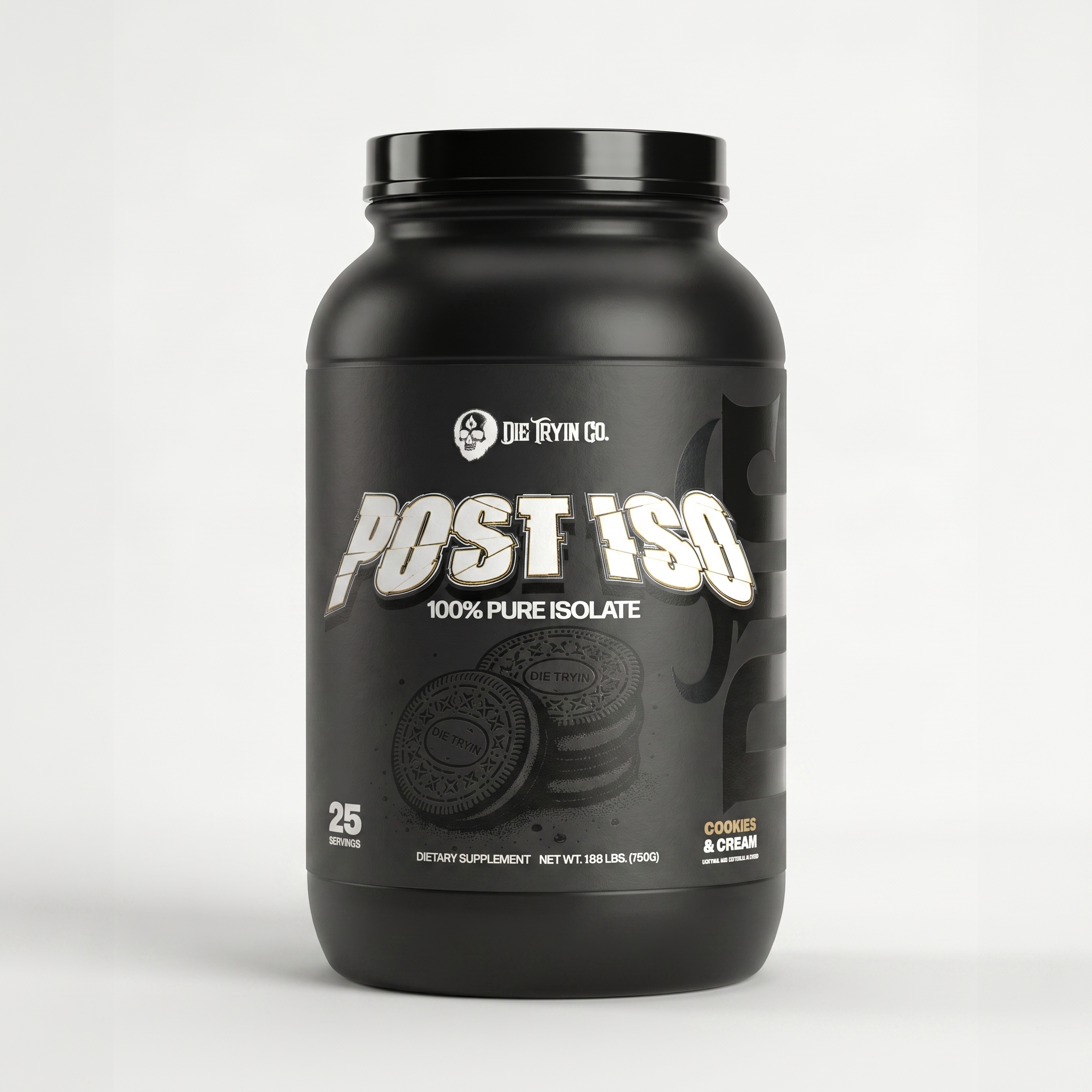
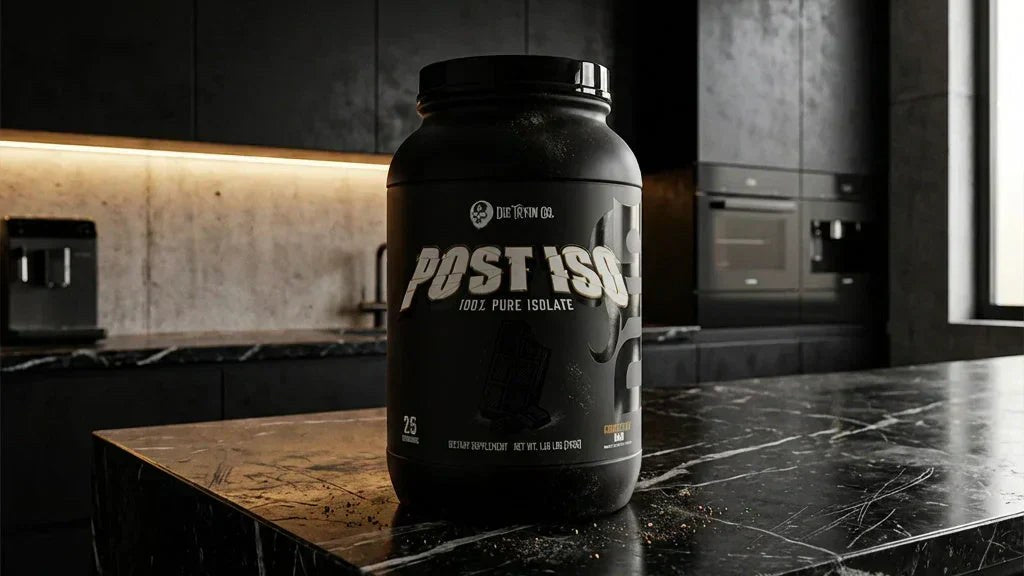
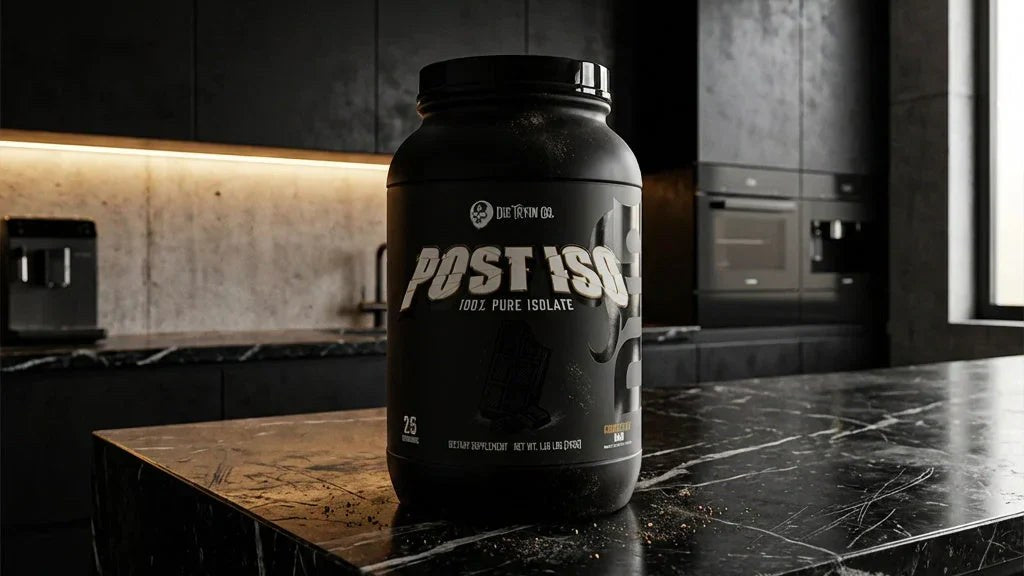
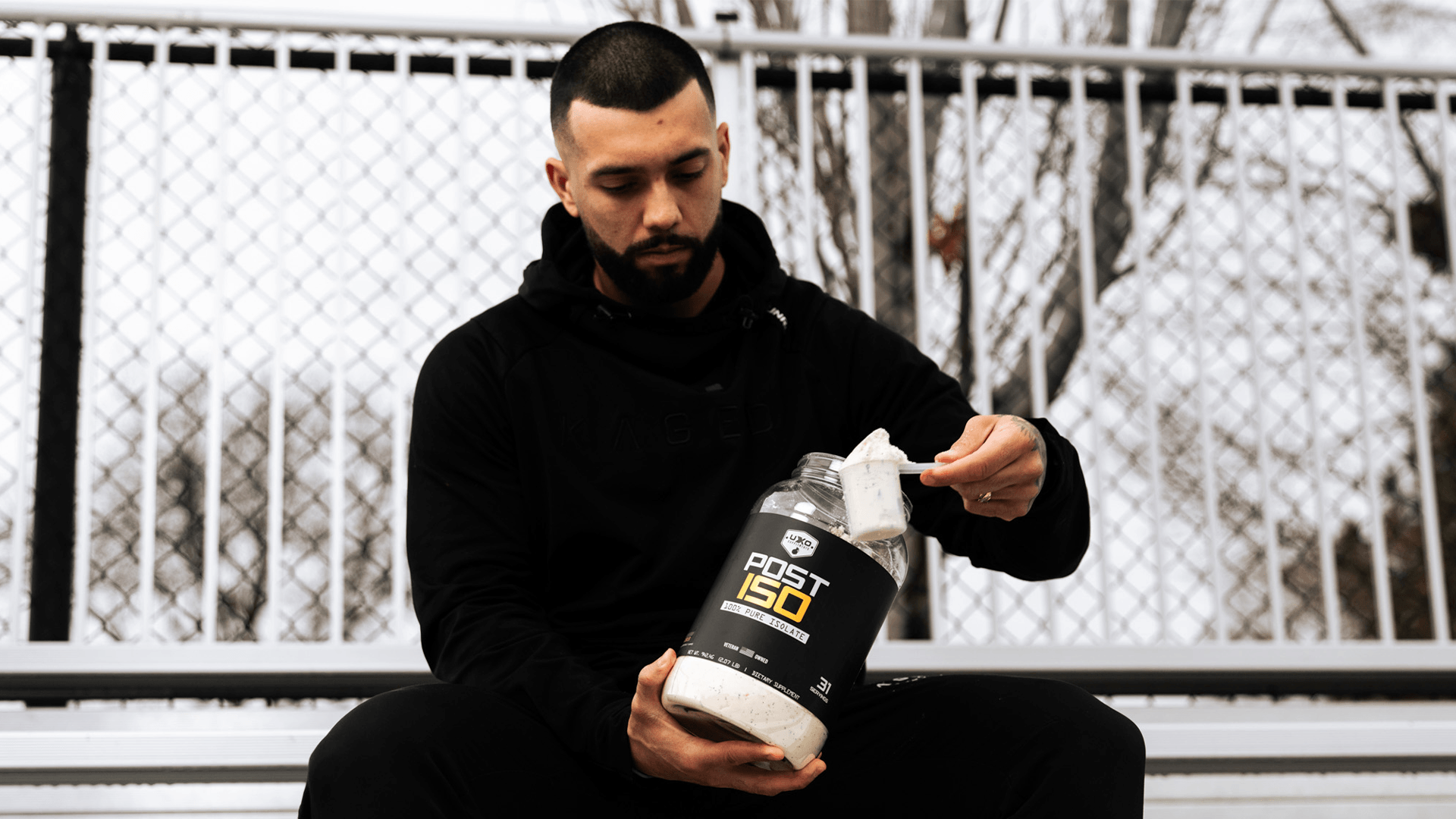
Post Iso is a whey isolate delivering 24g per scoop with DigeZyme digestive enzymes — clean digestion, no bloat, no proprietary blends hiding cheaper fillers.
EAAs vs. whole protein. Essential amino acid supplements deliver the building blocks directly. According to PubMed, the ISSN Position Stand on Essential Amino Acid Supplementation (Ferrando et al. 2023) confirms EAAs stimulate MPS at relatively small doses (1.5-3g) with the response plateauing around 15-18g — useful for fasted training, older adults with anabolic resistance, or topping off between meals. The Position Stand also notes EAA requirements rise during caloric deficits. But for most people eating enough complete protein, a whole protein source or whey already supplies all the EAAs you need. EAAs are a tool for specific situations, not a replacement for protein. Want EAAs around training? The pre-workout pillar covers the pre/intra/post stack.
Third-party testing matters. The supplement industry is under-regulated. Protein powders have been caught under-delivering on label claims or contaminated with heavy metals. Choose products that are third-party tested and transparent about sourcing.
The takeaway: prioritize complete, leucine-rich sources. Whey isolate is the cleanest supplemental option. EAAs serve niche cases. Verify quality through third-party testing. And remember protein alone doesn't build muscle — it's the raw material, not the stimulus.
THE PROTEIN FRAMEWORK — 5 STEPS
Five steps. Run them together. Skip any one and the whole stack underperforms.
Step 1 — Calculate your target.
Bodyweight in pounds equals roughly your daily protein target in grams. Cutting or over 50? Push 10-20% higher. That's your number. Write it down.
Step 2 — Distribute across 3-5 meals.
Divide your target into 3-5 meals of 30-50g each. Each meal triggers muscle protein synthesis separately, so spread beats stacking. Don't backload everything into dinner.
Step 3 — Prioritize quality sources.
Build each meal around a complete, leucine-rich protein: meat, fish, eggs, dairy, whey. Plant-based? Combine sources and eat slightly larger portions. Quality first, then total.
Step 4 — Supplement the gap.
Hit your target through food first. When life makes that hard — busy days, travel, low appetite — a whey isolate scoop fills the gap fast. Post Iso whey isolate is built for exactly that: 24g of clean isolate when whole food isn't realistic. EAAs cover niche cases like fasted training and over-50 anabolic-resistance support.
Step 5 — Adjust for goal and age.
Cutting: push protein to the high end to protect muscle. Building: keep it solid and consistent. Older: prioritize per-meal doses and push the high end to overcome anabolic resistance. Endurance-focused: slightly lower is fine, but stay well above the RDA.
Five steps. Calculate, distribute, prioritize quality, supplement the gap, adjust for context. Do that consistently and protein stops being a question mark. The discipline behind running it daily for years — that's where the real physique results live, and it's covered in the training mindset pillar. Dial in the rest of your fueling around it.
PROTEIN MYTHS — WHAT THE INDUSTRY GETS WRONG
The protein category is full of marketing dressed up as science. Here are the myths to ignore.
"Too much protein wrecks your kidneys." For healthy people, false. The kidney concern comes from studies of people with pre-existing kidney disease. In healthy athletes, high-protein diets within the ranges discussed here show no demonstrated kidney harm. If you have kidney disease, work with your doctor — otherwise, this is a non-issue.
"You can only absorb 30g of protein per meal." A half-truth that got distorted. Your body absorbs nearly all the protein you eat — absorption isn't the limit. What's capped is the amount that maximally stimulates muscle protein synthesis in one sitting (~0.4 g/kg, often 30-50g). Eat more and it's still digested and used — just not all funneled into MPS. So the advice to spread your protein is right; the "wasted and unabsorbed" framing is wrong.
"More protein = infinitely more muscle." No. Past your daily target, extra protein doesn't build extra muscle. It's used for energy or other functions. Protein is necessary, not magic. Hitting 1.6-2.2 g/kg is enough; doubling it doesn't double your gains.
"You NEED protein immediately post-workout or you lose gains." The anabolic window is hours wide, not minutes. Total daily protein matters far more than slamming a shake the instant you rack the bar.
"Plant protein can't build muscle." False. It takes more planning — combining sources, larger portions, attention to leucine — but plant-based athletes build plenty of muscle. The mechanism is identical; the logistics differ.
"BCAAs are essential for muscle growth." For anyone eating enough complete protein, BCAA supplements are largely redundant. Whey and whole protein sources already contain the BCAAs (including leucine) in better ratios alongside the full EAA profile. Save your money unless you have a specific fasted-training reason.
"Fast protein is always better than slow protein." Digestion speed matters far less than total daily intake and distribution. Whey (fast) is convenient around training; casein (slow) suits pre-sleep. Both build muscle. The "fast versus slow" marketing oversells a minor variable.
The takeaway: hit your daily target, distribute it, prioritize quality, and ignore the noise. Protein is simple once you strip away the marketing.
PROTEIN FAQ
How much protein do I really need per day?
For athletes, 1.6-2.2 g/kg of bodyweight — roughly 1 gram per pound. Push toward the high end when cutting or over 50. The 0.8 g/kg RDA is a deficiency-prevention floor, not an athletic target.
What's the best protein source?
Complete, leucine-rich sources: meat, fish, eggs, dairy, and whey. They contain all nine essential amino acids and trigger muscle protein synthesis efficiently. Whey isolate is the cleanest supplemental option.
Is whey or plant protein better?
Whey is more complete and leucine-rich per gram, making it the simpler choice. Plant protein works well too — it just requires combining sources and eating slightly larger portions to match the amino acid profile.
Should I eat protein before bed?
It can help. A slower-digesting protein or a protein-rich meal before sleep supports overnight recovery and muscle protein synthesis. Useful for hard-training athletes, optional for everyone else. Your daily total still matters most.
Can I eat too much protein?
For healthy people, no demonstrated harm within the ranges here. Past your daily target, extra protein simply doesn't build extra muscle — it's used for energy or other functions. The kidney-damage claim applies only to people with existing kidney disease.
Do I need a protein shake?
No. Whole food covers protein needs completely. A shake is a convenience tool for busy days, travel, or low appetite — a fast way to fill the gap when whole food isn't realistic, not a requirement.
How much protein do women need?
The same per-kilogram targets apply — 1.6-2.2 g/kg of bodyweight. The absolute grams are lower because bodyweight is typically lower, but the principles, distribution, and quality priorities are identical to men.
Does protein help with fat loss?
Significantly. Protein is the most filling macro, has the highest thermic effect, and protects muscle in a deficit. In a cut, push protein to the high end (2.0-2.4 g/kg) — it's the macro that keeps the weight you lose coming from fat, not muscle.
How much protein do older adults need?
More than younger adults. Aging muscle is less responsive to protein (anabolic resistance), so push toward the high end of the range and prioritize hitting 30-50g per meal to clear the leucine threshold each time.
READ MORE ON PROTEIN & NUTRITION
- The Power of Protein
- Is More Protein Better?
- Does Protein Timing Matter?
- How Often Should You Eat for Positive Protein Balance
- Protein Isolate vs. Blends — What You Need to Know
- EAAs vs. Whey Protein Isolate for Muscle Growth
- Take Protein Alone for Muscle Growth & Size?
- How to Ensure Your Protein Is Genuine
- What Are Macros? How to Count Protein, Carbs & Fats for Real Results
- Fueling Your Body for Optimal Performance: The Macros That Work
- How to Build Muscle: The Complete Guide
- How to Lose Fat and Keep Muscle: The Complete Guide
- How to Recover From Workouts: The Complete Guide
READY TO GEAR UP?
The Die Tryin Co. protein lineup is built on real doses, clean sourcing, and no proprietary blends:
- Post Iso — 24g whey isolate per scoop with DigeZyme enzymes for clean digestion
- EAAs — essential amino acids for fasted training, between-meal top-offs, and over-50 anabolic-resistance support
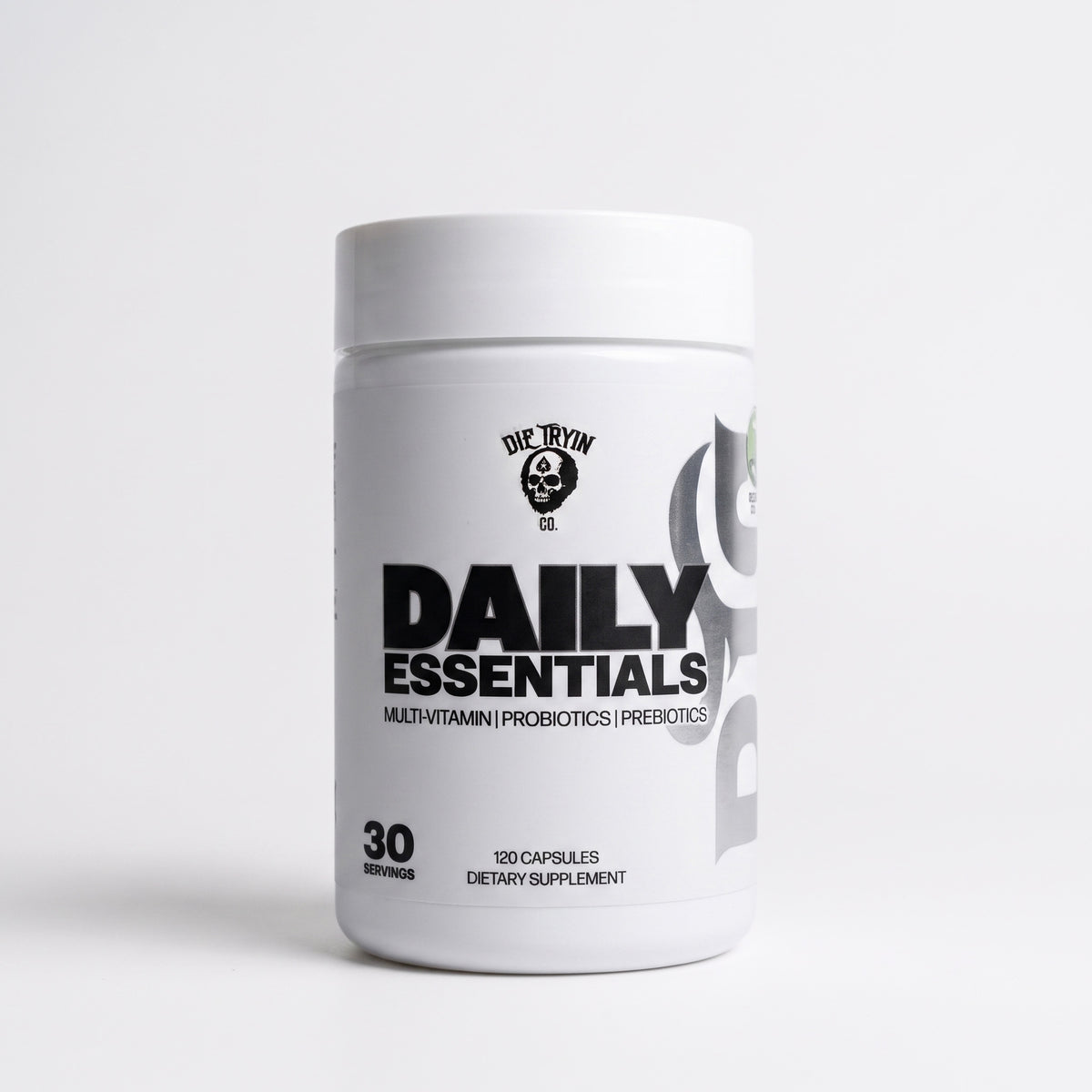
- Daily Essentials — micronutrient floor that supports protein utilization and recovery
Not sure what fits? Take the quiz.
ALWAYS FORWARD.
Read more

The no-BS recovery playbook — sleep, stress, nutrition, modalities, and the framework that ties it all together. Recovery is where growth actually happens.
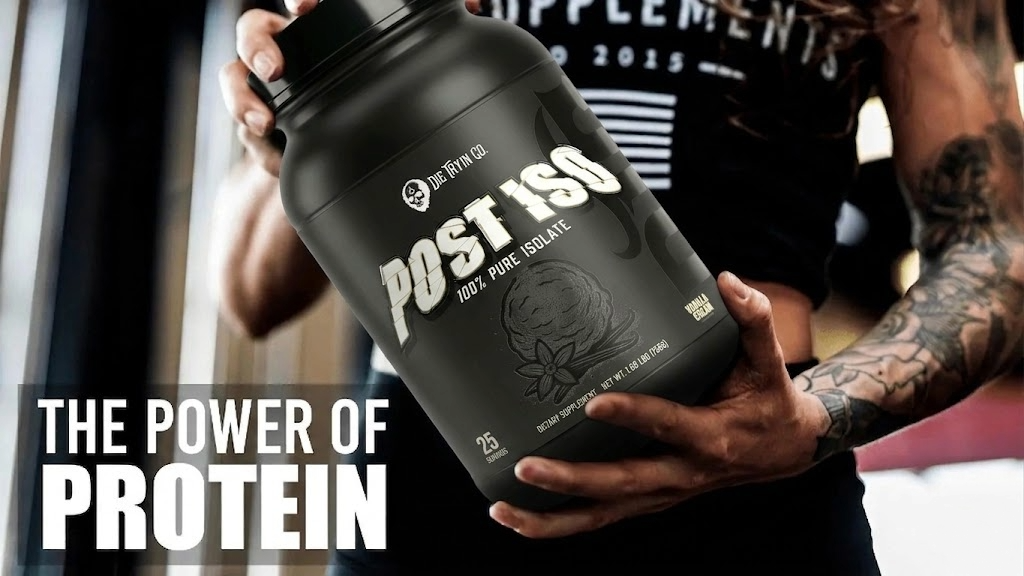
Protein does more than build muscle. 8 real benefits ranked by evidence strength: satiety, metabolic boost, bone density, sarcopenia prevention, and more.

The complete playbook for building muscle that actually lasts. Training, nutrition, recovery, and the supplements that move the needle — no hype.
The no-BS playbook for losing fat without losing muscle. Energy balance, protein, training, sleep, and the supplements that actually help.
You can't out-train a bad diet. Here's the no-BS guide to macros — what they are, why they matter, and how to count them so you actually hit your goals.
The 30-minute post-workout rush is the most oversold rule in sports nutrition. Here is what the research actually shows about the anabolic window, per-meal protein distribution, and pre-sleep protein.
GEAR THAT FITS THIS POST
The products this article actually talks about. Real doses, disclosed labels, veteran owned.