

Training and Mental Health: A Veteran's Perspective
By Jon Klipstein, U.S. Army Combat Veteran & Founder of Die Tryin Co.
Science reviewed by Onur Oncer, BS Physiology and peer-reviewed published researcher.
MENTAL HEALTH IS THE MISSION
June is PTSD Awareness Month. For a brand founded by a combat veteran, that isn't a marketing date on a calendar. It's personal. The fight a lot of us signed up for didn't end at discharge, and the hardest part often starts when the uniform comes off and the structure, the mission, and the people beside you are suddenly gone.
This is an honest piece about one thing that has helped a lot of us carry the weight: training. Not as a cure, not as a substitute for real help, but as a tool. And more important than any of that, it's about pointing you toward the help that's there if you need it right now.
One thing up front, and we mean it: this is not medical advice. Exercise can support mental health, but it works alongside therapy, medication, and professional care, never in place of them. If you are struggling, the resources below are for you, today.
If you're struggling, reach out now. Call or text the 988 Suicide & Crisis Lifeline (dial 988). Veterans: dial 988 then press 1, or text 838255, for the Veterans Crisis Line. You are not alone, and asking for help is strength.
WHAT THE RESEARCH ACTUALLY SAYS
We don't traffic in hype, so here's the evidence, framed honestly. A systematic review and meta-analysis of randomized trials found that physical activity significantly reduced PTSD and depressive symptoms compared to control conditions, and concluded that exercise "may be a useful adjunct to usual care" (Rosenbaum et al., 2015). It's a small evidence base, and the key word is adjunct: alongside treatment, not instead of it.
The broader picture points the same way. A 2025 umbrella review of 99 randomized trials across 11 mental health conditions, PTSD among them, found that moderate-to-vigorous aerobic exercise produced a meaningful reduction in symptoms (Solmi et al., 2025). Research increasingly treats movement as a real, supportive part of mental health care.
Read that the right way, though. "A supportive part of care" is not "a cure." Exercise belongs next to professional help, and the science is clear that it complements treatment rather than replacing it.
WHY TRAINING HELPS, BEYOND THE STUDIES
Numbers in a journal are one thing. Why it actually works for so many of us is simpler, and you don't need a study to feel it:
- It gives you a mission. A session on the calendar is a reason to get up, a small objective to complete when everything else feels heavy or out of your control.
- It stacks small wins. One more rep, a little more weight, showing up when you didn't want to. Progress you can measure builds something steadier than motivation.
- It burns off what you're carrying. Hard physical work is one of the oldest ways humans have discharged stress, tension, and adrenaline that has nowhere else to go.
- It puts people back around you. A gym, a training partner, a team. Structure and brotherhood are exactly what a lot of us lose in the transition, and they matter more than the workout itself.
The discipline that carried you through service can carry you forward now. We've written more on that in what combat training taught me about fitness and on why small daily habits decide who you become, and recovery is part of the work too, not the opposite of it (the science of recovery).
THE HONEST LIMITS
Training is a tool, not a treatment plan. It can support your mental health, but it does not replace therapy, medication, or a conversation with a qualified professional. Anyone who tells you a workout, a supplement, or a routine can fix a mental illness on its own is lying to you, and we won't.
And if you are in crisis right now, this is the part that matters most: training is not the answer in that moment. Reaching out is. Call or text 988. There is no version of "tough it out" that beats asking for help.
IF YOU'RE A VETERAN READING THIS
The transition home is its own kind of war, and nobody hands you a plan for it. If you're feeling lost, numb, angry, or just not yourself, you are not broken and you are not alone. A huge number of us have been exactly there.
Asking for help is not weakness. It is the same courage that got you through everything else, pointed in a new direction. The Veterans Crisis Line (dial 988, then press 1, or text 838255) is staffed by people who get it, around the clock. Use it, or send it to someone who needs it.
FREQUENTLY ASKED QUESTIONS
Can exercise replace therapy or medication?
No. Research supports exercise as a complement to professional care for conditions like PTSD, depression, and anxiety, not a replacement for it. Think of it as one tool that works best alongside therapy, medication, and professional support, not instead of them.
What kind of exercise helps mental health?
The best kind is the kind you'll actually do consistently. The research most often points to regular moderate-to-vigorous aerobic activity and resistance training, but a daily walk counts. Consistency beats intensity here, like everywhere else.
I can't get motivated. Where do I start?
Start so small it feels easy: a ten-minute walk, one set, showing up to the gym and leaving if you want. The goal early on is the habit, not the workout. Our guide on setting smart goals can help you build from there.
Where can a veteran get help right now?
The Veterans Crisis Line: dial 988, then press 1, or text 838255, any time of day. You can also reach the 988 Suicide & Crisis Lifeline by calling or texting 988, and your local VA can connect you with ongoing mental health care.
Is this article medical advice?
No. It's educational, written from a veteran's perspective and reviewed for accuracy. For anything related to your mental health, please talk to a qualified healthcare professional.
ALWAYS FORWARD, TOGETHER
This is the mission behind Die Tryin Co. Not a product, not a sale. The belief that you keep moving forward, that discipline can be an anchor, and that no one should have to carry the weight alone. This month and every month, check on the veterans in your life. Ask the real question. Listen.
If this reached you at the right time, take one step today, and reach out to someone who can help. The mission isn't to do it alone. It's to keep going.
ALWAYS FORWARD.
Read more
Dragging dummies, 24-mile rucks, sprinting in full gear. A combat veteran on the brutal drills that built real strength — and how to apply them in the gym.
Nobody becomes weak overnight — it happens through small habits repeated daily. The weak vs. strong habit framework, plus the 8 non-negotiables that build men who hold up under pressure.
Recovery is not a feeling, it is a clock. What your muscles are doing at hour 3, hour 24 and hour 48 after you train, and what to do in each window.
Most gym goals fail because they are outcomes you do not control. Process goals survive contact with a real week.
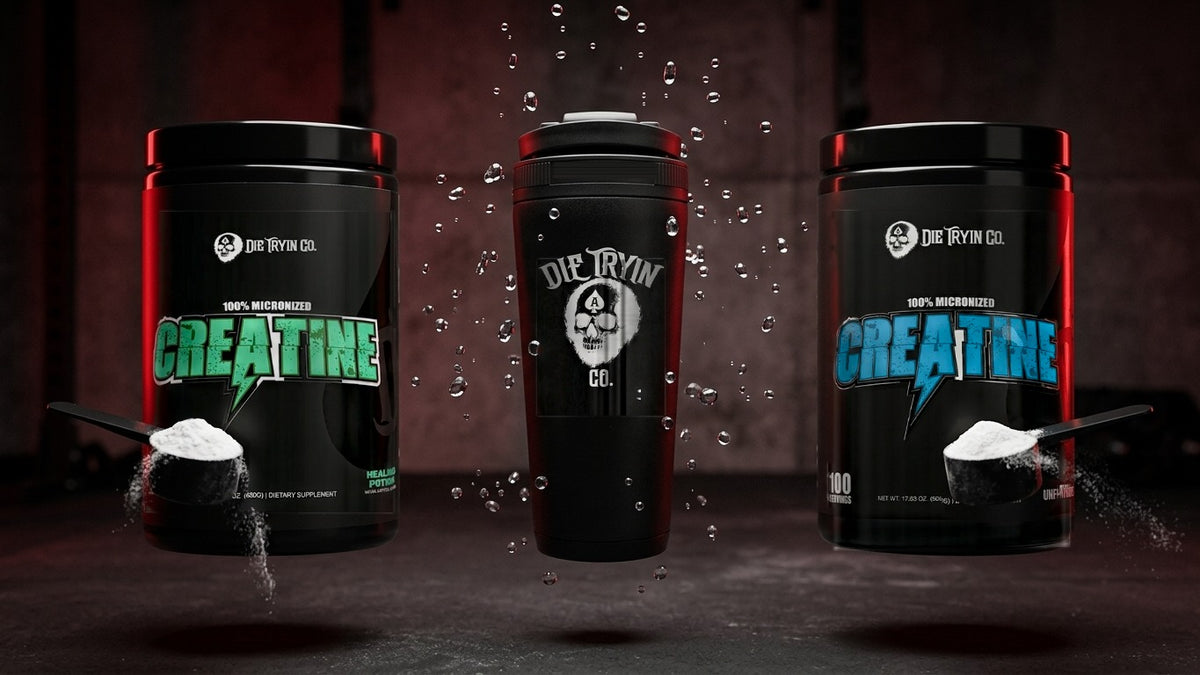
Flavor doesn't change what creatine does; taking it every day is what counts. How to pick flavored or unflavored, what to mix it with, and how long it lasts once mixed.

Whey protein concentrate now costs more than four times its early-2023 low. Here is what is driving it, what the 2027 forecasts actually say, and how to pay less per gram of protein without getting...
GEAR THAT FITS THIS POST
The products this article actually talks about. Real doses, disclosed labels, veteran owned.