



SMART Goals for Lifting: Targets That Actually Hold
By Jon Klipstein, U.S. Army Combat Veteran & Founder of Die Tryin Co.
Science reviewed by Onur Oncer, BS Physiology and peer-reviewed published researcher.
SMART GOALS WORK. THE ACRONYM IS THE WEAK PART.
Every January somebody tells me they want to "get in shape." I ask what that means. No answer. That's the whole problem, and SMART goal setting is the standard fix people reach for.
Here's the truth: the goal-setting part is real. Across 45 controlled studies covering 5,912 people, McEwan and colleagues found that structured goal-setting programs moved actual behavior with a medium, positive effect (d = 0.55). Setting a real goal beats not setting one. That's not up for debate.
The acronym itself is shakier than the industry admits, and nobody selling you a New Year's plan will tell you that. We're going to run SMART through a barbell and be straight about where it holds up and where it falls apart.
| GOAL TYPE | WHAT IT SOUNDS LIKE | WHAT IT'S ACTUALLY FOR |
|---|---|---|
| Outcome (weakest measured effect) | "Lose 20 lbs." "Win my class." | Direction only. Never your daily target. See why lifters stall. |
| Performance (moderate) | "Bench 245 for 3 by December 1." | Your 8-to-12-week checkpoint. One number you test on a date. |
| Process (largest) | "4 sessions a week. Log every top set." | What you actually do Monday. The only goal you control. Anchor it to the training mindset pillar. |
THE THREE GOAL TYPES, AND WHY MOST LIFTERS PICK THE WORST ONE
A 2022 systematic review and meta-analysis in the International Review of Sport and Exercise Psychology (Williamson and colleagues) pooled 27 goal-setting studies and split them by goal type. Process goals produced the largest effect on performance, at d = 1.36. Performance goals landed at d = 0.44. Outcome goals came in at d = 0.09. Effectively nothing. One caveat, straight: those were sport and motor-task studies, not barbell trials. The direction is consistent enough to act on, but don't read 1.36 as a promise about your bench.
Read that again. "Lose 20 pounds" and "win the meet" are what everybody writes on the whiteboard, and they are the category with the weakest measured effect. Not because the ambition is wrong, but because you don't control the outcome. You control the sessions. Outcome goals still have a job, though: they point the truck. But if the only thing on your list is a bodyweight number, you handed your motivation to a variable that swings three pounds on a salty dinner and a bad night of sleep.
RUNNING SMART THROUGH A BARBELL
Applied to lifting instead of a business plan, the letters get sharp fast. Generic on the left, what it looks like under a loaded bar on the right.
| LETTER | THE GENERIC VERSION | THE BARBELL VERSION |
|---|---|---|
| S — Specific | "Get stronger." | "Take my bench from 225x3 to 245x3." |
| M — Measurable | "Track my progress." | "Top set logged every session. Waist measured Friday morning, same tape, same spot, before food." |
| A — Attainable | "Be realistic." | "20 lbs on a 225 bench in 12 weeks after two years of training. Not 60." |
| R — Relevant | "Make it matter." | "Bench, close-grip, overhead press, rows. Curls come last, not first." |
| T — Time-bound | "Set a deadline." | "Test week of December 1. Deload the week before." |
That version is usable. It tells you what to load, what to write down, and what day you find out.
WHERE SMART BREAKS DOWN — THE HONEST PART
In 2022 Swann and colleagues published a narrative review in Health Psychology Review examining the scientific footing of the SMART acronym in physical activity promotion. Their conclusion was blunt: the acronym is intuitive and its practical value is real, but it is not based on scientific theory and it is not consistent with the empirical evidence. The problems they named:
- SMART says nothing about which type of goal to set, outcome or performance or process. That is the one variable the meta-analytic data says matters most.
- The letters are not applied consistently, and several criteria are redundant with each other. Ask five coaches what the A and the R stand for and you'll get Attainable, Achievable, Realistic and Relevant in some order.
- A goal that is rigidly specific and rigidly time-bound carries what the authors call a risk of potentially harmful effects. They flag the risk without cataloguing every form it takes. The version we watch play out on the gym floor is below.
That last one is the killer for lifters. You set "245 by December 1," you tweak a shoulder in week 7, you miss the date by 10 lbs, and you decide the block was a waste. It wasn't. You added 10 lbs and trained through an injury. The framework handed you a pass/fail scoreboard for something that isn't pass/fail, and the usual response, grinding every set into the floor to force the number, is its own trap. See training to failure: a tool, not a standard. The fix isn't throwing SMART out. It's demoting it: use it to sharpen the target, then hang your actual week on the process goal underneath it.
YOUR SCALE IS A TERRIBLE MEASURABLE
"Measurable" is the letter people get most wrong, because the easiest thing to measure is the worst thing to measure. A 2025 systematic review and meta-analysis pooled 25 randomized controlled trials of adults with overweight or obesity who added resistance training to a dietary weight-loss plan. Between groups, the difference in body mass was −0.32 kg. Statistically nothing (p = 0.35). The scale barely noticed.
But the lifting groups held onto fat-free mass (SMD 0.40, rated moderate certainty), lost more fat mass (SMD −0.36, high certainty), and came out significantly stronger, though the authors rate that strength result low certainty. Same scale number, different body. If bodyweight is your one measurable, the metric you picked is blind to what you're actually buying. Track more than one signal:
- Top set logged — load x reps on your two main lifts, every session
- Waist at the navel — once a week, same conditions
- Sessions completed — a raw count out of the number you planned
- Bodyweight — weekly average, never a single morning reading
- One progress photo — same light, same time, monthly
BUILD IT BACKWARD: A REAL 12-WEEK EXAMPLE
Start at the outcome, translate it into a performance target, then bury the whole thing in process. That is the order. Here is a lifter running a 12-week block:
- Outcome (direction, not a daily target): "Look like I lift with a shirt on."
- Performance (the checkpoint): "Bench 245x3 and squat 315x5 on test week. Waist down 1.5 inches. Bodyweight within 3 lbs of where I started."
- Process (the actual goal): "48 planned sessions over 12 weeks, hit 44. Upper/lower, four days a week. 10 to 20 hard sets per muscle per week. Add 5 lbs or one rep to every main lift until it stalls, then hold. Protein at 1 g per pound of goal bodyweight. Deload week 11."
- Abort criteria (decided in advance): "If I miss two full weeks, I restart at 90% of my last working load. I do not scrap the goal."
Notice what carries the weight. The process line is the only one you can succeed at on a Tuesday you don't feel like driving to the gym. That 44-of-48 number is the whole program. Everything else is a report card. If the training half needs work, start with training smarter, not harder and a warm-up that's dialed in, so week 7 doesn't end you.
WRITE IT DOWN OR IT DIDN'T HAPPEN
Michie and colleagues pooled 122 evaluations covering nearly 45,000 adults in Health Psychology, a meta-regression of which techniques actually drove results. One component explained more of the variation between studies than any other, roughly 13%: self-monitoring. Programs pairing it with at least one other technique drawn from control theory scored 0.42 against 0.26 for everything else. Translation for the gym floor: the logbook is not admin work, it is a live part of the intervention.
A goal you don't record is a wish you're auditing from memory, and memory is generous. Log the set. Log the miss. Log the session you skipped and why. That pattern is what tells you whether you're overtraining or just avoiding.
DISCIPLINE BEATS MOTIVATION, EVERY TIME
Here's the part the acronym cannot give you. On week 8 you will not want to go. The novelty is gone and the deadline is close enough to feel like pressure, far enough away to feel pointless. Motivation does not survive that week. A process goal does, because it asks one question: did you do the work today? Yes or no.
Consistency beats intensity, and 44 average sessions will bury 20 perfect ones every time. Discipline gets the full treatment in the Ultimate Guide to Training Mindset, so go there for the mental side. If fat loss is the direction you picked, the Ultimate Guide to Fat Loss and strength training for fat loss are your next two reads.
FREQUENTLY ASKED QUESTIONS
Are SMART goals actually backed by research?
Goal setting is. The acronym is not. Structured goal-setting programs move behavior with a medium effect across dozens of controlled trials, but Swann and colleagues found the acronym itself is not based on scientific theory and not consistent with the evidence. Use it as a checklist for wording, not as your strategy.
What is the difference between an outcome goal and a process goal?
An outcome goal is a result you do not fully control, like "lose 20 lbs" or "win my class." A process goal is behavior you control today, like "four sessions this week, every top set logged." In pooled sport research, process goals showed the largest effect on performance and outcome goals showed almost none.
Should I still set a bodyweight goal?
Set it, then stop using it as your daily scorecard. Research suggests adding resistance training to a diet can leave scale weight nearly unchanged while fat mass drops and lean mass is better protected. Track a weekly average alongside your waist and your lifts.
How long should a lifting goal run?
Eight to twelve weeks for a performance target. Short enough that the deadline has teeth, long enough that real strength adaptation can show up. Build a deload in before you test.
What do I do when I miss the deadline?
Reset the target, not the habit. Missing a number is data about your rate of progress. Quitting the process because you missed it is the exact failure mode the SMART critique warned about. Write abort criteria into the plan before you start.
How hard should the goal be?
Hard enough that you are not certain you will hit it. If it is guaranteed, it drives nothing. If it needs everything to go perfectly, one bad week kills it.
READY TO GEAR UP?
The process goal is the work. Real doses of real ingredients let you keep showing up for it. Here's what backs a 12-week block:
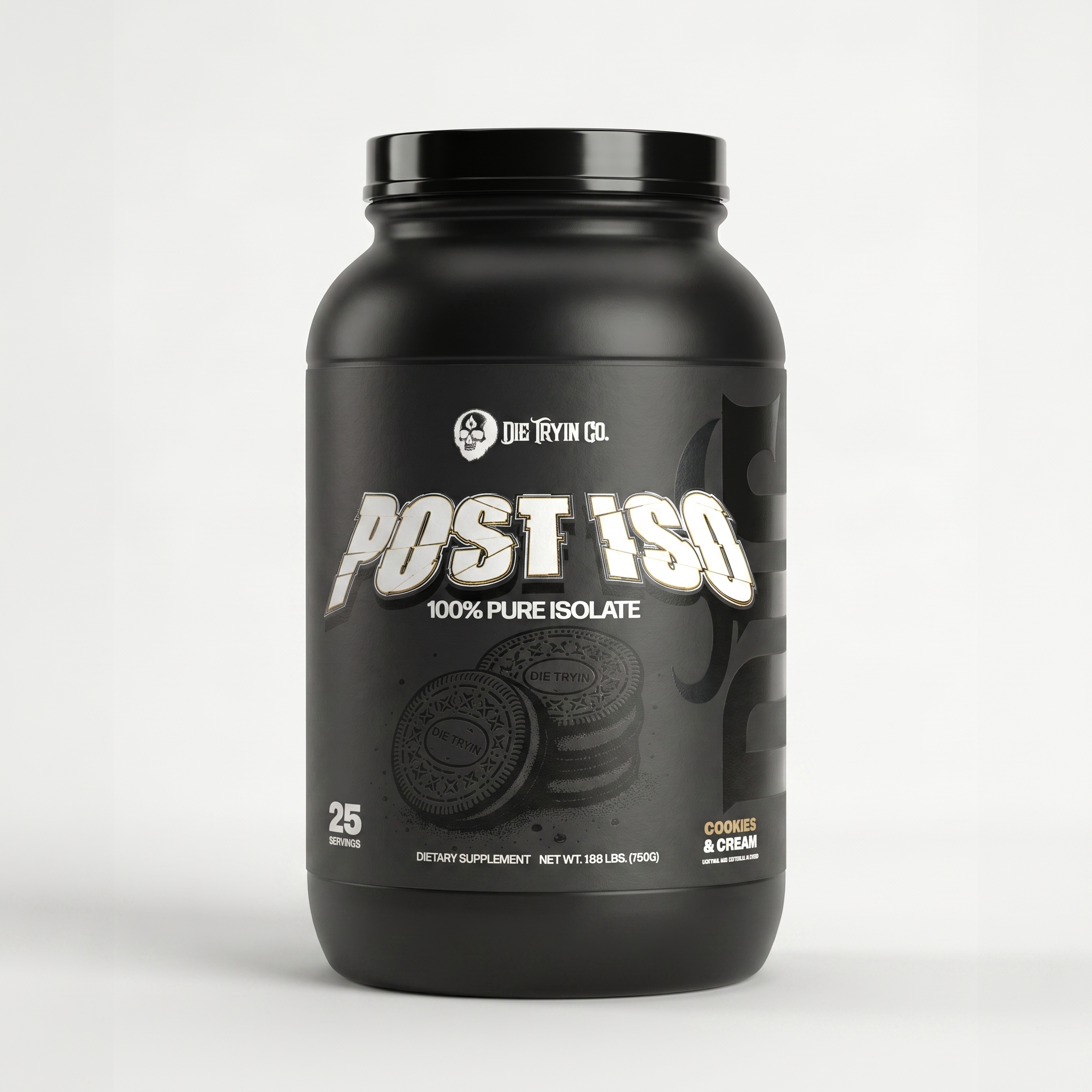
- Post Iso — 24g whey isolate with DigeZyme enzymes. A protein number is a process goal you win daily. See the Ultimate Guide to Protein.
- Creatine — 5g micronized Creatine Monohydrate. The least exciting thing on this list, and the most heavily researched.
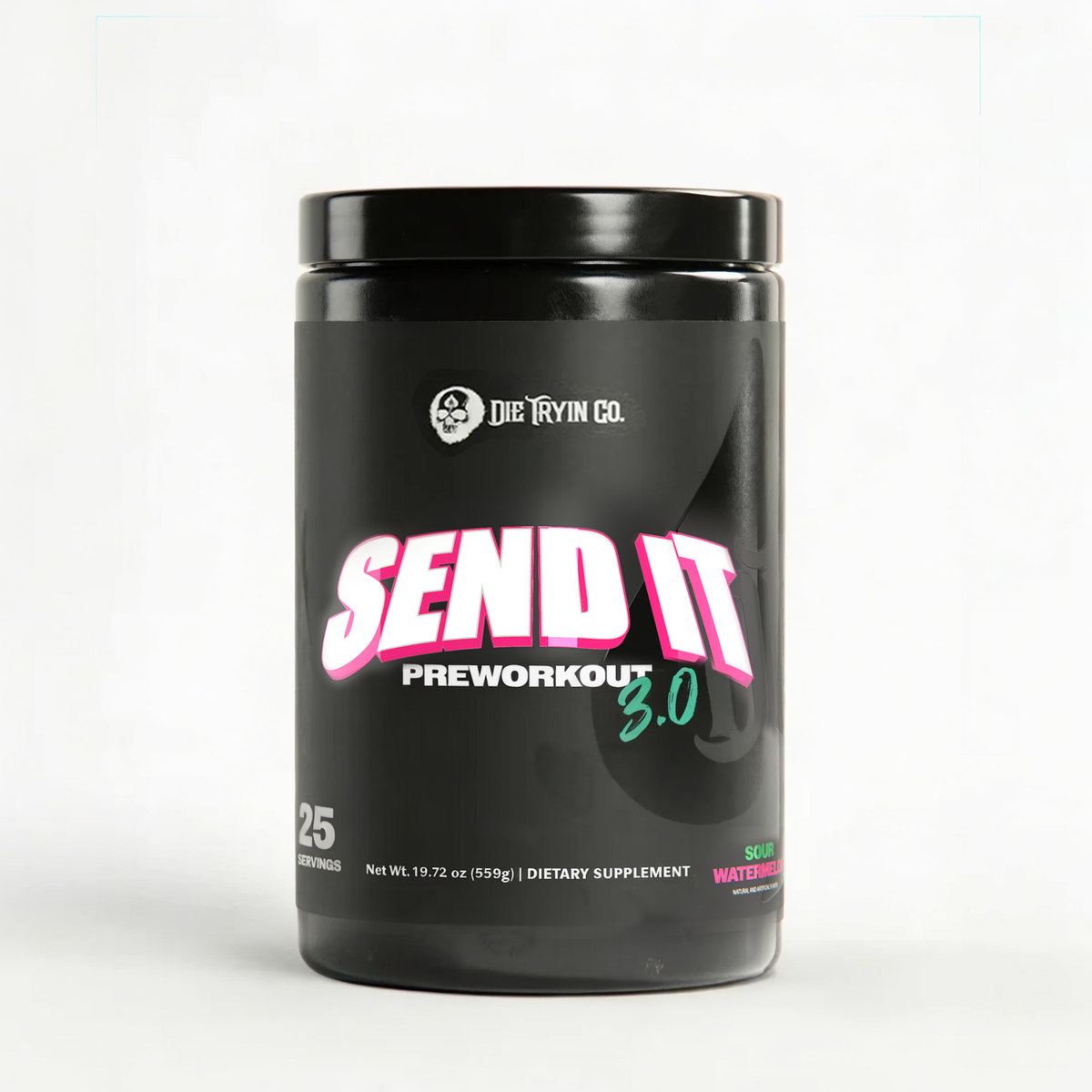
- SEND IT 3.0 — the daily driver for the four sessions you committed to.
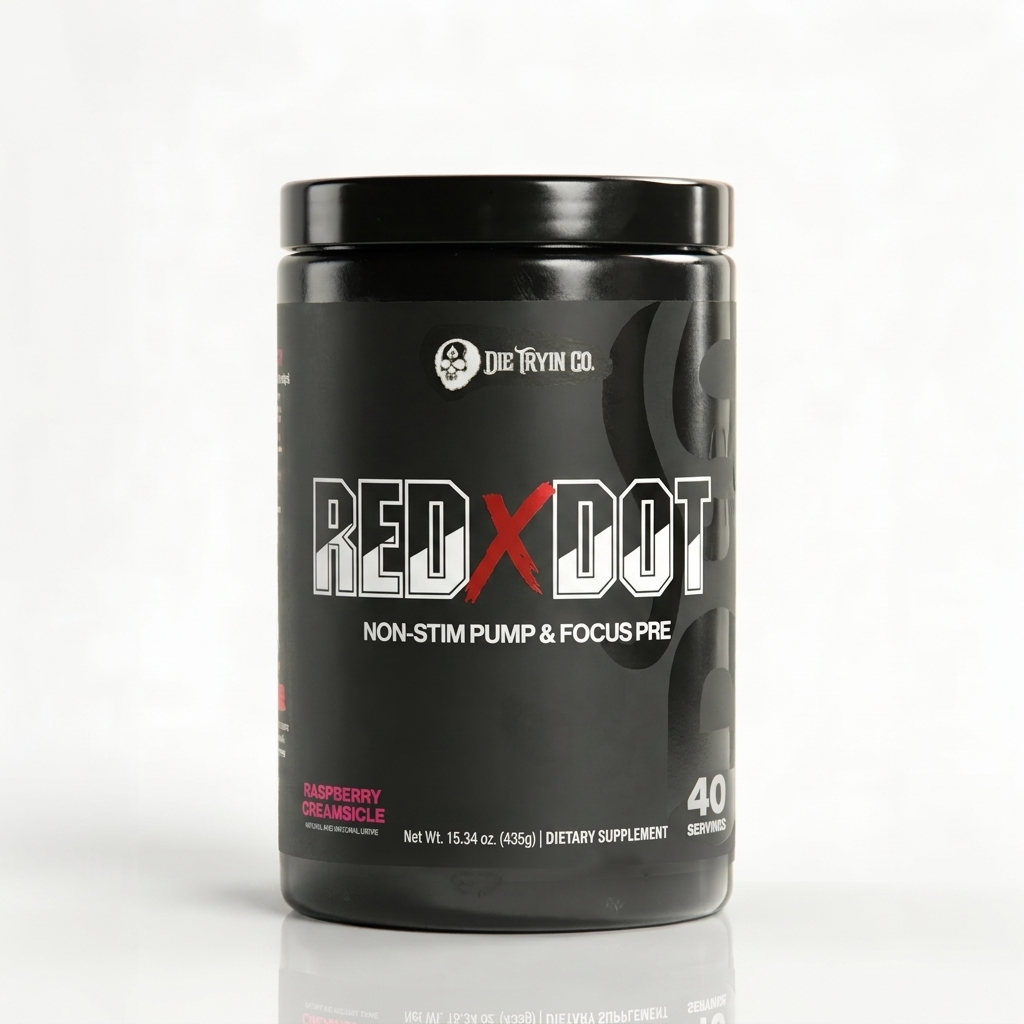
- Red Dot — stim-free pump and focus for late sessions, when caffeine would cost you the sleep you need.
- Aqua Spike — hydration and electrolytes, and why that is non-negotiable.
- Ice Shaker and the DTC Athletic Tee — gear packed the night before makes the 5 a.m. session one decision easier.
- Take the quiz and we will point you at the right stack.
Sources: Swann et al., Health Psychology Review, 2022 · McEwan et al., Health Psychology Review, 2016 · Binmahfoz et al., BMJ Open Sport & Exercise Medicine, 2025 · Williamson et al., International Review of Sport and Exercise Psychology, 2022 · Michie et al., Health Psychology, 2009.
ALWAYS FORWARD.
GEAR THAT FITS THIS POST
The products this article actually talks about. Real doses, disclosed labels, veteran owned.

Read more
The reason most lifters never see results isn't a bad program or weak motivation. It's inconsistency. Here's what actually builds physiques — and why the basics work.
The honest playbook for building the discipline that actually lasts. Motivation fails — discipline gets built. Here's how.
Recovery is the other half of adaptation. The signals you need a deload, and exactly how to run one without losing progress.
Training to failure is a tool, not a default. Here is what the research actually says for size and for strength, what the fatigue costs you, and the exact spots where taking a set to the wall earns...
Overtraining doesn't build faster results — it builds injuries and burnout. The minimum effective dose principle for training, recovery, and smart supplementation.
Five minutes on a treadmill is not a warm-up. Here is the four-phase ramp that actually preps you to lift heavy, plus what the research says about foam rolling and static stretching.