



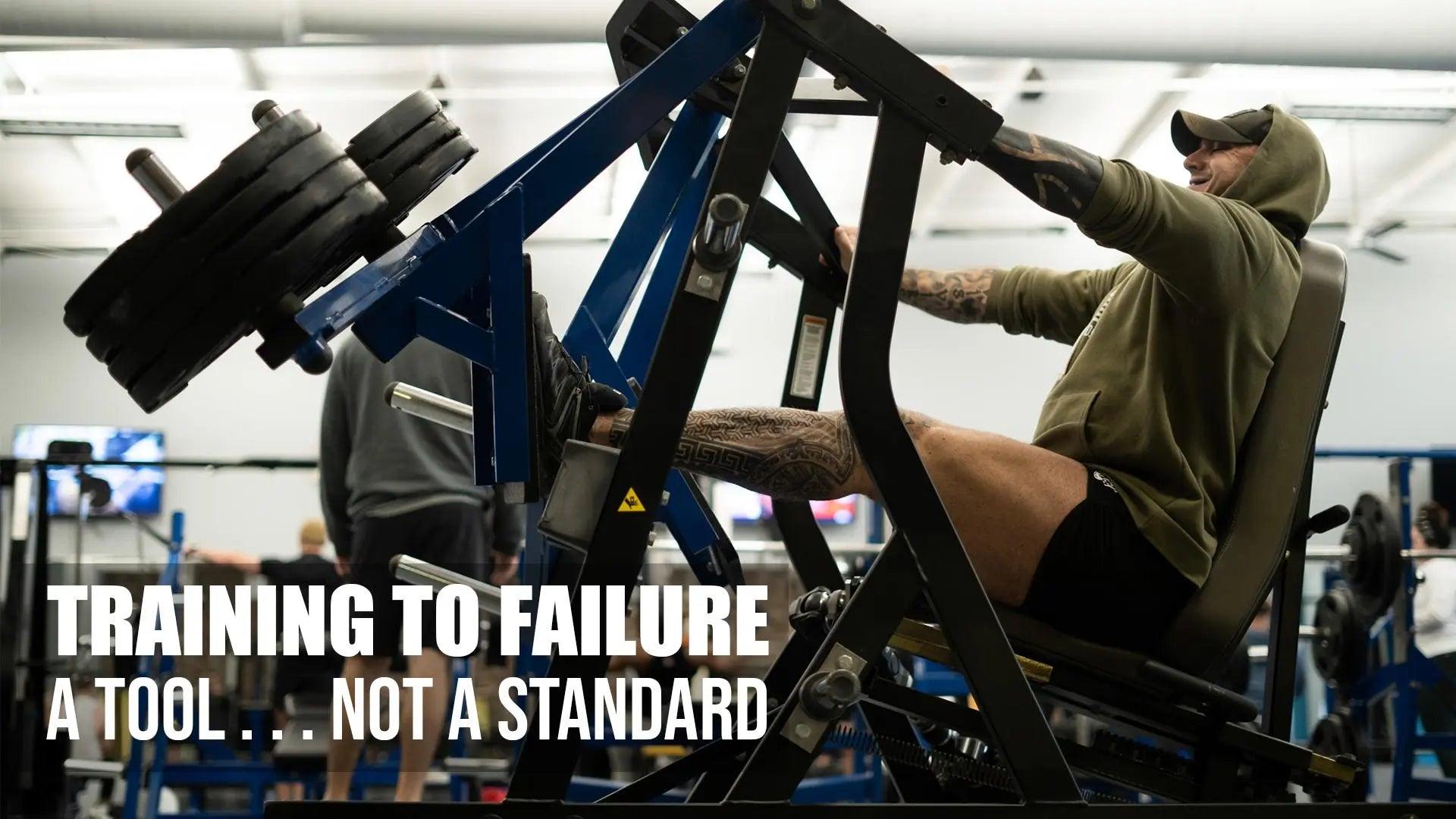
Training to Failure: When It Works, When It Wrecks You
By Jon Klipstein, U.S. Army Combat Veteran & Founder of Die Tryin Co.
Science reviewed by Onur Oncer, BS Physiology and peer-reviewed published researcher.
FAILURE IS A TOOL, NOT THE STANDARD
Most people get this wrong. Somewhere along the way the gym decided that if a set did not end with the bar pinning you, it did not count. Every set, every exercise, every session, all the way to the wall. That is not intensity. That is a lack of a plan.
Here is the truth: training to failure is one tool in a box full of tools. It has a real job. It also has a real price, and most lifters pay that price on the sets where it buys them nothing.
The question is not whether you should train to failure. It is where in your week failure earns its keep, and where it just makes you tired. Getting that right is worth more than any program swap you will ever make.
| WHERE YOU ARE | TAKE IT TO FAILURE? | WHY |
|---|---|---|
| Machine isolation (leg extension, cable curl, lateral raise) | Yes, last set only | Fixed path, low injury risk, cheap to recover from |
| Free-weight isolation (dumbbell curl, skullcrusher) | Sometimes, last set only | Form drifts under fatigue and the elbows and shoulders absorb it |
| Supported compound (leg press, chest press, hack squat) | Occasionally | Big stimulus, big fatigue bill. Once a week per movement |
| Heavy barbell compound (squat, deadlift, bench) | No | Worst return for the cost. Stop short and add load over time |
| Heavy singles, doubles, triples | Never | The target is bar speed and technique, not exhaustion |
| High frequency (a muscle 3x+ per week) | Rarely | Fatigue steals from the next session in your split |
WHAT TRAINING TO FAILURE ACTUALLY MEANS
Half the arguments about failure happen because two people are using one word for three different things. Get the definitions straight before you argue about the research.
- Momentary muscular failure. You attempt another rep with good form and the bar stops moving. This is the strict definition and the one the tightest studies use.
- Technical failure. You could grind out one more, but only by shrugging or bouncing. The set is over because the exercise stopped being the exercise.
- Reps in reserve (RIR). The honest scale. 0 RIR means nothing left. 2 RIR means two clean reps were still in the tank.
RIR is the useful language because it turns a yes-or-no argument into a dial. You are not choosing between failure and sandbagging. You are choosing how close to the edge each set gets, and that should change with the movement, the week, and the recovery you have left.
THE RESEARCH ON FAILURE AND MUSCLE GROWTH
The strongest evidence comes from a 2023 Sports Medicine systematic review with meta-analysis by Refalo and colleagues, pooling 15 studies on training proximity to failure. Isolating true momentary muscular failure against non-failure training, the hypertrophy difference was small and not statistically significant (effect size 0.12). The authors concluded there is no evidence that momentary failure is superior for muscle growth.
Be fair to the data. Pooling every looser definition of set failure together, there was a trivial edge for failure that just cleared significance (effect size 0.19). They also flagged that the relationship may be non-linear, which points to the final rep or two adding far less than the reps before it. Translation: getting close matters, going all the way adds little, and sets left 1 to 3 reps short are already doing nearly all the work.
FOR STRENGTH, FAILURE COSTS MORE THAN IT PAYS
Strength tells a clearer story. A Sports Medicine meta-analysis by Davies and colleagues (2016) pooled eight studies and found a small effect favoring non-failure training (effect size 0.34), with those groups gaining roughly 0.6 to 1.3 percent more strength. The effect showed up specifically on compound exercises and in already-trained lifters, which is exactly the crowd that argues hardest for failure.
The authors were honest about the size of that gap and called it unlikely to be meaningful. Their real conclusion belongs in your training log: similar strength gains are achievable either way, failure is not necessary to maximize strength, and if you program it, use it sparingly to limit injury and overtraining risk.
THE FATIGUE BILL COMES DUE
Failure is not free, and the cost is measurable. In a 2023 Sports Medicine - Open study of 24 resistance-trained men and women, participants ran six bench press sets at 75 percent of 1RM to either failure, 1 RIR, or 3 RIR. Fatigue scaled with proximity, in a straight line.
- Four minutes post-session, lifting velocity dropped 25 percent after failure versus 13 percent at 1 RIR and 8 percent at 3 RIR.
- Within the session, velocity from first set to last fell 22 percent going to failure, against 9 percent at 1 RIR and 6 percent at 3 RIR.
- At 24 hours, failure and 1 RIR were still down about 3 percent while 3 RIR was back at baseline. By 48 hours the gaps had washed out.
- Perceptually, discomfort, exertion, and soreness climbed as they got closer to failure, and how recovered people felt went down.
One exercise, one session, so do not over-read it. But the pattern matches what every experienced lifter feels. The closer you take set one to the wall, the worse sets two through six get. Run that on everything and you are not training harder, you are training worse for longer. Same math as the minimum effective dose.
WHEN FAILURE IS THE RIGHT TOOL
Now the useful part. Specific spots where taking a set all the way is the smart call, and they share a pattern: high stimulus, low risk, low carryover cost.
- The last set of an exercise. Nothing after it has to be good. Empty the tank there, not on set one.
- Isolation on machines and cables. Fixed path, protected joints, one muscle working. Lateral raises, leg extensions, cable curls, rear delt flyes.
- Light-load, higher-rep work. With lighter loads you have to get close for the set to count.
- Calibrating your RIR. Most lifters overestimate how close they are. Hitting true failure occasionally makes your 2 RIR actually 2.
- The end of a block. Push the last week, then deload and let the adaptation land.
Notice what these share. None is a heavy barbell lift, and none is a set that something else in the session depends on.
WHEN FAILURE IS THE WRONG TOOL
The flip side matters more, because this is where most people bleed progress without knowing it.
- Heavy barbell compounds. Highest fatigue cost, highest injury risk on a broken-down rep, and the research says you gain nothing for it.
- Max-effort work. Singles, doubles, and triples are a technique skill. Grinding them trains a slow, ugly pattern.
- Early sets. Torch set one and sets two and three are trash. You finish with less quality volume than you started with.
- High-frequency programs. Train a muscle three or more times a week and the fatigue never clears before the next hit.
- Any week you are beat up. Poor sleep, a deficit, life stress. Failure on top of that is how you end up overtrained instead of overloaded.
One more that never makes the list: failure with bad form is not a harder set, it is a different exercise. The second your back rounds or your hips shoot up, tension left the muscle you were trying to train.
HOW TO PROGRAM IT WITHOUT WRECKING THE WEEK
Straight to the point: here is a framework you can run starting with your next session.
- Default to 1 to 3 RIR on everything. That is your standard, and nearly all the growth lives there.
- Reserve failure for the final set of isolation or machine work, capped at two or three sets per session.
- Never take a heavy barbell compound to failure. Add weight or a rep next week instead.
- Rest long enough for it to count. Two to three minutes minimum, and know your rest period trade-offs.
- Audit every four to six weeks. If top sets are getting lighter instead of heavier, cut the failure work first.
Consistency beats intensity. A lifter running 1 to 3 RIR for 52 weeks buries the guy who goes to the wall on everything for six weeks and then spends two months hurt. The complete guide to building muscle covers the rest of the variables.
RECOVERY IS WHAT MAKES HARD SETS PAY OFF
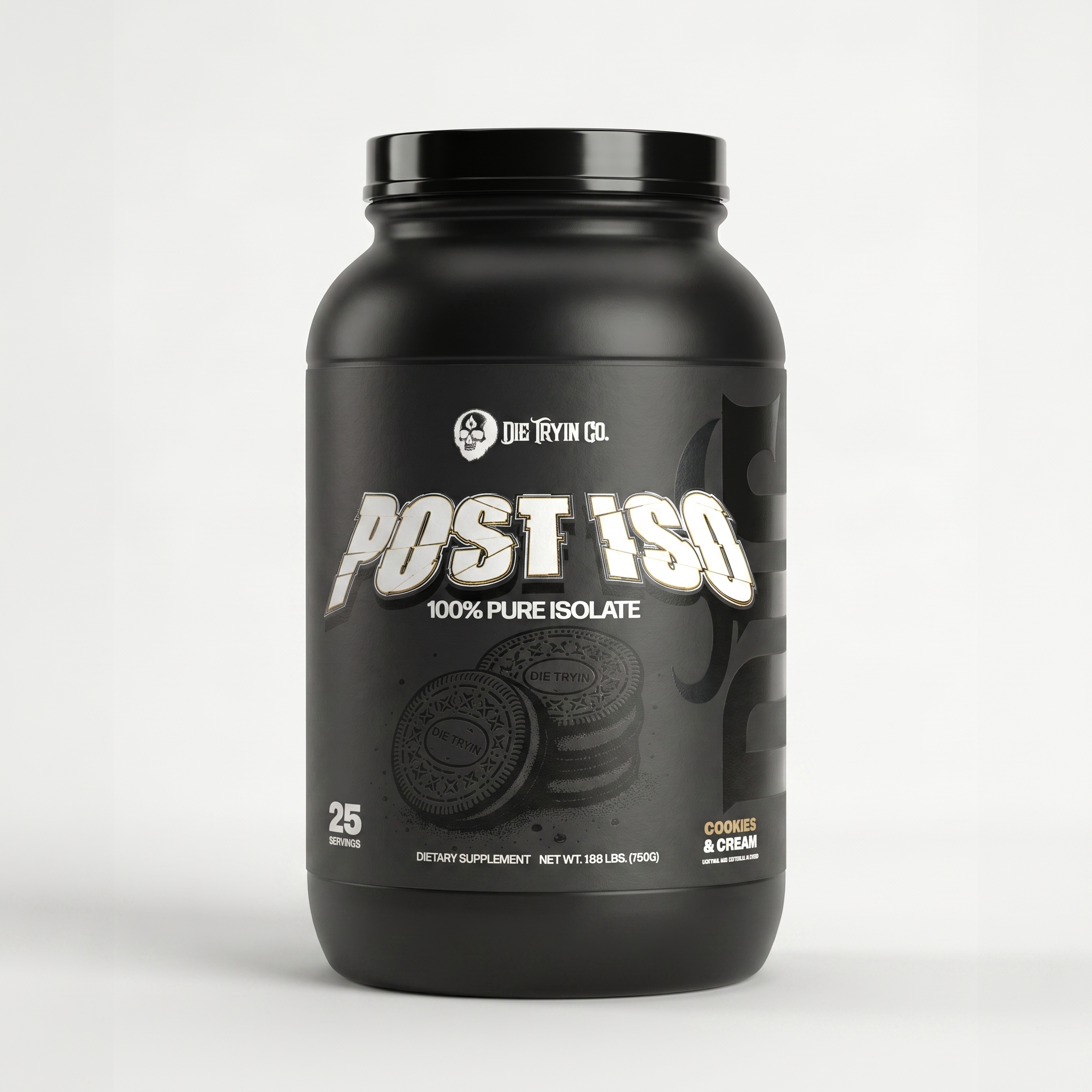
Failure sets only turn into muscle if you recover from them. Sleep and protein carry that load and no product replaces either. Our recovery guide covers the priority order, and Post Iso is the simple 24g whey isolate answer for hitting your daily protein target.
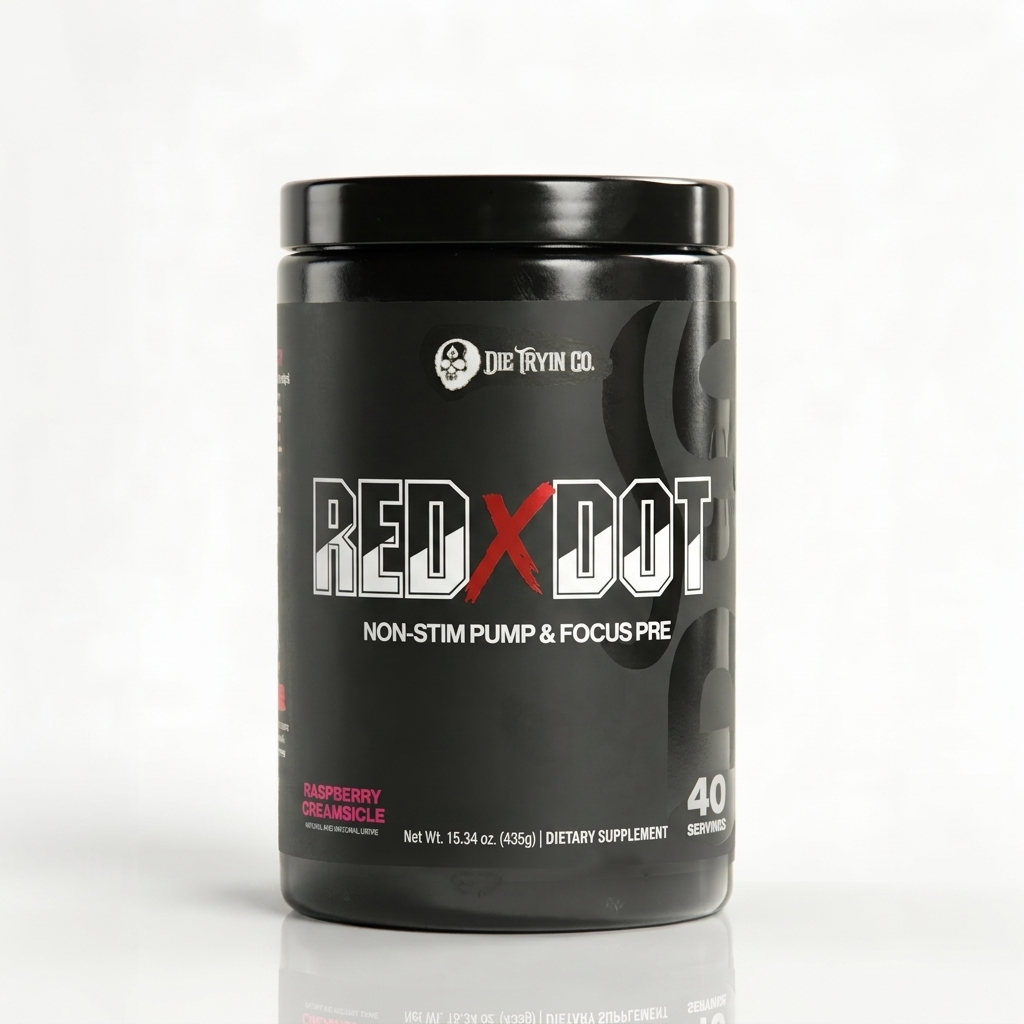
On the training side, 5g of Creatine Monohydrate daily is the most researched way to support work capacity and buy more quality reps before bar speed falls off. Training late or already got caffeine from coffee? Red Dot is stim-free pump and focus with 9g of L-Citrulline. Save Project M777 for sessions that earn it, which is the same logic as failure itself.
FREQUENTLY ASKED QUESTIONS
Should you train to failure to build muscle?
You do not have to. The 2023 Sports Medicine meta-analysis found no significant hypertrophy advantage for momentary muscular failure over stopping short. Roughly 1 to 3 reps in reserve captures nearly all the stimulus at a fraction of the fatigue cost.
How many sets to failure per workout is reasonable?
Two or three at most, placed on the last set of isolation or machine exercises. On a high-frequency split, dial that back further.
What is the difference between failure and reps in reserve?
Failure means the muscle cannot complete another rep with good form. Reps in reserve counts the clean reps you had left. 0 RIR is failure, 2 RIR means two were available. RIR is more useful because it lets you set proximity per exercise.
Does training to failure cause more injuries?
Form tends to break down as fatigue climbs, and the Davies meta-analysis specifically recommended using failure sparingly to limit injury and overtraining risk. Risk is highest on heavy barbell compounds and lowest on machines with a fixed path.
How long does it take to recover from a set to failure?
In the 2023 bench press study, lifting velocity was still down about 3 percent 24 hours after training to failure and back to normal by 48 hours. That is one exercise in trained lifters, so treat it as a ballpark.
Is failure better for beginners or advanced lifters?
Newer lifters benefit from occasional failure sets to learn what true effort feels like, since most stop well short of where they think. Advanced lifters carry more load and more fatigue, and that is the group where the research favored stopping short on compounds.
READY TO GEAR UP?
Train close to the edge. Cross it on purpose, in the right place, on the last set. Then recover like you meant it.
- Creatine Monohydrate for work capacity and more quality reps per set
- Post Iso for 24g of whey isolate after the sessions that took something out of you
- Red Dot for stim-free pump and focus with 9g of L-Citrulline
- Project M777 for the hardest days on the calendar, not every day
- The Beater for the sessions where the last set is the only one that matters
- Not sure where to start? Take the quiz
Discipline beats motivation. Failure is a tool. Pick it up when it works and set it down when it does not.
ALWAYS FORWARD.
GEAR THAT FITS THIS POST
The products this article actually talks about. Real doses, disclosed labels, veteran owned.


Read more

Muscle grows when demand grows, everything else is detail. The load-vs-reps research, the double progression method, and how to escape a plateau without wrecking recovery.

There's no perfect split — only the one you'll stick to. PPL vs. upper/lower broken down, plus how to choose the best workout split for your week.
Overtraining doesn't build faster results — it builds injuries and burnout. The minimum effective dose principle for training, recovery, and smart supplementation.
Recovery is the other half of adaptation. The signals you need a deload, and exactly how to run one without losing progress.
Most lifters asking if they're overtraining are actually overreaching, and there are two kinds. Here's how to tell which one you're in, and what to do about it.
The 60-second rest rule costs you reps you needed. Here is what the research actually supports.