


How Long to Rest Between Sets: Strength vs Size
By Jon Klipstein, U.S. Army Combat Veteran & Founder of Die Tryin Co.
Science reviewed by Onur Oncer, BS Physiology and peer-reviewed published researcher.
THE CLOCK IS A TOOL, NOT A RULE
Most people get this wrong. They pick a rest period because a magazine told them 60 seconds builds muscle and 3 minutes builds strength, then never think about it again for ten years.
Here is the truth: rest is not the goal. It is a lever you pull to protect something else, namely how much hard work you can put on the muscle at a load that matters. Get that right and the timer takes care of itself.
This post answers one question: how long to rest between sets, and how to choose that number on purpose instead of by habit. Rest length is a within-session variable. How you sequence training blocks across months is periodization, and that is its own conversation.
| WHAT YOU ARE TRAINING | REST | WHAT THE REST IS PROTECTING | GO DEEPER |
|---|---|---|---|
| Max strength (1-5 reps) | 3-5 min | Bar speed and neural output. | Muscle building guide |
| Hypertrophy on compounds (6-12 reps) | 2-3 min | Reps at a load worth doing. | Training to failure |
| Hypertrophy on isolation (10-20 reps) | 60-120 sec | Local fatigue only. Systemic cost is low. | Strip sets |
| Work capacity / conditioning | 30-60 sec | Nothing. Incomplete recovery is the point. | Exercise metabolism |
| Warm-up sets | Don't time them | Readiness. Move when the next load feels available. | Warm-up protocol |
WHAT ACTUALLY RECOVERS WHEN YOU SIT DOWN
Three separate systems are clawing their way back during that gap, and they run on very different clocks. That mismatch is the whole reason this debate exists.
- Phosphocreatine. Your fastest energy system for short, heavy efforts. It refills quickly at first and then slows, which is why the gap between 30 and 90 seconds is huge and the gap between 4 and 5 minutes is small.
- Neural drive. The signal that lets you produce force. Slowest to return after a heavy set, and the one that quietly ruins top sets when you rush.
- Local metabolites and breathing. The burn, and the gasping. Clears fastest, and is the one most people mistake for actual recovery.
Here is the trap: your lungs settle before your nervous system does. You feel ready at 45 seconds on a heavy squat because your breathing calmed down, then miss reps you should have owned. Feeling recovered and being recovered are not the same thing.
THE SHORT-REST MYTH THAT WON'T DIE
For two decades the case for 30 to 60 second rest went like this: short rest creates more metabolic stress, that creates a bigger post-workout spike in growth hormone and testosterone, and the spike drives growth. Rest less, grow more. It sounded mechanistic, so it stuck.
Then somebody tested the actual link. West and Phillips at McMaster (European Journal of Applied Physiology, 2012) tracked 56 young men through a 12-week training study and correlated each man's acute post-exercise hormone response against what he actually gained. There were no significant correlations between the growth hormone, free testosterone or IGF-1 responses and gains in lean body mass or leg press strength. It is not flatly zero: cortisol correlated weakly with lean mass change (r = 0.29) and type II fiber area (r = 0.35), growth hormone with fiber area (r = 0.28 to 0.36). But those are weak correlations from an observational analysis, not from an experiment that manipulated rest.
The other half of the old story was that short rest causes muscle breakdown. That collapses on contact with the data, because the short-rest groups in these trials kept gaining size and strength. Slower progress is not catabolism.
WHAT THE RESEARCH ACTUALLY FOUND
The cleanest single trial on this comes from Schoenfeld and colleagues in 2016. Twenty-one resistance-trained men, 8 weeks, 3 full-body sessions a week, 3 sets of 8-12 rep max across 7 exercises. Every variable was held constant except one: one group rested 1 minute, the other 3 minutes. The 3-minute group finished with significantly greater 1RM squat and bench, and greater muscle thickness in the anterior thigh, with a trend toward more triceps growth that did not clear significance at p = 0.06. Both groups gained upper-body muscular endurance, with no significant difference between them. Honest framing: 21 young men over 8 weeks is a well-run trial, not a settled law.
Zoom out and the picture gets more useful. A 2018 systematic review in Sports Medicine pooled 23 studies covering 491 participants (413 men, 78 women) and landed somewhere more practical than either camp wants. Short rest under 60 seconds still produced robust strength gains. But longer than 2 minutes appeared to be what maximized strength in people who were already trained, while untrained lifters did fine on 60 to 120 seconds. That split is the part nobody repeats. If you are new, short rest is a legitimate way to buy back time. If you have been under the bar for years, the timer starts costing you real progress.
On hypertrophy specifically, the evidence is thinner than the confidence in most gym arguments. A companion systematic review from an overlapping author group (European Journal of Sport Science, 2017) found only six studies that met inclusion criteria, called the findings equivocal, and noted only a possible advantage for longer rest in trained lifters while calling for more research. Anyone telling you this question is closed has not read it.
THE REAL MECHANISM IS VOLUME LOAD
The most interesting study here separated the clock from what the clock actually buys you. Longo and colleagues took 28 subjects through 10 weeks of unilateral knee extensions at 80% of 1RM, twice a week, with each leg assigned to one of four protocols: long rest (3 min), short rest (1 min), short rest with volume load matched to the long-rest group, and long rest with volume load matched down to the short-rest group.
Strength went up everywhere and nowhere in particular. All four protocols increased 1RM between 26.5% and 31.2%, with no significant differences between them. Size told a different story. Quadriceps cross-sectional area rose 13.1% and 12.9% in the two high volume-load conditions, versus 6.8% and 6.6% in the two low ones. The split tracked volume load, not the rest interval. Long rest with the volume dialed down grew about as little as short rest did.
Caveat it properly: 28 subjects, one joint, a leg extension machine. A single trial on an isolation movement is not a training program. The takeaway still reframes the argument. Longer rest does not build muscle. Longer rest lets you accumulate more quality work at a heavier load, and that is what tracked with growth. Rest is the delivery mechanism. If short rest gets you the same work at the same loads, it works fine. It usually doesn't. Same logic behind finding the least work that still works.
REST BY THE EXERCISE, NOT BY THE WORKOUT
Setting one rest period for an entire session is the most common mistake here. A heavy deadlift and a cable lateral raise do not tax you the same way, so they should not share a timer.
- Heavy compounds (squat, deadlift, bench, row, overhead press): 2-5 minutes. These are systemic, taxing breathing, spinal erectors and nervous system at once.
- Machine compounds (leg press, hack squat, chest press): 90 seconds to 2 minutes. Same muscles, far less stabilization tax.
- Isolation work (curls, extensions, lateral raises): 60-90 seconds. One joint, low systemic cost.
- Intensity techniques: the short rest is built into the technique. Take a full rest before the next real set. See mechanical drop sets vs. strip sets.
- Antagonist pairs (chest and back, biceps and triceps): alternate them and each muscle gets 2-3 minutes of real rest while you keep working.
WHEN SHORT REST IS THE RIGHT CALL
Short rest is not wrong. It is a trade. You buy time and conditioning, and you pay in load and total quality volume. Take that trade on purpose in these spots.
- You have 40 minutes, not 80. A compressed session you finish beats the ideal session you skip. Consistency beats intensity.
- Accessory work at the end. The heavy work is banked. Cut the rest and move.
- You are chasing work capacity. Incomplete recovery is the stimulus, not a compromise on it.
- Pump-focused finishers. Blood flow work has its own value for recovery between sessions, and needs no heavy loading.
HOW TO ACTUALLY RUN THE CLOCK
Four rules that survive contact with a real gym floor.
- Time it, don't feel it. Unmeasured rest drifts. It stretches on hard days and shrinks when you are impatient, and either way training stops being repeatable.
- On top sets, rest by readiness. If your target was 8 and you got 5, you rested too little or went too heavy. Fix the rest first.
- Log the number. Rest is a training variable, same as load and reps. If it isn't in the log, you are not controlling it.
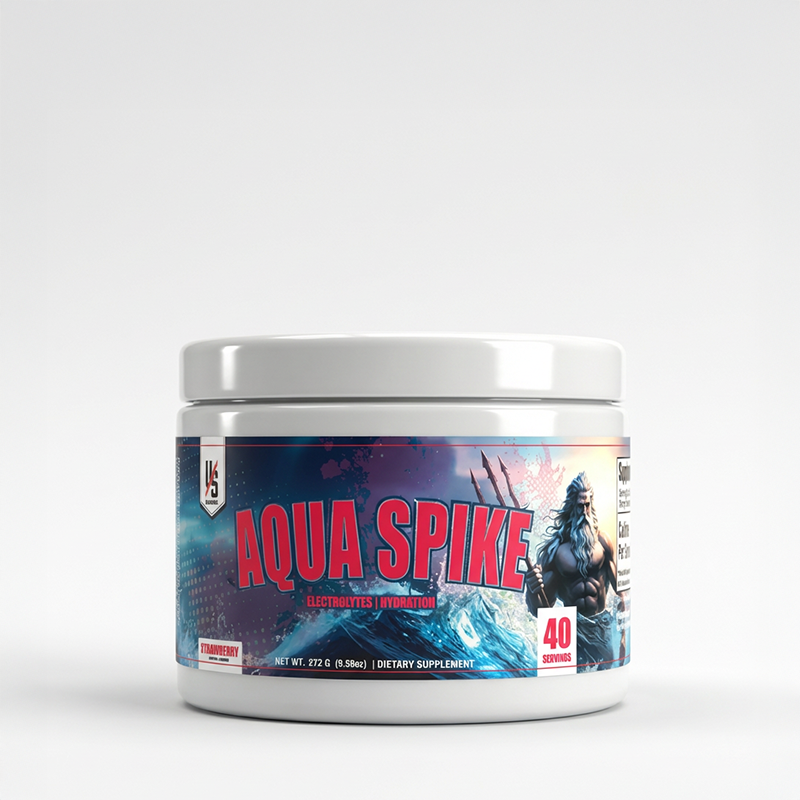
- Stay hydrated through the session. Fluid loss degrades output before you notice, which is why hydration belongs here. Sip Aqua Spike across the whole workout.
FREQUENTLY ASKED QUESTIONS
How long should I rest between sets to build muscle?
Two to three minutes on compound lifts, 60 to 90 seconds on isolation work. Research suggests longer rest gives trained lifters an edge, mostly because it lets them keep the load high and accumulate more total volume. If you are a beginner, 60 to 120 seconds is enough across the board.
Is 30 seconds between sets too short?
For heavy compounds, yes. Thirty seconds does not come close to restoring phosphocreatine or neural drive, so your next set is a lighter set wearing a heavier weight's clothing. For a curl finisher or a conditioning block, 30 seconds is a reasonable tool.
Will resting longer hurt my fat loss?
No. Shorter rest keeps heart rate higher and makes a session feel harder, but fat loss is driven by energy balance across the week, not the gap between sets. Lifting heavy with full rest protects the muscle you are trying to keep. See the fat loss guide.
Should I rest the same amount on squats and lateral raises?
No, and this is the single easiest fix in your program. Squats tax your entire system. Lateral raises tax one small muscle. Give the squat 3 minutes and the raise 60 seconds, and your session gets both better and shorter.
Does Creatine Monohydrate change how long I need to rest?
It supports the system that rest is refilling. Creatine Monohydrate loads the muscle's phosphocreatine stores, the exact pathway you are waiting on between heavy sets, and research suggests it supports strength and repeated high-intensity output. It does not replace rest. 5g of Creatine Monohydrate daily is still the most-supported dose in the category. Basics beat hype.
How do I keep long-rest sessions from taking two hours?
Pair antagonist movements so one muscle rests while the other works, and stop letting your phone eat the gap. If it still runs long, cut exercises before you cut rest. If sessions keep bleeding out, check whether you are overtraining.
READY TO GEAR UP?
Longer rest means longer sessions, and long sessions expose whatever your pre-workout can't carry.
- Creatine Monohydrate - 5g micronized. The energy system your rest periods are refilling.
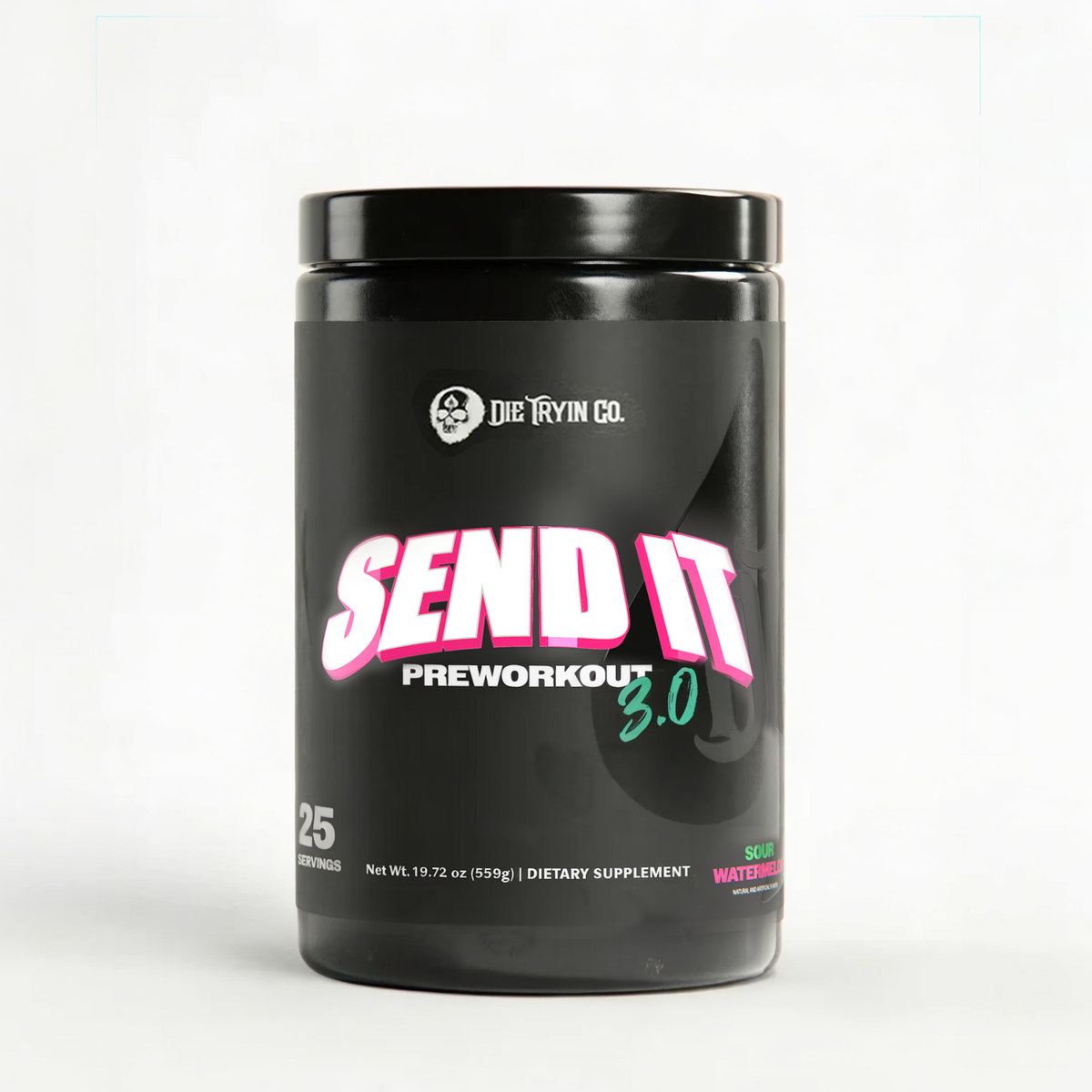
- SEND IT 3.0 - daily driver, extended-release caffeine for sessions that run long.
- Project M777 - high-stim, for the heaviest days.
- Red Dot - stim-free pump and focus, 9g L-Citrulline, for late or second sessions.
- Pump Action - stim-free pump capsules for short-rest accessory work.
- Aqua Spike - electrolytes to sip through the whole session.
- Post Iso - 24g whey isolate once the work is done.
- Not sure where to start? Take the product quiz.
Set the timer. Protect the load. Let the work accumulate. That beats arguing about 60 versus 90 seconds forever.
ALWAYS FORWARD.
GEAR THAT FITS THIS POST
The products this article actually talks about. Real doses, disclosed labels, veteran owned.


Read more

The complete playbook for building muscle that actually lasts. Training, nutrition, recovery, and the supplements that move the needle — no hype.
Training to failure is a tool, not a default. Here is what the research actually says for size and for strength, what the fatigue costs you, and the exact spots where taking a set to the wall earns...
Strip sets buy you time, not extra growth. The research is clearer than the gym-floor mythology suggests.
The afterburn effect is real, and it is far smaller than the industry claims. Here is what cardio and lifting each actually contribute to your metabolism.
Five minutes on a treadmill is not a warm-up. Here is the four-phase ramp that actually preps you to lift heavy, plus what the research says about foam rolling and static stretching.
More is not better, it is just more. Here is where the returns actually flatten out, and how to train at the edge of enough.