





Mechanical Drop Sets vs Strip Sets: What Is the Difference?
By Jon Klipstein, U.S. Army Combat Veteran & Founder of Die Tryin Co.
Science reviewed by Onur Oncer, BS Physiology and peer-reviewed published researcher.
TWO WAYS TO KEEP GOING AFTER THE SET IS OVER
Listen up. Most people use "drop set" as a catch-all for anything that keeps a set alive past the point where the reps stop moving. That's sloppy, and it costs you, because there are two completely different levers you can pull at that moment, and they solve different problems.
A strip set changes the load. You pull weight off the bar or grab lighter dumbbells and keep going with the same movement. A mechanical drop set changes the leverage. The weight in your hands stays exactly the same, and you shift into a position where your body has a better mechanical advantage, which buys you more reps out of a muscle that just quit.
Same goal, opposite mechanism. One is a weight problem, the other is a position problem. Here is how to tell them apart, and when each one is actually worth doing.
| TECHNIQUE | WHAT CHANGES AT FAILURE | CONCRETE EXAMPLE | BEST FOR |
|---|---|---|---|
| Strip set (load drop) | The weight. Movement stays identical. | Lat pulldown at 160 lb to failure, drop the pin to 120 lb, keep pulling. | Pin-stack machines, cables, anything you can strip in five seconds. Full strip-set breakdown here. |
| Mechanical drop set (leverage drop) | Your position. Load stays identical. | 30 lb dumbbells to failure on incline press, drop the bench to flat, keep pressing the same 30s. | Dumbbells and fixed loads, busy gyms, home setups with limited plates. |
| Both | Zero rest between segments. The set ends when the last position fails. | Two or three segments, not seven. | Compressing volume into less time, not replacing your program. |
THE STRIP SET, IN ONE PARAGRAPH
Take a set to failure, cut the load by roughly 20-30%, and go again immediately with no rest. The exercise never changes. All you are doing is lowering the resistance to a level your now-fatigued muscle can still move, so you keep accumulating hard reps instead of racking the weight and sitting down for two minutes.
That is the whole idea, and we are not going to relitigate it here. If you want the rep schemes, the number of drops worth running, and the setup that makes them practical, that lives in the dedicated strip-set article. This post is about the choice between the two.
THE MECHANICAL DROP SET, IN PRACTICE
Here the load never moves. You exploit the fact that most muscles are stronger in some positions than others, so when you fail in a weak position you still have reps left in a stronger one. Start in the hardest position, ride it to failure, then shift to an easier one and keep going with the same weight in your hands.
Three that actually work in a real gym:
- Angle change: incline dumbbell press to flat dumbbell press. The incline puts the pecs at a longer, weaker angle. Drop the bench to flat and the same dumbbells start moving again.
- Grip change: pronated (overhand) curls to supinated (underhand) curls. Overhand takes the biceps out of its strongest line of pull. Flip the wrists at failure and you have handed yourself another five or six reps. The same lever shows up in straight bar vs. EZ bar curls and in pulldown grip selection.
- Lever change: long-lever to short-lever. Straight-arm lateral raises to bent-arm lateral raises. Lying triceps extensions to close-grip presses. Shortening the lever arm cuts the torque demand without touching the dumbbell.
THE HONEST VERSION OF WHAT THE RESEARCH SAYS
This is where most articles on this topic oversell. A 2023 systematic review and meta-analysis in Sports Medicine - Open screened six studies covering 142 participants comparing drop sets against traditional sets, five of which fed the pooled analysis. Both groups grew. The between-group difference was not statistically significant (standardized mean difference 0.155, p = 0.392). What did differ was the clock: some drop-set modalities took half to one-third of the time of traditional training for the same result.
A larger 2026 meta-analysis in the same journal ran 12 studies and 274 participants and landed in the same place. No significant difference in hypertrophy (SMD 0.04), strength (SMD -0.04), or muscular endurance versus traditional training. What drop sets did produce was significantly higher rated perceived exertion (SMD 1.62) and higher blood lactate (SMD 0.67). Heart rate trended higher but never reached significance. Harder, not better. The authors specifically flagged that elevated perceptual demand, and the recovery it may cost, as something to account for when you program it.
Read it plainly: when volume is equated, these techniques build about the same muscle as straight sets while generating more fatigue. They are time-efficiency tools, not growth multipliers. That is still worth something. A 2021 narrative review in Sports Medicine co-authored by Brad Schoenfeld concluded that advanced techniques including drop sets roughly halve training time while maintaining training volume, while noting they are probably better at driving hypertrophy than maximal strength and that more research on long-term effects is needed. If your problem is forty-five minutes instead of ninety, that is a real solution. If your problem is that your program has no structure, this fixes nothing.
WHERE MECHANICAL DROP SETS HAVE NO DATA AT ALL
Straight talk: every study above tested the load-drop version. The controlled research on this whole family of techniques is research on dropping the weight. We could not find a single trial that isolated the other variable, holding the load constant and changing only leverage at failure. Not weak evidence, not mixed evidence. Nobody has run it.
The mechanism is sound, and the closest signal we have is interesting. A 2021 unilateral leg-extension study in Sports (Varovic and colleagues, 16 recreationally active young men, eight weeks) found drop sets produced greater rectus femoris thickness at 30% and 50% of muscle length, with no difference at 70%, none anywhere on the vastus lateralis, and no strength advantage at all. That hints these methods may shift where a muscle grows more than how much. Single study, one muscle group, one method, and still a load drop rather than a leverage change. Do not build a program on it. Anyone telling you mechanical drop sets outperform strip sets is guessing, and so is anyone telling you the reverse.
HOW TO PROGRAM EITHER ONE WITHOUT DIGGING A HOLE
Both methods take a set past failure, and that cost is real. The fatigue is the price of the time savings, so spend it deliberately. If you are still working out where failure belongs in your training at all, start with training to failure: a tool, not a standard.
- Last set only. One intensity technique on the final set of an exercise, not on every set.
- Two segments, sometimes three. Past three, form degrades faster than stimulus accumulates.
- One or two exercises per session, maximum. Not the whole workout.
- Isolation and machines first. Cable, dumbbell, and machine work. Nobody needs a mechanical drop set on a heavy barbell squat.
- Track it against the rest of your week. Extra fatigue has to fit inside your recovery budget. If sleep and food are already stretched, this is the first thing to cut. The training sweet spot and why deloads matter both apply directly.
WHICH ONE TO PICK
Pick based on your equipment and your gym, not on which one sounds more advanced. Strip sets need load you can change in under five seconds, which means pin-loaded machines, cables, or a dumbbell rack you can reach without walking. If you are on a barbell in a crowded gym, stripping plates takes long enough that the set stops being a drop set.
Mechanical drop sets win when the load cannot move. One pair of dumbbells at home, a fixed-weight rack, a packed gym at 5 p.m. where camping on two sets of dumbbells gets you looks. Changing a bench angle or flipping your grip takes two seconds and costs you nothing. That is the practical case, and it is a good one, as long as you are honest that it is a logistics advantage and not a proven growth advantage. For how any of this fits into gaining size, start at the ultimate guide to muscle building.
FUEL THE FATIGUE YOU ARE CREATING
Techniques that push past failure raise the recovery bill, and research suggests the perceived-effort and metabolic cost of these methods runs higher than traditional sets even when the growth does not. That makes the boring stuff matter more, not less: protein hitting your daily target, hydration that does not collapse mid-session, and sleep you actually protect. Our take on that lives in the most overlooked part of training and the ultimate guide to recovery.
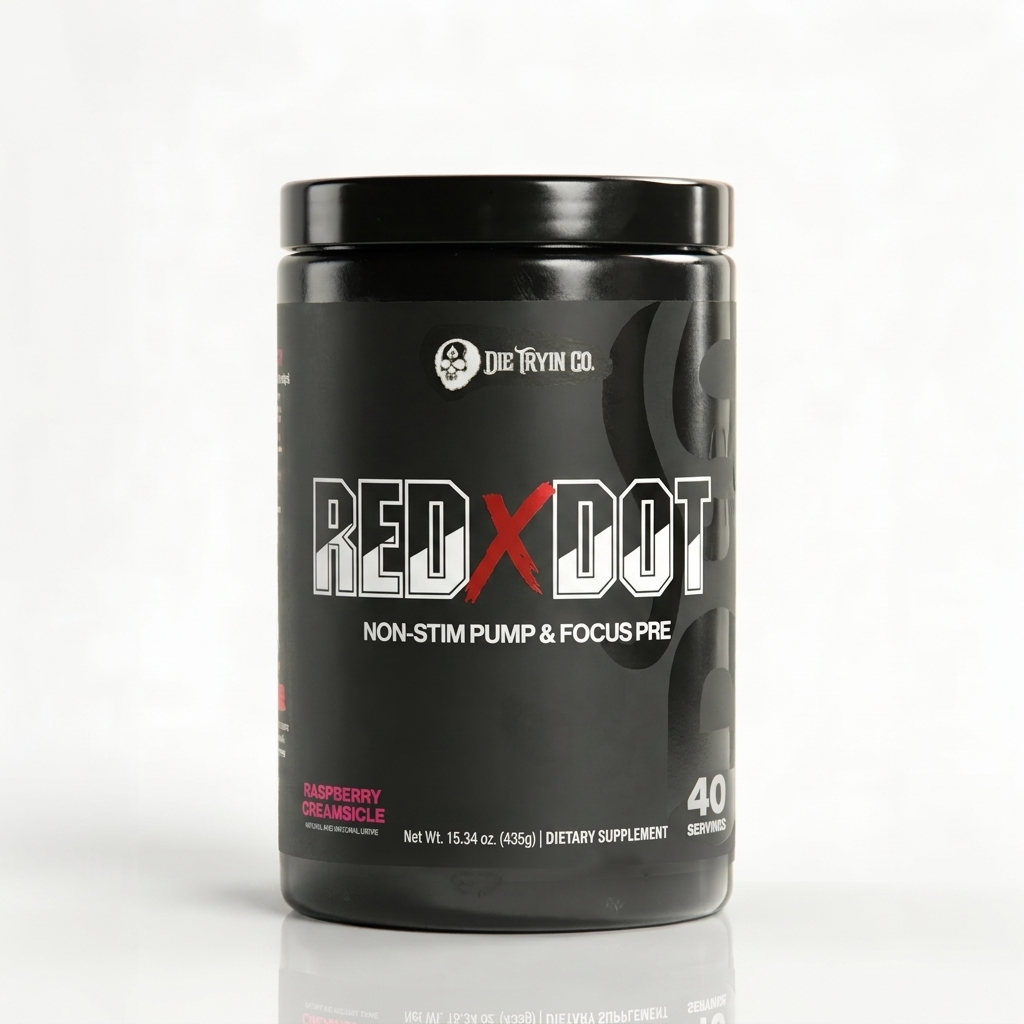
On the supplement side, keep it unglamorous. Creatine Monohydrate at 5g daily is the most heavily researched supplement in the category. Post Iso covers 24g of protein when a real meal is not happening. If you want blood flow and focus without stimulants for a late session, Red Dot runs 9g of L-Citrulline with zero caffeine. None of those makes a mechanical drop set work better. They make the week around it survivable.
FAQ
Is a mechanical drop set better than a strip set?
No evidence says so. Strip sets have direct research showing results comparable to traditional training in less time. The leverage-change version has not been tested on its own in a controlled trial. Choose on equipment and logistics, not on a hierarchy that does not exist in the data.
How much weight should I drop on a strip set?
Roughly 20-30% is the working range most protocols use. Drop too little and you get two reps. Drop too much and you are doing a light endurance set that adds fatigue without meaningful tension.
How many drops or position changes should I use?
Two segments covers most cases, three at the outside. Every extra segment adds fatigue faster than it adds useful reps, and technique tends to fall apart by the fourth.
Do these techniques build more muscle than straight sets?
Not when total volume is matched. Both meta-analyses above found no significant hypertrophy difference versus traditional training. The measurable advantage is time, with roughly half to one-third the training duration in some protocols.
Are they only for advanced lifters?
They are for lifters who already own their technique on the movement in question. Failure is a bad place to be learning form. If you cannot hold your groove on the last clean rep, build that first. This one covers why that matters.
Can I run these on compound barbell lifts?
You can, but the risk-to-reward gets ugly fast. Keep them on machines, cables, and dumbbells where failure means the weight stops moving rather than landing on you.
How often should I use them?
One or two exercises per session, on the last set, and not every session. If your performance trends down week over week or you wake up beat up, you are overspending. Are you overtraining? walks through the warning signs.
READY TO GEAR UP?
Intensity techniques compress your time. Recovery is what makes the compressed work count.
- Creatine — 5g micronized Creatine Monohydrate. The one with the most research behind it.
- Post Iso — 24g whey isolate with DigeZyme enzymes.
- Red Dot — stim-free pump and focus, 9g L-Citrulline, zero caffeine.
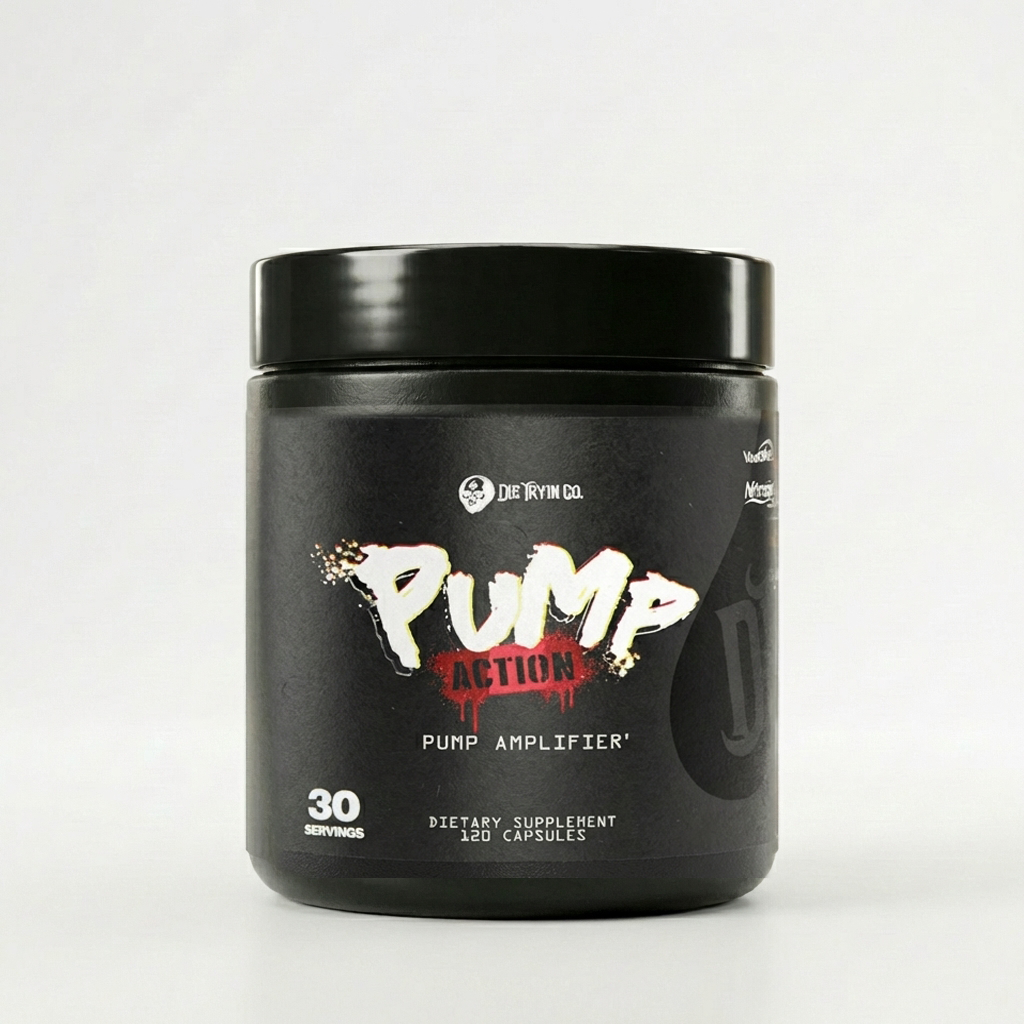
- Pump Action — stim-free pump capsules when you want minimal setup.
- Project M777 — high-stim, for the days you are genuinely bringing it.
- Aqua Spike — hydration and electrolytes for long, high-fatigue sessions.
- Take the quiz — two minutes to find what actually fits your training.
ALWAYS FORWARD.
GEAR THAT FITS THIS POST
The products this article actually talks about. Real doses, disclosed labels, veteran owned.


Read more
Strip sets buy you time, not extra growth. The research is clearer than the gym-floor mythology suggests.

One loads the biceps harder, the other spares your wrists. Neither wins outright, and wrist comfort decides it for most lifters.

Width or thickness. Vertical or horizontal. The honest answer is both, programmed properly, and here is why.
Training to failure is a tool, not a default. Here is what the research actually says for size and for strength, what the fatigue costs you, and the exact spots where taking a set to the wall earns...

More is not better, it is just more. Here is where the returns actually flatten out, and how to train at the edge of enough.
Recovery is the other half of adaptation. The signals you need a deload, and exactly how to run one without losing progress.