





Lat Pulldowns vs Rows: Which Builds a Better Back?
By Jon Klipstein, U.S. Army Combat Veteran & Founder of Die Tryin Co.
Science reviewed by Onur Oncer, BS Physiology and peer-reviewed published researcher.
PULL DOWN, PULL IN. THAT'S THE ENTIRE ARGUMENT.
Every back-day debate on the internet collapses into the same question: pulldowns or rows. People want a winner. They want one exercise crowned so they can delete the other and feel efficient about it.
Here's the truth: these are two different movement patterns pulling the same muscle from two different directions. Asking which is better is like asking whether you should train the bench press or the overhead press. The honest answer is both, programmed on purpose, not both thrown in because you couldn't decide.
Here's the actual mechanical difference, so you stop guessing and stop running two exercises that hit your back the same way twice.
| PATTERN | RESISTANCE DIRECTION | LOADED HARDEST | WHAT YOU SEE |
|---|---|---|---|
|
Vertical pull Pulldown, pull-up, chin-up |
Overhead, arm travels from overhead down to the ribs | Latissimus dorsi through shoulder adduction and extension, plus teres major and biceps | Flare off the ribcage. The taper. |
|
Horizontal pull Barbell, dumbbell, cable, chest-supported row |
In front, arm travels from extended forward back to the torso | Mid and lower trapezius, rhomboids, rear delts, plus the lats through shoulder extension | Density between the shoulder blades. The slab. |
| Both, same week | Two distinct resistance vectors | Full upper-back coverage without doubling up on the same stimulus | The complete back |
WHAT THE LAT ACTUALLY DOES
The latissimus dorsi is enormous. It anchors along the thoracolumbar fascia, the lower thoracic vertebrae, the iliac crest and the lower ribs, then narrows into a tendon attaching to the front of the upper arm bone. One muscle, running from your hip to your humerus.
Its jobs are shoulder extension (driving the arm backward), shoulder adduction (driving the arm down toward your side) and internal rotation. A pulldown hammers adduction because your arm starts overhead. A row hammers extension because your arm starts out in front. Same muscle, two lines of pull, two different regions doing the heavy lifting.
VERTICAL PULLING: WHAT THE PULLDOWN OWNS
With your arms overhead, the lat is stretched close to its longest length and has to drive the humerus down and in against gravity. Nothing else in the pulling menu loads that adduction angle the same way. That is why the pulldown and the pull-up are the closest thing to a lat-specific movement you have. It also gives you something the barbell row doesn't: a fixed torso. On a heavy bent-over row, the set often ends because your spinal erectors quit holding position, not because your lats are done.
- Best used for: loading the lats near full stretch, accumulating hard sets without frying your lower back, and building toward bodyweight pull-ups.
- Common failure: leaning back 45 degrees and turning it into a sloppy row. If your torso is that far back, you're not training the vertical pattern.
- Cue that works: drive your elbows down toward your back pockets, not the bar toward your chin.
HORIZONTAL PULLING: WHAT THE ROW OWNS
Rowing puts the resistance out in front, so the scapula has to retract against load. That is where the mid and lower trapezius and rhomboids earn their money, and they are what's missing when someone says "my back looks flat from the side."
Rows also load the rear delt far more than a pulldown does, and build postural strength that holds up under heavy pressing. If you bench and press overhead seriously, horizontal pulling is not optional.
- Best used for: upper-back density, scapular retraction strength, rear delt volume, balancing pressing work.
- Common failure: shrugging the weight with the upper traps instead of pulling it back with the mid-back. If your ears meet your shoulders, the load is too heavy.
- Cue that works: pull to the belly button when you want the lats involved. Pull to the sternum when you want traps and rhomboids.
WIDTH VS. THICKNESS: WHAT'S REAL AND WHAT'S FOLKLORE
You cannot grow a muscle "wide" instead of "thick." A fiber gets bigger, it does not choose a direction. What is real is that the lats flare outward off the ribcage, so growing them changes your silhouette from the front, while the traps and rhomboids sit between the shoulder blades and change it from the side. That's an anatomy fact wearing a bodybuilding costume.
What is also real is that different exercises can bias growth toward different regions of the same muscle. A 2022 systematic review in the Journal of Strength and Conditioning Research pooled eight studies covering 241 participants and reported that systematic exercise variation appears to enhance regional hypertrophic adaptations, while excessive, random rotation may compromise gains. Two honest caveats. Every subject across all eight studies was a young man, so nobody has shown this generalizes to women or older lifters. And a controlled trial from the same Brazilian lab ran 23 young men through nine weeks of varied versus fixed exercise selection and found no meaningful difference in 1RM strength, with the fixed-exercise group actually gaining more isometric knee-extension strength (+12% vs. +7%). Vary with intent, not for the sake of it.
THE GRIP DEBATE IS MOSTLY NOISE
Wide grip for width. Everybody says it. The data does not back it up nearly as hard as the gym floor does.
Researchers had 15 men perform 6-rep-max lat pulldowns at narrow, medium and wide grips (one, one-and-a-half and two times biacromial, or shoulder-tip, width) and measured both load and muscle activation. Narrow and medium grips moved more weight (80.3 kg and 80.0 kg) than wide (77.3 kg). Latissimus, trapezius and infraspinatus activation were similar across all three widths across the entire movement. Reporting the whole result rather than the convenient half: in the eccentric phase the wide grip did produce more lat and infraspinatus activation than the narrow grip, and the authors noted a medium grip may carry minor advantages. Their conclusion was still that lifters can expect similar activation, and similar hypertrophy, anywhere in that one-to-two-times range.
Bar path may matter more than hand spacing. A 2024 high-density EMG study ran 14 resistance-trained men through pulldowns with the bar passing in front of the neck versus behind it, and found the front version produced greater latissimus excitation in the lowering phase while behind-the-neck edged it on the way back up. Read both with the same caution: surface EMG measures electrical activity across a handful of reps in fewer than twenty people. It is not a hypertrophy measurement, and no EMG study ever grew anybody's back. Pick a width you can load and progress, then spend the effort there.
SCAPULAR MECHANICS: THE PART NOBODY COACHES
Here's what separates a good rep from a wasted one. The lat attaches to the arm, but the shoulder blade sits between arm and torso, and how you manage it decides which muscles absorb the load. Lock the scapula down and back and you bias the retractors. Let it move through protraction and retraction and you get more range through the upper back.
A 2025 high-density EMG study put 14 trained men through seated rows with the scapulae held fixed versus allowed to move freely and mapped activation across nine muscles. Overall excitation was comparable between the two. What changed was distribution: the fixed-scapula condition produced greater rear delt activity in the concentric and greater mid-trap and lat activity in the eccentric. Same small-sample, acute-EMG caveat applies. The researchers concluded both variations work, and you choose based on whether you want to emphasize scapular movement. For the case that the stretched position deserves its own emphasis, we cover that in focusing on the stretch.
HOW TO RUN BOTH WITHOUT WASTING SETS
The mistake isn't picking the wrong exercise. It's picking two that do the same thing and calling it variety. Wide-grip pulldowns plus close-grip pulldowns is one stimulus twice. Pulldowns plus rows is two stimuli. Principles, not a prescription:
- Cover both vectors every week. At minimum one vertical pull and one horizontal pull. Which one leads depends on which one is behind.
- Bias the weaker pattern first. Whichever you're worse at goes first, when you're freshest. Most people should be leading with rows.
- Change exercises on a timeline, not a whim. Give a movement four to eight weeks before rotating it. You need enough exposure to progress the load.
- Take most sets close to failure, not past it. Back work is easy to cheat and easy to junk up. See training to failure as a tool, not a standard and the training sweet spot.
- Warm the shoulder up first. Both patterns load the shoulder through big ranges. Level up your warm-up before you touch a heavy row.
THE HONEST VERDICT
Pulldowns are the better lat-specific tool because the overhead position is the only one loading shoulder adduction under real weight. Rows are the better back-development tool because they load the retractors, rear delts and postural chain that pulldowns barely touch. Neither covers the other's ground, which is exactly why the "winner" framing is broken.
Forced to keep one? Keep rows, because the back is more than lats and rows cover more of it. But nobody is forcing you. Run both, for different reasons, and stop rotating exercises every week hoping novelty does the work progressive load is supposed to do.
FREQUENTLY ASKED QUESTIONS
Can I do lat pulldowns and rows in the same workout?
Yes, and you should. They're different movement patterns, not competing versions of the same thing. Put whichever you're weaker at first while you're fresh, and treat the second as real work, not a throwaway finisher.
Do rows work your lats?
Yes, through shoulder extension, because your arm starts out in front and travels back to the torso. Rows also load the mid and lower traps, rhomboids and rear delts; pull to the belly button when you want the lats involved.
Does a wide grip really build wider lats?
Not the way the gym floor claims. A comparison across narrow, medium and wide pulldown grips found similar latissimus activation over the full rep, and narrow and medium grips let lifters move slightly more weight, though wide did show more lat activation in the lowering phase specifically. Pick a width between shoulder width and roughly double it, then spend your effort adding load.
Are pull-ups better than lat pulldowns?
Same movement pattern, different load source. Pull-ups load your bodyweight and demand more full-body tension. Pulldowns let you scale the weight precisely, which matters if you can't yet do quality reps or you want high-rep volume. Use pulldowns to build toward pull-ups, then keep both.
Which row should I pick?
Chest-supported rows for mid-back stimulus without your lower back limiting the set. Barbell rows for more total-body loading, if you can hold a rigid position. Cable rows for constant tension and an easily adjusted pull path. All three train the horizontal pattern. Rotate every few blocks, not every session.
Should I do rows or lat pulldowns first?
For most people, rows. Whichever pattern you're worse at goes first, while you're freshest.
How often should I train back?
Two sessions a week is a reasonable default for most lifters, which lets you cover both patterns with real effort instead of cramming everything into one long grind. Total weekly volume matters more than frequency, and recovery caps both.
Why do I feel rows and pulldowns in my biceps instead of my back?
The biceps assist every pulling movement, so some involvement is normal. When they take over, it's usually because you're initiating with the elbow instead of the shoulder. Drive the elbow through the movement and let the hand be a hook. We break down the arm side of that in the truth about arm growth.
READY TO GEAR UP?
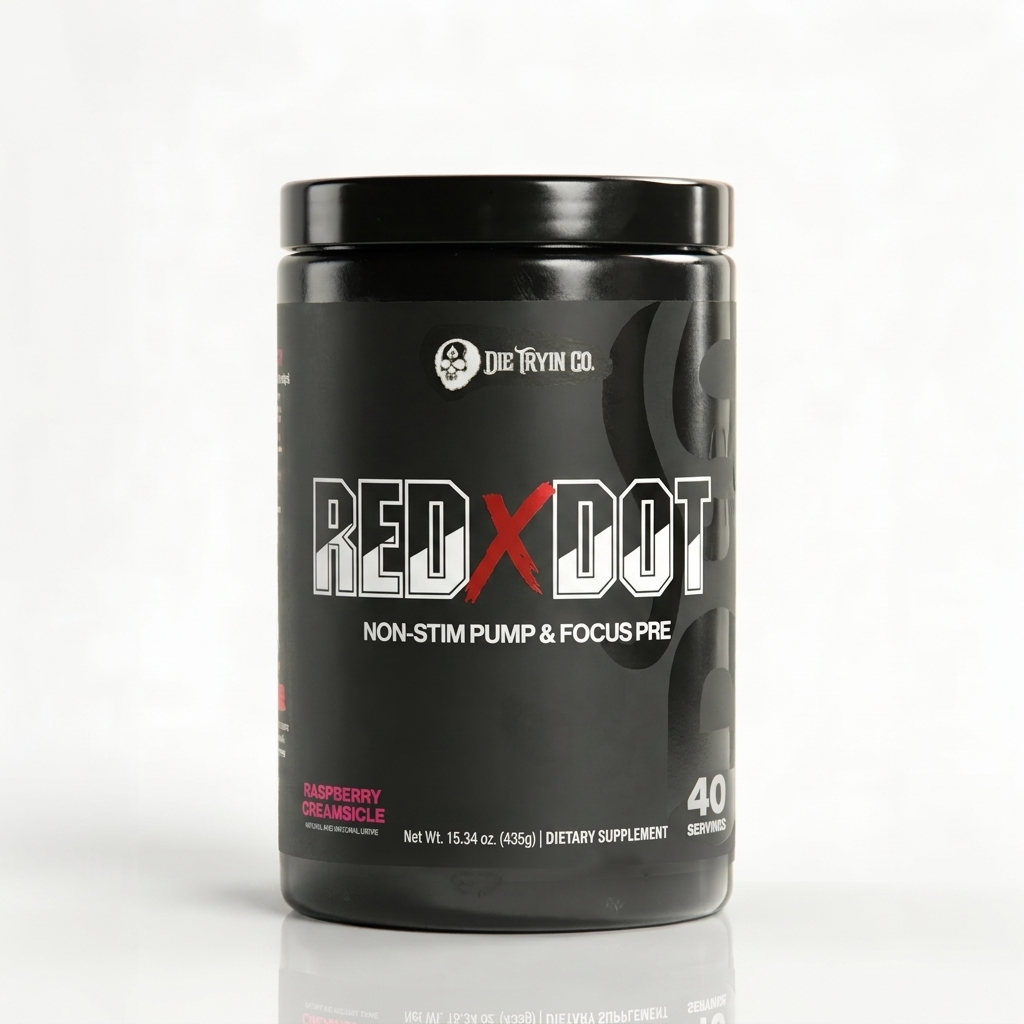
- Red Dot for stim-free pump and focus. On back day the pump is useful feedback on whether you're hitting the right muscle.
- SEND IT 3.0 when the session is long and you want a balanced, fully dosed daily driver behind it.
- Creatine Monohydrate. Five grams, the most heavily researched sports supplement on the shelf, no novel form required.
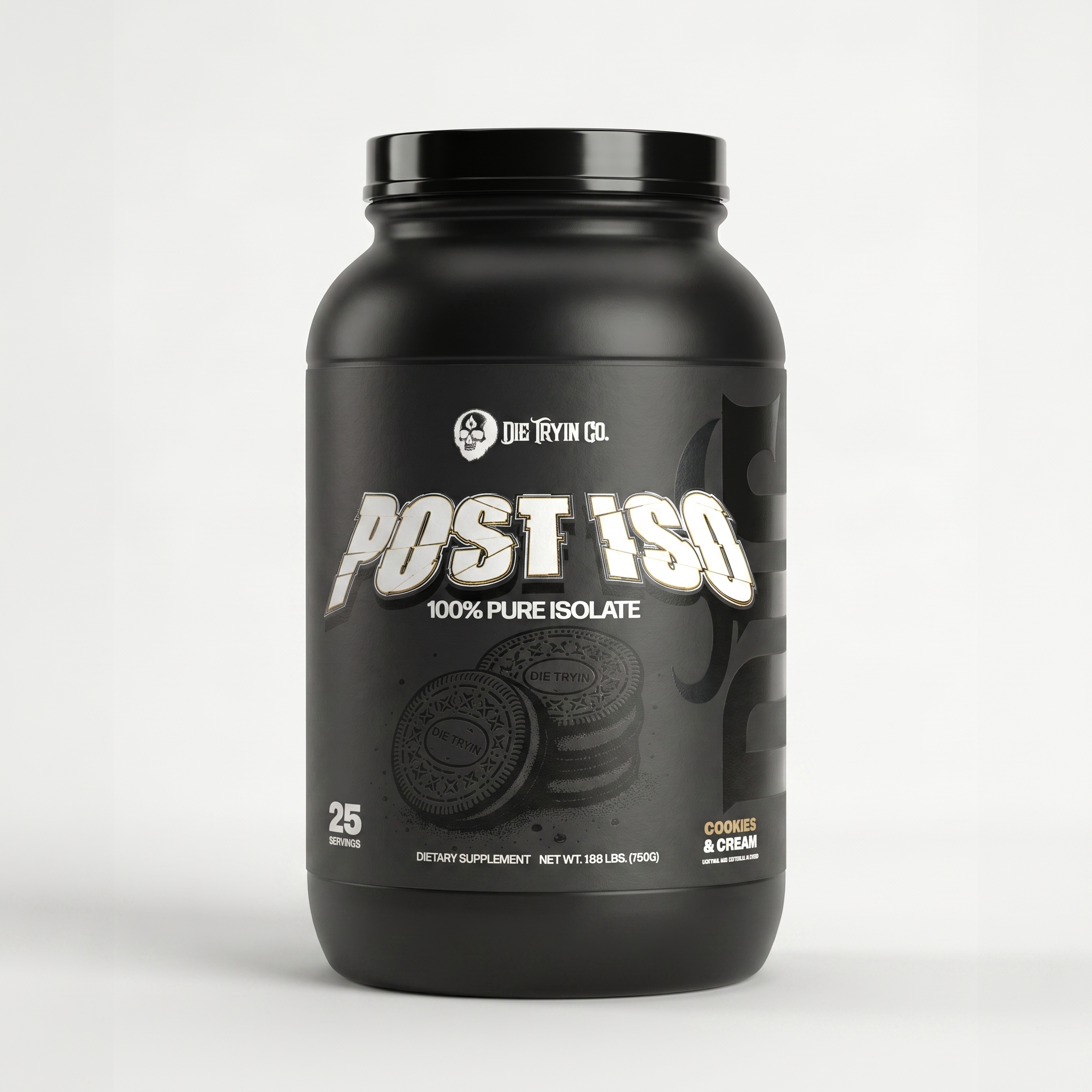
- Post Iso to cover the protein you're not eating. Back growth is still a food problem first.
- Not sure where to start? Run the supplement quiz.
ALWAYS FORWARD.

GEAR THAT FITS THIS POST
The products this article actually talks about. Real doses, disclosed labels, veteran owned.


Read more

The complete playbook for building muscle that actually lasts. Training, nutrition, recovery, and the supplements that move the needle — no hype.

The secret to a bigger back isn't more weight — it's the stretch. Here's how to train your lats at long muscle lengths, demoed on the barbell row.
Training to failure is a tool, not a default. Here is what the research actually says for size and for strength, what the fatigue costs you, and the exact spots where taking a set to the wall earns...

More is not better, it is just more. Here is where the returns actually flatten out, and how to train at the edge of enough.

Five minutes on a treadmill is not a warm-up. Here is the four-phase ramp that actually preps you to lift heavy, plus what the research says about foam rolling and static stretching.
Bigger biceps don't come from endless curls. The real strategy: anatomy, training mistakes, the 4 best exercises (incline curl, hammer, cable, preacher), sets/reps, and recovery.