





The Training Sweet Spot: The Least Work That Still Works
By Jon Klipstein, U.S. Army Combat Veteran & Founder of Die Tryin Co.
Science reviewed by Onur Oncer, BS Physiology (Phi Beta Kappa) and peer-reviewed published researcher.
THE LEAST WORK THAT STILL MOVES THE NEEDLE
Listen up. The training sweet spot is not the most you can survive. It is the smallest amount of hard work that still forces your body to change, repeated long enough that the change compounds.
Most lifters hunt for the ceiling. They want to know how much they can take. That is the wrong question. The right one is how little you can get away with and still grow, because that is the version of the program you will still be running in March, in July, and next January.
The dial that matters most is weekly hard sets per muscle group. Not exercise order. Not machine brand. Not whether you superset. Weekly hard sets have real dose-response data behind them, and that data has a shape: it climbs fast, then flattens, then gets expensive.
| WEEKLY HARD SETS PER MUSCLE | WHAT YOU ACTUALLY GET | WHO IT FITS |
|---|---|---|
| 1-3 sets (the floor) | Real, measurable strength gains in trained men. Suboptimal for size, but nowhere near zero. | Deployment weeks, travel, newborn at home, 60-hour job |
| 4-9 sets (the productive middle) | Our practical read of the curve: most of your available growth for a manageable recovery cost. | Almost everyone, most of the year |
| 10-15 sets (the upper band) | On average still more growth, but the payoff per added set keeps shrinking. | Lifters whose recovery is genuinely handled |
| 16+ sets (the expensive end) | Thin research, heavy recovery tax, and the first thing that breaks your adherence. | Short specialization blocks on one lagging muscle, never a default |
WHAT THE VOLUME RESEARCH ACTUALLY SHOWS
A meta-analysis by Schoenfeld, Ogborn and Krieger pooled 34 treatment groups from 15 studies and ran the numbers on weekly sets. Their meta-regression found each additional weekly set was associated with an increase in the percentage gain of 0.37%, and the higher-volume groups within each study gained about 3.9% more than the lower-volume groups.
Here is the part nobody quotes. When those same authors split volume into three buckets, under 5 sets, 5 to 9 sets, and 10-plus sets per muscle, the result was only a trend and did not reach statistical significance (P = 0.074). Translation: the graded relationship is real, but the data thins out badly at the high end. Anyone quoting you a precise optimal set number is reading more into that literature than it contains.
A far larger 2025 meta-regression by Pelland and colleagues, 67 studies and 2,058 participants, reported the same direction with a sharper edge: size and strength both rise as volume rises, but the best-fit models suggest diminishing returns, and the flattening is considerably more pronounced for strength than for size. More is not wrong. More is just worth less, set after set.
THE MINIMUM EFFECTIVE DOSE IS SMALLER THAN YOUR EGO WANTS
Androulakis-Korakakis and colleagues went hunting for the floor instead of the ceiling. They screened 2,629 studies, found 6 that qualified, and pooled the lowest-dose groups from 5 of them. A single set of 6 to 12 reps at roughly 70-85% of 1RM, performed 2 to 3 times per week with high intensity of effort, produced an estimated 12.09 kg increase in overall 1RM across 8 to 12 weeks. Squat went up 17.48 kg. Bench went up 8.25 kg.
Read the fine print with me, because it matters. The authors call those gains suboptimal, yet significant. The bench confidence interval ran from 0.68 kg to 15.83 kg, wide enough that the true effect could be close to nothing. Six qualifying studies is a thin evidence base. The subjects were resistance-trained men, and the authors say plainly it is less clear whether the same holds for the deadlift, for trained women, or for highly trained strength athletes.
None of that ruins the point. One hard set, done with real intent, two or three times a week, is not maintenance. It is progress. That is your emergency program for the week the job blows up, and it is the honest answer to whether it is even worth walking in today.
WHERE THE RETURNS START TO DIE
Read the curve and the practical middle lands somewhere around 4 to 9 hard sets per muscle per week, where most people collect most of their available growth. Push into the 10 to 15 range and the average result is still positive, but you are paying a much higher recovery bill for a smaller slice of adaptation.
Past that, three things tend to break at once. Session quality drops, because sets 14 through 20 usually get performed with less load and less speed than sets 1 through 6. Recovery debt piles up faster than sleep and food can clear it. And session length balloons, which is the real killer, because the 100-minute workout is the one you skip when life gets loud.
Frequency is a smaller lever than the internet claims. In that 2025 analysis, frequency's effect on muscle size was compatible with a negligible effect, while strength gains did track with higher frequency, again with diminishing returns. Spreading sets across more days is a tool for protecting set quality, not a growth hack on its own.
HOW TO FIND YOUR OWN SWEET SPOT
Population averages tell you the shape of the curve. They do not tell you where you sit on it. You find that by running a controlled ramp instead of guessing.
- Set your floor. Start at 6 hard sets per muscle per week. Every set within 1-3 reps of failure. Nothing junk.
- Hold it for 4 weeks. Log load and reps on every set. No program hopping, no bolting on exercises because a video told you to.
- Add 2 sets per muscle only to the muscles that stalled. Not everything. Muscles still adding reps do not need more volume.
- Run 4 more weeks and compare. If loads and reps still climb, those extra sets earned their place. If performance flatlines or drops, you just found your ceiling.
- Back off 2 sets and stay there. Your sweet spot is the last volume that still produced progress, not the one that broke you.
This is boring on purpose. It is also the only method that produces a number belonging to your body, your sleep, your job and your stress load instead of to a stranger in a study. Put the target in writing first, the way we lay out in smart goal setting, or you will re-litigate the whole plan every Monday.
THE SWEET SPOT MOVES
Your tolerance is not a fixed number stamped on you at birth. It slides with everything else in your life, and the volume that built you in January can bury you in October.
- Calories down? Tolerance drops. A cut is for holding volume, not chasing it.
- Sleep under 6 hours? Tolerance drops, and it is the cheapest thing on this list to fix. Start with the recovery basics.
- Life stress spiking? Same stress budget, different withdrawals. Training is not exempt from the total.
- Training age climbing? Tolerance usually rises, slowly, across years. Not across a weekend of motivation.
- Taking every set to failure? Then you need fewer sets, not more. Failure is a tool, not a standard.
THE PROGRAM YOU CAN REPEAT FOR A YEAR
Consistency beats intensity. A program you run for 52 weeks at 7 sets per muscle beats a program you run for 6 weeks at 20 and then abandon in a pile of tendonitis and resentment. The math is not close, and every honest coach has watched it play out a hundred times.
So build the version you can repeat when you are underslept, when the gym is packed, when you are traveling, when you would rather be anywhere else. Then let the boring weeks stack. Basics beat hype, and volume you can actually recover from beats volume that looks impressive in a training log nobody reads. For the wider case on working the dial instead of the throttle, train smarter, not harder covers it, and the muscle building guide shows where volume sits inside a full program.
One boundary so nobody misreads this. This post is about setting the dose. Diagnosing whether you have already dug yourself a hole is a different job, handled in are you overtraining. Planned pullbacks are their own tool, handled in why deloads are important. Read those separately.
FREQUENTLY ASKED QUESTIONS
How many sets per muscle group per week should I actually do?
Start at 6 hard sets per muscle per week and earn your way up in increments of 2. Research suggests most people land in a productive range somewhere between 4 and 15 weekly sets, with the payoff per added set shrinking the higher you climb. Anyone handing you one universal number is guessing.
Is a single set per session really enough to progress?
For 1RM strength in trained men, the meta-analytic evidence says yes: a single set 2 to 3 times per week produced significant gains across 8 to 12 weeks. The authors themselves labeled those gains suboptimal, it rested on only 6 qualifying studies, and it was tested in men only. Treat it as a real floor, not a target.
Does training a muscle more days per week build it faster?
Not on its own. In the 2025 meta-regression, frequency's effect on muscle size was compatible with a negligible effect, though strength gains did improve with higher frequency, again with diminishing returns. Use extra days to keep set quality high, not as a shortcut.
How do I know I passed my sweet spot?
Performance is the tell. Loads and reps stop climbing, warm-ups start feeling like working sets, and joints get noisy before muscles do. Two or three weeks of that pattern following a volume increase means the increase did not pay for itself.
Should I add sets or add weight first?
Add weight and reps first, every time. Load progression is free. Volume progression costs recovery. Only add sets once you have genuinely stalled at your current volume for several weeks running.
Does the sweet spot change when I am cutting?
Yes, downward. Fewer calories mean less recovery capacity, so a cut is a phase for holding your current volume and defending your strength, not for adding sets. Keep protein high and your training dose steady.
READY TO GEAR UP?
Volume you can recover from is the whole game. Support the recovery side and the number you can hold goes up. Here is what we build for exactly that:
- Creatine Monohydrate: 5g micronized, one of the most heavily researched training supplements on the shelf.
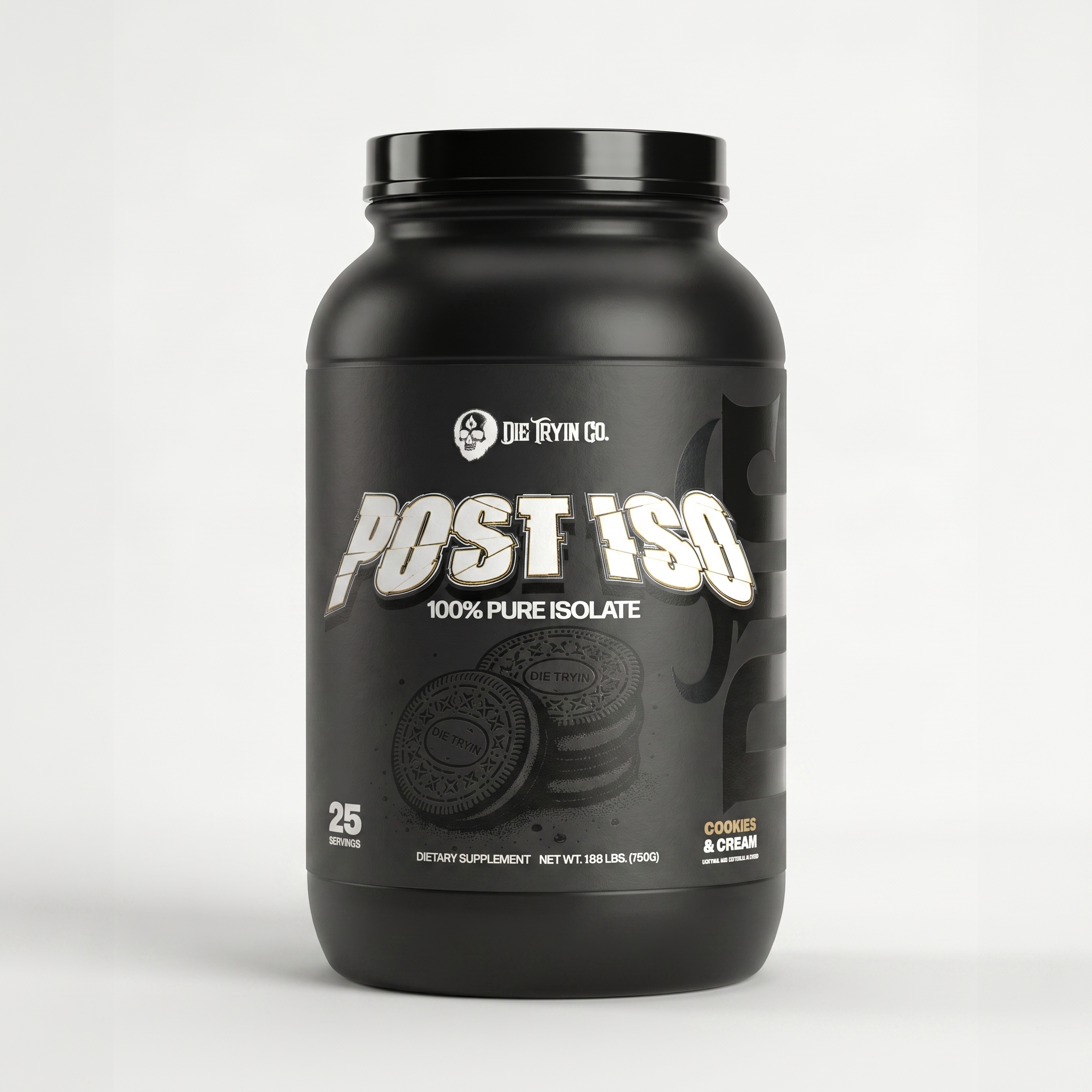
- Post Iso: 24g whey isolate with DigeZyme enzymes, for hitting protein without a fight.
- SEND IT 3.0: the daily driver pre-workout, built for repeatable sessions instead of one hero workout.
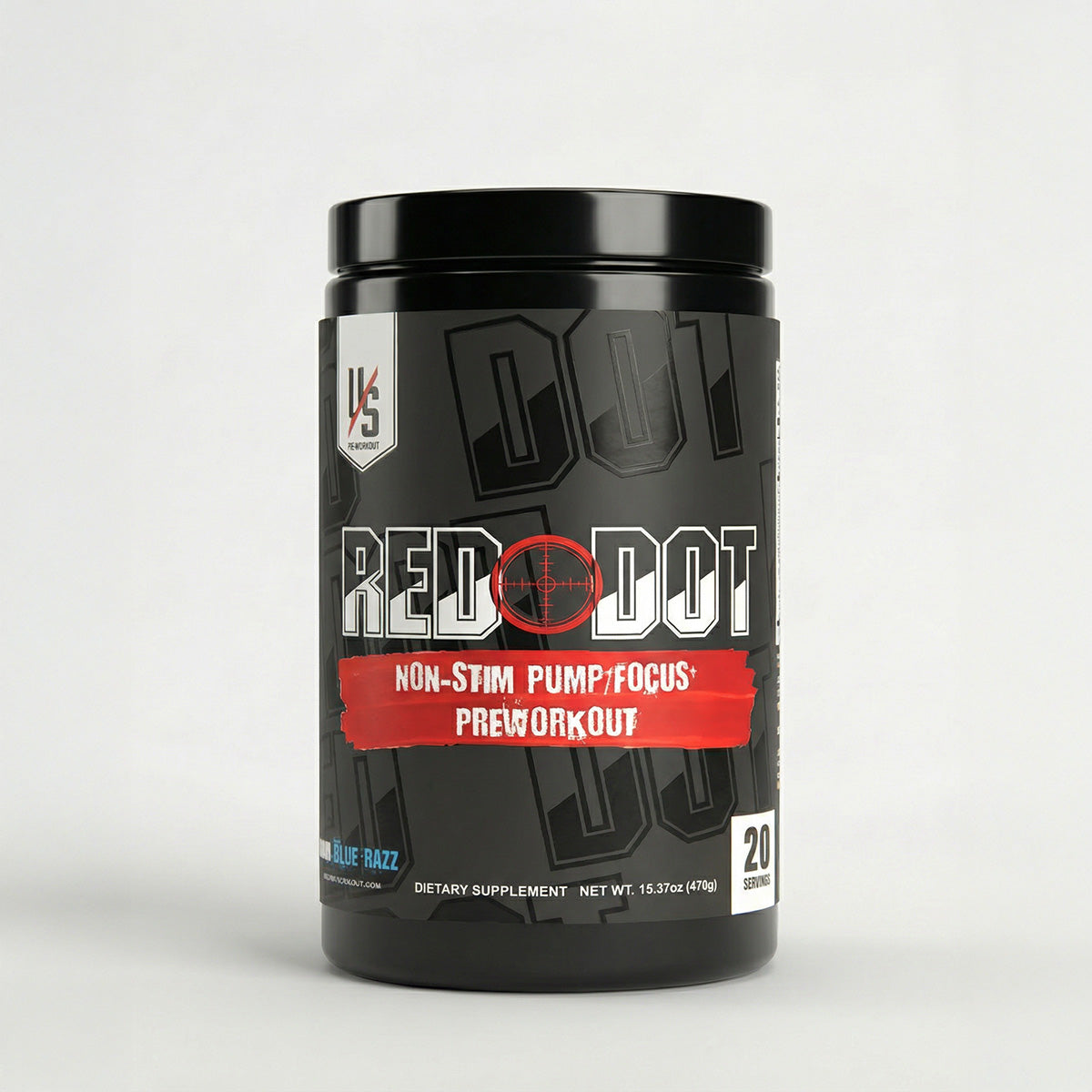
- Red Dot: stim-free pump and focus for late sessions when caffeine would cost you sleep.
- Aqua Spike: hydration and electrolytes for the long, hot, high-volume sessions.
- Straight Leg Joggers: for the 52-weeks-of-showing-up part.
- Take the quiz: two minutes to get pointed at the right stack for your training dose.
ALWAYS FORWARD.
Read more

The no-BS recovery playbook — sleep, stress, nutrition, modalities, and the framework that ties it all together. Recovery is where growth actually happens.

Most gym goals fail because they are outcomes you do not control. Process goals survive contact with a real week.

You program sets, reps, load and tempo. Then the plan stops. Recovery is a training variable, not the absence of training, and here is what leaving it blank actually costs you.
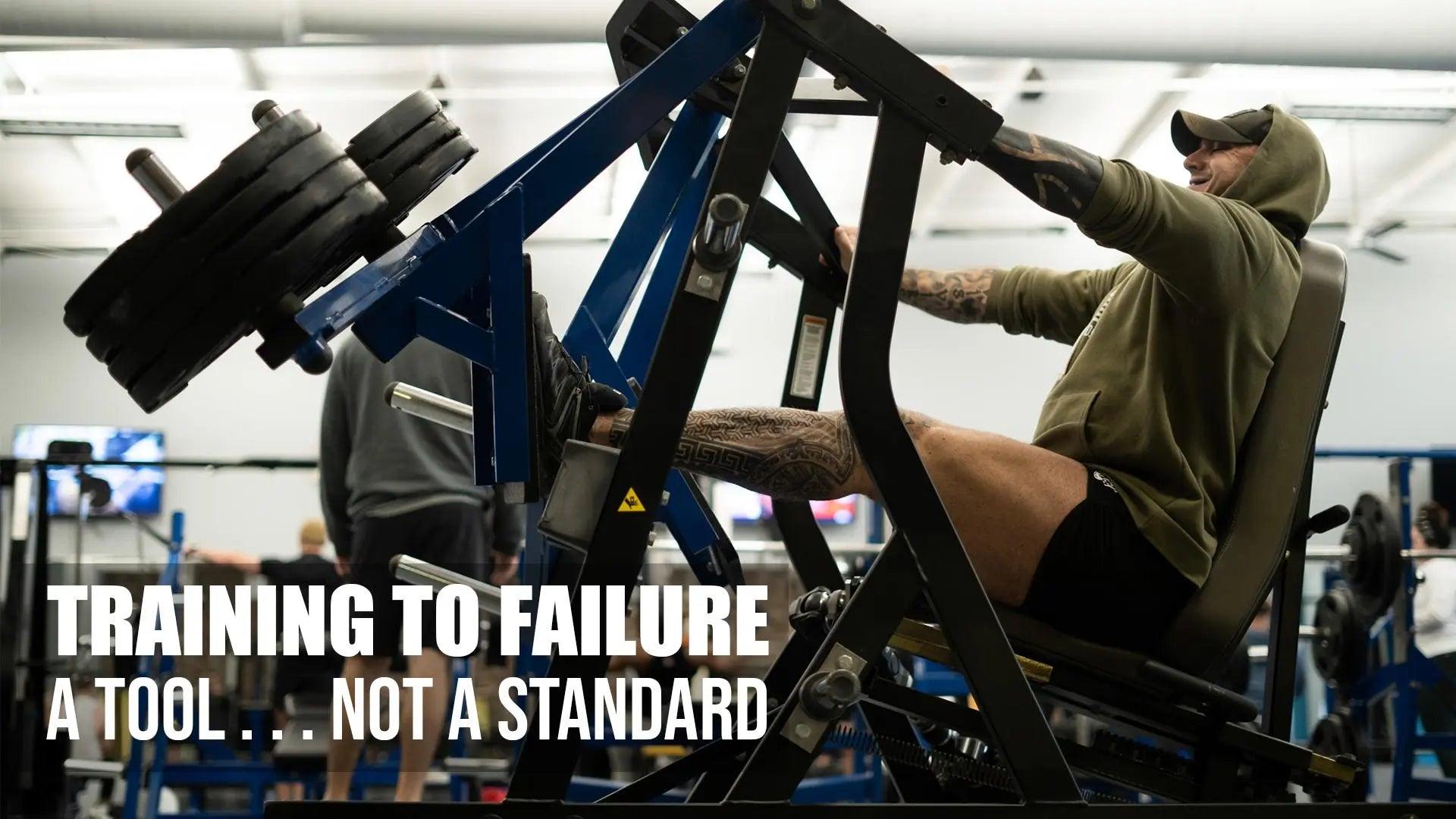
Training to failure is a tool, not a default. Here is what the research actually says for size and for strength, what the fatigue costs you, and the exact spots where taking a set to the wall earns...
Overtraining doesn't build faster results — it builds injuries and burnout. The minimum effective dose principle for training, recovery, and smart supplementation.

The complete playbook for building muscle that actually lasts. Training, nutrition, recovery, and the supplements that move the needle — no hype.

GEAR THAT FITS THIS POST
The products this article actually talks about. Real doses, disclosed labels, veteran owned.