



Straight Bar vs EZ Bar Curls: Which Builds Bigger Arms?
By Jon Klipstein, U.S. Army Combat Veteran & Founder of Die Tryin Co.
Science reviewed by Onur Oncer, BS Physiology and peer-reviewed published researcher.
THE BAR ISN'T THE VARIABLE YOU THINK IT IS
Most people get this wrong. They stand at the rack on arm day treating the choice between a straight bar and an EZ bar like it decides whether their sleeves fill out. It doesn't. Both bars have been wired up with electrodes and tested head to head, and the gap between them is about the size of a rounding error.
What the bend in the bar actually changes is your wrist and elbow position, and that changes how long you can keep curling hard without something in your forearm starting to complain. That is the real decision. Not activation percentages.
Here is the mechanical difference in plain terms, the actual numbers from the research, and the part the numbers can't tell you.
| YOUR SITUATION | PICK | WHY |
|---|---|---|
| Wrists or elbows bark on a straight bar | EZ bar | The semi-pronated grip pulls your forearm off end-range rotation |
| No joint complaints, chasing the biceps brachii | Straight bar | Full supination is the biceps' strongest working position |
| Heavy top sets, 5 to 8 reps | EZ bar | Most lifters hold wrist position better under near-max load |
| Back-off sets, 12 to 15 reps | Straight bar | Lighter load makes locked supination easy to hold clean |
| Working around a cranky wrist or elbow | EZ bar | The least demanding of the two barbell options on the joint |
| Long-term arm development | Both | The measured difference is small enough that rotating them costs you nothing |
WHAT THE BEND ACTUALLY DOES TO YOUR FOREARM
A straight bar locks your hands fully palm-up. That is full supination, and it is not a neutral place for your forearm to live. Your biceps brachii is both an elbow flexor and a powerful supinator, so a fully supinated grip has it doing both of its jobs at once. That is why the straight bar is the traditional choice for direct biceps work.
The EZ bar's camber rotates your hands part of the way in, so the forearm sits somewhere between palm-up and palm-in. You give up some supination. In exchange, your wrist and elbow stop sitting at the end of their rotational range while a loaded bar tries to twist them.
- Straight bar: fixed full supination, maximum biceps brachii involvement, maximum rotational demand on the wrist and elbow.
- EZ bar: semi-pronated grip, slightly less supination, noticeably less rotational strain for most lifters.
- The trade: you are swapping a small amount of biceps leverage for a large amount of joint comfort.
The standard gym explanation is that the EZ bar's grip shifts work off the biceps and onto the brachialis and brachioradialis. That is a reasonable mechanical story. The EMG data behind it is messier than the story, and we'll get to that.
THE HEAD-TO-HEAD NUMBERS
The most direct test we have comes from a 2023 study in the Journal of Functional Morphology and Kinesiology. Ten competitive bodybuilders performed bilateral barbell curls with both bars using 8-rep-max loads in six-rep sets, with surface electrodes on the biceps brachii and anterior deltoid.
The straight bar won. Barely. The researchers measured a small biceps brachii advantage for the straight bar over the EZ bar in both halves of the rep:
- Lifting the bar up: straight bar produced 1.8% more biceps excitation than the EZ bar.
- Lowering the bar down: straight bar produced 3.8% more.
Now the part almost nobody quotes from that same paper. The researchers also tested whether lifters flexed the arms forward at the top of the rep or kept the elbows pinned at the sides. On the way up, that single execution choice moved biceps excitation by 17.7% on the straight bar and 20.3% on the EZ bar. Roughly ten times the swing the bar itself produced.
Report the whole thing, though. On the way down, that same flexion comparison shrank to 2.8% and 8.1%. So "how you finish the rep beats which bar you grabbed" holds up hard on the lifting phase and only modestly on the lowering phase. Either way, the bar is not where the leverage is.
SUPINATION IS THE PART THAT MOVES THE NUMBER
The same research group ran a companion study on grip position alone, again with ten competitive bodybuilders under 8-rep-max loads. Comparing supinated, neutral and pronated grips, they found that on the lifting phase the supinated grip produced 19% more biceps brachii excitation than pronated and 12% more than neutral.
That is the honest version of the supination argument. It is grip rotation doing the work, not the bar itself, and the EZ bar only shaves a slice off full supination rather than removing it. Here is the inconvenient finding in that same study: the supinated grip also produced slightly more brachioradialis excitation than the pronated and neutral grips, roughly 5 to 6% more, which cuts against the tidy "semi-pronated grips hand the job to your forearm" line. Neither study measured the brachialis at all. It sits underneath the biceps and surface electrodes can't reliably separate it from what's on top, so the most-repeated claim about the EZ bar goes untested in both papers.
THE STUDY THAT TELLS YOU TO PICK WHAT FEELS BETTER
A 2018 paper in PeerJ put twelve lifters through three curl variations, a set of ten reps each at 65% of one-rep max, measuring biceps brachii and brachioradialis. Both barbells out-measured the dumbbell curl in several comparisons, with the EZ bar showing higher activity than the dumbbell in both muscles overall and the biceps advantage landing clearest on the lowering phase.
Between the two barbells, the authors found the difference small enough that they closed the paper by calling the choice between them "a matter of subjective comfort." That is a research team, looking at their own data, telling you to pick the bar that feels better. Take the win.
WHAT EMG DOES NOT TELL YOU
A 2018 review in Frontiers in Physiology led by Andrew Vigotsky exists specifically because the fitness industry overreads studies like these. Surface EMG measures electrical excitation during a set. It does not measure growth. That review team concluded that using these comparisons to draw conclusions about long-term adaptations like strength and hypertrophy is frequently unsubstantiated.
Stack that against the evidence we actually have here. Sample sizes of ten and twelve. Single training sessions. No growth measured in any of them. Two of the three studies out of the same lab running the same design. Trained bodybuilders whose curl technique is nothing like a third-year lifter's. A 1.8% difference under those conditions is not a training instruction. It is a footnote. Anyone selling you a bar choice as the unlock for your arms is working from a number that was never built to carry that weight.
HOW TO PROGRAM BOTH WITHOUT OVERTHINKING IT
Run both. The research gives you no reason to pick a side permanently, and rotating them keeps your wrists out of the same fixed position every single session.
- Lead with the bar your joints tolerate under load. Whichever one lets you push a hard top set without your wrist stealing your attention gets the heavy work.
- Use the other one for back-off volume. Lighter loads, higher reps, cleaner position.
- Rotate the lead bar every four to six weeks. Long enough to progress the load, short enough to keep both patterns available.
- Fix your finish before you fix your equipment. The 17.7% number came from how the rep ended, not from hardware.
- Warm the elbows and wrists first. Ten minutes of prep does more for curl comfort than any bar swap. Our warm-up guide covers the sequence.
None of this replaces the boring stuff that actually grows arms. Total weekly volume, proximity to failure and years of consistency do the heavy lifting. We break the whole picture down in the truth about arm growth, and how hard to push each set in training to failure. If you want the full framework behind hypertrophy programming, start with our ultimate guide to muscle building.
THE HONEST VERDICT
Neither bar is superior for everyone, and anybody claiming otherwise is selling something. The straight bar holds a small, measured edge in biceps brachii excitation. The EZ bar asks less of your wrists and elbows. Those two facts do not resolve into a winner because they aren't competing on the same axis.
Wrist comfort decides it for most lifters, and that is the correct way to decide it. The bar you can load hard, pain-free, for the next five years beats the one that wins by two percent on a single set in a lab. Same logic we apply to lat pull-downs versus rows. Pick the version you can execute well and progress on, then go earn it.
FREQUENTLY ASKED QUESTIONS
Is the EZ bar worse for biceps growth?
Nobody has tested that, because none of these studies measured growth. In the only direct head-to-head we have, the straight bar edged the EZ bar by 1.8% to 3.8% in biceps excitation across a single set. That is a smaller gap than the difference between a good rep and a sloppy one.
Which bar should a newer lifter start with?
The EZ bar, usually. Newer lifters tend to lose wrist position first when the load climbs, and the cambered grip is more forgiving while you build the grip and connective tissue strength to hold a straight bar under real weight.
Can I build big arms using only the EZ bar?
Yes. In the 2018 PeerJ data the EZ bar produced more biceps and brachioradialis activity than the dumbbell curl, and it sat within a rounding error of the straight bar. Volume, effort and consistency build arms. The bar is a delivery method.
Does the straight bar hurt your wrists?
Not by itself. It holds your forearm at full supination, which is the end of its rotational range, and some lifters find that uncomfortable under heavy load while others never notice it. Persistent wrist or elbow pain is worth a conversation with a qualified professional, not a bar swap.
Should I use both bars in the same workout?
You can. Heavy work on whichever bar your joints prefer, then back-off sets on the other one is a clean setup. Just don't add curl volume purely to fit both bars in.
How much more weight can I use on an EZ bar?
It varies by lifter, and no study we found has quantified it. Anecdotally, most people load an EZ bar slightly heavier because wrist position holds up better, not because the exercise is mechanically easier.
READY TO GEAR UP?
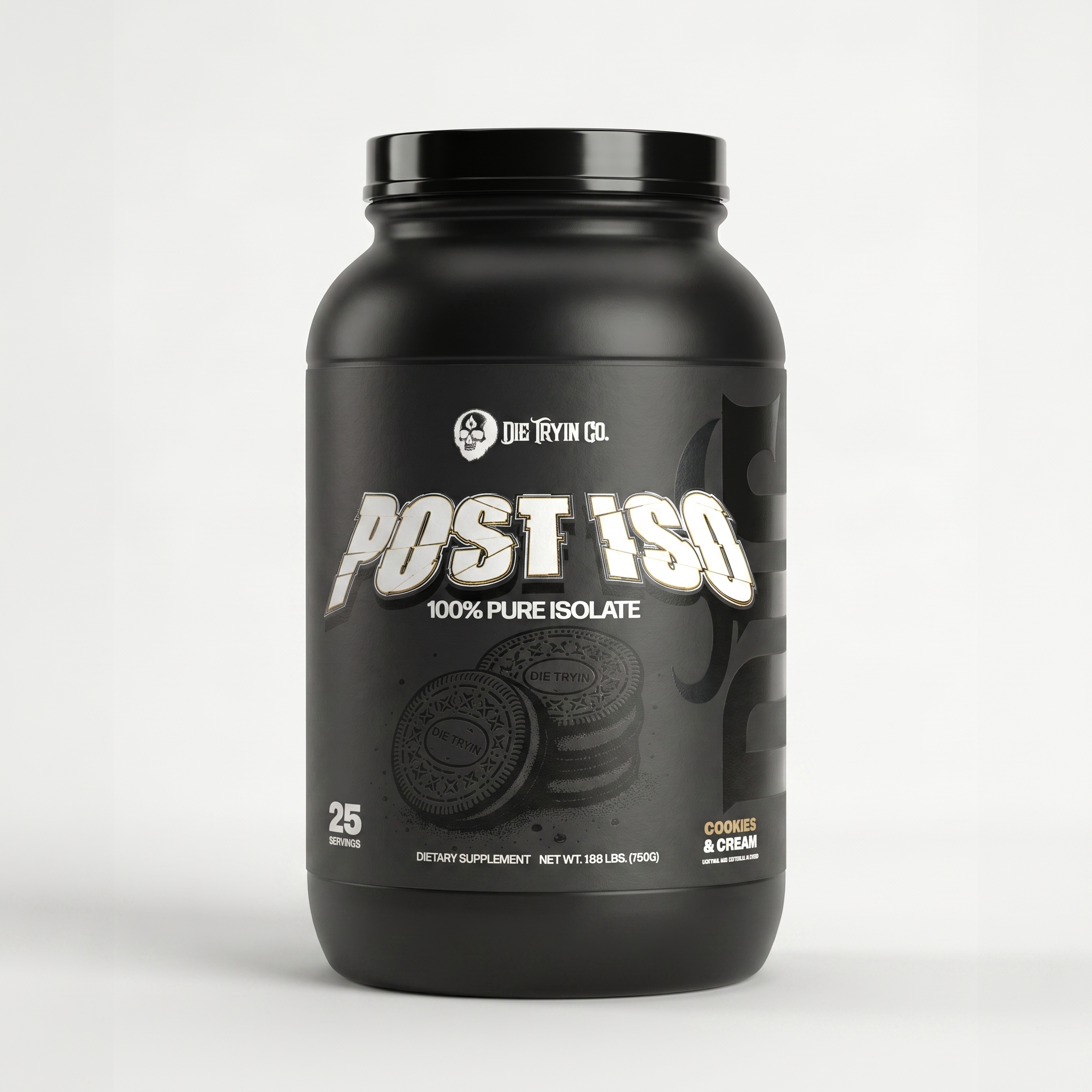
- Post Iso - 24g whey isolate with DigeZyme enzymes to cover the protein side of arm day.
- Creatine Monohydrate - 5g micronized, one of the most researched supplements in sports nutrition.
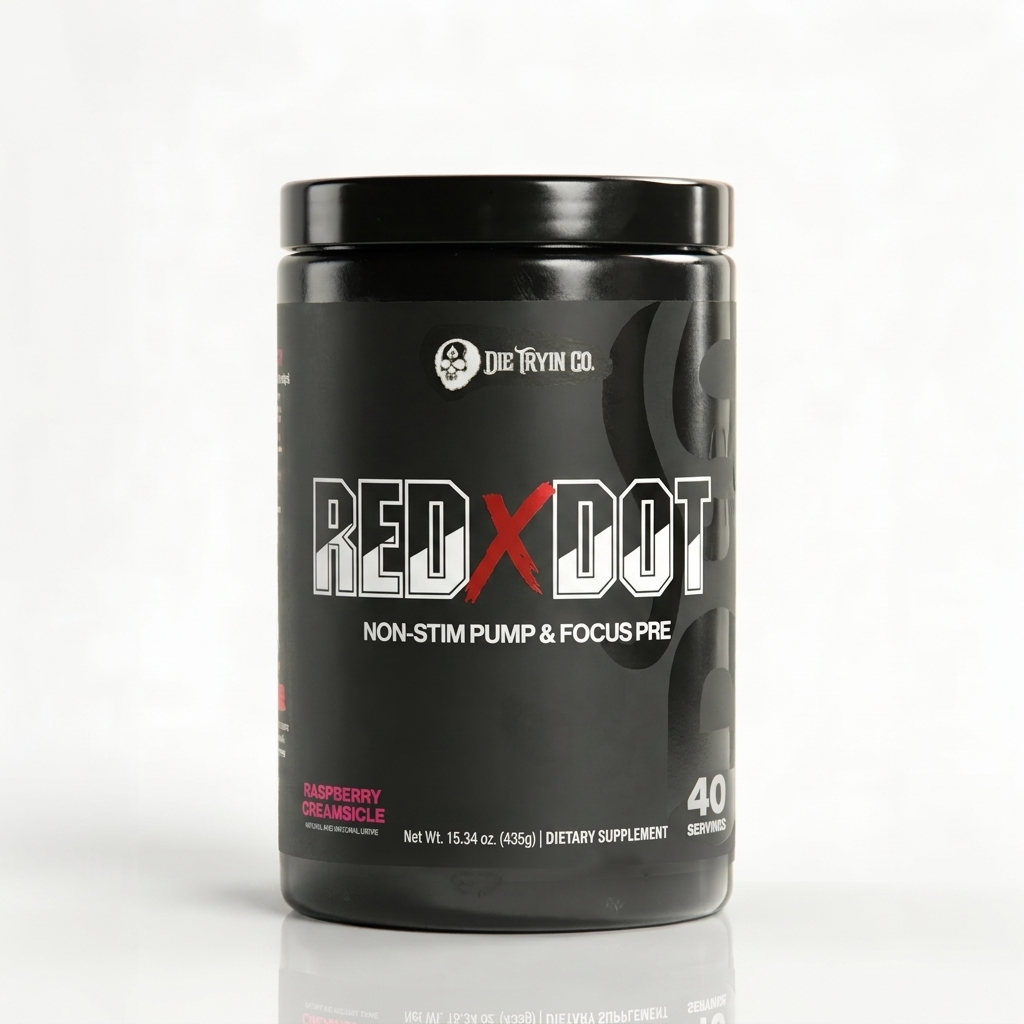
- Red Dot - stim-free pump and focus with 9g L-Citrulline for arm day without the caffeine.
- Pump Action - stim-free pump capsules if you'd rather not drink another scoop.
- Collagen Peptides - connective tissue support for lifters who curl a lot.
- DTC Athletic Tee - wear the standard while you build the arms.
Not sure what belongs in your stack? Take the supplement quiz and get a straight answer in two minutes. Basics beat hype, every time.
ALWAYS FORWARD.
GEAR THAT FITS THIS POST
The products this article actually talks about. Real doses, disclosed labels, veteran owned.

Read more
Five minutes on a treadmill is not a warm-up. Here is the four-phase ramp that actually preps you to lift heavy, plus what the research says about foam rolling and static stretching.
Bigger biceps don't come from endless curls. The real strategy: anatomy, training mistakes, the 4 best exercises (incline curl, hammer, cable, preacher), sets/reps, and recovery.
Training to failure is a tool, not a default. Here is what the research actually says for size and for strength, what the fatigue costs you, and the exact spots where taking a set to the wall earns...
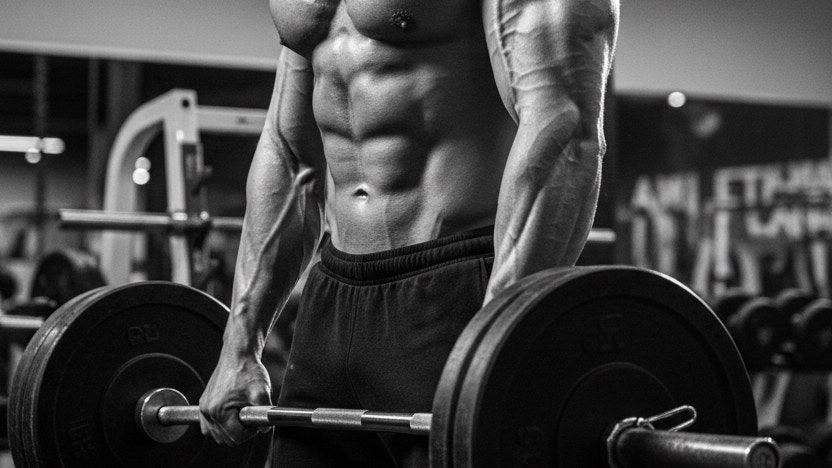
The complete playbook for building muscle that actually lasts. Training, nutrition, recovery, and the supplements that move the needle — no hype.
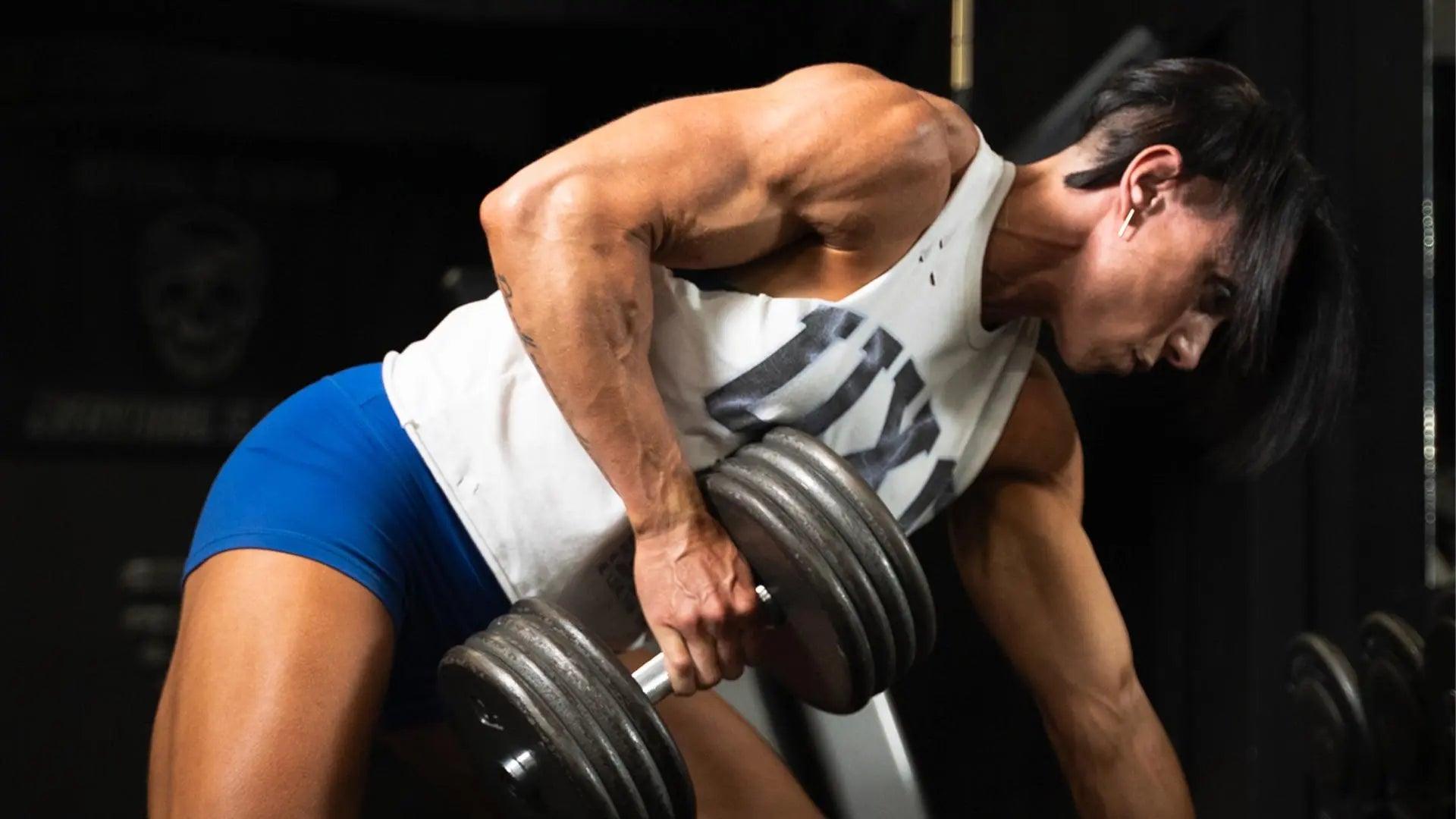
Width or thickness. Vertical or horizontal. The honest answer is both, programmed properly, and here is why.
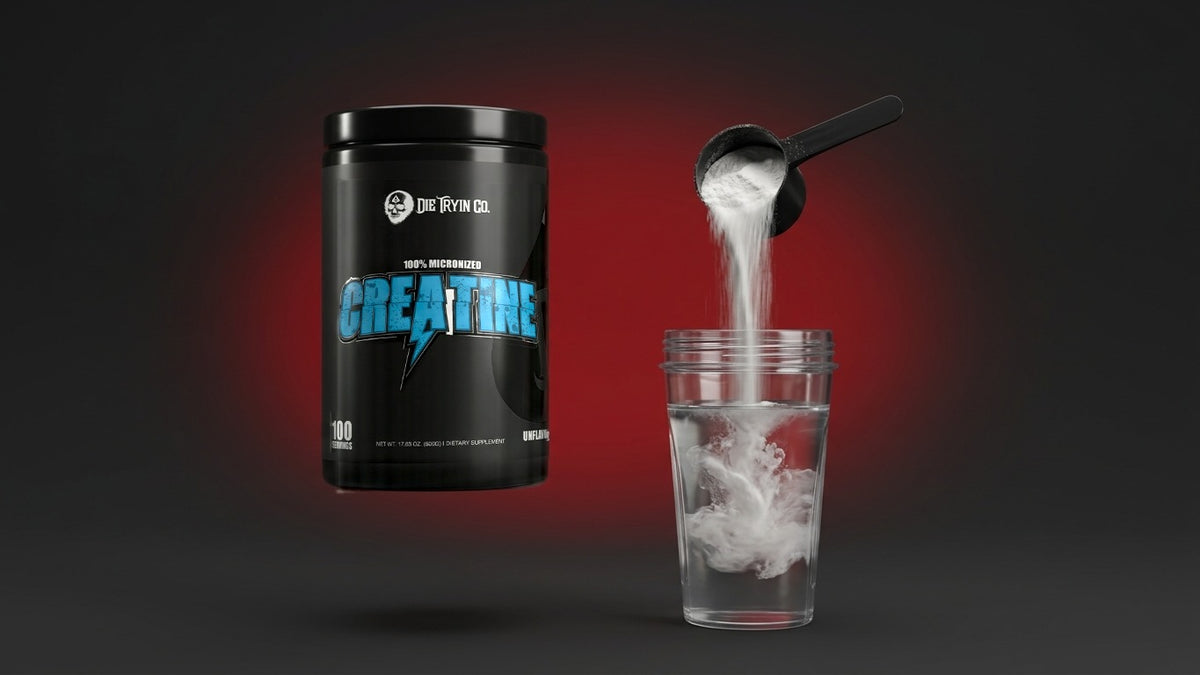
Your gut lining runs the same creatine energy system as your muscles. Here is what the research shows on stomach upset, IBS, colitis and leaky gut, and exactly where the human evidence stops.