



Hydration Guide: Why Water Is Non-Negotiable
By Jon Klipstein, U.S. Army Combat Veteran & Founder of Die Tryin Co.
Science reviewed by Onur Oncer, BS Physiology and peer-reviewed published researcher.
THE BASICS, DONE RIGHT
Here's the truth: you can dial in your training, nail your macros, and stack the best supplements on the market, and still leave performance on the table because you're walking around mildly dehydrated. Most people do. They treat water as an afterthought instead of the foundation it actually is.
Water isn't a wellness trend — it's the medium your whole body runs on. It makes up most of your body weight and drives nearly every system: it regulates your temperature, carries nutrients, clears waste, and cushions your joints. Run low, and the whole machine runs worse. This is the canonical guide: what hydration actually does, exactly how much water you need, and how to hydrate around hard training so you stop guessing.
WHAT HYDRATION ACTUALLY DOES FOR YOU
Short version — you don't need a list of twenty "benefits." You need the few that move the needle:
- It regulates body temperature. When you train, your body sheds heat through sweat, and that cooling system runs on fluid. Drain the tank and your core temperature climbs faster — exactly when hard sessions fall apart.
- It moves nutrients and clears waste. Water is the solvent and the carrier; the protein, carbs, and electrolytes you take in get shuttled where they're needed in a hydrated body.
- It sharpens focus. Your brain is sensitive to fluid balance — research suggests being dehydrated by just 2% may impair attention, memory, and mood. If your sessions feel foggy, hydration is one of the first levers to check, not the last.
- It supports appetite control. In one randomized trial, drinking 500 mL of water before meals led to greater weight loss over 12 weeks than dieting alone, partly by curbing how much people ate. Water isn't a fat burner — it's a tool that supports adherence.
HOW DEHYDRATION TANKS YOUR PERFORMANCE
This is where it stops being abstract. Dehydration isn't a "later" problem — it shows up in the set you're doing right now. The American College of Sports Medicine draws a hard line: their position stand recommends preventing more than 2% body-weight loss during exercise, because past that, performance reliably suffers. For a 180-pound athlete, 2% is under four pounds of fluid — easy to lose in a hot session and never notice until your output drops.
What that looks like in practice: slower reps, earlier fatigue, a higher heart rate at the same effort, and a head that won't lock in. None of it is dramatic — that's the trap. You don't crash, you just operate at 85% and call it a bad day.
HOW MUCH WATER DO YOU ACTUALLY NEED?
Forget the lazy "eight glasses a day" line — it ignores your size and your sweat. Here's the working formula:
| YOUR SITUATION | THE TARGET |
|---|---|
| Daily baseline | Roughly half your body weight in ounces. 180 lb = ~90 oz/day as a floor. |
| Training add-on | Add 8–10 oz for every 30 minutes of exercise on top of baseline. |
| Heat or heavy sweat | Add more — and start replacing electrolytes, not just plain water. |
The most accurate method is the one ACSM recommends: weigh yourself before and after a hard session. Every pound lost is roughly 16 oz of fluid to replace. Do it a few times and you'll know your real sweat rate instead of guessing.
One caution: more is not infinitely better. Hammering plain water without replacing sodium during very long or very sweaty efforts can backfire — which is exactly where electrolytes earn their place.
WHEN WATER ISN'T ENOUGH: ELECTROLYTES
Sweat isn't just water — it's water plus sodium, potassium, and magnesium, the minerals that let your muscles fire and your nerves signal. Replace the fluid but not the minerals and you can still feel flat, crampy, and off.
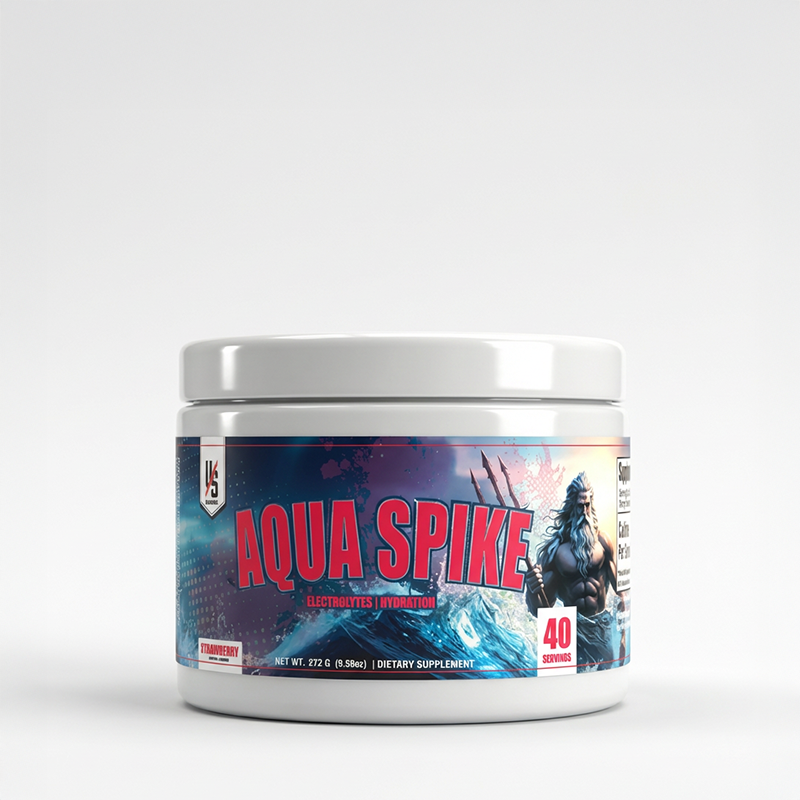
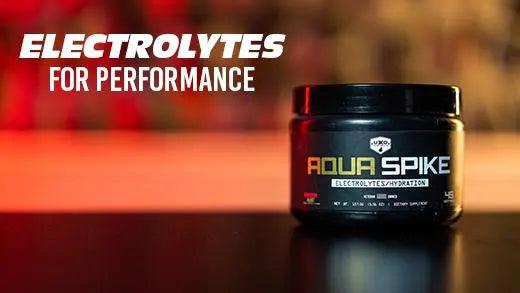
For everyday hydration, food and water cover most people. But for heavy-sweat training, long sessions, or hot weather, you need to put the minerals back — that's the whole reason we built Aqua Spike, an electrolyte formula with sodium, potassium, and magnesium and a stronger sodium load than the average mix, because sodium is the one most athletes under-replace. We go deeper on the mineral side in our guide to electrolytes for performance — pair the two ideas and you've got the full picture.
BUILDING A DAILY HYDRATION HABIT
Discipline beats motivation. You won't drink more water by willpower — you build systems so it happens on autopilot:
- Front-load the morning. You wake up already down a tank from overnight — drink 16–20 oz before coffee.
- Carry one bottle, know its volume. A 32 oz bottle you refill on a schedule beats a vague intention. Two to three refills and you're at baseline.
- Anchor water to existing habits. A glass with every meal, a few pulls between sets, a bottle that lives on your desk.
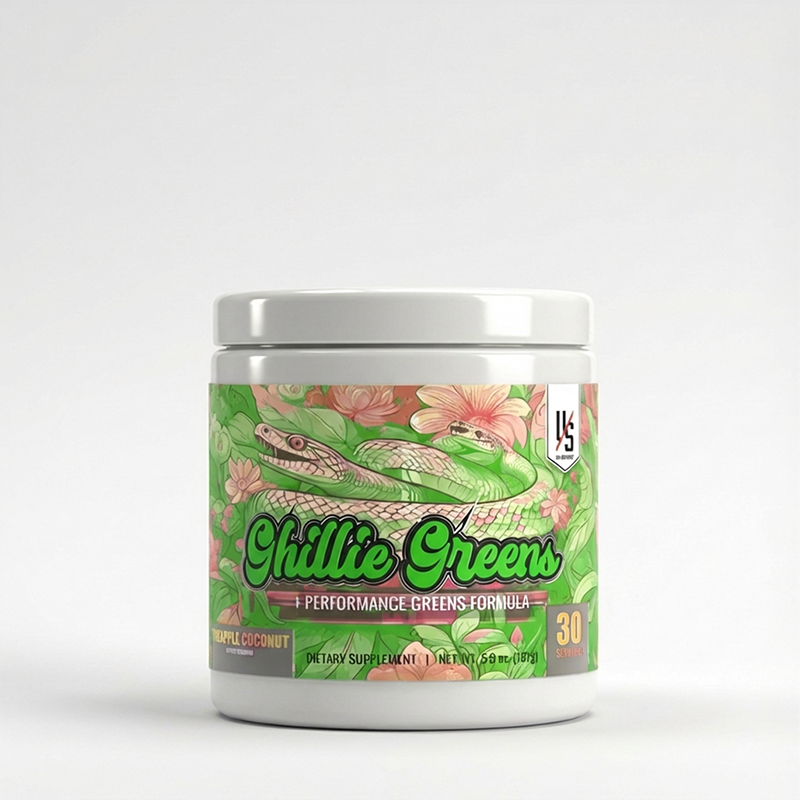
- Stack your routine. Plenty of athletes build the habit around a morning scoop of Ghillie Greens in water — real-ingredient greens that turn "drink your water" into "drink your water and your micronutrients."
Hydration doesn't live in a vacuum. It ties directly into recovery between workouts and the same boring fundamentals that decide whether you progress or stall — including the diet side, like burning fat faster.
FREQUENTLY ASKED QUESTIONS
How much water should I drink per day?
Start with roughly half your body weight in ounces as a daily floor, then add 8–10 oz for every 30 minutes of exercise. A 180 lb athlete training an hour is looking at ~90 oz baseline plus ~16–20 oz for the session. Heat and heavy sweat push it higher.
Can mild dehydration really affect my workout?
Yes. Research suggests even a 2% drop in body water may impair attention, mood, and physical output, and the American College of Sports Medicine recommends keeping fluid loss under that 2% threshold during exercise specifically because performance suffers past it.
Is plain water enough, or do I need electrolytes?
For everyday hydration, water and a balanced diet handle it for most people. For heavy-sweat training, long sessions, or hot weather, you're losing sodium, potassium, and magnesium in sweat — replace those minerals with an electrolyte formula like Aqua Spike, not just more plain water.
Does drinking water help with fat loss?
It can support it. In a 12-week randomized trial, drinking 500 mL of water before each meal alongside a reduced-calorie diet produced greater weight loss than dieting alone, partly by reducing how much people ate. Water isn't a fat burner — it's a tool that supports appetite control and adherence.
Can I drink too much water?
It's possible. Hammering large volumes of plain water during very long or sweaty efforts without replacing sodium can dilute your blood sodium and leave you feeling worse, not better. This is exactly why electrolytes matter on big-sweat days — balance the fluid with the minerals.
What's the best way to know my real fluid needs?
Weigh yourself before and after a hard session. Each pound lost is roughly 16 oz of fluid to replace. Do it a few times across different conditions and you'll know your actual sweat rate instead of guessing from a generic chart.
READY TO GEAR UP?
Hydration is the most boring, most overlooked, most undefeated fundamental in the game. Get it right and everything else — training, recovery, focus — works better. Build the system, then put the minerals back when you sweat them out with Aqua Spike, anchor your daily habit with Ghillie Greens, or take the quiz to build a stack around your goals.
Real doses of real ingredients. Basics beat hype. Hydrate like it matters — because it does.
ALWAYS FORWARD.
GEAR THAT FITS THIS POST
The products this article actually talks about. Real doses, disclosed labels, veteran owned.
Read more
Sweat is water plus salt, and how much salt is in yours is close to a personal fingerprint. Here is what the field data says you actually lose, and when replacing it is worth your money.
Recovery is not a feeling, it is a clock. What your muscles are doing at hour 3, hour 24 and hour 48 after you train, and what to do in each window.
How Do I Burn Fat Quicker? Since starting the company, we have received a lot of questions regarding ways to lean out (or the most common
Your gut lining runs the same creatine energy system as your muscles. Here is what the research shows on stomach upset, IBS, colitis and leaky gut, and exactly where the human evidence stops.

Creatine gummies can work if the creatine is actually in them, and lab tests keep finding it often is not. Here is why a scoop of Creatine Monohydrate powder still wins.
Flavor doesn't change what creatine does; taking it every day is what counts. How to pick flavored or unflavored, what to mix it with, and how long it lasts once mixed.