



Muscle Recovery Time: What Really Happens in 48 Hours
By Jon Klipstein, U.S. Army Combat Veteran & Founder of Die Tryin Co.
Science reviewed by Onur Oncer, BS Physiology (Phi Beta Kappa) and peer-reviewed published researcher.
RECOVERY RUNS ON A CLOCK
Most people treat recovery like a mood. You feel beat up, you take the day off. You feel fine, you train. That is guessing, and guessing is why lifters stall for years.
Recovery is a sequence of measurable processes, and researchers have tracked it hour by hour. The rebuild after a hard session runs for at least two days, it does not run at a constant speed, and what matters at hour two is not what matters at hour thirty.
This post is the clock, and only the clock. If you want the full system, sleep, stress, hydration, modalities, programming, that lives in the complete guide to recovering from workouts. Read that one for the whole picture. Read this one to know where you are on the timeline right now. Here is the map.
| WINDOW | WHAT YOUR BODY IS DOING | WHAT ACTUALLY MOVES THE NEEDLE |
|---|---|---|
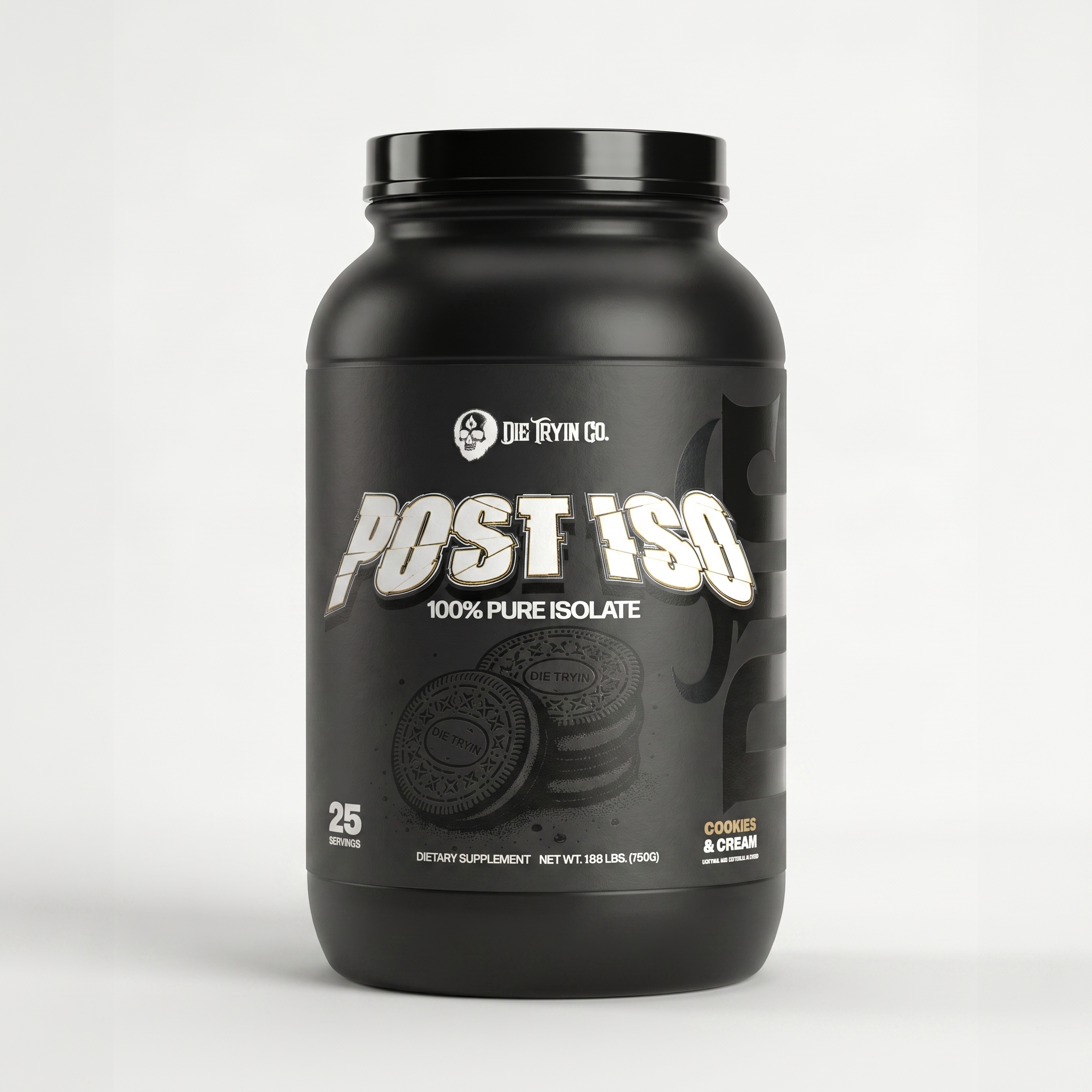
| 0 to 3 hours | Protein synthesis spikes hardest. Breakdown climbs right alongside it. Glycogen is down. | Eat. 20 to 40 g of quality protein plus carbs. Post Iso |
| 3 to 24 hours | Synthesis still well above baseline. Breakdown still elevated. Most of the rebuild happens here. | Daily protein total, spaced. Sleep. Creatine Monohydrate |
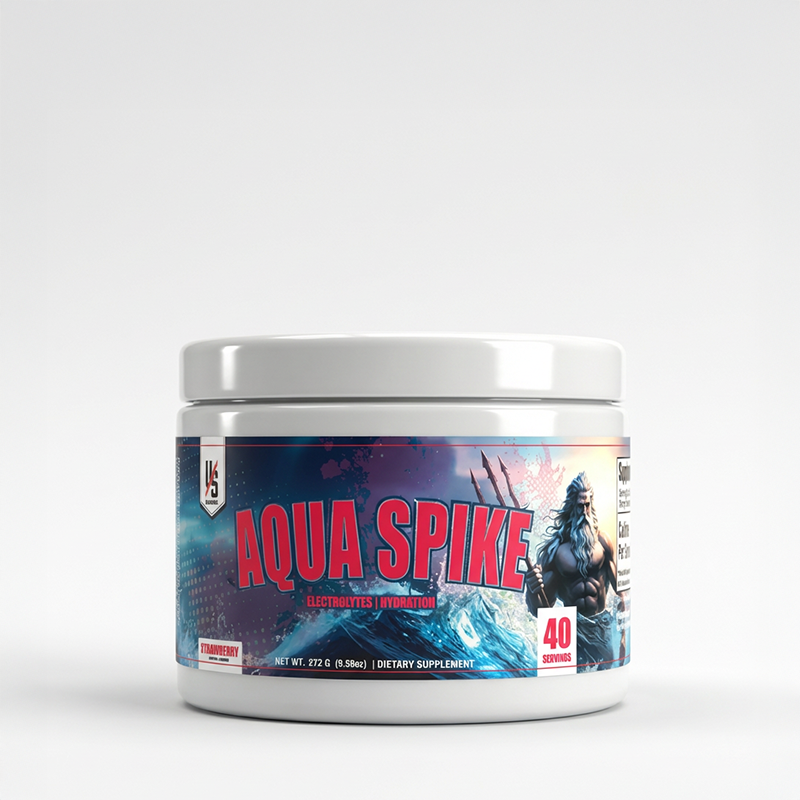
| 24 to 48 hours | Synthesis still running. Breakdown back to resting levels. Soreness peaks and misleads you. | Light movement, food, fluids. Aqua Spike |
| 48 hours and out | Where the measurements stop. Synthesis was still 34% above rest at that last reading, so the tail runs off the chart. | For most sessions, this is the practical floor before you hit that muscle hard again. |
HOUR 0 TO 3: THE SIGNAL FIRES, NOT THE GROWTH
The classic measurement here comes from a 1997 study in The American Journal of Physiology, where eight volunteers had muscle protein synthesis and breakdown tracked at rest and then at 3, 24 and 48 hours after a single resistance session. Synthesis jumped 112% above rest at 3 hours, and it was still elevated two days later. That is the spike everyone quotes.
Here is the part nobody quotes. Breakdown went up too, 31% at the 3 hour mark. And when the researchers subtracted breakdown from synthesis, net protein balance at every single time point was still negative. Training improved the balance. It did not flip it. Lifting is the signal. Food turns the signal into tissue, and until you eat you are running a construction site with no materials on the truck.
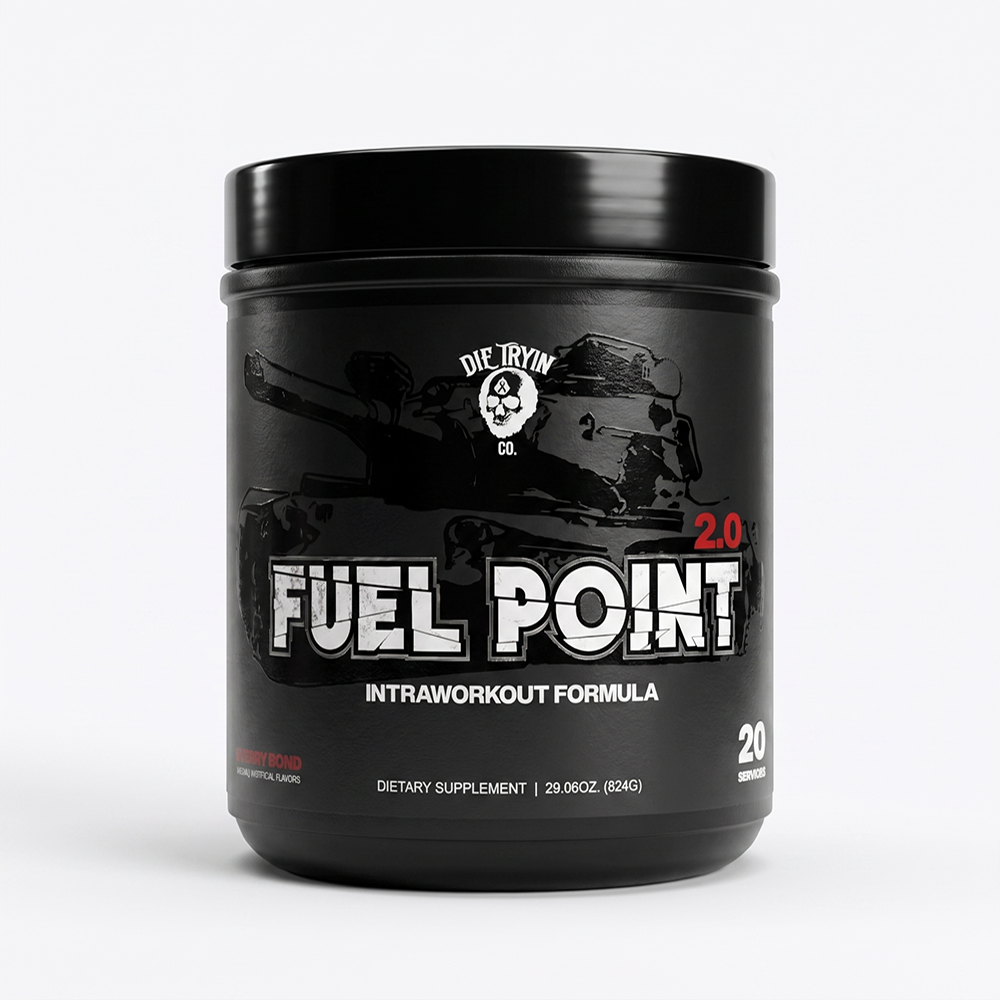
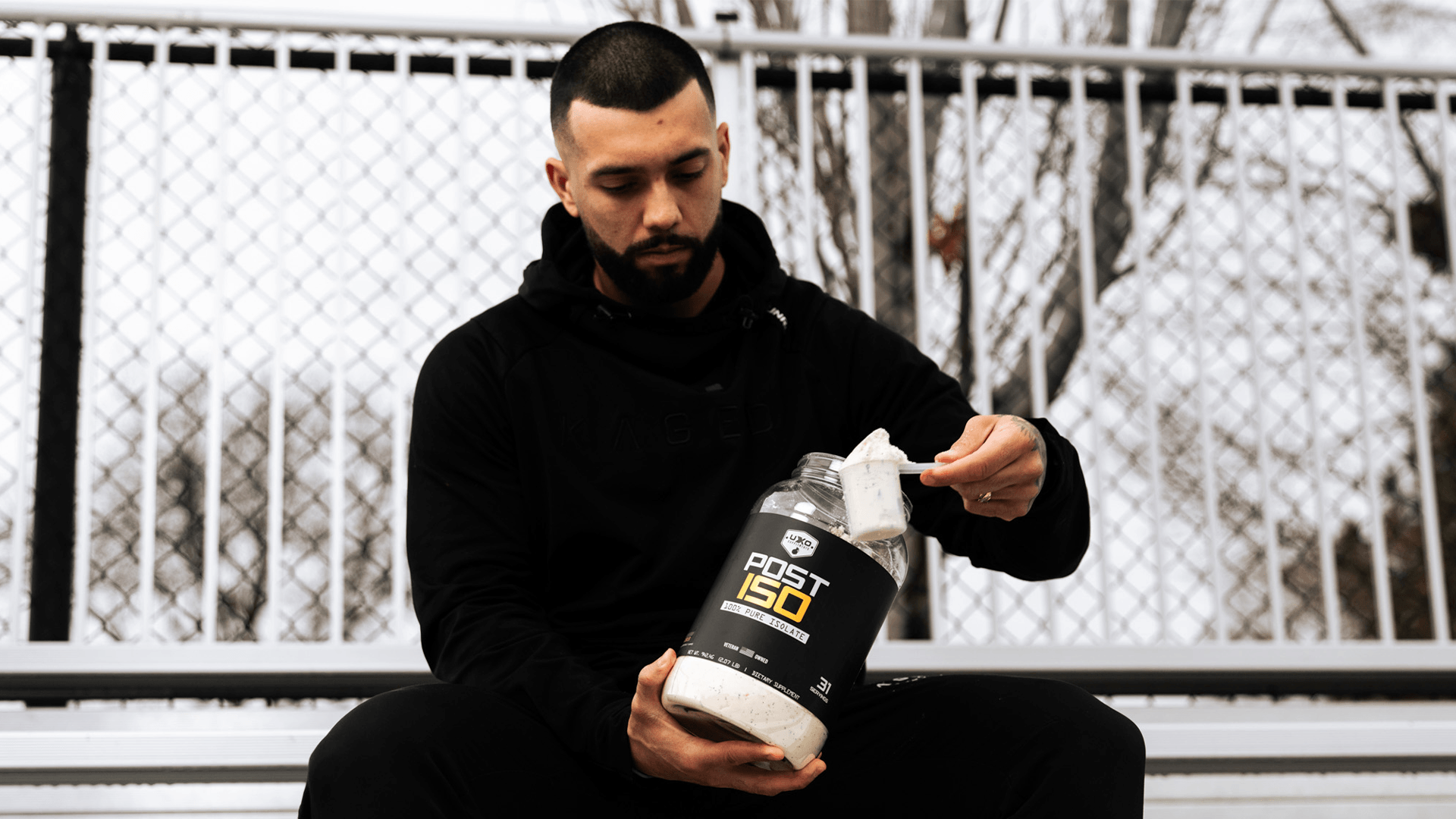
The International Society of Sports Nutrition puts the practical dose at 20 to 40 g of a high quality protein source in the window from immediately post to about two hours out. One scoop of Post Iso is 24 g of whey isolate carrying a DigeZyme enzyme blend, which lands in that band with nothing else riding along. Train long or train fasted and Fuel Point 2.0 covers the window from the other side, intra-workout: 24 g of SusCarb HBCD carbohydrate and 6,750 mg of essential amino acids, including 4,000 mg of BCAA at a 2:1:1 ratio.
One honest caveat on those percentages. Those were eight untrained volunteers, measured fasted. Read the shape of the curve, not the decimal places, and do not expect your own numbers to land on theirs.
HOUR 3 TO 24: THE BUILD RUNS ALL DAY
At 24 hours, synthesis in that study was still 65% above resting. A full day after the session. This is the block that decides whether you grow, and almost nobody manages it, because there is no dramatic moment in it. Nothing to post. Just food and sleep.
- Space your protein. The ISSN position stand lands on 20 to 40 g of quality protein every three to four hours as the pattern that best supports synthesis. Not one giant shake. A rhythm. More in protein timing and the anabolic window.
- Refill glycogen with your day, not with a panic shake. The aggressive refeed protocols, 1.2 g of carbohydrate per kg of bodyweight per hour, exist for athletes training again in under four hours. If your next session is tomorrow, your total daily carbohydrate intake does that job on its own. Carb timing for workouts breaks down where timing genuinely earns its keep.
- Sleep is the only item on this list that rebuilds you. Everything else supports the process. Sleep runs it. Short it and you are paying for a session you will not fully bank, which is exactly the trap covered in sleep and fat loss.
Creatine Monohydrate belongs to this block for a reason that gets ignored constantly: it does not work on a window. It works on saturation. Five grams a day, training day or rest day, morning or night, because the point is a full intramuscular store, not a well timed scoop. Any brand selling a novel creatine form with special timing instructions is selling marketing.
HOUR 24 TO 48: SORENESS PEAKS AND LIES TO YOU
Two days out, synthesis was still 34% above rest, and breakdown had dropped back to resting levels. You are still building at hour 48. You just happen to feel like you got run over while it is happening.
Delayed onset muscle soreness typically peaks somewhere inside this same stretch, and that timing collision is why so many lifters misread it. The foundational Sports Medicine review on DOMS went through the treatment options and found that cryotherapy, stretching, ultrasound and electrical current showed no effect on soreness. Exercise was the most effective option for pain relief, and even that relief is temporary. The review's own recommendation was to cut intensity and duration for a day or two after a session that wrecked you, or work the body parts that got off lighter. Not to lie down.
So move. A twenty minute walk, easy cycling, mobility work, or training a muscle that is not screaming at you. Blood flow is what people are really chasing when they buy recovery gadgets, and it is covered properly in blood flow and recovery. What you should not do is treat soreness as a scoreboard. It tracks novelty and eccentric load, not adaptation. Your first leg day back after a layoff will hurt more than the best leg day you ever had.
WHY 48 HOURS IS NOT AUTOMATICALLY YOUR NUMBER
Every recovery chart on the internet hands you a fixed number per muscle group and calls it settled. That is not how bodies work. The 48 hour figure is one well measured average from one controlled study, and your session was not that study. What shifts it:
- Volume and eccentric load. Six sets of slow negatives on a new movement is a different repair job than three straight sets you have run for a year.
- Range of motion. Deep stretch positions under load, think deficit deadlifts or a heavy leg day, beat you up more than short range work.
- Calories. Recovery is a construction project. Run a deep deficit and it slows down. No supplement changes that.
- Sleep debt and life stress. Both stack on top of training stress. Your body does not keep separate accounts.
- Training age. Repeated exposure to a movement blunts the damage it does, which is why the session that flattens a beginner barely registers on someone who has run it for a year. Frequency climbs as that happens.
Judge readiness by performance, not by feel. Same load, same bar speed, same joint comfort? Then the block is closed. If your numbers have been sliding for weeks rather than days, you are past a recovery question and into a programming one. Start with the overtraining symptoms checklist, then look at how to run a deload week and the case for treating recovery as a variable you program.
THE SUPPLEMENTS THAT ACTUALLY MAP TO THE CLOCK
Cut the fluff. No supplement shortens the timeline. What the right ones do is remove what would have stretched it out: not enough protein, not enough carbohydrate, a half empty creatine pool, fluid you never replaced. That is the honest job description, and four products cover it.
- Post Iso, hour 0 to 2 and across the day. 24 g whey isolate per scoop with a DigeZyme enzyme blend. Hits the 20 to 40 g dose the research points at, with no fillers.
- Fuel Point 2.0, during the session. 24 g SusCarb HBCD, all nine essential amino acids at 6,750 mg total, 2 g L-Glutamine, taurine and a full electrolyte panel. Built for long sessions and back to back training days.
- Creatine Monohydrate, every day. 5 g micronized, single ingredient, no timing required. The most researched performance supplement there is, and the least complicated thing on this list.
- Aqua Spike, whenever you sweat hard. Sodium, potassium and magnesium, because rehydration means replacing what left in the sweat, not just the water.
That is four, and it is deliberately four. If a recovery article hands you seven products, it is a shopping list, not a recommendation. For which lever to pull first, read how to recover faster after a workout.
FREQUENTLY ASKED QUESTIONS
How long does it take for muscles to recover after a workout?
Roughly 24 to 48 hours for most sessions, and the measurements do not stop cleanly. Protein synthesis was recorded at 112% above rest at 3 hours, 65% at 24 hours and still 34% at 48 hours, which is where that study stopped counting. High volume, heavy eccentric or unfamiliar work sits at the long end. Well practiced, moderate volume work sits at the short end.
How long does DOMS last?
Soreness usually shows up 12 to 24 hours after training and peaks somewhere in the 24 to 72 hour range. Unfamiliar movements and heavy negatives produce the worst of it. If it is still severe on day five, you overshot the load.
Does being sore mean the muscle is still recovering?
No. Soreness and repair are two different processes that overlap on the calendar. At the 48 hour mark, when soreness is often at its worst, protein breakdown has already returned to baseline while synthesis is still elevated. You can be sore and ready to train, and you can feel smooth as glass and still be under recovered.
Can I train the same muscle two days in a row?
You can, but you are training into an unfinished rebuild. Keep the second session lighter, shorter, or aimed at a different movement pattern. For most lifters, 48 hours between hard sessions for the same muscle is the practical floor.
Should I drink a protein shake before bed?
The pre sleep protein research the ISSN cites is specifically about roughly 30 to 40 g of casein, which the position stand says can raise muscle protein synthesis through the night. Whey isolate empties fast, so Post Iso is the wrong tool for that job and the right tool for the post training window. If a bedtime shake is how you hit your daily total, it counts. Just do not expect isolate to behave like casein.
Do recovery supplements actually shorten recovery time?
No, and any brand telling you otherwise is selling hype. Protein, carbohydrate, creatine and electrolytes remove the deficits that stretch recovery out. They do not compress the biology. Sleep and food do the heavy lifting, and no scoop replaces either.
READY TO GEAR UP?
Match the tool to the window, then get out of your body's way.
- Post training protein: Post Iso, 24 g whey isolate per scoop
- Carbs and aminos during long sessions: Fuel Point 2.0
- Daily saturation: Creatine Monohydrate, 5 g every day
- Rehydration after heavy sweat: Aqua Spike
- Not sure where to start: take the Die Tryin Co. product quiz
Training is the order. Recovery is the execution. Respect the clock and the clock pays you back.
ALWAYS FORWARD.
Read more
The no-BS recovery playbook — sleep, stress, nutrition, modalities, and the framework that ties it all together. Recovery is where growth actually happens.
The 30-minute post-workout rush is the most oversold rule in sports nutrition. Here is what the research actually shows about the anabolic window, per-meal protein distribution, and pre-sleep protein.
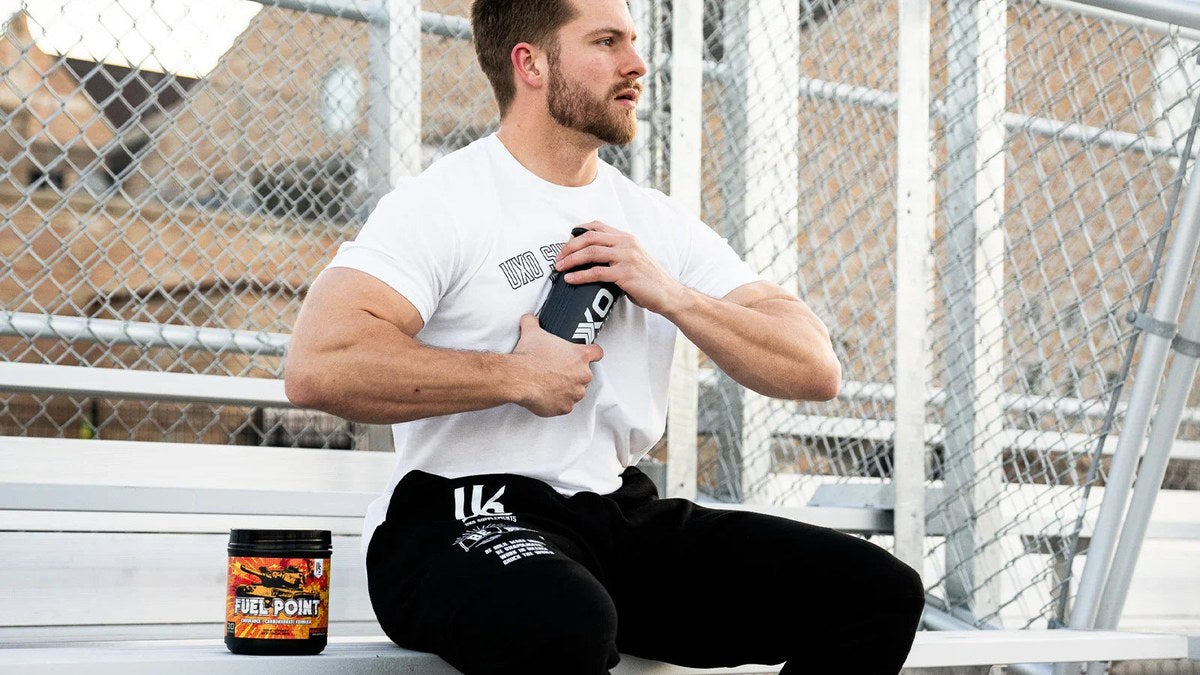
Carb timing matters less than the industry claims and more than the skeptics admit. Here is where the line actually sits.
Short sleep does not necessarily stall your weight loss. It changes what you lose, and the scale will not warn you it is happening.
Every recovery gadget claims to boost blood flow. Here is what the evidence actually supports, and where the honest limits are.
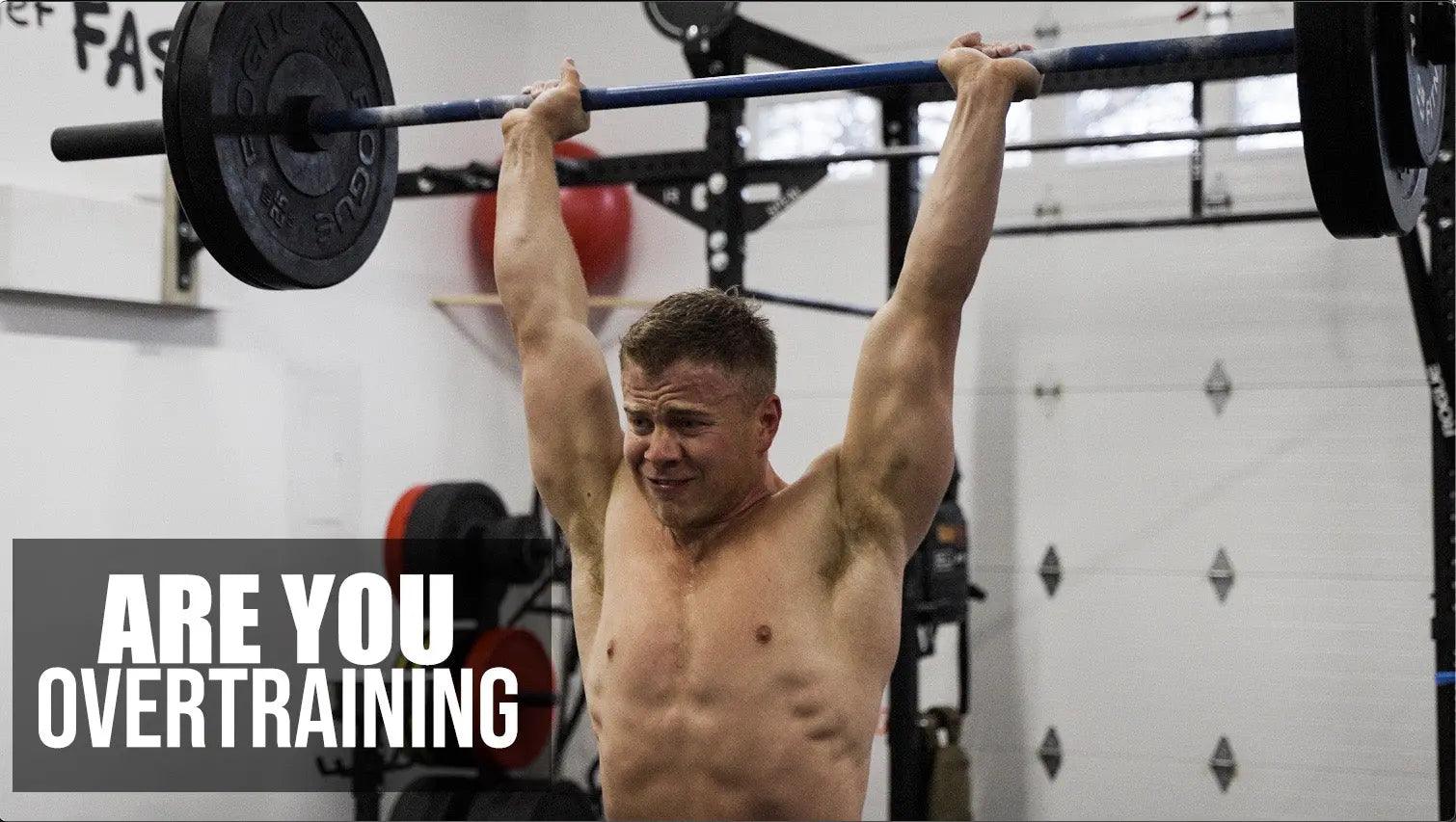
Most lifters asking if they're overtraining are actually overreaching, and there are two kinds. Here's how to tell which one you're in, and what to do about it.
GEAR THAT FITS THIS POST
The products this article actually talks about. Real doses, disclosed labels, veteran owned.