


Protein Timing: Is the Anabolic Window Real?
By Jon Klipstein, U.S. Army Combat Veteran & Founder of Die Tryin Co.
Science reviewed by Onur Oncer, BS Physiology and peer-reviewed published researcher.
THE ANABOLIC WINDOW IS WIDER THAN THE GYM TOLD YOU
Most people get this wrong. They rack the last set, speed-walk to the locker room, and slam a shake before some imaginary clock runs out. Thirty minutes. That's the number everybody repeats. Miss it and the session was supposedly wasted.
Here's the truth: protein timing matters, but not the way the industry sold it to you. The 30-minute anabolic window is the most oversold idea in sports nutrition, and the research behind it is a lot softer than the guy next to you at the squat rack thinks it is.
This post answers one question, and answers it honestly. Does when you eat protein change what you build? Not how much you need. That's a different job, and the complete protein guide handles the numbers. This one is about the clock.
| THE CLAIM | WHAT THE RESEARCH SHOWS | WHAT TO ACTUALLY DO |
|---|---|---|
| "Shake within 30 minutes or you lose the session" | A meta-analysis of 23 hypertrophy trials found the timing effect vanished once total daily protein was accounted for. | Hit your daily total first. The clock is secondary. |
| "The window slams shut fast" | A pre-training meal keeps amino acids in circulation well after the last set. | Eat protein within a couple of hours on either side of training. See the full timing guide. |
| "More feedings means more muscle" | Across 12 hours, 20g every 3 hours beat both 10g every 90 minutes and 40g every 6 hours. | Three to five real protein feedings, spaced roughly 3 to 4 hours apart. Meal frequency breakdown. |
| "Pre-sleep protein is a cheat code" | One 12-week trial showed better gains, but the control group got a non-caloric placebo, so total protein differed too. | Use it if it helps you hit your daily total. Don't expect magic from the hour. |
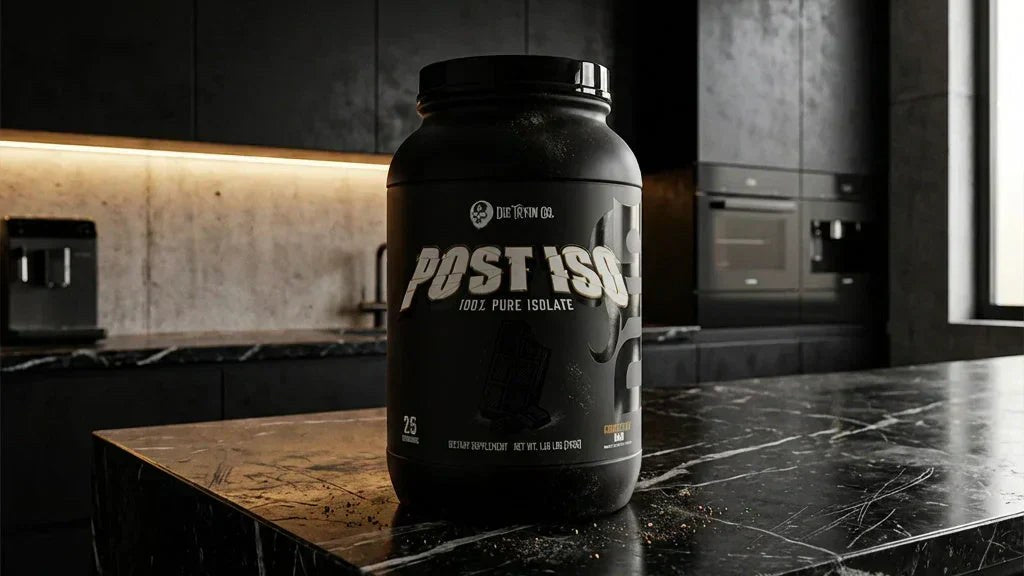
| "You need a shake, not food" | Whole food and powder both raise blood amino acids. Powder is faster and more portable, not superior. | Post Iso when convenience wins. Real food when it doesn't. |
WHERE THE 30-MINUTE WINDOW CAME FROM
The window wasn't invented by liars. It came out of real lab work. Resistance training makes muscle more sensitive to amino acids, and feeding protein after a session drives muscle protein synthesis higher than feeding it at rest. That part holds up. What happened next is a marketing story. Short-term lab findings got compressed into a rule, the rule got a round number attached to it, and the number sold a whole lot of post-workout powder. Nobody went back and told you the number was a guess.
WHAT THE META-ANALYSIS ACTUALLY FOUND
The cleanest test of the window is a 2013 meta-regression by Schoenfeld, Aragon and Krieger in the Journal of the International Society of Sports Nutrition. It pooled 20 strength studies and 23 hypertrophy studies. A simple pooled look showed a small-to-moderate effect on muscle size, which is exactly the result the supplement industry loves to quote at you.
Then they controlled for the covariates. Once total protein intake was in the model, the timing effect disappeared for both strength and hypertrophy. The strongest predictor of muscle gain wasn't the clock. It was how much protein people ate in total.
Read that twice, because it explains most of the confusion in this debate. A lot of the timing studies that "worked" worked because the timing group was also eating more protein. Control the total and the magic goes away. Basics beat hype.
THE WINDOW IS REAL. IT'S JUST HOURS WIDE, NOT MINUTES.
Killing the 30-minute rule doesn't mean timing is irrelevant. It means the window is a garage door, not a mail slot. If you ate a protein-containing meal an hour or two before training, amino acids are still circulating when you finish. Nothing shuts off the second you re-rack the bar. That's why the pre-training meal changes how urgent the post-training one is.
The International Society of Sports Nutrition position stand on nutrient timing places post-exercise protein anywhere from immediately to roughly two hours out, and notes that the size and timing of the pre-exercise meal may change how much post-exercise feeding is even required. Two hours. Not thirty minutes.
PER-MEAL DISTRIBUTION: WHERE TIMING ACTUALLY EARNS ITS KEEP
Here's the part nobody markets, because you can't sell it in a tub. How you spread protein across the whole day looks more important than what you do in the hour after training.
Areta and colleagues ran a controlled trial in The Journal of Physiology that split 80 grams of whey across a 12-hour recovery period three different ways: eight 10-gram hits every 90 minutes, four 20-gram doses every 3 hours, or two 40-gram loads every 6 hours. Same total protein, same training session, three schedules.
The 20 grams every 3 hours protocol won, running roughly 31 to 48 percent higher muscle protein synthesis than the dribble or the bolus. Too little at a time doesn't clear the bar. Too much at once wastes the surplus. The middle worked.
THE LEUCINE THRESHOLD, HONESTLY
The mechanism behind that result usually gets called the leucine threshold. Leucine is the essential amino acid that does most of the triggering, and the idea is that a feeding has to carry enough of it to flip the switch. That's why leucine-dense whey isolate does the job in a smaller dose than most plant sources.
You'll see a very specific leucine number quoted as a hard cutoff. Treat it as a working model, not a law. What the position-stand evidence actually supports is a dose range: roughly 20 to 40 grams of a high-quality protein per feeding, or about 10 grams of essential amino acids, appears to maximally stimulate synthesis, with feedings spaced every 3 to 4 hours.
One more honest caveat. Every study in this section measures muscle protein synthesis over hours, not muscle on your frame over months. Acute synthesis is a useful proxy. It is not the outcome you care about, and the long-term trials keep pointing back at total intake. For the deeper version of that argument, read the protein cycling breakdown.
DOES PRE-SLEEP PROTEIN DO ANYTHING?
Overnight is the longest fast most lifters run, so a pre-sleep feeding makes sense on paper. The evidence is genuinely interesting and genuinely limited. The headline trial is Snijders and colleagues, published in The Journal of Nutrition in 2015. Forty-four young men ran a 12-week progressive resistance program. One group took 27.5 grams of protein with 15 grams of carbohydrate before bed every night. The other took a placebo. The protein group gained more strength and more quadriceps cross-sectional area.
Here's the caveat the headlines skip: the placebo had zero calories and zero protein. So the pre-sleep group didn't just eat protein at a different time, they ate more protein overall. That is not a clean test of timing. Research suggests a pre-sleep feeding is a useful tool. It is not proof the hour did the work.
WHEN TIMING ACTUALLY MATTERS
Timing moves from "nice" to "worth planning" in a short list of situations. Everywhere else, chase the daily total and stop watching the clock.
- You train fasted. No pre-workout meal means nothing is circulating. Get protein in reasonably soon after.
- Two sessions in one day. A short recovery gap compresses everything, protein and carbs included.
- You're in a deficit. Less total food means each feeding has to do more work, so spacing gets tighter.
- You're barely hitting your target. When total intake is low, structure is the cheapest fix available.
- Long endurance work. Fuel and amino acid support during the session start to matter for their own reasons.
Creatine doesn't appear on that list on purpose. Creatine works on a saturation model instead of an acute one, which makes it a completely different timing question. We answered that one separately in when to take creatine.
FREQUENTLY ASKED QUESTIONS
Do I have to drink a shake within 30 minutes of training?
No. The 30-minute rule is gym folklore. If you ate protein before you trained, amino acids are still elevated afterward, and the nutrient timing position stand supports a post-exercise feeding anywhere from immediately to about two hours out.
Is the anabolic window real at all?
Yes, but it's hours wide, not minutes. Training makes muscle more responsive to protein for an extended stretch. The mistake was compressing that into a countdown timer.
How much protein should I eat per meal?
Roughly 20 to 40 grams of a high-quality source per feeding, every 3 to 4 hours, is what the nutrient timing position stand points to. For your daily and per-meal numbers by bodyweight and goal, run the protein calculator or read the protein guide.
Does protein timing matter more if I train fasted?
It matters more than it does for someone who ate two hours beforehand. With nothing circulating, getting a feeding in after the session is the reasonable move. Don't panic about the exact minute.
Should I take protein before bed?
It's a legitimate option, especially if it helps you hit your daily target. Just know the strongest supporting trial compared protein against a zero-calorie placebo, which means total intake differed too.
Is whey isolate better than whole food after training?
Not better. Faster and more convenient. If you're driving home from the gym, a shake wins on logistics. If you're sitting down to a meal, the meal is fine. More on what protein actually does for you in why protein matters.
READY TO GEAR UP?
Timing is a detail. Total intake is the mission. These are the tools that make hitting it easier:
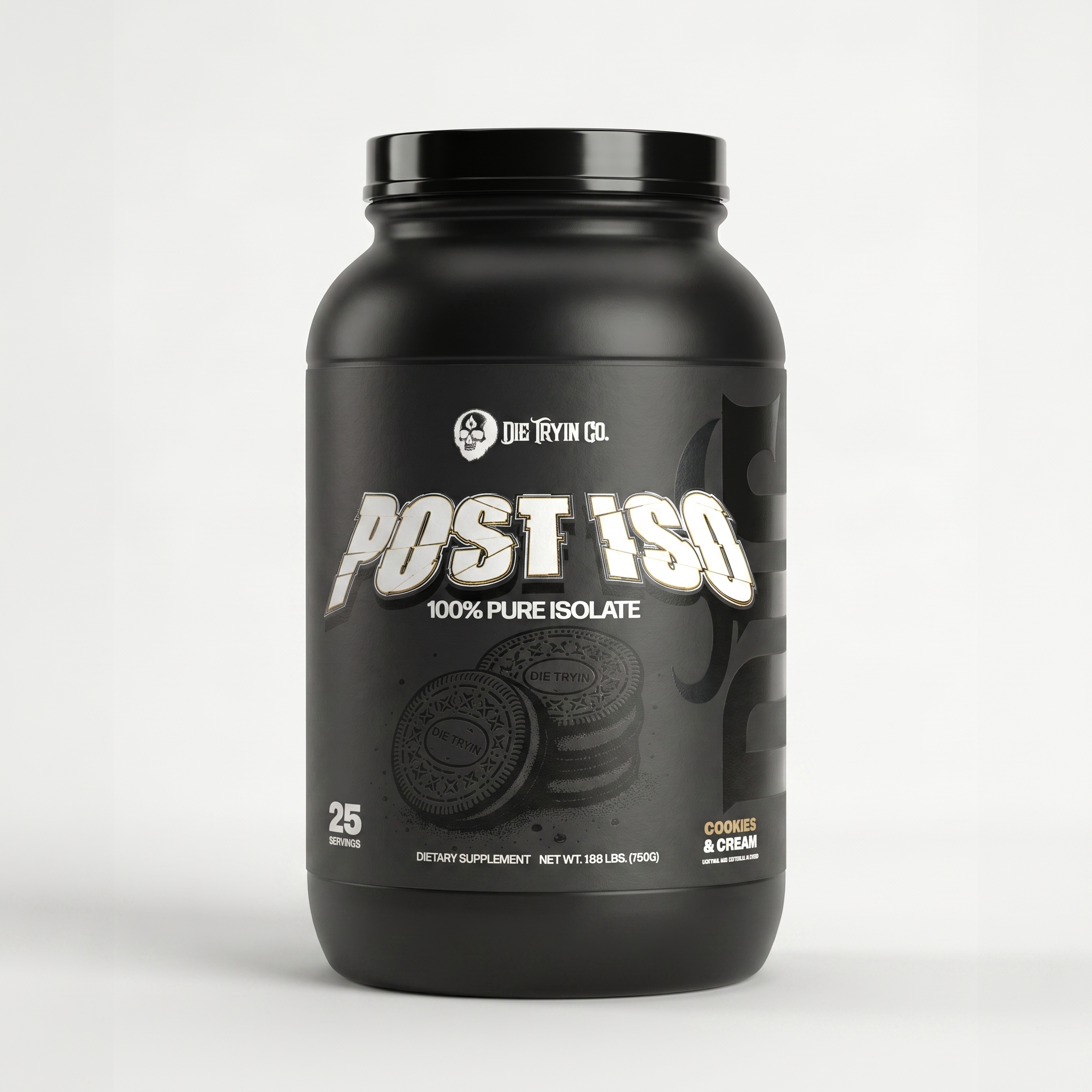
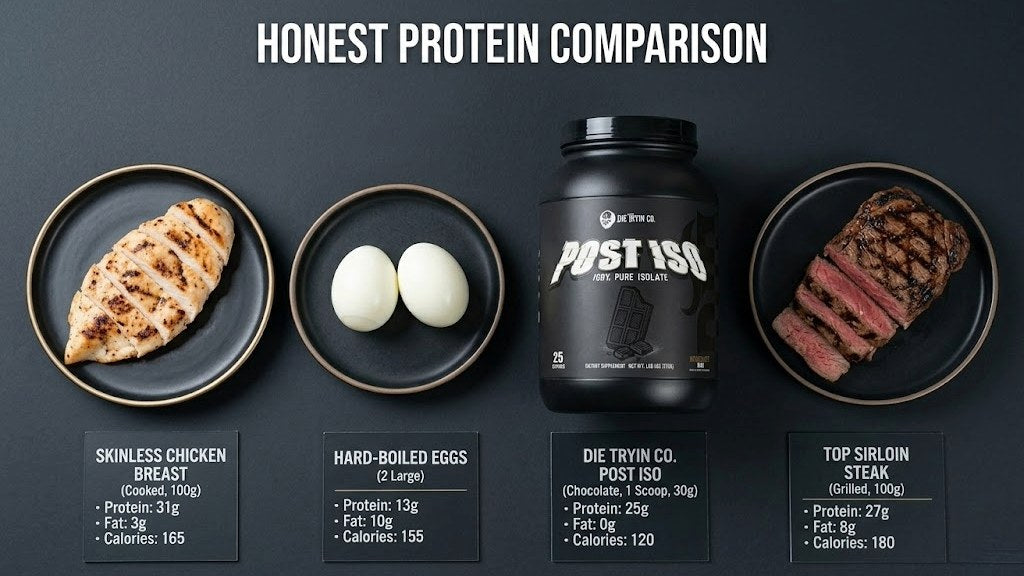
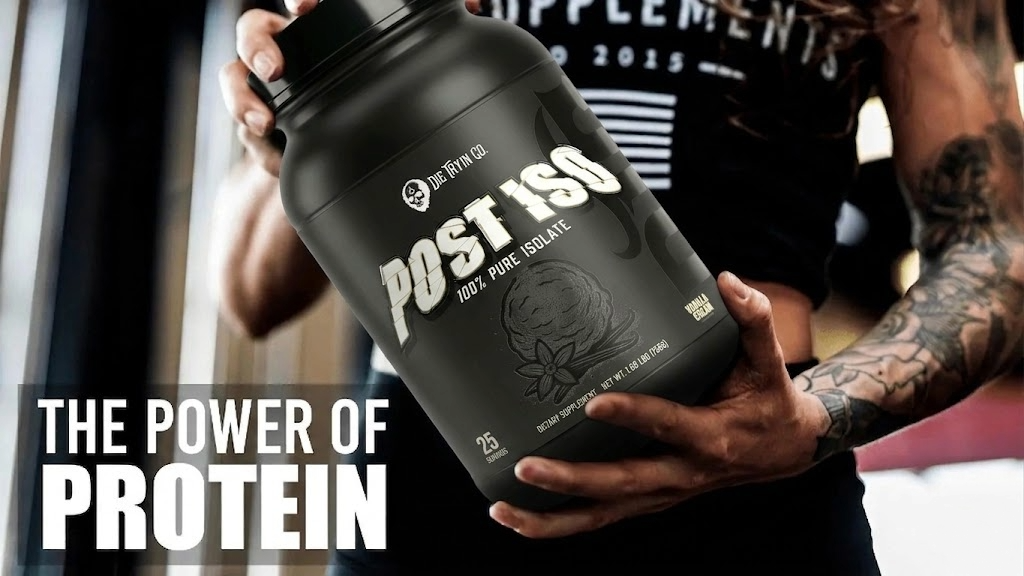
- Post Iso for a fast, clean feeding. 24g of whey isolate protein in 110 calories with DigeZyme digestive enzymes.
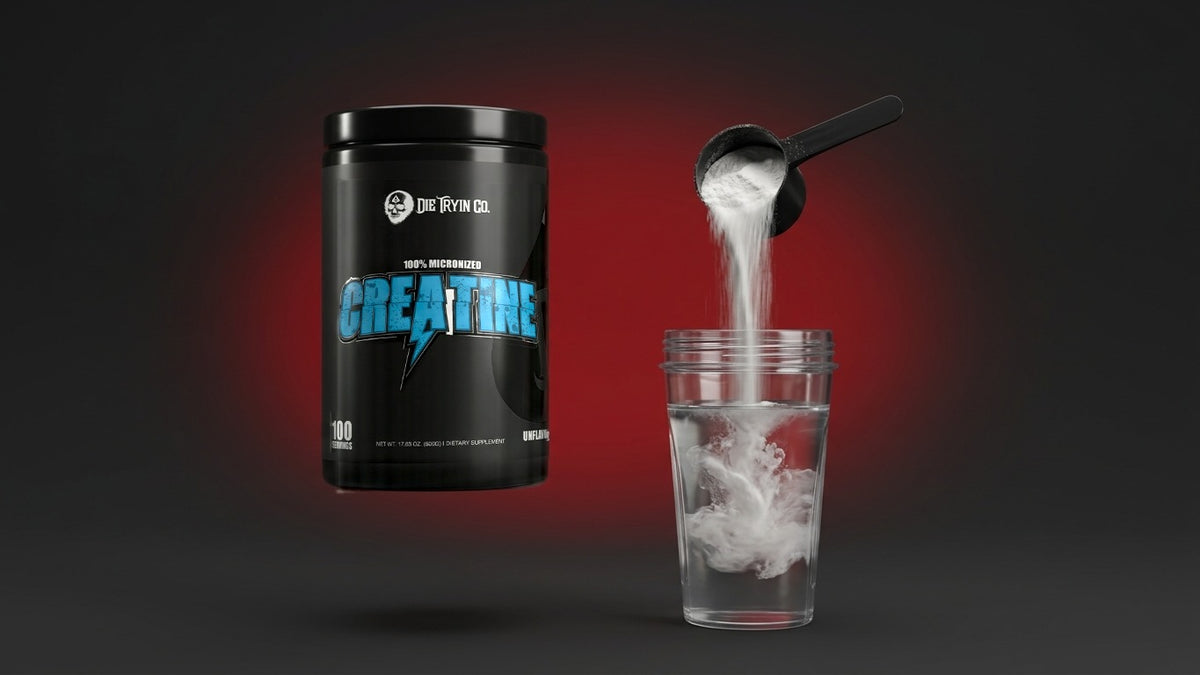
- Creatine Monohydrate at 5g daily. Saturation model, so take it whenever you'll actually remember.
Not sure what belongs in your stack? Take the supplement quiz and build it around your training instead of a countdown timer. Discipline beats motivation. Consistency beats a stopwatch.
ALWAYS FORWARD.
GEAR THAT FITS THIS POST
The products this article actually talks about. Real doses, disclosed labels, veteran owned.

Read more
The complete protein playbook — how much you need, when timing matters, which sources deliver, and the myths costing you money.
What to take before, during, and after training — and exactly when. The complete pre/intra/post supplement timing guide. No filler, no 12-bottle stacks.
Protein cycling promises better muscle outcomes by alternating high and low protein. Three meta-analyses say otherwise. Here's what actually works.
Pre-workout? Post-workout? With food? The truth about creatine timing is simpler than the internet makes it — here's what actually matters.
Protein does more than build muscle. 8 real benefits ranked by evidence strength: satiety, metabolic boost, bone density, sarcopenia prevention, and more.
Your gut lining runs the same creatine energy system as your muscles. Here is what the research shows on stomach upset, IBS, colitis and leaky gut, and exactly where the human evidence stops.