


When to Take Creatine: Does Timing Actually Matter?
By Jon Klipstein, U.S. Army Combat Veteran & Founder of Die Tryin Co.
Science reviewed by Onur Oncer, BS Physiology and peer-reviewed published researcher.
WHEN TO TAKE CREATINE: THE SHORT ANSWER
Here's the honest answer: take 5 g of creatine (one scoop) every day, at whatever time you'll remember. Taking it after training with a meal is a small, optional edge, not a rule.
"When should I take creatine?" might be the most over-asked, over-complicated question in supplements. Before the workout? After? With food? Morning or night? The internet has turned a dead-simple supplement into a timing puzzle. Creatine builds up in your muscles over time, not in a magic window around training. Miss the "perfect" time and nothing breaks. Skip days and you lose the benefit. Creatine is the most-researched supplement in sports nutrition, and one of the simplest to use. Here's what moves the needle and what's just noise.
| SITUATION | WHAT TO DO | WHY |
|---|---|---|
| Before or after a workout | Either. For a slight edge, take it after, with your post-workout meal or shake. | A few trials lean "after." Most find no difference. |
| Rest days | One scoop of Creatine (5 g), same as training days. | Keeps your muscles topped off. Stop and the extra is gone in about 4 to 6 weeks. |
| Loading | Optional: four 5 g scoops a day (20 g) for 5 to 7 days to fill up faster. | You end up just as full. 3 to 5 g a day just takes about 3 to 4 weeks instead of 1. |
| Morning or night | Whichever you'll remember. | Not a stimulant. A 12-week study found very similar results morning or evening. |
| With food | With a protein-and-carb meal or shake if easy. Empty stomach works too. | Carbs and protein with it helped the body keep more creatine during loading. |
| With caffeine or pre-workout | Your daily 5 g can share the shaker. Loading? Keep big caffeine doses apart from it. | The studies that warned about it used loading plus lots of caffeine every day, and even they don't agree. |
HOW CREATINE ACTUALLY WORKS (WHY TIMING IS OVERRATED)
Timing only makes sense once you know how creatine works. Creatine isn't like caffeine. You don't feel it kick in, so there's nothing to time. Creatine works by saturation, which just means filling up. Taken daily, it slowly fills the creatine stores in your muscles. Once they're full, you have a bigger reserve of fast energy for hard efforts like a heavy set or a sprint. The International Society of Sports Nutrition's official position on creatine agrees: getting enough every day to fill those stores is what counts, not the exact time. Think of it like filling a fuel tank. The time of day you add fuel doesn't matter. What matters is that the tank stays full. That's why the daily habit beats any clever timing trick.
SHOULD YOU TAKE CREATINE BEFORE OR AFTER A WORKOUT?
This is the question everyone actually wants answered. Either works, and the difference is tiny. The idea behind taking it close to training is that a working muscle has more blood moving through it and may pull in more creatine. Five trials tested it head to head. In a 2013 study, 19 bodybuilders took 5 g right before or right after training for a month (Antonio, 2013). Overall, no real difference, with a small hint that "after" was better. A 2015 study followed older adults through 32 weeks of training (Candow, 2015). Only the "after" group gained more lean mass (body weight that isn't fat) than the placebo (fake powder) group. Both timings beat the placebo on strength. Head to head, before and after did not differ.
The other three found no difference. A 2014 study in older adults ran 12 weeks (Candow, 2014). In a 2021 study, 10 young adults took creatine right before training one side of the body and right after training the other side. After 8 weeks, both sides gained similar size and strength (Forbes, 2021 trial). In a 16-week study of 27 trained young lifters, neither timing beat the placebo (Mills and colleagues, 2026, Nutraceuticals, vol 6, issue 3). Those lifters took it on training days only (more on that under rest days). A 2021 review of the timing studies said the evidence leans slightly toward "after" but is too limited to call (Ribeiro, 2021). No clean trial has shown that timing changes how much creatine your muscles store. A 2022 review of the timing research went further: the evidence does not support timing creatine around training at all.
So if you want to split hairs, take it after training, ideally with your post-workout meal or shake. If that's inconvenient, take it before. If neither fits your day, take it whenever you'll remember. The gap between perfect timing and "whenever" is tiny. The gap between every day and sometimes is huge. See where creatine fits in the full supplement timing guide, and why protein's post-workout "anabolic window" is hours wide, not minutes.
SHOULD YOU TAKE CREATINE WITH FOOD?
It helps a little, but not enough to obsess over. In a 2000 study, 12 men loaded creatine with different meals (Steenge, 2000). About 50 g each of protein and carbs, or about 100 g of carbs, helped the body hold about 25% more creatine than a placebo drink. That's insulin at work: the hormone that rises after you eat helps move creatine into your tissues. A study that took muscle samples saw the effect inside the muscle too (Green, 1996). But it took about 93 g of sugar per 5 g serving, four times a day. And in the 2000 study the insulin effect weakened within the first day. It's a small, optional extra.
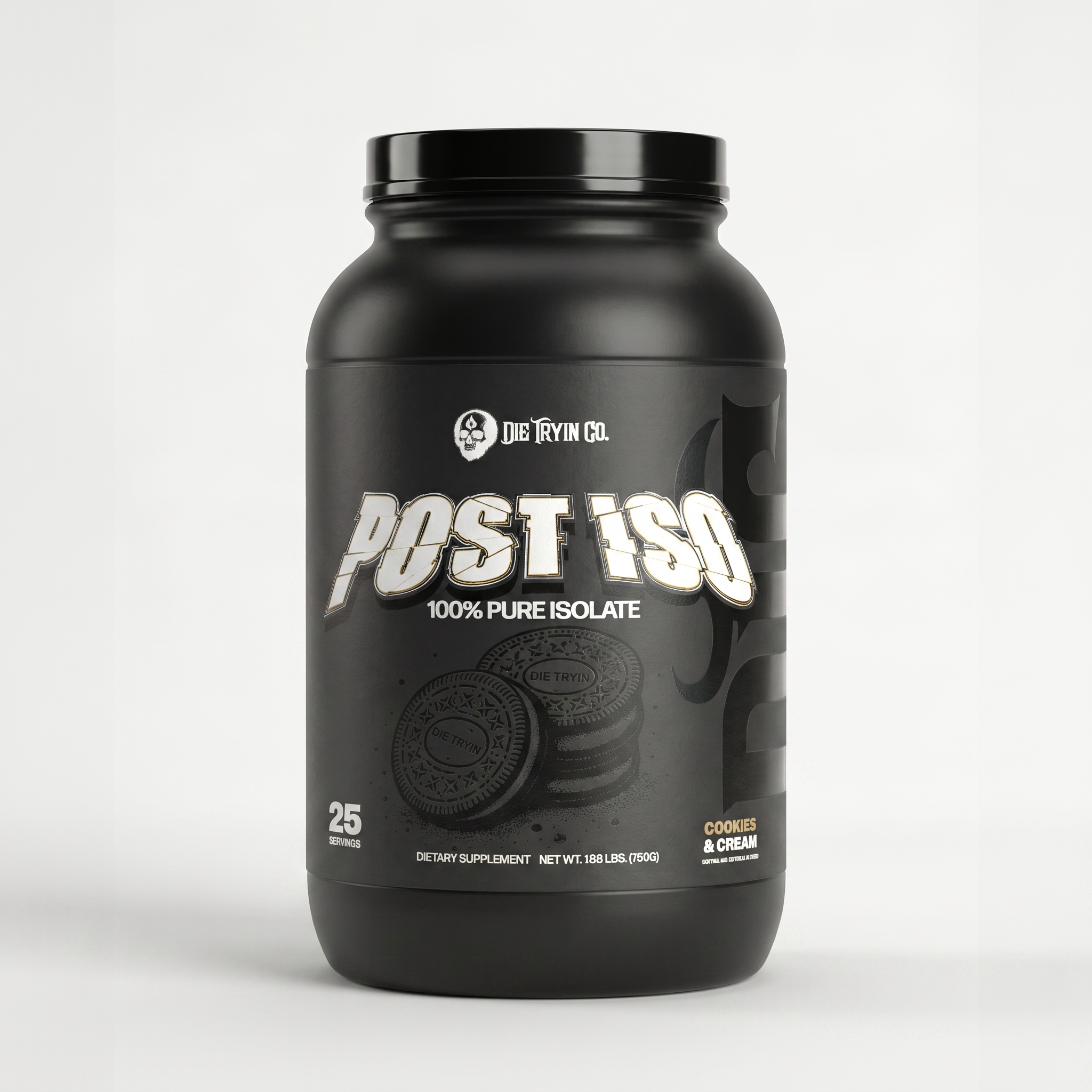
An empty stomach works too. If creatine on its own upsets your stomach, take it with food. What you mix it into doesn't change how it works. Water, juice, a pre-workout or a protein shake all do the job. A micronized creatine, ground extra fine, dissolves cleanly into any of them. Post Iso has only 3 g of carbs a scoop, so add oats, a bagel or rice if you want the carb effect. For mixing ideas, see what to mix creatine with. Don't overthink the mix. Just get it in.

DO YOU NEED TO LOAD CREATINE?
You've probably seen the advice to "load" creatine: about 20 g a day for the first week, then a smaller daily dose. Here's the honest take: you don't need to load. A 1996 study that measured creatine in muscle samples tested both ways. One group took 20 g a day for 6 days. Another took 3 g a day for 4 weeks. Both ended up with about 20% more creatine in their muscles. Loading gets you full in about a week instead of about 3 to 4 weeks. That's the only difference.
Big single servings are what upset stomachs. In a 2008 trial, one 10 g serving caused more diarrhea, while two 5 g servings matched the placebo (Ostojic, 2008). So if you load, split it into 5 g servings. Unless you need to fill up fast, like for an event in two weeks, skip loading. A steady 3 to 5 g a day reaches the same full tank without the big servings. If you are pregnant, managing a medical condition or taking medication, clear any supplement with your doctor first. We covered cycling creatine on and off and other myths here.
SHOULD YOU TAKE CREATINE ON REST DAYS?
Yes. This trips people up, but it follows straight from how creatine works. The goal is keeping your muscles full, not fueling one workout, so you take it every day, including rest days. Your muscles don't stop holding creatine just because you didn't train. In that 1996 loading study, 2 g a day kept the stores full. People who stopped completely drifted back to where they started in about a month.
Skip off days and you top up less often. Studies that dosed only on training days split. A 2021 meta-analysis pooling studies in older adults still found gains in lean mass and strength (Forbes, 2021 meta-analysis). The 2026 study above dosed only on training days and found no effect. Since the results go both ways, every day is the safe call: take your scoop on rest days exactly like training days.
CAN YOU TAKE CREATINE IN THE MORNING OR AT NIGHT?
Either one. In a 12-week study, elite female handball players took creatine in the morning or the evening, and both groups got very similar results (Jurado-Castro, 2021). Night is fine too: creatine is not a stimulant, so it won't wire you like caffeine. In a 2025 study, 14 active men loaded creatine for a week (Ben Maaoui, 2025). How long they slept and how fast they fell asleep didn't change. On one of two sleep questionnaires, they also rated their sleep better than on the placebo.
CAN YOU TAKE CREATINE WITH PRE-WORKOUT OR CAFFEINE?
Yes, for your daily 5 g. The worry comes from loading studies. In a 1996 study, 9 men loaded creatine while taking a high daily dose of caffeine. The caffeine wiped out the performance boost, though the creatine stored in their muscles still rose (Vandenberghe, 1996). A 2022 review of 10 studies found a mixed picture (Elosegui, 2022). Daily caffeine during loading cut into the benefit in some, made no difference in others and helped in one. And creatine loading didn't weaken the kick from a single caffeine dose.
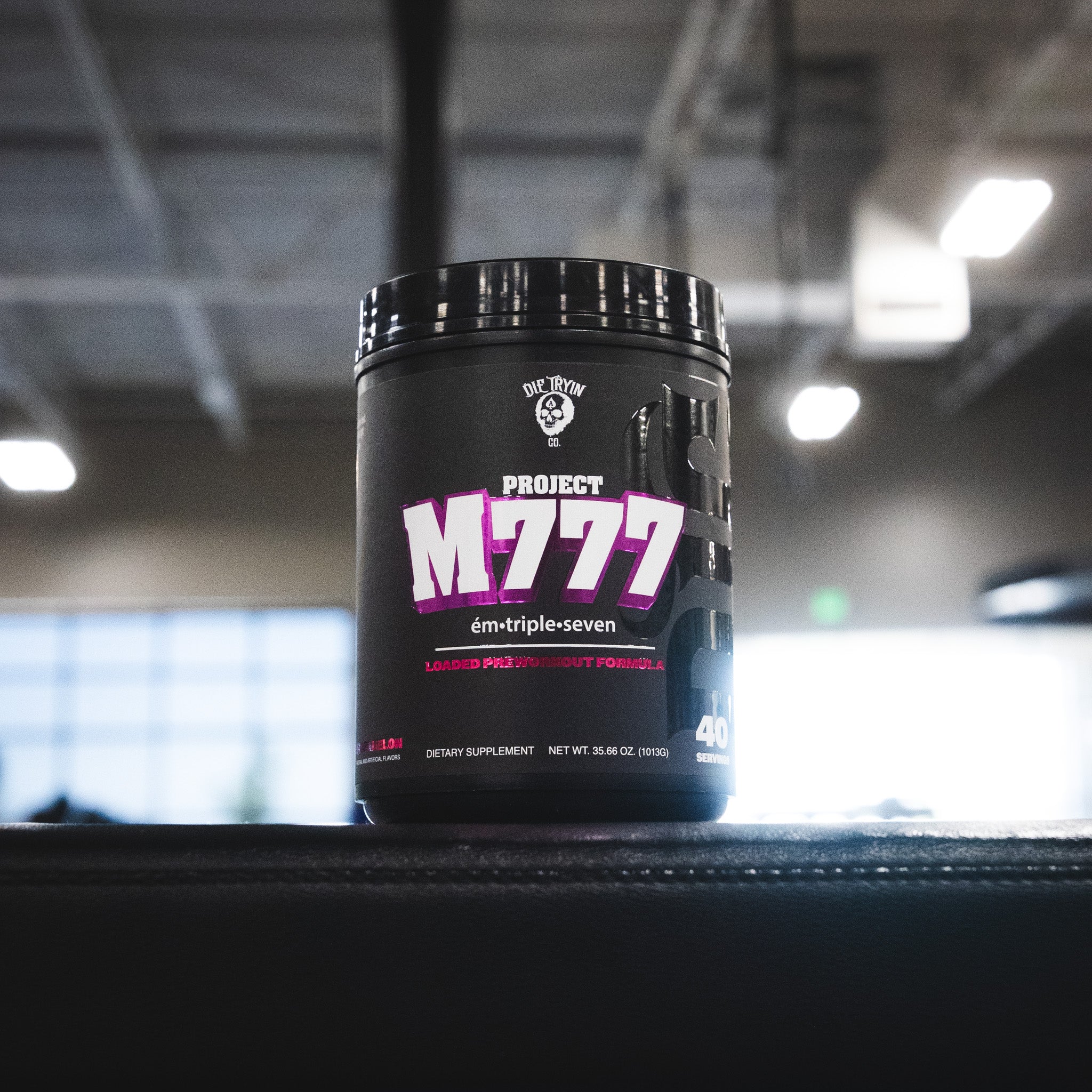
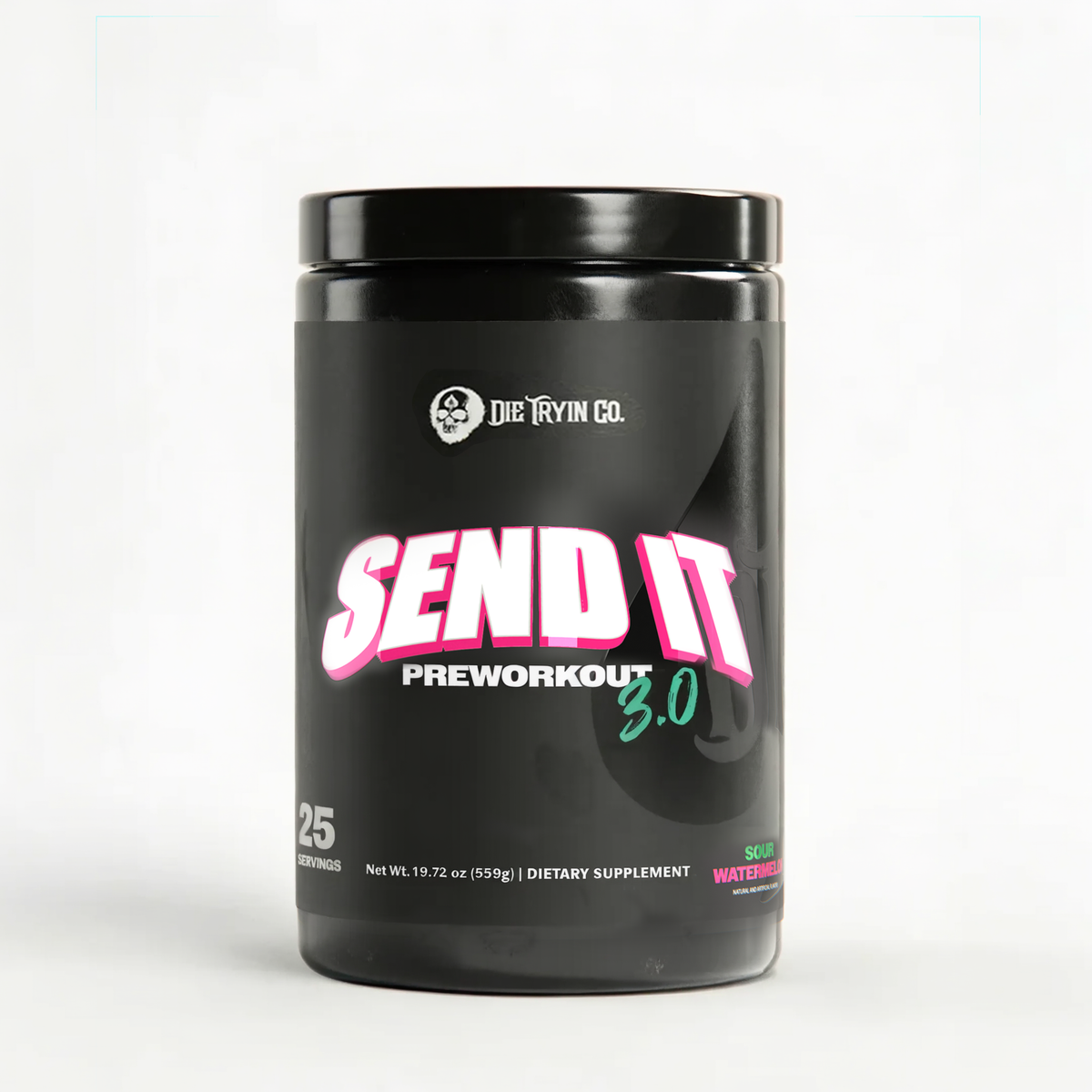
If you load, keep big caffeine doses away from your creatine servings, and go easy on caffeine that week. SEND IT 3.0 has no creatine, so add your 5 g. Project M777 carries 5 g of Creatine Monohydrate in its full two-scoop serving, or 2.5 g in one scoop. The full serving is for experienced stimulant users only. Either serving counts toward your daily 5 g.
THE ONLY TIMING RULE THAT ACTUALLY MATTERS
If timing barely matters for results, here's where it does matter: picking a time you'll actually stick to. Taking it every day, month after month, is the single biggest factor in whether creatine works for you. The best time to take creatine is the time you won't forget. Anchor it to something you already do daily, make it automatic, and you've solved the only timing problem that affects your results:
- With your morning coffee or breakfast
- In your daily protein shake
- Mixed into your pre- or post-workout drink
- Right before bed with a glass of water
FREQUENTLY ASKED QUESTIONS
What is the best time to take creatine?
Whatever time you'll stick to every day. For the small edge, take it after training with a meal or shake.
Should I take creatine before or after a workout?
Either works. A few trials lean slightly toward after, and most find no difference.
Do I take creatine on rest days?
Yes. Take one scoop (5 g) every day so your muscles stay full.
Can I take creatine at night?
Yes. It isn't a stimulant, and a loading study found it didn't change measured sleep.
Should I take creatine with food?
You can. Carbs and protein with it may slightly improve uptake into the muscle, but an empty stomach works too.
Do I need to load creatine?
No. A steady 3 to 5 g a day fills your muscles in about 3 to 4 weeks. Loading only gets you there in about one.
READY TO GEAR UP?
Die Tryin Co. Creatine is micronized Creatine Monohydrate, the gold-standard form the research is built on. It's ground fine so it mixes clean into whatever you drink, whenever you take it. No loading gimmicks, no proprietary blends hiding the dose. Just 5 g of the real thing daily, in Healing Potion, Cherry Limeade, Forbidden Fruit or Unflavored. For the shake it goes in, Post Iso brings 24 g of whey isolate protein per scoop.
New to creatine? See what to look for in the best creatine, or take the quiz to build your stack.
ALWAYS FORWARD.
GEAR THAT FITS THIS POST
The products this article actually talks about. Real doses, disclosed labels, veteran owned.


Read more

What actually works in pre-workout — ingredients, doses, timing, and how to pick the right one. Cut through the marketing. Get the real answer.
Micronized creatine isn't a different, "superior" creatine — it's the same proven monohydrate ground finer. Here's what that actually gets you, no hype.
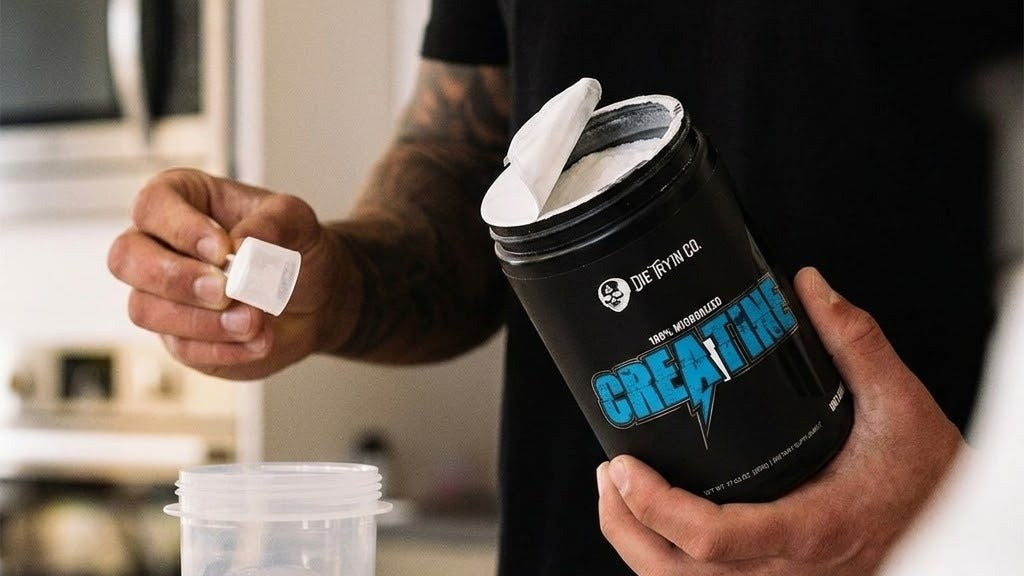
Kidney damage, steroids, hair loss, bloating — creatine is buried under gym myths. Here's the truth on each one, backed by what the research actually shows.
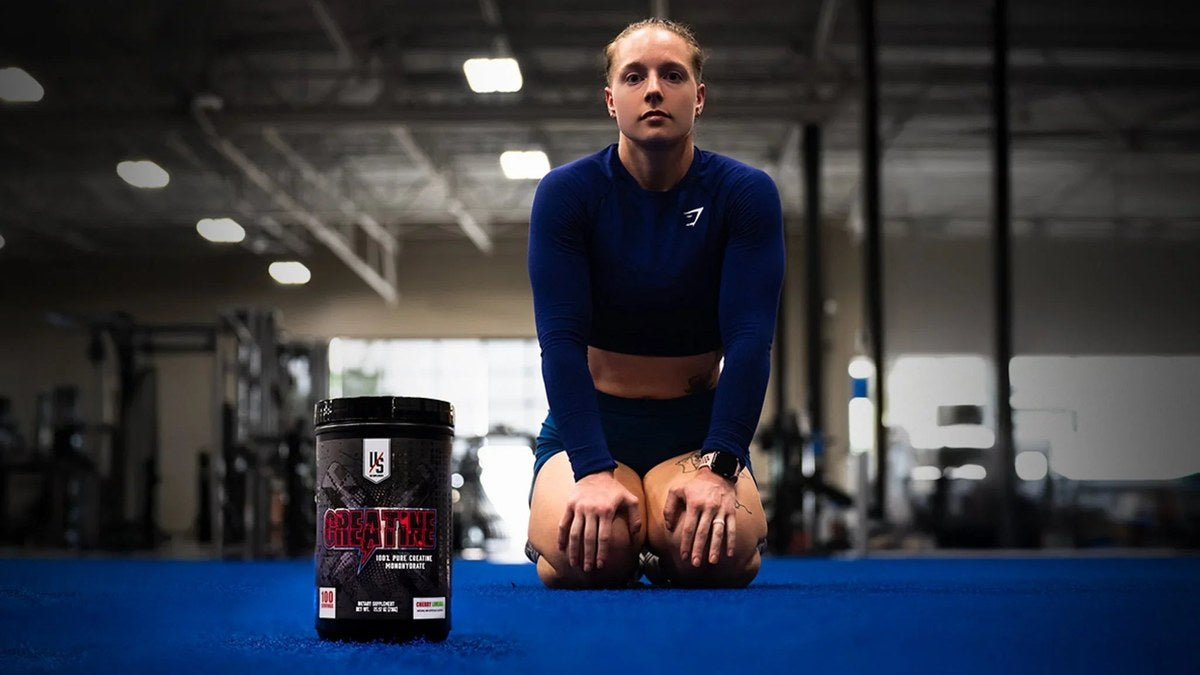
Not all creatine is worth your money. Here's exactly what to look for in the best creatine — and the overpriced, overhyped forms to walk right past.
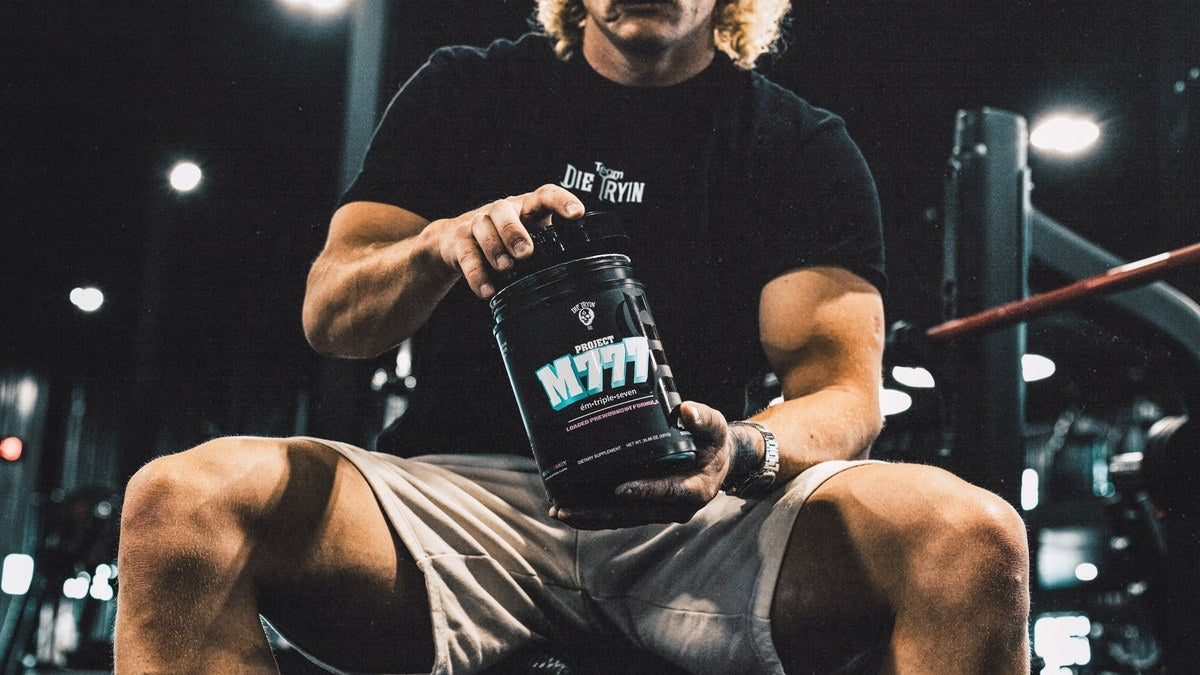
What to take before, during, and after training — and exactly when. The complete pre/intra/post supplement timing guide. No filler, no 12-bottle stacks.
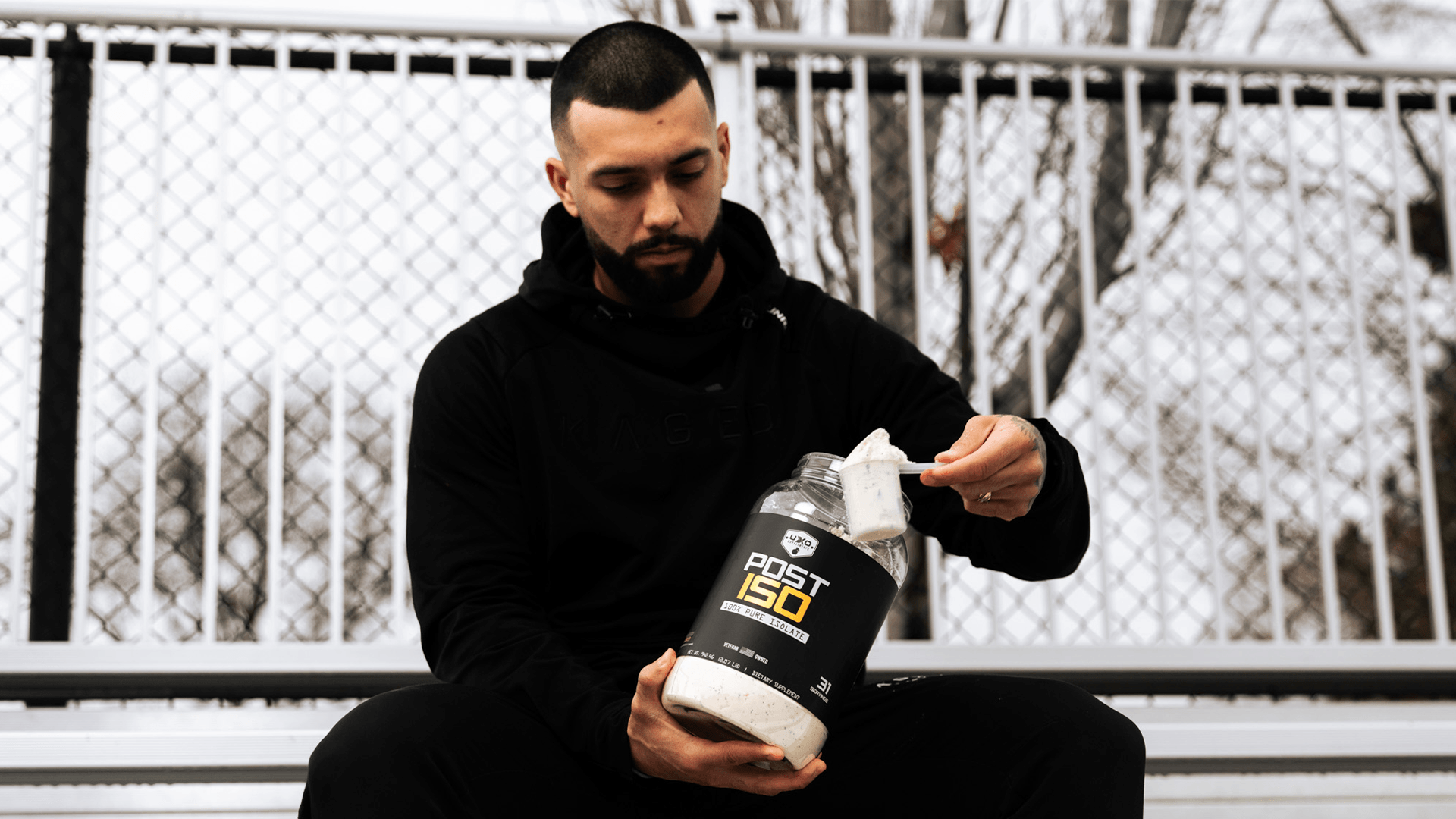
The 30-minute post-workout rush is the most oversold rule in sports nutrition. Here is what the research actually shows about the anabolic window, per-meal protein distribution, and pre-sleep protein.