




Creatine Myths Busted: The Truth About Side Effects
By Jon Klipstein, U.S. Army Combat Veteran & Founder of Die Tryin Co.
Science reviewed by Onur Oncer, BS Physiology and peer-reviewed published researcher.

THE MOST STUDIED SUPPLEMENT, THE MOST LIED ABOUT
Here's something that should tell you everything: Creatine Monohydrate is the single most-researched supplement in all of sports nutrition — hundreds of studies, 30-plus years of data — and it's still buried under more gym myths than almost anything else you can buy.
Your buddy swears it wrecks your kidneys. Someone on the internet says it's basically a steroid. A headline claims it makes your hair fall out. Meanwhile the actual science has been sitting there the whole time, quietly saying the opposite.
Let's go through the big myths one by one and kill them with what the research actually shows. No hype, no fear-mongering — just the truth.
MYTH: "CREATINE DAMAGES YOUR KIDNEYS"
This is the big one, and it's wrong for healthy people. Decades of research, including long-term studies, show no evidence that creatine harms the kidneys or liver in healthy individuals taking normal doses. The ISSN Position Stand on Creatine is explicit that creatine is safe and well-tolerated, even with years of use.
So where did the scare come from? A blood marker called creatinine. Creatine naturally breaks down into creatinine, so when you supplement, your creatinine reads slightly higher. Doctors use creatinine to estimate kidney function — so an uninformed reading can look alarming when it's really just a harmless side effect of supplementing. It's not damage; it's a measurement quirk.
The honest caveat: if you have pre-existing kidney disease, talk to your doctor before using creatine. For everyone else with healthy kidneys, the fear is unfounded.
MYTH: "CREATINE IS A STEROID"
No. Creatine and anabolic steroids have nothing in common. Steroids are synthetic hormones. Creatine is a naturally occurring compound your body already makes in the liver and kidneys, and that you eat every time you have red meat or fish.
It doesn't alter your hormones. It isn't banned by any sporting body. It works by helping your muscles regenerate ATP — their fast energy currency — not by manipulating your endocrine system. Calling creatine a steroid is like calling coffee a narcotic.
MYTH: "CREATINE MAKES YOU FAT AND BLOATED"
Creatine has zero calories that turn into body fat — it's not going to make you gain fat. The "bloat" myth comes from water, and the detail people miss is where the water goes.
Creatine pulls water into your muscle cells (intracellular), which actually makes muscles look fuller and supports performance. That's different from the puffy, soft, under-the-skin (subcutaneous) water retention people picture. Any small bump on the scale in the first couple of weeks is muscle water, not fat. Stomach bloating, when it happens, is usually a loading-phase or coarse-powder issue — not the creatine itself.
MYTH: "YOU HAVE TO LOAD AND CYCLE CREATINE"
You don't need to do either. Loading (about 20 g a day for a week) just fills your muscles faster. A steady 3 to 5 g a day gets you to the same full tank in about 3 to 4 weeks, and smaller servings are easier on the stomach. Here's the full breakdown on loading and timing.
Cycling is equally pointless. Creatine isn't a stimulant and your body doesn't build a tolerance or "stop responding." There's no need to take breaks. Take it daily, year-round, and you're set. The form barely matters next to that consistency.
MYTH: "CREATINE CAUSES HAIR LOSS"
This one traces back to a single small 2009 study that found a rise in DHT (a hormone linked to male-pattern baldness) in rugby players — without actually measuring any hair loss. That study has never been replicated, and no research since has shown creatine directly causes hair loss.
If you're genetically prone to balding, that's genetics doing its thing regardless of creatine. Blaming the most-studied supplement in the world on the basis of one unreplicated study is exactly the kind of myth that spreads faster than the science correcting it.
MYTH: "CREATINE CAUSES CRAMPS AND DEHYDRATION"
The opposite, if anything. Despite the old locker-room warning, research has not found that creatine causes muscle cramps or dehydration. Some studies suggest it may actually help with hydration and heat tolerance, since it increases the water your cells hold.
Stay normally hydrated like you would anyway, and creatine gives you no special cramping risk. The "creatine dehydrates you" line is gym folklore, not science.
MYTH: "CREATINE IS JUST FOR MALE BODYBUILDERS"
Creatine is one of the most universally useful supplements there is. Women benefit just as much for strength, lean muscle, and performance — without "getting bulky," which isn't how it works anyway. Older adults use it to support muscle retention and even cognitive function as they age. Endurance and team-sport athletes use it for repeated high-intensity efforts.
It's not a "bro" supplement. It's a foundational one for almost anyone who trains.
THE BOTTOM LINE
Strip away the myths and you're left with a simple, well-established truth: Creatine Monohydrate is safe, effective, and one of the few supplements that genuinely earns its place in your routine. Decades of research back it. The scare stories don't.
Stay consistent, train hard, and ignore the noise. That's how the most-studied supplement in the world is supposed to be used.
FREQUENTLY ASKED QUESTIONS
Is creatine safe to take long term?
Yes. Long-term studies in healthy individuals show creatine is safe and well-tolerated over years of daily use. If you have a pre-existing kidney condition, check with your doctor first.
Do I need to stop taking creatine periodically?
No. There's no need to cycle off. Creatine isn't a stimulant, your body doesn't build tolerance, and taking it continuously keeps your muscles saturated for ongoing benefit.
Does creatine actually cause hair loss?
There's no good evidence it does. The concern comes from one small, never-replicated study that measured a hormone, not actual hair loss. Genetic balding happens with or without creatine.
Will creatine make me gain weight?
Any early scale increase is water drawn into your muscles, not fat. It supports muscle fullness and performance. Creatine has no calories that convert to body fat.
Is creatine safe for women?
Yes. Women get the same strength, performance, and lean-muscle benefits, with the same strong safety profile. It will not make you "bulky."
READY TO GEAR UP?
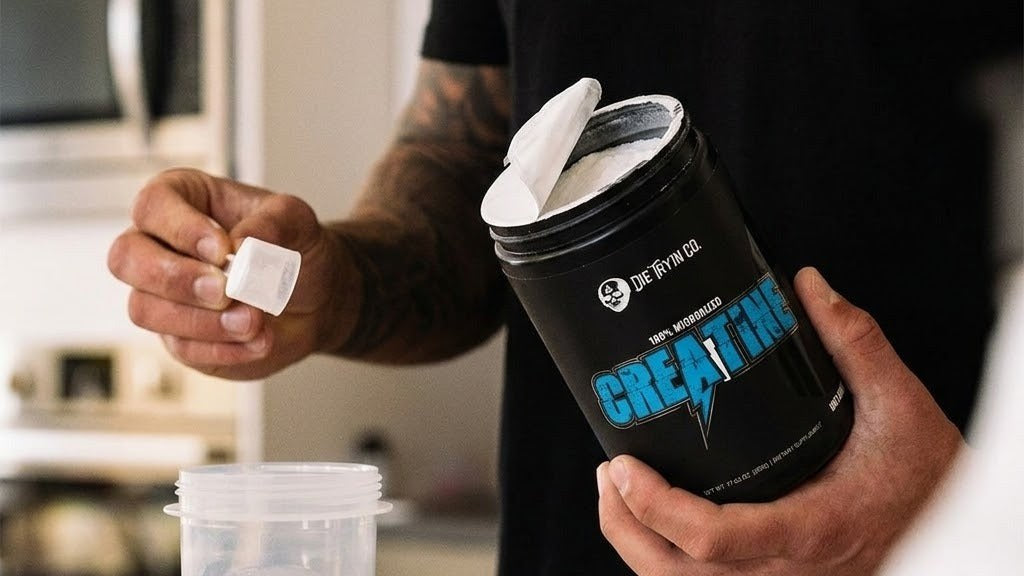
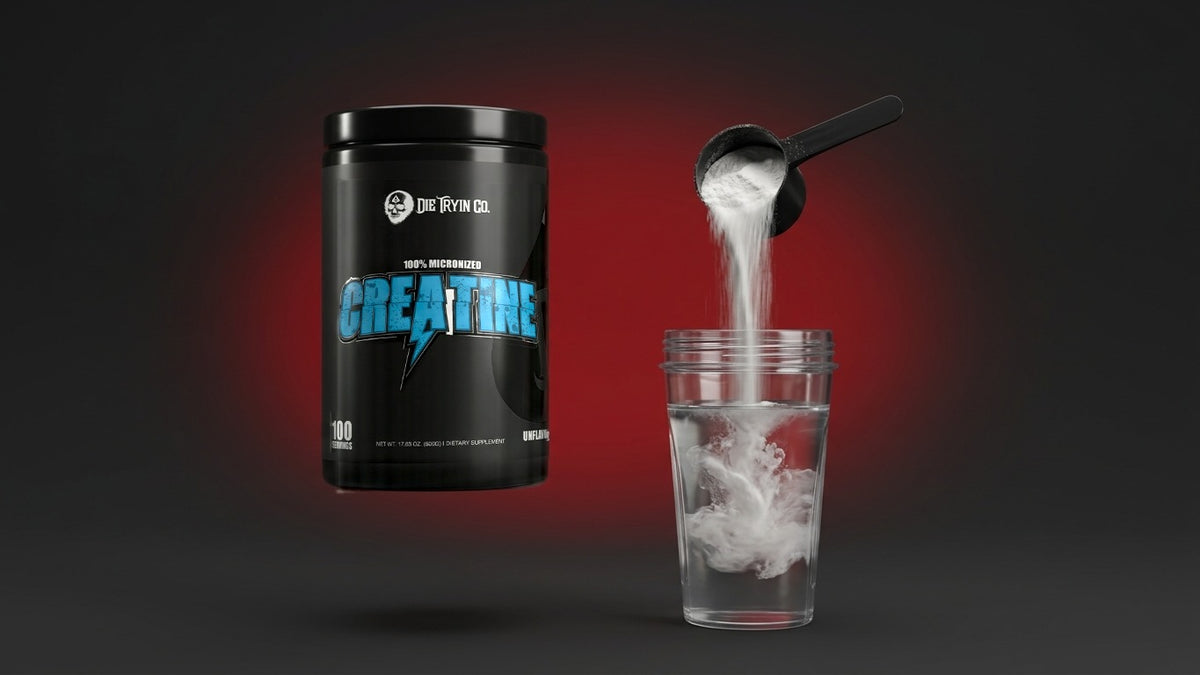
Die Tryin Co. Creatine is micronized Creatine Monohydrate — the proven, gold-standard form the research is actually built on. No gimmicks, no novel-form hype, no proprietary blends. Just the real thing at the real 5g dose.
Want to see how it fits with hard training? Read the complete guide to building muscle, or take the quiz to dial in your stack.
ALWAYS FORWARD.
GEAR THAT FITS THIS POST
The products this article actually talks about. Real doses, disclosed labels, veteran owned.

Read more

Micronized creatine isn't a different, "superior" creatine — it's the same proven monohydrate ground finer. Here's what that actually gets you, no hype.

The supplement industry sells creatine HCL as an upgrade. The honest answer: monohydrate is the proven, better-value gold standard. Here's the real comparison.
The complete playbook for building muscle that actually lasts. Training, nutrition, recovery, and the supplements that move the needle — no hype.
Pre-workout? Post-workout? With food? The truth about creatine timing is simpler than the internet makes it — here's what actually matters.
Your gut lining runs the same creatine energy system as your muscles. Here is what the research shows on stomach upset, IBS, colitis and leaky gut, and exactly where the human evidence stops.

Creatine gummies can work if the creatine is actually in them, and lab tests keep finding it often is not. Here is why a scoop of Creatine Monohydrate powder still wins.