






Micronized Creatine: The Real Advantages, No Hype
By Jon Klipstein, U.S. Army Combat Veteran & Founder of Die Tryin Co.
Science reviewed by Onur Oncer, BS Physiology (Phi Beta Kappa) and peer-reviewed published researcher.
THE TRUTH ABOUT MICRONIZED CREATINE
Creatine Monohydrate is the most-researched, most-proven supplement in all of sports nutrition. Micronized creatine monohydrate is the exact same molecule — just ground into a finer powder.
The supplement industry loves to make "micronized" sound like a different, superior creatine you should pay more for. It isn't. It's the same proven Creatine Monohydrate with one genuine, practical upgrade: it mixes cleaner and sits easier in your stomach.
Here's the honest breakdown of what micronizing actually does for you — and what it doesn't.
IT MIXES CLEAN — NO GRIT, NO CLUMPS
This is the real headline benefit. Micronizing breaks the creatine particles down to under 10 micrometers (a ~200 mesh rating) versus the coarser ~100 mesh of regular monohydrate.
That finer powder dissolves far more readily in liquid. Regular monohydrate has a habit of clumping, floating, or settling into a gritty layer at the bottom of your shaker. Micronized blends smoothly into water, juice, or your pre-workout with way less effort. No grit, no sludge at the bottom of the cup.
EASIER ON YOUR STOMACH
Some people get gastrointestinal discomfort from creatine — bloating, cramping, that heavy gut feeling. Here's the thing most brands won't tell you: that's usually not the creatine itself. It's typically caused by taking too much at once (the old-school "loading phase" of 20g+ a day) or by coarse, undissolved particles sitting in your gut.
So does creatine cause bloating? For most people, no. And when it does, the fix is simple: skip the megadose loading phase, stick to a steady 3-5g daily, and use a finer powder that actually dissolves. Because micronized creatine breaks down and dissolves better, it tends to be gentler on sensitive stomachs — less undissolved grit means less to irritate your gut.
IT MIXES INTO ANYTHING, ANYWHERE
Thanks to that fine particle size, micronized creatine integrates into whatever you're drinking without endless shaking or stirring. Water, juice, your daily pre — it goes in clean. No clumpy mess, no scraping paste off the bottom. It just makes the daily habit easier to actually keep, which matters more than people think: the best creatine is the one you take consistently.
IT'S STILL THE SAME PROVEN CREATINE — AND THAT'S THE POINT

Here's the honesty most supplement companies skip: micronized creatine does not work "faster" or deliver "better results" than regular Creatine Monohydrate taken consistently. Both saturate your muscles over time and produce the same gains in strength, power, and lean mass. The ISSN Position Stand on Creatine confirms Creatine Monohydrate is the safe, effective, gold-standard form — and that's exactly what micronized creatine is.
The micronized advantage is practical, not magical: it mixes better and is easier on your stomach. That's it. That's a real, worthwhile upgrade — but don't let anyone sell you "micronized" as some breakthrough that outperforms the original. And definitely don't pay five times the price for flashy "novel forms" like creatine HCL or buffered creatine that promise more and deliver no proven advantage over monohydrate. We broke down monohydrate vs. HCL here, and busted the most common creatine myths here.
Real doses of the real, proven ingredient — in the form that's easiest to actually use. That's the whole pitch, and it's the truth.
FREQUENTLY ASKED QUESTIONS
Does creatine cause bloating?
For most people, no. When bloating happens, it's usually from a high-dose "loading phase" (20g+ a day) or coarse, undissolved powder — not the creatine itself. Skip the loading phase, take a steady 3-5g daily, and use a micronized powder that dissolves cleanly, and bloating is rarely an issue.
Is micronized creatine better than regular creatine monohydrate?
It's the same creatine, so it delivers the same results. "Better" only in the practical sense: it mixes cleaner and tends to be easier on the stomach. The active ingredient and its proven benefits are identical.
Does micronized creatine work faster?
No. Both micronized and regular monohydrate saturate your muscles over the same timeframe with consistent daily use. Anyone claiming micronized "works faster" is selling marketing, not science.
How much creatine should I take?
3-5 grams per day, every day. You don't need a loading phase — consistent daily dosing fully saturates your muscles within a few weeks and avoids the stomach discomfort that loading can cause.
When should I take creatine?
Timing matters far less than consistency. Take your 3-5g whenever you'll remember it daily — pre-workout, post-workout, or any time at all. Daily intake is what saturates your muscles; the exact clock time barely moves the needle.
Is creatine safe?
Creatine Monohydrate is one of the most extensively studied supplements in existence, with decades of research supporting its safety in healthy individuals at standard doses. As with any supplement, if you have a pre-existing medical condition, check with your doctor first.
READY TO GEAR UP?
Die Tryin Co. Creatine is micronized Creatine Monohydrate — the proven gold standard, ground fine so it mixes clean and sits easy. No novel-form gimmicks, no inflated price, no proprietary blends. Just real creatine at the real, research-backed dose.
Pair it with hard, progressive training and it goes to work. See exactly how in the complete guide to building muscle, or take the quiz to dial in your full stack.
ALWAYS FORWARD.
Read more

What actually works in pre-workout — ingredients, doses, timing, and how to pick the right one. Cut through the marketing. Get the real answer.

The supplement industry sells creatine HCL as an upgrade. The honest answer: monohydrate is the proven, better-value gold standard. Here's the real comparison.
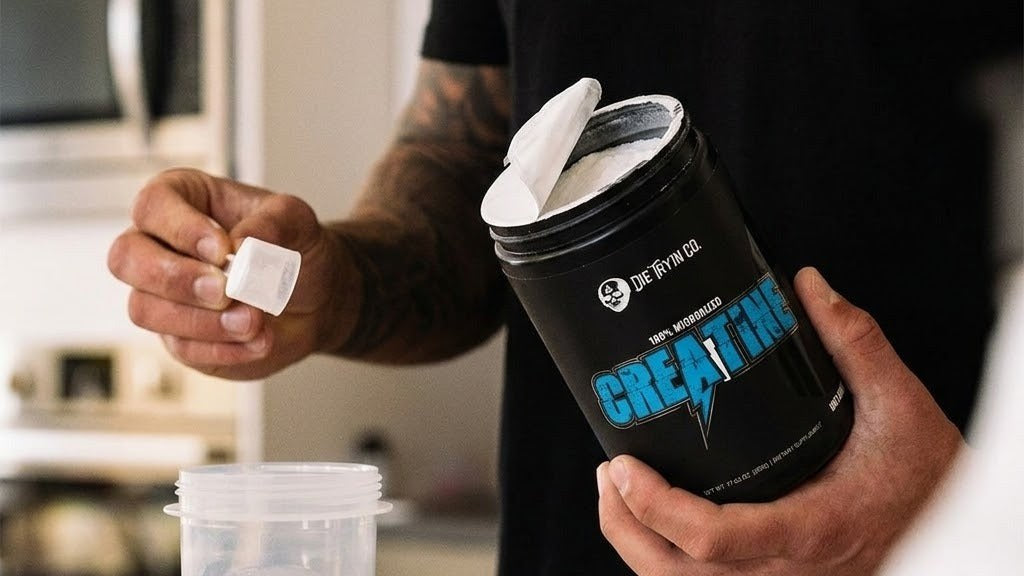
Kidney damage, steroids, hair loss, bloating — creatine is buried under gym myths. Here's the truth on each one, backed by what the research actually shows.

The complete playbook for building muscle that actually lasts. Training, nutrition, recovery, and the supplements that move the needle — no hype.
Two tubs both say 9 g of citrulline. One gives you 9 g, the other gives you 6 g. The 2:1 ratio explained, plus the 2024 trial that tested whether the malate does anything at all.
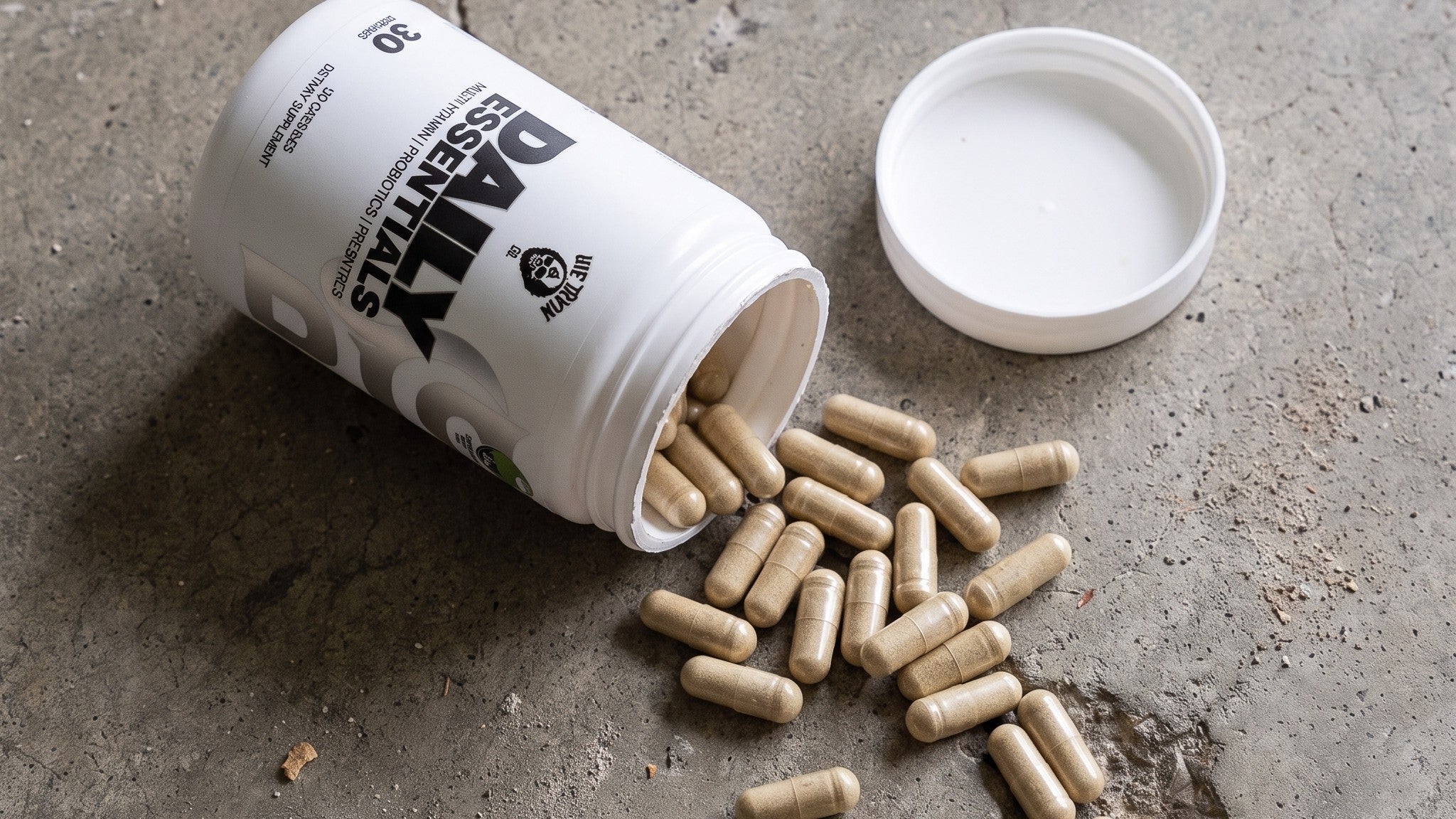
The honest case for a multivitamin when you train hard: where the evidence stops, where the gaps are real, and why chelated minerals plus a gut stack change the math.
GEAR THAT FITS THIS POST
The products this article actually talks about. Real doses, disclosed labels, veteran owned.
