



L-Citrulline vs Citrulline Malate: The Label Math
By Jon Klipstein, U.S. Army Combat Veteran & Founder of Die Tryin Co.
Science reviewed by Onur Oncer, BS Physiology and peer-reviewed published researcher.
THE LABEL MATH NOBODY SHOWS YOU
Citrulline malate is L-Citrulline, a common pump ingredient in pre-workouts, joined to malic acid (the sour acid in apples). In the most common version, a third of its weight is malic acid, not citrulline. Listen up, because two pre-workouts can both say "9 g of citrulline" on the front of the tub. One of them gives you 9 g. The other gives you 6 g and charges you for the difference.
That is not a loophole or a scandal. It is basic chemistry that most brands never explain, because the honest number makes their tub look weaker side by side.
Here is the whole thing in one table.
| What the label says | Actual L-Citrulline | The rest |
|---|---|---|
| 9 g Citrulline Malate (2:1) | 6 g | 3 g malic acid |
| 8 g Citrulline Malate (2:1) | 5.3 g | 2.7 g malic acid |
| 9 g L-Citrulline (what SEND IT 3.0 and Red Dot use) | 9 g | nothing |
WHAT THE 2:1 RATIO ACTUALLY MEANS
Most citrulline malate is sold as 2:1. That ratio is by weight. It means two parts citrulline for every one part malic acid, which is where the missing third comes from. Here is what that looks like on the scoop sizes you will see most. A 9 g scoop of 2:1 gives you 6 g of citrulline. An 8 g scoop, the amount most of the published studies used, gives you about 5.3 g.
Some labels list 1:1 citrulline malate, which gives you even less citrulline. Half of that scoop is malic acid, so 9 g becomes 4.5 g of citrulline. And a fair number of tubs never list the ratio at all, which tells you something on its own.
SO DOES THE MALATE DO ANYTHING?
This is the honest question, and it finally has a direct answer. Most brands defend the malate by saying it helps your cells turn food into energy. Your cells do that through a chain of steps, and malic acid really is one of the molecules in that chain. So the science behind the idea is real. The question was always whether swallowing some extra malic acid with your citrulline does anything you can measure in the gym.
In 2024, a team at the University of Granada in Spain finally tested exactly that. Forty-three trained men and women each took three different supplements on separate days, in random order. One was a placebo, a look-alike with nothing active in it. One was 5.3 g of pure L-Citrulline. The last was that same 5.3 g plus 2.7 g of malate. That is the same mix as the 8 g citrulline malate scoop in the table. Neither the lifters nor the researchers knew which was which on a given day. The citrulline was the same in both real supplements, so the malate was the only thing that changed.
They tested max strength, jumping, and how much strength people kept as the sets of squats and bench press went on. In this one study, on these tests, neither real supplement beat the placebo, and adding malate gave no edge over citrulline alone. Other research does find a small boost from citrulline, which we get to below.
A six-week study published in 2025 compared the two forms over a full training block and landed on the same verdict on the pure-versus-malate question. Both forms helped upper-body muscular endurance, meaning more reps before your muscles give out, compared with a placebo. There was no real difference between the pure form and the malate form.
So the malate is not doing damage. It is just not earning its share of the scoop.
THEN IS CITRULLINE MALATE A SCAM?
No, and we are not going to pretend it is. Most of the studies behind citrulline's reputation for pumps and extra reps actually used citrulline malate. A 2021 review that combined the results of eight studies found citrulline malate gave about three extra reps per session compared with a placebo. That is a small but real effect, and it showed up most clearly in lower-body work.
Three extra reps will not transform you, and we are not going to sell it that way. But it is the honest size of the effect. It is also why citrulline is in nearly every serious pre-workout, ours included.
The point is not that citrulline malate fails. The point is that the citrulline does the work, so the citrulline is what you should count. If two products cost the same and one gives you 9 g while the other gives you 6 g, that is an easy call.
HOW TO READ ANY PRE-WORKOUT LABEL IN TEN SECONDS
This works on our tubs and on everyone else's. You do not need to trust the brand, including us.
- Find the form. "L-Citrulline" means what it says. "Citrulline Malate" means you have to do the math.
- Find the ratio. 2:1 means take off a third. 1:1 means cut it in half. No ratio listed? Assume the worst one.
- Check for a proprietary blend. That is a mix that lists one total weight instead of each ingredient's amount. If the citrulline is hidden inside one, you cannot do this math at all. That is usually why the blend exists.
- Compare per serving, not per scoop. Check how many scoops the label counts as one serving. Two scoops of a weaker formula are not the same deal as one scoop of a stronger one.
Run that on three tubs in your cupboard right now. It takes longer to read this paragraph than to do it.
WHAT WE USE, AND WHY WE PRINT IT
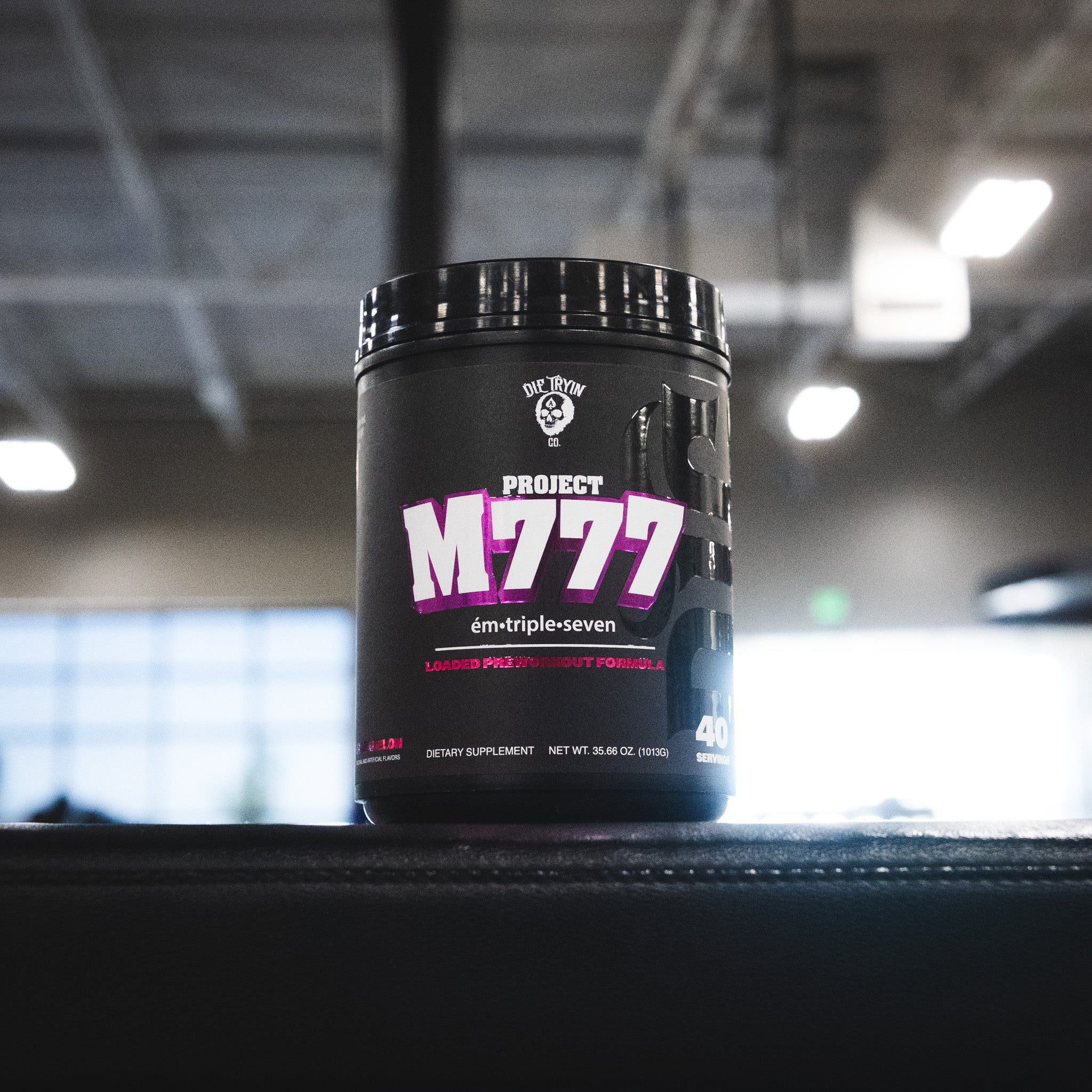
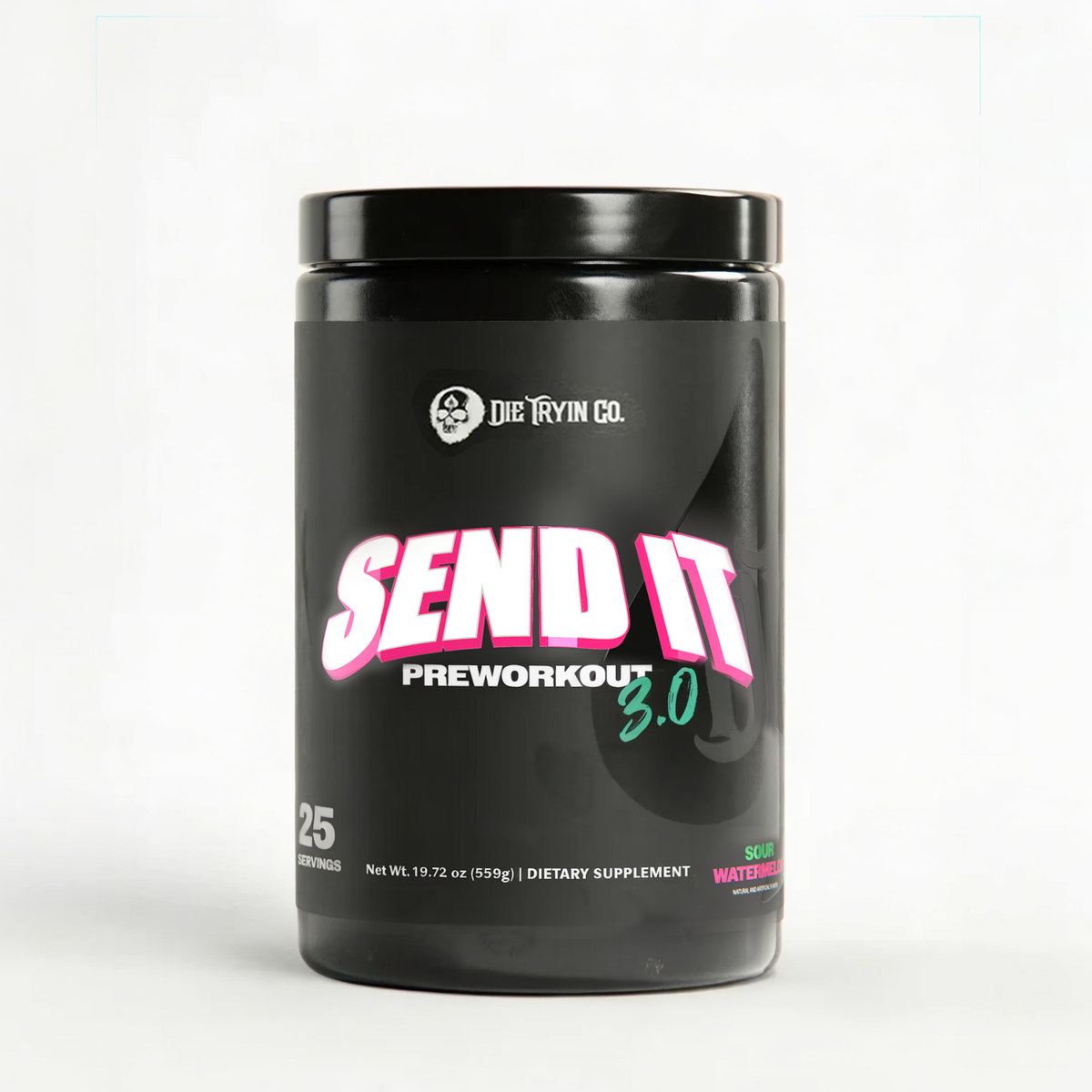
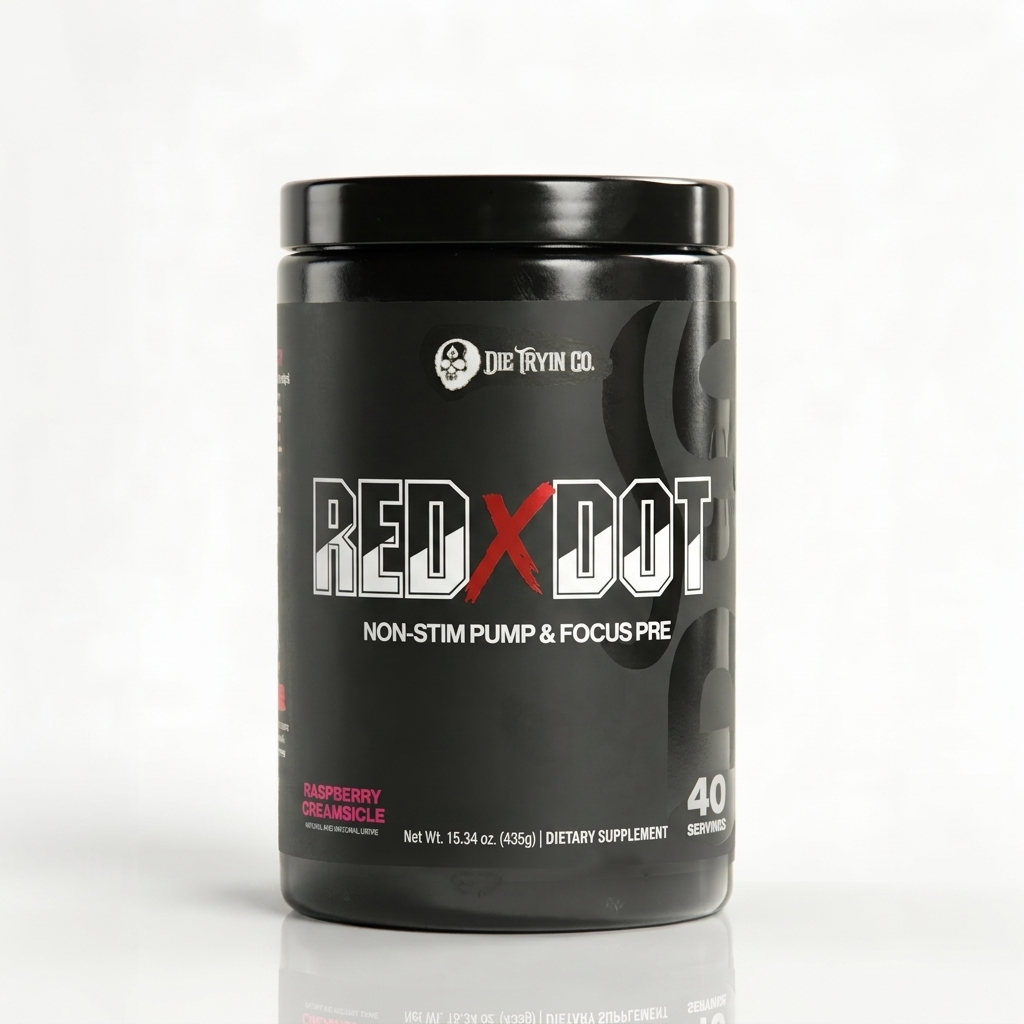
Every pre-workout we make uses pure L-Citrulline. SEND IT 3.0 and Red Dot both carry 9,000 mg, which is the same 9 g from the table. Project M777 carries 10,000 mg (10 g) in the full two-scoop serving, which is for experienced users only. One scoop is half that, 5,000 mg. These are real amounts of citrulline, not the total weight of a blend.
We buy the pure form for two reasons. The malate is not paying for itself, and a number you have to convert is a number most people will not convert. The brand was built by a combat veteran who got tired of reading labels that were technically true and practically useless.
Want the bigger picture on what belongs in a pre-workout, and how much of it? The complete guide to pre-workout covers the full ingredient list. Our breakdown of the essential pre-workout ingredients goes deeper on the rest of the formula. If pumps are what you are chasing, Nitrosigine is the other pump ingredient worth understanding.
FREQUENTLY ASKED QUESTIONS
Is L-Citrulline the same as citrulline malate?
No. Citrulline malate is L-Citrulline joined to malic acid, so part of every scoop is not citrulline at all. The citrulline is what does the work, so that is the number to count.
How much L-Citrulline is in 9 g of citrulline malate?
About 6 g, because a third of a 2:1 scoop is malic acid. An 8 g scoop of citrulline malate gives you about 5.3 g of citrulline.
Is L-Citrulline better than citrulline malate?
Gram for gram of actual citrulline, the research shows no real difference between the two forms. Pure L-Citrulline just gives you more citrulline per scoop, so you are not paying for malic acid you do not need.
How much L-Citrulline should a pre-workout have?
The studies behind the pump and extra-rep results generally used the equivalent of 5 to 8 g of citrulline. People took it 40 to 60 minutes before training. Anything under about 3 g of actual citrulline is unlikely to do much, whatever the front of the tub claims. If you are pregnant, managing a medical condition or taking medication, clear any supplement with your doctor first.
Does malic acid give you extra energy?
Malic acid really is one of the molecules in the chain your cells use to make energy, so the idea is not made up. But studies have not shown that adding it to citrulline helps your workout, and the 2024 study that changed only the malate found no boost.
Why do so many brands use citrulline malate then?
Partly history, since most of the early research used it, and partly because the bigger number looks better on a label. A tub can advertise "9 g" of something while giving you 6 g of the ingredient that actually matters.
Does L-Citrulline make you tingle?
No, that is Beta-Alanine, a completely different ingredient. If you want the pump without the pins and needles, our pre-workouts without Beta-Alanine are built for exactly that.
READY TO GEAR UP?
Pick the one that fits the session in front of you. Every dose is printed on the label, in the form you actually get.
- SEND IT 3.0 for the daily driver: 9,000 mg L-Citrulline and about 286 mg of caffeine.
- Red Dot for evening training: 9,000 mg L-Citrulline and zero caffeine.
- Project M777 for the hardest days: 10,000 mg L-Citrulline per two-scoop serving, experienced users only (5,000 mg per scoop).
- Not sure which? Take the 60-second quiz, or browse every pre-workout we make.
ALWAYS FORWARD.
GEAR THAT FITS THIS POST
The products this article actually talks about. Real doses, disclosed labels, veteran owned.

Read more
What actually works in pre-workout — ingredients, doses, timing, and how to pick the right one. Cut through the marketing. Get the real answer.
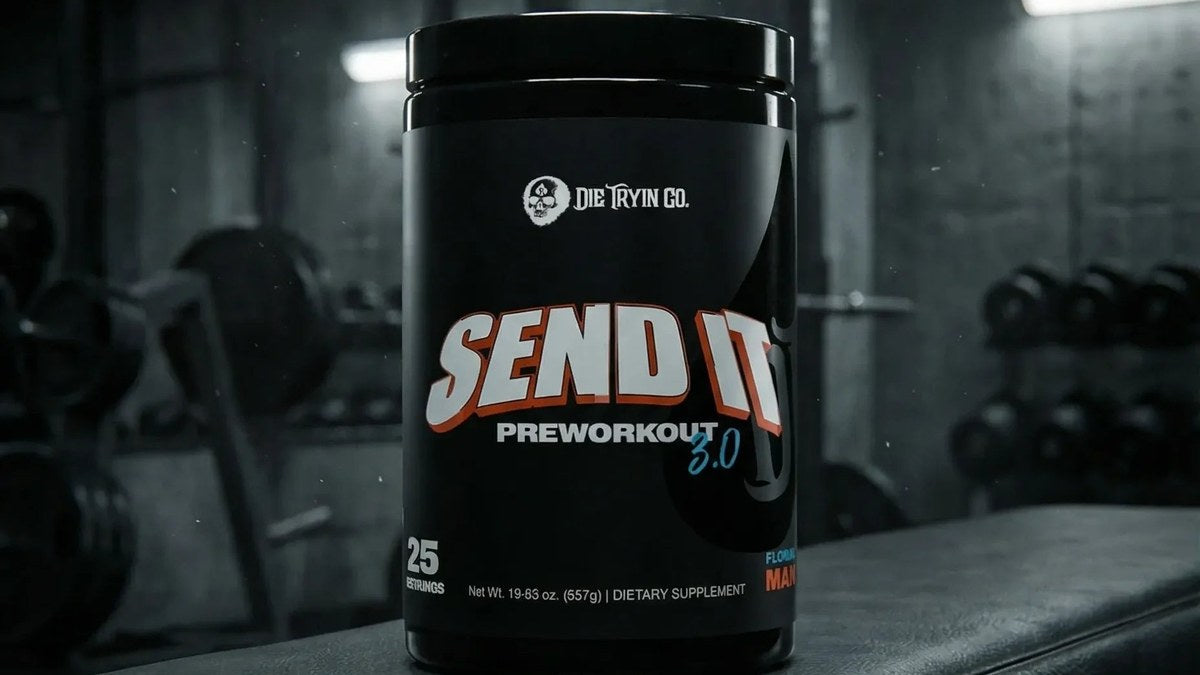
The ingredients that actually move the needle in your pre-workout — and the ones that don't. What works, why, and at what dose. Veteran-owned, no marketing fluff.
Nitrosigine is a patented pump ingredient with real research but heavy manufacturer funding. Here's the honest breakdown of how it works and where it fits.
Your gut lining runs the same creatine energy system as your muscles. Here is what the research shows on stomach upset, IBS, colitis and leaky gut, and exactly where the human evidence stops.

Creatine gummies can work if the creatine is actually in them, and lab tests keep finding it often is not. Here is why a scoop of Creatine Monohydrate powder still wins.
Flavor doesn't change what creatine does; taking it every day is what counts. How to pick flavored or unflavored, what to mix it with, and how long it lasts once mixed.