


Does Protein Cycling Actually Work? The Real Answer
By Jon Klipstein, U.S. Army Combat Veteran & Founder of Die Tryin Co.
Science reviewed by Onur Oncer, BS Physiology and peer-reviewed published researcher.
PROTEIN CYCLING: THE BROSCIENCE THAT WON'T DIE
Protein cycling is the idea that you should alternate periods of high and low protein intake — usually 2-3 weeks of high (2.2+ g/kg) followed by 2-3 weeks of low (0.8 g/kg or less) — to "prevent adaptation" and maximize muscle growth. The claim has been kicking around bodybuilding forums and Instagram posts for years.
It sounds plausible. Your body adapts to things; high protein eventually plateaus; therefore cycling should keep the response sharp. That’s the logic, anyway. Here’s the problem: three independent meta-analyses and a 12-week controlled trial all say it doesn’t work. This is the honest research breakdown.
QUICK ANSWER
| QUESTION | ANSWER |
|---|---|
| Does protein cycling build more muscle than consistent high intake? | No peer-reviewed research supports this claim |
| Does high protein "stop working" after a while? | There IS a plateau around 1.6 g/kg/day — but the fix is consistency at that level, not cycling down |
| Will cycling down to low protein cost me muscle? | In a 12-week controlled study, basal MPS rates were maintained whether subjects ate 0.4 or 2.4 g/kg/d — but acute training responses suffer at low intake |
| So what should I do? | Eat 1.6-2.2 g/kg/day consistently. Skip the cycling protocols. |
WHAT PROTEIN CYCLING CLAIMS TO DO
The argument goes like this:
- When you eat high protein, your body upregulates the enzymes that break down protein (to handle the load).
- Over time, this means more protein = more breakdown = diminishing returns.
- Therefore, cycling down to low protein "resets" the system, so when you cycle back up, you get the muscle-building benefit again.
It’s a satisfying story. It’s also wrong — or at least, the conclusion doesn’t follow from the premise. Let’s walk through each claim.
THE 4 CLAIMS, DEBUNKED ONE BY ONE
Claim 1: "High protein upregulates enzymes that break down protein."
Half-truth. Yes, when you eat more protein, your body increases whole-body protein turnover — both protein synthesis AND protein breakdown go up. This is real physiology. Hursel et al. 2015 showed that subjects on 2.4 g/kg/day had significantly higher whole-body protein turnover than subjects on 0.4 g/kg/day after 12 weeks of adaptation.
But here’s what the cycling argument gets wrong: increased turnover isn’t the same as net muscle loss. Synthesis stays one step ahead of breakdown when training is adequate. And crucially — some muscle protein breakdown after exercise is actually important for muscle remodeling, not just bad. Tipton et al. 2018 (Sports Medicine) explicitly notes: "some degree of increased MPB following exercise is an important component for optimal remodeling." Cycling down to "minimize" MPB isn’t actually a benefit.
Claim 2: "Long-term high protein causes homeostasis — muscle gain stops."
Half-truth. There IS a dose-response plateau for muscle hypertrophy from protein. The foundational evidence: Morton et al. 2018 systematic review and meta-analysis in the British Journal of Sports Medicine, pulling 49 randomized controlled trials with 1,863 participants. The finding: protein intake beyond ~1.62 g/kg/day produced no further training-induced gains in fat-free mass (Morton et al., 2018).
This finding has been independently replicated. Nunes et al. 2022 meta-analysis (74 RCTs) and Tagawa et al. 2022 meta-analysis (82 RCTs) both confirm a plateau around 1.5-1.6 g/kg/day for strength and lean body mass gains in younger adults.
The conclusion doesn’t follow: the plateau means "more isn’t better past 1.6 g/kg/day." It does NOT mean "therefore, eat less for a while." The fix is consistency at the plateau level, not periodic dropdowns.
Claim 3: "Cycle 2-3 weeks high, 2-3 weeks low for better muscle outcomes."
This is the claim that has zero peer-reviewed support.
I searched the major sports nutrition and biomedical databases for evidence that alternating high and low protein intake periods improves muscle outcomes compared to consistent intake. There’s no high-quality trial showing this protocol outperforms steady protein intake within the 1.6-2.2 g/kg/day range.
What IS in the literature: the Hursel 2015 study showed that after 12 weeks of adaptation, basal MPS rates were the SAME for subjects on 0.4 g/kg/day vs 2.4 g/kg/day. The body adapts to handle a wide range of intakes. But this doesn’t support cycling — it suggests the body is already pretty good at handling whatever consistent intake you give it. There’s no advantage to cycling between extremes.
For comparison, here’s what HAS been studied and shown to work: consistent protein intake of 1.6-2.2 g/kg/day (Morton 2018), distributed across at least 4 meals and paired with resistance training, supports maximum muscle hypertrophy. The ISSN’s own range for most exercising people is 1.4-2.0 g/kg/day (ISSN Protein Position Stand, 2017).
Claim 4: "Cycling avoids negative effects of constant high protein."
For healthy adults, there are no well-documented negative effects to avoid. The sports nutrition consensus — including studies by Antonio et al. that pushed protein intake as high as 4.4 g/kg/day for months with no adverse outcomes on kidney function, bone density, or other health markers in healthy resistance-trained adults — supports consistent intake within and above the 1.6-2.2 g/kg/day range.
That said, if you have pre-existing kidney disease, liver conditions, or are on a very low-calorie diet, high protein intake should be discussed with your doctor. Not because protein causes problems in healthy people, but because pre-existing conditions change the calculus. This isn’t a reason to cycle — it’s a reason to consult your physician on the right intake level for your situation.
WHAT THE RESEARCH ACTUALLY SAYS WORKS
Strip away the broscience and the evidence is clear and consistent. To maximize muscle protein synthesis and training adaptations:
- Total daily protein: 1.6-2.2 g/kg of body weight per day (Morton 2018, Nunes 2022, Tagawa 2022). Get your number from the protein calculator.
- Distribution: At least 4 meals spread across the day, each containing 0.4 g/kg of protein (approximately 25-40g for most adults) to maximize per-meal MPS response
- Consistency: Daily intake matters more than weekly or monthly cycles. The body adapts and operates better with stable inputs.
- Training: Protein supports muscle building only when paired with progressive resistance training. Without training stimulus, extra protein doesn’t build muscle.
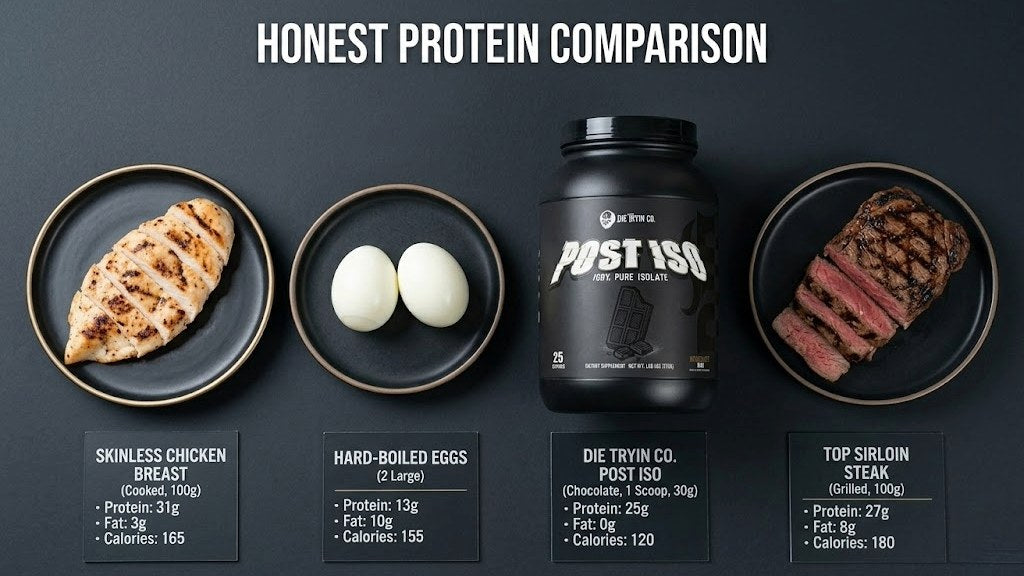
- Source quality: Whey isolate (like Post Iso), lean meats, eggs, and dairy provide complete amino acid profiles. Plant proteins work but require larger total doses for equivalent MPS response.
For the full framework, see the Ultimate Guide to Protein. For the broader muscle-building system, the Ultimate Guide to Muscle Building.
WHEN PROTEIN CYCLING MIGHT MAKE SENSE (HONEST CAVEAT)
There’s one edge case worth mentioning: caloric deficit phases on a long cut.
If you’re cutting and need to reduce calories aggressively, protein doesn’t drop — you set it at 2.3-3.1 g per kg of lean mass (bodyweight minus fat), toward the top of that range on a cut this hard, to preserve muscle — but you might naturally reduce protein on refeed/diet-break weeks to allow more carbs for performance. That’s NOT "protein cycling" in the broscience sense (alternating to manipulate enzymes); it’s strategic refeeding to support metabolic and psychological recovery during a cut.
For nutrition during a cut, see Carb Cycling — which IS supported by research, unlike protein cycling. And Carb Cycling Meal Plan for the day-by-day framework.
HONEST LIMITATIONS OF THE EVIDENCE
"Absence of evidence" vs "evidence of absence." No peer-reviewed researcher has run a multi-month RCT directly comparing protein cycling vs consistent high intake for muscle outcomes — mostly because there’s no compelling reason to design that study based on existing data. Technically, we can’t prove protein cycling doesn’t work without a head-to-head trial. What we can say: existing research doesn’t support it, and the underlying biological reasoning doesn’t hold up to scrutiny.
Most studies are on younger adults. In adults 65+, Nunes 2022 saw the lean-mass benefit of extra protein at 1.2-1.59 g/kg/day, so age doesn't call for a bigger daily total. What rises with age is the dose per meal: older men needed about 0.4 g/kg in one meal to max out muscle protein synthesis, versus about 0.24 g/kg for young men (Moore 2015). Hit at least 0.4 g/kg every meal.
Individual variation exists. Some people may respond differently to protein doses based on genetics, training experience, and other factors. The meta-analyses show averages — you might respond above or below the curve.
FAQ
If high protein has a plateau at 1.6 g/kg, why not just eat that?
That’s exactly the right move. The plateau means consistent intake at 1.6-2.2 g/kg/day captures the muscle-building benefit. Going lower (0.8 g/kg/day RDA) costs you muscle response; going higher than 2.2 g/kg/day doesn’t add anything for hypertrophy. Stay in the sweet spot, every day.
Will my body really not benefit from MORE protein past 1.6 g/kg/day?
For muscle hypertrophy specifically, no — per Morton 2018 and replicated meta-analyses. Higher protein may have other benefits (satiety on a cut, support during recovery from heavy training blocks) but it doesn’t add to muscle growth.
What if I’m not building muscle even with consistent 1.6 g/kg/day intake?
Protein isn’t the bottleneck. Check: training stimulus (progressive overload), total calories (need maintenance or slight surplus for muscle gain), recovery (sleep, training volume management). Cycling protein won’t fix any of those underlying issues.
Should I take protein right after a workout?
The "anabolic window" is wider than 90s broscience claimed. Getting about 0.4 g/kg of protein (25-40g for most adults) within ~2 hours of training supports muscle protein synthesis better than waiting 3+ hours, but you don’t need to slam a shake the second you rack the bar. Daily total intake matters more than timing precision.
Is protein cycling dangerous?
For healthy adults, no. The cycling protocol itself isn’t dangerous — it’s just unnecessary. If you cycle down to very low protein (0.4 g/kg/day, half the 0.8 g/kg RDA), you may compromise muscle response and recovery, but you won’t harm yourself. The real cost is opportunity: weeks of suboptimal muscle response in exchange for no measurable benefit.
Why do bodybuilders sometimes recommend protein cycling?
Some recommend it based on personal experience or community lore. Bodybuilding has a long tradition of practices that predate the research and stick around even after evidence contradicts them. "Eat 6 small meals to boost metabolism," "anabolic window is 30 minutes," and "protein cycling" are all in this category. Real-world physique results often come from total volume, training quality, and consistency — not from the specific scheduling protocols people credit.
Does intermittent fasting count as protein cycling?
No. Intermittent fasting affects when you eat (compressing meals into a window), not how much protein you eat over a week or month. Done correctly, intermittent fasting keeps the same 1.6-2.2 g/kg/day total protein. The catch: a short eating window makes four 0.4 g/kg feedings harder to fit.
READY TO GEAR UP?
For lifters wanting to optimize protein intake the way the research actually supports:
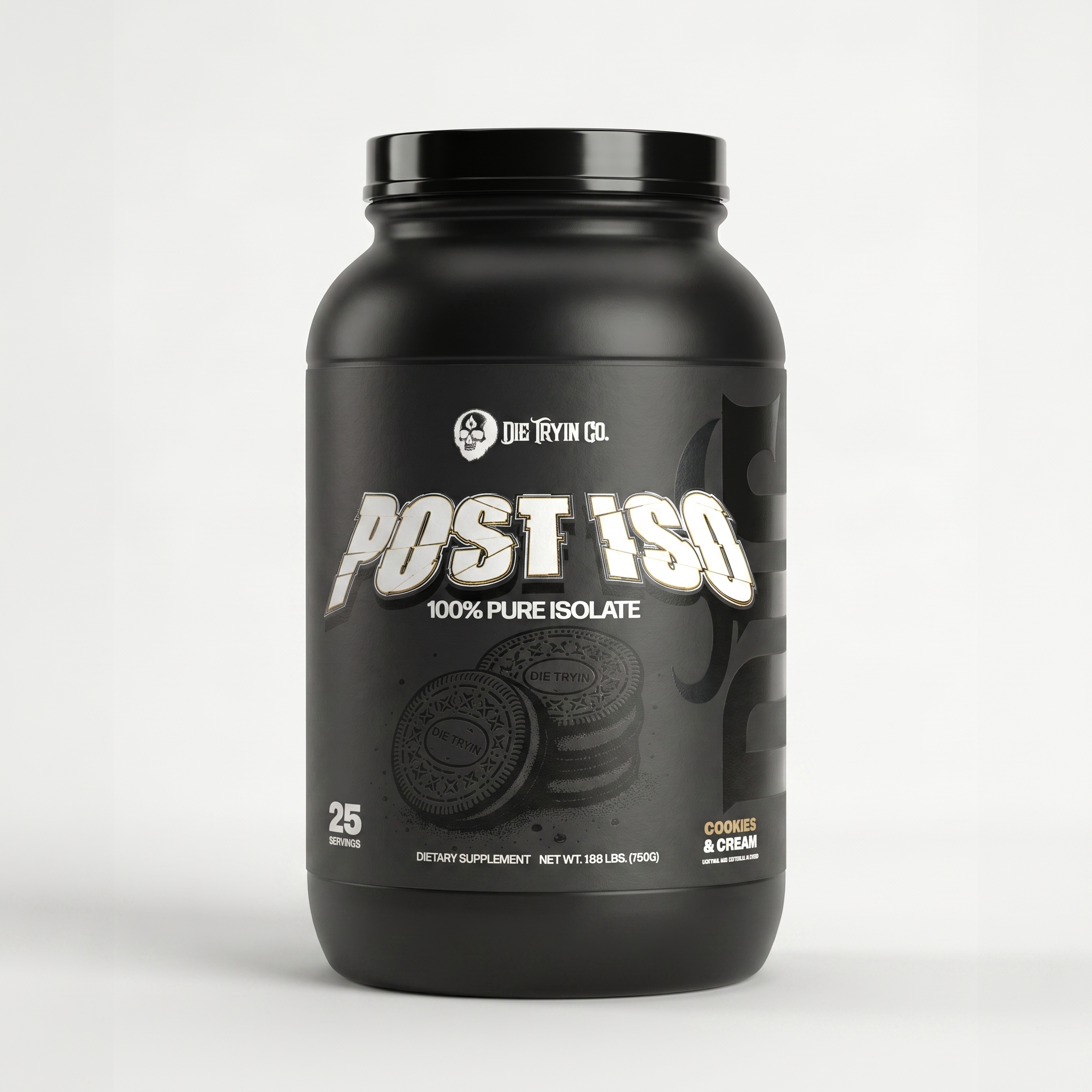
- Post Iso — 24g whey isolate per scoop with DigeZyme enzymes; clean, transparent, no fillers. The simplest way to hit the 1.6-2.2 g/kg/day target consistently.
- EAAs — essential amino acids for intra-workout muscle protein support during long sessions or fasted training
- Creatine — 5g daily for ATP regeneration and strength output; the supplement everyone should be on regardless of protein intake
For the broader strategy: Ultimate Guide to Protein. For the muscle-building system around protein: Ultimate Guide to Muscle Building. For high-protein recipes that make hitting the target painless: 3 High-Protein Whey Isolate Recipes (No Cardboard).
Not sure where to start? Take the DTC supplement quiz — two minutes, dialed-in recommendation.
ALWAYS FORWARD.
GEAR THAT FITS THIS POST
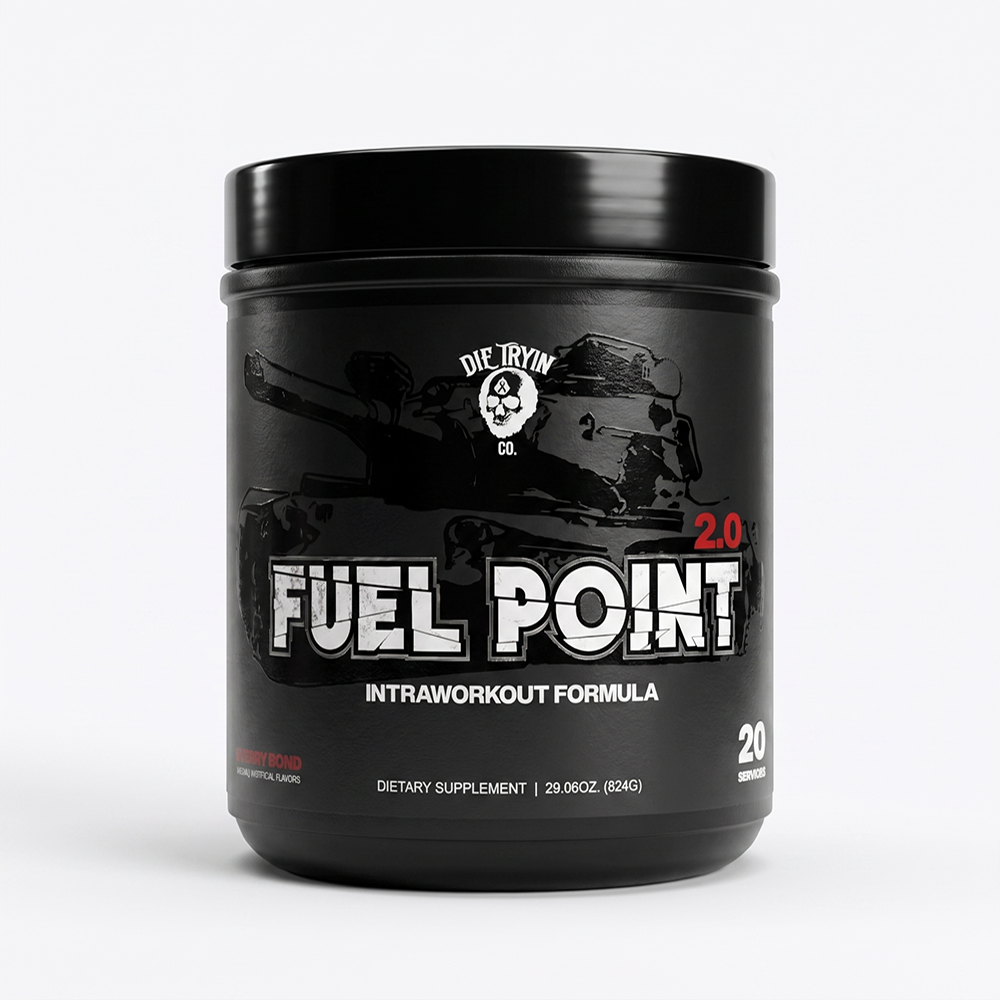
The products this article actually talks about. Real doses, disclosed labels, veteran owned.

Read more
The complete protein playbook — how much you need, when timing matters, which sources deliver, and the myths costing you money.

The complete playbook for building muscle that actually lasts. Training, nutrition, recovery, and the supplements that move the needle — no hype.
Carb cycling means rotating high, low, and moderate carb days around your training. Here's how it works — and the honest truth about whether it burns more fat.
The carb cycling meal plan, simplified: high/low/moderate days mapped to a 7-day training week, with food lists and how to set your own gram targets.
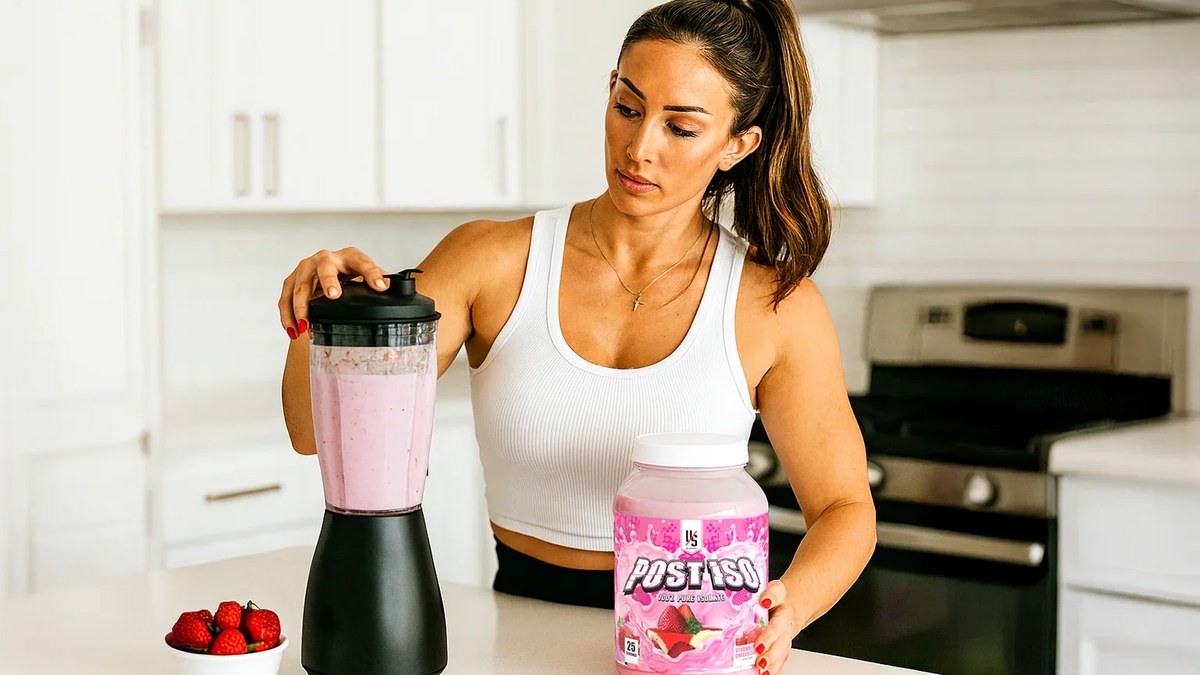
Three quick, high-protein recipes — mocha mug cake, strawberry cheesecake smoothie, and chocolate protein oatmeal — that actually taste like food.
Your gut lining runs the same creatine energy system as your muscles. Here is what the research shows on stomach upset, IBS, colitis and leaky gut, and exactly where the human evidence stops.