



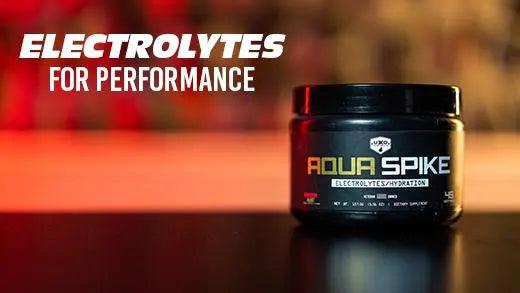
Electrolytes for Performance: What You Really Lose
By Jon Klipstein, U.S. Army Combat Veteran & Founder of Die Tryin Co.
Science reviewed by Onur Oncer, BS Physiology and peer-reviewed published researcher.
SWEAT IS NOT JUST WATER
Listen up. The electrolyte aisle sells you one number and one story: everybody loses the same minerals, so everybody needs the same tub. That story is wrong, and the research that breaks it is not new.
Sweat is water plus salt. How much salt is in yours is close to a personal fingerprint, and you cannot guess it from how big you are, how hard you train, or how soaked your shirt gets. This post is about that specific problem: what actually leaves your body in sweat, how wildly it swings person to person, and what that means for whether a mix is worth your money. For the "how much fluid do I need" side of the equation, read the hydration guide. This one stays on the minerals.
Basics beat hype. But the basics here are more interesting than the label copy suggests.
WHAT YOU ACTUALLY LOSE IN SWEAT
A field study on 157 experienced marathon runners collected sweat with forearm patches during an actual race and measured it in a lab. Real conditions, real athletes, not a treadmill. Here is what came out (Lara et al., Journal of the International Society of Sports Nutrition, 2016):
| MINERAL | AVERAGE IN SWEAT | RANGE ACROSS RUNNERS | WHY IT MATTERS |
|---|---|---|---|
| Sodium | 42.9 mmol/L (roughly 990 mg per liter of sweat) | 7.0 to 95.5 mmol/L | The dominant loss. Drives fluid balance and nerve signalling. |
| Chloride | 32.2 mmol/L (roughly 1,140 mg per liter) | 7.3 to 90.6 mmol/L | Travels with sodium. The other half of salt. |
| Potassium | 6.0 mmol/L (roughly 235 mg per liter) | 3.1 to 8.0 mmol/L | Far smaller loss, far more consistent. Not the priority sodium is. |
Read the potassium row again. Sweat potassium barely moves between athletes, and the total loss is small next to sodium. Every brand that leads its marketing with potassium is selling you the minor character. Sodium is the one doing the work, and sodium is the one that varies.
THE 13-FOLD SPREAD NOBODY PUTS ON A LABEL
The lowest runner in that study lost 7.0 mmol of sodium per liter of sweat. The highest lost 95.5. That is a roughly 13-fold gap inside one race, one climate, one sport. Twenty percent of the runners came in above 60 mmol/L, and the researchers called that group out specifically as athletes who may need individual sodium intake recommendations rather than the generic advice everyone else gets.
Here is the part that should end the guesswork industry: sweat electrolyte concentration did not correlate with sweat rate, age, body characteristics, training experience, or training volume. Only sex (women averaged lower sodium than men) and a weak relationship to running pace showed up at all. So the guy who sweats through two shirts is not automatically the high-salt sweater, and the calculator that estimates your sodium loss from your bodyweight and session length is estimating the one variable it cannot see.
WHEN THE SALT LOSS ACTUALLY MATTERS
Label copy wants you to gate this on session length and room temperature. Those matter for fluid, and the hydration guide already handles them. For minerals, gate it on your own salt concentration instead, because that is the variable carrying the 13-fold spread. Signals your salt loss is low enough that water and normally salted food cover it:
- No visible salt line on your hat, shirt, or skin after a hard session
- Sweat that does not sting your eyes or leave a gritty film on your forehead
- You eat normal food with salt in it, not a zero-sodium meal-prep plan
- Bodyweight stable morning to morning across the training week
Now the other side. At the study average, two liters of sweat carries roughly 2 grams of sodium out with it, and a high-concentration sweater losing the same two liters gives up more than double that. Putting the sodium back, not just the water, is a recovery lever more than a hydration one, and the faster-recovery guide covers it from that side. Signals you are in that group:
- White residue drying on your hat, shirt, or skin, the classic high-concentration marker
- Sweat that stings your eyes, and skin that feels gritty after a session
- A sweat patch test that put you above 60 mmol/L, the threshold the marathon researchers flagged
- You are cutting on a low-sodium diet, so food is not backfilling the loss
- Big sweat volume stacked on top of any of the above, which is where the two variables finally multiply
HYPONATREMIA: THE RISK THAT COMES FROM DRINKING TOO MUCH
This is the part the hydration-maximalist crowd skips. In a study of 488 runners at the Boston Marathon, 13 percent finished with low blood sodium and 0.6 percent were critically low (Almond et al., New England Journal of Medicine, 2005). Those researchers describe hyponatremia as an important cause of race-related death and life-threatening illness in marathoners. It is a medical emergency, not a bad afternoon. The strongest predictors were gaining weight during the race, meaning drinking more than you sweated out, and a finish time over four hours.
Now the honest half, because this brand does not sell you on a claim the data cannot carry. In that same analysis, the composition of the fluid people drank was not associated with who ended up hyponatremic. Volume was. Sodium replacement earns its place on fluid-balance and performance grounds, not as hyponatremia insurance, and no electrolyte drink is a license to drink without limit. Keep the context straight too: this was marathoners going four-plus hours, not lifters doing an hour of squats.
Context is not reassurance. Confusion, a pounding headache, nausea or vomiting during or after a long session is a stop-and-get-medical-help situation, not a push-through one.
THE CRAMP CLAIM ON EVERY ELECTROLYTE LABEL
Cramps sell electrolytes. Magnesium sells cramps. So look at what the evidence file actually holds. A 2020 Cochrane systematic review pooled 11 trials, five of them (271 participants) in people with idiopathic cramps, largely older adults with presumed nocturnal leg cramps (Garrison et al., Cochrane Database of Systematic Reviews, 2020). In that group magnesium was no better than placebo, and the proportion of people getting a 25 percent or better reduction in cramp rate was a high-certainty null result across three of those studies.
On safety, minor gastrointestinal effects such as diarrhoea were reported more often in the magnesium groups, though that difference was low-certainty and did not reach statistical significance. Major adverse events were no different from placebo.
The line that matters most for lifters is what the reviewers could not find: no randomized controlled trials evaluating magnesium for exercise-associated muscle cramps existed at all. Not negative evidence. Absent evidence. Nobody has tested it in people like you, which is exactly why nobody can promise you anything, and anyone printing a cramp guarantee on a tub is printing ahead of the research. Ours included.
HOW TO FIND YOUR OWN NUMBER
Measure your sweat volume once using the weigh-in method in the hydration guide. Then do the part that guide does not cover: multiply your liters of sweat by 990 mg for a mid-range sodium estimate, and accept that your real number could be a fraction of that or several times it, because the field data says you cannot infer it from your size or your sweat rate. Treat the output as a range you adjust by feel, not a prescription.
WHERE AQUA SPIKE FITS
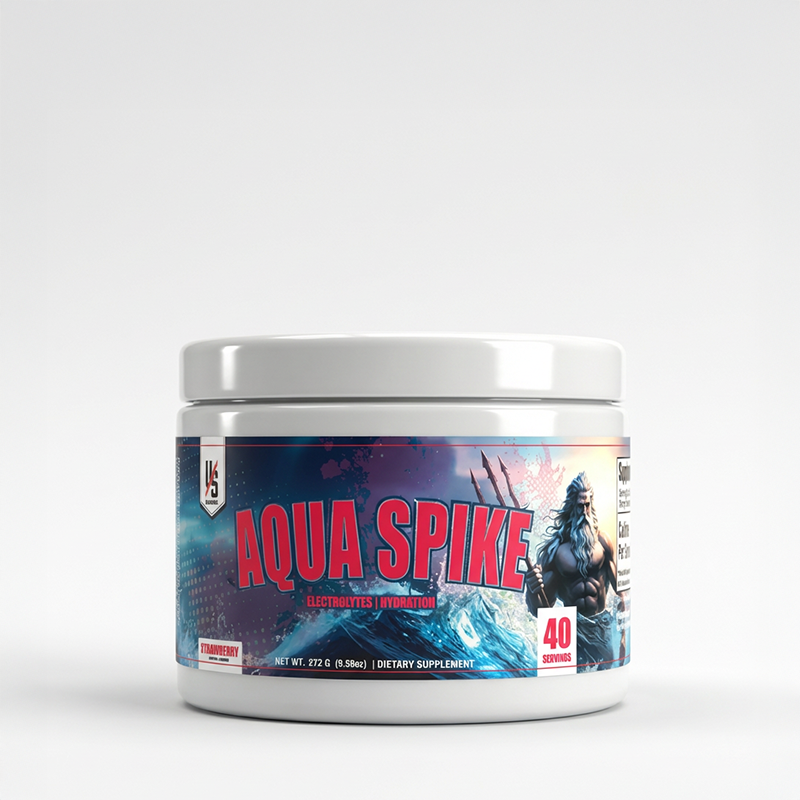
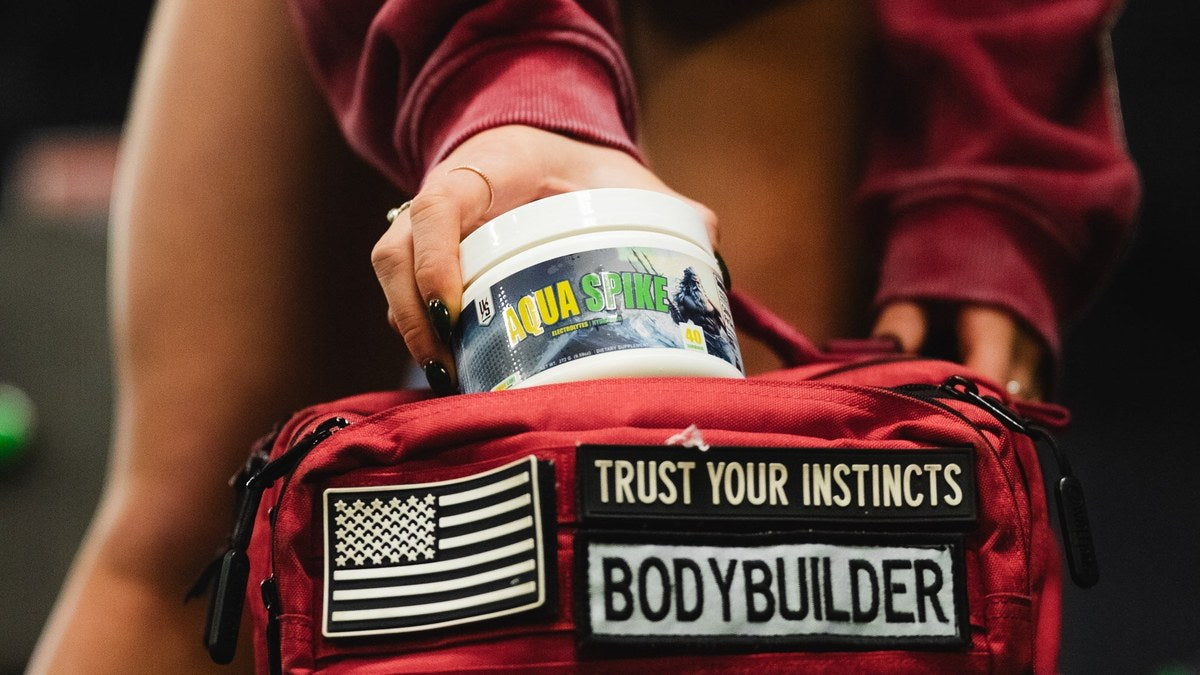
Aqua Spike is built for the second list, not the first. It is a sodium, potassium, and magnesium formula built for heavy-sweat training and daily hydration, with sodium as the lead mineral.
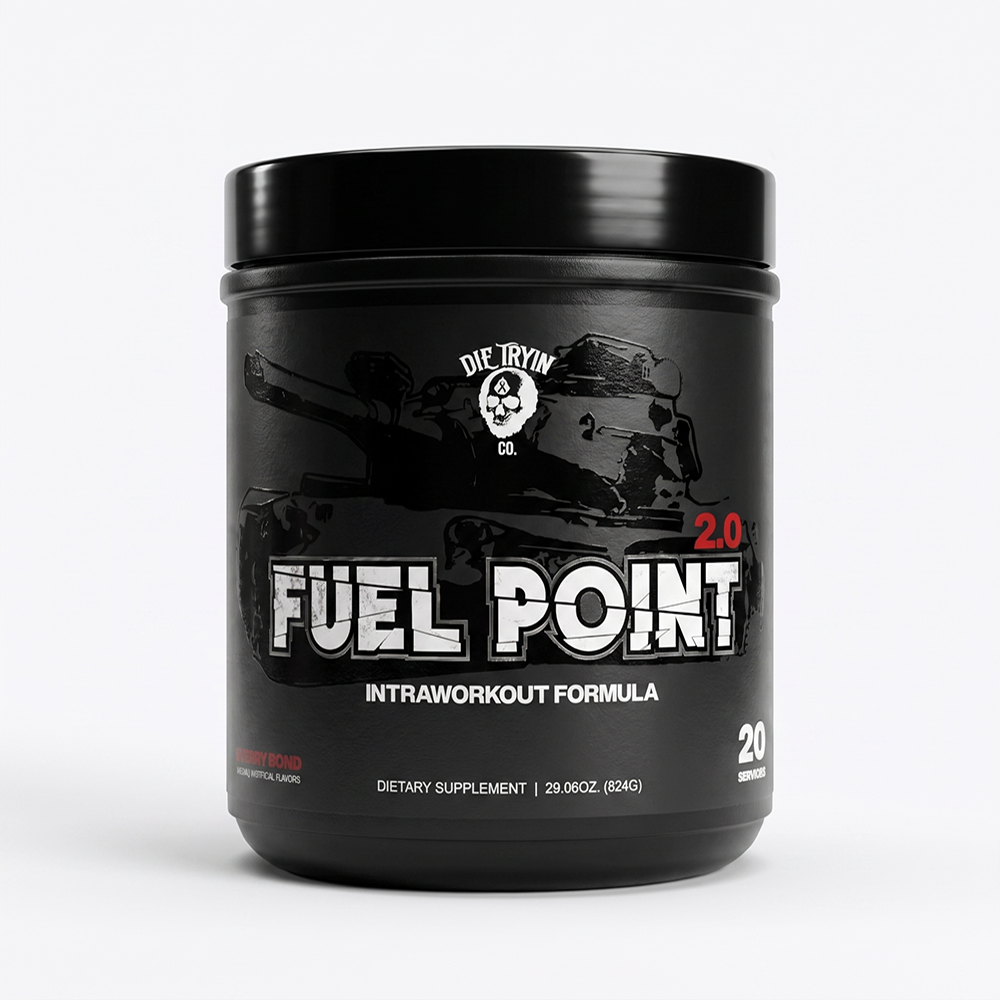
Use it on the long sessions, the hot ones, the doubles, and the days a cut has your food sodium low. On a short air-conditioned session you finish without a salt line, water is fine, and that stays true even though saying it sells fewer tubs. If your long sessions also need carbohydrate and aminos, Fuel Point 2.0 carries an electrolyte panel alongside them, so you are not stacking two half-solutions. Everything downstream of the session, sleep, food, and rest, is covered in the complete recovery guide.
FREQUENTLY ASKED QUESTIONS
How do I know if I am a high-salt sweater?
Practical field markers: white residue drying on your hat, shirt, or skin, sweat that stings your eyes, and a gritty feel on your forehead. Those are observations, not measurements. The only real answer comes from a sweat patch test, and the marathon data confirms you cannot deduce it from your size or how much you sweat.
Do I need electrolytes for a normal one-hour lifting session?
It depends less on the session than on you. The marathon field data found sweat sodium spans roughly 13-fold between athletes, with no relationship to body size or sweat rate, so two people in the same hour-long session can be losing very different amounts of salt. Run the concentration markers above before you run the clock. For the general fluid question, the hydration guide has it covered.
Will electrolytes stop my cramps?
Nobody can honestly promise that. The Cochrane review found no benefit of magnesium over placebo in older adults with nocturnal leg cramps, and found zero randomized trials on exercise-associated cramps at all. Nobody has tested it in lifters, which is why nobody can promise you anything. Sodium replacement has a clearer rationale for fluid balance, but treat any cramp guarantee on a label as marketing.
Is potassium as important as sodium during training?
Not close. Sweat potassium averaged 6.0 mmol/L in the marathon study against 42.9 mmol/L for sodium, and potassium varied far less between athletes. Get potassium from food, and prioritize sodium around heavy-sweat training.
What is exercise-associated hyponatremia, and am I at risk in the gym?
It is blood sodium falling too low, and in the Boston Marathon cohort it tracked with gaining weight during the event, meaning drinking beyond what you sweat out. Severe cases are a medical emergency. That cohort was marathoners past four hours, not lifters doing an hour of squats, so gym risk is low, but confusion, a pounding headache, nausea or vomiting during a long session means stop and get medical help. The hydration guide covers daily intake in full.
When should I take an electrolyte drink, before or during training?
Both work. Sipping through the session keeps replacement close to loss, which is the cleaner approach on anything long. Loading a serving 20 to 30 minutes before helps when you know the room is hot and you will be behind from the first set.
READY TO GEAR UP?
Pick the tool that matches the session, not the one with the loudest label:
- Heavy-sweat training and daily hydration: Aqua Spike
- Long sessions that need carbs and aminos too: Fuel Point 2.0
- Post-training protein: Post Iso
- Daily micronutrient base: Daily Essentials
- Not sure where to start: take the product quiz
Measure your own sweat loss. Salt the sessions that earn it. Skip the tub on the ones that do not. Train smart. Train hard.
ALWAYS FORWARD.
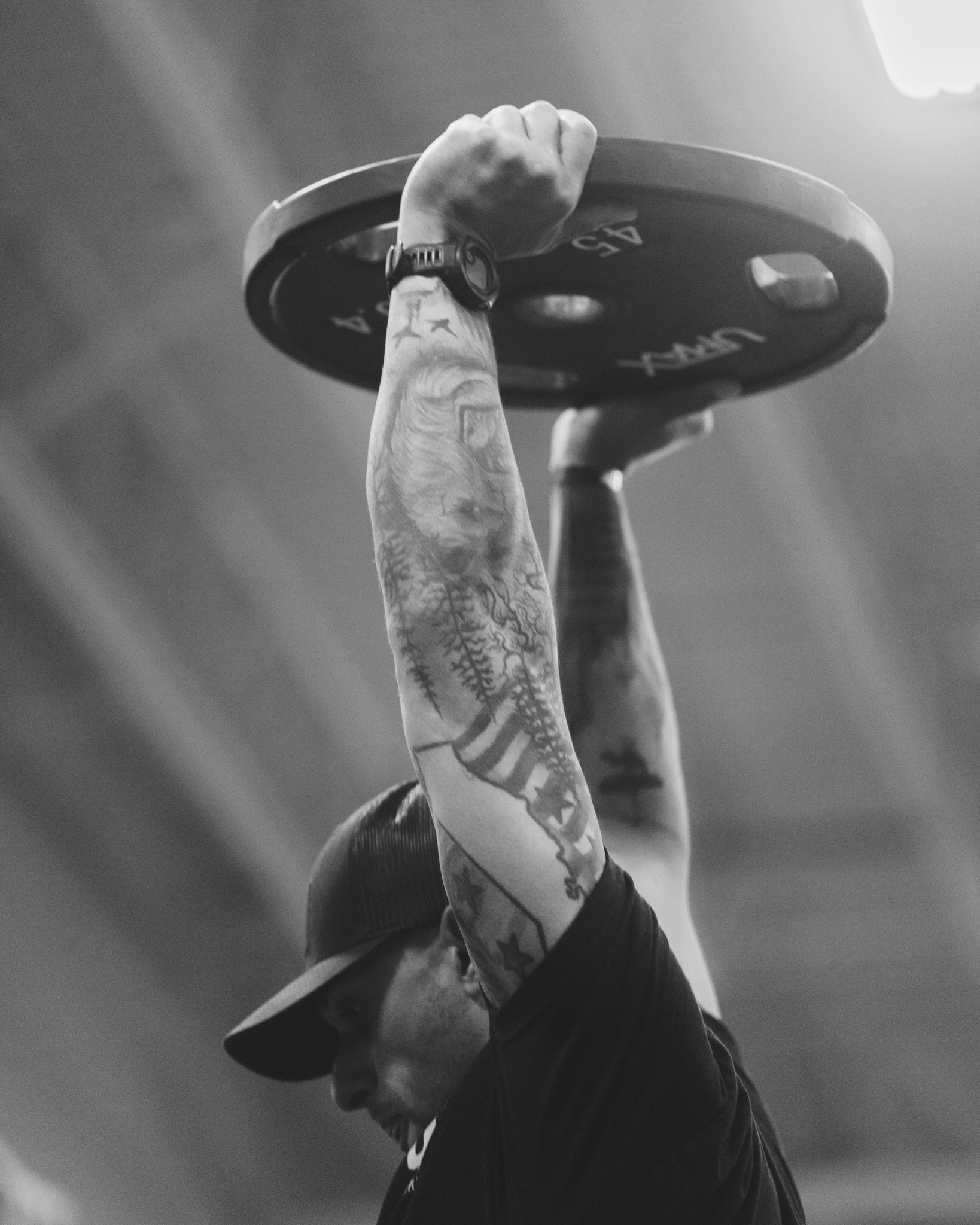
GEAR THAT FITS THIS POST
The products this article actually talks about. Real doses, disclosed labels, veteran owned.
Read more
The complete hydration playbook: how much water you actually need, what dehydration does to your performance, and how to hydrate around hard training.
Recovery is mostly three unglamorous things. Everything else is a rounding error, and we will show you the numbers.
The no-BS recovery playbook — sleep, stress, nutrition, modalities, and the framework that ties it all together. Recovery is where growth actually happens.
Your gut lining runs the same creatine energy system as your muscles. Here is what the research shows on stomach upset, IBS, colitis and leaky gut, and exactly where the human evidence stops.

Creatine gummies can work if the creatine is actually in them, and lab tests keep finding it often is not. Here is why a scoop of Creatine Monohydrate powder still wins.
Flavor doesn't change what creatine does; taking it every day is what counts. How to pick flavored or unflavored, what to mix it with, and how long it lasts once mixed.