


Does Protein Alone Build Muscle? Carbs After Training
By Jon Klipstein, U.S. Army Combat Veteran & Founder of Die Tryin Co.
Science reviewed by Onur Oncer, BS Physiology and peer-reviewed published researcher.
THE CARB RULE NOBODY EVER CHECKED
Listen up. Somewhere along the way the industry decided your protein shake was useless unless you slammed 50 grams of dextrose with it. Insulin spike. Nutrient shuttle. Anabolic window. You've heard the pitch, and you've probably paid for it, because most "recovery" powders are protein with a bag of sugar bolted on and a markup attached.
Here's the truth: when researchers put that rule under a needle biopsy, it didn't hold. Adding carbs to an adequate dose of protein did not build more muscle after lifting. The rule got imported from endurance research, where the problem being solved was glycogen, not muscle tissue.
This post covers one question only: do you need carbohydrate alongside your protein after training to grow? How often you eat protein across the day is a different question with a different answer, and it lives in its own post. Stay here for the carb question.
| YOUR SITUATION | DO CARBS WITH THE SHAKE CHANGE ANYTHING? | WHAT TO DO |
|---|---|---|
| Lifting 3-5x/week (24h+ between sessions) | No measurable muscle benefit in the research | Post Iso straight. Get carbs from meals. |
| Cutting / fat-loss phase | No, and the calories you skip are real | Protein alone. See the fat loss pillar. |
| Bulking / struggling to eat | Carbs help you hit calories, not muscle protein synthesis | Add carbs for the surplus. Do I Need Carbs? |
| Two hard sessions, under 8 hours apart | Yes, but for glycogen, not for growth | Carbs are the priority. See carb timing. |
| Endurance / conditioning block | Yes, fuel is the limiter | Fuel Point and the fueling guide. |
WHERE THE "YOU NEED CARBS" RULE CAME FROM
The logic looked clean on paper. Carbs raise insulin. Insulin is anabolic. Insulin drives amino acids into muscle. So carbs plus protein must beat protein alone. Every supplement company in the 2000s built a product around that sentence.
The problem is that insulin's role in muscle protein synthesis appears to be permissive rather than additive. Once enough insulin is present to keep the machinery switched on, pushing it higher doesn't push harder. A decent dose of whey already raises insulin on its own. You are not starting from zero, so the extra spike is buying you something you already own.
WHAT THE ACUTE RESEARCH ACTUALLY FOUND
In a randomized crossover trial out of McMaster University, nine men did four sets of single-leg knee extensions to failure and then drank either 25 g of whey protein or 25 g of whey plus 50 g of maltodextrin. The carb drink produced a 17.5-fold larger glucose response and a 5-fold larger insulin response. Muscle biopsies with stable isotope tracers showed no difference in muscle protein synthesis or muscle protein breakdown between the two drinks, in the exercised leg or the rested one (Staples et al., Medicine & Science in Sports & Exercise, 2011).
Straight framing on the size of that: nine subjects, one session, one measurement window. It is a small acute mechanistic study, not a training outcome. It tells you what the machinery did, not what your arms look like in June.
Worth reporting honestly, because it cuts against the headline: the carb trial did raise Akt phosphorylation, one of the signalling proteins upstream of growth. The signal moved. The actual protein accretion didn't. That gap is exactly why we don't sell you on mechanism diagrams.
A Dutch crossover study reached the same place from a different direction. Ten fit men did 60 minutes of resistance exercise, then took protein hydrolysate with zero, low, or high carbohydrate across a six-hour recovery window. Plasma insulin came in at 1.5, 3.7, and 18.4 units respectively, a twelvefold spread top to bottom. Muscle fractional synthetic rate came back 0.10, 0.10, and 0.11 percent per hour (Koopman and colleagues, American Journal of Physiology: Endocrinology and Metabolism, 2007; PMID 17609259). Twelve times the insulin bought a rounding error. Another small trial at n=10, but it fails to find a carb effect from a different angle than the first one.
AND OVER TWELVE WEEKS?
Acute biopsy data is a snapshot. What happens when you run it for a training block? A 12-week Finnish trial randomized previously untrained men, after a four-week standardization phase, into 30 g whey protein (n=22), isocaloric maltodextrin (n=21), or protein plus carbohydrate (n=25), taken immediately after training. Fat-free mass, quadriceps cross-sectional area, and maximal strength all improved, and they improved independent of what was in the shaker (Hulmi et al., Journal of the International Society of Sports Nutrition, 2015).
Now the correction, because most of the internet gets this next part wrong. The whey group did lose more total and abdominal-area fat, and did gain more fat-free mass per kilogram of bodyweight, compared to the carbohydrate-only group. Not compared to protein plus carbs. Against the combined group there was no significant difference. Anybody telling you a study proved protein-only beats protein-plus-carbs for belly fat is reporting a comparison that didn't come out that way.
Two limitations the headline never mentions. The supplement was taken only two to three times per week, which is a small nutritional lever across 12 weeks and part of why the muscle outcomes converged. And the subjects were previously untrained, so the results transfer to a beginner more cleanly than to someone ten years deep. Read it as evidence that shaker contents are not the deciding variable, not as proof that carbs sabotage you.
WHEN CARBS AFTER TRAINING GENUINELY MATTER
Skip carbs entirely and you'll eventually pay for it, just not in the muscle-building column. A systematic review and meta-analysis pooled 29 muscle-biopsy trials across 246 participants. In the ten of those trials (n=86) that compared carbohydrate against water, taking carbohydrate at roughly 1.0 g per kg of bodyweight per hour raised muscle glycogen re-synthesis by 23.5 mmol/kg dry mass per hour (95% CI 19.0 to 27.9) during recovery windows of eight hours or less (Craven et al., Sports Medicine - Open, 2021). Heterogeneity across those ten trials was high, so treat the exact figure as a ballpark and the direction as the solid part.
The same review checked whether adding protein to those carbs sped glycogen refill. Across 19 trials and 160 participants, the difference was 0.4 mmol/kg dm/h, with a confidence interval crossing zero and a p-value of 0.805. Nothing. The two nutrients each do their own job, and neither one rescues the other.
So the honest version is boring and useful: carbs are a fuel decision, protein is a tissue decision. If you train once a day with a night's sleep in between, your next meal handles the fuel. If you're doing two-a-days, a long conditioning block, or a sport with same-day sessions, carbs move up the priority list fast.
HOW TO ACTUALLY RUN IT
Basics beat hype. Here's the protocol we'd hand a new lifter and a competing athlete alike:
- Set daily protein first. Roughly 1.6-2.2 g per kg of bodyweight per day is where most sports-nutrition guidance lands. That number does more than any timing trick. See the protein pillar. Or get your number from the protein calculator.
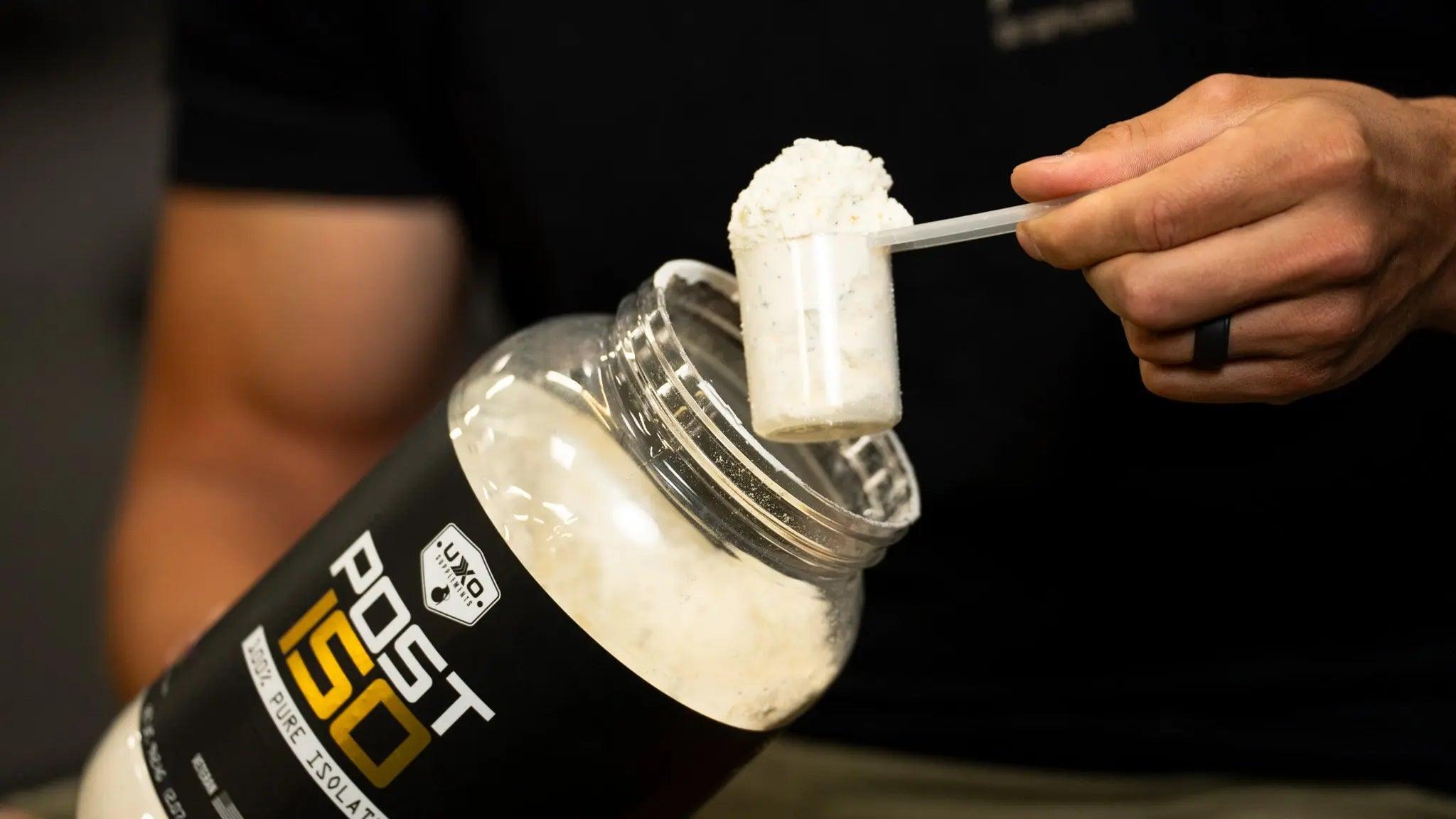
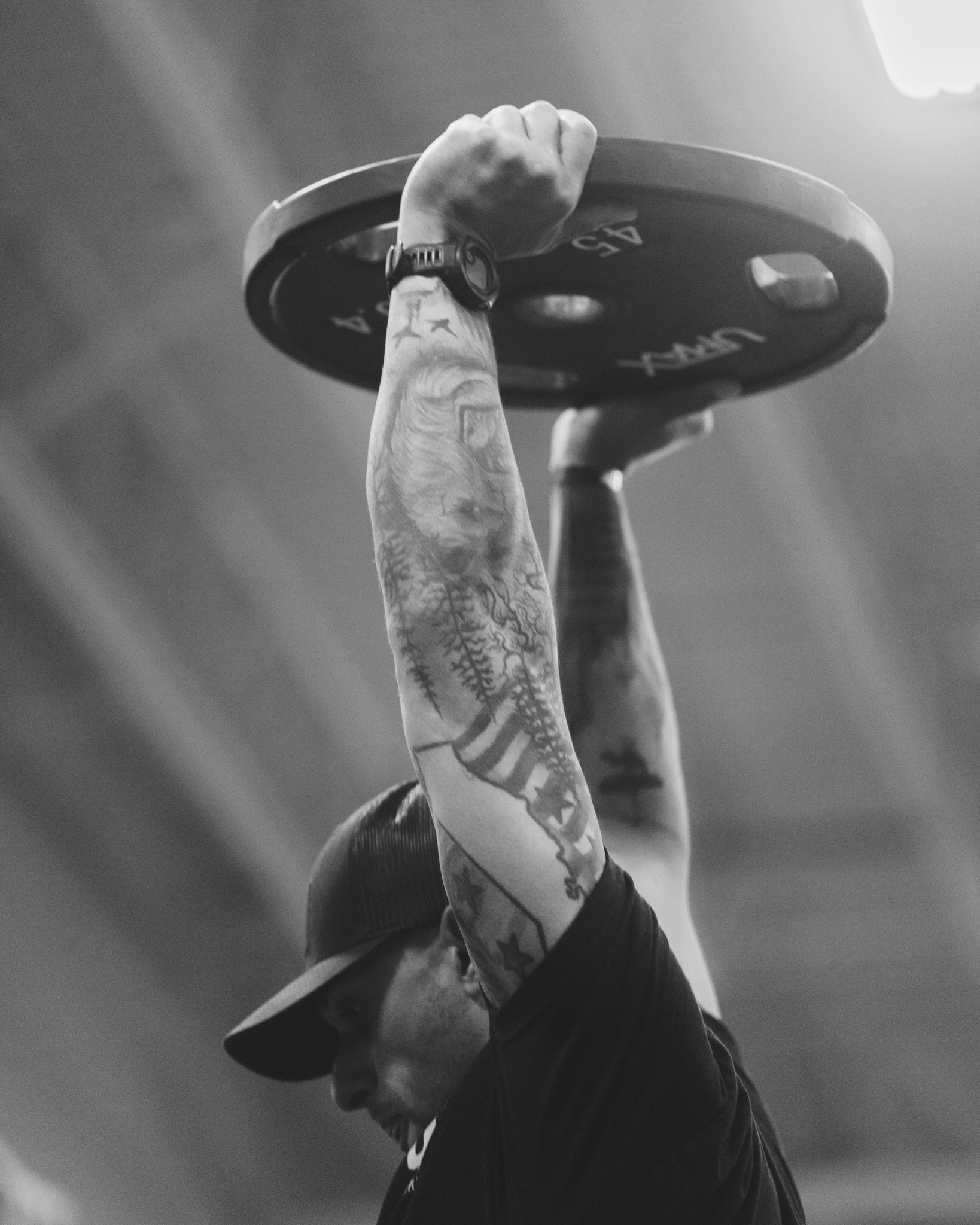
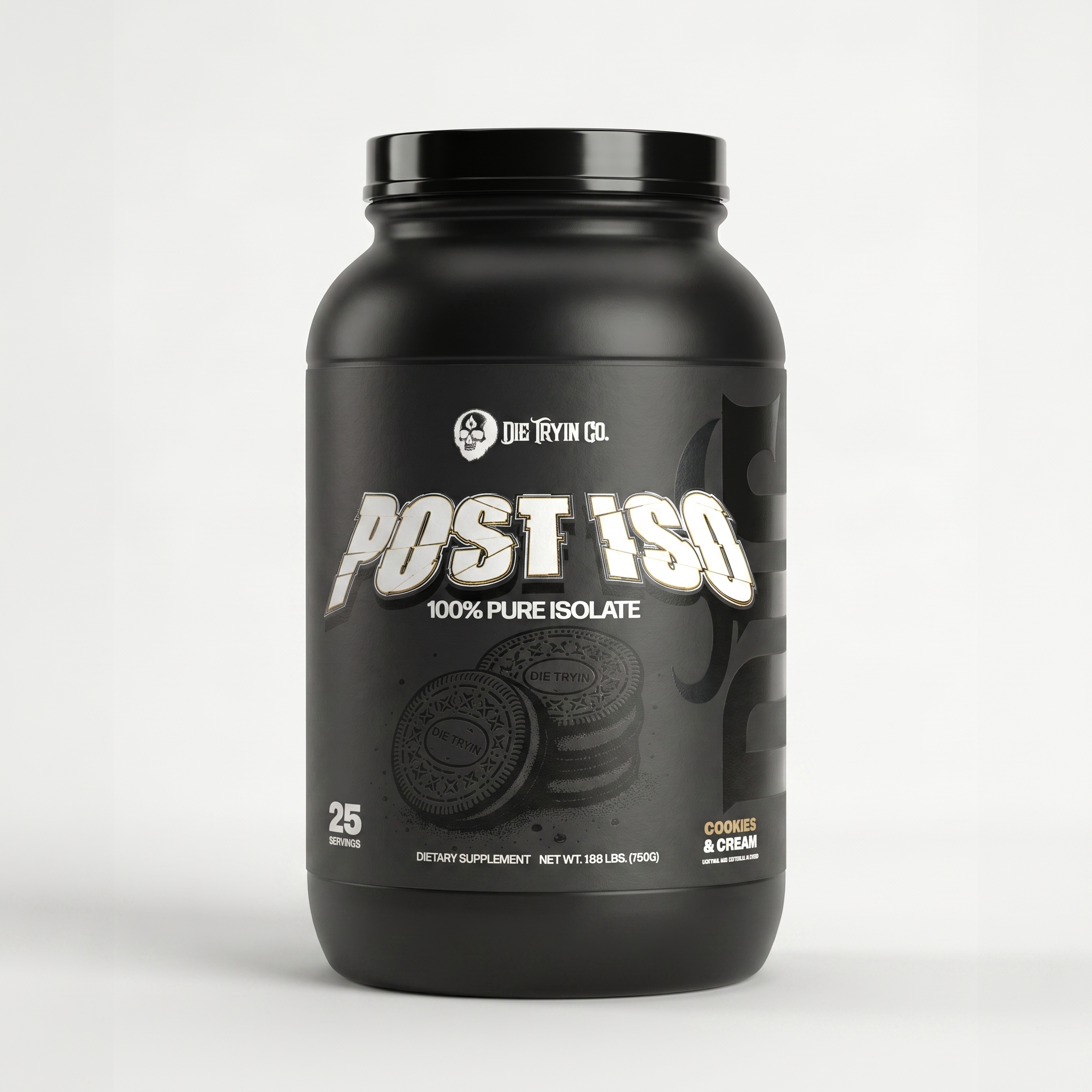
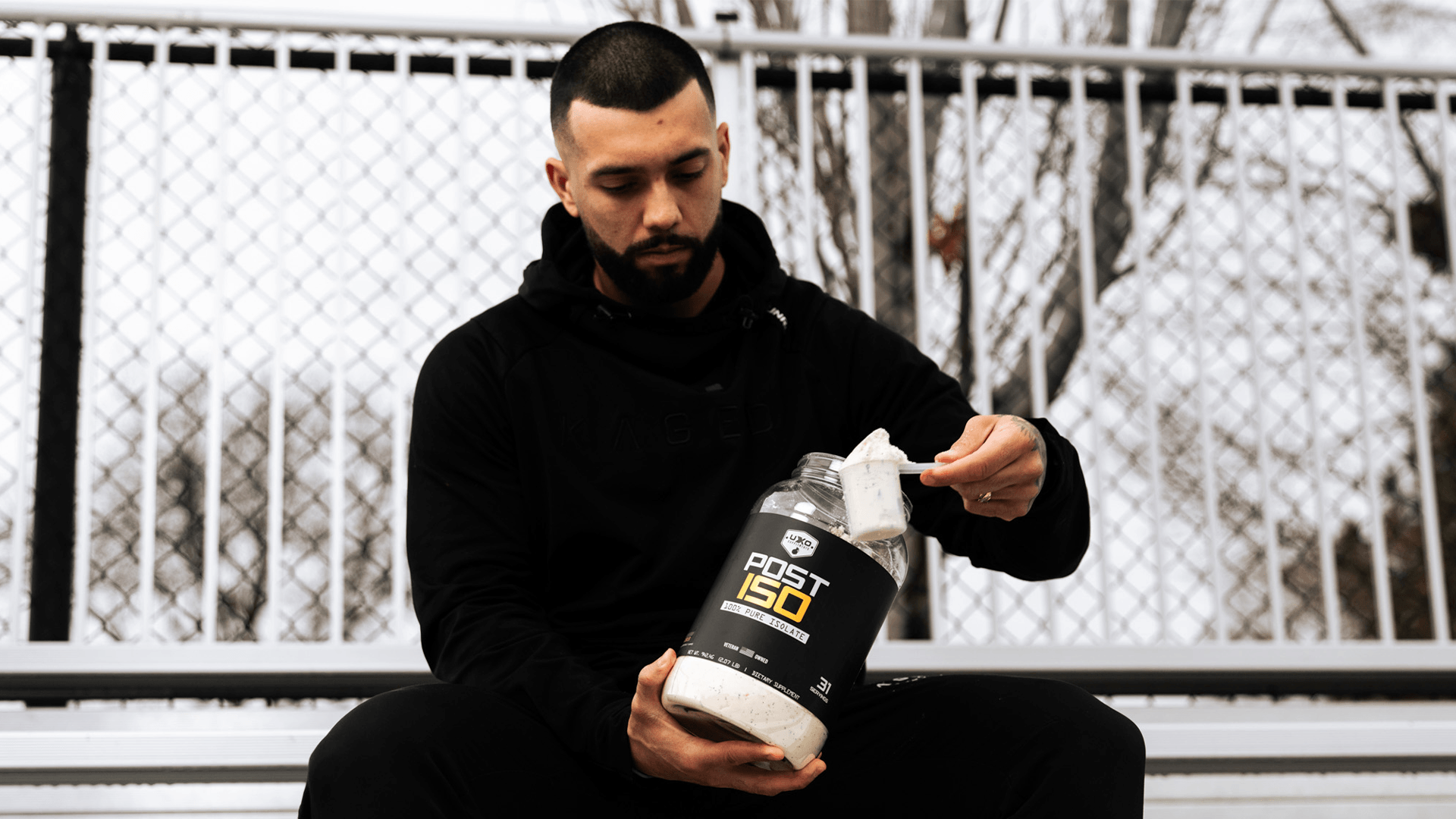
- Post-training, take 25-40 g of a fast protein. Post Iso delivers 24 g of whey isolate with DigeZyme enzymes. No sugar bolted on.
- Put carbs where they earn their keep. Around training for performance and fuel, and across your daily meals to hit calories. Not in the shaker as an anabolic tax.
- Stop chasing the 30-minute window. The urgency was oversold. Does Protein Timing Matter? breaks that down.
- Add the boring stuff with decades of data behind it. 5 g of Creatine Monohydrate daily, sleep, and progressive overload.
- Two sessions in one day? Prioritize carbohydrate between them. That's a fueling problem, not a protein problem.
FREQUENTLY ASKED QUESTIONS
Is it bad to take protein without carbs after lifting?
No. In small controlled trials using muscle biopsies, protein alone produced the same muscle protein synthesis and breakdown response as protein plus 50 g of carbohydrate. If your goal is muscle, protein alone appears to be sufficient.
Does the insulin spike from carbs help build muscle?
Research suggests insulin's role here is permissive rather than additive. Once protein intake is adequate, driving insulin higher with carbs did not increase synthesis rates in the trials above, even at twelve times the insulin exposure.
Will skipping post-workout carbs help me lose belly fat?
Not by itself. The 12-week trial that gets cited for this compared whey against a carbohydrate-only drink, not against protein plus carbs. Fat loss came from the overall calorie and protein picture, not from what you left out of the shaker.
Do I need carbs after training if I'm bulking?
Not for the muscle-building signal, but they make hitting a surplus far easier and they refill glycogen for your next session. That's a calorie and fuel argument, and it's a good one. Do I Need Carbs? goes deeper.
What about endurance athletes and two-a-days?
Different rules. When recovery between sessions runs under eight hours, carbohydrate intake is the limiting factor for glycogen restoration, and in the pooled data adding protein to those carbs did not speed it up. Fuel with intent, then handle protein separately.
Which protein should I use if I'm going carb-free?
A clean isolate. It digests fast and carries minimal carbohydrate or fat. Isolate vs. blends covers when each one makes sense.
Does creatine need carbs to work?
Old bodybuilding lore said creatine needed a sugar carrier. Consistency is what matters most here. Take 5 g every day, with or without carbs, and don't overthink the vehicle.
READY TO GEAR UP?
Real doses of real ingredients, none of the sugar padding:
- Post Iso - 24 g whey isolate with DigeZyme enzymes. Protein, not filler.
- Creatine Monohydrate - 5 g micronized, the most studied lever in the building.
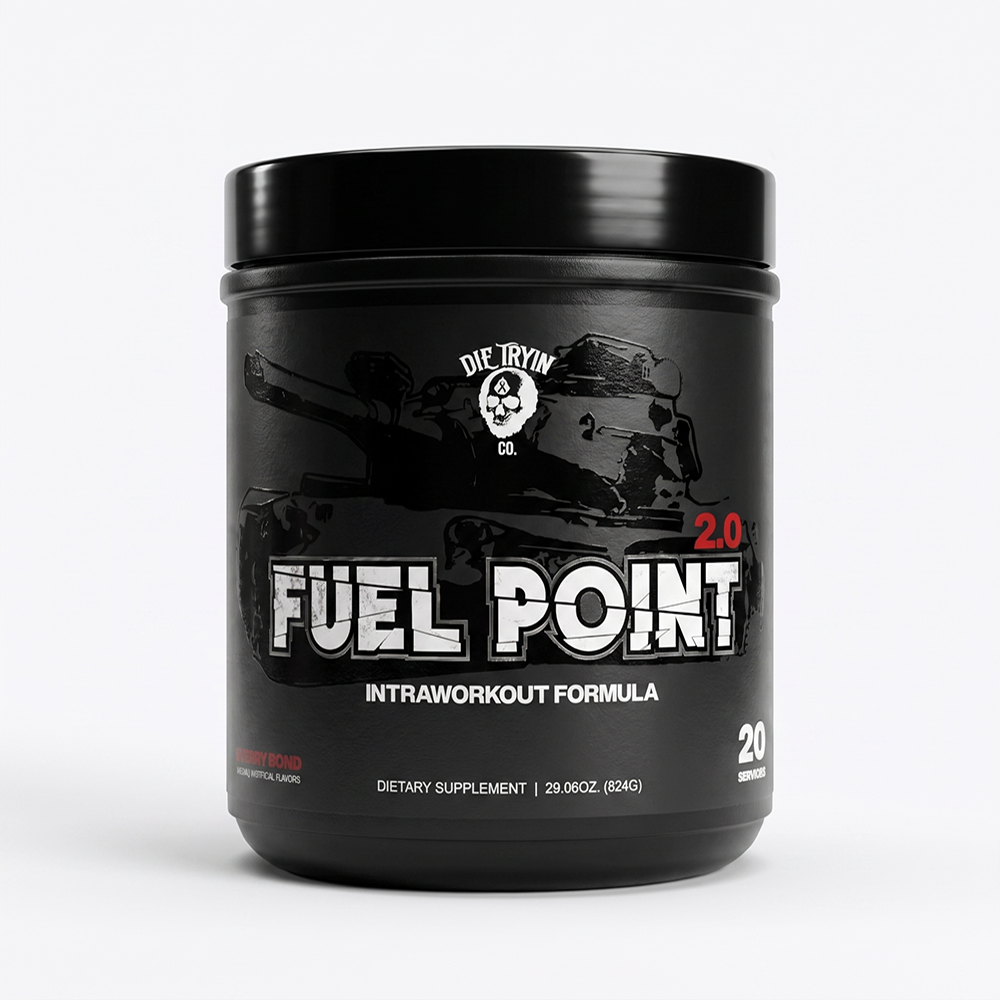
- Fuel Point - intra-workout carbohydrate for the sessions that actually need fuel.
- Pre / Intra / Post Guide - what belongs at each point in the session.
- The Power of Protein - the case for making daily intake non-negotiable.
- Take the quiz - two minutes, and we'll tell you what you actually need.
Discipline beats motivation. Consistency beats intensity. Get your daily protein handled, train hard enough to earn the recovery, and stop paying extra for sugar with a marketing story attached.
ALWAYS FORWARD.
GEAR THAT FITS THIS POST
The products this article actually talks about. Real doses, disclosed labels, veteran owned.

Read more
The no-BS playbook for losing fat without losing muscle. Energy balance, protein, training, sleep, and the supplements that actually help.
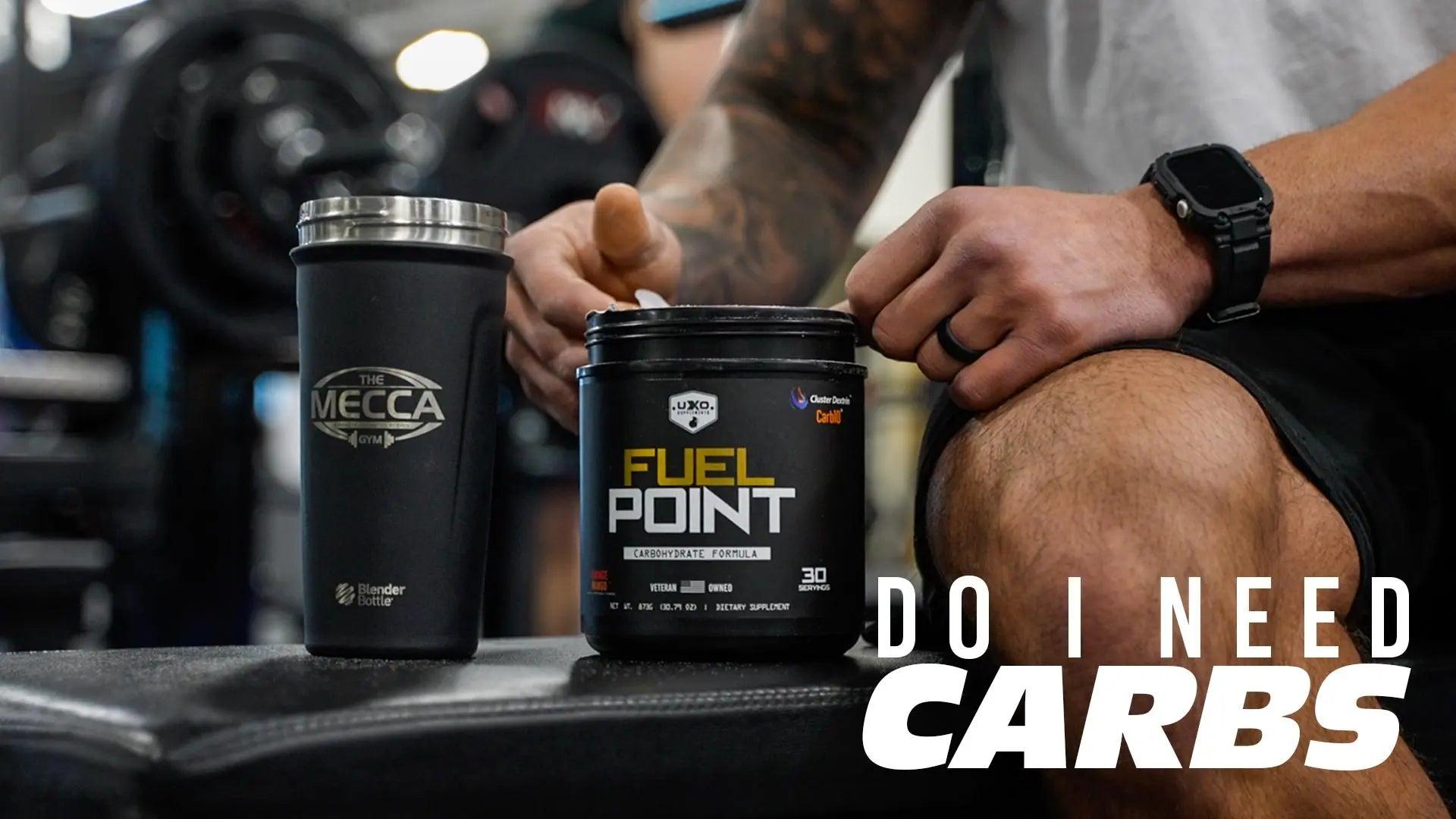
Carbs are not the enemy and they are not strictly essential either. Here is the honest version, and the numbers that actually matter.
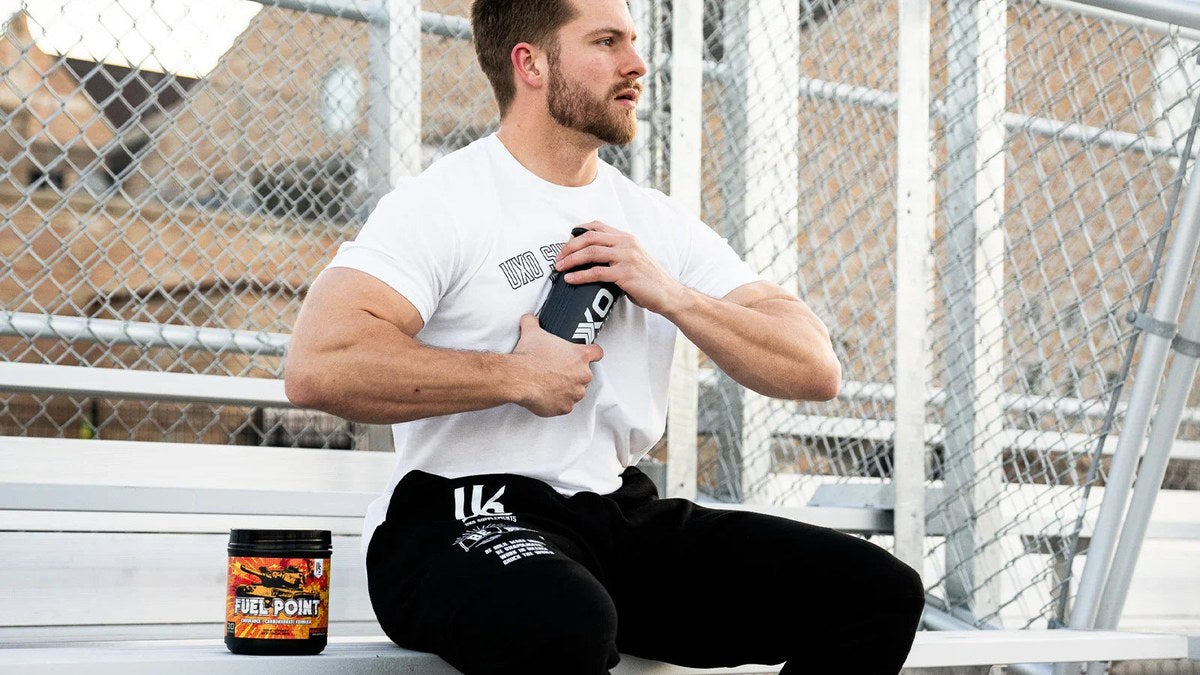
Carb timing matters less than the industry claims and more than the skeptics admit. Here is where the line actually sits.

The complete athlete's guide to fueling: carbs for output, protein for recovery, fats for hormones. Daily targets, timing, and the mistakes that kill progress.
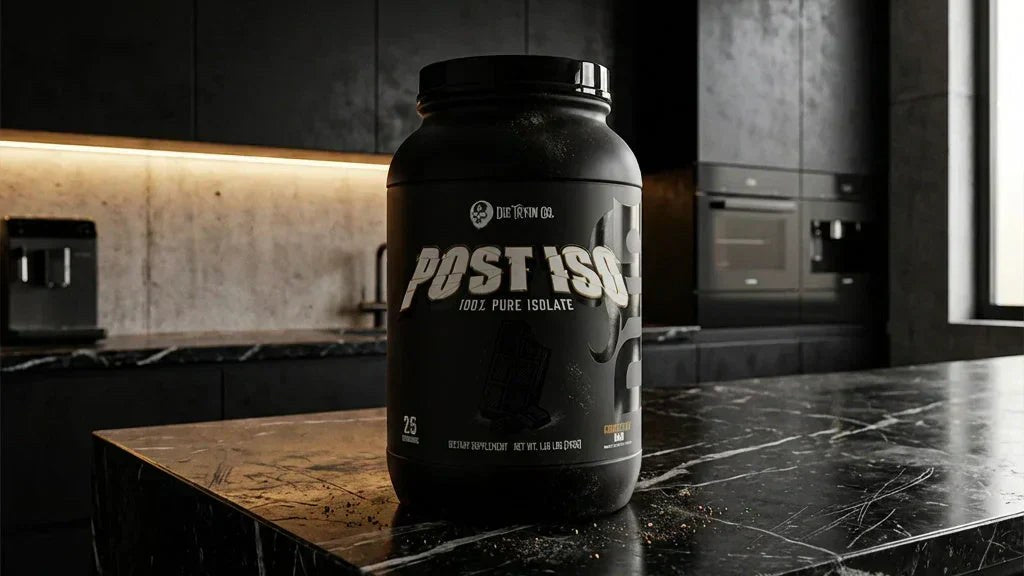
The complete protein playbook — how much you need, when timing matters, which sources deliver, and the myths costing you money.
The 30-minute post-workout rush is the most oversold rule in sports nutrition. Here is what the research actually shows about the anabolic window, per-meal protein distribution, and pre-sleep protein.