



Whey Isolate vs Protein Blends: Which Should You Buy?
By Jon Klipstein, U.S. Army Combat Veteran & Founder of Die Tryin Co.
Science reviewed by Onur Oncer, BS Physiology and peer-reviewed published researcher.
ISOLATE VS. BLEND IS A FILTRATION ARGUMENT, NOT A MUSCLE ARGUMENT
Here's the deal: isolate and blend are not two grades of muscle. They are two answers to a manufacturing question: how much of the non-protein part of milk gets filtered out, and what the company charges you for the extra filtering.
Concentrate keeps more lactose, more fat, more of the milk it came from. Isolate strips most of that out. A blend mixes protein sources so amino acids arrive in the blood on a staggered schedule instead of one spike. All three feed muscle. They cost different money and they sit different in your gut, and that is most of the real difference.
Here is the part most supplement brands skip: the filtration grade printed on your tub is one of the smaller decisions you will make about protein. We sell an isolate. It is still not the thing that decides your result.
| TYPE | WHAT THE PROCESSING DOES | TYPICAL PROTEIN BY WEIGHT | WHO IT'S ACTUALLY FOR |
|---|---|---|---|
| Whey Concentrate | Lightly filtered. Keeps most of the lactose and milk fat. | Roughly 35–80%; gym-grade is usually the 80% tier | Cheapest cost per gram. Fine if dairy doesn't bother you and you have calorie room. |
| Whey Isolate | Filtered further to pull out most lactose, fat and carbs. | About 90% or higher | Tight macros, hard cuts, or a gut that argues with dairy. Post Iso lives here. |
| Whey Hydrolysate | Enzymatically pre-broken into shorter peptide chains. | Varies widely by product | Most expensive tier. Rarely worth the premium for a healthy lifter. |
| Multi-source Blend | Two or more proteins mixed (whey + casein, or dairy + plant). | Depends entirely on the mix — read the panel | Slower, longer amino acid release. Useful as a last meal of the day. |
| Casein | Clots in the stomach and empties slowly. | Around 80% for micellar grades | Long gaps between meals. Not a post-lift tool. |
WHAT "ISOLATE" ACTUALLY MEANS ON A LABEL
Whey starts as a liquid byproduct of cheese making: mostly water, with protein, lactose, minerals and a little fat riding along. Concentrate is that liquid filtered and dried without much fuss. Isolate goes through additional passes — cross-flow microfiltration or ion exchange — that strip out more lactose and fat and leave a higher percentage of protein behind.
That extra filtering buys you three specific things and nothing else:
- Less lactose. The main reason people with dairy trouble tolerate isolate when concentrate wrecks them.
- Fewer calories per gram of protein. Matters when you are counting. If you are not counting, it does not.
- Thinner texture. Isolate mixes lighter and less creamy. Some people prefer concentrate for exactly this reason.
WHAT A "BLEND" ACTUALLY MEANS ON A LABEL
"Blend" is not a regulated promise. It covers two very different products. The honest version is a deliberate mix of fast and slow proteins built to extend how long amino acids stay elevated. The other is a concentrate-heavy tub with a little isolate sprinkled in so the word "isolate" can appear on the front panel at a lower ingredient cost.
You can tell them apart in ten seconds. Ingredients are listed by weight, so whatever is named first is the bulk of what you bought. If the front says "premium isolate blend" and the panel reads concentrate first, you bought concentrate with marketing on it.
SPEED IS REAL, AND IT MATTERS LESS THAN YOU THINK
The fast-versus-slow difference does show up in controlled research. In a double-blind randomized trial of 19 young adults published in The Journal of Nutrition, participants took either about 18g of whey protein or about 19g of a soy-dairy blend an hour after heavy leg training. Whey produced a higher, earlier rise in blood amino acids. The blend produced a lower initial rise but kept levels elevated later into recovery, and muscle protein synthesis remained elevated in the blend group through the 2–4 hour window while the whey group's no longer was (Reidy et al., 2013).
Do not run away with that. In the early 0–2 hour window both groups increased synthesis by the same amount, and a 2016 follow-up from the same lab, also in The Journal of Nutrition, gave 30g of whey isolate or a soy-dairy blend to men aged 55 to 75 and found no difference between them in synthesis rate, breakdown rate or net protein balance. One trial found a late-window edge for the blend. The next found nothing. Worth knowing: both papers carry co-authors employed by DuPont Nutrition and Health, an ingredient supplier with a commercial stake in soy protein. That does not make the data wrong. It does mean you read it with your eyes open.
Both measured a molecular signal over a few hours, not muscle on a body over months. Nobody has shown the shape of your amino acid curve after one shake changes what you look like in a year. The same hole sits under the free-form EAA pitch, and we take it apart in EAAs vs whey protein. If timing is what you came for, that is its own fight — we handle it in does protein timing matter.
THE HONEST PART: TOTAL DAILY PROTEIN BEATS BOTH
A systematic review and meta-analysis in the British Journal of Sports Medicine pooled 49 studies and 1,863 participants and found that protein supplementation on top of resistance training produced an average gain of 0.30 kg of fat-free mass and 2.49 kg on one-rep max strength. Real, measurable, and modest. The same analysis found the benefit flattened out: past a total intake of roughly 1.62 g/kg/day, more protein produced no further gains in fat-free mass (Morton et al., 2018). Where your personal number lands inside that ceiling is the pillar's job — start with the ultimate guide to protein. Want it in grams for your own weight and goal? Run the protein calculator.
Now the part that cuts against our own product. A separate meta-analysis in Nutrients compared concentrate, hydrolysate and isolate against isocaloric placebos across eight randomized trials and 246 trained participants. Whey supplementation was associated with fat mass loss of about 0.96 kg. Fat-free mass showed no significant effect in any scenario the authors investigated, and in the subgroup analysis that fat-loss effect was maintained specifically in the concentrate group (Castro et al., 2019). Eight trials is a small pool and the authors flagged several important limitations themselves, so treat it as directional rather than settled.
Put those together and the picture is simple. Hitting your daily protein number does the work. Filtration grade is a comfort feature layered on top. Anyone selling isolate as the reason you will finally grow is selling the wrong story, and that includes us.
SO WHO SHOULD ACTUALLY BUY WHICH
Pick based on your gut and your macros, not on which one sounds more advanced.
- Buy isolate if dairy gives you trouble, you are cutting and every calorie is spoken for, or you drink two-plus shakes a day and the extra carbs and fat from concentrate add up.
- Buy concentrate or a blend if you tolerate dairy fine, you have calories to spare, or you want the most protein per dollar.
- Buy a genuine slow blend if you want a last feeding before a long overnight gap and would rather have a flat release than a spike.
WHAT'S ACTUALLY IN POST ISO
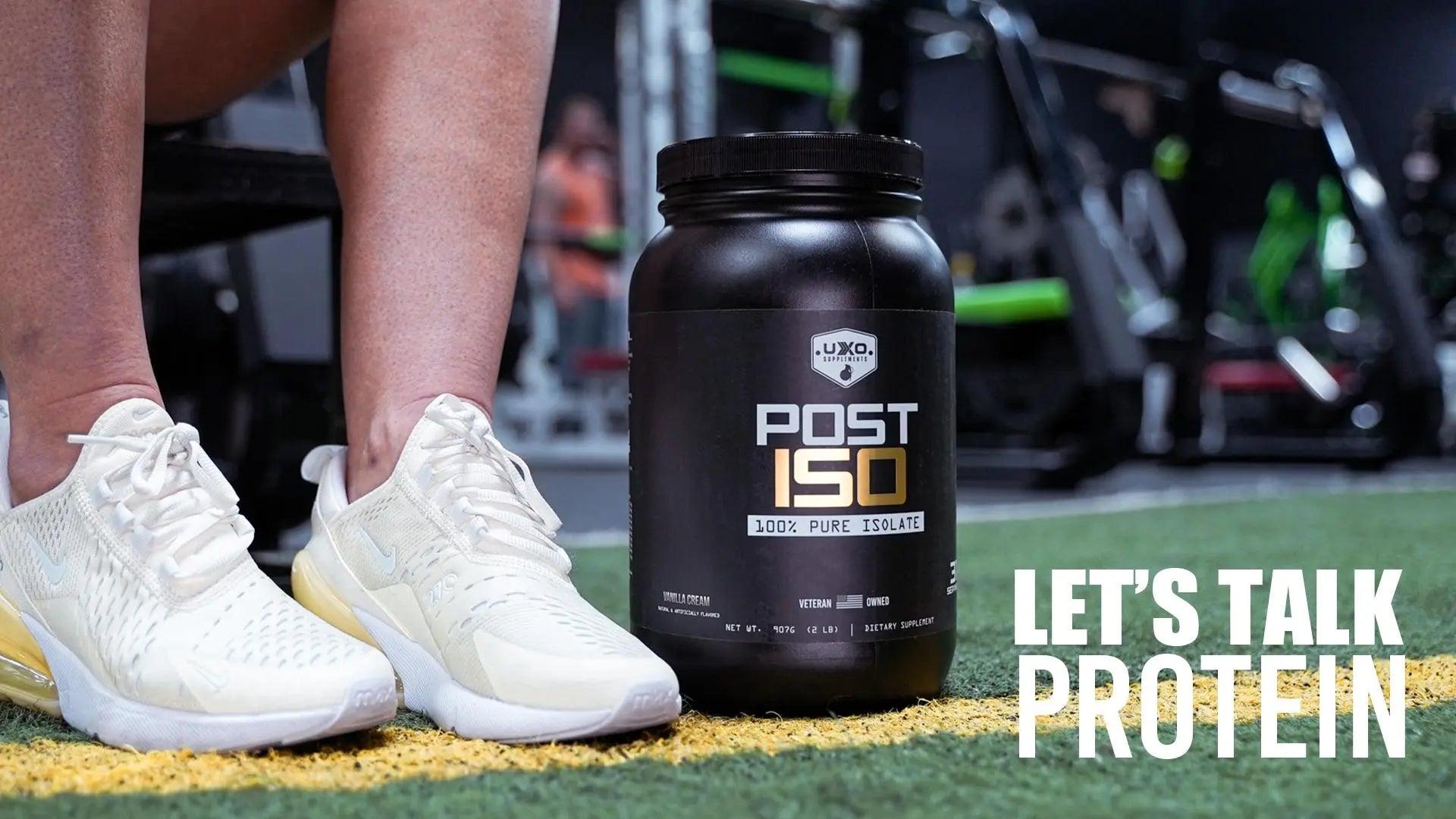
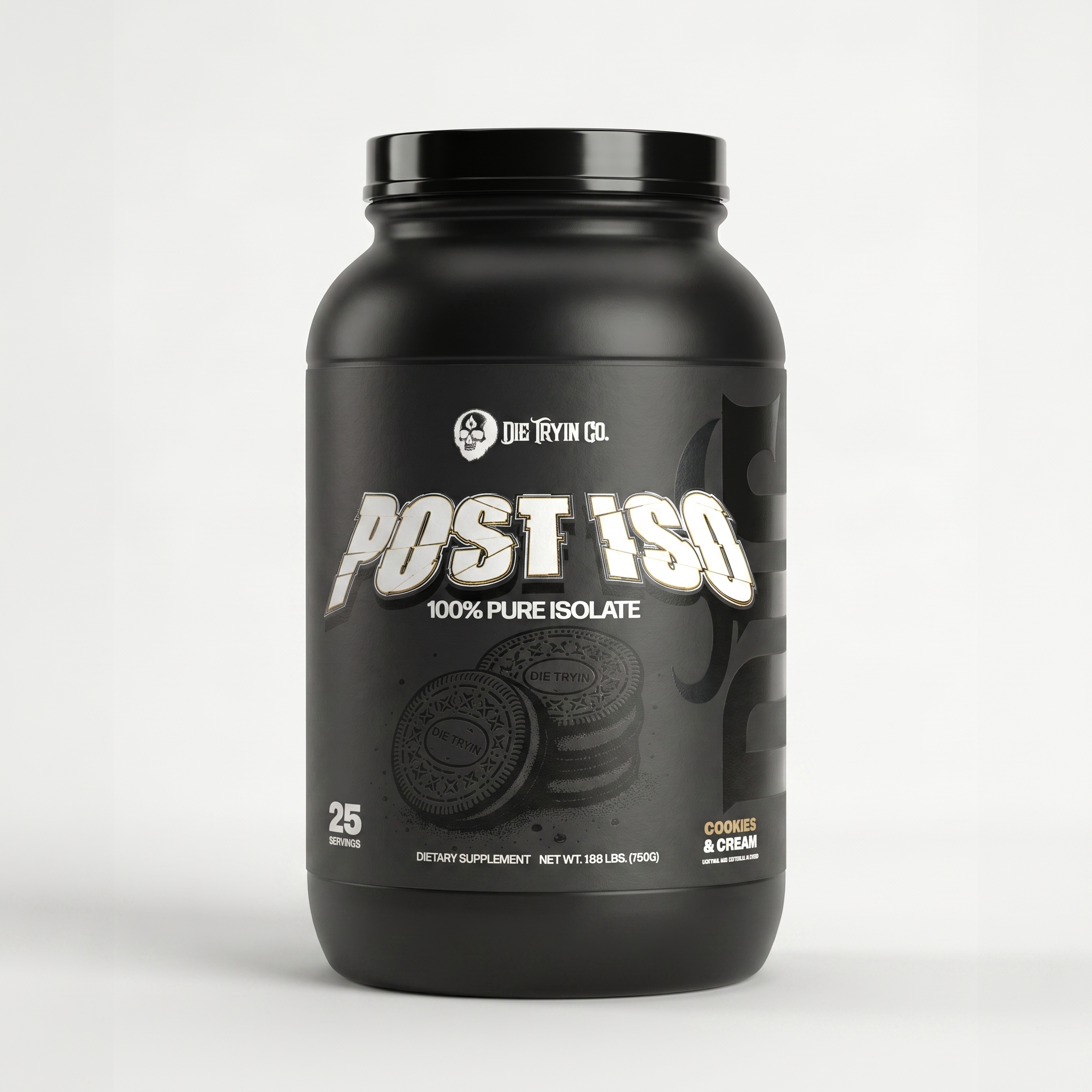
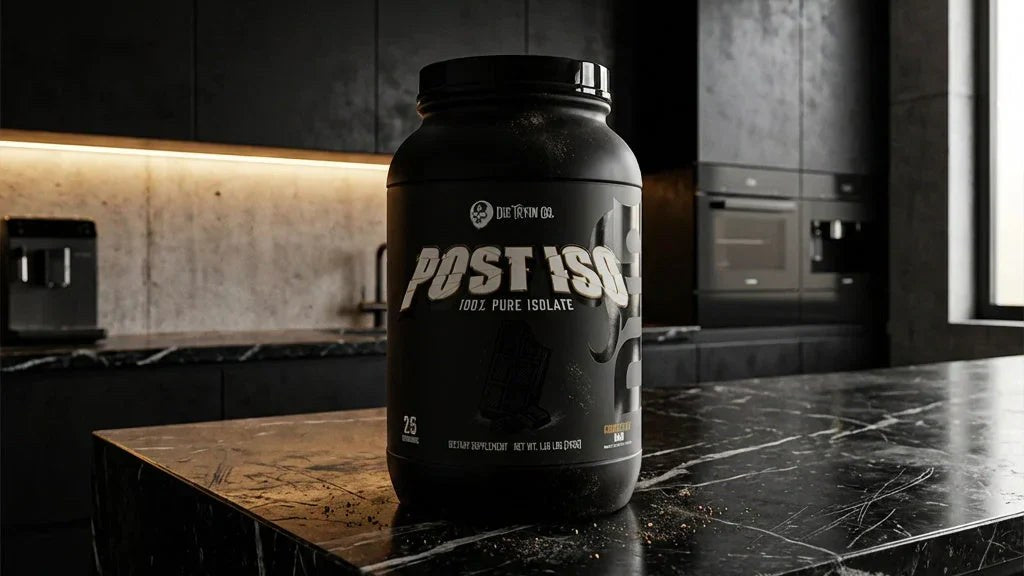
One scoop of Post Iso is 30.6g and delivers 24g of protein from 26,667mg of whey isolate, in 110 calories, with 3g of total carbohydrate (2g of that is fiber, 1g sugar) and 0.5g of fat. That is roughly 87% of the calories in the scoop coming from protein, and the isolate itself runs about 90% protein by weight. Those are the numbers off the panel, not a marketing range. It contains milk.
It also carries 100mg of DigeZyme multi-enzyme complex — alpha amylase, neutral protease, cellulase, lactase and lipase — plus 10mg papain and 10mg protease. Straight talk: enzyme blends in healthy adults are a comfort feature, and the research behind them is thinner than the research behind the protein itself. Lactase has the clearest rationale, since it targets the residual lactose that survives filtration. If digestion is why you have avoided protein powder, read tips to improve gut health.
HOW TO READ A PROTEIN LABEL WITHOUT GETTING PLAYED
Four checks, thirty seconds, and you will never overpay for a tub again:
- Divide protein grams by calories. An isolate should land near or above 0.20g per calorie. Post Iso is 24g over 110.
- Check scoop weight against the protein claim. A 40g scoop yielding 24g of protein is a different product from a 30g scoop yielding the same.
- Read ingredient order, not the front panel. The first ingredient is the bulk of the tub.
- Price it per gram of protein, not per tub. A cheaper tub with 20 servings can cost more per gram than a pricier one with 25.
FREQUENTLY ASKED QUESTIONS
Is whey isolate better than a blend for building muscle?
Not in any way the research has shown consistently. The Nutrients meta-analysis found no significant fat-free mass advantage for any whey form, and the two acute trials comparing whey against a soy-dairy blend split: one found a late-window edge for the blend, the follow-up found nothing. Total daily intake is the lever. Why protein does what it does is covered in the power of protein.
Do I need isolate if I'm lactose intolerant?
Usually the better call. Lactase non-persistence is the global norm, not the exception — published reviews put it at roughly 65–70% of the world's adult population, with prevalence varying widely by region. Isolate is filtered to remove most of the lactose, which is why plenty of people who cannot handle a concentrate shake do fine on isolate. It is not lactose-free, and Post Iso contains milk. If you react to trace amounts, test one serving before buying a full tub.
Is a protein blend just a cheaper product?
Sometimes. Concentrate is cheaper to produce, so a concentrate-forward "blend" is often a cost decision dressed up as a formulation decision. A real multi-source blend built for staggered amino acid release is a legitimate product. The ingredient panel tells you which one you are holding.
Does isolate really absorb faster, and does that change anything?
Whey does produce a faster, higher rise in blood amino acids than a slower blend — that part is measured and real. What has not been shown is that the shape of that curve changes body composition over months of training. Treat absorption speed as a preference, not a performance spec.
Can I use isolate while cutting?
That is where isolate earns its price. In a deficit you are buying protein with a limited calorie budget, and 24g for 110 calories protects more of that budget than a concentrate carrying extra lactose and fat. Staying strong through a cut is its own skill set — see how to maintain muscle while cutting.
Is whey concentrate "dirty" protein?
No, and that framing is a sales tactic. Concentrate is a perfectly good protein source. It carries more lactose, fat and carbohydrate per serving than isolate, which is a problem only if those numbers conflict with your plan or your gut. If you are tracking, start with macros: what are they and why should I count them.
READY TO GEAR UP?
Pick the tool that matches the job, then go hit your number every single day. That is the whole play.
- Post Iso — 24g of whey isolate protein in 110 calories with DigeZyme enzymes. For tight macros and stomachs that argue with dairy.
- Creatine Monohydrate — 5g of micronized Creatine Monohydrate, one of the most-researched performance ingredients there is.
- Glutamine — 5g of L-Glutamine, standalone, for stacked hard training weeks.
- Daily Essentials — chelated multi plus probiotics, enzymes and prebiotic for the days your diet is not perfect.
- Take the quiz — sixty seconds, and we will tell you what you need instead of what has the best label.
Basics beat hype. Buy the protein that fits your gut and your budget, then get the grams in.
ALWAYS FORWARD.

GEAR THAT FITS THIS POST
The products this article actually talks about. Real doses, disclosed labels, veteran owned.

Read more
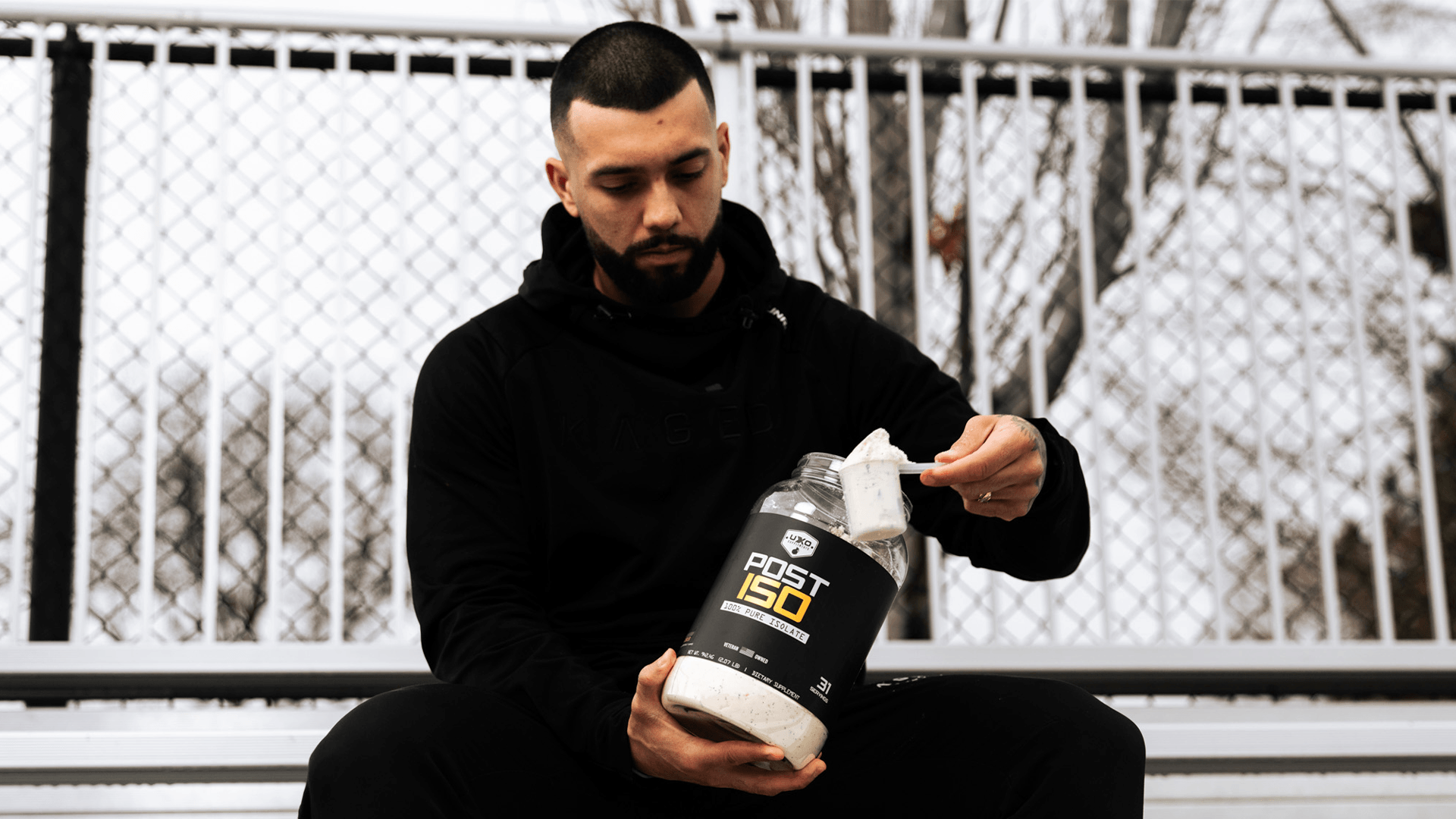
The 30-minute post-workout rush is the most oversold rule in sports nutrition. Here is what the research actually shows about the anabolic window, per-meal protein distribution, and pre-sleep protein.
The complete protein playbook — how much you need, when timing matters, which sources deliver, and the myths costing you money.
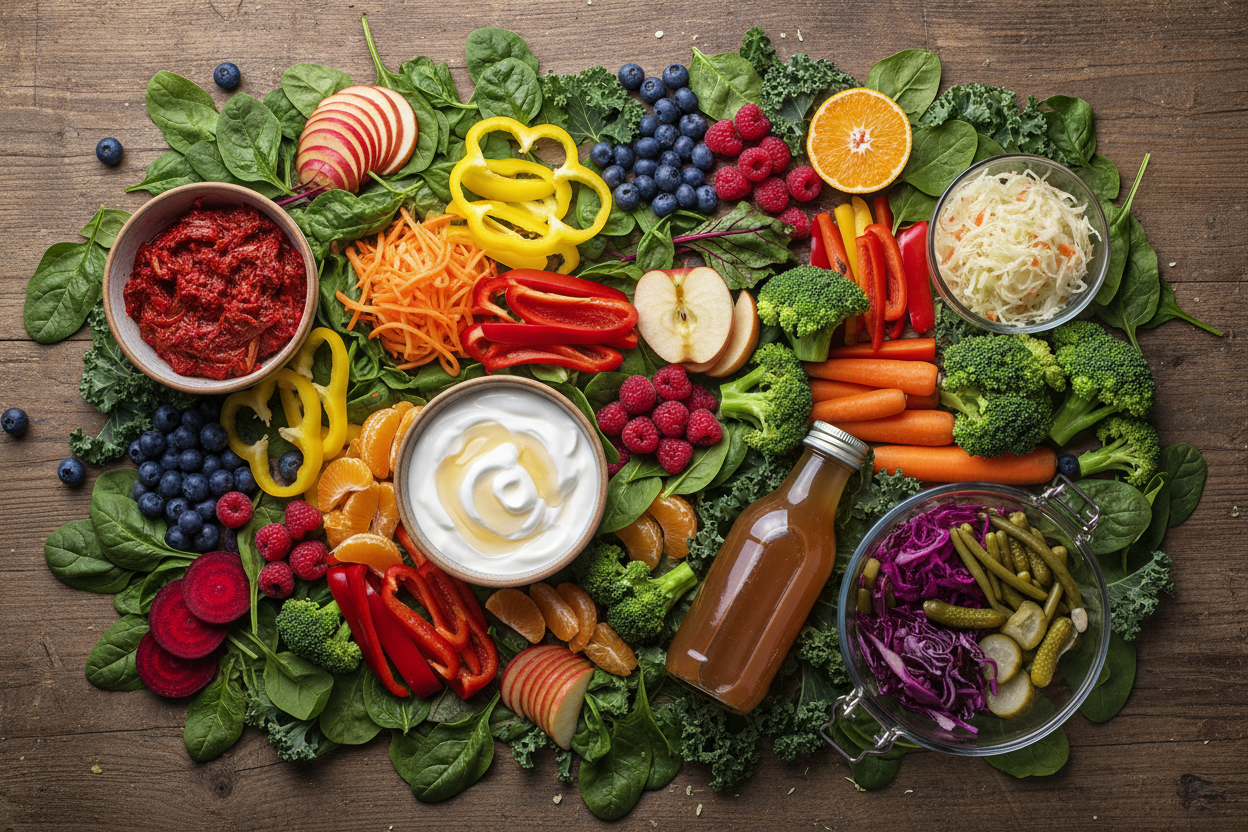
Your gut runs more than your digestion. Here are 8 day-to-day tips — diet, hydration, sleep, stress, and probiotics — to support a healthier gut.
Protein does more than build muscle. 8 real benefits ranked by evidence strength: satiety, metabolic boost, bone density, sarcopenia prevention, and more.

Anyone can lose weight. The hard part is deciding what comes off. Four levers decide whether you finish a cut lean and strong or smaller at the same scale weight.
You can't out-train a bad diet. Here's the no-BS guide to macros — what they are, why they matter, and how to count them so you actually hit your goals.