





8 Tips to Improve Gut Health (That Actually Work)
By Jon Klipstein, U.S. Army Combat Veteran & Founder of Die Tryin Co.
Science reviewed by Onur Oncer, BS Physiology and peer-reviewed published researcher.
YOUR GUT RUNS MORE THAN YOUR DIGESTION
Listen up. Your gut isn't just where lunch goes to get processed. Hundreds of bacterial species live down there, and what they're doing affects your performance in the gym, your body composition, how often you get sick, and even how you feel day to day. Ignore it and you're leaving gains on the table.
Here's the honest version of the science: researchers have linked an out-of-balance microbiome — what they call dysbiosis — with immune, metabolic, and mood-related outcomes. That's an association found in research, not a promise that a salad fixes everything. According to PubMed, a peer-reviewed review in BMJ concluded that the gut microbiota plays a role in digestion, metabolism, and immune function, and that what you eat — especially fiber and plant diversity — shapes which bacteria thrive (Valdes et al., 2018).
No fear-mongering, no miracle cures. Just the basics, done right. Below are eight day-to-day levers, then a deeper look at the ones that move the needle most. Basics beat hype.
| THE LEVER | WHY IT MATTERS |
|---|---|
| 1. Eat real food | Veg, fruit, protein, healthy fats, and fiber from legumes, nuts, and seeds feed your beneficial bacteria. |
| 2. Cut the sugary soda | High-sugar carbonated drinks can crowd out the bacteria you want and feed the ones you don't. |
| 3. Manage stress | The gut-brain axis is real — chronic stress and anxiety disrupt digestion. |
| 4. Stay hydrated | Water supports a healthy bacterial balance and protects the gut's mucosal lining. |
| 5. Eat slowly | Chewing thoroughly improves nutrient absorption and eases digestion and reflux. |
| 6. Sleep 7-9 hours | Short, broken sleep is tied to a less favorable microbial balance. |
| 7. Prebiotics & probiotics | Probiotics are live beneficial bacteria; prebiotics are the fiber that feeds them. |
| 8. Spot food intolerances | Recurring bloating, cramping, or reflux can flag a trigger food worth investigating. |
DIET & FIBER — THE BIGGEST LEVER
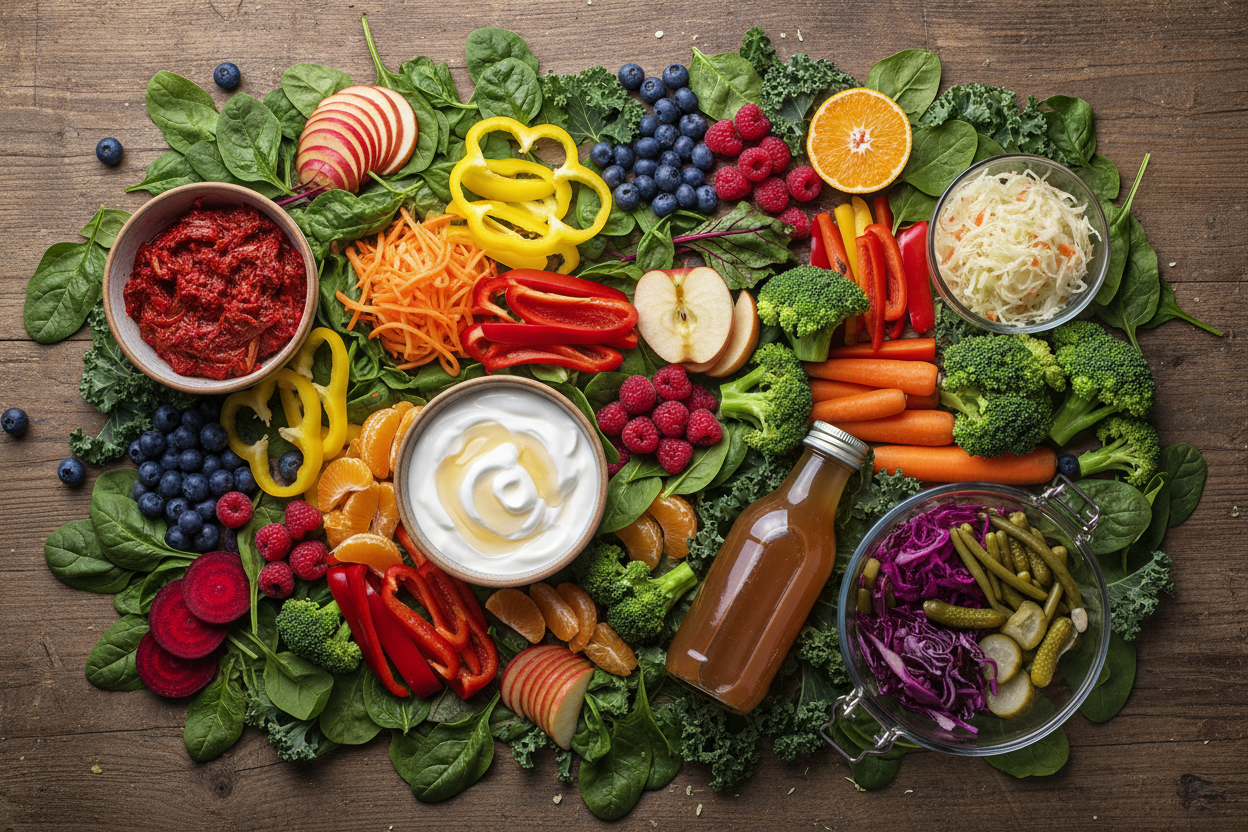
If you only fix one thing, fix the plate. Your bacteria eat what you eat, and the ones you want to feed run on fiber and plant variety. Pile in vegetables, fruit, legumes, nuts, and seeds alongside your protein and healthy fats. Variety matters as much as volume — a wider range of plants supports a wider range of beneficial bacteria.
Fermented foods deserve a callout. In a Stanford randomized controlled trial, adults who ate more fermented foods for 17 weeks saw their gut microbiome diversity climb and inflammatory markers drop (Wastyk et al., 2021). It was a small, tightly controlled study — not mass-scale proof — but the direction is clear: yogurt, kefir, kimchi, and sauerkraut are easy adds. This is also where the gut-and-training connection lives. If you want the muscle-building angle, read Gut Health and Muscle Growth — The Overlooked Connection.
Dialing in the rest of your diet? Start with What Are Macros? How to Count Protein, Carbs & Fats so your fiber and protein both land in range.
HYDRATION — THE OVERLOOKED HABIT
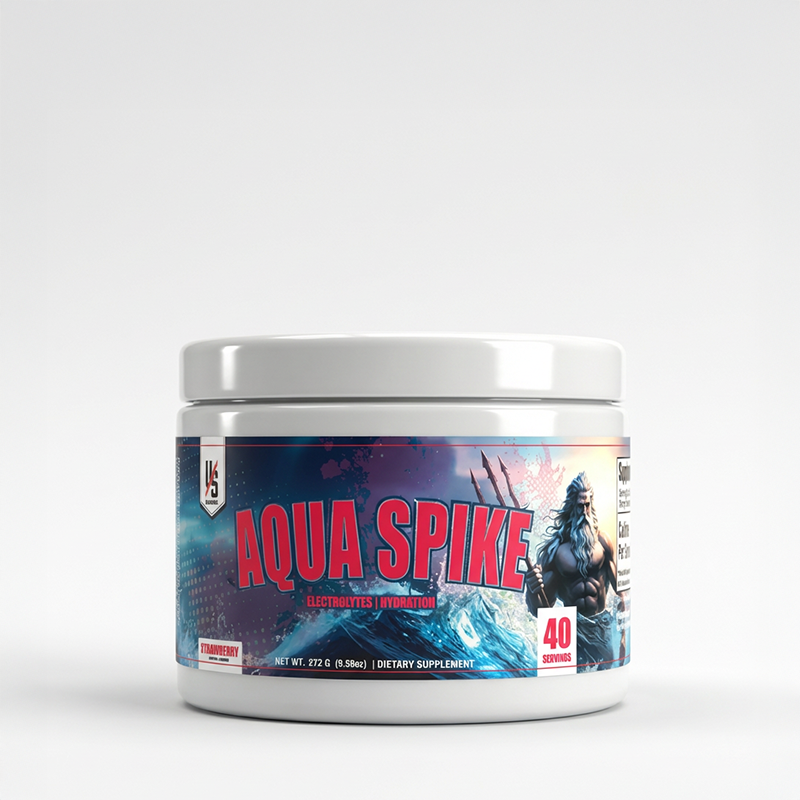
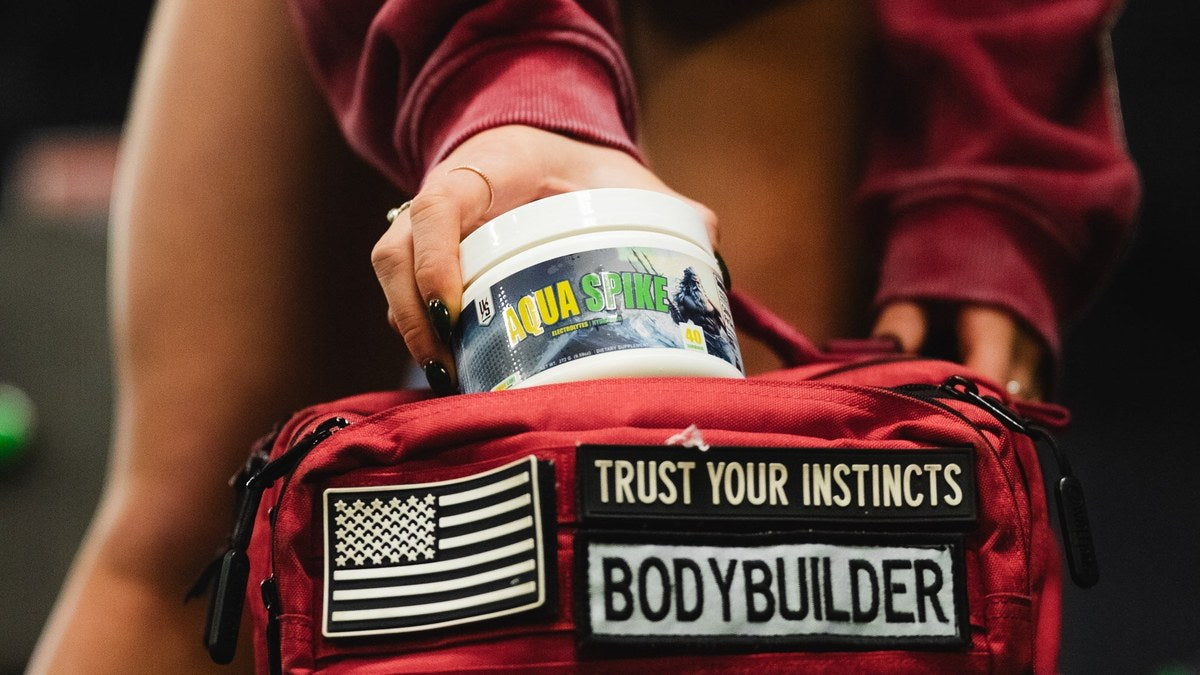
You're more than 60% water, and your gut leans on that. Water helps maintain the bacterial balance and protects the mucosal lining that keeps your digestion running clean. Aim for steady intake across the day rather than chugging it all at once. If you train hard or sweat a lot, electrolytes matter too — that's where Aqua Spike earns its place in the bag.
Want the full breakdown on why this one's non-negotiable? Read The Importance of Hydration and Why It's Key.
SLEEP — WHERE THE BALANCE RESETS
Skimp on sleep and your gut feels it. Short, broken nights are tied to a less favorable microbial balance, and they wreck the recovery you're chasing in the gym. Target 7-9 hours of uninterrupted sleep — consistency beats intensity here too. Lock the basics: dark room, cool temp, no screens at the buzzer.
Sleep is one piece of the recovery puzzle. For the rest, dig into The Science of Recovery — How to Maximize Gains Between Workouts.
STRESS & THE GUT-BRAIN AXIS
Your gut and your brain are wired together. Chronic stress and anxiety can disrupt digestion, and a rough gut can feed back into how you feel. You don't need a retreat in the mountains — you need a few repeatable habits. Get outside for a walk or jog, slow your breathing, keep caffeine reasonable, and find whatever resets you, whether that's lifting, stretching, or ten quiet minutes. Discipline beats motivation, and that applies to your nervous system too.
PREBIOTICS, PROBIOTICS & THE SMALL STUFF
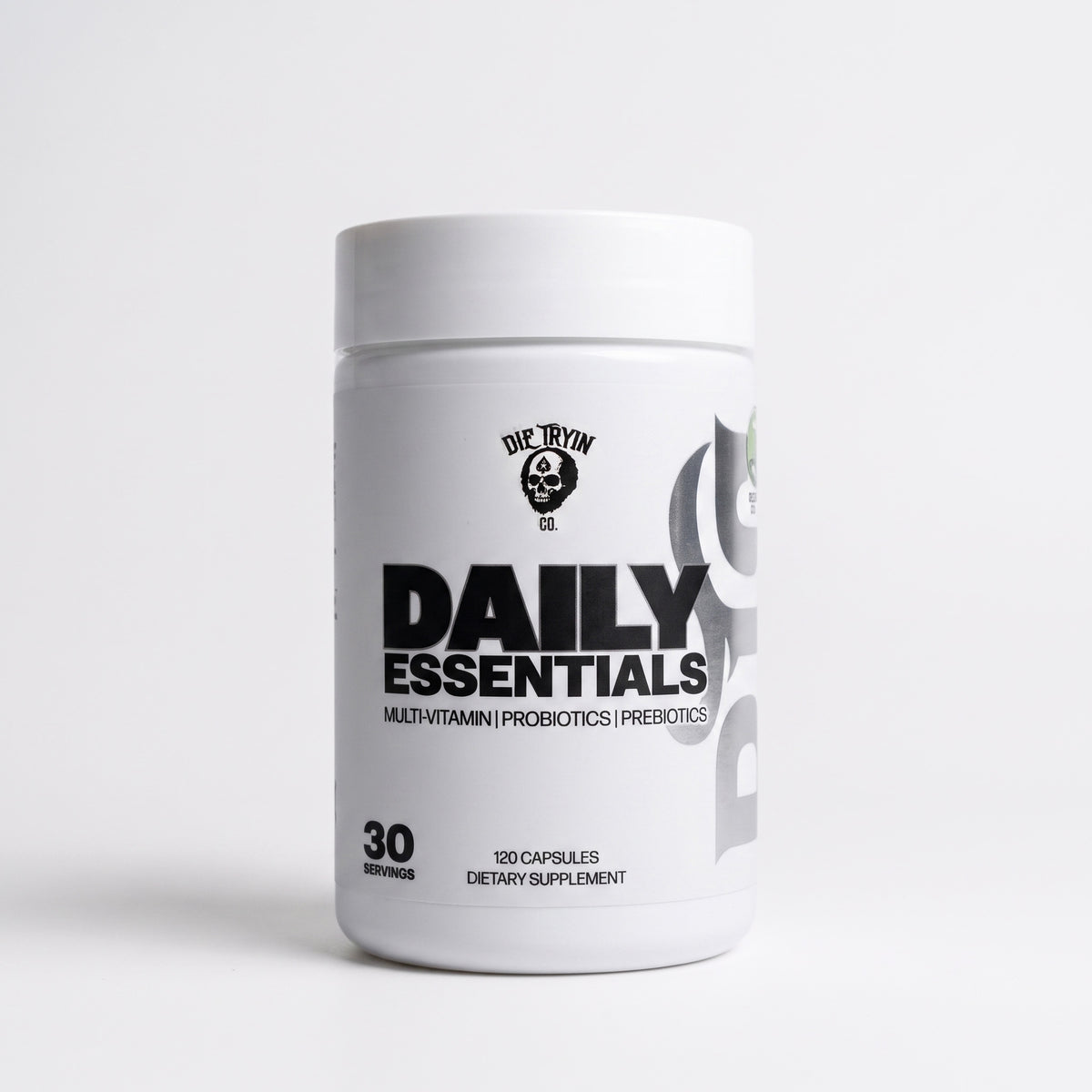
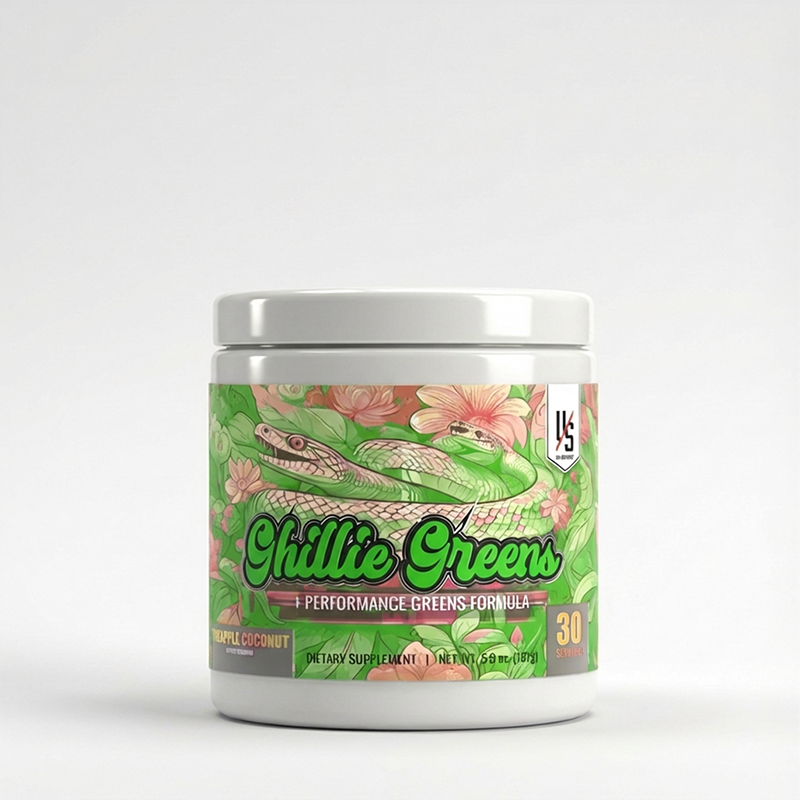
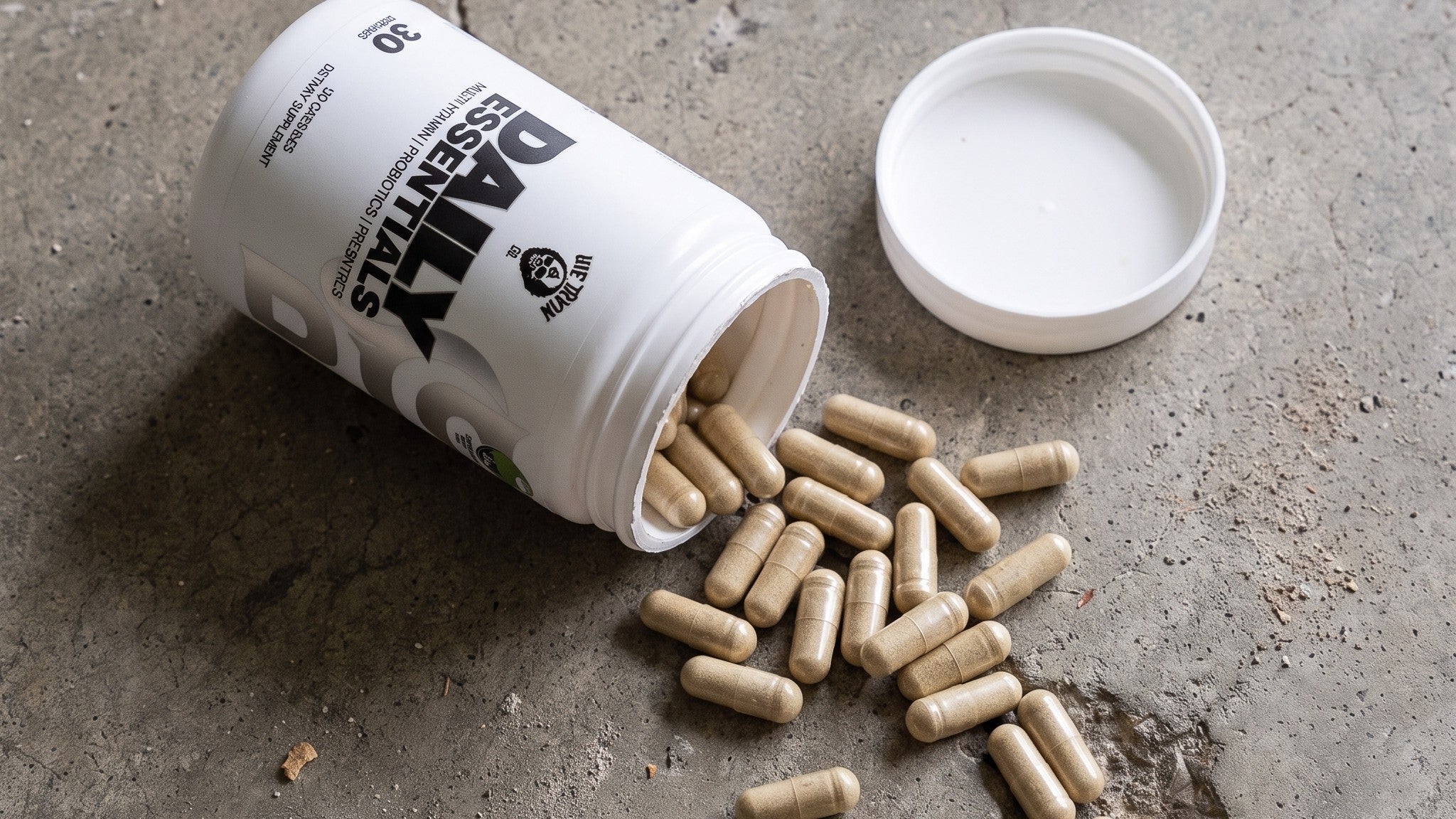
Probiotics are live beneficial bacteria; prebiotics are the fiber that feeds them. You can get both from food — fermented foods for the bugs, fiber-rich plants for the fuel — and a quality stack makes it simpler on busy days. Daily Essentials pairs a chelated multivitamin with probiotics, prebiotics, and digestive enzymes to support gut health as part of a real-food routine.* Ghillie Greens adds a real-ingredient greens base with KSM-66 and AstraGin when you can't get enough plants on the plate. As always, talk to your doctor before starting any new supplement — especially if you've got an existing condition.
Two more from the table worth a line: skip the sugary soda when you can, since high-sugar carbonated drinks can tilt the balance the wrong way. And eat slower — chewing thoroughly improves nutrient absorption and eases reflux. Small reps, real results.
On food intolerances: if you get recurring bloating, cramping, or reflux tied to certain foods, track what you eat and how you feel. Persistent symptoms aren't something to tough out — see a physician, who may run blood work, and pull confirmed trigger foods. Real doses of real ingredients only work when your gut can actually handle them.
FREQUENTLY ASKED QUESTIONS
How long does it take to improve gut health?
It varies, but research on diet changes shows shifts in the microbiome over a matter of weeks — the Stanford fermented-food trial ran 17 weeks. Treat it as a habit, not a quick fix. Consistency beats intensity.
Do I need probiotics, or is food enough?
Food first — fiber-rich plants and fermented foods do a lot of the work. A stack like Daily Essentials makes the prebiotic, probiotic, and enzyme side easier to hit on busy days. Talk to your doctor before starting anything new.
What's the difference between prebiotics and probiotics?
Probiotics are the live beneficial bacteria themselves. Prebiotics are the fiber that feeds them. You want both — bugs and fuel.
Does gut health actually affect my training?
The gut plays a role in how you digest and absorb nutrients, which ties directly into recovery and body composition. For the deeper connection, read our gut-and-muscle-growth breakdown.
Can gut health affect my immune system?
Research links the gut microbiota with immune function — it's one of the systems the microbiome interacts with. We cover the immune side in our 4 Ways to Boost Immune System guide. Keep it framed as research associations, not guarantees.
How much water should I drink for gut health?
Aim for steady hydration across the day and adjust up for heat and hard training. Electrolytes help when you're sweating heavily.
When should I see a doctor about my gut?
If symptoms like bloating, cramping, diarrhea, or reflux persist, see a physician. They can run appropriate testing and help identify trigger foods or underlying issues.
READY TO GEAR UP?
Gut health isn't one product — it's a routine. Real food, water, sleep, and stress management do the heavy lifting. When you want backup on the supplement side, these fit the mission:
- Daily Essentials — chelated multivitamin plus probiotics, prebiotics, and digestive enzymes to support gut health.*
- Ghillie Greens — real-ingredient greens with KSM-66 and AstraGin for the days the plate falls short.
- Aqua Spike — hydration and electrolytes to keep the system running.
Not sure where to start? Take the Die Tryin Co. quiz and we'll point you at the right gear for your goals.
*These statements have not been evaluated by the Food and Drug Administration. This product is not intended to diagnose, treat, cure, or prevent any disease.
ALWAYS FORWARD.
GEAR THAT FITS THIS POST
The products this article actually talks about. Real doses, disclosed labels, veteran owned.
Read more
The honest case for a multivitamin when you train hard: where the evidence stops, where the gaps are real, and why chelated minerals plus a gut stack change the math.
You do not grow from what you eat. You grow from what you absorb, and that is a gut problem.
You can't out-train a bad diet. Here's the no-BS guide to macros — what they are, why they matter, and how to count them so you actually hit your goals.
The complete hydration playbook: how much water you actually need, what dehydration does to your performance, and how to hydrate around hard training.
Recovery is not a feeling, it is a clock. What your muscles are doing at hour 3, hour 24 and hour 48 after you train, and what to do in each window.
Your immune system is built by what you do every day. Four research-backed habits — movement, sleep, sane drinking, and gut health — that support healthy immune function.