


EAAs vs Whey Isolate: Which Builds More Muscle?
By Jon Klipstein, U.S. Army Combat Veteran & Founder of Die Tryin Co.
Science reviewed by Onur Oncer, BS Physiology (Phi Beta Kappa) and peer-reviewed published researcher.
THE HONEST ANSWER FIRST
Listen up. The EAA-versus-whey-isolate fight gets sold to you as a technology question. It is not. It is a dosing question, and once you frame it that way the answer gets boring fast.
Free-form essential amino acids do hit your bloodstream faster and do spike muscle protein synthesis harder gram for gram. That part is real and it is in the literature. What does not follow is the conclusion the industry staples onto it: that a faster spike on a lab readout means more muscle on your frame at the end of a training block.
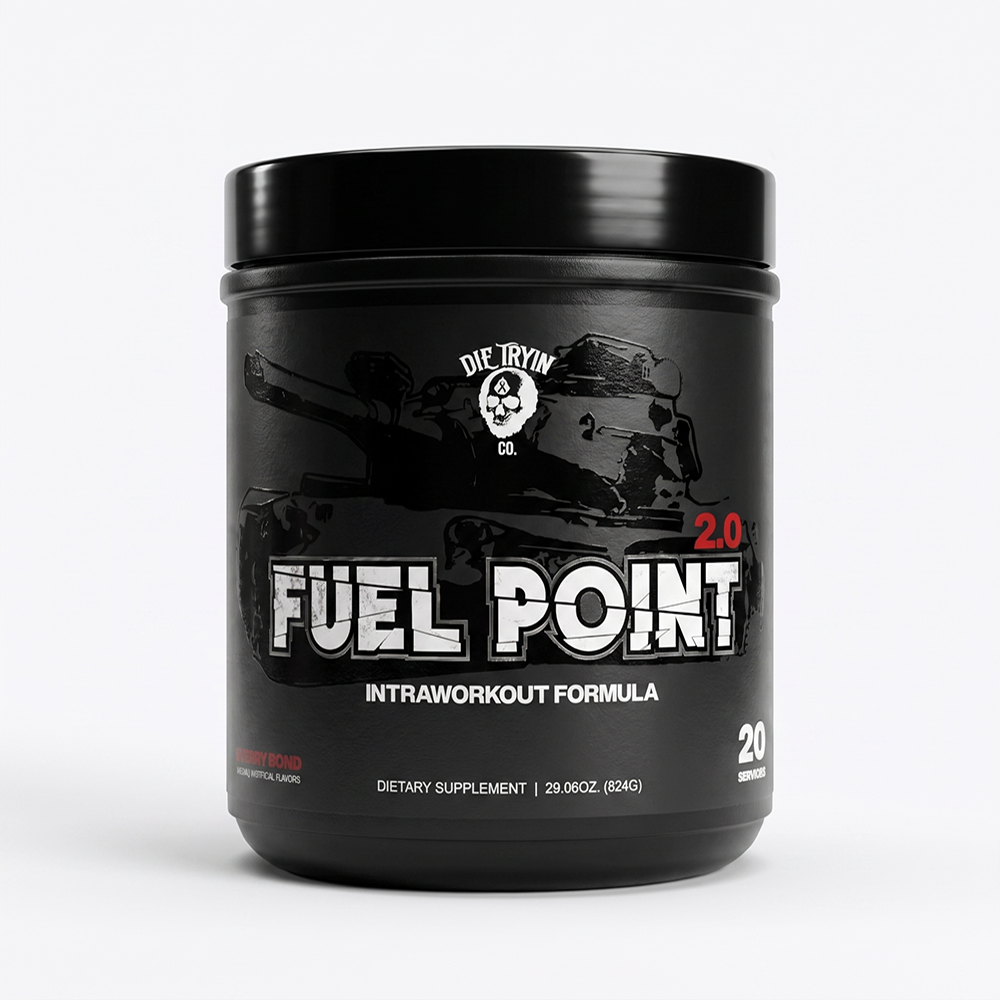
So here is where this lands. For almost every lifter who is already eating enough protein, whey isolate is the better buy. Free EAAs solve a narrow set of problems that most people do not have. We do sell all nine essential amino acids now, in one product, Fuel Point 2.0, and it is a drink you sip during training, not a protein plan. That placement is the whole argument.
| THE PROBLEM YOU ACTUALLY HAVE | BETTER TOOL | WHY |
|---|---|---|
| Post-lift recovery, appetite normal | Whey isolate | All nine EAAs plus the rest of the protein, one dose, one cost. |
| Falling short on daily protein | Whey isolate | 24 g a scoop actually moves your daily total. Free EAAs barely register against it. See the protein guide. |
| Dairy you genuinely cannot tolerate | Free EAAs or a non-dairy protein | EAAs carry no lactose. This is the one case where they clearly win. We do not make a non-dairy protein, and an intra-workout scoop is not a substitute for one. |
| Fasted training you refuse to break | Free EAAs | Fewer calories in the shaker. Real, and smaller than the marketing suggests. |
| Long sessions where the tank runs dry mid-workout | Fuel Point 2.0 | Carbohydrate and electrolytes to sip while you train, with all nine EAAs riding along. Fuel for the session, not your protein total. |
| Deep cut, appetite gone, calories tight | Whey isolate first | Amino acid needs climb in a deficit. Cover the total before you chase the spike. Cutting protocol here. |
| Building real muscle over months | Total daily protein + progressive overload | Neither powder outranks the total or the training. Start here. |
WHAT EACH ONE ACTUALLY IS
Strip the labels off and you are looking at two different levels of processing, not two different categories of nutrient.
- Essential amino acids (EAAs): the nine amino acids your body cannot manufacture. In a supplement they arrive as free-form powder, already broken down, needing no digestion to be absorbed.
- Whey protein isolate: milk protein filtered down to strip most of the fat, carbs and lactose. It contains all nine EAAs bound in an intact protein chain that your gut has to cleave apart first.
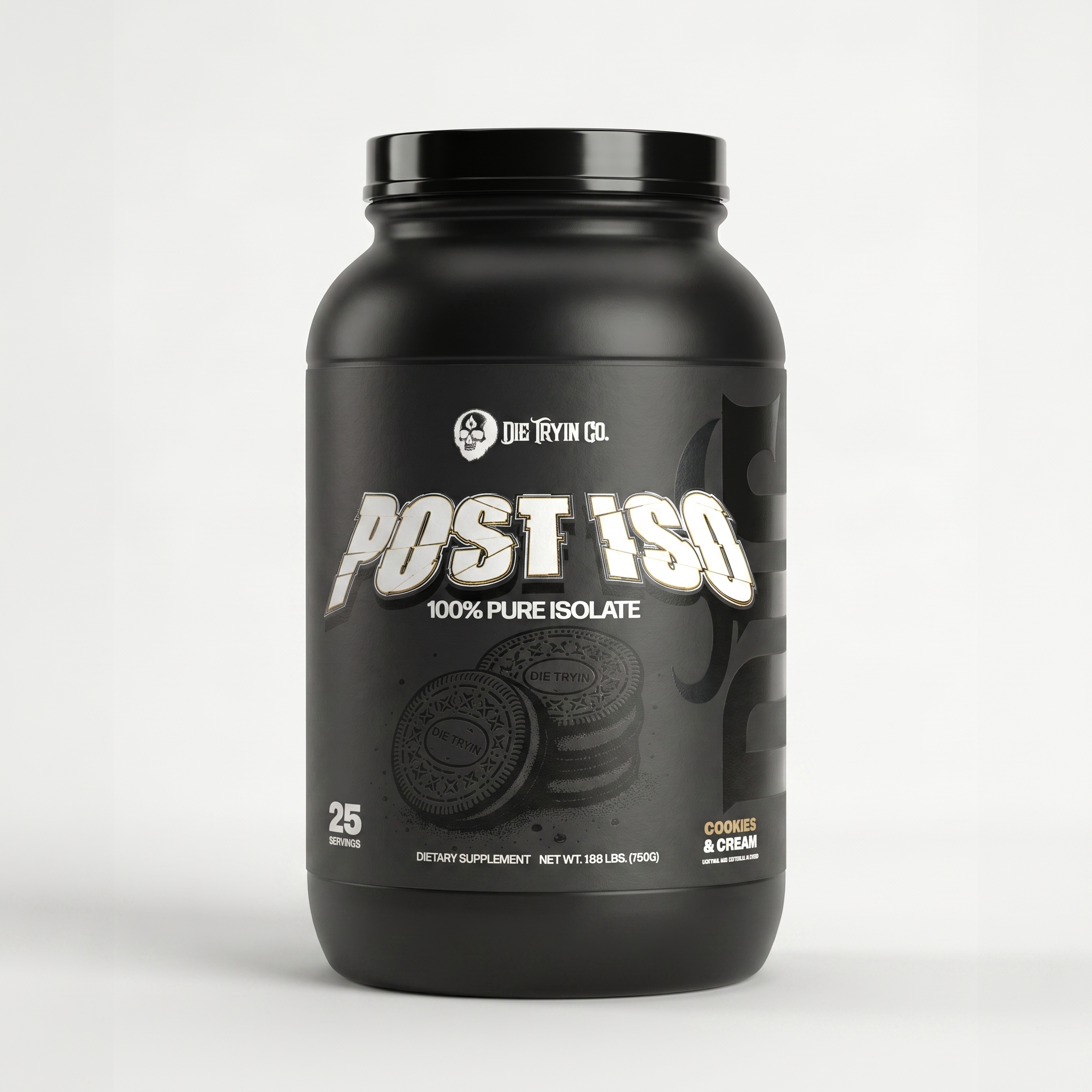
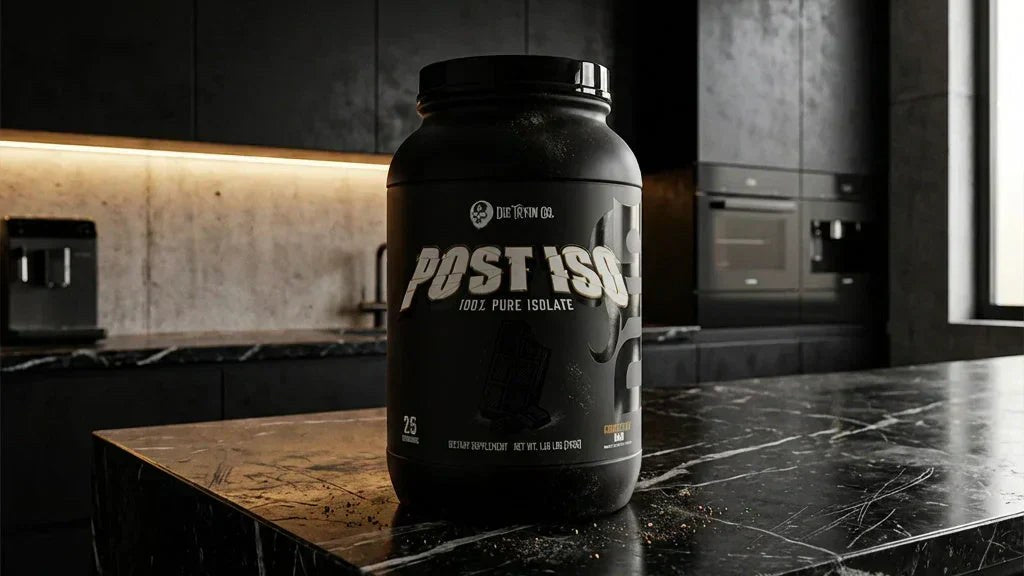
Whey is not missing anything EAAs have. It is the same nine amino acids delivered in a package that also brings the non-essential ones, plus a delay while digestion does its work. Our Post Iso runs 24 g of isolate with DigeZyme enzymes for exactly that reason. If you want the isolate-versus-blend breakdown, we covered that separately.
THE CASE FOR EAAs, STATED FAIRLY
We are not going to strawman the other side. The International Society of Sports Nutrition published a position stand on EAA supplementation in 2023, and it makes several claims worth taking seriously (Ferrando et al., J Int Soc Sports Nutr, 2023):
- Free-form EAAs raise circulating amino acid levels quickly, which stimulates muscle protein synthesis.
- At rest, MPS starts responding at doses as small as 1.5 to 3.0 g and appears to plateau around 15 to 18 g.
- The non-essential amino acids are not required to trigger the MPS response.
- Gram for gram, free-form EAAs stimulate MPS more than an equivalent amount of intact protein.
- Amino acid requirements rise during a caloric deficit.
Two pieces of honesty before you take that as a verdict. First, it is a position stand from a sports nutrition society, not an experiment, and several contributing authors list supplement industry affiliations. That does not make the conclusions wrong, but a consensus document and a controlled trial are not the same evidence. Second, look closely at the gram-for-gram claim. Nobody dose-matches in real life. You take 24 g of whey, not 10 g. The comparison that wins the argument on paper is not the comparison you run in your kitchen.
WHY THE MPS ARGUMENT DOES NOT FINISH THE JOB
Here is the part the label never prints. The entire EAA sales pitch rests on one assumption: that a bigger acute MPS spike produces a bigger athlete months later. That assumption has been tested directly, and it did not hold.
Researchers at McMaster measured MPS in 23 untrained men after their first resistance session, then trained them for 16 weeks and measured actual quadriceps growth by MRI (Mitchell et al., PLoS One, 2014). The acute spike was enormous, up 235 percent above rest in the 1-to-3-hour window after training. Quadriceps volume rose 7.9 percent on average across the group. And the correlation between the two was effectively zero: r = 0.02 over one to three hours, r = 0.16 over three to six hours, r = 0.10 across the whole one-to-six-hour window.
Keep the limits in view. That was 23 previously untrained men, a single acute measurement, and individual growth ranged wildly from negative 1.9 percent to 24.7 percent. The same paper did find one signalling marker that tracked with growth, phosphorylation of 4E-BP1 at one hour post-exercise, at r = 0.42. One study does not close a field. But it is the study that directly asked whether the MPS spike predicts the result, and the answer came back no. Any product sold to you purely on an MPS curve is selling a surrogate marker.
WHAT ACTUALLY MOVED THE NEEDLE IN THE DATA
Pull back to the outcome that matters and the picture is far less exciting and far more useful. A systematic review and meta-analysis pooled 49 randomized trials and 1,863 participants to ask what protein supplementation does to muscle and strength over training blocks of six weeks or longer (Morton et al., Br J Sports Med, 2018).
Supplementation worked, and it worked modestly. One-rep max went up by 2.49 kg on average. Fat-free mass went up by 0.30 kg. Read those numbers honestly, because that is a third of a kilo of lean mass across an entire training block. The effect was stronger in people who already trained and weaker with advancing age. The number that should reset your shopping list: beyond a total intake of roughly 1.62 g of protein per kg of bodyweight per day, more protein produced no further gain in fat-free mass.
Read that again. The ceiling is on your daily total, not on the form the protein arrives in. Whichever powder gets you to that number cheapest and most consistently is the correct powder. That is the whole answer, and it is why tracking your macros beats optimizing your amino acid profile every day of the week.
WHERE FREE EAAs GENUINELY EARN A SPOT
Situational does not mean useless. Research suggests free EAAs are a reasonable tool when a specific constraint blocks whole protein, and there are only a few of those.
- Real dairy intolerance that a lactase enzyme or a plant protein does not solve.
- Fasted or early-morning training where you want amino acids present without meaningful calories.
- Very long sessions where a full protein shake sits heavy but you want something in the tank. That is the one slot we build for: Fuel Point 2.0 is carbohydrate and electrolytes first, with all nine essential amino acids riding along.
- Older and clinical populations facing anabolic resistance, which is a population the EAA literature leans on heavily. That is not the same evidence base as a healthy lifter in their twenties.
Notice what is not on that list: a healthy lifter with a working appetite hitting their protein target. That person gains nothing from swapping whey for a tub of free aminos, and pays more per gram to do it.
WHY OUR PROTEIN IS ISOLATE, NOT FREE EAAs
Basics beat hype. Real doses of real ingredients. Those are not slogans we hang on a wall, they are a filter we run every SKU through, and a standalone tub of free-form EAAs did not make it past the filter for the athlete we build for.
You would be paying a premium for the fast-absorption story while still needing a protein source to hit your daily number. So the protein money goes into the thing that does both jobs. Post Iso is whey isolate with DigeZyme digestive enzymes, which is our answer to the "whey sits heavy" complaint after a session. Wanting something light in the tank mid-session is a different problem, and it is the only one free aminos solve better than whey. That is why ours ride along with the carbohydrate and electrolytes in Fuel Point 2.0, instead of sitting in a tub of their own. Pair Post Iso with Creatine Monohydrate, the most heavily researched muscle-building supplement on the shelf, and you have covered the two things that actually build muscle.
THE SETUP THAT ACTUALLY WORKS
- Set the daily total first. Roughly 1.6 g per kg of bodyweight. Chase that before you chase anything else.
- Use whole food for most of it. Powder fills the gaps, it does not replace meals. More on that here.
- Put a shake where it is easiest to hit. Post-lift is convenient and fine. It is not magic. The timing evidence is thinner than you think.
- Train hard enough to need the protein. Progressive overload is the stimulus. Protein is the raw material. No amount of raw material builds anything without a signal to build.
- Sleep. Free, unglamorous, and it costs you nothing to fix.
FREQUENTLY ASKED QUESTIONS
Are EAAs better than whey protein isolate for muscle growth?
Not for most people. Gram for gram they spike MPS harder, but that spike has not been shown to predict actual hypertrophy, and whey isolate delivers all nine EAAs plus far more total protein per serving. Whey isolate is the better tool unless a specific constraint rules it out.
Can I take both EAAs and whey isolate?
You can, and it is mostly redundant. Whey isolate already contains every essential amino acid. Stacking free EAAs on top adds cost without adding a nutrient you were missing. Put that budget toward hitting your daily protein total instead. The aminos in an intra-workout scoop are just as redundant with the aminos in your whey. The carbohydrate and the sodium riding with them are not, and that is the only reason to buy one.
Do EAAs absorb faster than whey isolate?
Yes. Free-form amino acids skip digestion and appear in the blood sooner. The open question is whether that speed changes anything over a training block, and the direct evidence on that is weak.
How much protein do I actually need to build muscle?
The meta-analysis above found no additional fat-free mass gains past about 1.62 g per kg of bodyweight per day. For most lifters that lands somewhere between 120 and 190 g daily depending on size.
Does Die Tryin Co. sell an EAA supplement?
Yes, in one place. Fuel Point 2.0 is an intra-workout drink built on SusCarb® HBCD carbohydrate and a full electrolyte panel, and all nine essential amino acids ride along with it. Be straight about what that means: the aminos arrived attached to a carbohydrate product, not because the evidence on free EAAs as a protein alternative moved. It did not. For your daily protein total the answer is still Post Iso.
Should I use Fuel Point 2.0 instead of protein?
No. It is not a protein powder. A scoop carries 6,750 mg of essential amino acids, 4,000 mg of that the BCAA fraction. Real dose, not a label sprinkle, but it sits well below the 15 to 18 g at-rest plateau quoted above, and a 24 g scoop of Post Iso carries more essential amino acids than it does. Run Fuel Point 2.0 for the carbohydrate and the electrolytes through a long session, then still hit your daily protein total.
Should I take EAAs while cutting?
Amino acid needs do rise in a deficit, so the concern is legitimate. The fix is still to protect your total protein intake first, which is exactly what a low-carb, low-fat isolate is built for. A cut is when a 24 g scoop earns its calories hardest.
READY TO GEAR UP?
- Post Iso — 24 g whey isolate with DigeZyme enzymes. A complete protein, so all nine essential amino acids come built into the protein itself.
- Fuel Point 2.0 — SusCarb® HBCD carbohydrate, a full electrolyte panel and all nine essential amino acids, built to be sipped during training. Fuel for the session, not a protein serving.
- Creatine Monohydrate — 5 g micronized. The most heavily researched muscle-building supplement there is.
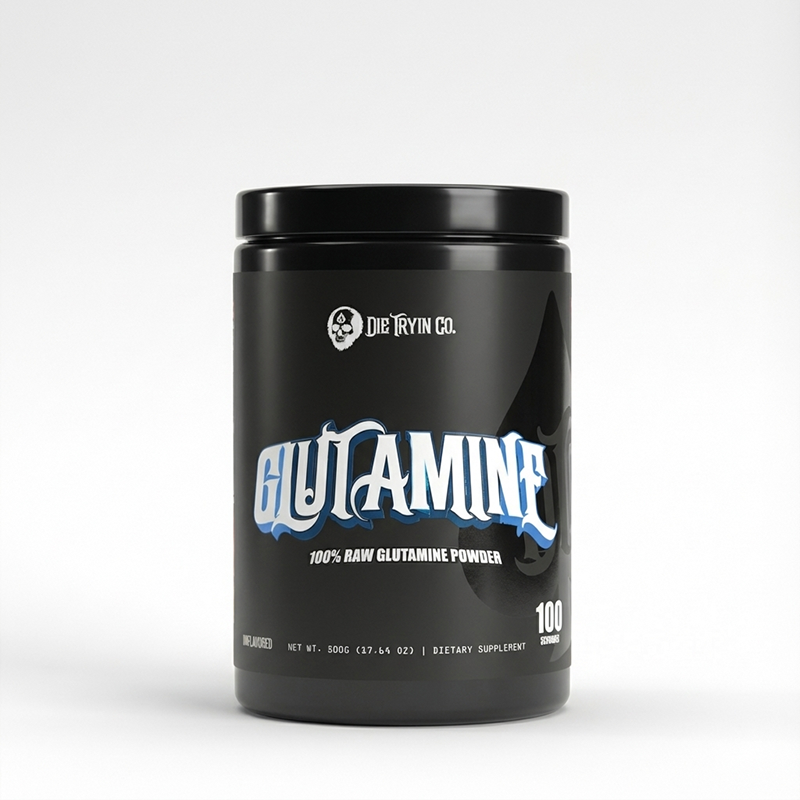
- Glutamine — 5 g L-Glutamine. One ingredient, one dose, no proprietary blend.
- Sport Shaker — because a lumpy shake is the fastest way to stop drinking your protein.
- DTC Athletic Tee — train in it, sweat in it, earn it.
- Take the quiz — two minutes, and we will tell you what to skip.
Updated August 24, 2026: Fuel Point 2.0 launched this week and it carries all nine essential amino acids. The sections covering what we sell were rewritten rather than quietly deleted. The verdict above is unchanged.
ALWAYS FORWARD.
Read more
The complete protein playbook — how much you need, when timing matters, which sources deliver, and the myths costing you money.
Anyone can lose weight. The hard part is deciding what comes off. Four levers decide whether you finish a cut lean and strong or smaller at the same scale weight.

The complete playbook for building muscle that actually lasts. Training, nutrition, recovery, and the supplements that move the needle — no hype.
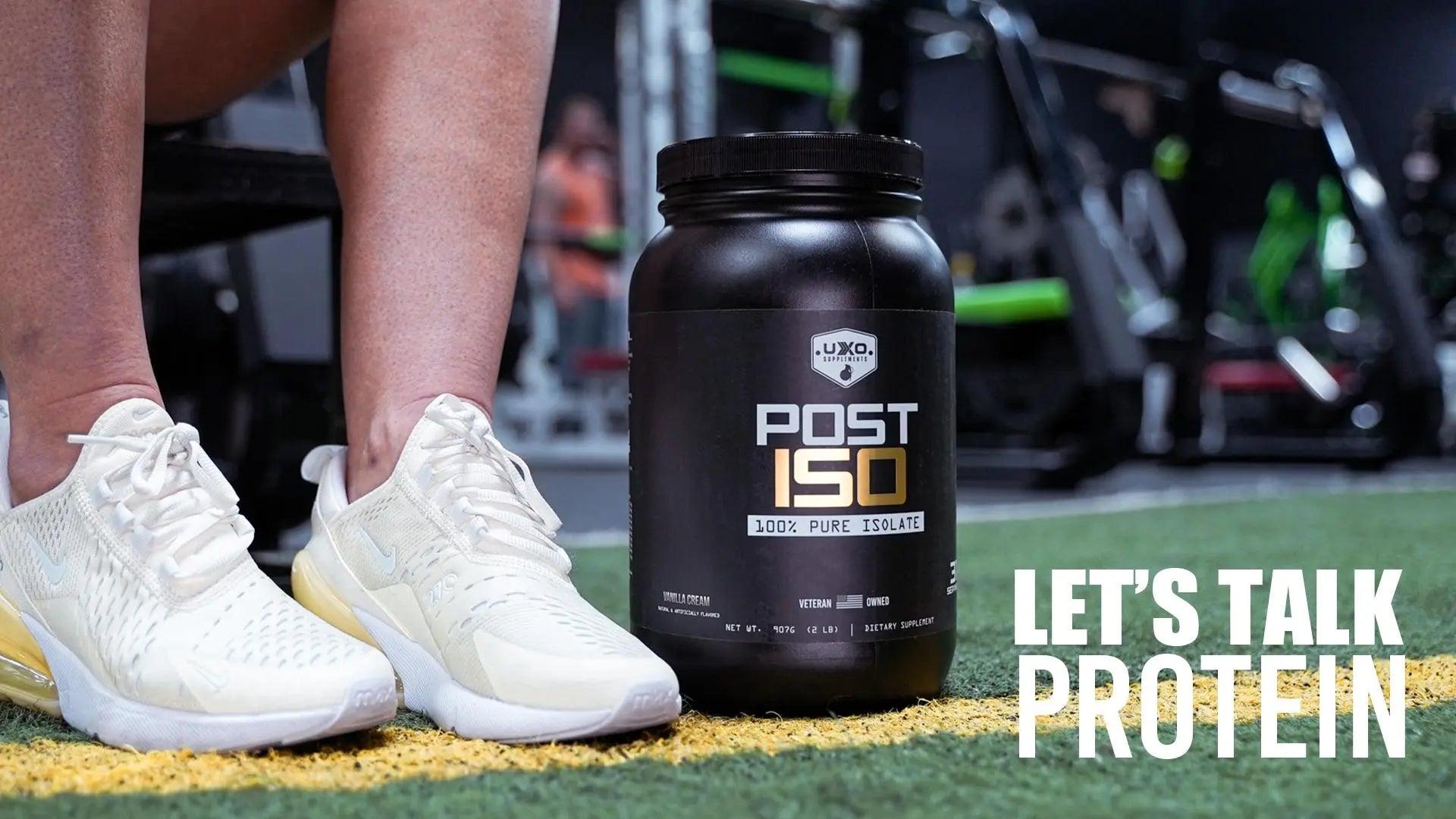
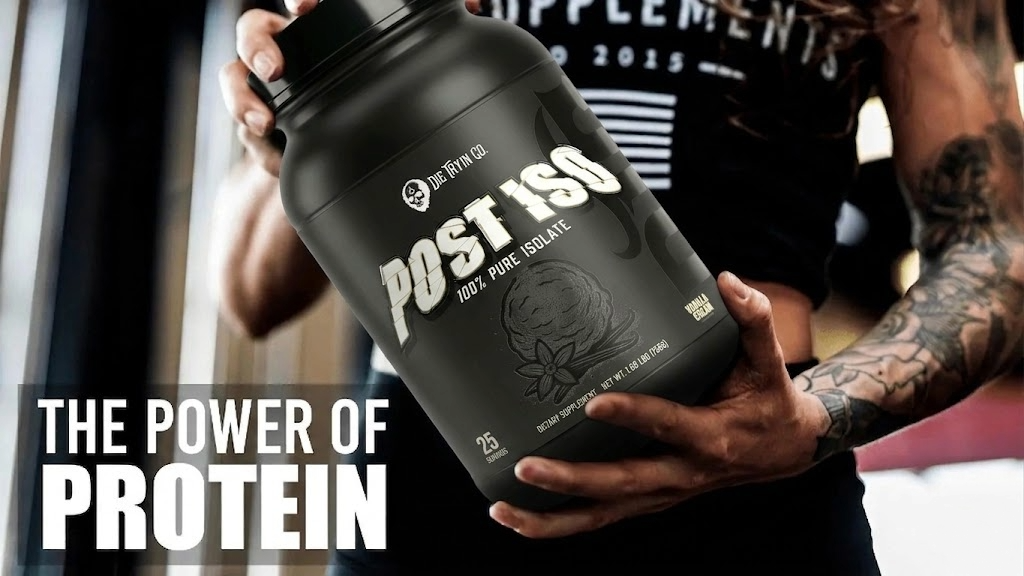
Isolate or blend is a smaller decision than the label suggests. Here is what genuinely separates them, and what matters more.
You can't out-train a bad diet. Here's the no-BS guide to macros — what they are, why they matter, and how to count them so you actually hit your goals.
Protein does more than build muscle. 8 real benefits ranked by evidence strength: satiety, metabolic boost, bone density, sarcopenia prevention, and more.
GEAR THAT FITS THIS POST
The products this article actually talks about. Real doses, disclosed labels, veteran owned.