




Why Is Warming Up Important? 5 Benefits Backed by Science
By Jon Klipstein, U.S. Army Combat Veteran & Founder of Die Tryin Co., and Garrett Ussery, NASM-CPT & Die Tryin Co. Athlete
MOST PEOPLE SKIP IT. DON'T.
Listen up. The warm-up is the most skipped part of training, and it's the one that quietly decides how your whole session goes. You walk in, you're cold, you load the bar, and you wonder why the first few sets feel like garbage. That's not weakness. That's a cold body being asked to do hot work.
A warm-up isn't stretching for two minutes and calling it good. It's an active ramp — light movement, rising heart rate, gradually heavier prep sets — that takes anywhere from 5 minutes on an easy day to 30 minutes before something heavy or explosive. The harder and faster the session, the more warm-up it earns.
Here's the truth: the research backs warming up, and it backs it honestly — not as a magic injury shield, but as a real edge on performance and risk. Below are five reasons it's worth the time, with the broscience stripped out. Basics beat hype.
| BENEFIT | WHAT HAPPENS | THE TAKEAWAY |
|---|---|---|
| Mobility & tissue prep | More blood flow, looser tissue, easier range of motion | May lower strain/overuse risk — not a guarantee |
| Heart & nervous system | Heart and CNS ease into the demand instead of slamming into it | Smoother first sets, sharper mind-muscle connection |
| Performance | Better output on strength, speed, and power work | Research: improvement in most cases, little downside |
| Body temperature | Muscle and core temp rise, tissue works more efficiently | You perform better slightly warm than dead cold |
| Energy systems | Aerobic system primed, you reach efficient output faster | Not about "flushing lactic acid" — that's a myth |
1. IT PRIMES YOUR MOBILITY AND TISSUE
When you warm up, blood flow to the working muscles climbs. The tissue gets more pliable, joints move through their range with less stress, and you stop fighting your own body on the first rep.
That matters for risk. A cold muscle yanked into a heavy or fast movement is where strains and nagging overuse stuff like tendonitis tend to show up. Research suggests structured warm-up and neuromuscular training programs are associated with roughly a 30-40% lower injury rate in team-sport athletes (Soomro et al., 2016, Am J Sports Med) — not a guarantee against injury, but a meaningful reduction in risk.
Be honest about what that means: a warm-up lowers the odds of soft-tissue and overuse injuries. It does not stop a broken bone or a freak accident — nothing in your warm-up protects you from a fracture. We're talking risk reduction, not a force field. Garrett's coached enough prep athletes to tell you the guys who skip the ramp-up are the ones nursing tweaks by week three.
2. IT EASES YOUR HEART AND NERVOUS SYSTEM IN
Going from sitting in your car to a max effort is asking your cardiovascular system to flip a switch it doesn't like flipping. A warm-up eases your heart and circulation into the work — heart rate climbs gradually, blood gets routed to the muscles you're about to hammer, and the jump in demand isn't so abrupt.
It's not just plumbing, either. Your nervous system is part of the warm-up. Light, intentional reps wake up the brain-to-muscle connection so that when the bar gets heavy, the signal is already sharp. That's why your last warm-up single feels more locked-in than your first.
3. IT ACTUALLY BOOSTS YOUR PERFORMANCE
This is the one with the strongest evidence behind it. A systematic review and meta-analysis of 32 high-quality studies found that an active warm-up improved subsequent performance in 79% of the measured criterions, with little evidence that warming up is detrimental.
Read that honestly: most measures improved — not every single one, every time. The takeaway is that an adequate active warm-up improves your output in the majority of cases, with very little downside. That's about as clean a risk-reward as training gives you. More strength, more speed, a sharper headspace going into the work — for the price of a few minutes.
This is also why warming up beats static stretching as your opener. The review only counted warm-ups that involved actual movement, not just sitting in a stretch. If you want the performance bump, you have to move.
4. IT RAISES YOUR BODY TEMPERATURE
The whole point of the word "warm-up" is right there. As you move, muscle and core temperature rise, and slightly warm tissue contracts and relaxes more efficiently than cold tissue. You perform better a few degrees up than you do stone cold.
You don't need to chase this with anything fancy. Five to ten minutes of progressively harder movement gets your temperature where it needs to be. A small bump in core temperature may also nudge calorie burn slightly, but that's a footnote — don't warm up to torch calories. Warm up to train well.
5. IT PRIMES YOUR ENERGY SYSTEMS — AND NO, LACTIC ACID ISN'T THE ENEMY
Here's where we kill a myth that's been repeated in gyms for decades. The old story goes: "lactic acid builds up, makes your muscles burn, and forces you to quit — so warming up flushes it out and lets you go longer." That's broscience, and it's wrong on the science.
Lactate is not the villain. It's not what causes fatigue, and it's not what makes you sore the next day. Your body actually uses lactate as a fuel source — it's recycled back into energy, not some toxic sludge wrecking your set. The "lactic acid is the enemy" idea is outdated. Time to retire it.
So what does the warm-up actually do here? It primes your aerobic and energy systems and raises muscle temperature so you reach efficient work output faster. Instead of spending the first few minutes of your session ramping up, your engine is already running. That's the real endurance benefit — you get to efficient output sooner and hold it longer, because the system was online before the bell rang. Same result the broscience promised, honest mechanism behind it.
HOW LONG, AND WHAT TO ACTUALLY DO
Quick version: 5 minutes for light, easy sessions; up to 30 minutes before heavy, explosive, or sprint work. General movement first to raise the temperature, then specific prep that looks like the lift you're about to do — ramp the weight up in stages instead of jumping straight to your working set.
This post is the why. For the actual step-by-step routine — the drills, the order, the prep-set scheme — go read the companion piece: Level Up Your Warm-Up. That's the how-to. Then carry the same logic into your lifts with progressive overload, and stop making the rookie error of skipping the ramp entirely — it's on our list of 5 common workout mistakes for a reason.
FREQUENTLY ASKED QUESTIONS
How long should a warm-up be?
Anywhere from 5 minutes for a light, low-intensity session up to 30 minutes before heavy lifting, sprinting, or explosive work. The harder and faster the session, the longer the ramp.
Does warming up prevent injuries?
It can reduce the risk of soft-tissue strains and overuse injuries — research links structured warm-up programs to roughly a 30-40% lower injury rate in team-sport athletes. It does not prevent fractures or freak accidents. Think risk reduction, not a guarantee.
Is static stretching a good warm-up?
On its own, no. The performance benefit in the research comes from active, movement-based warm-ups — not from holding stretches. Move to warm up; save longer static stretching for after or for dedicated mobility work.
Does warming up reduce lactic acid so I can go longer?
No — that's a myth. Lactate doesn't cause fatigue and isn't "flushed" by warming up. Your body uses lactate as fuel. What a warm-up actually does is prime your energy systems and raise muscle temperature so you reach efficient output faster.
Should I warm up before lifting weights specifically?
Yes. Raise your temperature with general movement, then do specific prep sets that mirror the lift, ramping the weight up in stages. Your first working set should feel locked in, not like a shock to the system.
Can a pre-workout replace my warm-up?
No. A pre-workout primes focus and output, but it does not warm your tissue or raise your core temperature. Warm up first, then let a pre-workout take an already-prepped body further.
What's the difference between this post and "Level Up Your Warm-Up"?
This post is the why — the case for warming up and the benefits behind it. Level Up Your Warm-Up is the how — the actual routine you run before you train.
READY TO GEAR UP?
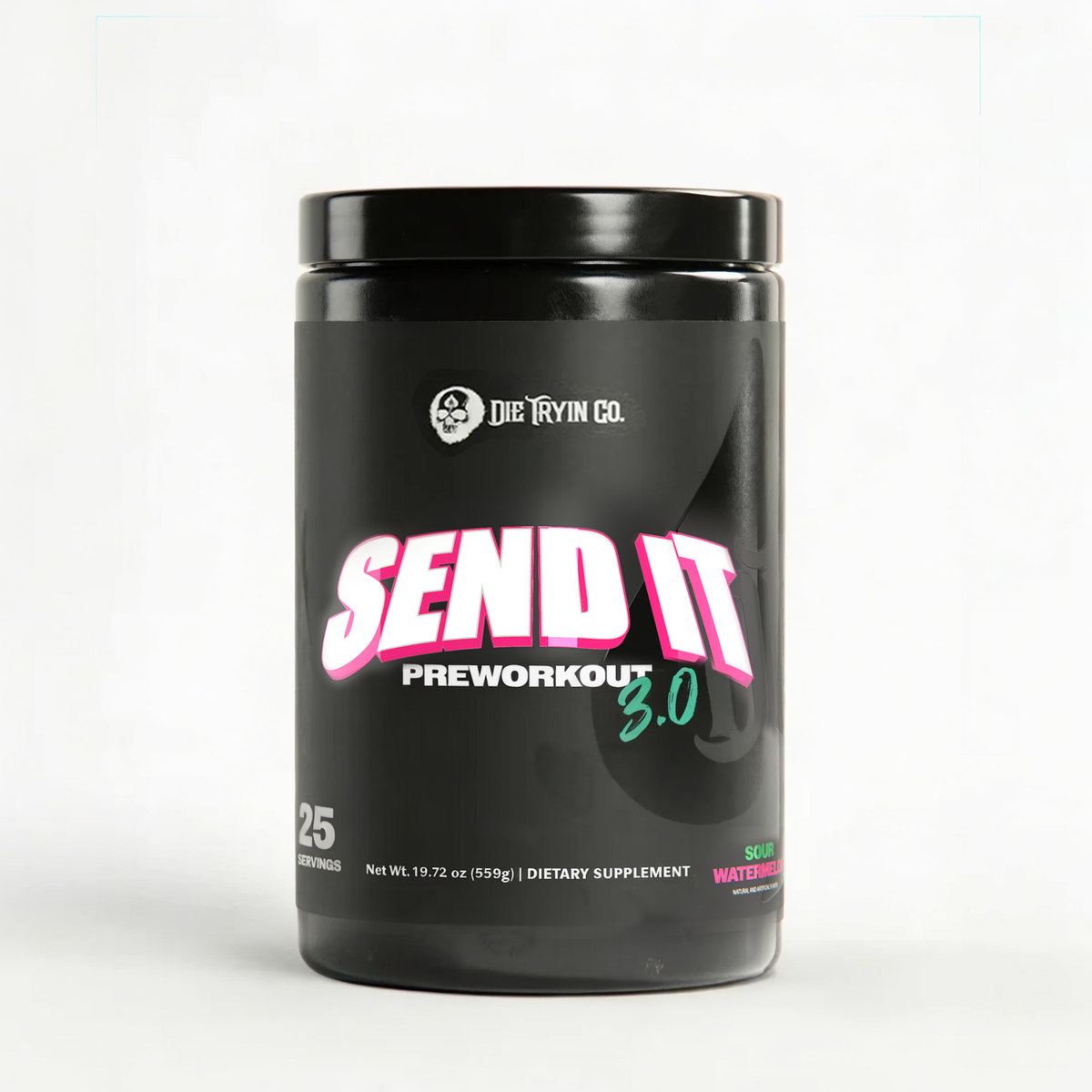
Warm up first. Always. Then, once your body's prepped and your temperature's up, prime the session — SEND IT 3.0 is the daily-driver pre-workout built to carry an already-warm body through the hard work. It's a tool for after you warm up, not a shortcut around it. Discipline beats motivation.
Not sure where to start? Take the quiz and we'll point you to the right gear for your goal. Then dial in the rest of your training around recovery — read the science of recovery so the work you put in actually sticks.
ALWAYS FORWARD.

GEAR THAT FITS THIS POST
The products this article actually talks about. Real doses, disclosed labels, veteran owned.


Read more

Five minutes on a treadmill is not a warm-up. Here is the four-phase ramp that actually preps you to lift heavy, plus what the research says about foam rolling and static stretching.

Muscle grows when demand grows, everything else is detail. The load-vs-reps research, the double progression method, and how to escape a plateau without wrecking recovery.

Most plateaus aren't a programming problem — they're execution. The 5 most common workout mistakes (poor form, overtraining, lack of variety, no warm-up, bad nutrition) and the practical fixes.
Recovery is not a feeling, it is a clock. What your muscles are doing at hour 3, hour 24 and hour 48 after you train, and what to do in each window.
Your gut lining runs the same creatine energy system as your muscles. Here is what the research shows on stomach upset, IBS, colitis and leaky gut, and exactly where the human evidence stops.

Creatine gummies can work if the creatine is actually in them, and lab tests keep finding it often is not. Here is why a scoop of Creatine Monohydrate powder still wins.