






5 Mobility Tips That Actually Build Range
By Jon Klipstein, U.S. Army Combat Veteran & Founder of Die Tryin Co., and Chelsea Rodgers, IFBB Pro & Die Tryin Co. Athlete
THE FRAMEWORK
Most people get this wrong. They treat mobility as a ten-minute apology performed before training, a couple of leg swings, a minute on the foam roller, then they load up and wonder why the bottom of their squat still looks like a hostage situation.
Mobility is not warm-up. Warm-up is preparing the range you already own for the next hour, and we cover that in the 4-phase ramp. Mobility is expanding what you own, and that is training, built over weeks, with the same rules as everything else you build. Here are the five tips, rebuilt on what the research actually shows.
TIP 1: LIFT FULL RANGE, BECAUSE THE BARBELL IS A STRETCH
The finding that should reorganize your week: a meta-analysis of 55 studies found resistance training through a full range of motion improves flexibility about as well as dedicated stretching does, with no significant difference between the two (Alizadeh et al., 2023). Deep squats, full-depth presses, Romanian deadlifts ridden to the honest end of the hamstrings, each one is a loaded stretch with a strength payout attached.
The same analysis carries a warning for the bodyweight-circuit crowd: training with body mass alone did not significantly move range of motion. Load is part of the signal. So before adding a single minute of stretching, audit your lifts. Cutting squats two inches high does not just cost quad growth. It quietly cancels your mobility program.
TIP 2: STRETCH LIKE A MINIMALIST, NOT A MONK
Stretching still earns a place, and the biggest analysis of long-term stretch training, 77 studies, says the recipe is simpler than the industry pretends. Static and PNF-style stretching beat ballistic bouncing for lasting range, and here is the surprise: neither volume, intensity, nor weekly frequency significantly changed the size of the gains (Konrad et al., 2023).
Translation: the twenty-minute nightly flexibility ritual is mostly ceremony. A few honest holds, 30 to 60 seconds at genuine tension on the two or three positions that limit your lifting, done a few times a week after training, captures the effect. Spend the saved minutes lifting deeper.
TIP 3: TRAIN THE END RANGE UNDER LOAD
The bottom two inches of a stretch are where change happens and where everyone leaves. Pausing lifts in the deep position, a three-second bottom on squats, a held stretch on the last rep of Romanian deadlifts or flyes, teaches the nervous system that the new range is safe territory rather than an emergency. We wrote a full playbook on this in stretch-pause reps, and it doubles as a hypertrophy technique, which is the kind of two-for-one a 45-minute training week needs.
A note on the foam roller, since it eats so many gym minutes: rolling can help a session feel better and buy a little acute range, but a meta-analysis of foam rolling programs longer than two weeks, from the same Graz and Newfoundland research groups, found no significant performance changes from chronic rolling. Use it as a two-minute feel-good tool if you like it. Do not book it as mobility training.
TIP 4: MAKE THE NEW RANGE YOURS
Passive range you cannot control is a liability with paperwork pending. Once a position opens up, put strength in it: cossack squats owned rep by rep, deep goblet squat holds where you pry and breathe, overhead carries for shoulders that just learned to reach. The test is simple. If you can only get into a position with momentum or a helping hand, it is not yours yet. Two controlled sets in the new range at the end of a session is enough to file the claim.
TIP 5: KEEP A MAINTENANCE DOSE, FOREVER
Range of motion behaves like every other adaptation: stop paying and it starts leaving. A 2025 meta-analysis of detraining after stretch programs found gains stayed above baseline after two to six weeks off, but measurably decayed from their peak, and the people who kept the most range were the ones who stayed generally active (Konrad et al., 2025).
The good news hiding in that: if tip 1 is running, your maintenance dose is already scheduled. Full-range lifting is the subscription that keeps the range paid for. The lifter who squats deep three times a week never has to find extra minutes for mobility maintenance, which is exactly why this list started with the barbell instead of the yoga mat.
THE WEEK, ASSEMBLED
Here is what the five tips cost inside a normal four-day lifting week: almost nothing, which is the point. Monday lower: squats taken to honest depth, last set with a three-second bottom pause, then one 45-second couch stretch per side while the legs are warm. Tuesday upper: full-range pressing and rows, finish with a minute of dead hangs. Thursday lower: Romanian deadlifts ridden deep and controlled, two sets of cossack squats as the control work. Friday upper: full-range everything, 45-second pec stretch per side at the end.
Total added time: maybe eight minutes across the week. Everything else was already your training, done through its full range instead of the comfortable middle. That is the entire trick the mobility industry does not want written down: the barbell was the mobility program all along, and the extras are seasoning.
Pick your two problem positions and aim the seasoning there. For most lifters that is the bottom of the squat and overhead reach. For desk workers add the hip flexors. Do not try to fix six positions at once; the research says consistency wins and scattered effort loses, so two positions trained honestly for eight weeks beats a full-body routine abandoned in three.
HOW TO KNOW IT IS WORKING
Measure something, because feel lies. Film your squat depth once a month from the side. Mark your sit-and-reach distance on a box. Note the plate height your heels need for a full-depth goblet squat and watch the plates get thinner. Range that shows up on camera and sticks around after a deload, per the detraining data, is range you actually own, and watching a measurable number move is what keeps a mobility habit alive long after motivation left the building.
FREQUENTLY ASKED QUESTIONS
How long until mobility improves?
Meaningful, measurable range change shows up in about four to eight weeks of consistent work in the research, sometimes sooner in beginners. The first week of feeling looser is mostly tolerance. Keep going.
Should I stretch before or after lifting?
After, or in separate sessions. Long static holds before training can blunt force output slightly, and the warm-up minutes are better spent ramping the actual lifts. Save the holds for when the work is done.
Is yoga enough for lifting mobility?
It builds real range and control, and it is a fine engine for tips 2 and 4. What it lacks is load in lifting-specific positions, so keep full-range barbell work in the week regardless.
Why are my hamstrings always tight?
Often they are not short, they are weak at length, and the nervous system guards them. Romanian deadlifts trained deep and controlled usually do more for hamstring range than another year of toe touches.
Can I build mobility every day?
You can, but the 77-study analysis found frequency was not the lever people assume. Three focused exposures a week, plus full-range lifting, beats daily token gestures you will eventually skip.
READY TO GEAR UP?
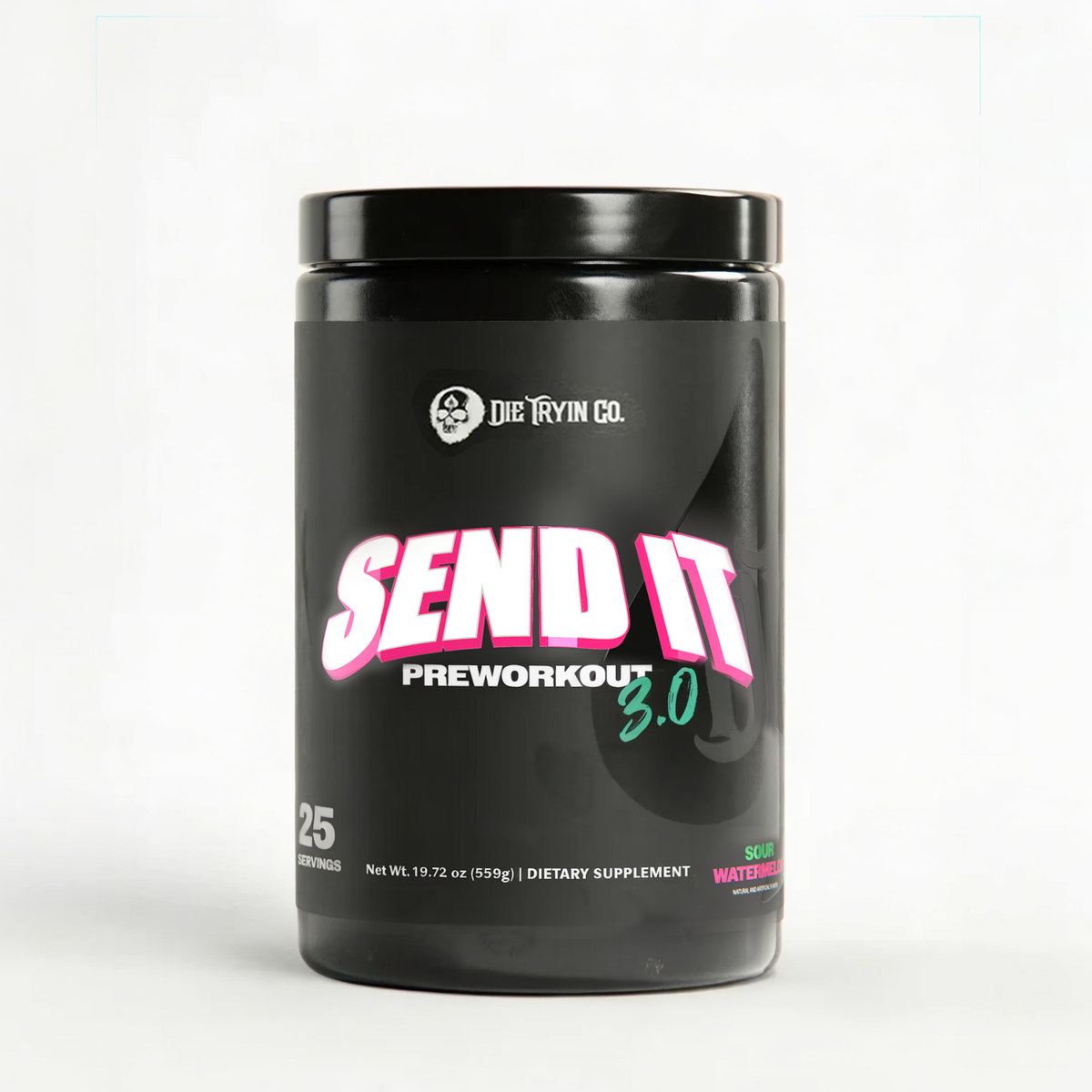
Mobility work is still training, so fuel it like training: SEND IT 3.0 before the session, Creatine daily, Post Iso after. Go deeper on the session-prep side with why warming up matters, and if you are not sure what belongs in your stack, take the quiz.
ALWAYS FORWARD.

GEAR THAT FITS THIS POST
The products this article actually talks about. Real doses, disclosed labels, veteran owned.


Read more

Five minutes on a treadmill is not a warm-up. Here is the four-phase ramp that actually preps you to lift heavy, plus what the research says about foam rolling and static stretching.

Most lifters train the top half of the rep and give the stretch away for free. Here is the protocol for loading the stretched position with stretch-pause reps, intra-set stretching and lengthened p...

Most people skip the warm-up. Don't. Here are 5 research-backed reasons warming up earns its 5-30 minutes — plus the lactic-acid myth, finally put to rest.

Your gut lining runs the same creatine energy system as your muscles. Here is what the research shows on stomach upset, IBS, colitis and leaky gut, and exactly where the human evidence stops.

Creatine gummies can work if the creatine is actually in them, and lab tests keep finding it often is not. Here is why a scoop of Creatine Monohydrate powder still wins.

Flavor doesn't change what creatine does; taking it every day is what counts. How to pick flavored or unflavored, what to mix it with, and how long it lasts once mixed.