





What Motivates You? The Wrong Question
By Jon Klipstein, U.S. Army Combat Veteran & Founder of Die Tryin Co.
Science reviewed by Onur Oncer, BS Physiology and peer-reviewed published researcher.
MOTIVATION IS A FEELING. FEELINGS QUIT.
Listen up. If you are waiting to feel motivated before you train, you have already lost the argument.
Motivation is weather. It shows up loud in January, on the first warm day of spring, the Monday after a photo you hated. Then it leaves. It does not owe you anything and it does not give notice.
Die Tryin Co. was built on the opposite idea. Discipline beats motivation. Not because motivation is worthless, but because it is unreliable, and you cannot build a body or a life on something unreliable.
So the question in the title is still worth answering, just not the way most people answer it. What motivates you is the starting gun. What you do when nothing motivates you is the race. Here is how to find the first one and build the second.
THE REASON PEOPLE QUIT IS NOT WHAT YOU THINK
People do not quit because the program was wrong. They quit because they ran out of feeling and had nothing underneath it.
The research on program adherence is blunt about how common that is. A 2016 meta-analysis of 27 weight-loss intervention studies put overall adherence at 60.5 percent. That is weight-loss program research rather than gym research, so read it as a directional signal and not a gym dropout stat. Roughly four in ten people stopped doing the thing they had signed up for and paid for.
Two things pulled adherence up in that data. Programs that supervised attendance, and programs that offered social support. Nobody in those numbers got more consistent by wanting it harder. They got more consistent because the structure made showing up the default, and because somebody noticed when they did not.
That is the whole game. Motivation gets you in the door once. Structure keeps you walking through it after the feeling is gone. Same pattern behind why most people never see results in the gym. It is almost never effort. It is almost always inconsistency.
EXTERNAL MOTIVATION HAS A SHELF LIFE
Money works. So does a wedding date, a reunion, a bet with a coworker, or a comment somebody made about how you look in a t-shirt. External motivators are real, and using one to get moving is not cheating. They just come with an expiration date attached. The wedding happens. The bet gets paid. The comment stops stinging. And the behavior you bolted onto it walks out the door with it.
A 2012 systematic review of 66 studies on exercise motivation found a consistent pattern. The more autonomous the reason, meaning the more it genuinely belonged to the person instead of being handed to them, the better it tracked with actually training. Reasons people had internalized (this matters to me, this is who I am) tended to predict getting started. Valuing the training itself predicted still doing it a long time later.
Translate that out of research language: use the bet to start. Do not expect it to still be working in year three. Somewhere in the first few months the reason has to become yours, or the training ends.
FIND THE REASON, THEN BUILD THE SYSTEM
Two separate jobs. Most people do the first one, feel great about it, and skip the second one entirely. Your reason is allowed to be unglamorous. Nobody is grading it. The only requirement is that it stays true when you say it out loud with nobody else in the room. The ones that hold up:
- Capability. You want to carry the thing, move the couch, keep up on the hike, and never be the person who needs help.
- Stress. Training is where the noise in your head gets quiet for an hour. That is a legitimate reason to lift, and it beats most of them for staying power.
- Identity. You want to be the kind of person who trains. Not a person trying to start. A person who trains.
- Standards. You keep the promises you make to yourself, and this is one of them. Break it here and it gets easier to break everywhere else.
- People. Somebody depends on you being healthy, present, and hard to break. Kids, a spouse, a unit, a crew.
Write yours down. On paper, in your phone, taped where you will see it at 5am. A reason you cannot articulate is a reason that disappears the first cold morning. Then build the system that runs when the reason gets quiet, because it will get quiet.
THE SYSTEM THAT RUNS WITHOUT YOU
- A schedule, not a plan. "Four days a week" is a wish. "Monday, Tuesday, Thursday, Friday at 5:30" is a commitment with a time attached. Put it in the calendar like a meeting you cannot move.
- A minimum, not a maximum. Decide what counts on your worst day. Twenty minutes and the main lift. That number is the floor you never drop under, not the goal you rarely hit.
- An environment that votes for you. Gym bag packed the night before. Shaker filled. Clothes laid out. Every decision you remove at 5am is a decision your tired brain cannot lose.
- Somebody who notices. The adherence data is loud on this one and so is the gym floor. Get a partner, a coach, or a group chat that asks where you were. The case for a training partner is mostly a case for accountability.
- A return rule. Decide right now what happens after a missed session. Next day, no negotiation, no penance workout. Missing once is data. Missing twice is a pattern.
None of that requires you to feel anything, which is exactly the point. A system is what you install so your future self does not get a vote on the mornings your future self is a coward. The rest of that framework, the full breakdown of how discipline gets built instead of summoned, lives in the Training Mindset pillar.
WHAT TO DO ON THE DAYS YOU DO NOT WANT TO
Every trained person has the same conversation with themselves in the parking lot. The voice is very reasonable. It has excellent points about your sleep, your schedule, and how tomorrow would honestly be a better day for this. That voice is not a strategist, it is a negotiator, and you do not negotiate with it.
Hit the minimum instead. Warm up, do the main lift, leave. A short session you actually finished beats a perfect session you skipped, every time. Same logic behind training smarter, not harder. The minimum effective dose is not a compromise, it is the thing that keeps the streak alive so the good days still have somewhere to land.
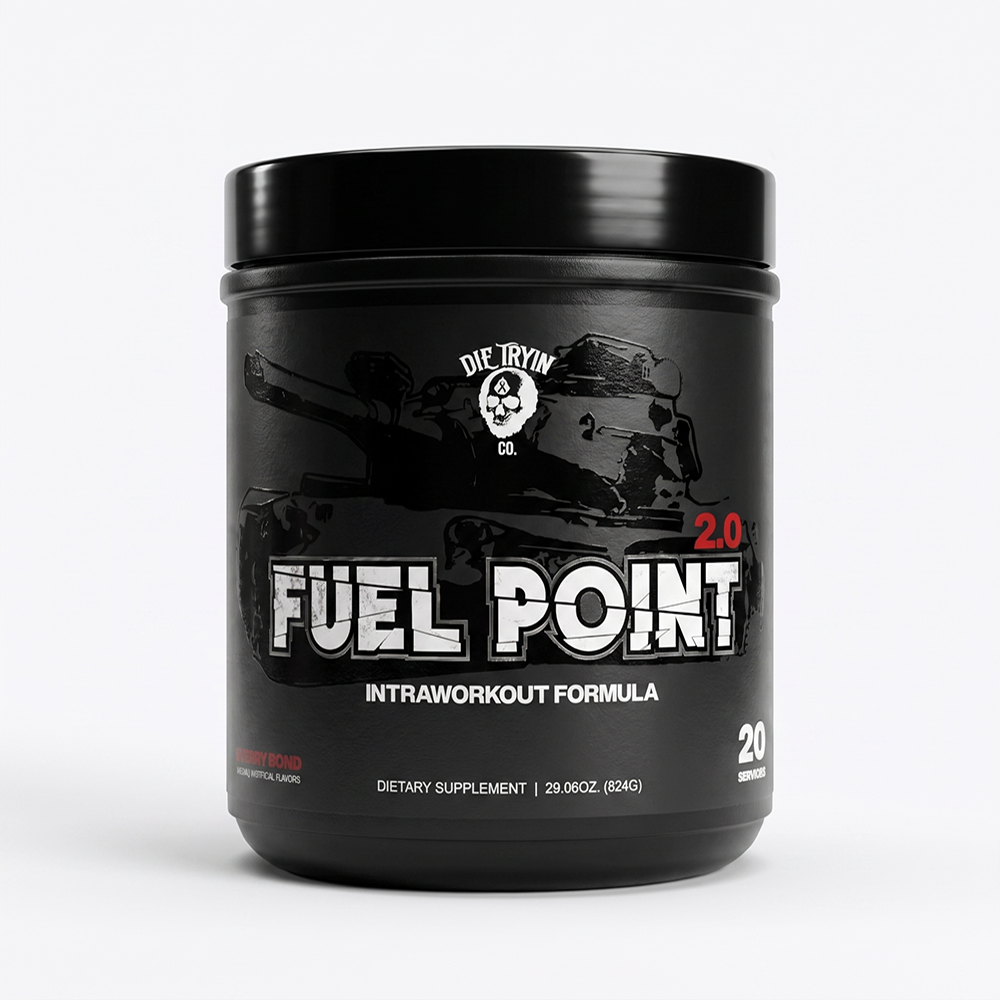
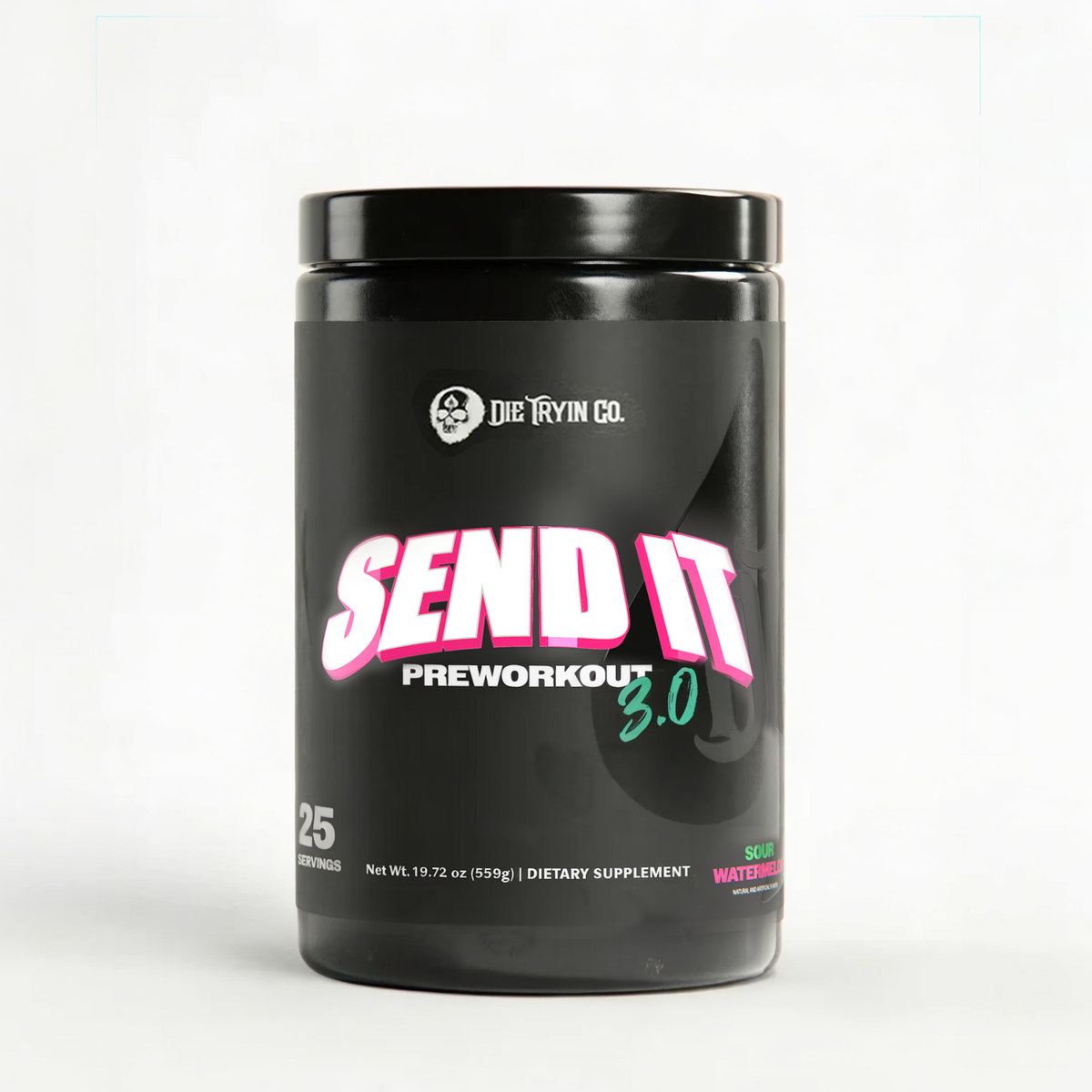
Tools help, and we sell some of them, so here is the honest version. Nothing in a tub builds discipline. SEND IT 3.0 is the daily driver for flat sessions when the schedule says train and the body says no. Creatine Monohydrate gets taken at 5g every day whether you trained or not, which makes it a habit before it is a supplement. Both assist the work. Neither does it for you.
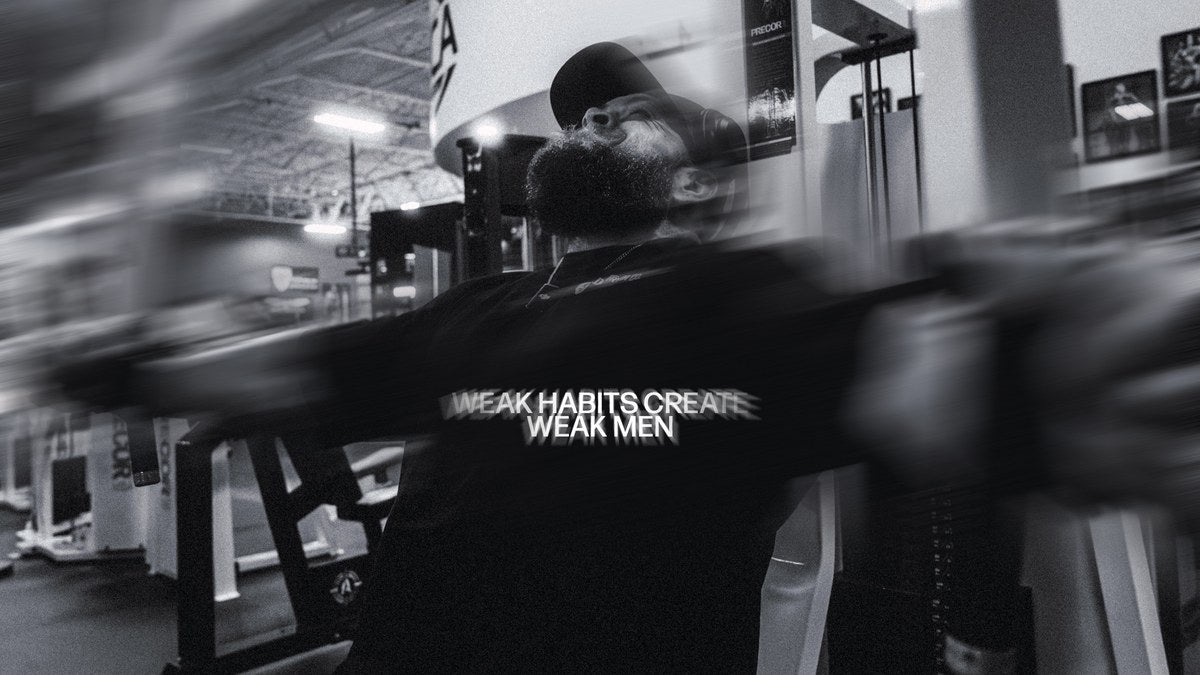
Small choices, repeated, become the person you are. That is the argument in weak habits create weak men, and it cuts both directions. The habits you tolerate today are quietly assembling whoever shows up in five years.
FAQ
What if I genuinely have no motivation at all right now?
Start with the smallest commitment you will not break. Two sessions a week, twenty minutes each, on fixed days. Motivation is usually downstream of momentum, not upstream of it. Most people do not feel like training until they have already been training for a few weeks.
Is external motivation like money or a wedding actually bad?
No. It is a legitimate starting gun and the research supports using one to begin. The mistake is depending on it. Ride the external reason while you build the schedule, the minimum, and the accountability, so something structural is left standing when the deadline passes.
What if the scale is my only motivation?
Read weight loss motivation, why it fails and what works before you weigh in again. A number that moves slowly and unevenly is a brutal thing to hang an entire habit on. Track it, but anchor the habit to something a bad week on the scale cannot take away from you.
Does a supplement help with motivation?
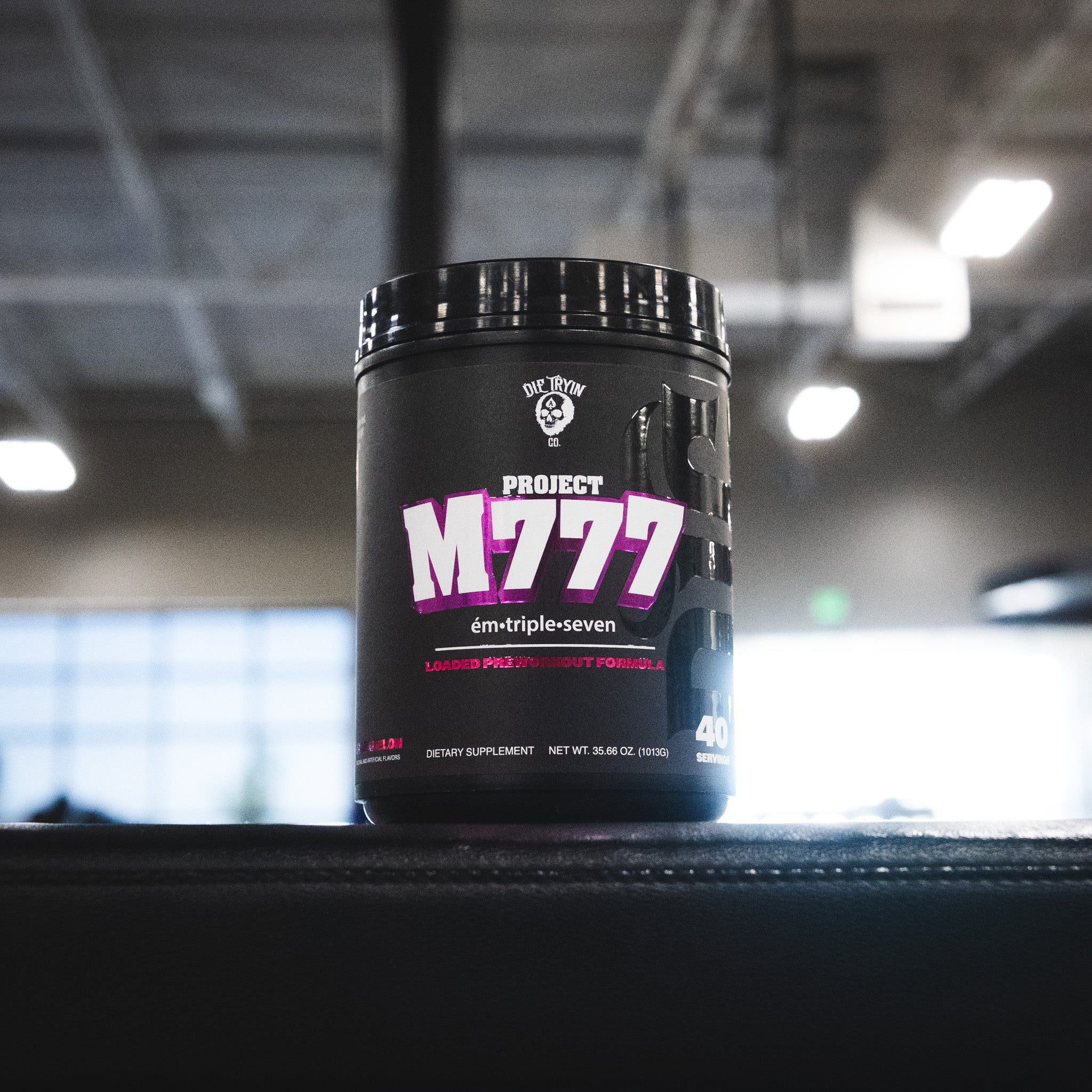
Not in the way the ads imply. A pre-workout can make a session you already committed to feel better. It cannot make the commitment. Anyone selling motivation in a scoop is selling hype, and hype is the thing this company was built to be the opposite of.
I keep restarting every January. How do I break that?
Stop building programs you can only run at full strength. The January version of you plans for the January version of you, then quits in March when life gets loud. Design the week around your worst realistic day instead of your best one, and it will survive contact with reality.
What motivates the people who never seem to stop?
Standards. Not a photo, not a number, not a deadline. The training becomes the daily proof that you still keep promises to yourself. That reason does not expire, does not need a mirror, and does not care how you feel at 5am.
READY TO GEAR UP?
Answer the question honestly, on paper, tonight. Then go build the schedule that outlives the answer. The reason gets you started. The system is what is still standing in year five.
Need a stack that supports the work instead of pretending to replace it? Start with SEND IT 3.0 for the sessions the schedule demands and the body resists, or take the quiz and get matched to where you actually are right now, not where you plan to be in January.
Discipline beats motivation. Every time.
ALWAYS FORWARD.

GEAR THAT FITS THIS POST
The products this article actually talks about. Real doses, disclosed labels, veteran owned.

Read more

The reason most lifters never see results isn't a bad program or weak motivation. It's inconsistency. Here's what actually builds physiques — and why the basics work.

Solo training clears your head. The right partner moves the bar. Here are 5 benefits of training with a buddy, plus what the spotter and competition research actually measured.

The honest playbook for building the discipline that actually lasts. Motivation fails — discipline gets built. Here's how.

Two voices in your head — one builds you, one destroys you slowly. The inner bitch wants comfort. Discipline beats motivation. Here's how to silence weakness.
Overtraining doesn't build faster results — it builds injuries and burnout. The minimum effective dose principle for training, recovery, and smart supplementation.
Nobody becomes weak overnight — it happens through small habits repeated daily. The weak vs. strong habit framework, plus the 8 non-negotiables that build men who hold up under pressure.