





Why January Motivation Dies and What to Build Instead
By Jon Klipstein, U.S. Army Combat Veteran & Founder of Die Tryin Co.
Science reviewed by Onur Oncer, BS Physiology and peer-reviewed published researcher.
FEBRUARY IS WHERE RESOLUTIONS GO TO DIE
Listen up. Every January the gym fills up. Every February it empties out. Same faces gone, same equipment free, same people telling themselves they'll restart in the spring. Nobody plans for that. It happens anyway.
Here's the truth: the people who disappear in February did not lose their willpower. They built the wrong thing in January. They built a burst of intensity on top of a feeling, and feelings have a shelf life. Six days a week, new diet, new sleep schedule, new everything, all launched on the same Monday with nothing underneath it.
What survives February is boring. A trigger, a floor, and a plan for the day it goes sideways. That's the whole post. Below is what the research measures, what it doesn't, and what to build instead.
| THE JANUARY MOVE | WHY IT DIES BY FEBRUARY | BUILD THIS INSTEAD |
|---|---|---|
| Run on motivation | Motivation is a mood. It doesn't show up on schedule. | A cue that fires whether you feel it or not. Why motivation is the wrong question |
| Six days a week from zero | No recovery budget. Week three you're flat and behind. | Three or four hard days you can hold all year. Why deloads matter |
| All-or-nothing standard | One missed session reads as failure, so you quit everything. | A minimum you can hit on your worst day. The training mindset guide |
| Change everything at once | Too many new behaviors, one pool of attention. | One anchored habit at a time. Why most people never see results |
| Reward yourself at milestones | A bribe for a habit that isn't automatic yet. Doesn't fix why you missed. | Solve the obstacle that stopped you. Check for overtraining first |
THE 80% STAT IS MADE UP. THE REAL NUMBER IS BETTER.
You've seen it. "80% of resolutions fail by February." Repeated everywhere, traces back to nothing solid. But the opposite line, that nobody has measured this, isn't true either. A 2020 randomized experiment out of Stockholm University ran 1,066 people and followed them a full year. At twelve months, 55% of those who responded rated themselves successful at sustaining their resolution. People who framed the goal as something to move toward beat people who framed it as something to quit, 58.9% versus 47.1% (Oscarsson et al., PLoS One, 2020).
Honest read: success was self-rated, not measured in a gym, and 55% is a share of those who still answered at one year, not of everyone who started. Attrition flatters that number. Take it as proof resolutions can hold, not a promise yours will. The part worth stealing is the framing split. "Train three days a week" outruns "stop being lazy."
THE REAL TIMELINE: ABOUT TWO MONTHS, WITH A BRUTAL SPREAD
A 2024 systematic review and meta-analysis pooled 20 studies and 2,601 people on health-habit formation. Four of those studies reported how long it actually took a behavior to go automatic: medians of 59 to 66 days, means running higher at 106 to 154 days, and an individual range of 4 to 335 days (Singh et al., Healthcare, 2024).
Read that spread again. Two months is the middle of the pack, not the finish line. Two caveats we won't bury: only four of the twenty studies reported timings, and most were flagged high risk of bias. Best evidence available, not settled law. Still enough to say this: if you started in January and expected automatic by Valentine's Day, you were scheduled to feel like a failure right when most people are still grinding.
The same review flagged what actually moved habit strength:
- Frequency. More repetitions of the same behavior, in the same context.
- Timing. Morning practices generally showed greater habit strength than habits slotted later in the day.
- Self-selection. Habits people chose themselves beat habits assigned to them.
- Preparatory habits. The setup behaviors around the main one, like packing the bag the night before.
- Affective judgement. Whether you find the behavior tolerable matters. Research suggests something you hate every rep of is a bad long-term bet.
DISCIPLINE BEATS MOTIVATION. SYSTEMS BEAT BOTH.
Discipline beats motivation. That's been on the wall since day one and it still holds, but discipline is finite on a bad week, and the smartest move is spending as little of it as possible on decisions that should already be made. In the Army nobody wakes up and asks whether they feel like PT. Time set, place set, standard set. The decision was made once, above your pay grade, and then it just runs. That isn't motivation and it isn't even discipline in the moment. It's a system that removed the question. For the deeper argument on why chasing the feeling is the wrong frame, see what actually motivates you, and the full mental framework lives in the training mindset pillar.
BUILD THE TRIGGER, NOT THE HYPE
The cleanest tool in the behavior-change literature is also the least exciting one. It's called an implementation intention, and it's just a sentence: when X happens, I will do Y at Z. A 2018 meta-analysis of 13 randomized controlled trials found that adults who got reinforced implementation-intention strategies increased their physical activity compared to controls, with a pooled effect of 0.25 (95% CI 0.05 to 0.45) (Silva et al., PLoS One, 2018).
That's a small-to-modest effect and we're going to call it what it is rather than oversell it. But it costs nothing, it takes thirty seconds, and it's the difference between a goal that floats and a goal bolted to a time and a place. Write yours like this:
- "When my alarm goes off at 0530, I put on the shoes that are already by the door and drive to the gym."
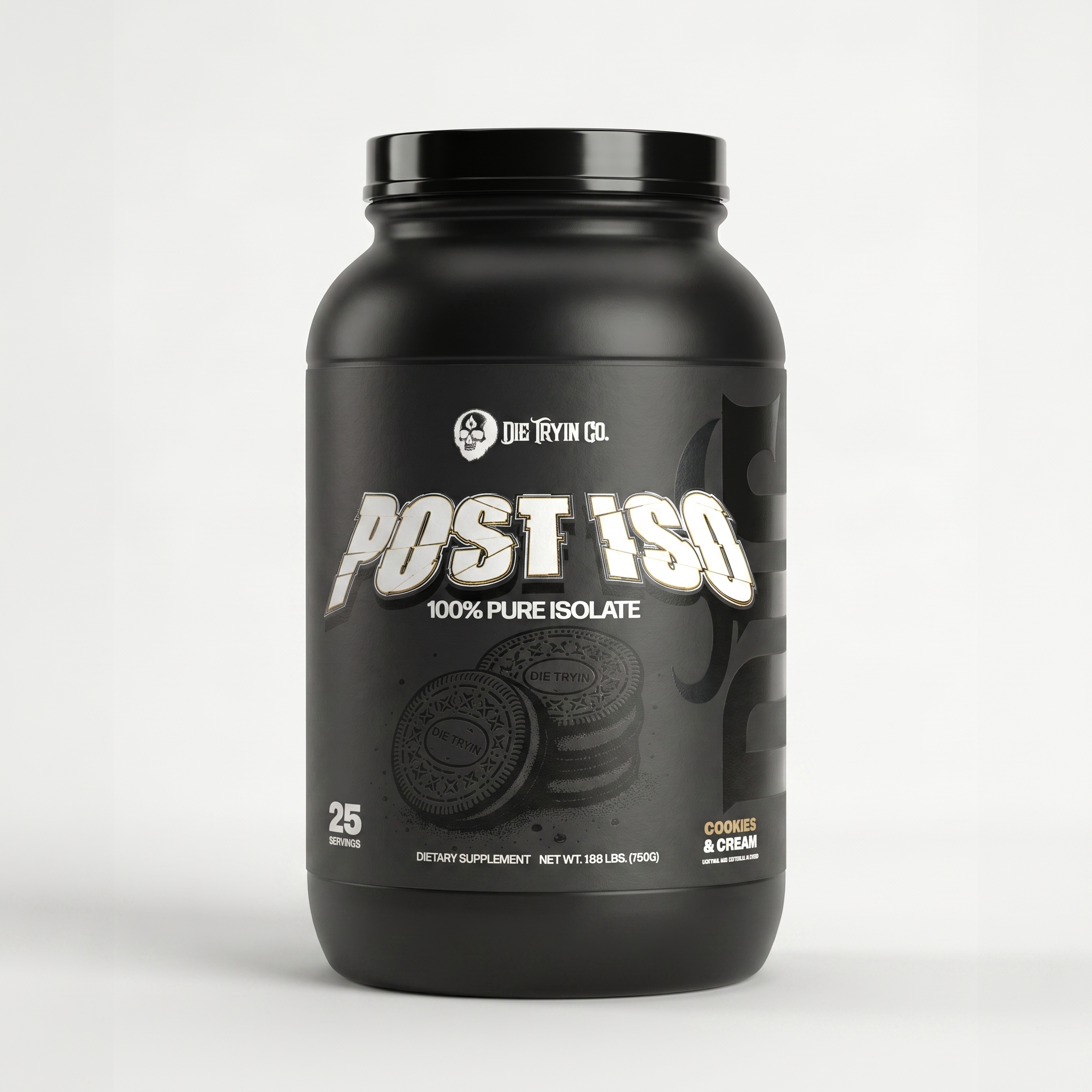
- "When I finish my last set, I mix my Post Iso in the car before I leave the lot."
- "When I get home from work on Tuesday, I train legs before I sit down. Not after."
- "When I miss a session, I do the floor version the next morning instead of writing off the week."
Vague plans die quietly. "I'll train more" has no cue, no time, no location, and no way to tell whether you did it. Anchor it to something that already happens on schedule.
SET A FLOOR YOU CAN HIT ON YOUR WORST DAY
The all-or-nothing standard is the single biggest killer of February. You planned a 75-minute session, you got 20 minutes and a screaming kid, so you did nothing. Do that three times and the streak dies, and the identity goes with it.
So set two standards. The target is the session you want. The floor is the version you can hit on four hours of sleep in a hotel gym with a headache. Ten working sets. One heavy compound and a walk. Or a proper warm-up and one top set. The floor keeps the cue alive, and the cue is the thing you're actually building. Miss the target, hit the floor, keep the chain. That's how a streak survives a bad month, and it's the same logic behind programming real recovery instead of grinding until you break.
REWARDS AND WORKOUT BUDDIES: WHAT WE'LL ACTUALLY CLAIM
The old version of this post told you to find a workout buddy and reward yourself with a massage at milestones. We went looking for evidence on the rewards piece, and what exists in the habit literature is associational and thin enough that we won't build advice on it. So here's plain reasoning, flagged as reasoning: a reward is a bribe for a behavior that isn't automatic yet, and it doesn't touch the reason Thursday keeps falling apart. Fix Thursday and you don't need the bribe. As for a training partner, if someone waiting on you at 0530 gets you in the door, keep them. Just don't make them your only mechanism.
THE FEBRUARY AUDIT: FOUR QUESTIONS
Run this the first week of February, then again every month. It takes ten minutes and beats another round of promising to try harder:
- Which specific session keeps getting missed? Not "I'm inconsistent." Which day, which time, what got in the way.
- What is the actual obstacle? Traffic, work runover, no food in the house, dead by 7pm. Name it.
- What is the smallest change that removes it? Move the session an hour earlier. Pack the bag Sunday. Train at a gym on the commute, not the nice one across town.
- Is the plan itself too big? If you're missing 40% of sessions, the program is wrong, not you. Cut a day and hit 100% of what's left. Read train smarter, not harder.
MAKE THE BORING STUFF AUTOMATIC TOO
Training is the habit people obsess over. It's also the one that collapses first when the support behaviors aren't automatic. Water, protein, sleep, and a pre-workout ritual are habits in their own right, and the same rules apply: same cue, same time, low friction, morning if you can. Same shaker on the same shelf. Same scoop after the same last set. Hit your daily protein without thinking about it. Stay on top of hydration so the 3pm crash stops eating your session. Get your fueling handled and your pre, intra and post-workout routine locked to the same sequence. None of it is a motivation problem. All of it is a system problem, and systems are fixable.
FEBRUARY FAQ
How long does it really take for training to feel automatic?
Four of the twenty studies in that 2024 review reported timings: medians of 59 to 66 days, with an individual range of 4 to 335 days. Plan for roughly two months before it feels like less of a fight, and don't panic if you land on the long end of that spread.
I already broke my streak. Is January wasted?
No. Habit strength builds on total repetitions in a consistent context, not an unbroken chain. A missed session is a data point for the February audit, not a verdict. Hit the floor version tomorrow and keep the cue alive.
Should I restart in the spring instead?
Restarting in spring means running the same January play four months later for the same result. Fix the system now, while you still remember what broke.
Is a workout partner a bad idea?
Not at all. If a partner gets you in the door, that's a win. Keep them. The only trap is making them your single point of failure, because when their schedule changes yours shouldn't collapse with it.
How many days a week should I actually commit to?
The number you will hit every week for a year. For most people starting over, that's three or four, not six. Add a day once the habit is automatic. Adding is easy. Rebuilding after a burnout cycle is not.
Do supplements help with consistency?
Indirectly, and only if you're honest about the mechanism. Nothing in a tub creates discipline. A consistent pre-workout ritual gives you a repeatable cue at a repeatable time, and adequate protein and hydration keep you from feeling wrecked enough to skip. That's a system benefit, not a motivation shortcut.
READY TO GEAR UP?
Build the habit first, then the stack that supports it. Not sure where to start, take the supplement quiz and get pointed at the right shelf.
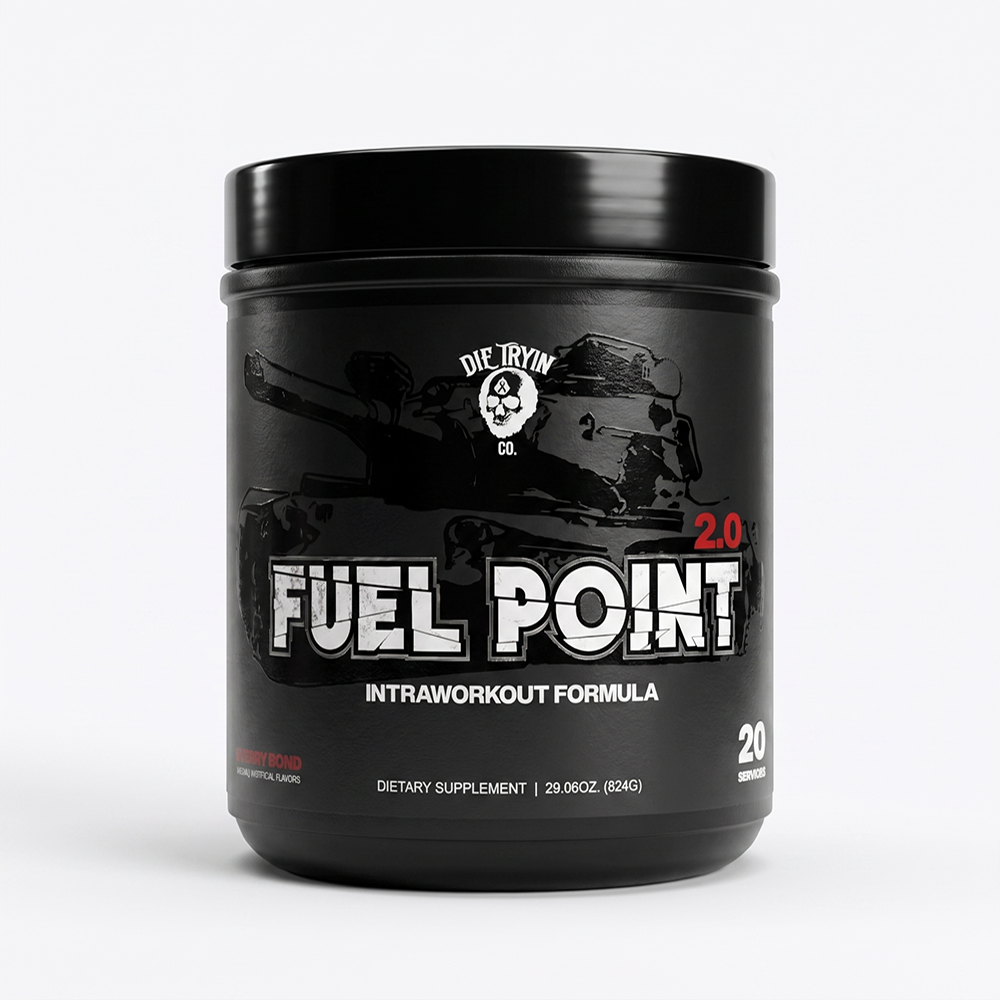
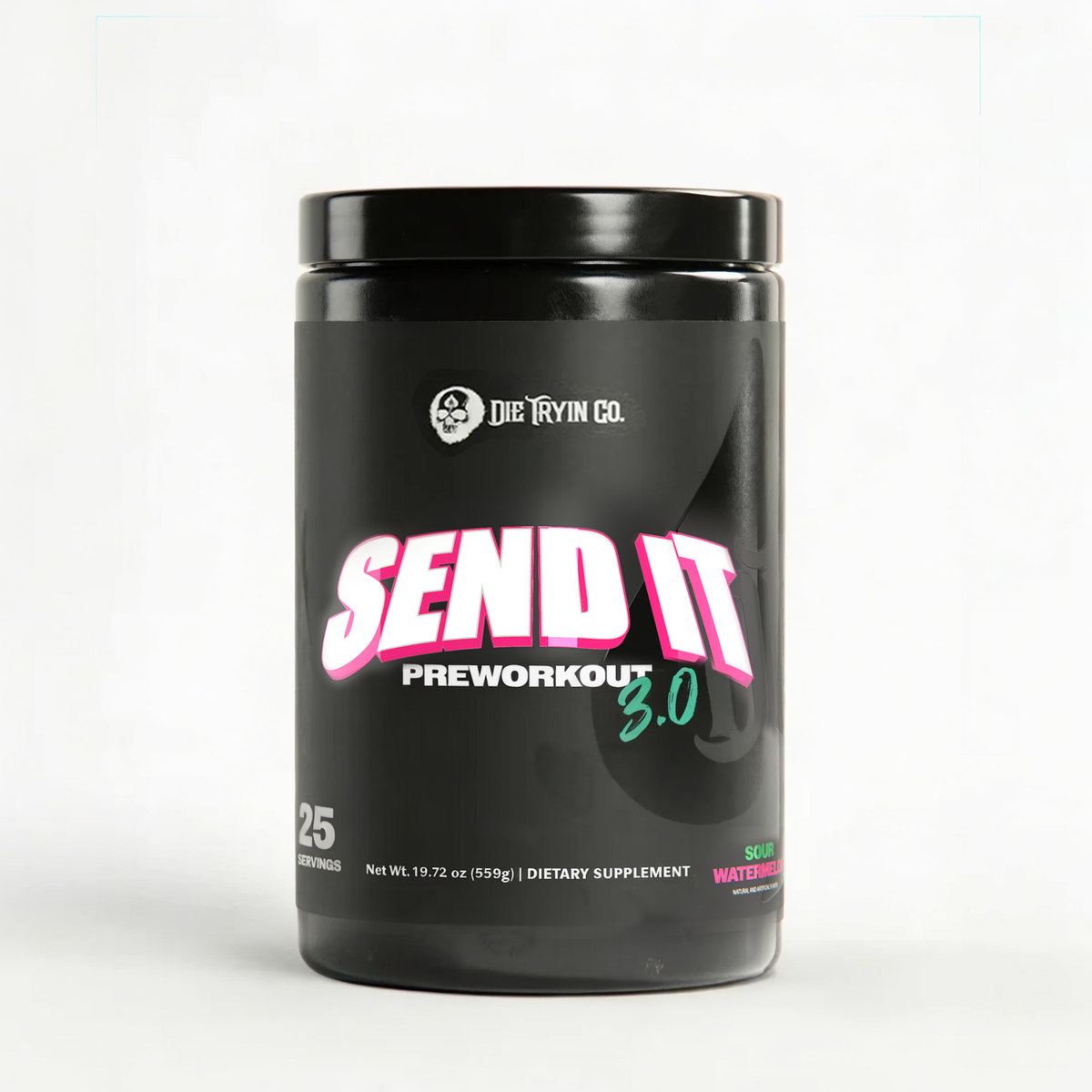
- SEND IT 3.0 — the daily driver. Same scoop, same time, clinical doses. A ritual you repeat 200 days a year.
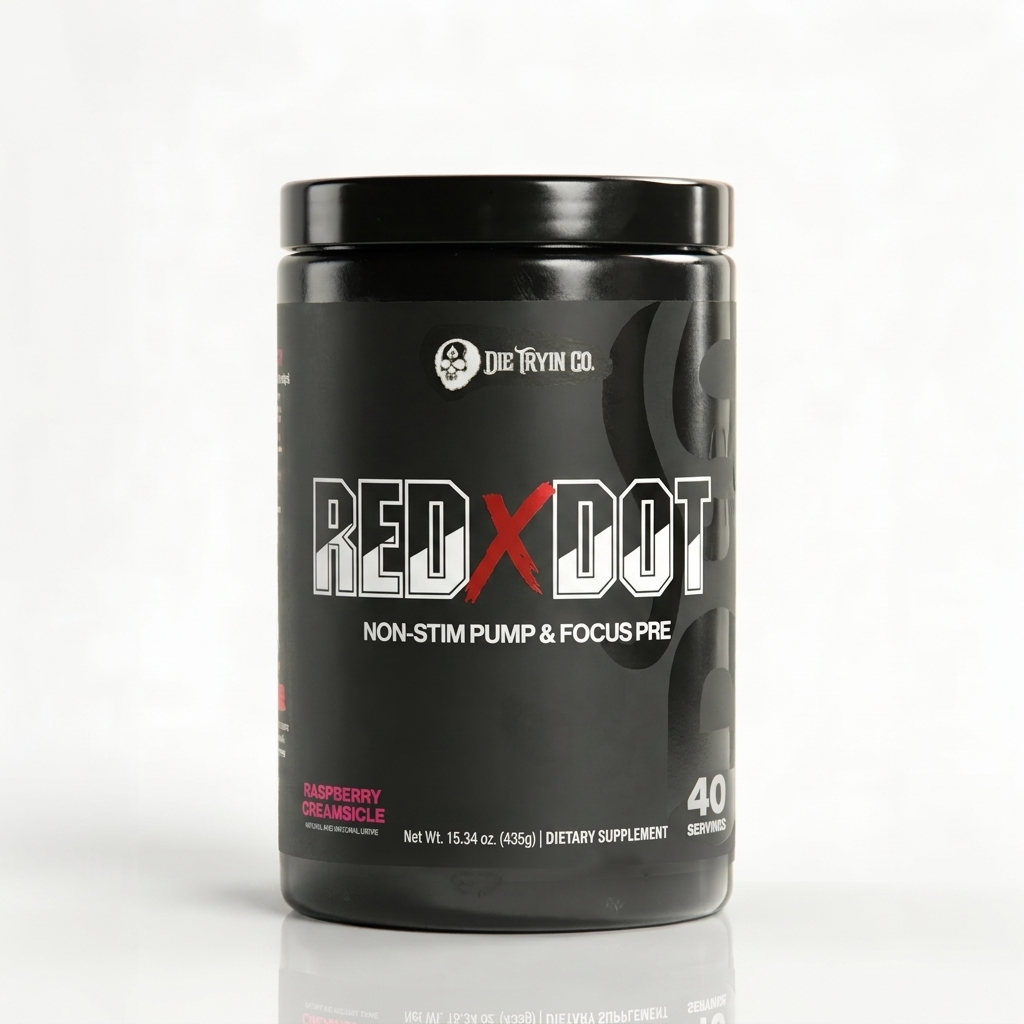
- Red Dot — stim-free pump and focus for evening sessions when caffeine costs you sleep.
- Post Iso — 24g whey isolate with DigeZyme enzymes. Makes daily protein a non-decision.
- Creatine Monohydrate — 5g micronized, daily. The most boring, most repeatable habit in the stack.
- Aqua Spike — hydration and electrolytes so the afternoon crash stops killing sessions.
- Daily Essentials — chelated multi plus gut support. One cue, every morning.
- DTC Athletic Tee — because the bag you pack the night before needs something in it.
ALWAYS FORWARD.

GEAR THAT FITS THIS POST
The products this article actually talks about. Real doses, disclosed labels, veteran owned.

Read more

Motivation is weather. It shows up loud, then it leaves without notice. Here is how to find the reason that actually holds, and the system that keeps you training after the feeling is gone.

Recovery is the other half of adaptation. The signals you need a deload, and exactly how to run one without losing progress.

The honest playbook for building the discipline that actually lasts. Motivation fails — discipline gets built. Here's how.

The reason most lifters never see results isn't a bad program or weak motivation. It's inconsistency. Here's what actually builds physiques — and why the basics work.

Most lifters asking if they're overtraining are actually overreaching, and there are two kinds. Here's how to tell which one you're in, and what to do about it.

Five minutes on a treadmill is not a warm-up. Here is the four-phase ramp that actually preps you to lift heavy, plus what the research says about foam rolling and static stretching.