





Muscle Fiber Types: What They Mean for Your Training
By Jon Klipstein, U.S. Army Combat Veteran & Founder of Die Tryin Co., and Chelsea Rodgers, IFBB Pro & Die Tryin Co. Athlete
Science reviewed by Onur Oncer, BS Physiology and peer-reviewed published researcher.
FIBER TYPE IS REAL. IT IS A WEAK PROGRAMMING LEVER.
Most people get this wrong. They hear "fast twitch" and "slow twitch," decide their calves are one thing and their quads another, then build a training week around a label they never measured on themselves.
Here's the truth: you cannot know your own fiber breakdown without a muscle biopsy, and the spread between two lifters in the same muscle is wide enough to make any blanket rule useless. Fiber composition is genuine physiology. It is just a far weaker programming lever than the internet sells, and the rules built on it were invented, not measured.
What moves the needle is the order fibers get recruited in, and which of your sets reach the units that matter. That is what this covers: recruitment order, rep ranges, frequency, where short-rest work fits, and the fiber-splitting claim that refuses to die. The full build-muscle framework, calories, protein and progression, lives in our complete guide to building muscle. This post is the layer underneath it.
THE FIBER TYPES AT A GLANCE
Human skeletal muscle splits into three working categories. Every muscle you own is a mix of all three, in a ratio you inherited and can only nudge.
| FIBER TYPE | WHAT IT DOES BEST | FATIGUE PROFILE | WHERE IT SHOWS UP |
|---|---|---|---|
| Type I (slow, oxidative) | Sustained, repeated effort | Highly fatigue resistant | Recruited first in every set |
| Type IIa (fast, oxidative-glycolytic) | Force with staying power | Moderate | Most hypertrophy work lands here |
| Type IIx (fast, glycolytic) | Max force and speed, short bursts | Fatigues fastest | Heavy singles, sprints, the last ugly rep |
One correction worth locking in: training does not flip a slow fiber into a fast one. What it reliably does in humans is shift the fast pool, moving Type IIx characteristics toward Type IIa. You refine the engine you were issued. You do not swap it, and no supplement swaps it.
THE "FAST-TWITCH MUSCLE GROUP" MYTH
You have seen the chart. Traps, glutes and calves get filed as slow twitch and trained four times a week. Quads, hamstrings and arms get filed as fast twitch and trained once. It is tidy, it is popular, and it does not survive contact with the data. Fiber composition varies enormously between individuals, so a population average tells you nothing about you.
Recovery is not set by a fiber label either. It is set by your volume, how close to failure you took it, the load you carried in the stretched position, and how well you ate and slept. A brutal three-set calf session can leave you limping longer than an easy quad day. Our complete guide to recovery breaks down what actually drives that timeline.
REP RANGES: WHAT FIBER TYPE DOES AND DOES NOT DECIDE
Motor units get recruited in order, smallest and most fatigue-resistant first. Load a bar heavy and you call in the high-threshold units immediately. Go light and stop at rep 10 of a possible 25, and the highest-threshold units barely get touched. Take that same set close to failure and fatigue forces the recruitment anyway. That is the mechanism under the rep-range argument, and why "high reps for slow-twitch muscles" is a half-truth.
A 2021 network meta-analysis in Medicine & Science in Sports & Exercise, pooling 28 studies and 747 healthy adults, reported that when sets were taken to volitional failure, hypertrophy was load independent. Strength was not: heavier loads still won there. So pick a rep range for the job: heavy for strength, moderate for repeatable volume, lighter when the joints demand it. Light loading only pays off near the edge, and failure is a tool rather than a standard, as we cover in training to failure.
THE ONCE-A-WEEK FAST-TWITCH RULE IS WRONG
This is where the old fiber-type advice does real damage. According to PubMed, a 2016 systematic review and meta-analysis in Sports Medicine by Schoenfeld, Ogborn and Krieger examined ten studies and found that, on equal weekly volume, training a muscle group twice a week produced a larger hypertrophy effect than training it once (0.49 versus 0.30, P = 0.002). Whether three times a week beats twice is still unresolved.
Read that against the "train quads once a week because they are fast twitch" rule and the problem is obvious. That rule was never derived from a frequency study. It was reverse-engineered from a label nobody measured, and it costs a growth stimulus every week. The honest floor is twice a week per muscle group, volume split across those sessions instead of dumped into one heroic beatdown. Mapped onto a real week, our breakdown of the best workout split shows how push/pull/legs and upper/lower each hit that target.
WHERE METABOLIC-STRESS WORK FITS AGAINST RECRUITMENT ORDER
The programming detail for that style of work, how to actually run supersets, giant sets and short-rest blocks, lives in our guide to training for metabolic stress. This section is only about where it sits against recruitment order.
Heavy sets buy high-threshold recruitment on rep one. That is the entire advantage of load. Short-rest, higher-rep work earns the same recruitment the long way, piling up fatigue until the small units quit and the big ones get drafted in. Same destination, longer road. The three mechanisms driving growth underneath all of this are broken down in our complete guide to building muscle.
That makes short-rest work a tool with a specific job, not a substitute for load. Supersets, giant sets and short-rest circuits bank real volume in less time and hit a muscle from an angle straight sets never will. Run them at the end of a session on isolation movements, where the fatigue cost does not corrupt your heavy compounds, and know they will not stoke your metabolism for the rest of the day, which we ran the numbers on in exercise and metabolism. Time under tension work fits the same slot, and cluster sets are the mirror image for days you need output instead of burn.
HYPERPLASIA: THE HONEST ANSWER
Start with the definition, because it gets butchered constantly. Hypertrophy is existing fibers getting bigger. Hyperplasia is the number of fibers going up. Myofibrillar hypertrophy, the growth of contractile proteins inside a fiber, is not hyperplasia. Anyone selling a "fiber splitting" protocol has confused the two.
Here is where the evidence sits. According to PubMed, a 2025 systematic review and meta-analysis in the Journal of Sports Medicine and Physical Fitness by Barton, Gowda and Dankel pooled eleven studies estimating fiber number in the biceps brachii and vastus lateralis. Resistance exercise did not significantly change fiber number (P = 0.419), and that held regardless of training status, duration, or muscle group. The authors add that the interventions ran up to six months and estimating fiber number is difficult, so failure to detect it is not proof it never happens.
Animal work, particularly extreme stretch-overload models, has shown increases in fiber number. That evidence is real. It is also not human, not voluntary training, and not something you reproduce with an 8-second pause on the leg press. Train the stretched position because long-length work is a legitimate hypertrophy strategy on its own merits, not because you are splitting fibers. And discount any claim that fiber splitting improves your joints, heart or injury risk. None of that is established in humans.
WHAT FIBER TYPE ACTUALLY CHANGES IN YOUR WEEK
Strip out the mysticism and the fiber-type payload shrinks to three decisions:
- Hit every muscle group at least twice a week. Split the volume across sessions instead of stacking it into one. This one replaces the once-a-week fast-twitch chart outright.
- Take light sets close enough to failure to earn the recruitment. Heavy loads reach the high-threshold units on rep one. Light loads reach them only at the ugly end of the set, so a light set stopped early did its work on fibers that were never the bottleneck.
- Adjust by fatigue, not by fiber label. If performance drops week over week, cut volume before frequency. Our take on the training sweet spot covers that line.
That is all of it. Everything else, how you anchor a session, how you add load, what you eat to support it, is identical no matter which fibers you inherited. That framework is the six-step build in our complete guide to building muscle.
FUELING THE WORK
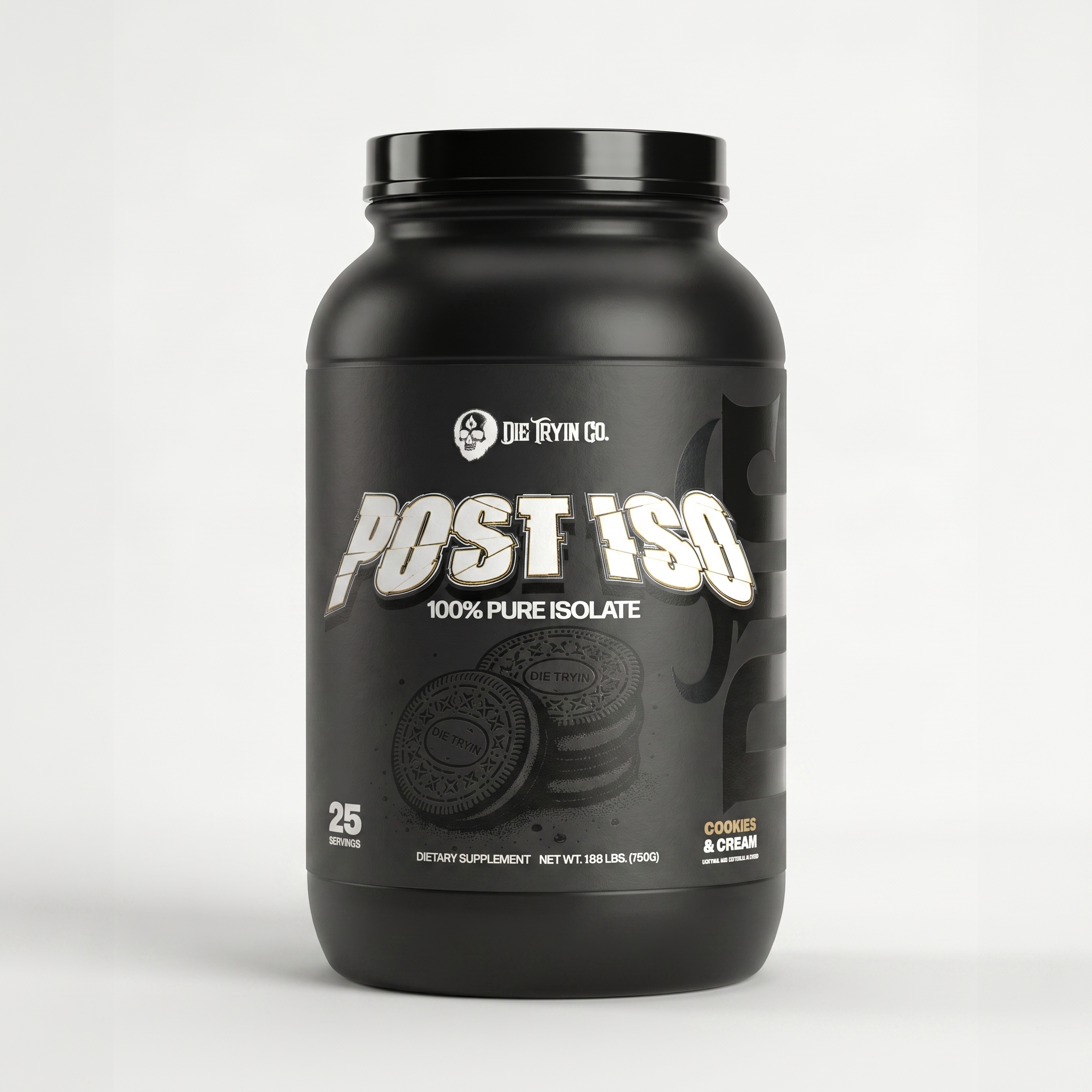
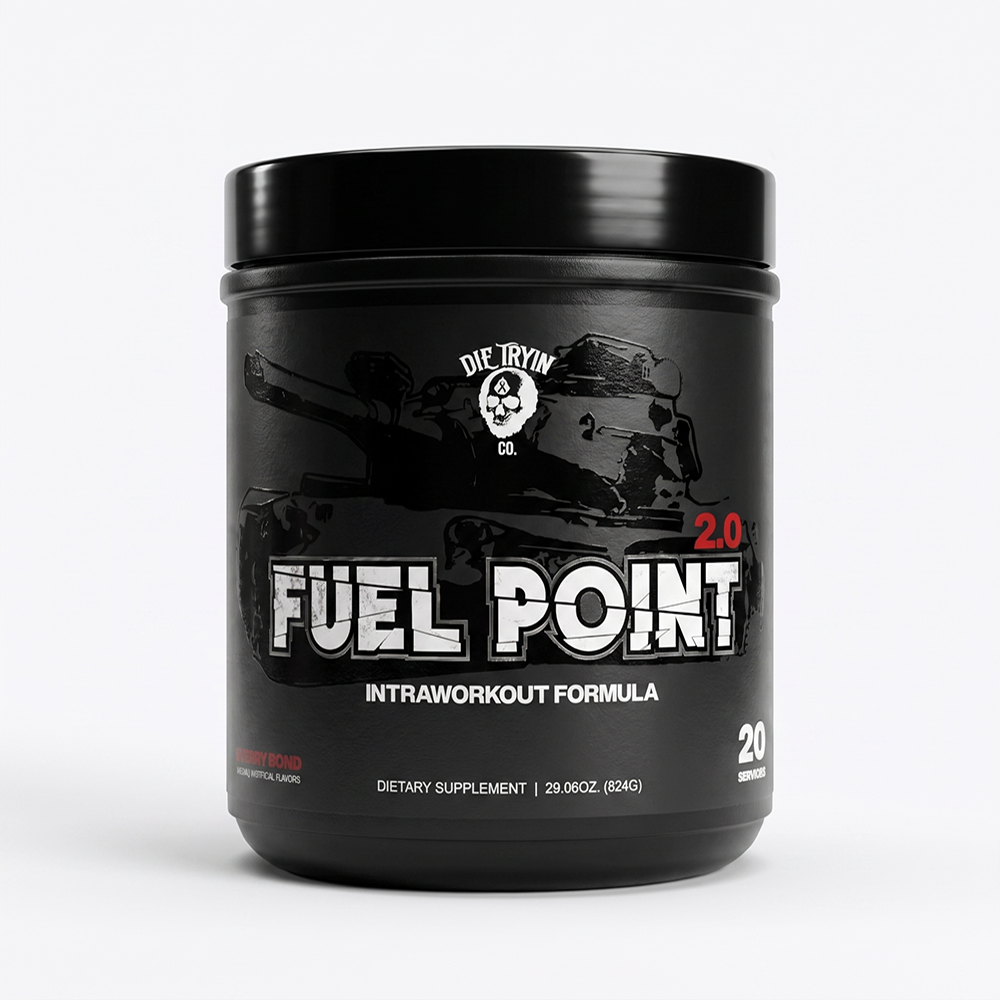
No supplement changes your fiber composition, and anyone claiming otherwise is selling. What they do is help you execute the plan above consistently. Creatine Monohydrate at 5g daily is the most researched product in the category and works through saturation, not timing, which is why our Creatine is a standalone single ingredient. Protein sets the ceiling on what any of this builds, and 24g of whey isolate from Post Iso closes a daily gap. On long sessions, Fuel Point 2.0 covers intra-workout carbs and all nine EAAs.
MUSCLE FIBER FAQ
What are the different types of muscle fibers?
Human skeletal muscle contains Type I fibers, slow and highly fatigue resistant, plus two fast subtypes: Type IIa, which balances force with endurance, and Type IIx, which produces the most force and fatigues fastest. Every muscle holds all three.
Do high reps train slow-twitch fibers and heavy reps fast-twitch?
Not the way that phrase implies. Motor units are recruited smallest first, so every set starts on slow fibers regardless of load. Heavy loads call the high-threshold units in almost immediately. Light loads reach them only once fatigue forces the issue, which is why proximity to failure matters more on a light set. For which rep range to program, see our complete guide to building muscle.
Can you change your muscle fiber type with training?
Not in the way most people mean. Training in humans does not reliably convert slow fibers into fast ones or the reverse. What it does do is shift characteristics within the fast pool, generally moving Type IIx toward Type IIa with consistent resistance training.
Can you tell your fiber type without a biopsy?
Not with any real precision. Vertical jump height, reps at a percentage of your one-rep max, and how fast you gas out all get sold as fiber tests. None separate fiber composition from training history, technique, or effort. Train the variables you can measure instead.
Do fast-twitch muscles need more recovery time?
The popular rule that fast-twitch muscle groups should be trained only once a week does not hold up. Recovery is driven by session volume, proximity to failure, eccentric load and range of motion, plus sleep and food. Manage those, not a percentage you never measured.
Does muscle hyperplasia happen in humans?
It is not established. A 2025 meta-analysis of eleven studies found no significant change in estimated fiber number after resistance training, and its authors note that interventions of up to six months may be too short to detect one. Increases appear in animal models only. Train for hypertrophy.
READY TO GEAR UP?
Fiber type is inherited. Frequency, proximity to failure and progression are what you control, and those build the muscle. Train the mechanisms, not the labels. Here is the gear that backs the work:
- Creatine Monohydrate for 5g daily saturation, training day or not.
- Post Iso whey isolate, 24g protein with digestive enzymes.
- Fuel Point 2.0 for intra-workout carbs and full-spectrum EAAs.
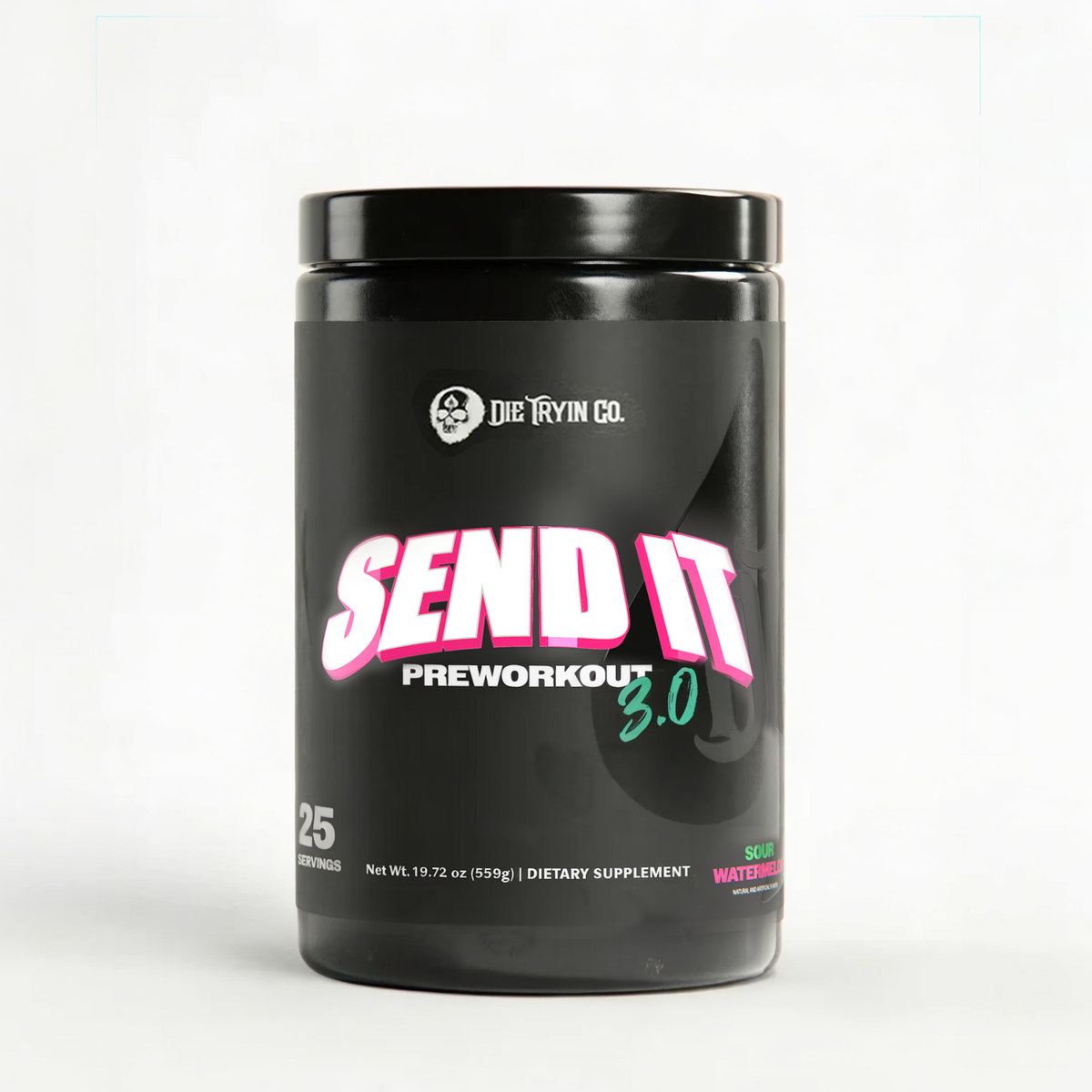
- SEND IT 3.0 as a fully dosed daily driver.
- Red Dot for stim-free pump and focus on late sessions.
- Not sure where to start? Take the supplement quiz.
ALWAYS FORWARD.

GEAR THAT FITS THIS POST
The products this article actually talks about. Real doses, disclosed labels, veteran owned.

Read more

The complete playbook for building muscle that actually lasts. Training, nutrition, recovery, and the supplements that move the needle — no hype.

The no-BS recovery playbook — sleep, stress, nutrition, modalities, and the framework that ties it all together. Recovery is where growth actually happens.
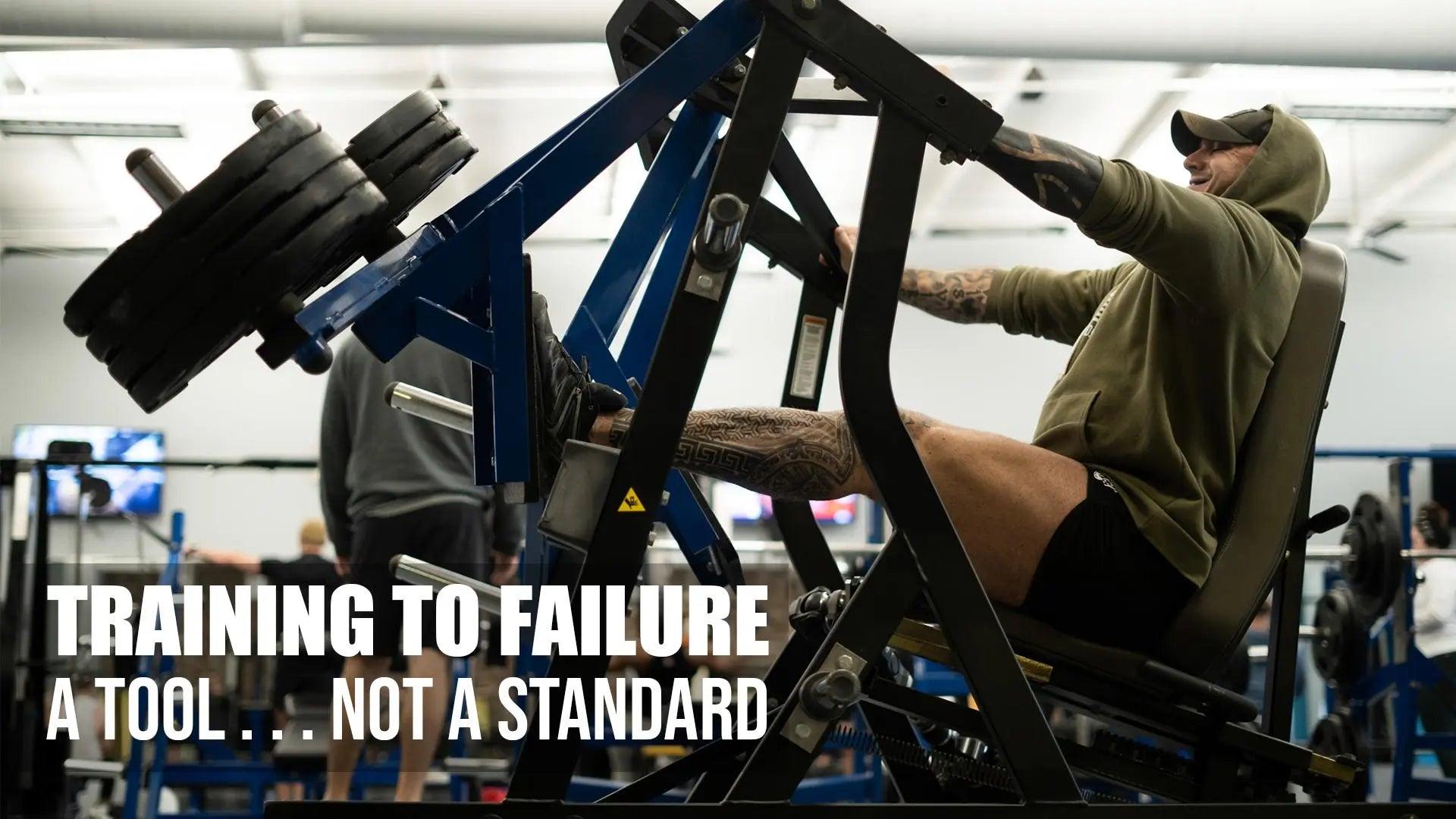
Training to failure is a tool, not a default. Here is what the research actually says for size and for strength, what the fatigue costs you, and the exact spots where taking a set to the wall earns...

There's no perfect split — only the one you'll stick to. PPL vs. upper/lower broken down, plus how to choose the best workout split for your week.
The pump is a blood-volume event, not a mystery. Here is what actually drives it before you ever touch a barbell.

The afterburn effect is real, and it is far smaller than the industry claims. Here is what cardio and lifting each actually contribute to your metabolism.