



Pump Training: How to Actually Get a Better Pump
By Jon Klipstein, U.S. Army Combat Veteran & Founder of Die Tryin Co.
Science reviewed by Onur Oncer, BS Physiology and peer-reviewed published researcher.
THE PUMP IS A PLUMBING PROBLEM
Listen up. The pump is not a mystery and not a mood. It is blood volume and cell volume showing up in the same muscle at once. Fluid enters the working tissue faster than it drains out, the vessels feeding it open wider, and the muscle holds more liquid than it did twenty minutes ago.
So when your pump is flat, you have a supply problem. Either there isn't enough fluid to move, or the vessels aren't opening, or the cell has nothing in it to hold water against. All three are decided by what you eat, drink and swallow before you touch a barbell.
That's the whole scope here: the inputs. How you organize the sets themselves, and whether chasing a pump buys you anything on the recovery side, are separate arguments in separate posts. This isn't a strength article either. A pump is a blood-volume event, not a 1RM.
| LEVER | WHAT IT ACTUALLY DOES | EVIDENCE STRENGTH | WHERE WE FIT |
|---|---|---|---|
| 1. Fluid | Keeps plasma volume up so there's blood to move | Strong. Settled ground. | Aqua Spike |
| 2. Sodium | Holds that fluid in the vascular space, not the toilet | Strong for retention, indirect for pump | Pump Action |
| 3. L-Citrulline | Feeds nitric oxide synthesis, widens the vessel | Good for dilation. Small for reps. | Red Dot (9 g) |
| 4. Muscle fuel | Glycogen pulls water into the cell with it | Moderate. Ratio varies by hydration. | Creatine |
| 5. Patented vasodilators | Direct arterial dilation, no conversion step | One solid acute trial. Thin overall. | Pump Action |
LEVER 1 — THE WATER GOES IN HOURS EARLY, NOT MINUTES EARLY
Blood is mostly water. Walk in a liter down and there's less plasma to push into the muscle no matter what's in your scoop. The American College of Sports Medicine's 2007 position stand on exercise and fluid replacement, led by Sawka, draws the line at more than 2% of body weight lost to water deficit, and says prehydrating should begin several hours out so the fluid can actually be absorbed.
That same position stand makes a point most lifters skip: sweat rates and sweat electrolyte content vary considerably between individuals, so it recommends a customized fluid plan, not a universal number. Our breakdown on daily hydration goes deeper on what counts toward intake.
- Chugging 24 oz in the parking lot doesn't hydrate you. It fills your stomach, then your bladder.
- Spread intake across the three to four hours before training so it can absorb.
- Clear urine all day isn't the goal either. That's expensive water passing through.
- Weigh in before and after one hard session. ACSM lists that exact method for estimating sweat rate. It turns a feeling into a number.
LEVER 2 — SODIUM IS THE LEVER ALMOST NOBODY PULLS
Sodium is what keeps the water you drank inside the bloodstream. Lifters spend a decade hearing salt is the enemy, then wonder why they feel washed out on a cut with two liters of plain water in them. ACSM notes that beverages containing electrolytes and carbohydrate can beat water alone under certain circumstances, and the reason is retention, not flavor.
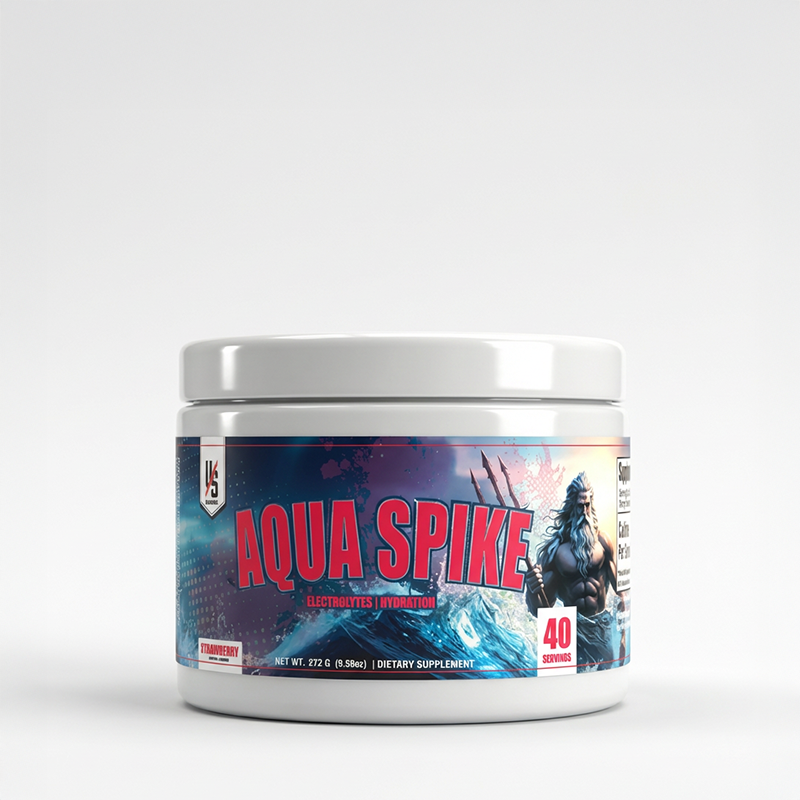
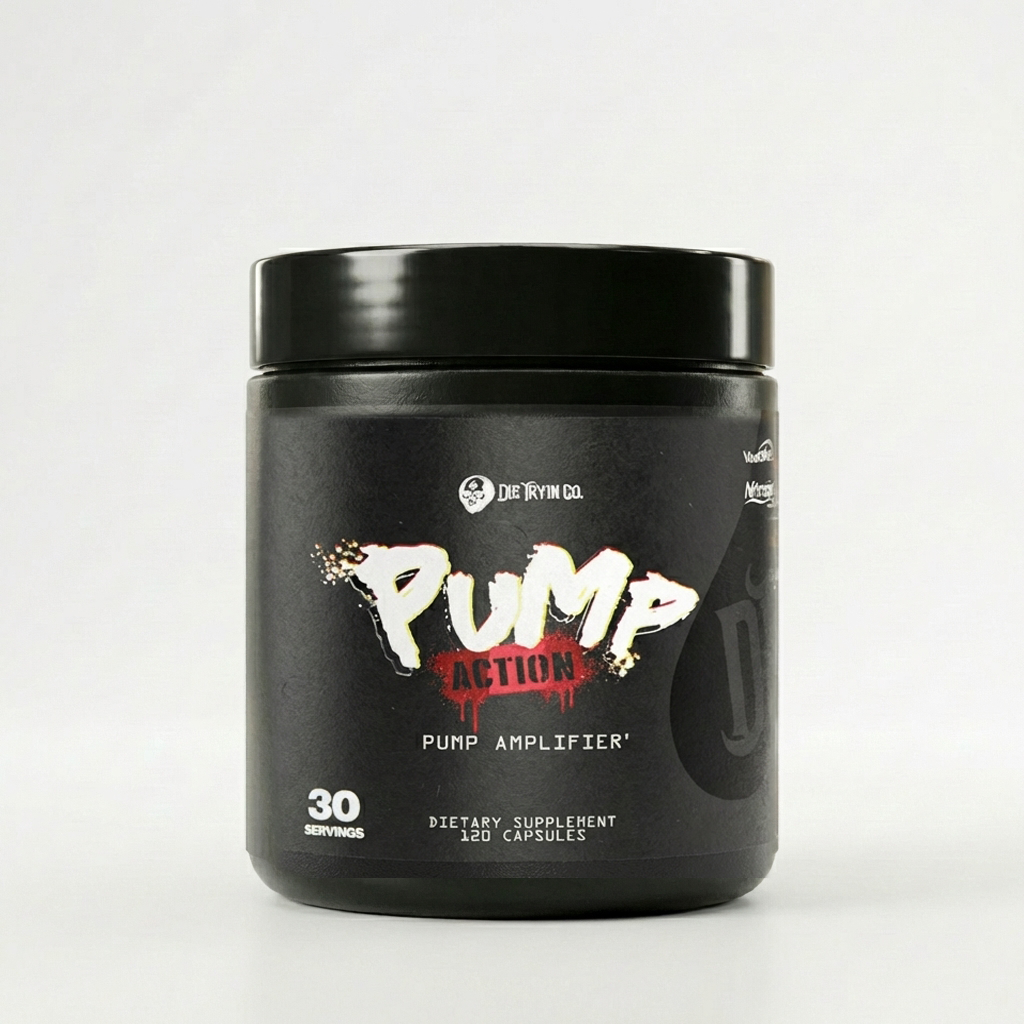
That's why Aqua Spike runs a heavier sodium load than the average electrolyte packet, and why Pump Action puts 150 mg of sodium from pink Himalayan salt alongside its two pump ingredients. If you have a diagnosed blood pressure condition, that's a conversation for your doctor.
LEVER 3 — L-CITRULLINE, AT A DOSE THAT DOES SOMETHING
L-Citrulline is the most reliable nitric oxide input in a pre-workout. Your body converts it to arginine, arginine feeds nitric oxide production, nitric oxide relaxes the smooth muscle lining your arteries, and the vessel opens. Wider vessel, more blood per beat.
The best acute human data on that pathway comes from a randomized, double-blind crossover trial at the University of Arkansas. Twenty-four healthy, physically active adults, 16 men and 8 women, took one clinical dose and had flow-mediated dilation measured by ultrasound after a 60-minute digestion window. Dilation rose 31% on 1.5 g of Nitrosigine and 34% on 8 g of malate-bound L-Citrulline, against a 2% decrease on placebo. That trial measured artery diameter. Not reps, not weight on the bar, and one session in 24 people. Worth saying out loud.
What the dilation buys inside a working set is a smaller story. A 2021 systematic review and meta-analysis pooled eight studies and 137 participants taking 6 to 8 g of the malate-bound form 40 to 60 minutes pre-training, and found roughly 3 extra reps to failure, about 6.4% over placebo. Real, statistically. Small effect size, with lower-body work only trending and upper-body work not significant at all. Three reps is worth having. It is not a transformation. Dose is where most brands quietly fail:
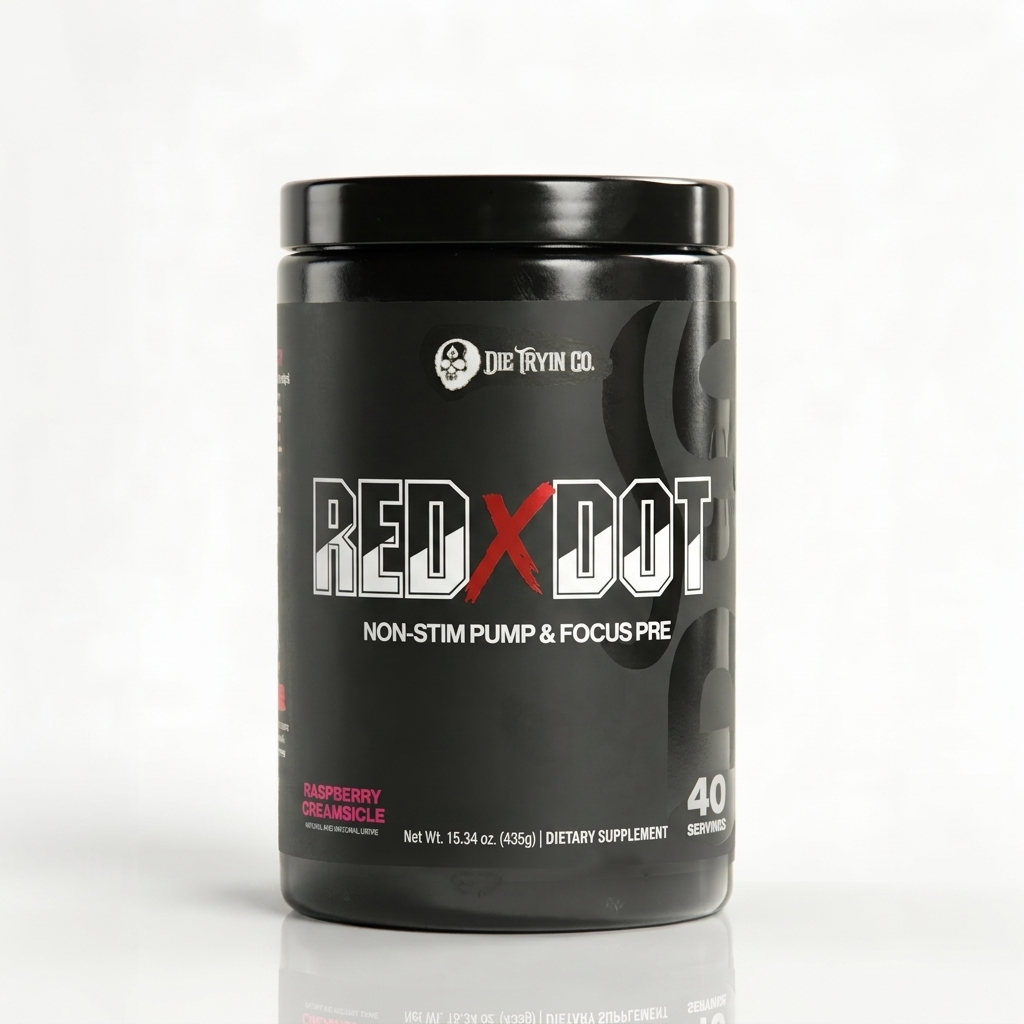
- Red Dot — 9,000 mg L-Citrulline, zero caffeine, 4,000 mg L-Tyrosine for focus.
- SEND IT 3.0 — 9,000 mg L-Citrulline and 2,500 mg Betaine Anhydrous, the daily driver.
- Project M777 — 5,000 mg per scoop, 10,000 mg at the advanced two-scoop dose.
LEVER 4 — FILL THE MUSCLE BEFORE YOU TRY TO INFLATE IT
Glycogen is stored carbohydrate and it does not sit in the cell dry. Fernández-Elías and colleagues took muscle biopsies from nine trained subjects recovering from a dehydrating ride in the heat and found at least 3 g of water stored per gram of glycogen. The honest caveats: those were trained cyclists in a heat protocol, not lifters, and the ratio wasn't fixed. When fluid losses were fully replaced it climbed to roughly 1:17, which the authors put down to water stored independently of glycogen. Treat 1:3 as a floor, not a law.
Anyone who has trained through a low-carb week knows the practical version: depleted muscle looks flat and feels flat, and no scoop fixes it. Carbs the day before matter more than carbs ten minutes before, which is why whether you need carbs at all and how you time them both get their own deep dives. For long sessions, intra-workout carbohydrate keeps the tank from emptying.
Creatine Monohydrate gets marketed as a cell-volumizer, and here the honesty points at our own shelf. Powers and colleagues loaded 32 resistance-trained men and women for 28 days and tracked body water by deuterium oxide and sodium bromide dilution. Total body water and body mass both rose, though placebo nudged total body water up slightly too. Fluid distribution between the inside and outside of the cell did not change. Take Creatine Monohydrate for the strength and work-capacity effect, about as well-supported as sports supplements get. Treat the cell-swelling story as unproven.
LEVER 5 — THE PATENTED VASODILATORS, AND WHAT THEY ACTUALLY BUY
Nitrosigine, inositol-stabilized arginine silicate, skips the L-Citrulline conversion step and delivers arginine directly. It matched 8 g of malate-bound L-Citrulline on artery dilation at a 1.5 g dose in that Arkansas trial. Read that carefully: two products, each at its own clinical dose, in one 60-minute measurement. That is not evidence 1.5 g of one equals 8 g of the other in a training session.
Be skeptical about the volume of evidence too. A PubMed search on inositol-stabilized arginine silicate returns twelve indexed papers in total. Marketing claims about dozens of studies don't survive contact with the database. Pump Action runs it at the full 1,500 mg clinical dose alongside 508 mg of VasoDrive-AP, a casein-derived peptide whose human literature is mostly vascular-tone work, not pump work.
Glycerol is the third, and the most honest about its own limits. Jardine and colleagues reviewed 38 studies and 403 participants in Sports Medicine in 2023, and ten of those studies reported plasma volume increases of 3.5% to 12.6% against a control. Read the rest before you get excited: 361 of the 403 participants were male, gastrointestinal symptoms turned up in 26 of the 38 studies, and of the 22 that measured performance only a handful moved it. Nearly all of it is endurance and heat research, not lifting. More plasma is still more plasma, which is why Red Dot carries 2,000 mg of HydroPrime glycerol.
WHAT THE INTERNET SELLS THAT THE DATA WON'T BACK
"Drink beet juice for the pump" is the tip that won't die, and the resistance-training evidence is unkind to it. In a 2025 double-blind crossover, 18 resistance-trained men took beetroot juice at roughly 6, 12 and 24 mmol of nitrate. Plasma nitrate climbed dose-dependently and nitrite rose in every beetroot condition, exactly as advertised. Performance didn't move on countermovement jumps, back squats or bench press at any dose. Eighteen men is a small trial, and nitrate has real support for endurance work. For lifting, the receipts aren't there yet.
The second claim to retire is that the pump is the growth. Cell swelling is one plausible input to hypertrophy signaling, not the mechanism itself. If your pump is enormous and your load hasn't moved in six months, you're chasing the feeling and skipping the work. Blood flow does have a real job in nutrient delivery, but delivery is not stimulus.
THE 24-HOUR PUMP PROTOCOL
Stack the levers instead of gambling on one. Basics beat hype, and this costs nothing but planning.
- Night before: carbs at your normal intake or slightly above. Depleted glycogen is a flat muscle no scoop fixes.
- Waking to T-4 hours: drink to a steady baseline, spread out. Electrolytes if you're a heavy or salty sweater.
- T-45 to T-30 minutes: pre-workout with a real L-Citrulline dose, or capsules if you're stacking onto coffee.
- T-15 minutes: another 8 to 12 oz of fluid with sodium in it. Not a liter.
- During: sip, don't chug. Intra-workout carbohydrate if the session runs long.
FREQUENTLY ASKED QUESTIONS
How long before training should I take a pump supplement?
Thirty to 45 minutes for powders. The L-Citrulline meta-analysis used a 40-to-60-minute window, and the vasodilation trial measured its effect after a 60-minute digestion period. Capsules need the same runway. Take it in the parking lot and the pump arrives during your cooldown.
Can I get a good pump without a pre-workout?
Yes. Fluid, sodium and full glycogen stores are free, and they carry most of the weight. Supplements move the needle on top of those three, not instead of them.
Does a bigger pump mean more muscle growth?
Not on its own. Cell swelling is one candidate input to hypertrophy signaling, but mechanical tension and progressive load drive adaptation. Use the pump as feedback, not as your scorecard.
Why does my pump disappear on a cut?
Lower carbohydrate intake means less muscle glycogen, and glycogen carries water into the cell with it. Add cutting-phase sodium restriction and lower total fluid, and all three levers drop at once. It's expected, and it isn't muscle loss.
Should I drink beet juice before lifting?
For endurance work, dietary nitrate has genuine support. For resistance training, the 2025 dose-response trial above found no benefit at any dose tested. It won't hurt you. Research suggests it just doesn't do much for the barbell.
Can I stack stim-free pump products with a stimulant pre-workout?
That's what Pump Action is built for, since it carries zero caffeine. What you don't want is two full pre-workouts stacking caffeine on caffeine. Watch total stimulant load, not total scoops.
READY TO GEAR UP?
Real doses of real ingredients, honest framing about what each does. Not sure which formula fits your caffeine tolerance? Take the two-minute gear quiz, or work through the Ultimate Guide to Pre-Workout first.
- Red Dot — 9,000 mg L-Citrulline, HydroPrime glycerol, zero caffeine. The stim-free pump and focus scoop.
- Pump Action — 1,500 mg Nitrosigine, 508 mg VasoDrive-AP, 150 mg sodium. Capsules, no flavoring, stacks with anything.
- SEND IT 3.0 — the daily driver, with the same 9,000 mg L-Citrulline dose plus caffeine.
- Aqua Spike — electrolytes with a sodium load that actually holds fluid.
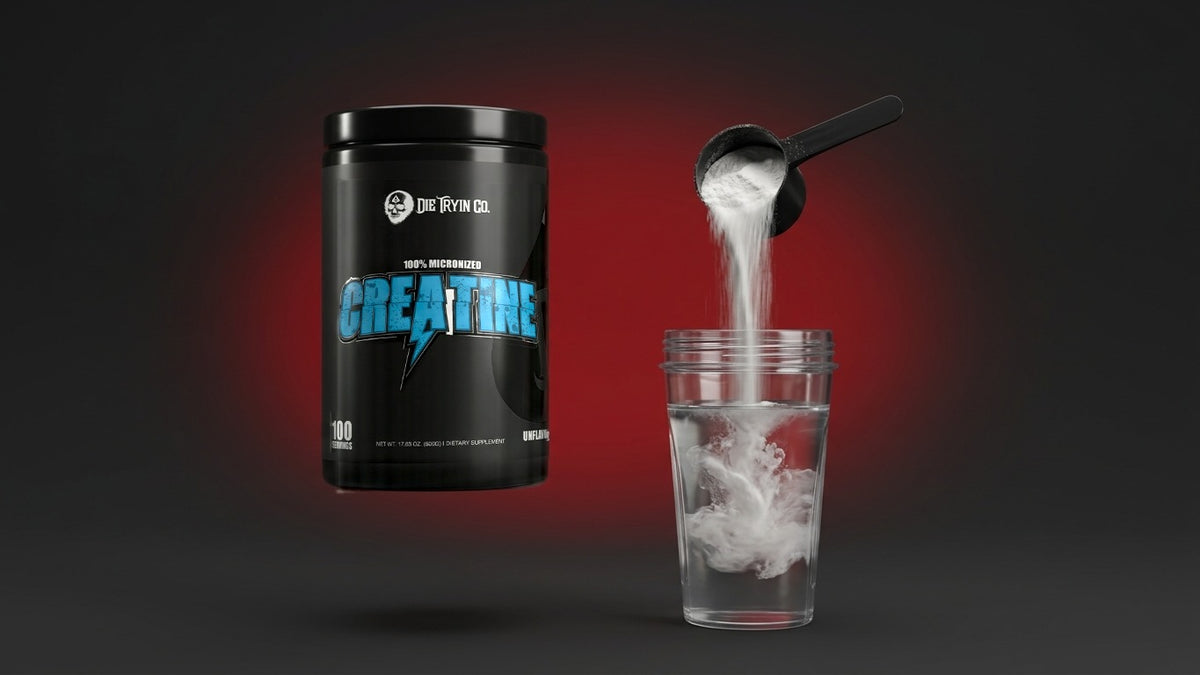
- Creatine — 5 g micronized Creatine Monohydrate. Take it for the strength.
- DTC Athletic Tee — for the sets where sleeves earn their keep.
ALWAYS FORWARD.
GEAR THAT FITS THIS POST
The products this article actually talks about. Real doses, disclosed labels, veteran owned.

Read more
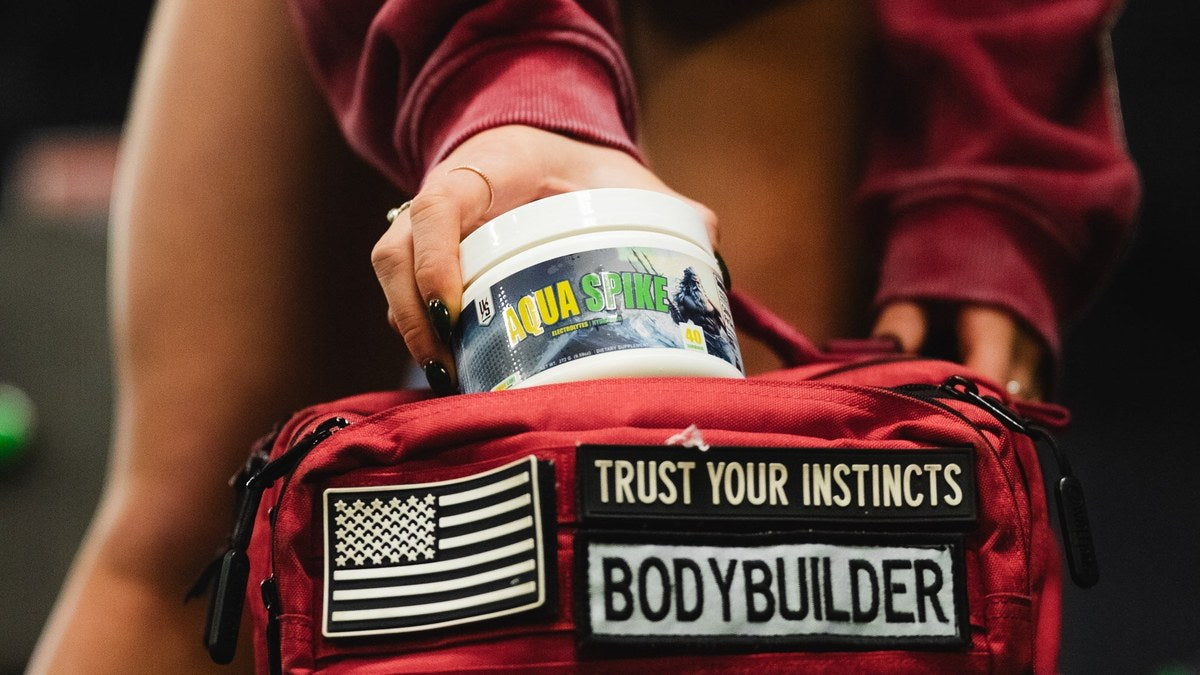
The complete hydration playbook: how much water you actually need, what dehydration does to your performance, and how to hydrate around hard training.
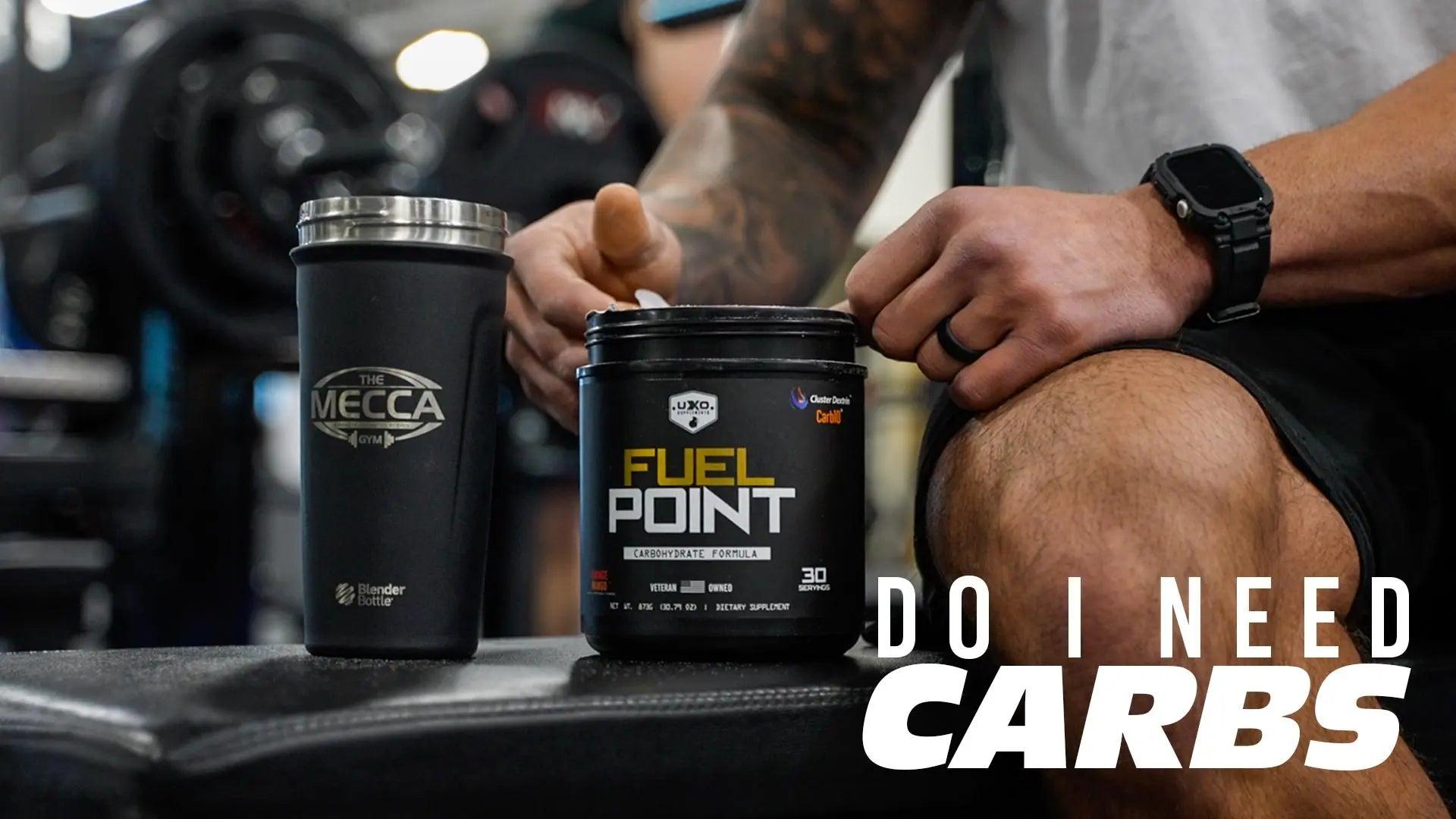
Carbs are not the enemy and they are not strictly essential either. Here is the honest version, and the numbers that actually matter.
Carb timing matters less than the industry claims and more than the skeptics admit. Here is where the line actually sits.
Every recovery gadget claims to boost blood flow. Here is what the evidence actually supports, and where the honest limits are.

What actually works in pre-workout — ingredients, doses, timing, and how to pick the right one. Cut through the marketing. Get the real answer.
Your gut lining runs the same creatine energy system as your muscles. Here is what the research shows on stomach upset, IBS, colitis and leaky gut, and exactly where the human evidence stops.