





Time Under Tension Training: What It Does (And Doesn't)
By Jon Klipstein, U.S. Army Combat Veteran & Founder of Die Tryin Co.
Science reviewed by Onur Oncer, BS Physiology and peer-reviewed published researcher.
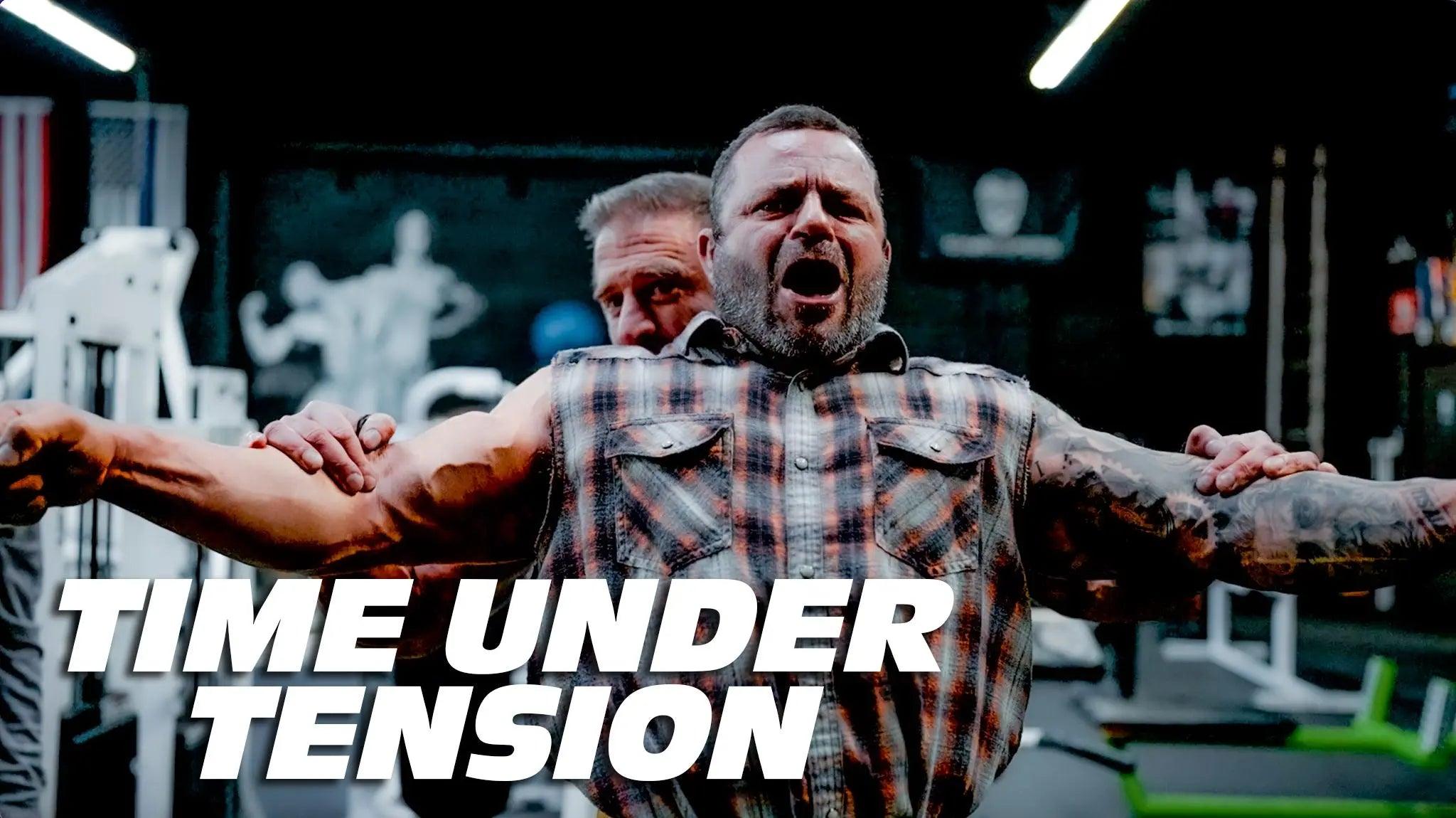
TIME UNDER TENSION TRAINING, WITHOUT THE HYPE
Most people get this one backwards. They hear "slow reps build more muscle," cut the weight in half, count to four on the way down, and assume they just unlocked something the guy repping heavy across the gym doesn't know about.
Here's the truth. Time under tension training is a real tool with real uses. It is not a shortcut, and it does not replace the two things that actually drive growth: total volume and progressive overload. Tension builds muscle. Tempo is one of several dials that controls tension, and it's a smaller dial than the internet sold you.
So this is the honest version. What time under tension actually means, how to read tempo notation, what the research does and does not support, where slowing down genuinely earns its place, and where it gets oversold.
Pick your tempo from the table. Then read why it works.
| WHAT YOU'RE DOING | TEMPO TO RUN | WHY |
|---|---|---|
| Heavy strength work (squat, bench, deadlift) | 2-0-X-0 | Control the descent, then move the bar with everything you have. Speed intent is the point. Bench press guide |
| Main hypertrophy compounds | 2-0-1-0 | The default. Own the lowering, no bouncing, and keep adding load over time. Progressive overload |
| Isolation and pump work | 3-1-1-1 | Where tempo pays off most. Light load, brutal set, zero momentum. Worked example: triceps |
| Relearning a lift or fixing form | 3-2-2-0 | Slow enough that you can actually feel and correct your position mid-rep. Common mistakes |
| Cranky joints or a deload week | 4-0-2-0, lighter load | Hard set, far less load on the joint. Same family of thinking as low-load methods. BFR training |
WHAT TIME UNDER TENSION ACTUALLY IS
Time under tension is the total amount of time a muscle stays loaded during a working set. Add up the lowering phase, any pause at the bottom, the lifting phase, and any pause at the top, multiply by your reps, and that's your number.
A normal set of 10 reps at a controlled speed lands somewhere around 30 to 40 seconds. Slow the lowering phase and add a pause, and the same 10 reps can stretch past a minute with far less weight on the bar. That's the whole mechanism. Nothing mystical about it.
The reason lifters care is that tension is the primary driver of muscle growth, and tempo is one way to manipulate it. The mistake is assuming more seconds automatically equals more muscle. It doesn't work that cleanly, and the research is pretty direct about why.
HOW TO READ TEMPO NOTATION
Programs write tempo as a four-digit code. Every number is seconds, and they always run in the same order:
- First digit: the eccentric. The lowering phase. Lowering the bar to your chest, descending into the squat, letting the dumbbell down.
- Second digit: the pause in the stretched position. Bottom of the squat, bar on the chest, dumbbell at the bottom of a curl.
- Third digit: the concentric. The lifting phase. An X here means explosive, move it as fast as you can regardless of how fast that actually is.
- Fourth digit: the pause at the top, or in the shortened position where you squeeze.
So 3-1-1-1 on a cable row means three seconds letting the handle out, one second stretched, one second pulling, one second squeezing. One rep, six seconds. Ten reps, a full minute of work. Read it once and you'll never have to look it up again.
WHAT THE RESEARCH ACTUALLY SUPPORTS
This is where the honest part starts, and it's the part most articles skip. A 2015 systematic review and meta-analysis in Sports Medicine pooled the controlled trials that directly compared training tempos and found that hypertrophy outcomes were similar across rep durations from roughly 0.5 to 8 seconds. Half a second per rep and eight seconds per rep produced comparable growth when sets were taken to failure.
The same review flagged the one place tempo clearly hurts you. Deliberately grinding out reps slower than about 10 seconds each appears to be worse for growth, not better. Super-slow training is not the advanced version of this.
Now compare that to volume. A 2016 meta-analysis found a graded dose-response between weekly sets per muscle and muscle growth, with each additional weekly set associated with a measurable increase. One variable shows a clear dose-response curve. The other shows almost no difference across a sixteen-fold range. That ranking isn't opinion. It falls straight out of the evidence.
Practical translation: get your weekly sets right, add load or reps over time, take sets close to failure, and treat tempo as the fine-tuning knob it is. Anyone selling you tempo as the missing piece is selling you the least important variable in the program.
WHERE TIME UNDER TENSION GENUINELY EARNS ITS SPOT
None of that makes tempo work useless. It makes it specific. These are the four situations where deliberately slowing down actually pays:
- Mind-muscle connection on isolation work. In an eight-week trial, lifters who focused internally on contracting the target muscle grew their elbow flexors more than lifters who focused on the outcome of the lift (12.4% versus 6.9%). Slowing a rep down is the easiest way to make that internal focus possible. It's also why activation work lives or dies on tempo.
- Joint-friendly volume. Elbows, shoulders and knees don't always cooperate. A slow tempo with a light load gives you a genuinely hard set without the joint stress of a heavy one. Useful on a deload, useful when something's angry.
- Killing momentum. If you can't feel a muscle working, you're probably swinging the weight. A three-second lowering phase makes cheating physically impossible.
- Loading the stretched position. A controlled eccentric keeps you honest at the bottom of the range, where the muscle is lengthened and the tension is highest. That pairs directly with stretch-focused training.
Want to see all of that applied to one movement, coached rep by rep? Our triceps time under tension breakdown is the worked example. Same principles, one exercise, exact cues.
WHERE IT GETS OVERSOLD
Four claims you'll see everywhere that don't hold up:
- "Your sets should last 60 to 120 seconds." There's no magic time window. The research compared rep durations, not stopwatch targets for a set. A set doesn't have to cross an arbitrary line to count.
- "Slow tempo is more efficient than lifting heavy." Growth was similar across a wide tempo range. Nothing in that data says slow is superior, only that it's not inferior inside a sane range.
- "Use light weight for everything." Light weight taken close to failure works. Living there permanently means you stop progressing load, which means you stop progressively overloading, which means you stall.
- "Slower is always better." Past roughly 10 seconds per rep, the evidence points the other direction. There's a floor and a ceiling, and both ends are worse than the wide middle.
HOW TO PROGRAM IT WITHOUT WRECKING YOUR PROGRESS
Five rules. Follow them and tempo becomes an asset instead of an excuse to go light forever.
- Pick one or two exercises per session, not the whole workout. Usually the isolation and accessory work, not the primary compound.
- Write the tempo in your log next to the load. A tempo you don't record isn't programming, it's a mood.
- Keep progressing. Same tempo, more reps or more weight over the weeks. Tempo is the constant, overload is the variable.
- Count reps, not seconds. Staring at a clock mid-set wrecks focus. Establish the rhythm on rep one and hold it.
- Leave your heavy work alone. Control the descent, then drive up hard. Don't turn a top set into an endurance event.
Slot the tempo work where it belongs in the week, and if your week isn't organized yet, start with the split breakdown before you worry about seconds per rep.
FREQUENTLY ASKED QUESTIONS
What is time under tension training?
It's training where you deliberately control rep speed to increase how long a muscle stays loaded during a set. You add up the lowering phase, the pauses and the lifting phase across all your reps. Slowing any of those phases increases the total.
Does time under tension build more muscle than lifting heavy?
Not on its own. A 2015 meta-analysis found similar hypertrophy across rep durations from about 0.5 to 8 seconds, so tempo inside a normal range doesn't beat conventional lifting. Total weekly volume and progressive overload move the needle far more.
How long should a set be for muscle growth?
There's no proven target. The "60 to 120 second" rule floating around online isn't backed by the tempo research, which compared rep durations rather than set durations. Take the set close to failure and the duration takes care of itself.
What does 3-1-2-0 tempo mean?
Three seconds lowering, one second paused in the stretched position, two seconds lifting, no pause at the top. An X in the third slot means lift explosively instead of counting.
Should I use lighter weights for tempo work?
Yes on isolation and accessory movements, because you can't maintain a slow controlled tempo under a heavy load. Keep your primary compounds heavy with a normal controlled descent and use tempo work as the accessory layer.
Can slow reps be too slow?
They can. Rep durations beyond roughly 10 seconds appear to be worse for growth than the wide range below that. Controlled beats crawling.
How often should I use tempo training?
One or two exercises per session is plenty, and it fits naturally into isolation work, deload weeks, or any session where a joint is complaining. It's a tool you reach for, not the whole program.
READY TO GEAR UP?
Slow eccentrics and long isolation sets are where the pump lives, so give yourself something to fill. Drive blood flow without the caffeine on Red Dot, cover your daily 5g with Creatine Monohydrate, refuel with Post Iso, and if you're going to spend a full minute on one set, do it in the mesh training shorts. Not sure where to start? Take the quiz and we'll build the stack around your goal.
Control the rep. Log the load. Add to it next week. That's the whole game.
ALWAYS FORWARD.
Read more
6 evidence-based strategies to increase your bench press — progressive overload, technique fixes, accessory work, and the recovery framework that turns training into real PRs.

Muscle grows when demand grows, everything else is detail. The load-vs-reps research, the double progression method, and how to escape a plateau without wrecking recovery.

Slow the eccentric, drop the weight, and feel your triceps like never before — the time-under-tension method for building arms, plus the honest science behind it.

Most plateaus aren't a programming problem — they're execution. The 5 most common workout mistakes (poor form, overtraining, lack of variety, no warm-up, bad nutrition) and the practical fixes.

IFBB Pro Chet Nichols breaks down blood flow restriction (BFR) training — how light weights and a cuff build muscle, how to use it safely, and who it's for.
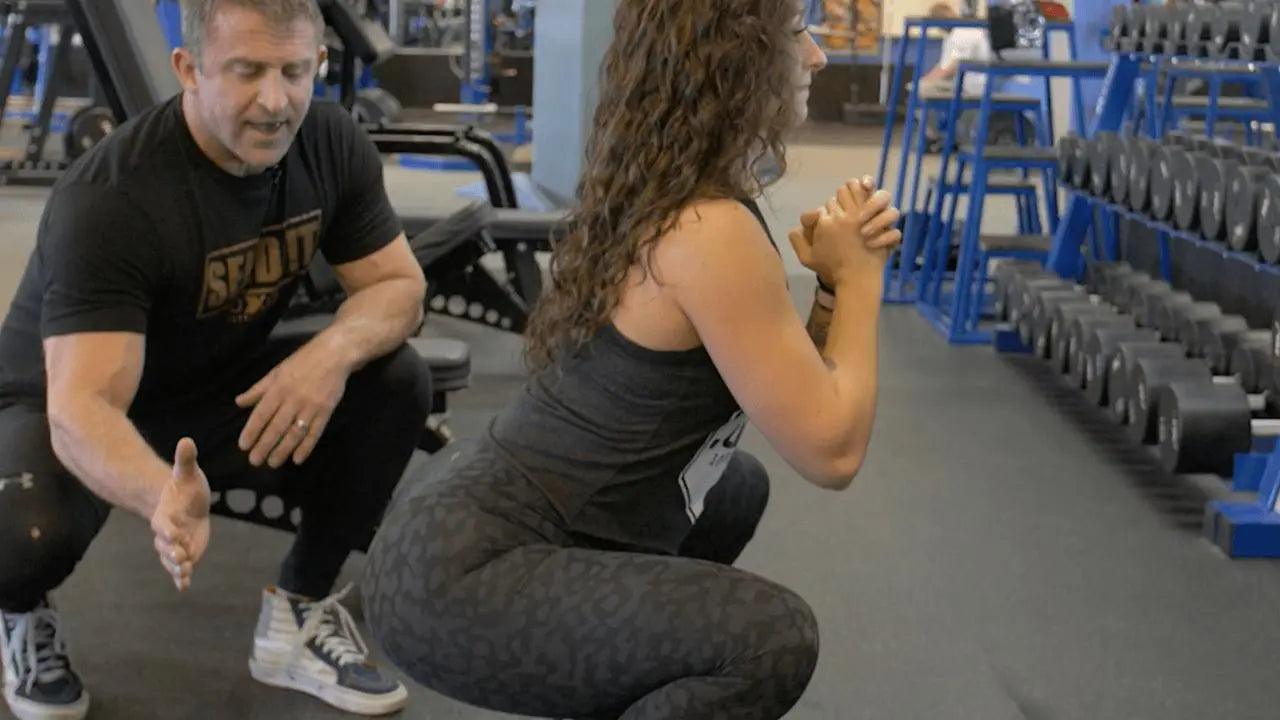
IFBB Pro Chet Nichols shows how to actually engage your glutes in goblet squats — slow down, pause, squeeze. Less weight, more glute growth.
GEAR THAT FITS THIS POST
The products this article actually talks about. Real doses, disclosed labels, veteran owned.