


How to Increase Your Bench Press: 6 Steps to a New 1RM
By Jon Klipstein, U.S. Army Combat Veteran & Founder, and Garrett Ussery, NASM-CPT & 2025 Idaho Cup Overall Champion
THE BENCH PRESS DOESN'T GO UP BECAUSE YOU WANT IT TO
Most guys plateau on the bench by their second year of training. They go to the gym, load the bar with the same weight they hit last week, fail at the same rep, and walk away frustrated. Then they try harder — same weight, same fail, same wall.
I've spent ten years competing in bodybuilding and another ten coaching lifters through bench plateaus at Mecca Gym. The bench press isn't a willpower lift — it's a programming lift. Six things move it: progressive overload done right, technique that actually transfers force, accessory work that builds the muscles around the lift, periodization, recovery, and getting your head straight under the bar.
Here's how to use all six.
1. PROGRESSIVE OVERLOAD — THE KIND THAT ACTUALLY WORKS
Adding 5 pounds to the bar every Monday isn't progressive overload — it's wishful thinking. Real overload is a planned, gradual increase in stimulus (weight, reps, sets, or tempo) that your body has time to adapt to before you push again.
The simplest framework: pick a weight you can hit for 5 sets of 5 with good form. Each week, either add a rep to one set or 5–10 pounds when you complete all sets at the prescribed reps. When you stall for two weeks at the same weight, de load 10% and rebuild. Sustainable progressive overload is the single biggest predictor of long-term strength gain (Schoenfeld, 2010).
2. FIX YOUR TECHNIQUE — SMALL DETAILS, BIG NUMBERS
Most missed reps aren't a strength problem — they're a leverage problem. The same lifter who fails at 225 can hit 245 a month later with no extra muscle, just better setup. The big ones:
- Foot placement — feet flat, planted hard, knees over ankles. Drive through the floor as you press.
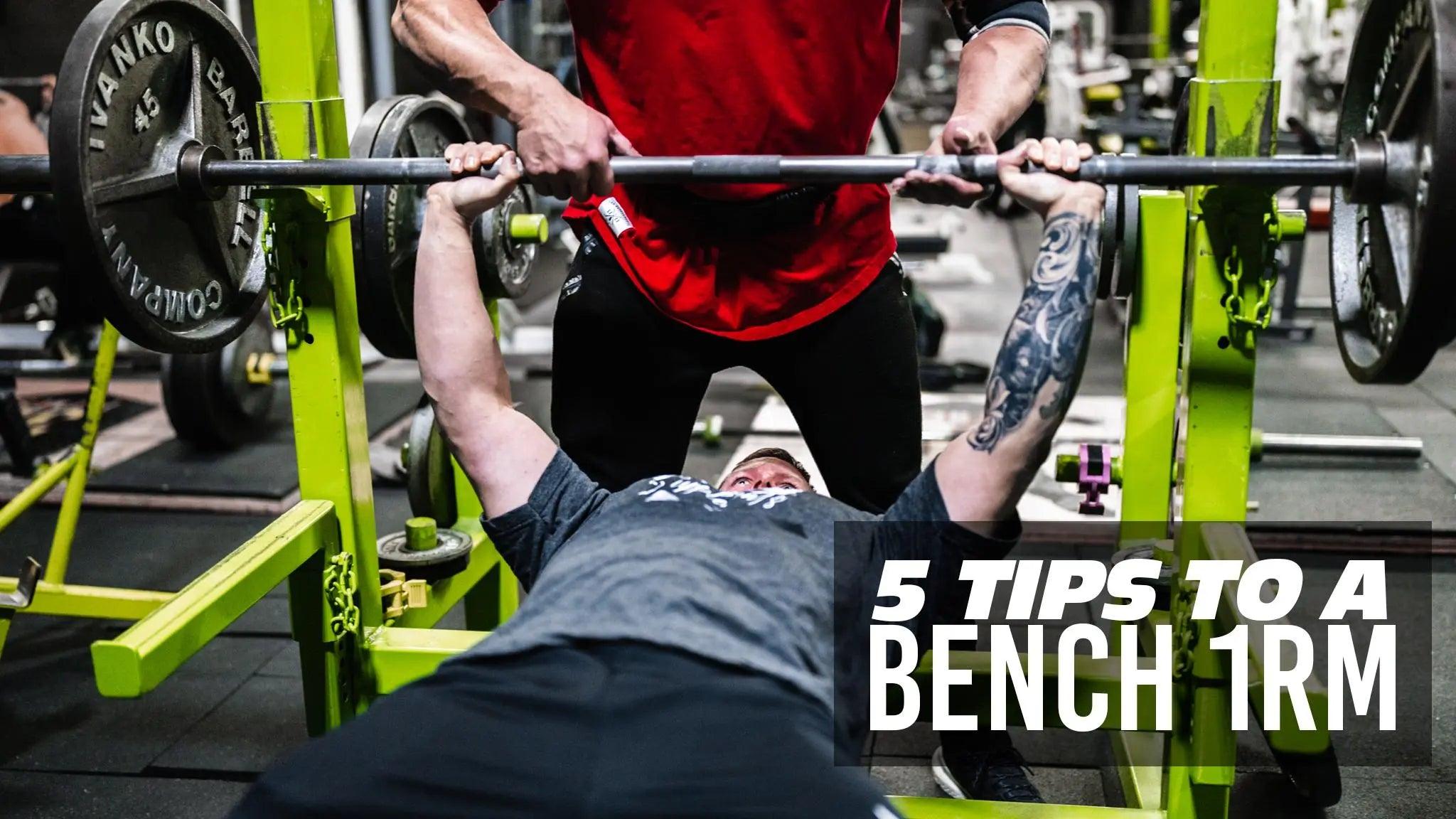
- Arch — a small natural upper-back arch shortens the bar path and locks the shoulder blades down. Don't go full powerlifter; a moderate arch is enough.
- Grip width — just outside shoulder width is the sweet spot for chest development. Wider biases the shoulders; narrower biases the triceps.
- Elbow position — 45–60° tuck, not 90° flare. Flared elbows are how shoulders get destroyed.
- Bar path — bar comes down to your lower chest (around the nipple line), drives up and slightly back over your shoulders.
- Pause at the chest — a one-second pause kills bounce, builds power off the chest, and translates directly to a higher 1RM.
3. STRENGTHEN THE MUSCLES AROUND THE LIFT
The bench is a chest movement, but it's executed by an entire system. Weak triceps stall the lockout. Weak rear delts and upper back collapse your foundation. Weak lats kill the bar path. To bench more, build the supporting cast:
- Close-grip bench press for tricep lockout strength
- Weighted dips for raw pressing power
- Barbell rows / dumbbell rows for upper back density (a stronger back is a stronger bench — the back is what you press against)
- Face pulls + rear delt flyes for shoulder health
- Overhead press for shoulder and tricep strength under load
The strongest benchers in any gym have backs that look as developed as their chests. The two are linked.
4. PERIODIZE — DON'T MAX EVERY WEEK
Going heavy every session is the fastest way to plateau. Your nervous system needs recovery between max-effort sessions; without it, force production drops and the bar stops moving. Wave your intensity across a 4-week block:
Week 1: Heavy (3 sets of 5 at 80–85% 1RM). Week 2: Moderate volume (4 sets of 8 at 70–75%). Week 3: Speed work (5 sets of 3 at 60% with explosive intent). Week 4: Deload (light, half-volume, recover). Then test or restart the wave at slightly higher numbers.
5. RECOVER LIKE YOU MEAN IT
Sleep, protein, and intra-week recovery move the bench more than any program ever will. Lifters who sleep 5 hours a night and hit 1g per pound of bodyweight in protein outperform lifters with better programs but worse recovery, every time. Specifically:
- Sleep 7–9 hours — growth hormone release peaks in deep sleep; that's when your bench actually gets stronger
- Hit your protein number — roughly 0.7–1g per pound of bodyweight, every day, without exception
- Don't train chest more than twice a week — the muscles need 48–72 hours to fully recover from heavy pressing
- Take real deload weeks — every 4–6 weeks, cut volume in half. Your nervous system thanks you with a PR on the other side.
6. TRAIN YOUR HEAD UNDER THE BAR
The strongest benchers in the world all walk up to heavy attempts with the same look — calm, locked in, no hesitation. Hesitation kills max attempts. If you've already half-decided you might miss the lift, you're going to miss it.
Build a ritual: same warm-up sets, same setup sequence, same breath pattern. Visualize the rep before you take the bar — see yourself driving it off your chest and locking out. Music helps. Caffeine helps. The bar moves up because you decided it was going to before you ever touched it.
WHERE THE BENCH PRESS FITS INTO YOUR PROGRAM
If you're running a push/pull/legs or upper/lower split, bench is your push-day main lift. Pair it with our chest hypertrophy work for size and our tricep programming for lockout strength. Together that's a complete push day that drives the bench up while building the physique that goes with it.
WHERE SUPPLEMENTS FIT
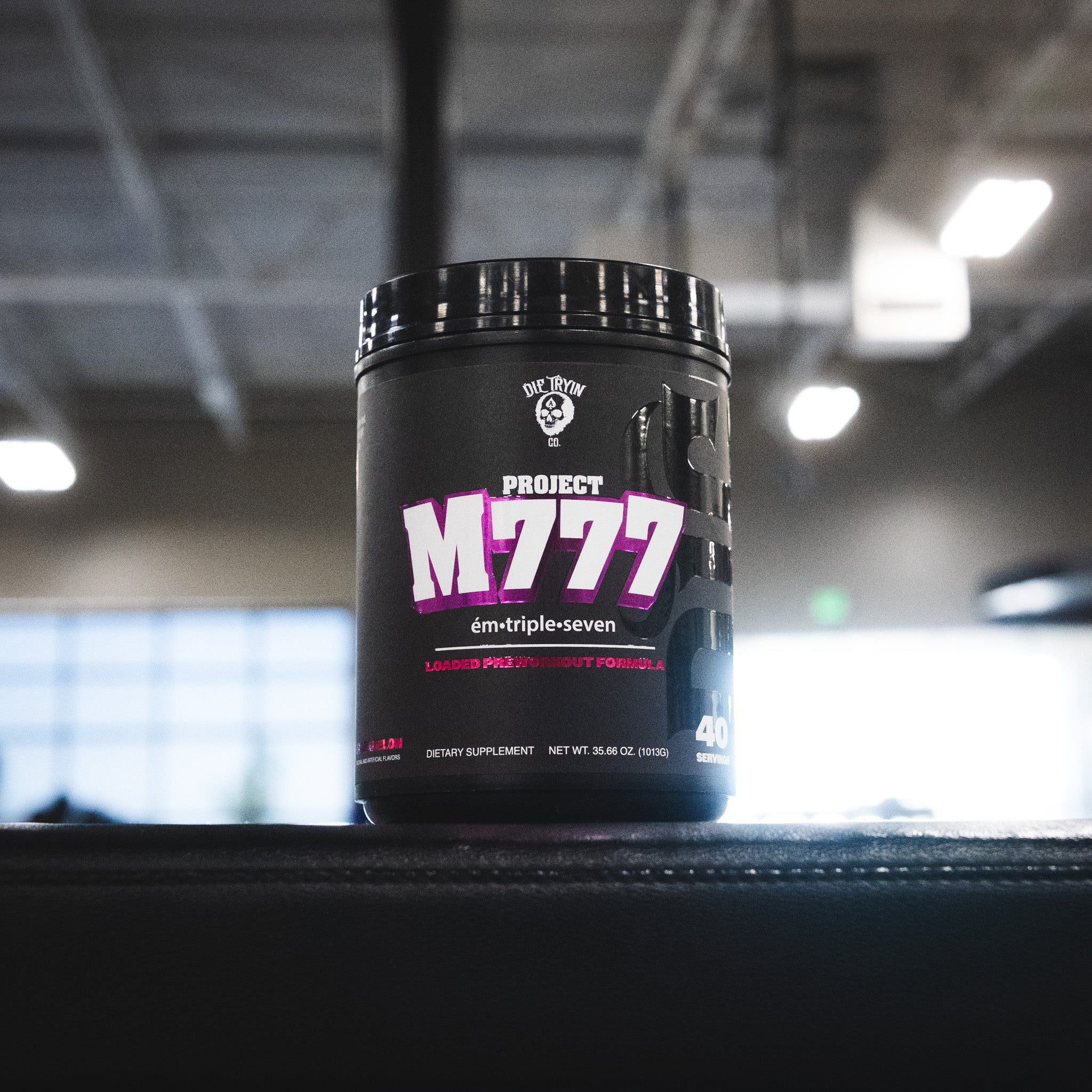
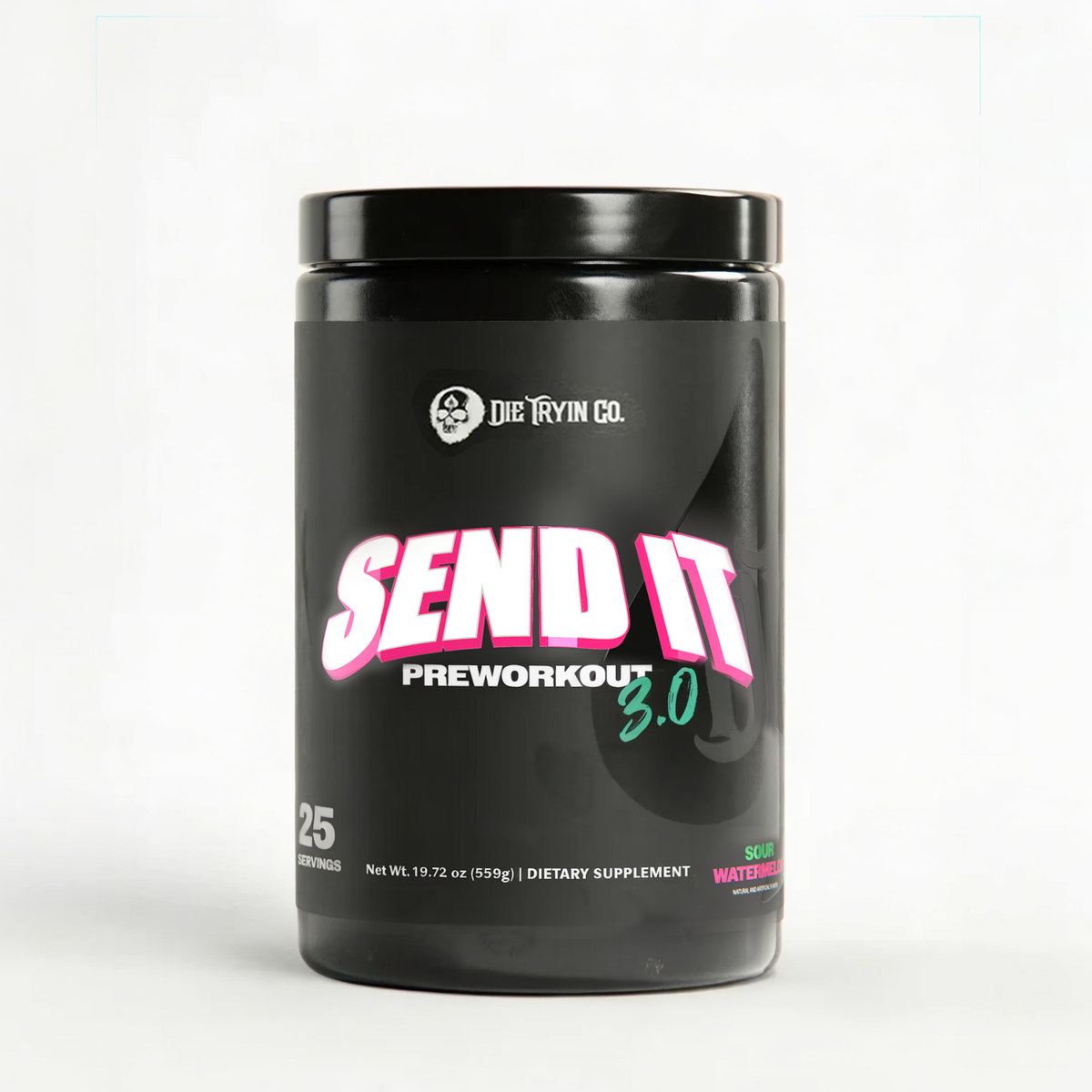
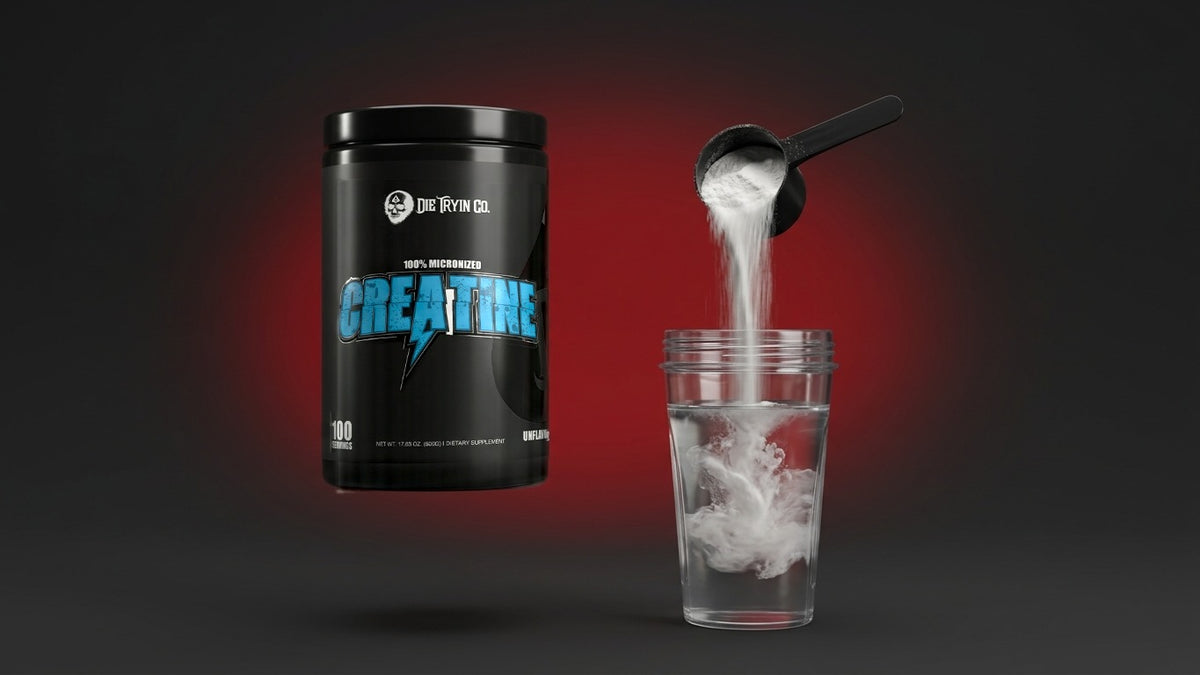
Two supplements actually move the needle on bench performance. Creatine monohydrate is the most-researched performance supplement on the market — 5g daily, taken any time, reliably increases strength output over 4–8 weeks. Take it. The second is a pre-workout. Project M777 for heavy bench days when you need every advantage, or our SEND IT 3.0 daily driver for standard sessions.
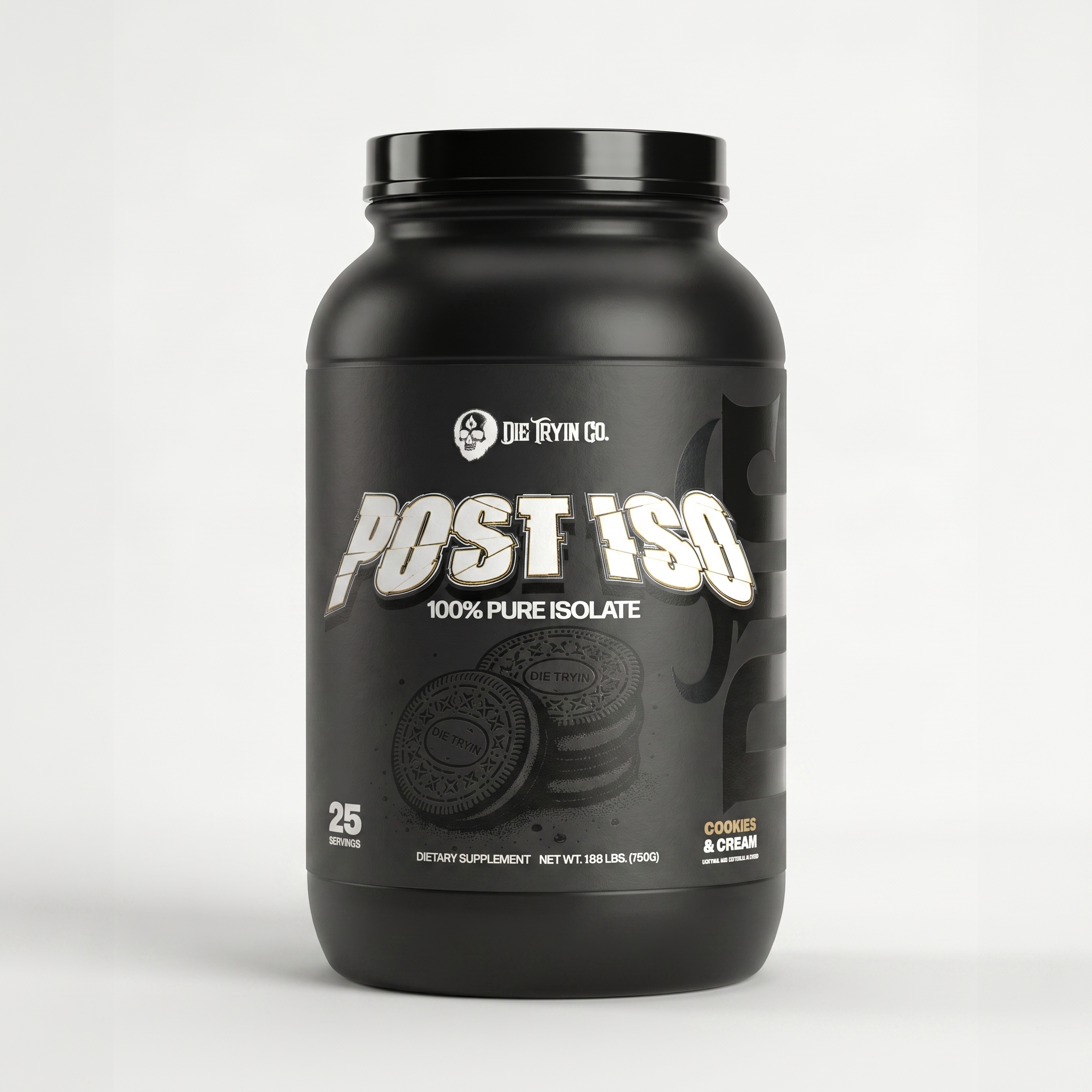
Post-workout, hit your protein number. Post Iso whey isolate drops 24g of fast-digesting protein into your system within 30 minutes of training — the easiest way to make sure you're hitting your daily target on a busy day.
FREQUENTLY ASKED QUESTIONS
How often should I bench press to increase my 1RM?
Two times per week is the sweet spot for most lifters. One heavy day (sets of 3–5 reps), one volume day (sets of 8–10). Once a week works if you can hit it hard. More than twice a week typically just adds fatigue without proportional strength gains.
How long does it take to add 50 pounds to your bench?
For an intermediate lifter (currently benching 1.25–1.5x bodyweight), adding 50 pounds typically takes 6–18 months with consistent programming. Beginners can do it faster — sometimes 3–6 months — because of the early neural adaptation curve. Advanced lifters often need a year or more for 50 pounds.
Should I use a spotter for max attempts?
Always, for any attempt above 90% of your 1RM. A spotter isn't there to help you lift the weight — they're there to keep you from getting crushed when you miss. If no spotter is available, use safety bars set just below your chest depth. Don't bench heavy alone.
Does grip width really matter for bench press strength?
Yes. Wider grip shortens the range of motion (slightly stronger lockout, slightly weaker off the chest) and biases the chest. Narrower grip lengthens the range and biases the triceps. For pure bodybuilding chest development, go just outside shoulder width. For maximum 1RM, slightly wider often wins.
Why does my bench stop going up?
Three usual culprits: too much volume with too little recovery, a technique flaw that compounds at higher loads, or a weak link (usually triceps or upper back) that the bench has outgrown. Diagnose by deloading for a week and watching where the bar slows down on your next heavy set — that's where the weakness is.
READY TO GEAR UP?
The bench goes up when programming, recovery, and effort align. Stack the supplements that support all three: Creatine for strength, Project M777 or SEND IT 3.0 for the push, Post Iso for recovery. Not sure where to start? Take the quiz and we'll match a stack to your goals. For the complete hypertrophy and strength framework, work through the muscle-building guide.
ALWAYS FORWARD.
GEAR THAT FITS THIS POST
The products this article actually talks about. Real doses, disclosed labels, veteran owned.


Read more
There's no perfect split — only the one you'll stick to. PPL vs. upper/lower broken down, plus how to choose the best workout split for your week.

The 7 chest exercises Garrett Ussery uses to build mass on himself and his clients — upper, middle, and lower pec coverage, plus how to program a chest day.

Your triceps are two-thirds of your arm. Here are the 7 best tricep exercises to hit all three heads — and how to program them for size.

The complete playbook for building muscle that actually lasts. Training, nutrition, recovery, and the supplements that move the needle — no hype.
Your gut lining runs the same creatine energy system as your muscles. Here is what the research shows on stomach upset, IBS, colitis and leaky gut, and exactly where the human evidence stops.

Creatine gummies can work if the creatine is actually in them, and lab tests keep finding it often is not. Here is why a scoop of Creatine Monohydrate powder still wins.