




Does Stress Wreck Your Gains? Cortisol and Muscle
By Jon Klipstein, U.S. Army Combat Veteran & Founder of Die Tryin Co.
Science reviewed by Onur Oncer, BS Physiology and peer-reviewed published researcher. Full disclosure: Onur founded and formulated Shroombiosis, one of the products recommended below.
STRESS IS A TRAINING VARIABLE, NOT A FEELING
Listen up. Most lifters treat stress as a mood problem. Something you push through, complain about, then forget once the music comes on. That framing is exactly why people stall out holding a good program and a clean diet.
Stress is not separate from your training. It lands in the same recovery budget your sets do. Your body does not keep one account for a deadline, one for a deployment and one for a heavy squat session. It keeps one. When life spends it, the barbell gets whatever is left over.
Here is the honest version. The research on this is real but narrow. A handful of solid human studies show that people carrying heavy life stress adapt worse and recover slower on the exact same training. That is enough to act on. It is not enough to blame every bad month on cortisol.
| WHAT YOU'RE SEEING | WHAT IT USUALLY MEANS | FIRST MOVE |
|---|---|---|
| Lifts flat, life calm | Programming problem, not a stress problem | Audit your volume |
| Soreness lasting 3-4 days | Your recovery window has stretched | Rebuild the recovery base |
| Strength dropping week over week | Accumulated fatigue, gym or life | Take the deload |
| Tired but wired at night | Sleep is the broken link | Fix sleep first |
| All of the above at once | You are past the sweet spot | Check for overtraining |
WHAT THE RESEARCH ACTUALLY SHOWS
The cleanest study on this question followed 135 university students through 12 weeks of supervised weight training, twice per week. Everyone trained. The meaningful difference was what was happening outside the gym. Participants scoring low on stressful negative life events gained significantly more on both the bench press and the squat than the high-stress half of the group (Bartholomew et al., J Strength Cond Res, 2008).
Same program. Same twelve weeks. Different results, sorted by life. That is about as direct an answer as the literature gives us on whether stress affects muscle growth. The null finding matters too: in that same study, social support scores had no relationship to strength gains in either group. Having people around you did not rescue the high-stress lifters.
A separate group of 31 resistance-trained undergraduates was tracked for 96 hours after a punishing leg press protocol. Higher life stress and higher perceived stress both predicted a slower return of maximal isometric force, and the relationship held after adjusting for fitness, workload and training experience (Stults-Kolehmainen et al., J Strength Cond Res, 2014). The picture was not uniform, though. Life-event stress also tracked with worse energy, fatigue and soreness scores, while perceived stress moved force and energy but not fatigue or soreness.
Thirty-one people is a small sample, and they were college students, not shift workers or parents of three. Take the direction seriously. Take the precision loosely. Anyone quoting you an exact percentage of gains lost to stress is making it up.
WHY THE RECOVERY WINDOW STRETCHES
Cortisol is not the cartoon villain the supplement aisle sells. It is a survival hormone. It mobilizes fuel, sharpens you up, and spikes every time you train hard, which is exactly what should happen. The problem is not that cortisol exists. It is what happens when the signal never switches off.
Chronically elevated cortisol tilts the body toward breaking tissue down for fuel and away from building it. Stack the second-order effects on top and the picture gets clear fast.
- Sleep takes the first hit. In a controlled sleep-lab study of healthy young men, Leproult and colleagues (Sleep, 1997) found that one night of partial or total sleep deprivation raised the following evening's cortisol by 37% and 45% respectively. Small study, one night, tightly controlled conditions. But it shows how fast the loop closes.
- Then bad sleep feeds the stress. Which raises cortisol. Which wrecks sleep again. That loop is what most people are actually stuck in, not some exotic gland failure.
- Training quality drops before volume does. Same sets on paper, less output per set. You are still running the program while the stimulus quietly shrinks underneath you.
- The recovery bill goes unpaid. Soreness lingers, warm-ups take longer, and top sets feel heavier than the number on the bar says they should.
None of that is an argument against hard training. Hard training is a stressor you control, dose, and recover from on purpose. If you want the day-to-day mechanism breakdown and how to bring the hormone back into range, we handle that separately in balancing cortisol.
RUN THE STRESS AUDIT BEFORE YOU CHANGE THE PROGRAM
Most people answer a stall by adding. More volume, more intensity, more stimulants. If life stress is the real bottleneck, adding makes it worse. Audit first. Be honest with the answers.
- Sleep count. How many of the last 14 nights were under six hours? More than four is a red flag.
- Load outside the gym. New job, new baby, money pressure, caregiving, deployment cycle, legal trouble. Score each one light, medium or heavy.
- Appetite. Eating noticeably less without meaning to, or far more without noticing? Both are stress readouts.
- Warm-up feel. Does 60% feel like 80% on your main lifts? That is a free fatigue check every single session.
- Drive. Skipping sessions you used to look forward to, or showing up and producing nothing?
- Days to normal. Track how long after a hard session you feel like yourself. If it went from two days to four, your budget changed.
Two or more heavy scores means you are training on a smaller recovery budget than your program assumes. That is not weakness. That is data.
WHAT TO CHANGE WHEN LIFE GETS LOUD
The goal during a high-stress stretch is not to train harder to prove something to yourself. It is to keep the training stimulus while cutting the recovery cost. Those are two separate dials, and most lifters only know how to turn one.
- Cut sets, keep the load. Drop total working sets 20-40% and hold your top-end intensity. You keep the strength signal at a fraction of the fatigue.
- Stop taking every set to failure. Leaving one to two reps in reserve keeps most of the growth stimulus at a much lower recovery cost. Full breakdown in training to failure.
- Deload early, not late. A planned light week beats a forced three-week layoff.
- Protect the meal you always skip. Under stress the first casualty is usually protein at breakfast or straight after training.
- Move the loud sessions. If Wednesday is your worst life day, do not put your heaviest lower body work there.
- Drink the water. Dehydration is one more physiological stressor stacked on the pile you already carry. Details in why hydration matters.
WHERE SUPPLEMENTS HONESTLY FIT
This is where most brands lie to you, so we will not. No powder outranks sleep, food, and a program you can actually recover from. A supplement removes friction and covers one specific gap.
The most-studied compound in this space is ashwagandha. A 2025 systematic review and meta-analysis pooled seven randomized controlled trials for cortisol and six for perceived stress, 488 participants in total, and found a statistically significant reduction in cortisol of 1.16 µg/dL versus control, with moderate heterogeneity between studies and a generally moderate risk of bias. In that same analysis there was no significant effect on how stressed people reported feeling on the Perceived Stress Scale (Albalawi, Nutrition and Health, 2025). Research suggests it moves the marker. It did not reliably move the experience. That gap is the whole story.
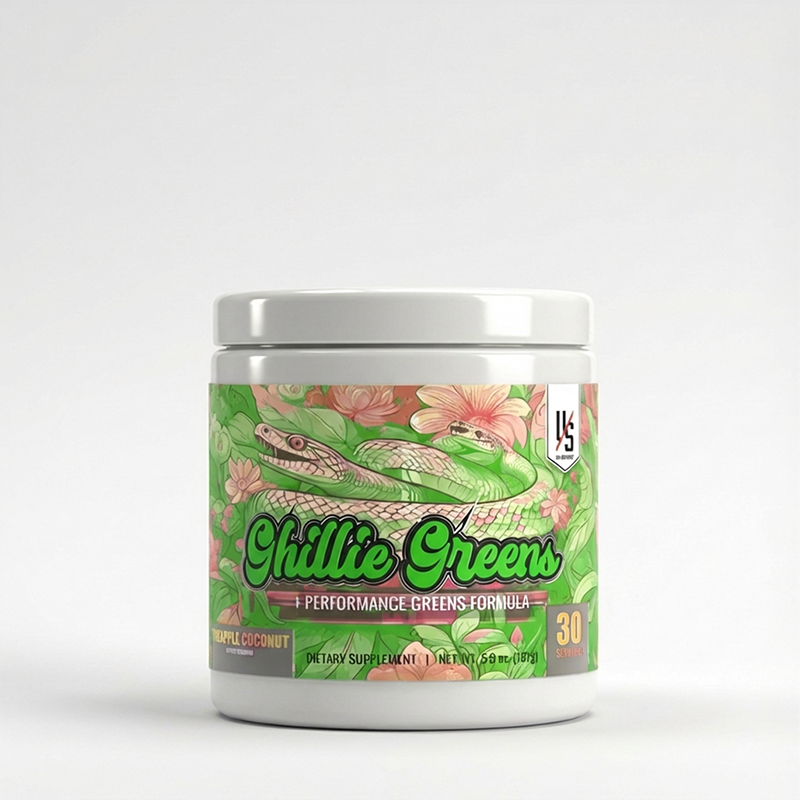
So set your expectations there. Our Ghillie Greens carries KSM-66 ashwagandha alongside real greens, and it belongs in a stress-heavy stretch as a daily habit anchor, not as a rescue. The rest of the honest list:
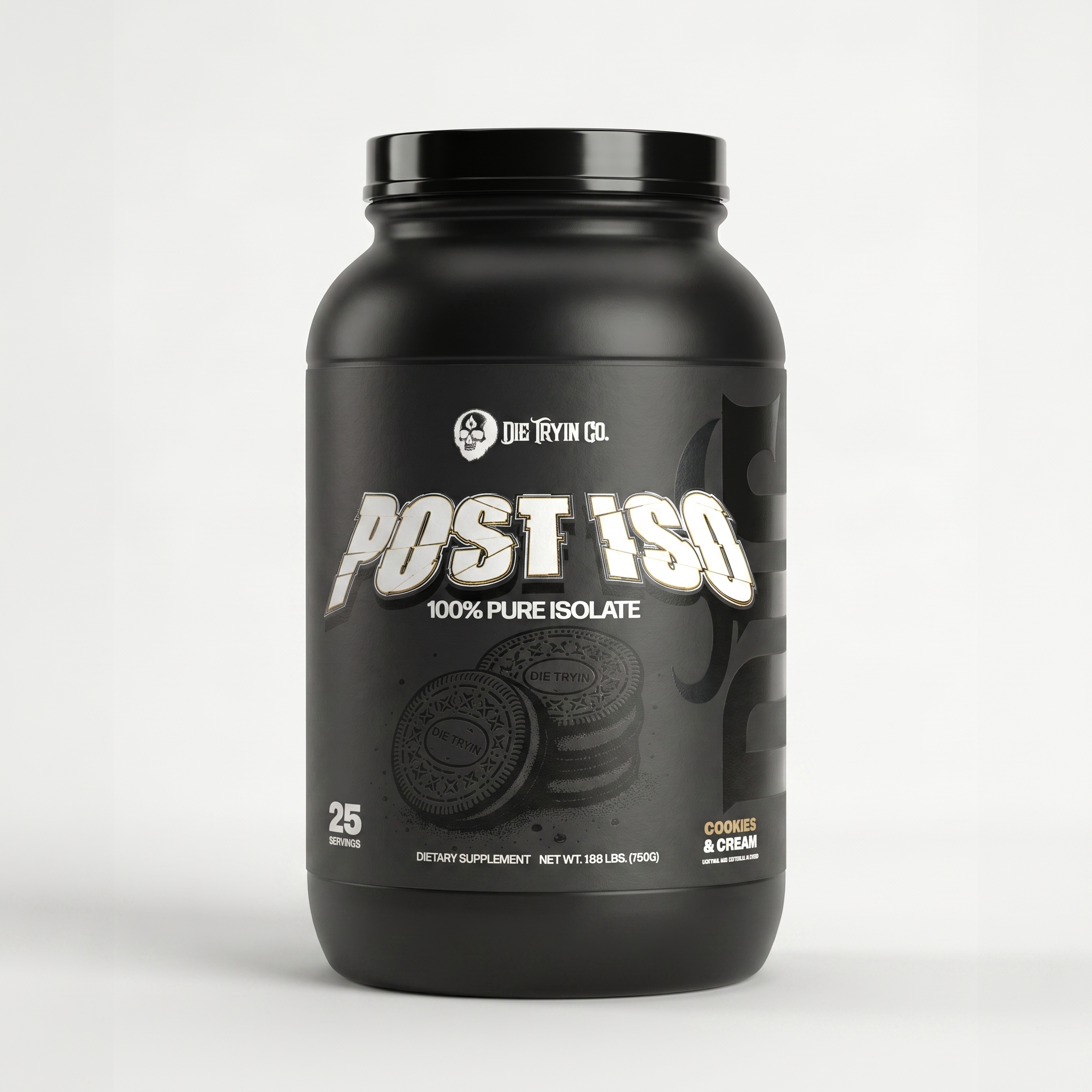
- Protein you will actually consume. Stress makes appetite weird and solid meals get skipped. Post Iso is 24g of whey isolate and 30 seconds of effort.
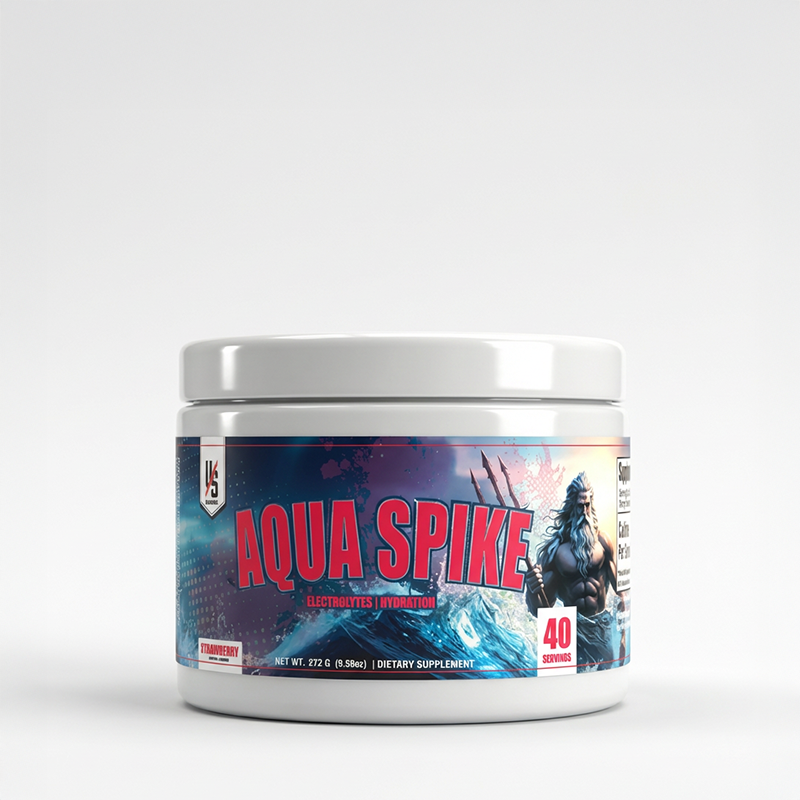
- Electrolytes on hot, long, or badly-slept days. Aqua Spike turns hydration into something you do instead of something you intend to do.
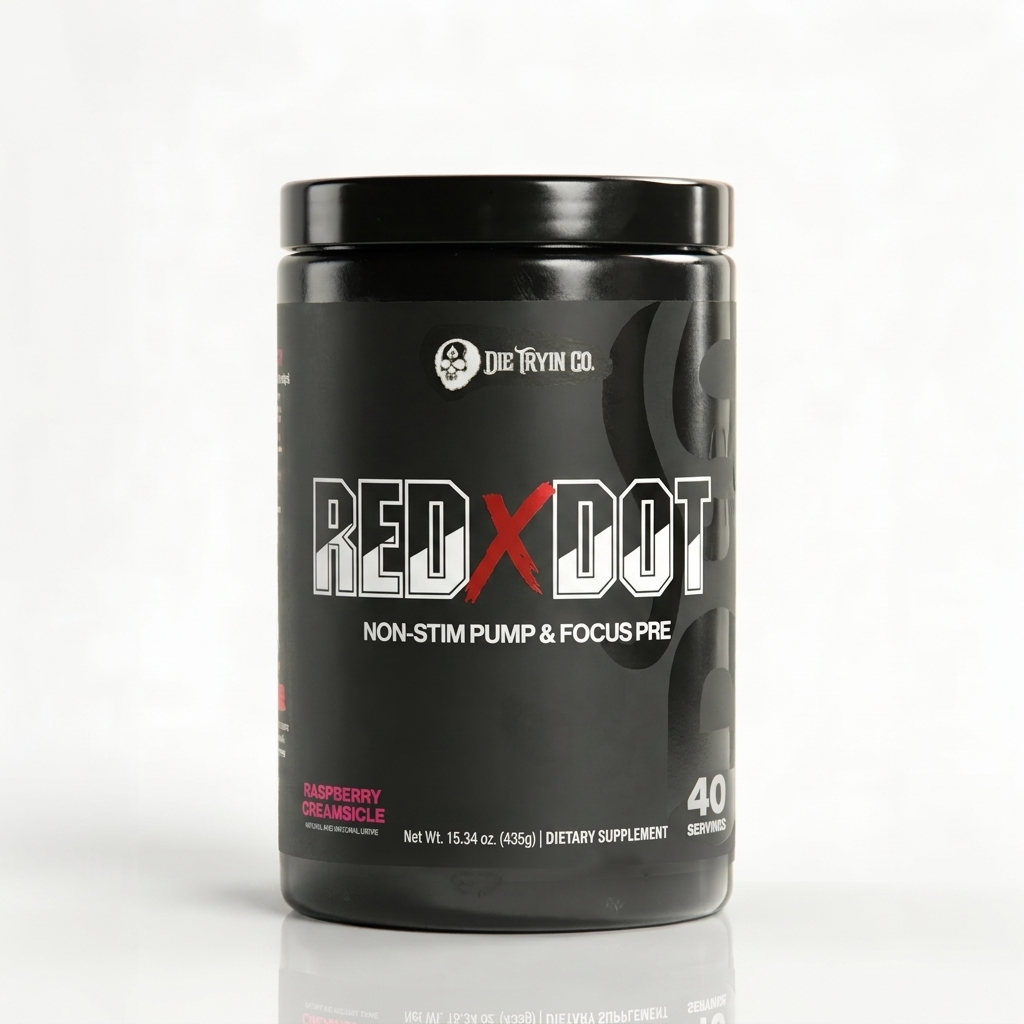
- Go stim-free when sleep is already broken. Slamming heavy caffeine on four hours of sleep buys energy you have to repay that night. Red Dot gives you pump and focus with zero caffeine.
- Cover the boring bases. Daily Essentials for the micronutrient floor, Collagen if connective tissue is the thing that keeps flaring up.
- Protect one routine that does not need a decision. Shroombiosis is a morning cocoa, so it survives the weeks when the rest of the routine slips. Set expectations there: the only human stress trial on any mushroom in it ran 41 adults on 1.8 g of lion's mane for 28 days, nearly double the 1 g in a scoop, and the stress result missed significance. A habit, not a cortisol tool.
WHAT DOESN'T WORK
Stacking more stimulants onto a fried nervous system is the most common mistake we see. It feels like a solution for about ninety minutes. Then it costs you sleep, and sleep was the lever that was actually broken.
- Chasing a single cortisol number. One blood or saliva reading swings wildly by time of day and tells you almost nothing on its own.
- "Adrenal fatigue" protocols. The label is not a recognized diagnosis, and the expensive programs built on it sell certainty nobody has.
- Training through it to prove toughness. Toughness is showing up for twelve months straight. Anybody can wreck themselves for two weeks.
- Slashing carbs hard during a high-stress block. Aggressive restriction on top of heavy life load is stacking stressors, not solving them.
The move is not to eliminate stress. You cannot. The move is knowing what your recovery budget actually is this month and programming inside it. Recovery is the part nobody posts about, and it decides who is still progressing a year from now.
FAQ
Does stress actually stop muscle growth, or does it just feel that way?
Both, but the effect is moderate rather than total. Across 12 weeks in 135 trainees on an identical program, the low-stress group gained significantly more bench press and squat strength than the high-stress group. Stress blunted the rate of progress. It did not erase it.
How long does recovery take from a hard session under high stress?
Longer than you expect. In the 96-hour tracking study of 31 lifters, higher stress predicted a slower return of maximal force across the full four days. If soreness and output used to normalize in 48 hours and now take four days, build your week around the four.
Should I stop training when life gets heavy?
No. Training is one of the few stressors you fully control, and quitting usually makes mood and sleep worse. Cut volume, hold intensity, protect the sessions you enjoy. Reduce the dose. Do not abandon the habit.
Is ashwagandha worth taking for stress?
Research suggests it lowers measured cortisol. The pooled 2025 meta-analysis found a significant drop in cortisol but no significant change in self-reported stress. Take it as a small edge on a solid base, never as the plan itself.
Can I just take more pre-workout to push through a stressed week?
Once or twice, sure. Doing it daily borrows against sleep, and lost sleep raises next-evening cortisol, which is the thing you were trying to fix. On short-sleep days, go stim-free.
How do I tell life stress apart from overtraining?
They overlap and usually travel together. If training load has been stable and life just got heavier, treat it as life stress. If you have been adding volume for weeks, treat it as accumulated training fatigue and deload. Either way the first move is identical: lower total load, then rebuild.
READY TO GEAR UP?
Stress is a variable you manage, not an excuse you cash in. Build the base, then let the gear do its job.
- Ghillie Greens — real greens with KSM-66 ashwagandha and AstraGin
- Post Iso — 24g whey isolate for the meals stress makes you skip
- Red Dot — stim-free pump and focus for short-sleep days
- Aqua Spike — hydration and electrolytes without the guesswork
- Daily Essentials — chelated multi plus gut support for the boring foundation
- Take the quiz — build the stack around the week you actually have
Real doses of real ingredients. Discipline beats motivation, and consistency beats intensity, especially in the months that come for both.
ALWAYS FORWARD.
GEAR THAT FITS THIS POST
The products this article actually talks about. Real doses, disclosed labels, veteran owned.
Read more
More is not better, it is just more. Here is where the returns actually flatten out, and how to train at the edge of enough.
The no-BS recovery playbook — sleep, stress, nutrition, modalities, and the framework that ties it all together. Recovery is where growth actually happens.
Recovery is the other half of adaptation. The signals you need a deload, and exactly how to run one without losing progress.

Short sleep does not necessarily stall your weight loss. It changes what you lose, and the scale will not warn you it is happening.
Most lifters asking if they're overtraining are actually overreaching, and there are two kinds. Here's how to tell which one you're in, and what to do about it.
Chronic high cortisol breaks sleep, drives belly fat, and tanks recovery. The honest physiology + evidence-based strategies to normalize HPA axis function.