

How to Grow Thicker Legs: Quads and Hamstrings
By Jon Klipstein, U.S. Army Combat Veteran & Founder of Die Tryin Co.
Science reviewed by Onur Oncer, BS Physiology and peer-reviewed published researcher.
THICK LEGS ARE A COVERAGE PROBLEM, NOT AN EFFORT PROBLEM
Listen up. Most lifters who cannot grow legs are not lazy. They squat until they see stars, they limp for three days, and the tape measure does not move an inch in six months. Effort was never the missing piece.
The problem is coverage. Your quads and hamstrings are two groups doing four separate jobs across two joints, and no single heroic lift covers all four. Miss a job and you get the classic look: front of the thigh doing all the work, hamstrings flat from the side, thick in the mirror and thin in a photo.
Here is the coverage map. Four jobs, the research behind loading each one, and a leg day that hits all four without you living in the squat rack.
| THE JOB | WHAT IT ACTUALLY BUILDS | GO-TO MOVEMENTS | HARD SETS / WEEK |
|---|---|---|---|
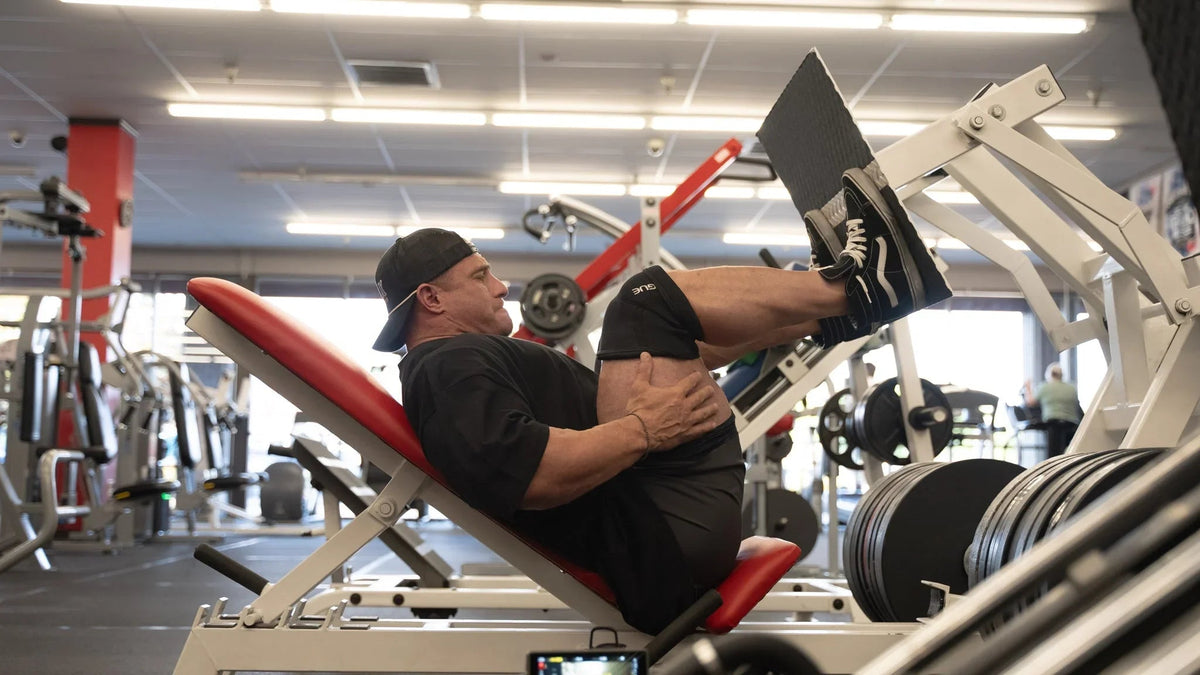
| 1. Deep knee bend under load | Vastus muscles, glutes, adductors | Back squat, front squat, hack squat, deep leg press (see the leg day workout) | 6–10 |
| 2. Knee extension, hip neutral | Rectus femoris, the one your squat keeps missing | Leg extension, sissy squat, upright-torso split squat | 3–6 |
| 3. Hip hinge under stretch | Biceps femoris long head, semitendinosus, glutes | Romanian deadlift, 45-degree back extension, good morning | 5–9 |
| 4. Knee flexion (the curl) | Hamstrings at the knee, short head included | Leg curl, Nordic curl | 4–8 |
JOB ONE: LOAD THE QUAD DEEP, NOT JUST HEAVY
Depth is the cheapest upgrade in leg training, and it does not cost you an extra set. A 2019 trial in the European Journal of Applied Physiology put 17 men through 10 weeks of squatting twice a week, full depth or half depth, with muscle volume measured by MRI. Knee extensor volume rose in both groups, 4.9% full and 4.6% half. Depth pulled away everywhere else: adductors up 6.2% versus 2.7%, glute max up 6.7% versus 2.2%, the only two sites where the gap between groups reached statistical significance.
Read that honestly. The groups were tiny, 8 and 9 lifters on a squat-only program, and depth was not a quad hack. What depth bought was the rest of the leg. Adductors and glutes are a huge slice of the thickness you see from the front and the back, and half squats left both behind. If your glutes are the part lagging, deficit reverse lunges load them deep in the stretch, one leg at a time.
The stretched position matters too. A 2023 systematic review of 11 range-of-motion studies in the Journal of Strength and Conditioning Research found full range and partials in the lengthened part of the range beat partials in the shortened part for rectus femoris and vastus lateralis, with between-group effect sizes from 0.20 to 0.90. It is a review rather than a single controlled trial, and the findings were muscle-specific rather than a universal law. The direction is clear: own the bottom, control the descent, stop cutting depth to add plates. Warm the hips and ankles first so you can get there, which is what a real warm-up is for.
JOB TWO: THE MUSCLE YOUR SQUAT KEEPS MISSING
The rectus femoris runs down the center of your thigh and crosses two joints, the hip and the knee. When you squat, the hip flexes while the knee extends, so the muscle never gets a clean stretch-and-shorten cycle. That is not theory. In that same 10-week squat study, rectus femoris volume did not change in either group.
That is the muscle sitting front and center on your quad, and squat-only leg training leaves it on the table. Fix it with movements that extend the knee while the hip stays neutral or extended: leg extensions through a full range, sissy squats, split squats with an upright torso. That same review cuts against itself here. It also found lengthened partials edging out full range at the upper end of the rectus femoris (effect sizes 0.35 to 0.38), so range of motion is a muscle-by-muscle question, not a slogan. Two or three sets is enough, and it is a spot where intensity techniques earn their keep, since the load is light and joint stress is low. Strip sets work well on the last one.
JOB THREE: THE HAMSTRING HIP JOB
Hamstrings cross two joints as well, and they need loading at both. The hip end is where most of the visible thickness lives. A randomized trial in the British Journal of Sports Medicine put 30 recreationally active men through 10 weeks of hip extension training, Nordic hamstring curls, or nothing, with MRI before and after. Biceps femoris long head volume increased more in the hip extension group than the Nordic group (d = 1.03, p = 0.037). Both exercises grew the semitendinosus significantly versus no training, with no meaningful edge either way (d = 0.69, p = 0.239).
The caveats are real: 10 lifters per group, all male, and the study was built around hamstring injury research rather than bodybuilding. The practical read still holds. If you want the long head of the biceps femoris, the muscle that gives a hamstring its sweep, you need hip extension under a stretch.
Romanian deadlifts are the anchor. Soft knees, hips back, bar dragging the thighs, and you stop the descent the moment your lower back rounds instead of chasing the floor. The 45-degree back extension is the underrated partner, loaded with a plate at the chest. Whether the back squat itself does anything meaningful for hamstring size is a separate argument, and it gets its own post.
JOB FOUR: THE HAMSTRING KNEE JOB
Curls are not optional, and they are not just a finisher. In that same trial, the Nordic curl, pure knee flexion with zero hip movement, grew the semitendinosus just as well as hip extension did. Different jobs, different regions of the same muscle group. Hinging alone leaves part of the hamstring undertrained, and curling alone leaves the long head short.
So run both. One hinge, one curl, every leg session. Which curl variation you pick, and what hip angle does to the stretch, is a conversation with its own post. Here, all that matters is that a curl is on the sheet and you take it through a full range instead of bouncing the stack.
VOLUME, PROGRESSION, AND THE PART EVERYONE SKIPS
Coverage tells you what to train. Volume and progression decide whether it grows. Roughly ten to twenty hard sets per week per muscle group is where most lifters land, and the table above keeps you in the lower half of that on purpose, split across two sessions rather than one death march. Be honest about that number: the research on exact set counts is noisy, and past a point more sets buy fatigue instead of muscle. The training sweet spot post digs into finding your own ceiling.
Progression is the non-negotiable part. Log every set. Add a rep before you add a plate, and add the plate only when the top of the rep range feels controlled. Take your working sets close to failure but not through the floor on every compound, which is the point of treating failure as a tool rather than a standard. And when your squat stalls for three straight weeks and your knees ache walking downstairs, that is not a signal to add volume. That is a signal to deload. Consistency beats intensity.
THE LEG DAY THAT COVERS ALL FOUR JOBS
Two sessions a week, roughly 72 hours apart. Session A leads with the deep knee bend, Session B leads with the hinge, so neither job is permanently stuck at the back of the workout.
- SESSION A
- Barbell back squat, 4 x 5–8, full depth, 3-second descent (Job 1)
- Romanian deadlift, 3 x 8–10, stop at the bottom of your hinge, not the floor (Job 3)
- Walking lunge or Bulgarian split squat, 3 x 10 per leg (Jobs 1 and 2)
- Lying leg curl, 3 x 10–15, controlled negative (Job 4)
- Leg extension, 2 x 12–15, last set a strip set (Job 2)
- Standing calf raise, 4 x 12–15, full pause at the stretch
- SESSION B
- 45-degree back extension, weighted, 4 x 10–12 (Job 3)
- Hack squat or deep leg press, 4 x 8–12, knees tracking over toes (Job 1)
- Seated or Nordic curl, 3 x 8–12 (Job 4)
- Sissy squat or upright split squat, 3 x 10–12 (Job 2)
- Seated calf raise, 4 x 15–20, no bouncing out of the bottom
FUEL AND RECOVERY FOR LEG DAY
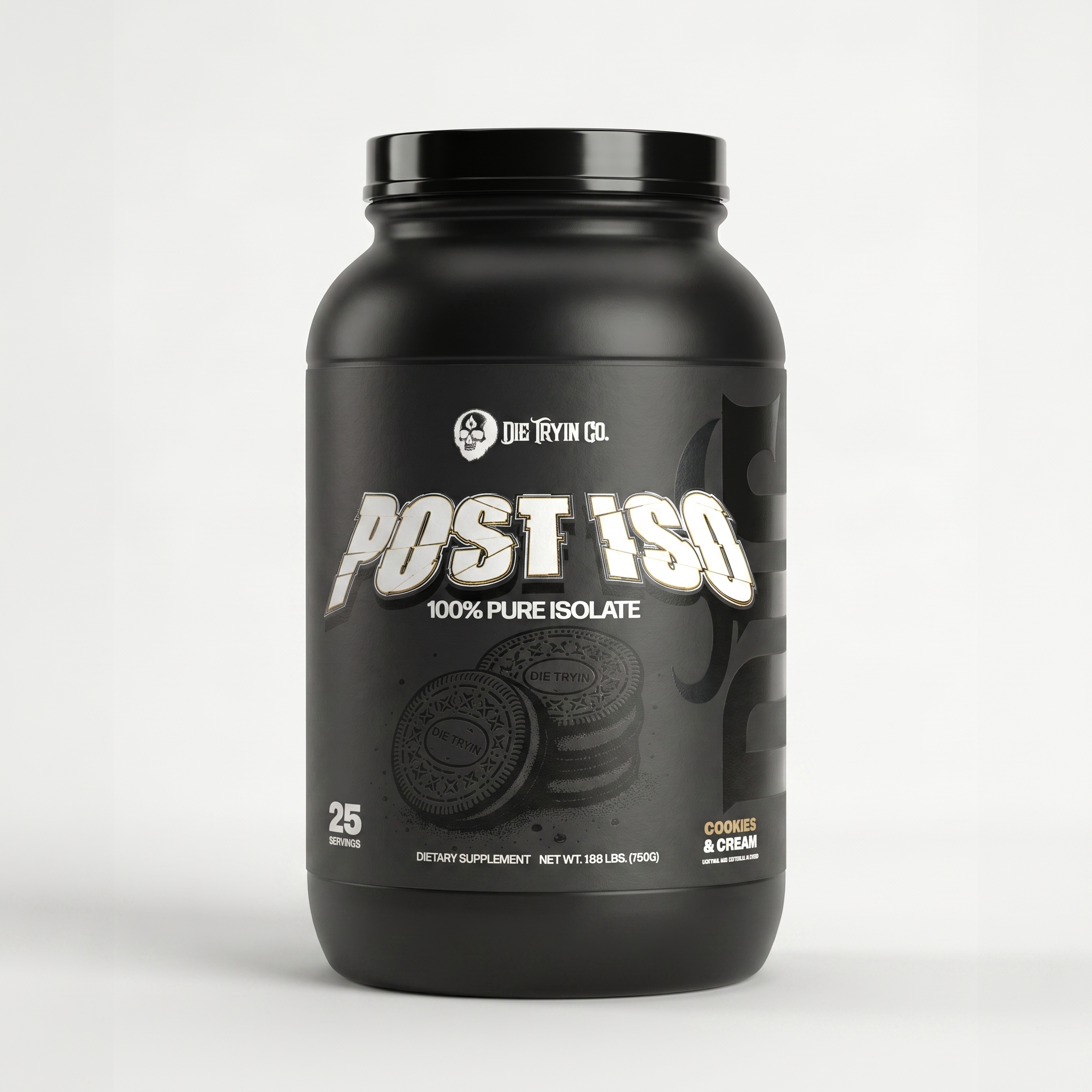
Legs are the biggest muscle group you own, so they cost the most to recover. Protein comes first, every day, not just training days, and the protein breakdown covers the numbers. Post Iso gives you 24g of whey isolate when a real meal is not happening after a session that wrecked you.
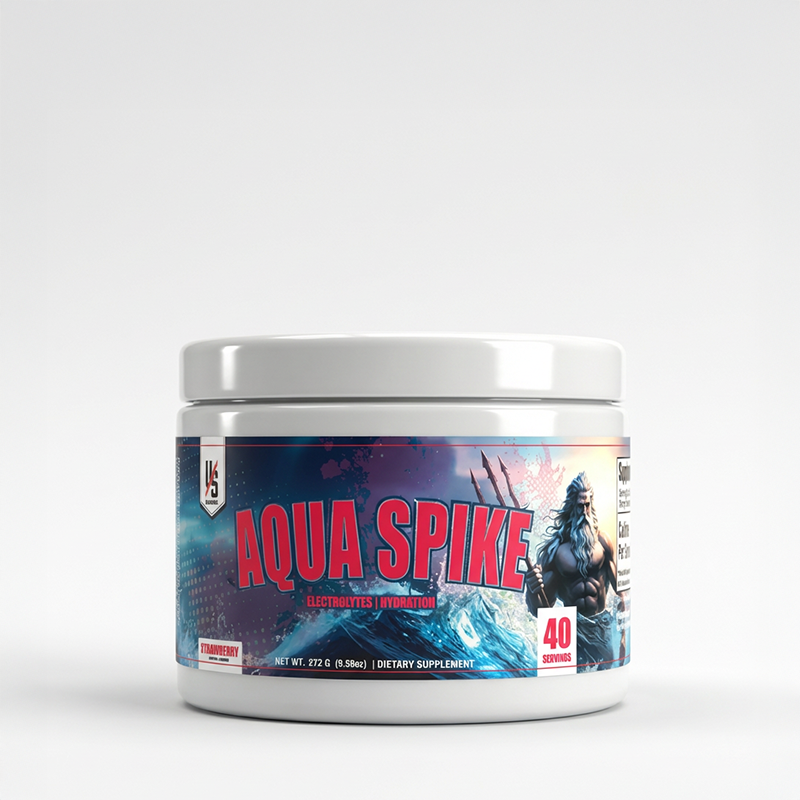
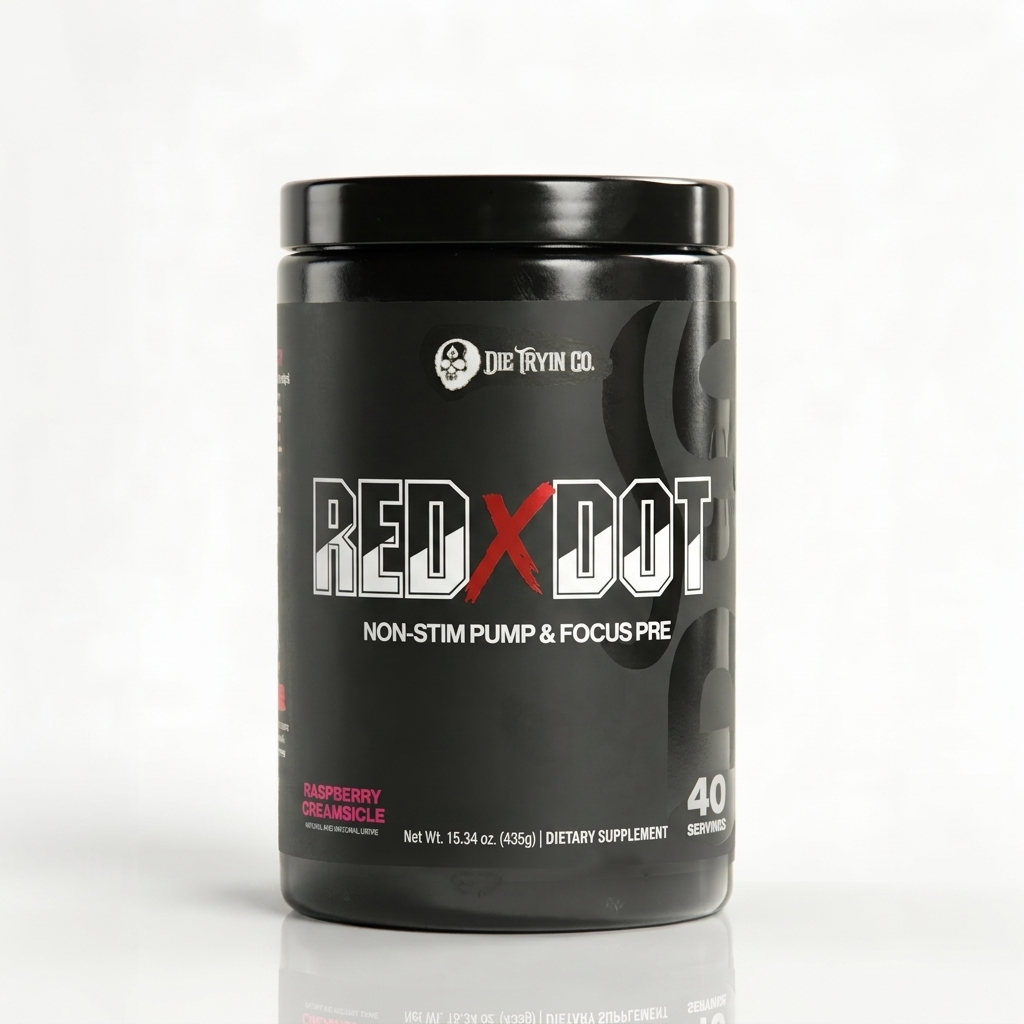
Creatine Monohydrate is the most researched training supplement on the shelf, and 5g daily is how you hold saturation. Not before, not after. Daily. Sleep, hydration, and blood flow do the rest, which is why Aqua Spike lives in the gym bag on high-volume days and why moving blood through the tissue beats sitting still while you are sore. If leg day lands late, Red Dot gives you 9,000mg of L-Citrulline and 4,000mg of L-Tyrosine with zero caffeine, so you get the pump and the focus without trading away the sleep that grows the legs. Basics beat hype.
FREQUENTLY ASKED QUESTIONS
How long does it take to grow bigger quads and hamstrings?
The trials above ran 10 weeks and produced roughly 5% to 7% increases in muscle volume, in small groups of 8 to 10 men per condition. That is measurable on an MRI, not obvious in a mirror. Plan in blocks of 12 to 16 weeks and judge with a tape measure.
Do I have to squat to build thicker legs?
No, but you have to do the job the squat does. A deep knee bend under real load can come from a hack squat, a front squat, or a leg press taken through a full range. What you cannot do is skip the pattern entirely and expect the leg extension to fill the gap.
How many times a week should I train legs?
Twice, for most people. It splits your weekly sets into sessions you can actually recover from and gives each of the four jobs a real slot instead of a leftover at the end of a 90-minute grind.
Why do my quads grow but my hamstrings stay flat?
Because most leg days are three quad movements and one curl tacked on when the tank is empty. Hamstrings need a hip job and a knee job, both with their own sets, both progressed on paper. Lead a session with the hinge and see what changes in eight weeks.
Should I train to failure on leg day?
Push the isolation work close to it. Leave a rep or two in reserve on heavy squats and Romanian deadlifts, where form breaks down before the muscle does and the recovery cost is highest.
Will supplements make my legs grow?
No supplement replaces coverage, volume, and progression. Creatine Monohydrate and daily protein have the strongest research behind them, and research suggests they help by letting you train harder and recover faster, not by growing muscle on their own. If you are pregnant, managing a medical condition or taking medication, clear any supplement with your doctor first.
READY TO GEAR UP?
Build the leg day. Cover all four jobs. Then recover from it.
- Creatine Monohydrate – 5g micronized, daily, no loading games
- Post Iso – 24g whey isolate with DigeZyme enzymes
- Red Dot – stim-free pump and focus for late leg sessions
- Aqua Spike – electrolytes for high-volume days
- Straight Leg Joggers – because eventually the quads stop fitting in regular pants
- Not sure where to start? Take the quiz or read the Ultimate Guide to Muscle Building
ALWAYS FORWARD.
GEAR THAT FITS THIS POST
The products this article actually talks about. Real doses, disclosed labels, veteran owned.

Read more
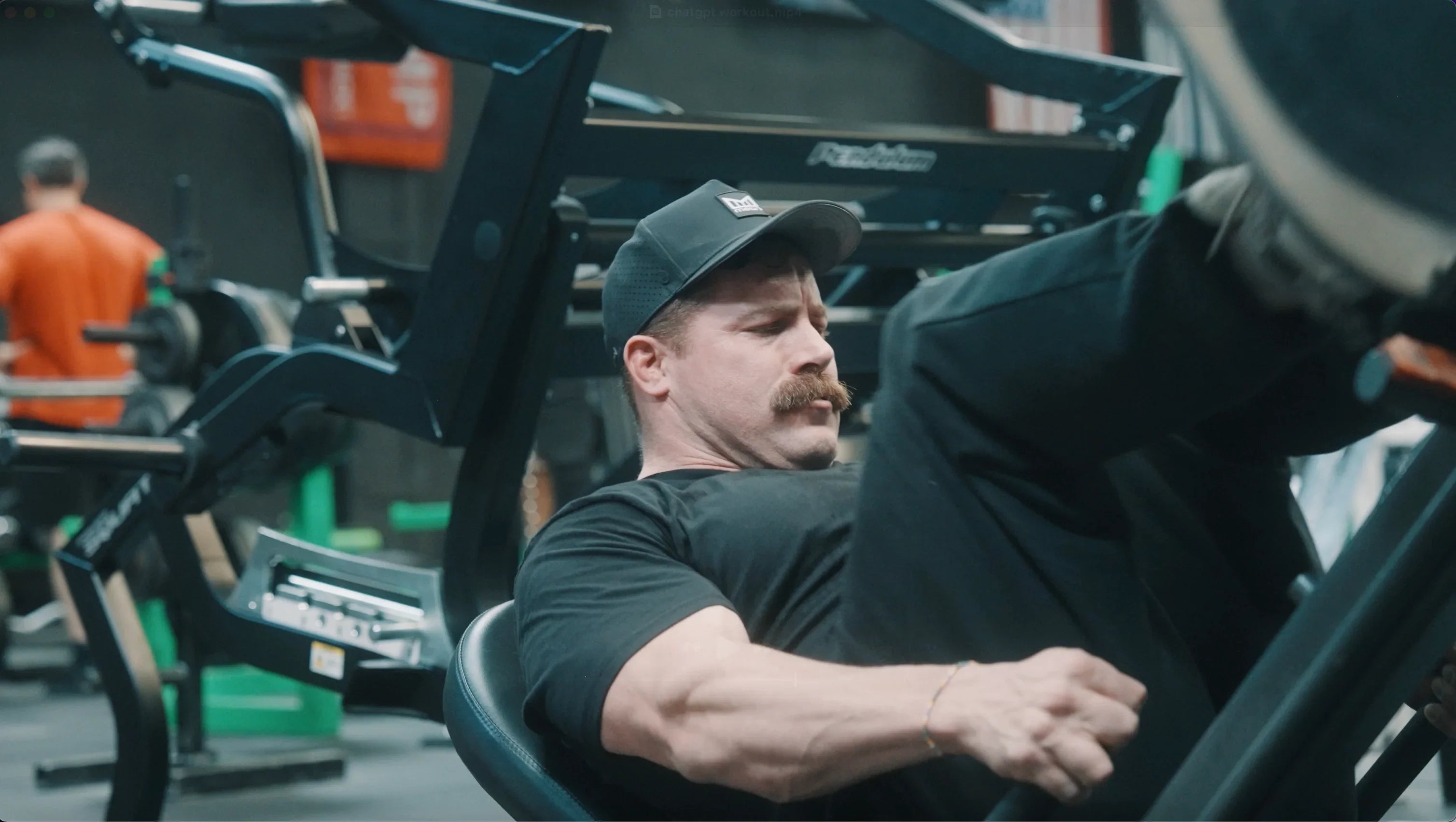
The best leg exercises that actually build wheels — 8 moves for quads, hamstrings, glutes, and calves, plus a complete leg-day plan.
Five minutes on a treadmill is not a warm-up. Here is the four-phase ramp that actually preps you to lift heavy, plus what the research says about foam rolling and static stretching.
Strip sets buy you time, not extra growth. The research is clearer than the gym-floor mythology suggests.
More is not better, it is just more. Here is where the returns actually flatten out, and how to train at the edge of enough.
Training to failure is a tool, not a default. Here is what the research actually says for size and for strength, what the fatigue costs you, and the exact spots where taking a set to the wall earns...
Recovery is the other half of adaptation. The signals you need a deload, and exactly how to run one without losing progress.