


Lifting and Cardio for Fat Loss: How to Combine Them
By Jon Klipstein, U.S. Army Combat Veteran & Founder of Die Tryin Co.
Science reviewed by Onur Oncer, BS Physiology and peer-reviewed published researcher.
THE EFFICIENCY IS IN THE WEEK, NOT THE WORKOUT
Listen up. Most people hunting for "more efficient fat loss" are shopping on the wrong shelf. They want a better session. A nastier finisher, a spicier interval protocol, a machine that promises a bigger number on the display.
Efficiency is not a property of a session. It is a property of a schedule. The question that decides your result is not which exercise burns the most in forty minutes. It is whether what you did Tuesday left you capable of doing the thing on Thursday that actually protects your muscle while you are eating less.
Get that wrong and you spend eight weeks manufacturing fatigue instead of adaptation, watching the scale drop while your lifts and your shape go backward with it. Get it right and the same hours build somebody who looks like they train. Here is how the week gets built.
| SESSION TYPE | THE JOB IT DOES | WHERE IT GOES |
|---|---|---|
| Heavy lifting (3-4x/week) | Defends the muscle so the deficit spends fat instead of tissue | Your freshest days. Never behind hard conditioning. Why lifting leads a cut |
| Low-impact conditioning (bike, row, sled, incline walk) | Adds expenditure and work capacity at the lowest recovery cost | Own day, or immediately after lifting. Never before. |
| Hard running | Biggest output per minute, biggest bill against your lower body | As far from leg day as the calendar allows. Cap the dose. |
| Walking | Movement you never have to recover from | Anywhere. It costs your training nothing. |
| Rest and deloads | Where the adaptation actually shows up | One full day weekly, plus a planned deload |
THE INTERFERENCE EFFECT IS REAL, AND IT HAS A SIZE
Stack endurance work on top of lifting and the lifting adaptations get blunted. That is the interference effect, and it is not gym folklore. A meta-analysis of 21 concurrent-training studies in the Journal of Strength and Conditioning Research, pooling 422 effect sizes, put numbers on it: for hypertrophy, lifting alone returned an effect size of 1.23 against 0.85 for concurrent training. For strength, 1.76 against 1.44. For power, 0.91 against 0.55.
Read that honestly, because the honest read is the useful one. Concurrent training still beat endurance training alone across the board, and for hypertrophy and strength the authors flagged only the gap over endurance-only as significant. Power was the outcome where all three groups separated significantly from one another. So cardio is not deleting your muscle. It is taxing the ceiling on what your lifting can return, and it taxes explosiveness hardest.
THE MODALITY IS THE LEVER MOST PEOPLE NEVER TOUCH
The same analysis found the interference was not uniform. Resistance training done concurrently with running produced significant decrements in both hypertrophy and strength. Concurrently with cycling, it did not. Same intensity conversation, completely different bill. The authors did not test why, so treat the usual explanation, the eccentric loading and impact your legs absorb every stride, as the leading theory rather than a settled finding.
That is the free win sitting in most fat-loss programs. Move your conditioning onto a bike, a rower, a sled, or an incline treadmill walk and you keep the expenditure while handing your quads and hamstrings a far smaller repair bill. Whether you run those minutes as steady work or as intervals is a separate decision with its own tradeoffs, and it gets its own post. The equipment question comes first and matters more.
DOSE IS A DIAL, NOT AN ON/OFF SWITCH
The most misused finding in this whole area is "cardio kills gains." The meta-analysis actually reported significant negative correlations between endurance frequency (-0.26 to -0.35) and endurance duration (-0.29 to -0.75) and the strength, size and power outcomes. Duration carried the heavier weight. Interference scales with how much you do, not with whether you do any.
Which turns an argument into a setting you choose:
- Two to three conditioning sessions a week, 20-30 minutes, mostly low-impact. This is the default for someone who wants to keep their size while losing fat.
- Cap long sessions before you cap frequency. Duration showed the stronger negative relationship, so three short pieces beat one grinding hour.
- Hard running gets a budget. If you also want your legs to grow, treat it as one session a week, placed as far from leg day as you can get it.
- Walking sits outside the budget entirely. It adds movement without adding anything to recover from.
If you are already at the edge of what you can recover from, adding conditioning is subtraction. Read the overtraining warning signs and find your training sweet spot before you add a single minute.
IF THEY SHARE A SESSION, LIFT FIRST — BUT NOT FOR THE REASON YOU THINK
Most lifters have heard "lift first, cardio after." It holds up, and the actual evidence is more specific than the slogan. A systematic review and meta-analysis in Sports Medicine pooled 10 studies of programs running five weeks or longer and found that resistance-before-endurance produced a 6.91% greater improvement in lower-body dynamic strength than the reverse order (95% CI 1.96 to 11.87, p = 0.006).
Now the part the fitness internet leaves out. That same analysis found no effect of exercise order on lower-body hypertrophy (p = 0.40), no effect on static strength (p = 0.98), no effect on maximal aerobic capacity, and no effect on body fat percentage. Ten studies is a thin pool, so treat the strength number as a reasonable bet rather than a law. Lift first, but be clear about what it buys: your dynamic strength, not a faster cut. Nobody has shown that the order you stack them in changes what comes off your waist. Anyone selling you a "fat-burning sequence" is selling you something the research does not support.
BUILD THE WEEK: TWO LAYOUTS THAT WORK
Four days in the gym, conditioning bolted onto lift days so your off days stay genuinely off:
- Mon: Lower body, heavy. No conditioning.
- Tue: Upper body push, then 20 min bike or rower.
- Wed: Walk. That is the session.
- Thu: Upper body pull, then 20 min low-impact conditioning.
- Fri: Lower body, moderate load, higher reps.
- Sat: Optional hard piece. Bike or sled sprints, not a run, if Monday is squats.
- Sun: Full rest.
Five days, conditioning given its own slot so lifting days stay clean:
- Mon: Lower body, heavy.
- Tue: Upper body. Optional 15 min flush on the bike.
- Wed: Conditioning only. 25-30 min, low impact, moderate effort.
- Thu: Lower body, hypertrophy focus.
- Fri: Upper body, then a short finisher.
- Sat: Long easy walk or a hike.
- Sun: Full rest.
WHAT AN EFFICIENT WEEK ACTUALLY BUYS YOU
Set expectations against real data. An overview of 12 systematic reviews covering 149 studies in Obesity Reviews, written largely by the European Association for the Study of Obesity's Obesity Management Task Force, found exercise training in adults with overweight or obesity produced mean weight loss of roughly 1.5 to 3.5 kg and fat loss of 1.3 to 2.6 kg. Real, worth having, and nowhere near what a transformation ad implies from training alone.
Two findings in that same overview matter more for how you build the week. Resistance training reduced lean mass loss during weight loss by a mean of 0.8 kg (95% CI 0.4 to 1.3), though that number rests on a single systematic review inside the overview rather than the full 149-study pool. And they found no difference in weight, fat or visceral fat loss between steady aerobic work and high-intensity intervals as long as energy expenditure was matched, which is exactly why the steady-versus-intervals question gets its own post rather than a paragraph here.
The blunt one, also resting on a single review: they found no significant effect of exercise on weight maintenance. Training is what protects your muscle and your work capacity. The deficit is what moves the fat. Neither one substitutes for the other, and if you want the full framework, start with the ultimate guide to fat loss.
WHERE SUPPLEMENTS FIT, AND WHERE THEY DON'T
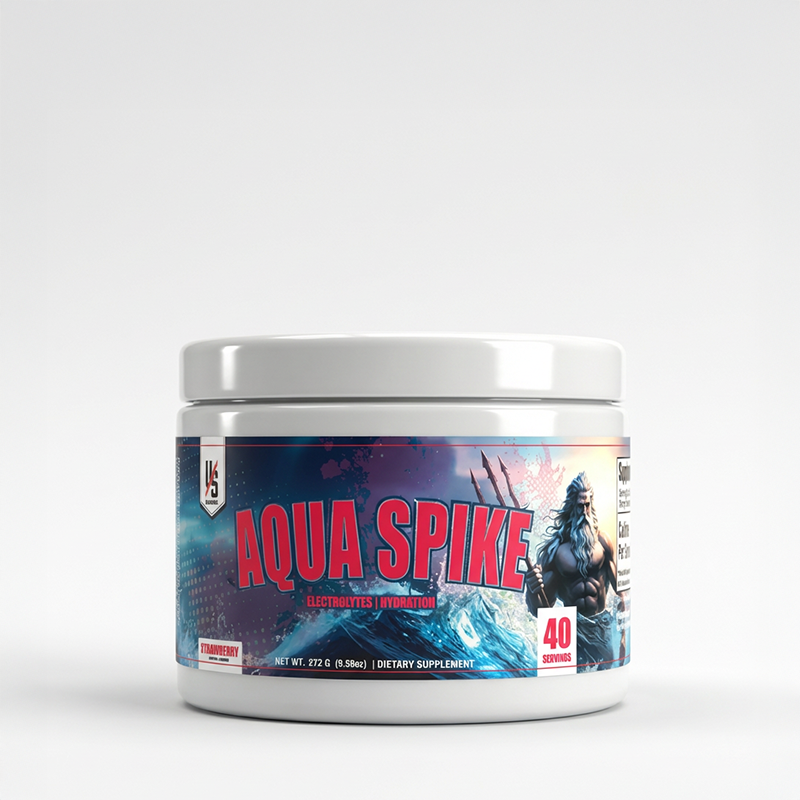
No powder fixes a badly built week. What supplements do here is narrow and worth knowing: protect the lifting quality that a deficit erodes, and cover the hydration cost of adding conditioning. Post Iso makes hitting protein easy when calories are tight, and Creatine Monohydrate at 5g a day is one of the few supplements with a genuinely deep human research base behind it. Aqua Spike handles electrolytes when the conditioning volume goes up.
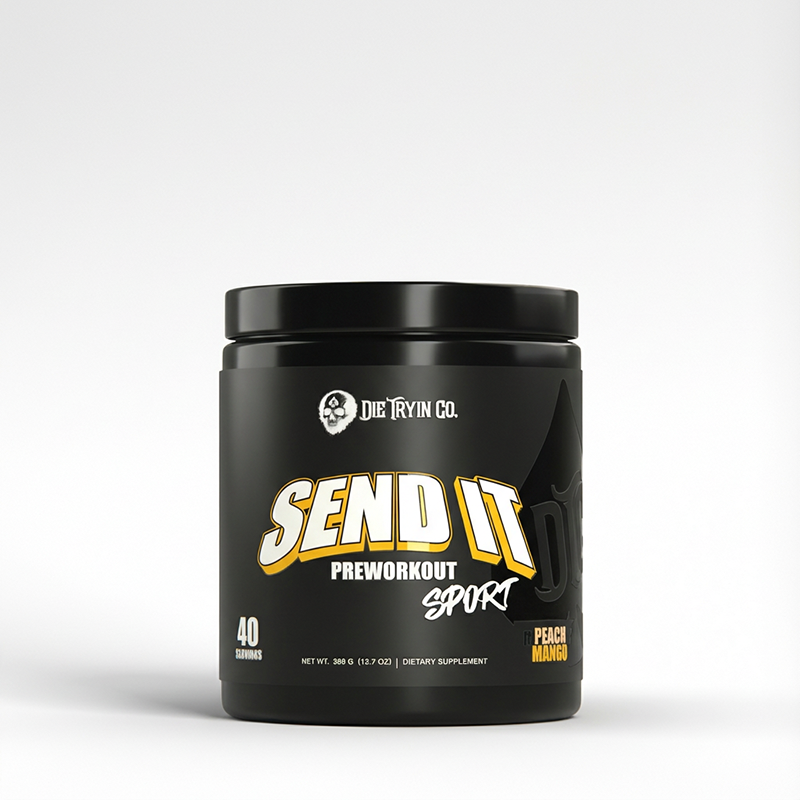
For the sessions themselves, match the stim to the slot. SEND IT Sport at 145mg caffeine suits longer conditioning work, and Red Dot is stim-free for evening sessions so the training does not cost you the sleep that fat loss depends on. Real doses of real ingredients, in the right slot. That is the whole pitch.
FREQUENTLY ASKED QUESTIONS
Does cardio kill your gains?
No, but the dose is not free. The meta-analysis evidence shows interference scaling with endurance frequency and especially duration, and hitting power output hardest. Two to three moderate low-impact sessions a week alongside proper lifting is not the problem. Five long hard runs while you try to add size is.
Is the bike really better than running for keeping muscle?
For protecting lower-body size and strength, the pooled evidence points that way. Running concurrently with resistance training produced significant decrements in both hypertrophy and strength in that meta-analysis. Cycling did not. If you love running, keep it and budget it. If you are indifferent, take the bike.
Should I do cardio before or after lifting?
After. Resistance-before-endurance produced 6.91% greater lower-body dynamic strength improvement in the Sports Medicine meta-analysis. That same analysis found the order made no difference to body fat percentage, so do it for your strength, not because it burns more fat.
Can I lift and do conditioning on the same day?
Yes, and for most people juggling a real schedule it is the practical answer. Lift first, keep the conditioning piece short and low-impact, and protect at least one lower-body day from having anything bolted onto it.
What about the afterburn everyone talks about?
The old version of this post leaned on it, and it does not carry the weight the marketing puts on it. Build your week around session quality and total weekly expenditure instead. More on how your body actually spends energy in the exercise metabolism post.
How much fat will training alone take off?
In that Obesity Reviews overview, exercise training produced mean fat loss of roughly 1.3 to 2.6 kg in adults with overweight or obesity. Training earns the composition. Nutrition sets the pace, and holding muscle through a cut is what decides whether you end up shredded or just smaller.
READY TO GEAR UP?
Build the week first. Then equip it:
- Post Iso — 24g whey isolate with DigeZyme enzymes, for hitting protein when calories are tight
- Creatine Monohydrate — 5g micronized, the least controversial thing in your cabinet
- SEND IT Sport — 145mg caffeine, built for longer conditioning work
- Red Dot — stim-free pump and focus for evening sessions
- Aqua Spike — electrolytes for when conditioning volume climbs
- DTC Athletic Tee — for the days the week actually gets done
- Take the quiz — two minutes to match the stack to the week you just built
ALWAYS FORWARD.
GEAR THAT FITS THIS POST
The products this article actually talks about. Real doses, disclosed labels, veteran owned.

Read more
Think you shouldn't lift weights while losing fat? It's a myth. Here's how strength training preserves muscle, protects your metabolism, and beats cardio alone.
Recovery is the other half of adaptation. The signals you need a deload, and exactly how to run one without losing progress.
Most lifters asking if they're overtraining are actually overreaching, and there are two kinds. Here's how to tell which one you're in, and what to do about it.
More is not better, it is just more. Here is where the returns actually flatten out, and how to train at the edge of enough.
The no-BS playbook for losing fat without losing muscle. Energy balance, protein, training, sleep, and the supplements that actually help.

Short sleep does not necessarily stall your weight loss. It changes what you lose, and the scale will not warn you it is happening.