




Working Hard vs. Progressing Fast: The Whole System
By Jon Klipstein, U.S. Army Combat Veteran & Founder of Die Tryin Co.
Science reviewed by Onur Oncer, BS Physiology and peer-reviewed published researcher.
TRAINING IS THE SPARK, NOT THE WHOLE FIRE
Here's the truth: you can train like an animal and still go nowhere.
Most people who feel stuck aren't lazy — they're the opposite. They're grinding every session, adding weight, chasing the pump, and wondering why the mirror won't move. The effort is real. The result isn't.
That's because a workout is a signal, not the growth itself. You light the match in the gym, but you don't grow during the set — you grow after it, when you recover, when you eat, and when the small gaps get filled. Training is the spark. Recovery, food, and supplements are the fuel. No fuel, no fire, no matter how hard you strike the match. This post is the map of the whole system: each piece kept shallow on purpose, with the deep guide linked for the part you need to fix.
| SYSTEM | WHAT IT DOES | GO DEEPER |
|---|---|---|
| 1. TRAIN | Sends the signal to adapt. Hard, progressive, consistent. The spark. | Why most people never see results |
| 2. RECOVER | Where the adaptation actually happens. Sleep, stress, rest days. | The science of recovery |
| 3. FUEL | The raw material. Enough calories and protein to rebuild what you broke down. | Why protein matters · count your macros |
| 4. SUPPLEMENT | The last 5%. Fills the gaps after the work and food are handled. Never the shortcut. | Take the quiz |
SYSTEM 1: THE SPARK (TRAIN)
You already know this part. You're here. You lift. So we'll keep it short.
Hard, progressive training is the signal that tells your body to change. Pick the right movements, add load or reps over time, and show up when you don't feel like it. That's the spark.
But more effort isn't the same as more progress. If you're already training hard four or five days a week and not moving, the answer is almost never "train harder" — cranking the volume on a body that isn't recovering or eating enough just digs the hole deeper. We break that trap down in why most people never see results in the gym and train smarter, not harder. Consistency beats intensity — and the spark only matters if there's fuel waiting for it.
SYSTEM 2: WHERE YOU ACTUALLY GROW (RECOVER)
This is the one most people skip, and it's the one killing your progress.
You don't build muscle in the gym — you build it while you sleep and rest. The session creates the damage and the demand; the adaptation gets built afterward. A review of how sleep supports recovery found that sleep extension improved performance and anabolic hormone responses, while cutting sleep short had measurable negative effects on muscle tissue and recovery (Chennaoui et al., 2021). Translation: skimp on sleep and you're throwing away the work you just did.
Recovery is more than sleep, though. It's managing stress, taking real rest days, and not living in a constant stimulant-and-cortisol fog — chronic stress works against everything you're trying to build. We cover that side in balancing cortisol.
For the full recovery playbook, go to the science of recovery. That post is the deep dive — this one just makes the case that recovery is non-negotiable, not optional.
SYSTEM 3: THE RAW MATERIAL (FUEL)
You can't build a wall with no bricks. Food is the bricks.
If you're not eating enough total calories, your body has nothing to rebuild with. And if you're not eating enough protein, recovery and muscle repair stall out even when the calories are there. The research consensus lands around 1.6 grams of protein per kilogram of bodyweight per day for people training to build muscle; a meta-analysis of 49 studies found gains plateaued past roughly that point (Morton et al., 2018). More than that isn't magic. Hitting it consistently is the whole game.
One note on the "slow metabolism" excuse, since it comes up every time someone stalls. Metabolic rate does vary a little between people, but research suggests energy balance, daily activity, and how much muscle you carry drive body composition far more than any inborn "slow" engine. No supplement fixes or speeds metabolism — the math does.
We won't re-teach nutrition here. Learn the protein side in why protein matters, learn to hit your numbers in how to count your macros, and don't forget water — being even a couple percent dehydrated drags down performance, so hydration is non-negotiable too.
SYSTEM 4: THE LAST 5% (SUPPLEMENT)
Here's where the industry lies to you, so let's be straight.
Supplements are the last 5%. They fill the gaps after the training, the sleep, and the food are already handled. They are not a shortcut, and they do not replace the work. If your sleep is trash and your protein is low, no powder on earth will save you. Basics beat hype, every time.
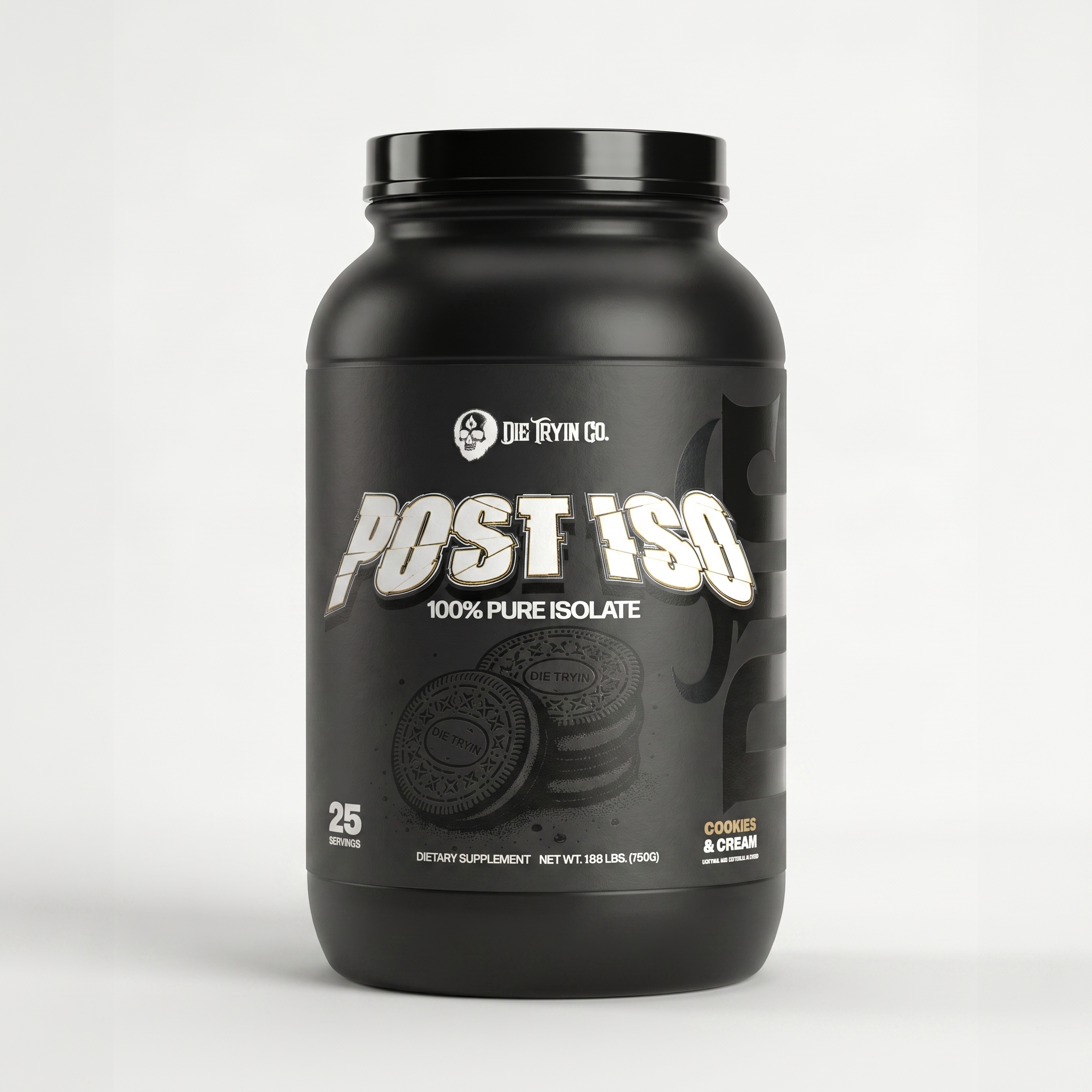
Once the foundation is solid, a few well-dosed products do help. Protein powder makes hitting your daily target easier when whole food isn't convenient, which is why a clean whey isolate like Post Iso earns its spot. Creatine Monohydrate is the most-researched performance supplement there is — the ISSN concluded it raises muscle creatine stores in a way that may help support high-intensity output and training adaptations (Kreider et al., 2017). And ignore the "novel form" marketing — it's always Creatine Monohydrate that earned the evidence.
Not sure what actually fits your gaps? Skip the guesswork and take the quiz — it points you at real doses of real ingredients for your goal, instead of a cabinet full of stuff you don't need.
PUT THE WHOLE SYSTEM TOGETHER
Effort was never your problem — the missing half was. You were sparking hard and starving the fire. Train hard to send the signal. Recover to let the adaptation happen. Eat enough to give it raw material. Then, and only then, use supplements to fill what's left. Run all four and progress stops feeling random; skip one and you stay stuck, no matter how hard you work.
Pick the weakest link from the table above, click into that deep guide, and fix that one thing first. Discipline beats motivation — and the whole system beats the grind.
FREQUENTLY ASKED QUESTIONS
I train hard 5 days a week and I'm still not progressing. Why?
Almost always recovery or food, not effort. If you're training hard and stalling, adding more training usually makes it worse. Check your sleep, your total calories, and your daily protein first. Start with the science of recovery.
How much protein do I really need?
Research points to roughly 1.6 grams per kilogram of bodyweight per day for people training to build muscle, with gains plateauing past about that point. Hitting it consistently matters far more than chasing a higher number. Details are in why protein matters.
Will supplements speed up my progress?
They fill the last 5% after training, sleep, and food are handled. They don't replace the work and they don't fix a broken foundation. Get the basics right first, then add well-dosed products to close real gaps.
Can a supplement fix a slow metabolism?
No. Metabolic rate varies modestly between people, but research suggests energy balance, activity, and muscle mass drive body composition far more. No supplement fixes or speeds metabolism — consistency in your calories and training does the work.
Where do I start if I'm overwhelmed?
Pick the one system you're weakest in from the table near the top, open that deep guide, and fix only that for the next few weeks. Most people find recovery or protein is the gap. Then move to the next link.
READY TO GEAR UP?
Get the basics handled, then let supplements fill the gaps. These fit the recovery-and-fuel side of the system:
- Post Iso — 24g whey isolate with DigeZyme enzymes to make hitting your daily protein target easy.
- Creatine Monohydrate — 5g micronized, daily. The most-researched performance supplement, no novel-form hype.
- Not sure what your gaps are? Take the quiz and get matched to real doses for your goal.
ALWAYS FORWARD.
GEAR THAT FITS THIS POST
The products this article actually talks about. Real doses, disclosed labels, veteran owned.

Read more
The reason most lifters never see results isn't a bad program or weak motivation. It's inconsistency. Here's what actually builds physiques — and why the basics work.
Recovery is not a feeling, it is a clock. What your muscles are doing at hour 3, hour 24 and hour 48 after you train, and what to do in each window.
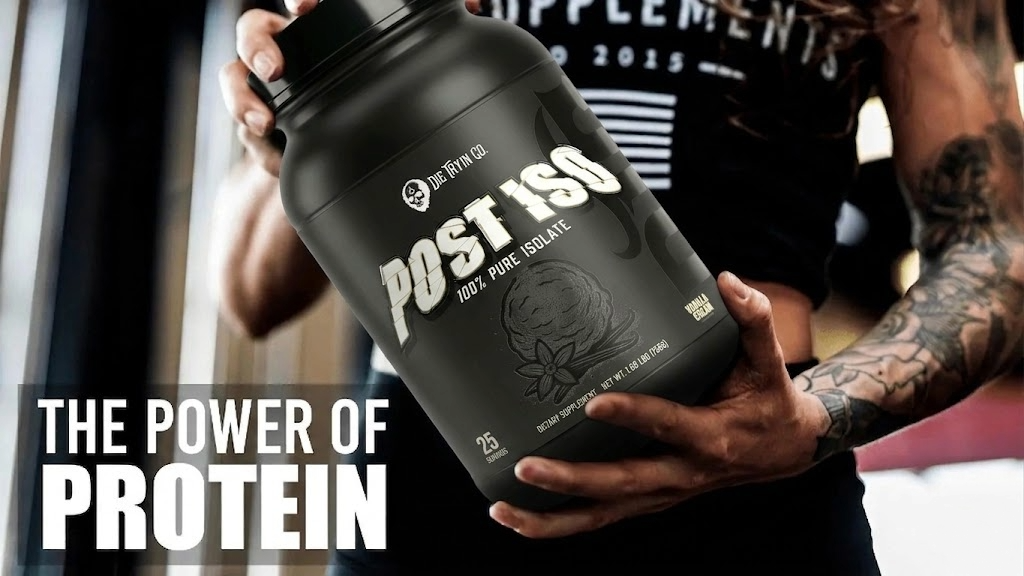
Protein does more than build muscle. 8 real benefits ranked by evidence strength: satiety, metabolic boost, bone density, sarcopenia prevention, and more.
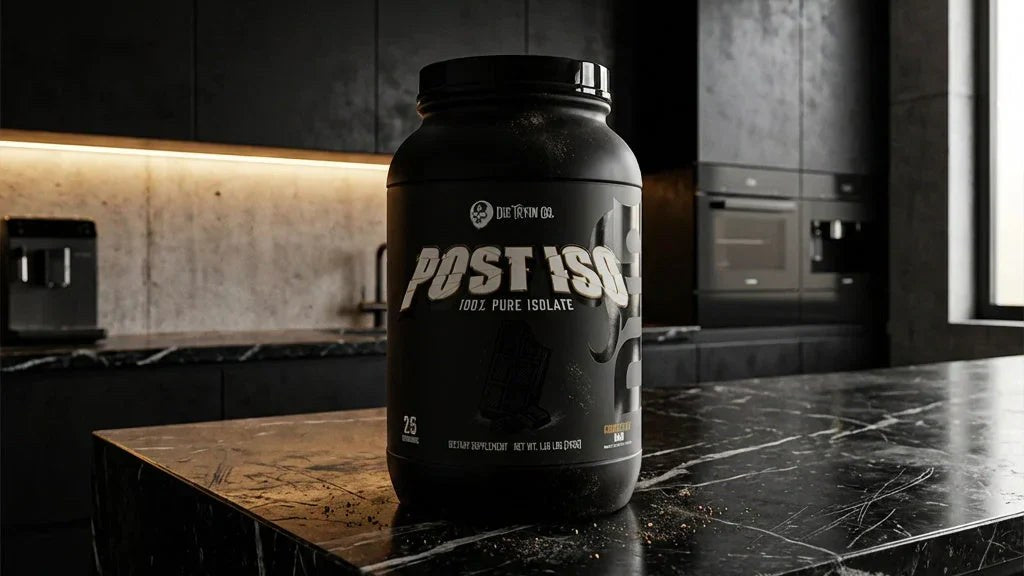
You can't out-train a bad diet. Here's the no-BS guide to macros — what they are, why they matter, and how to count them so you actually hit your goals.
Overtraining doesn't build faster results — it builds injuries and burnout. The minimum effective dose principle for training, recovery, and smart supplementation.
Chronic high cortisol breaks sleep, drives belly fat, and tanks recovery. The honest physiology + evidence-based strategies to normalize HPA axis function.