


Collagen for Lifters: What It Really Does for Tendons
By Jon Klipstein, U.S. Army Combat Veteran & Founder of Die Tryin Co.
Science reviewed by Onur Oncer, BS Physiology and peer-reviewed published researcher.
THE BEAUTY AISLE SOLD YOU THE WRONG BENEFIT
Here is the truth: collagen got filed under hair, skin and nails, and the fitness industry has been overcorrecting ever since. Now half the tubs on the shelf promise bulletproof joints and tendons that never quit.
Both stories are wrong in different directions. The skin research is the biggest evidence base collagen has. The connective tissue research is the more interesting one if you train, and it is also thinner, newer, and less certain than anybody selling it wants to admit.
This page is about one thing: what collagen does for the tissue that holds a trained body together. If you want to know how to read a tub and not get robbed, that job belongs to the collagen buying guide. Dose, source, hydrolysis, third-party testing, all of it lives over there. This page stays on the tissue.
| THE CLAIM | WHAT THE RESEARCH ACTUALLY SHOWS | HOW SOLID |
|---|---|---|
| Skin hydration and elasticity | Improvement against placebo across pooled trials | Strongest base it has (covered in the buying guide) |
| Tendon structure | Measurable change in tendon morphology when paired with training | Biggest effect size, lowest certainty |
| Activity-related joint discomfort | One 24-week athlete trial at 10 g per day | Single trial, real dropout |
| Recovery after damaging work | Small edge in reactive strength at the 48-hour mark | Low certainty, narrow measure |
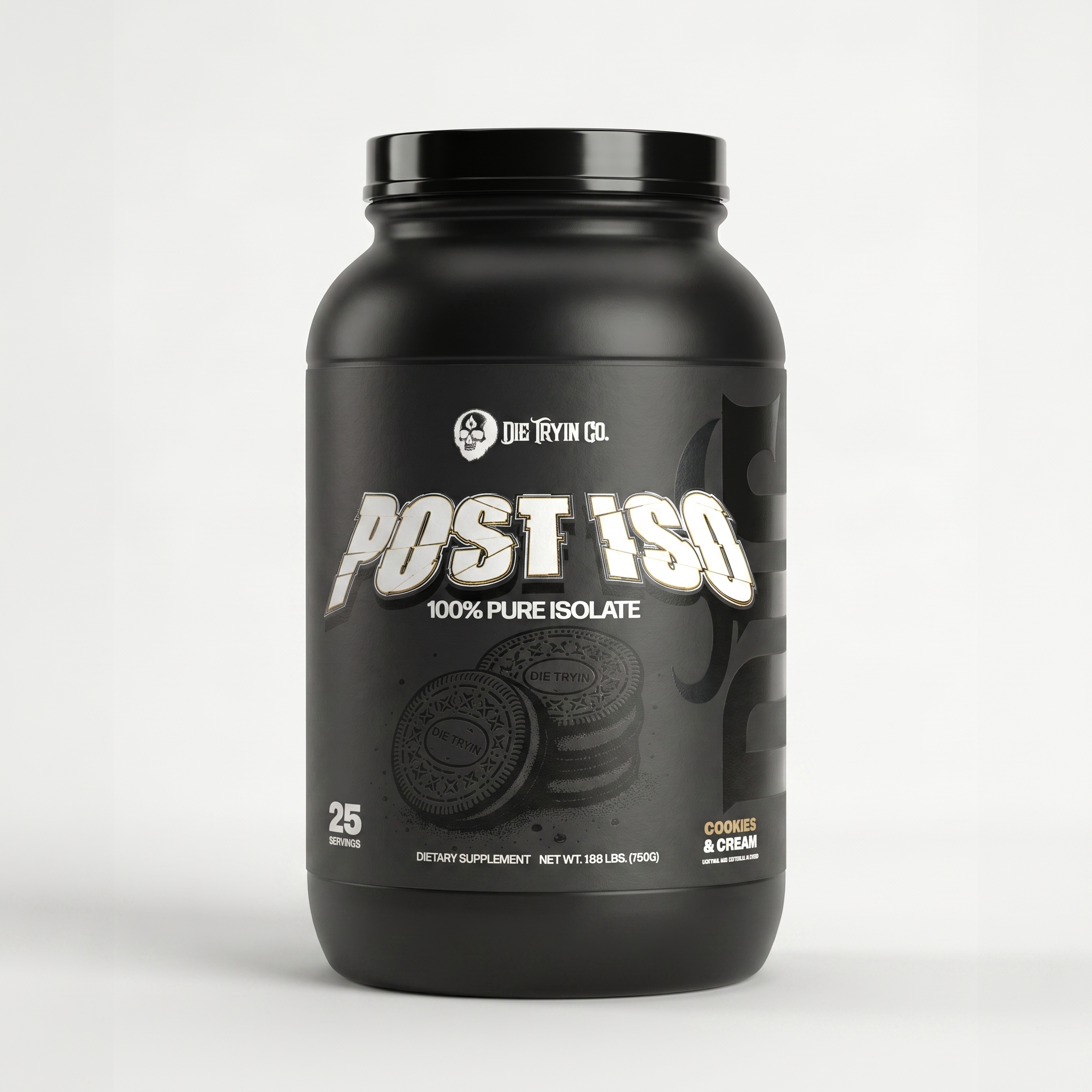
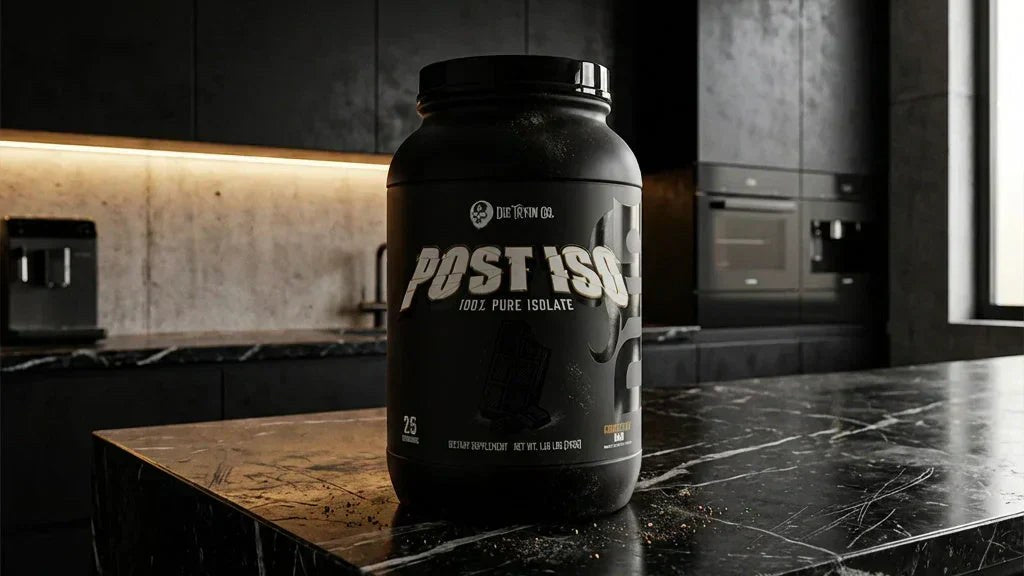
| Replacing your protein powder | Wrong amino acid profile. Low in leucine, the growth signal | Not the tool for it. Use Post Iso |
TENDONS ARE THE BOTTLENECK NOBODY PROGRAMS FOR
Muscle adapts fast. Give it progressive load and decent food and it responds in weeks. Tendon does not work on that schedule. It is denser, it carries far less blood flow, and it remodels on a timeline measured in months.
That mismatch is where lifters get hurt. Your quads get strong enough to move a weight your patellar tendon has not caught up to yet. The elbow starts barking on pressing day. The Achilles gets cranky in month four of a running block. Nothing tore. The structure just fell behind the engine.
Collagen is the structural protein in that tissue, and it is unusual: very heavy in glycine, proline and hydroxyproline, and short on the essential amino acids that drive muscle growth. That profile is the whole argument. It is a poor muscle protein and a plausible raw material for connective tissue, which is exactly why the research went looking in tendon.
WHAT THE TRAINING RESEARCH ACTUALLY SHOWS
The most useful summary to date is a 2024 systematic review and meta-analysis in Sports Medicine covering 19 randomized controlled trials and 768 healthy adults, most of them taking collagen peptides daily for at least eight weeks alongside real physical training.
It found significant effects in favor of collagen for fat-free mass, tendon morphology, muscle architecture, maximal strength, and recovery of reactive strength 48 hours after muscle-damaging exercise. On paper that reads like a clean sweep, and this is the point where most supplement pages stop reading.
Read the rest. The same authors graded how much confidence those results deserve, and it is not uniform. Body composition came out moderate. Tendon morphology and mechanical properties, the finding this entire page is built around, came out at very low certainty. The strength effect was statistically real and small. So: the tendon signal is the biggest number in the analysis and the one the authors trust least. Both halves of that sentence are true, and honest supplementation means carrying both.
THE TIMING DETAIL THAT ACTUALLY MATTERS
For skin and general joint support, timing barely moves the needle. For connective tissue it might, and that is one of the few places collagen behaves differently from your other powders.
A crossover trial in the American Journal of Clinical Nutrition gave subjects 5 g or 15 g of vitamin C-enriched gelatin one hour before six minutes of rope skipping. The 15 g dose taken an hour pre-exercise doubled a blood marker of collagen synthesis. Serum drawn from those subjects also increased collagen content and improved mechanics in engineered ligaments grown in a dish.
Now the limits, because they are large. Eight subjects. All male. The supplement was gelatin, not the hydrolyzed peptide powder you buy. The outcome was a circulating synthesis marker plus a lab-grown tissue model, not a tendon measured in a living athlete. The authors themselves framed it as suggesting a beneficial role, not demonstrating one.
What survives all that caution is a cheap, low-risk protocol: take it 30 to 60 minutes before you train, and make sure the tissue actually gets loaded afterward. No supplement remodels a tendon on its own. Load is the signal, collagen is at best the raw material. Which is also the argument for warming that tissue up properly before you ask anything of it.
VITAMIN C IS NOT AN UPSELL
Your body cannot finish building its own collagen without vitamin C. It is a required cofactor for the enzymes that hydroxylate proline and lysine during collagen synthesis, and that step is what lets the finished strands hold their structure. Skip it and you have supplied bricks with no mortar.
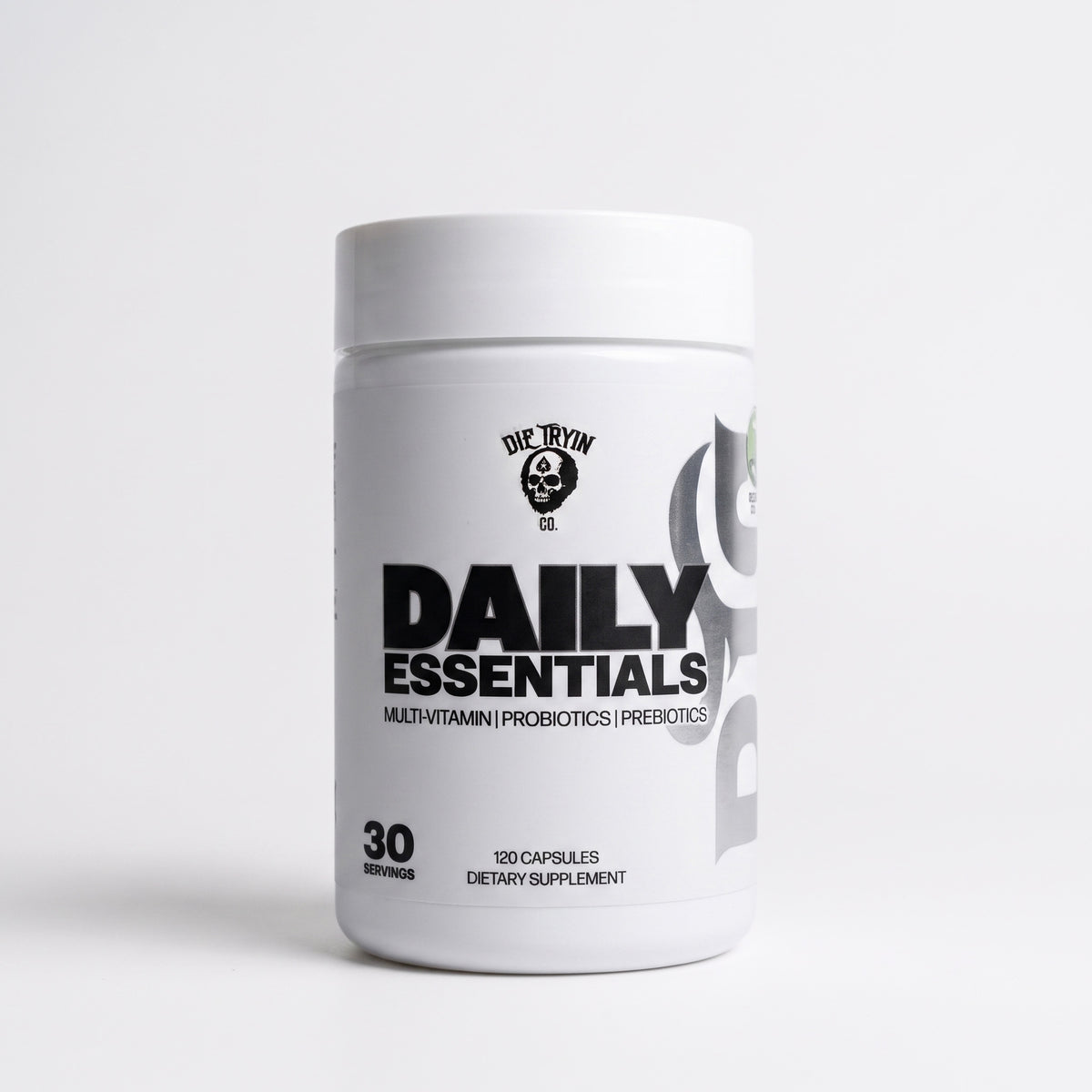
This is not a reason to buy an expensive stack. Vitamin C is one of the cheapest nutrients on earth and most people get plenty from food. Either take your collagen with fruit, take it alongside Daily Essentials, or pick a formula that already lists it. The trial above used a vitamin C-enriched dose for exactly this reason.
THE JOINT DISCOMFORT EVIDENCE
The most-cited work on athletes and joints is a 24-week randomized, double-blind, placebo-controlled trial in varsity and club athletes with activity-related joint pain. At 10 g per day of collagen hydrolysate, the supplemented group reported less joint pain when walking, standing, carrying and lifting than placebo. Same caution applies: 147 athletes were randomized, but only 97 produced evaluable data, and the product was one specific branded liquid formula. That is a single trial with meaningful attrition, not a closed case. It is a decent reason to run 10 g if your knees complain on leg day. It is not a reason to expect a fix.
WHERE THE HYPE OUTRUNS THE DATA
Two claims get repeated constantly and deserve a correction. The first is that collagen reduces soreness. The trial usually dragged out to support that studied 53 elderly sarcopenic men taking 15 g after training for 12 weeks, published in the British Journal of Nutrition in 2015, with a co-author employed by a collagen research institute. It measured body composition and quadriceps strength. It never measured soreness at all. Real result, wrong population, wrong outcome for the claim being made.
The second is that collagen counts as your protein. It does not, and that mistake is expensive: 15 g of collagen reads like 15 g of protein on a label while supplying a fraction of the leucine that carries the muscle-building signal. The meta-analysis above did find fat-free mass changes, and that is worth knowing, but a body composition number is not the same thing as collagen being a muscle-building protein. Run it on top of your protein target, never inside it. The real numbers are in the protein guide. Endurance athletes get the same answer as lifters here, with one honest caveat: almost all of the connective tissue work was done in resistance-trained or general populations, so runners and cyclists are borrowing the mechanism rather than reading their own data.
HOW TO ACTUALLY RUN IT
- Dose: 10 g daily as the floor the joint trial used. The pre-exercise gelatin trial used 15 g.
- Timing: 30 to 60 minutes before training on the days you train. This is the one place timing may earn its keep.
- Pair it: Vitamin C, from food or from your formula.
- Then load the tissue: The supplement supplies material. Training supplies the instruction. Without the second one, skip the first.
- Runway: Give it 90 days before you judge it. The trials that found anything ran 12 to 24 weeks.
- Stack position: Beside your protein and your recovery basics, never instead of them.
Basics beat hype. Collagen sits somewhere below sleep, food and sane programming on the list of things that keep you training, and that order matters more than the powder does.
FREQUENTLY ASKED QUESTIONS
Does collagen actually strengthen tendons?
Pooled trials show measurable change in tendon morphology when collagen is paired with training, and that was the largest effect in the 2024 meta-analysis. The same authors rated their confidence in it as very low. Treat it as promising and unproven rather than established.
Should I take collagen before or after training?
Before, if connective tissue is the goal. The pre-exercise window is the one timing detail with a mechanism behind it, and 30 to 60 minutes ahead is the pattern the research used. For general joint or skin support, take it whenever you will actually remember.
Do I really need vitamin C with it?
You need adequate vitamin C to build collagen at all, because it is a required cofactor in the synthesis pathway. That is not the same as needing a special product. Food, a multivitamin, or a formula that includes it all get the job done.
Is collagen worth it for runners and endurance athletes?
The mechanism applies to any tissue taking repeated load, so it is reasonable. Be honest about the gap: most of the connective tissue trials used resistance training or general populations, so endurance athletes are reasoning from mechanism, not from dedicated evidence.
Does collagen count toward my daily protein?
No. It counts as grams on a label but it is short on essential amino acids and low in leucine, so it does not carry the muscle-building signal. Keep it separate from your protein number and keep whey doing the whey job.
Will collagen fix tendon pain I already have?
Do not treat it as a fix. The athlete trial tracked self-reported joint discomfort, not tissue healing, and persistent tendon pain is a loading problem worth taking to a qualified professional. Adjust the training first. The powder is a support, not a repair. If you are pregnant, managing a medical condition or taking medication, clear any supplement with your doctor.
READY TO GEAR UP?
Structure work is slow, boring and unglamorous, which is exactly why most people skip it and then wonder why the elbow never settles down.
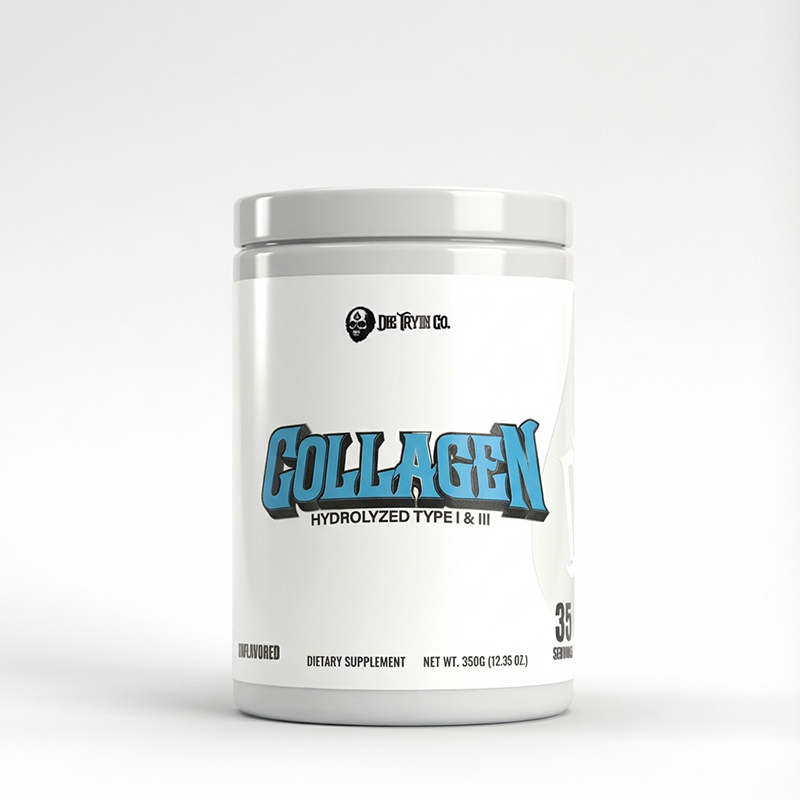
- Collagen Peptides: hydrolyzed Type I and III peptides for joint and connective tissue support
- How to Choose a Collagen Powder: the label checks before you buy anything
- Post Iso: 24 g whey isolate, the muscle job collagen cannot do
- Daily Essentials: chelated multi covering the vitamin C cofactor
- The Complete Recovery Guide: where connective tissue fits the bigger picture
- Take the quiz: two minutes to a stack that fits your actual training
ALWAYS FORWARD.
GEAR THAT FITS THIS POST
The products this article actually talks about. Real doses, disclosed labels, veteran owned.
Read more
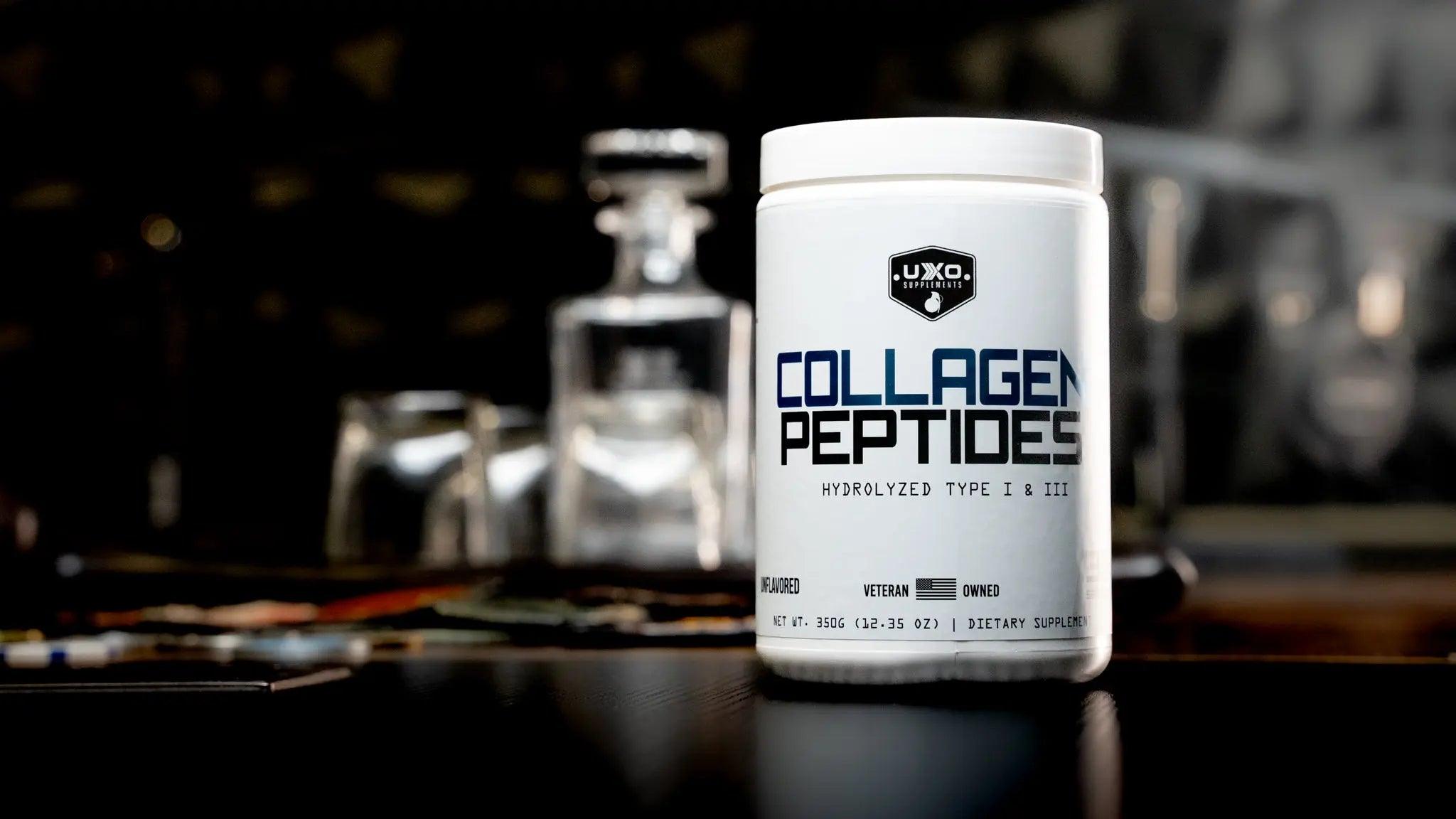
Collagen is oversold and not useless. Here is how to tell a worthwhile product from a marketing exercise.

Most people skip the warm-up. Don't. Here are 5 research-backed reasons warming up earns its 5-30 minutes — plus the lactic-acid myth, finally put to rest.
The complete protein playbook — how much you need, when timing matters, which sources deliver, and the myths costing you money.
The no-BS recovery playbook — sleep, stress, nutrition, modalities, and the framework that ties it all together. Recovery is where growth actually happens.

You program sets, reps, load and tempo. Then the plan stops. Recovery is a training variable, not the absence of training, and here is what leaving it blank actually costs you.
Your gut lining runs the same creatine energy system as your muscles. Here is what the research shows on stomach upset, IBS, colitis and leaky gut, and exactly where the human evidence stops.