
Kettlebells vs. Weights: Which Builds More Muscle?
By Jon Klipstein, U.S. Army Combat Veteran & Founder of Die Tryin Co., and Chelsea Rodgers, IFBB Pro & Die Tryin Co. Athlete
Science reviewed by Onur Oncer, BS Physiology and peer-reviewed published researcher.
TWO TOOLS, ONE JOB
Most people get this wrong. They treat kettlebells and barbells like rival gangs, pick a side, and then argue about it online instead of training.
Here's the reality: a kettlebell swing and a barbell curl are not competing for the same job. One is a ballistic, full-body hip hinge that hammers your posterior chain and jacks your heart rate. The other is a slow, isolated elbow flexion built to load one muscle through a controlled range. Different tools. Different problems.
Muscle does not know what shape the metal is. It responds to stimulus. Schoenfeld's review of the mechanisms of muscle hypertrophy points to mechanical tension, metabolic stress, and muscle damage as the primary drivers of growth. Every one of those can be produced with a kettlebell, a barbell, or a pair of dumbbells. The implement is a delivery system, not the mechanism.
So the real question is not which one is better. It is which one is better for what you are trying to do right now.
| FACTOR | KETTLEBELLS | BARBELLS & DUMBBELLS |
|---|---|---|
| Best for | Conditioning, hip power, grip, work capacity | Max strength, targeted hypertrophy, measurable progression |
| Movement type | Ballistic and full-body (swing, clean, snatch, get-up) | Grind and isolation (squat, press, row, curl, extension) |
| Learning curve | Steep. The swing and the snatch punish bad technique fast | Moderate. Fixed paths, easier to coach and self-correct |
| Hypertrophy potential | Real, but capped by available load and jump sizes | Higher ceiling. Small increments, easy to overload a muscle |
| Conditioning | Excellent. Strength and cardio in the same set | Possible, but usually needs separate programming |
| Space and cost | Two bells, a corner of a garage, done | Rack, bar, plates, bench, floor space, real money |
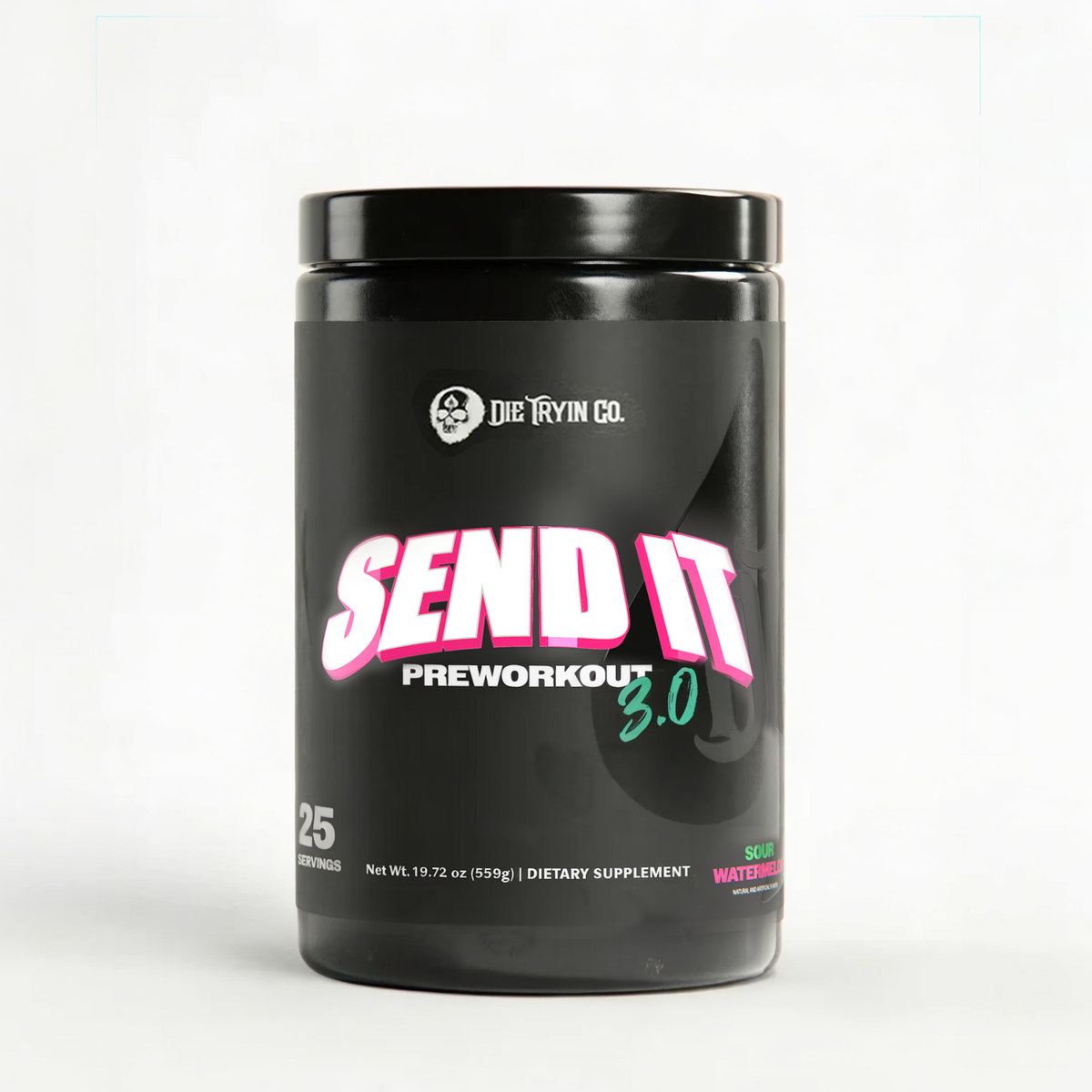
| Fuel it with | SEND IT 3.0 for the engine work | Creatine Monohydrate for the heavy stuff |
WHAT KETTLEBELLS ACTUALLY DO BEST
The kettlebell's advantage is the offset center of mass. The weight sits outside your hand, not balanced in it, which forces your grip, forearms, and shoulder stabilizers to work overtime on every rep. That is not a gimmick. It is a genuine training stimulus most bar work never touches.
Then there is the ballistic side. Swings, cleans, and snatches train hip extension at speed. You learn to produce force fast, absorb it, and immediately repeat. That skill carries over to sprinting, jumping, tackling, and hauling awkward objects that do not have handles.
The conditioning effect is the other big win. A ten minute set of heavy swings can drive your heart rate into conditioning territory while still loading the posterior chain. You get strength work and engine work in the same block, which matters when your training time is short.
Cost and space seal it. Two bells and eight feet of floor is a complete home gym. No rack. No spotter. No excuses.
WHAT BARBELLS AND DUMBBELLS DO BEST
Load. That is the whole answer, and it is a big one.
If your goal is maximum strength or maximum size, you need to progressively overload a movement over months and years. A barbell lets you add five pounds at a time, forever. Kettlebells usually jump in 4kg or 8kg steps, roughly nine to eighteen pounds at a time, which is a brutal leap when you are already near your ceiling on a press.
Isolation is the other advantage. When you want to grow a specific muscle, you want to fatigue that muscle without the rest of the body bailing you out. A dumbbell curl, a leg extension, a cable row, all of them let you park tension exactly where you want it and take that muscle close to failure. Full-body ballistics cannot do that. Your grip or your lungs quit before the target muscle does.
Measurement matters too. A barbell gives you clean numbers to chase. If your squat went from 225 to 275 over a training block, you know the block worked. That feedback loop is why almost every serious hypertrophy program still gets built around loaded compounds. Our ultimate guide to muscle building breaks down how to structure that progression properly.
WHO SHOULD PICK WHICH
Pick kettlebells if you train at home, you have limited space, you care about conditioning as much as size, you are a tactical athlete or a first responder who needs work capacity, or you are coming back from a long layoff and want to rebuild general fitness before chasing numbers.
Pick barbells and dumbbells if your primary goal is hypertrophy or max strength, you compete in anything where a number on the bar decides the outcome, you have gym access, or you need the fine-grained load increments to keep progressing past the beginner phase.
Pick both if you are like almost everybody reading this. Which you are.
HOW TO RUN BOTH WITHOUT WRECKING RECOVERY
The clean way to combine them is by role, not by mood. Barbells and dumbbells drive your strength and hypertrophy work at the front of the session. Kettlebells handle conditioning, power development, and finishers at the back.
A simple template: heavy compound work first, accessory hypertrophy second, then five to ten minutes of kettlebell swings, cleans, or carries to close. You are not adding a second workout. You are adding a finisher that trains a quality your barbell work does not.
On a full-body or upper/lower structure, you can also give kettlebells their own day. A dedicated bell session on an off day keeps blood moving, builds work capacity, and does not compete for the same recovery resources as a heavy squat day. If you are unsure how the days should stack, read our breakdown of which training split is best before you build the week.
The trap is stacking high-volume ballistics on top of an already brutal lower body day. Swings hammer the hamstrings and glutes eccentrically. Do 300 of them the day after heavy deadlifts and your next session pays for it. Recovery is the limiting factor in every program, not effort, which is why our recovery guide exists.
FREQUENTLY ASKED QUESTIONS
Can you build real muscle with kettlebells alone?
Yes, especially in the first year or two of training. Tension, metabolic stress, and fatigue all show up in hard kettlebell work. The limitation is the ceiling. Once you outgrow the heaviest bell you own, adding load gets awkward and progress slows compared to a barbell.
Are kettlebell swings better than deadlifts?
They are different. Deadlifts build maximal hinge strength under heavy load. Swings build explosive hip extension and conditioning under lighter load at speed. Strong lifters do both, usually in different parts of the week.
How heavy should my first kettlebell be?
Most untrained men start around 16kg for swings, most untrained women around 8 to 12kg. Get the hinge pattern coached or filmed before you go heavier. The swing rewards good technique and punishes a rounded back.
Do kettlebells help bone density?
Loaded, weight-bearing resistance training may support bone health regardless of the implement. What matters is progressive load through the skeleton, which both kettlebells and barbells provide.
How many days a week should I use kettlebells?
If they are a finisher, two or three short blocks per week is plenty. If they are your main training modality, three to four sessions works for most people, with at least one full rest day between the heaviest ones.
Do I need different supplements for kettlebell training?
No. Protein, Creatine Monohydrate, and hydration cover the fundamentals whether you are swinging a bell or squatting a bar. Conditioning-heavy sessions just make hydration and intra-workout fueling matter a little more.
READY TO GEAR UP?
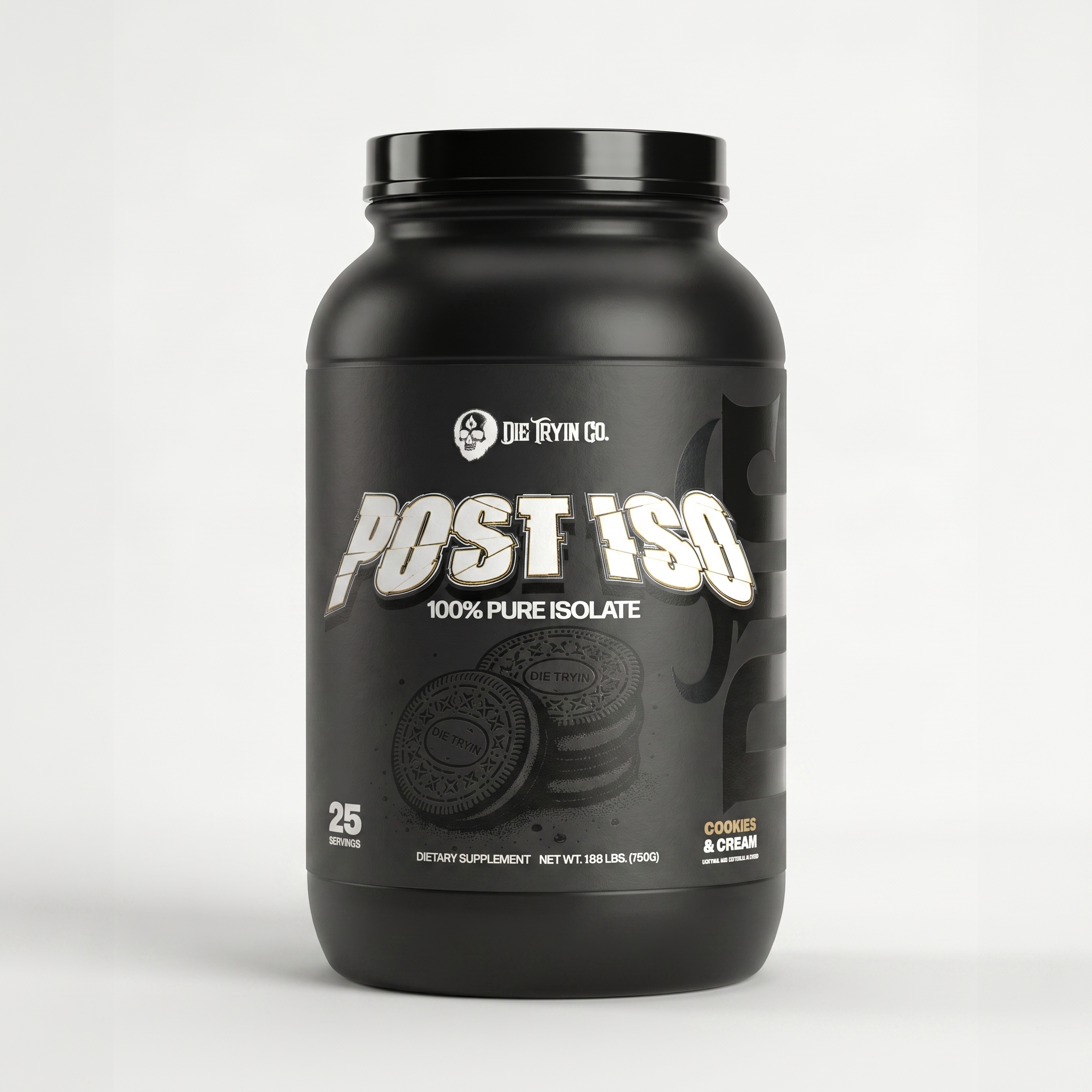
The tool is a detail. The stimulus, the consistency, and the recovery are the actual variables. For the sessions that demand focus and output, SEND IT 3.0 is the daily driver, fully dosed and built for repeat use rather than a one-time jolt. Heavy barbell blocks pair well with Creatine Monohydrate, five grams a day, one of the most researched performance ingredients in sports nutrition. Post-session, Post Iso delivers 24g of whey isolate to cover the protein target you keep missing. Not sure where your stack should start? Take the supplement quiz and get pointed at the right two or three products instead of guessing. Kettlebell work is full-body and messy, so train in gear built to move: our veteran owned gym apparel is made to get sweated in, not posed in.

Kettlebells and barbells are not rivals. They are different answers to different questions. Pick the one that fits the problem in front of you, then go do the work.
ALWAYS FORWARD.
Read more
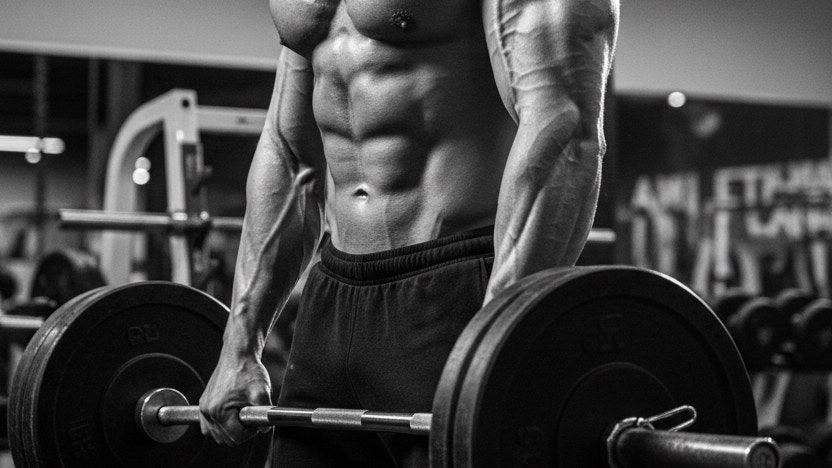
The complete playbook for building muscle that actually lasts. Training, nutrition, recovery, and the supplements that move the needle — no hype.

There's no perfect split — only the one you'll stick to. PPL vs. upper/lower broken down, plus how to choose the best workout split for your week.
The no-BS recovery playbook — sleep, stress, nutrition, modalities, and the framework that ties it all together. Recovery is where growth actually happens.
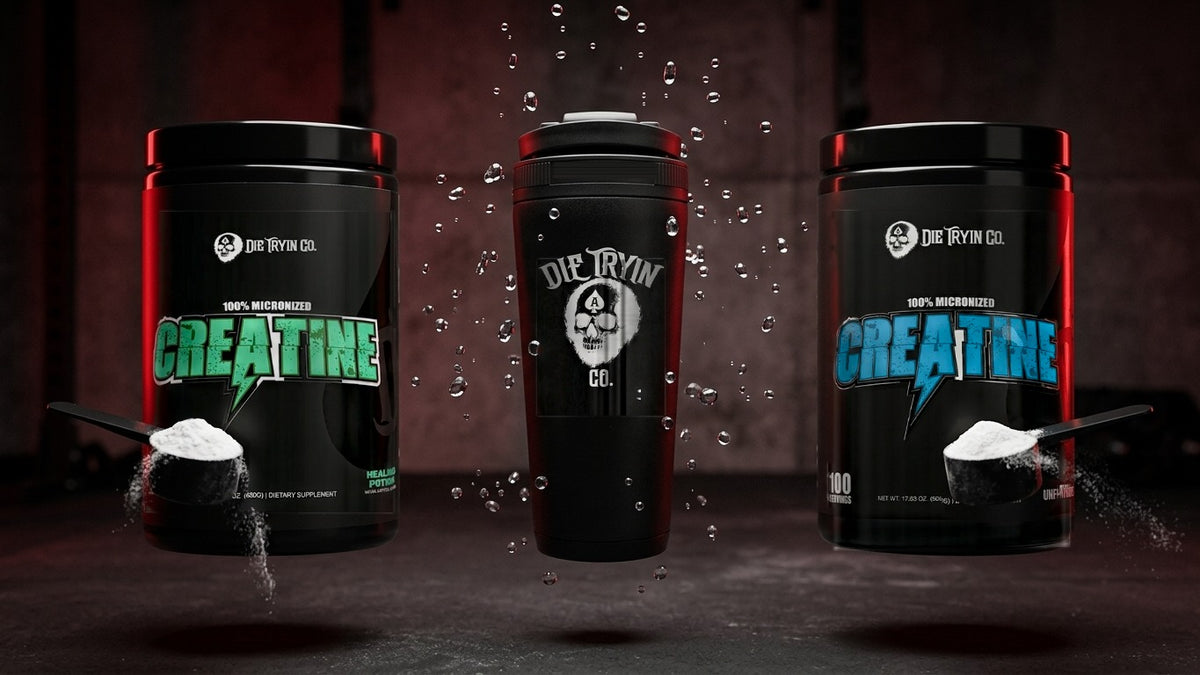
Flavor doesn't change what creatine does; taking it every day is what counts. How to pick flavored or unflavored, what to mix it with, and how long it lasts once mixed.
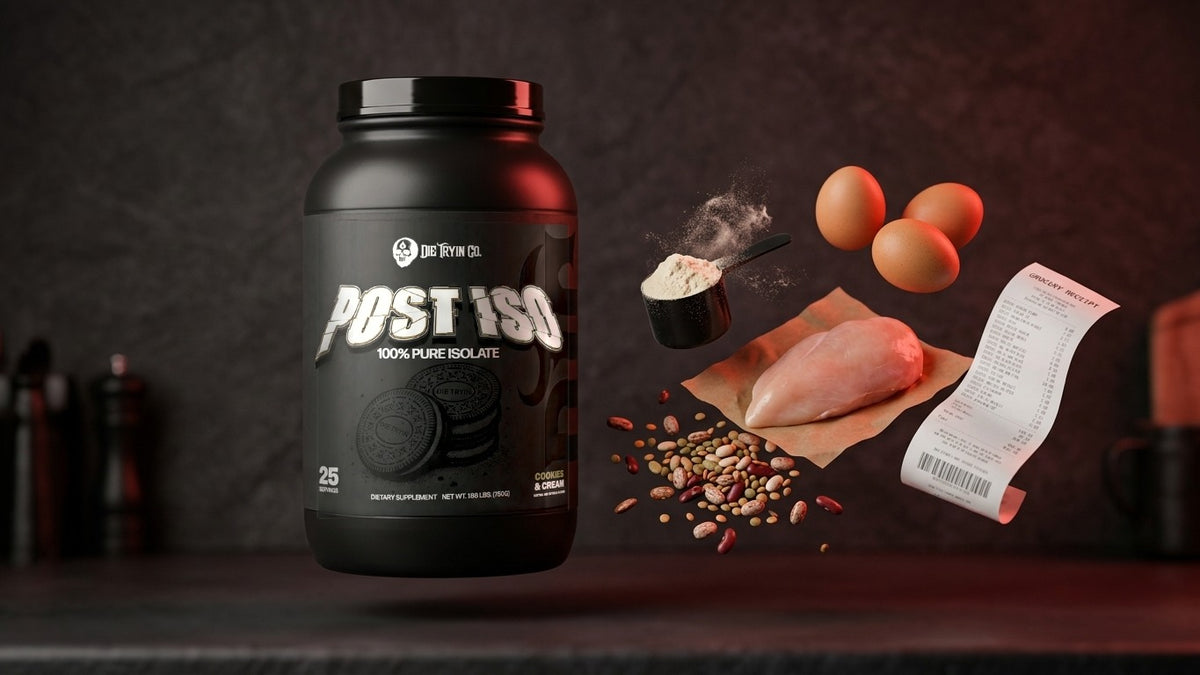
Whey protein concentrate now costs more than four times its early-2023 low. Here is what is driving it, what the 2027 forecasts actually say, and how to pay less per gram of protein without getting...
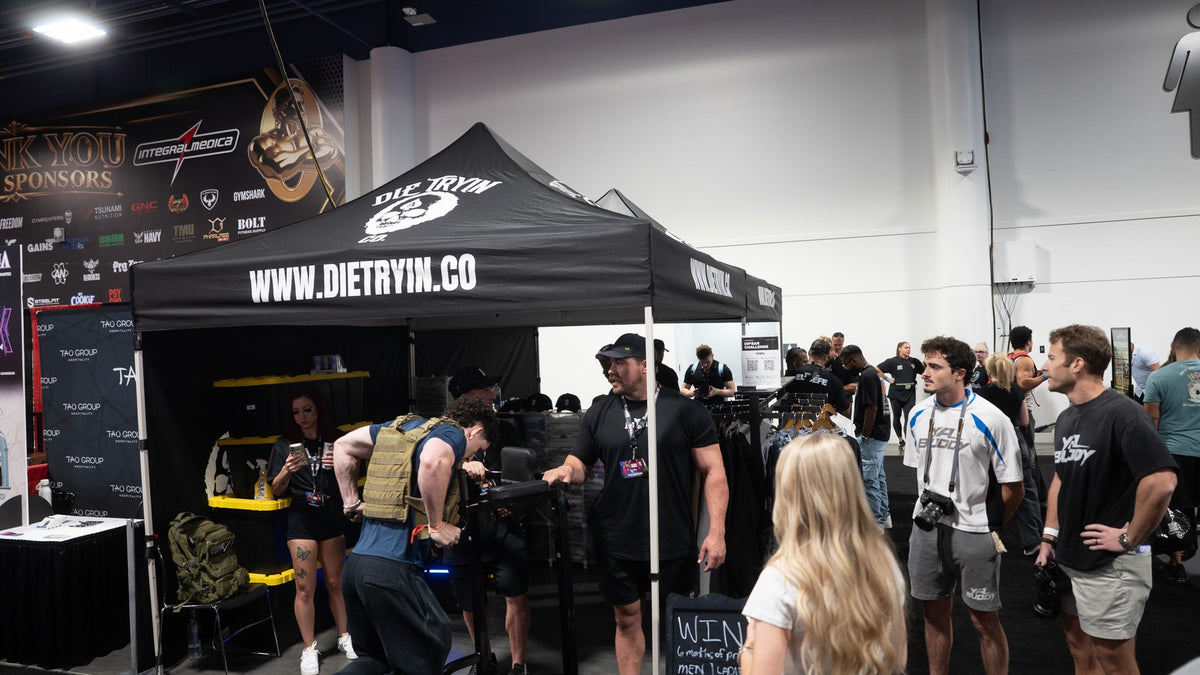
Four days, 1,400 miles on the road, 17 new products and 500 new customers. Here is what went down at the Die Tryin Co. booth at the 2026 Olympia World Fitness Expo.
GEAR THAT FITS THIS POST
The products this article actually talks about. Real doses, disclosed labels, veteran owned.