



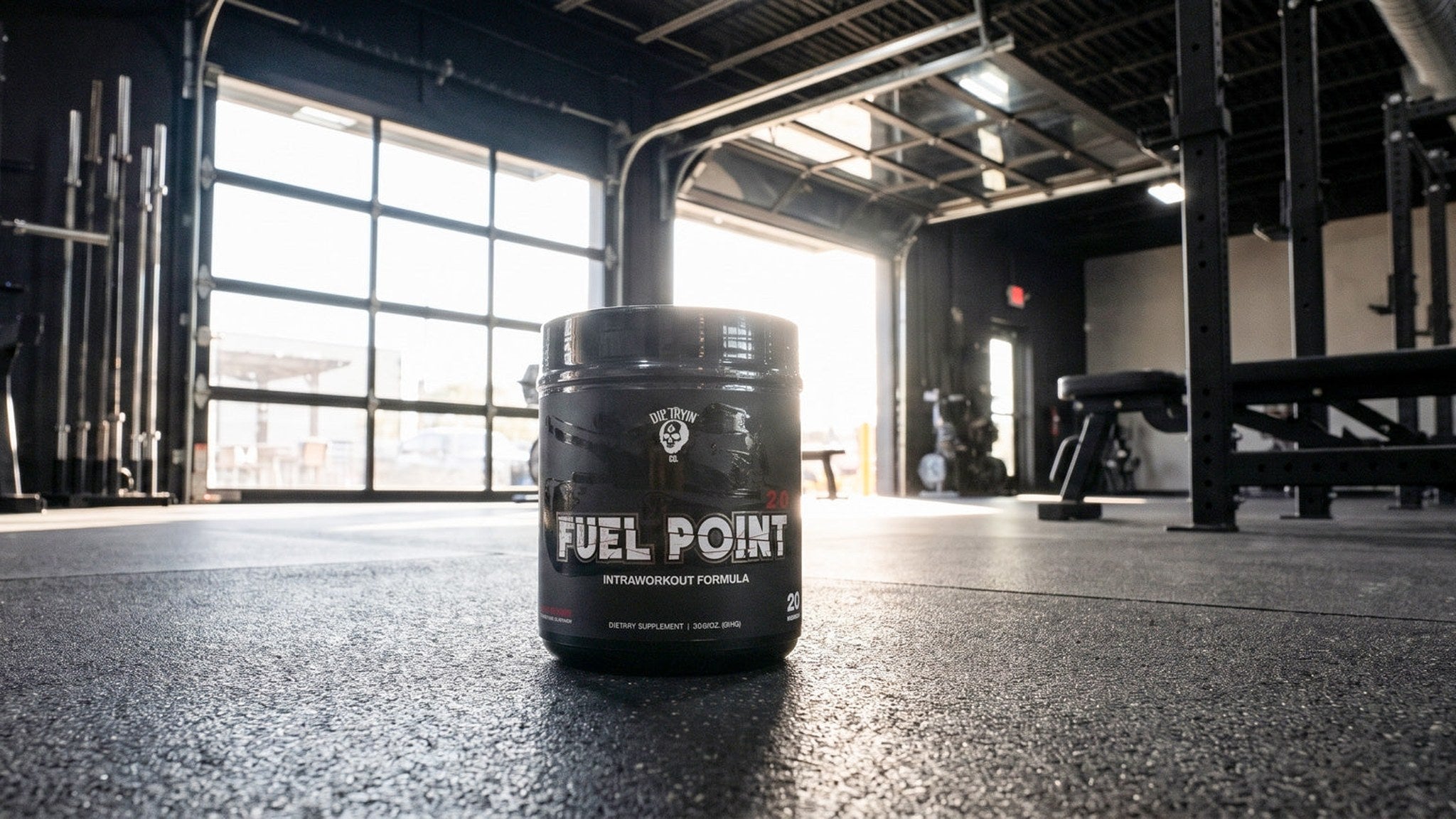
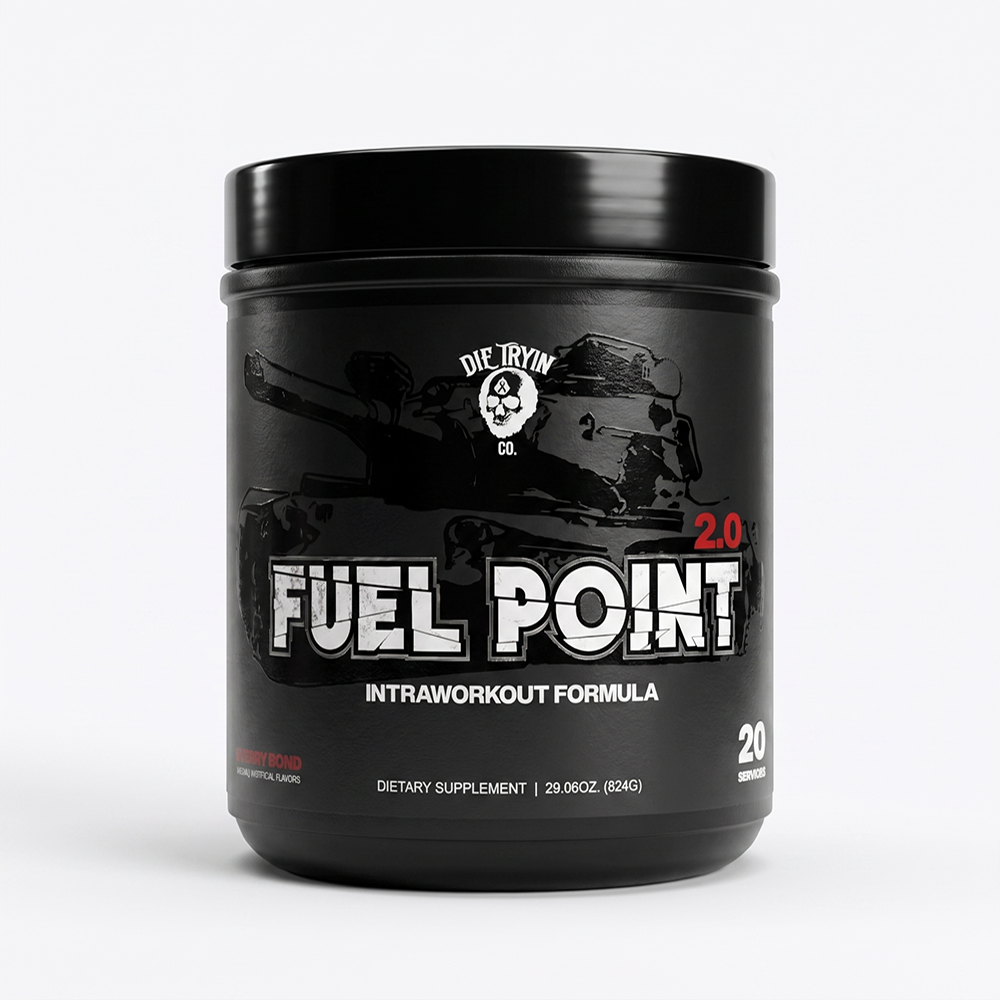
Fuel Point 2.0: Carbs, EAAs, and Electrolytes in One Scoop
By Jon Klipstein, U.S. Army Combat Veteran & Founder of Die Tryin Co.
Science reviewed by Onur Oncer, BS Physiology and peer-reviewed published researcher.
ONE SCOOP INSTEAD OF THREE TUBS

Here's the truth about intra-workout supplements, the ones you drink while you train. Most people are buying the same workout three separate times.
A tub of carbs. A tub of aminos (amino acids, the building blocks of protein). A tub of electrolytes, the salts and minerals you lose in sweat. Three scoops, three price tags, three things to remember, and a shaker that tastes like a chemistry experiment. That's not a stack, that's a shopping problem.
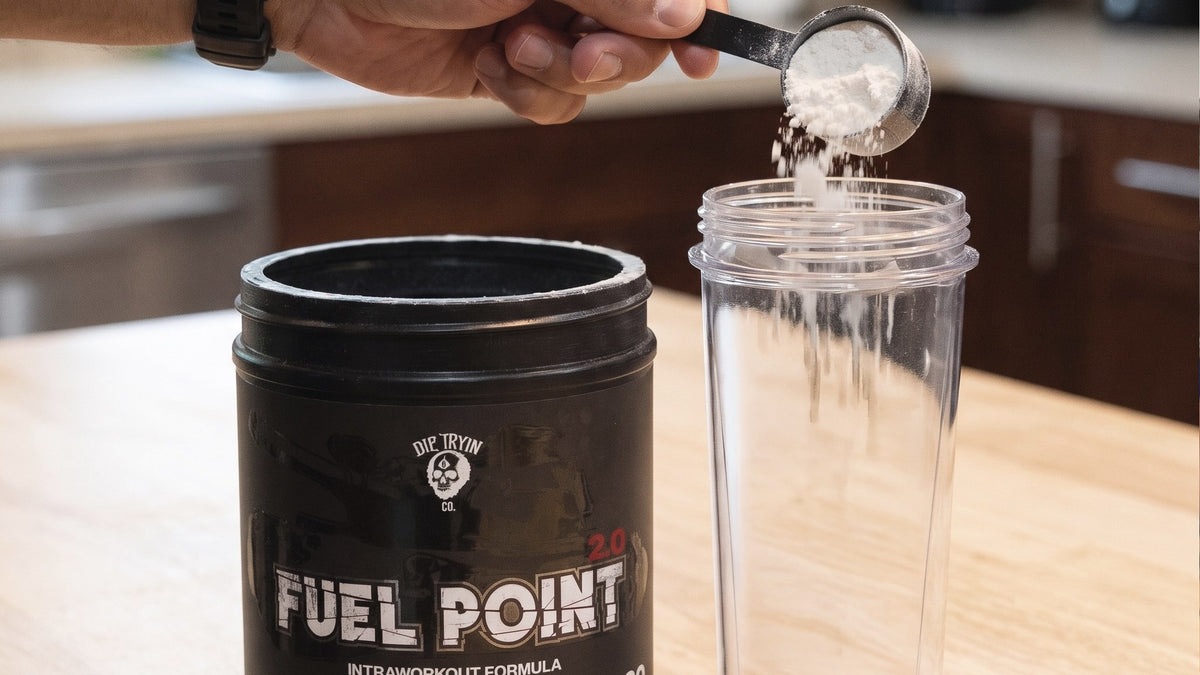
Fuel Point 2.0 is one scoop that covers all three jobs. Below is every ingredient and every dose. A label you have to squint at is usually a label with something to hide.
| WHAT'S IN IT | PER SCOOP | THE JOB IT DOES |
|---|---|---|
| SusCarb® Dextrin (HBCD) | 24,000 mg | The fuel. A branded carb powder that clears your stomach fast. |
| BCAA 2:1:1 (Leucine, Isoleucine, Valine) | 4,000 mg | Branched-chain amino acids (BCAAs), with twice as much leucine as each of the other two. Leucine is the trigger that starts muscle building. |
| L-Lysine HCl | 750 mg | Essential amino acid |
| L-Threonine | 750 mg | Essential amino acid |
| L-Histidine Base | 500 mg | Essential amino acid |
| L-Phenylalanine / L-Tryptophan / L-Methionine | 250 mg each | Completes all nine essential amino acids |
| L-Glutamine | 2,000 mg | Recovery and gut support |
| Taurine | 1,000 mg | Hydration inside your cells, endurance support |
| Coconut Water Powder | 1,000 mg | Electrolytes that come naturally in coconut water |
| Sodium (Pink Himalayan Sea Salt) | 340 mg | The electrolyte you actually sweat out |
| Potassium | 430 mg | Keeps fluids balanced, helps muscles contract |
| Magnesium (as Magnesium Glycinate) | 130 mg | 31% of your Daily Value, about a third of a day's amount. Glycinate (magnesium bound to glycine, an amino acid), not the cheap oxide form. |
| Calcium (from Calcium Citrate) | 60 mg | Helps muscles contract |
110 calories. 20 servings. Cherry Bomb flavor. No proprietary blends. A blend lists the ingredients but not how much of each. That's just a way to avoid telling you how little is in there.
ALL NINE AMINOS, NOT JUST THREE

This is the part that quietly matters most, and it's where most intra-workout products cut the corner.
BCAAs are three amino acids: leucine, isoleucine and valine. Leucine really is the trigger for muscle protein synthesis, the process your body uses to build new muscle. So BCAA-only products aren't useless. But pulling the trigger without supplying the raw material is like turning on a saw with no lumber. Muscle is built from all nine essential amino acids (EAAs). Those are the ones your body can't make, so they have to come from what you eat or drink. If six of them are missing, your body has to pull them from somewhere else.
Fuel Point 2.0 carries the 4 g of BCAAs and the other six. Per scoop, you get 6,750 mg of complete EAAs. That's the whole reason this replaced our standalone EAA product instead of sitting next to it. For the deeper version of how protein and amino acids drive growth, read the complete protein guide.
Worth being clear: aminos during training are not a replacement for hitting your daily protein. On PubMed, the U.S. government's free database of medical research, you can find a 2018 review of protein and muscle gains from weight training. It combined 49 studies with 1,863 people. It found that total daily protein is what drives gains. The benefit leveled off at about 0.7 grams of protein per pound of body weight a day (1.62 grams per kilogram). Aminos mid-session are a convenience and a support, not the foundation. We put amino acid powders and whey head to head in EAAs vs whey protein.
WHAT IS SUSCARB, AND WHY DID IT TAKE US THIS LONG?
The carb in Fuel Point 2.0 is a type called HBCD, short for highly branched cyclic dextrin. It is made from glucose, the same sugar that is in your blood. But it's not the generic kind. It is SusCarb® Dextrin, a branded HBCD made by Zymebase Inc. Getting it into an American tub is the single biggest reason this formula took as long as it did.
Die Tryin Co. is the first company in the United States to put SusCarb in a supplement. Not the first to use HBCD, which has been in the category for years. The first to use this one.
Being first is a slower way to launch a product. A new branded ingredient means new supplier paperwork, new documents and new spec sheets. It also means a production run nobody in the country has done before. There is no other brand's homework to copy. Every step took longer than it would have with an everyday carb we could have bought from three U.S. suppliers on a Tuesday.
The obvious question is why we bothered. HBCD is not rare. We could have put Cluster Dextrin on the label, the ingredient that built this whole category, and shipped a year sooner. Here is the answer.
What SusCarb actually is
SusCarb is an HBCD made with enzymes, which are proteins that speed up a chemical change. Cheaper carb powders use a harsher acid process. The result is a big carb built from glucose, with a tight, branched shape. It also has very low osmolarity, which means it does not pull much water into your gut.
Low osmolarity is the entire point. A high-osmolarity carb makes your gut pull in extra water to thin it out, so the drink just sits there. That is the sloshing feeling that ends a lot of intra-workout experiments. A low-osmolarity carb clears the stomach faster. That's why HBCD became the premium option in sports nutrition. It's also why we were willing to wait for the version we wanted.
SusCarb vs. Cluster Dextrin: what actually differs
Every HBCD has the same basic build: short chains of glucose with branches coming off them, a bit like a tree. Chemists call the links along a chain alpha-1,4 bonds and the branch points alpha-1,6 bonds. Two specs separate one HBCD from the next, and both of them matter:
- Branching ratio. This is how often the chains branch. More branch points pack the molecule into a tighter, rounder ball. That compact shape is why HBCD can be a huge, heavy molecule and still keep osmolarity low. It's the whole reason a heavy carb does not sit in your gut.
- Size spread. This is how much the molecules vary in size. A wide spread means the tub is a mix. You get some true HBCD plus a tail of small pieces that act more like maltodextrin, a cheaper, common carb powder. A narrow spread means most of the scoop is actually doing the job you paid for.
Glico's Cluster Dextrin is made from corn starch. An enzyme takes the branched part of the starch, called amylopectin, and rebuilds it into rings with short glucose chains of a fixed length. It is the original, and it earned its reputation.
Zymebase's spec says SusCarb branches more often than the HBCD products already on the market (a higher branching ratio). The same spec gives it more even molecule sizes than those products, with a narrower spread. It keeps everything that defines this type of carb: big, heavy molecules, low osmolarity, and a powder that dissolves easily. More branch points, less variation scoop to scoop.
That is why we waited. Not for a different ingredient, for a tighter version of the right one.
And here is the catch we are not going to bury: that is the manufacturer's published spec, not a head-to-head human trial. Nobody has run SusCarb against Cluster Dextrin with athletes and measured a winner. We chose it on the spec sheet and on the chemistry. We'd rather tell you that plainly than pretend we have evidence that does not exist. For the full comparison, including where Carb10 (a carb made from pea starch) fits, read the intra-workout carb breakdown.
SusCarb vs. maltodextrin vs. plain sugar
Maltodextrin is cheap and it works, but big servings are hard on some stomachs. Dextrose (pure glucose) and sucrose (table sugar) are cheaper still and absorb fast. They're also the most likely to leave you bloated, or spiking and crashing mid-session. SusCarb sits at the other end: it costs more per gram, it's a bigger molecule, and it leaves the stomach more gently.
Zymebase's own in-house testing reports SusCarb beating glucose and maltodextrin on exercise performance by wide margins. That is the manufacturer's data, not independent research, and we are going to say so rather than reprint it as fact. What we stand behind is the chemistry, the published HBCD research below, and the 24,000 mg on our label.
How much SusCarb is in a scoop
Twenty-four grams. SusCarb® Dextrin (HBCD) 24,000 mg, printed on the Supplement Facts panel in milligrams like everything else in the formula. No blend, no vague "carbohydrate matrix" name, no rounding.
SusCarb® is a registered trademark of Zymebase Inc.

THE CARB: WHAT HBCD ACTUALLY DOES (AND WHAT IT DOESN'T)
SusCarb is an HBCD, so the published HBCD research is the evidence it builds on. HBCD is the carb this whole category has been excited about for a decade. Here's the honest version, because you deserve better than the supplier's sales pitch.
The chemistry is real. In theory, HBCD's big, low-osmolarity molecule clears the stomach faster and sits lighter than the same amount of cheap sugar. That's how it is supposed to work, and it's the reason serious carb powders use it.
The evidence is thinner than the marketing. Search PubMed and you find essentially one proper trial of HBCD and weight training (a 2024 study). It tested 30 physically active people, half men and half women (15 each). During bench press, bench pull and squat work, they sipped either 45 g of HBCD or a placebo, a look-alike drink with none. Everyone tried both, in random order, and neither they nor the researchers knew which drink was which. The HBCD was easy on the stomach, with no gut complaints. It also made the reps faster, but only in the men. It did not meaningfully change how tired people felt. Several of the researchers are tied to a supplement company's research center, so factor that in.
So: a mild, real boost in lifting speed, seen in the men, from one small trial with industry ties. Not a miracle. What is well established is the boring part. Carbs during long or hard sessions support performance, and HBCD is a comfortable way to get them in.
One more honest note on dosing. Our scoop is 24 g of SusCarb, and that's deliberately moderate. Studies pushing very strong carb drinks during hard efforts have run into real stomach and gut trouble. A scoop you can't keep down fuels nothing. 24 g sits in the range most people handle without thinking about it. If you are pregnant, managing a medical condition or taking medication, clear any supplement with your doctor first.

THE ELECTROLYTES ARE NOT AN AFTERTHOUGHT

Most intra-workout formulas sprinkle in a tiny amount of electrolytes just so they can list them. 340 mg of sodium is not a tiny amount.
Sodium is the electrolyte you actually lose in real amounts when you sweat. It's also the one most lifters don't replace enough, because they've been told for twenty years that sodium is the enemy. Add 430 mg of potassium, magnesium in the glycinate form instead of the cheap oxide form, and calcium citrate. Now you have real hydration support, not label decoration. More on why this matters in the hydration breakdown.
WHO THIS IS ACTUALLY FOR

Cut to the chase. Intra-workout carbs are not a must for everybody, and we're not going to pretend otherwise.
- Worth it: sessions over 60-75 minutes and two-a-days (two sessions in one day). Also high-volume muscle-building phases, endurance work, rucking (walking with a loaded pack), and hybrid training that mixes lifting and cardio. And anyone training hard on a calorie deficit (eating less than they burn) who keeps running out of gas mid-session.
- Worth it: anyone buying carbs and aminos separately right now. This is the same job for one scoop.
- Probably not worth it: a 40-minute session where you ate a real meal two hours before. You're fine. Drink water.
- Definitely not a fix for: bad sleep, a day you didn't eat enough, or a program that isn't progressing. Basics beat hype, every time.
The timing guide for before, during and after training maps where this sits in your whole day. The athlete's fueling guide handles the macro side: your daily protein, carbs and fat.
FREQUENTLY ASKED QUESTIONS
How do I take it?


Mix one scoop in 6-10 oz of water and sip it through your session instead of slamming it up front. That's how the trial above gave it, and it's easier on your stomach.
Does this replace the EAA product?
Yes, Fuel Point 2.0 carries all nine essential amino acids at 6,750 mg, so there's no reason to run both. One scoop, one job, one price.
Will 24g of carbs break my fast or ruin a cut?
It's 110 calories inside your training window, and if those calories fit your daily target, they're not the problem. If you train fully fasted by choice, this isn't your product, and that's fine.
It has sucralose and acesulfame potassium. Should I care?
Fair question, and we'd rather answer it than dodge it: both are zero-calorie sweeteners, well within established safety limits at the amounts in this product. A product nobody wants to drink doesn't get drunk, and the real evidence on zero-calorie sweeteners is in is sucralose safe.
Can I stack it with a pre-workout?
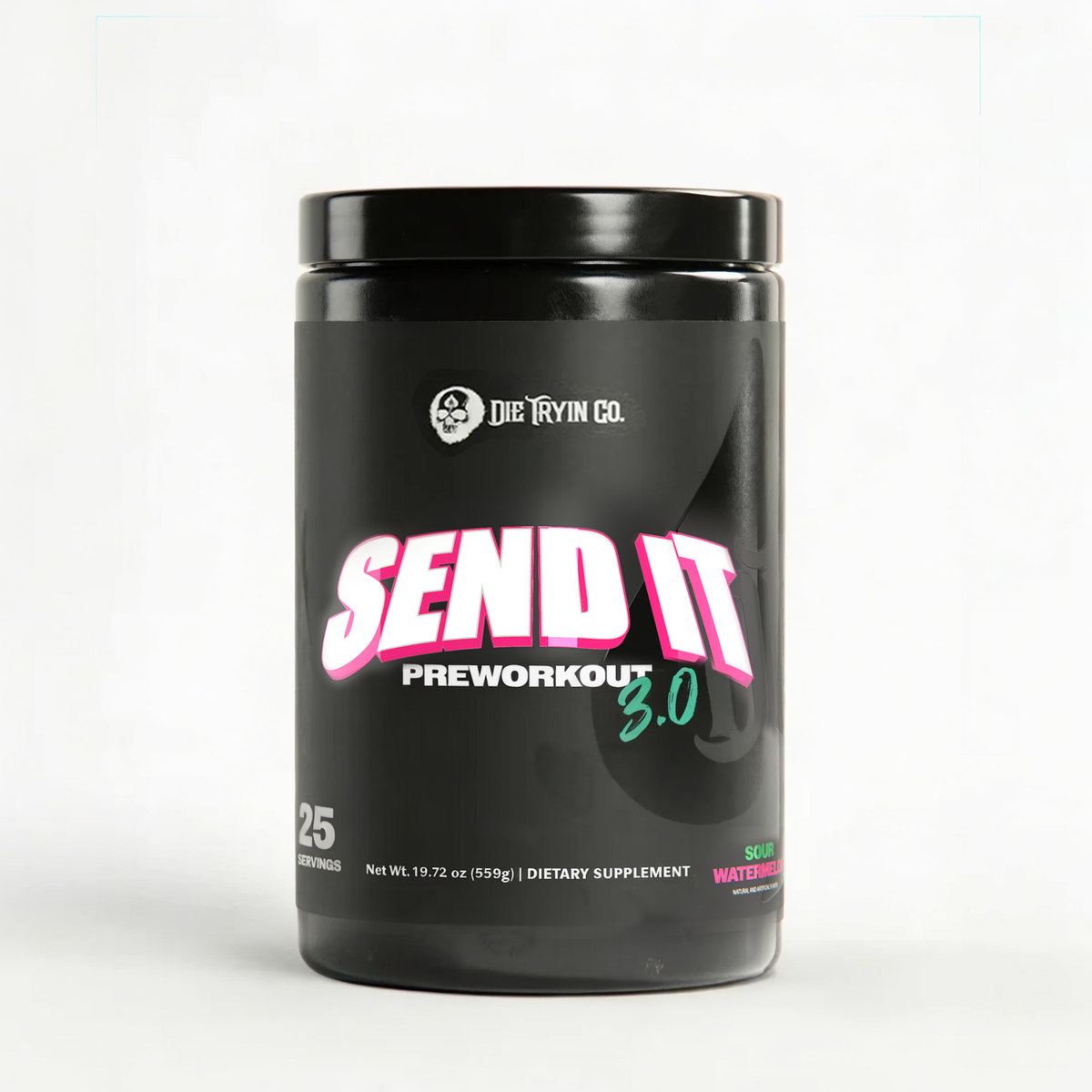
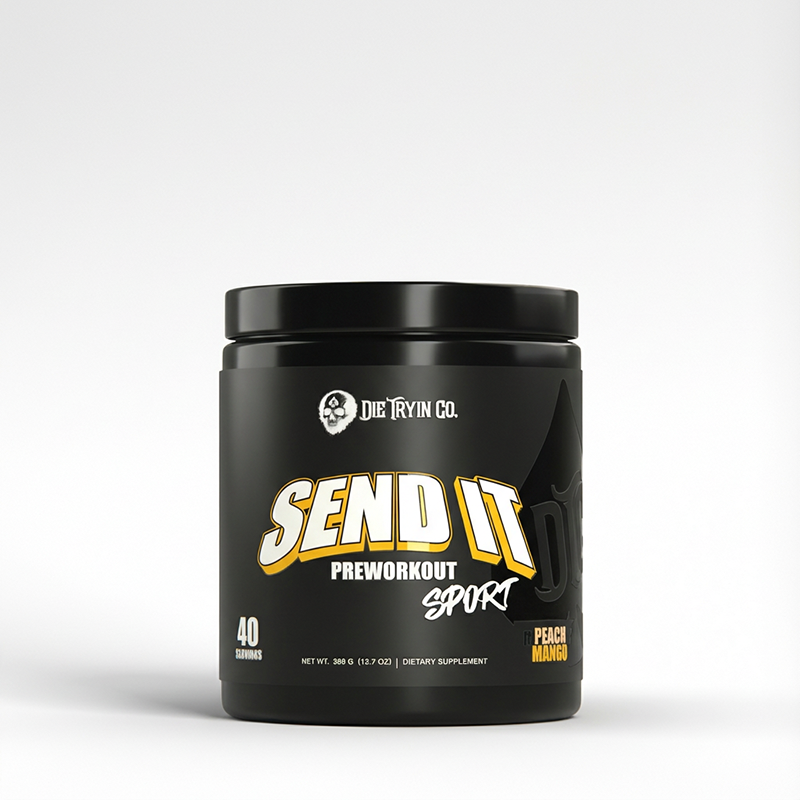
Yes, it's stimulant-free, so it stacks with anything. SEND IT Sport is the natural pairing for long sessions.
Is HBCD really better than regular maltodextrin?
Probably somewhat, mostly for comfort rather than performance, but the evidence is one small trial, not a mountain. We use it because it sits well at a moderate dose, not because we think the carb source is magic.
READY TO GEAR UP?
Fuel Point 2.0 covers the session. These cover everything around it:
- Fuel Point 2.0: 24 g of HBCD and 6,750 mg of complete EAAs. Plus 2 g of glutamine and a full set of electrolytes, all in one scoop.
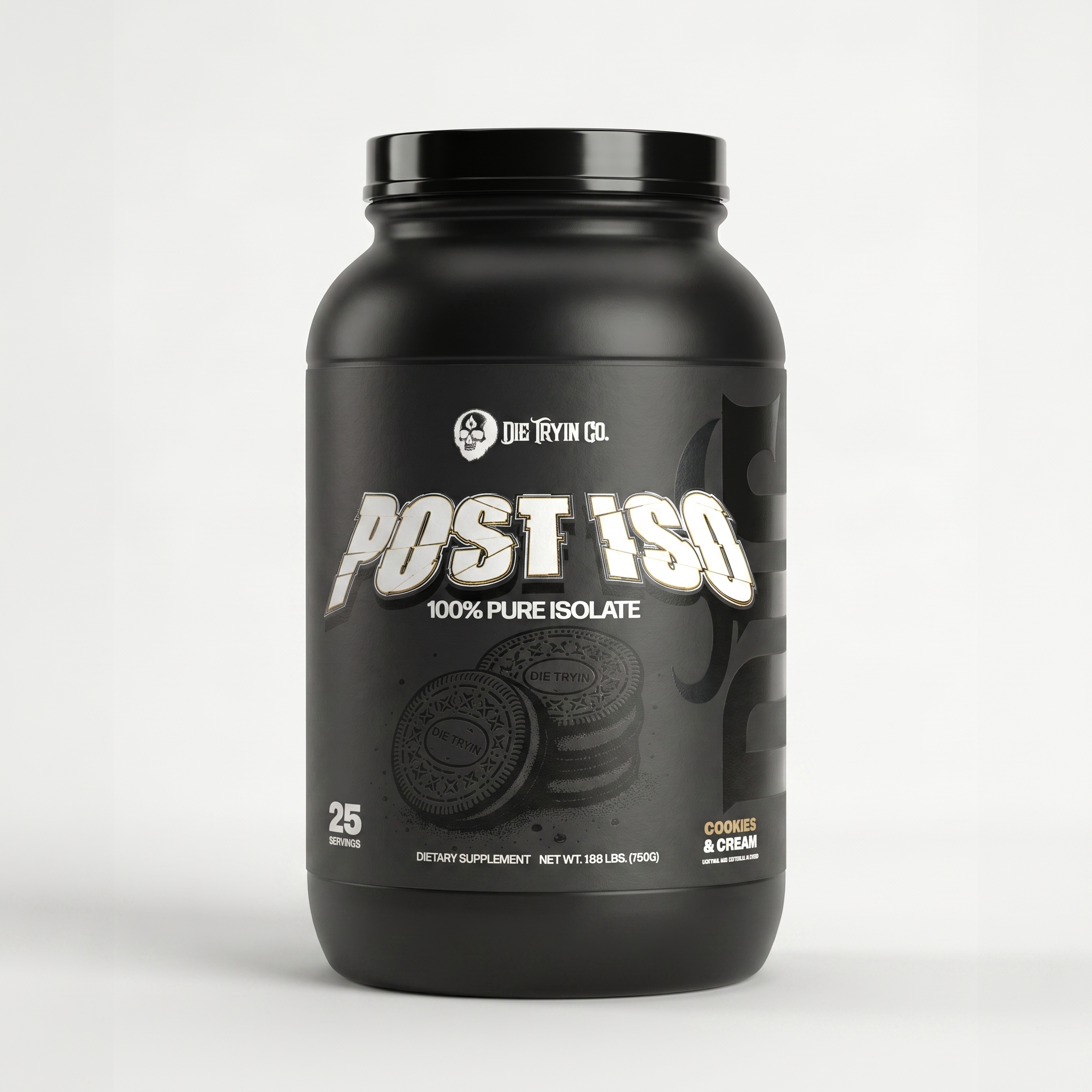
- Post Iso: 24 g of protein from whey isolate, for after. Aminos during training support the session; total daily protein builds the muscle.
- Micronized Creatine Monohydrate: 5 g daily, the supplement with the most research behind it in the category.
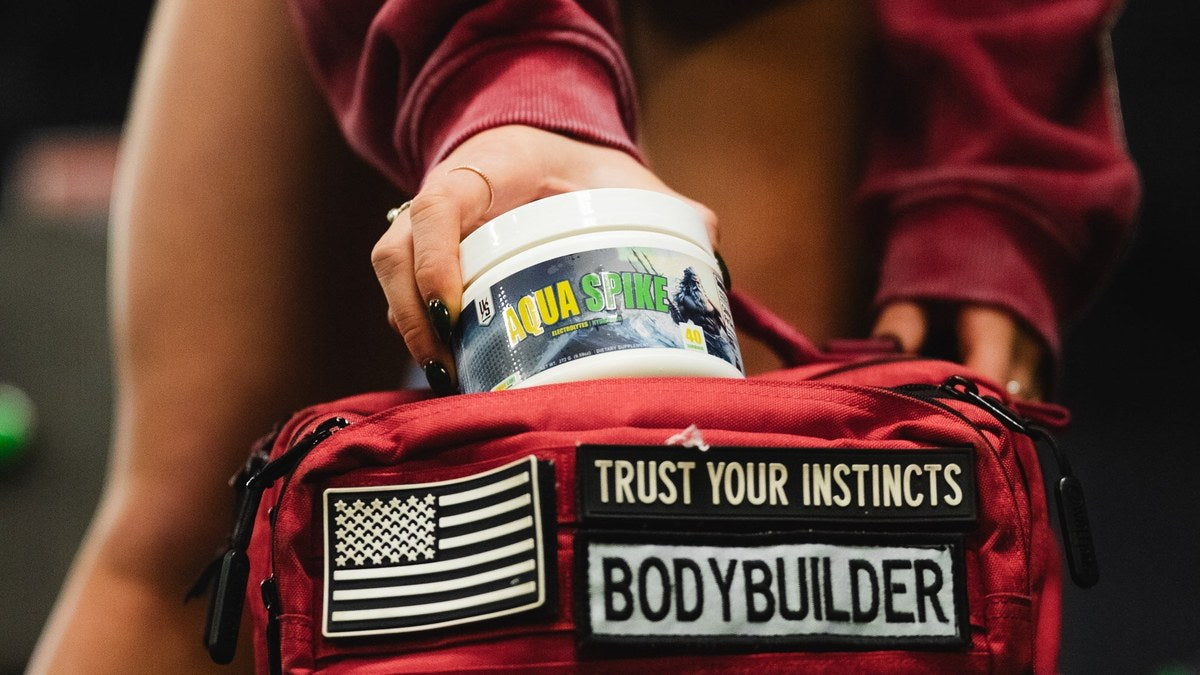
- Aqua Spike v2: for the hours you're not training.
- Stainless Steel IceShaker: keeps it cold through a long session.
- Not sure what fits your training? Take the quiz.
Real doses of real ingredients, printed where you can read them. That's the whole standard.
ALWAYS FORWARD.

GEAR THAT FITS THIS POST
The products this article actually talks about. Real doses, disclosed labels, veteran owned.

Read more
The complete protein playbook — how much you need, when timing matters, which sources deliver, and the myths costing you money.
Two premium carb sources, a lot of marketing, and a much smaller evidence base than either would suggest.
The complete hydration playbook: how much water you actually need, what dehydration does to your performance, and how to hydrate around hard training.
What to take before, during, and after training — and exactly when. The complete pre/intra/post supplement timing guide. No filler, no 12-bottle stacks.

The complete athlete's guide to fueling: carbs for output, protein for recovery, fats for hormones. Daily targets, timing, and the mistakes that kill progress.
Regulator reviews, the microbiome debate, and the actual amounts in a scoop. The sucralose question answered with citations, not headlines.