


Is Sucralose Safe? The Evidence, Straight
By Jon Klipstein, U.S. Army Combat Veteran & Founder of Die Tryin Co.
Science reviewed by Onur Oncer, BS Physiology and peer-reviewed published researcher.
THE SWEETENER ON YOUR LABEL, ANSWERED STRAIGHT
Listen up. Sucralose is in nearly every flavored supplement on the market, ours included. It is also the target of a decade of scare headlines. Both of those things are true, and neither one settles the question.
The honest answer takes ten minutes instead of a headline: what the safety reviews actually found, where the science is genuinely still moving, and how much of the stuff is really in a scoop.
Here is all of it, with the receipts.
| QUESTION | WHAT THE EVIDENCE SAYS | SOURCE |
|---|---|---|
| Is it approved as safe? | Yes. Cleared at intended intakes by every major regulator after decades of data | Magnuson 2017 critical review |
| Does it cause cancer? | No credible signal for genotoxicity or carcinogenicity in the animal or mechanistic data | Marchitti 2025 review |
| Does it wreck the gut? | A 14-day trial at realistic doses found no shift in the microbiome or its outputs | Ahmad 2020 RCT |
| Does it affect blood sugar? | Mixed. Averages look flat, but responses are person-specific and track your microbiome | Suez 2022, Cell |
| How much is in a scoop? | Flavoring amounts. A small fraction of the FDA daily limit | ADI math below |
WHAT SUCRALOSE ACTUALLY IS
Sucralose starts life as regular table sugar. Three of its hydroxyl groups get swapped for chlorine atoms, which does two things: it makes the molecule roughly 600 times sweeter than sugar, and it makes it mostly indigestible. The bulk of what you swallow passes through you unchanged, which is exactly why it sweetens a scoop for close to zero calories.
It has been in the food supply since the late 1990s, and it is the default sweetener in sports nutrition because it is heat stable, mixes clean, and takes a fraction of a gram to flavor an entire tub.
Why it matters for lifters specifically: flavor is compliance. A pre-workout you enjoy drinking is one you take consistently, and a protein shake that tastes like dessert is the one that keeps you out of the drive-through on a cut. Sweetening that scoop with actual sugar would cost 100 calories or more per serving. Sucralose does the same job for none, which is the entire trade being made on your label.
WHAT THE SAFETY REVIEWS FOUND
The most comprehensive modern review of the sucralose literature, covering toxicokinetics, genotoxicity, reproduction, immune function and carcinogenicity across animal and human studies, concluded it is safe at intended intakes (Magnuson et al., 2017). A 2025 review by Marchitti and colleagues in Advances in Nutrition looked specifically at cancer mechanisms across eight non-sugar sweeteners and found no biologically plausible route by which sucralose could cause cancer in humans.
Run the actual numbers on exposure. The FDA acceptable daily intake is 5 mg per kilogram of bodyweight per day, every day, for life. For a 180 lb lifter that is roughly 410 mg of pure sucralose daily, the sweetness equivalent of about half a pound of sugar. The flavoring dose in a scoop of pre-workout is nowhere near that, and intake research consistently finds even the heaviest consumers sit well under the limit.
THE BLOOD SUGAR QUESTION, WITHOUT SPIN
This is where the honest boundary sits, so here it is plainly. Multiple trials, including studies in people with diabetes, show no meaningful effect of sucralose on glycemic control, and that body of work is covered in the Magnuson review. A handful of smaller trials point the other way: Pepino and colleagues found an amplified insulin response to a glucose load in obese non-consumers in 2013, and Romo-Romo and colleagues measured reduced insulin sensitivity after 14 days of daily sachets in 2018.
The study that reconciles the mess is the biggest one. A randomized trial of 120 healthy adults published in Cell gave four different sweeteners at doses below the daily limit and found sucralose nudged glycemic responses on average, but the real finding was that the effect was person-specific and predicted by each individual's gut bacteria. Transplant a responder's microbiome into germ-free mice and the mice inherit the response (Suez et al., 2022).
What that means in practice: if you are metabolically healthy and training hard, the evidence does not show a problem at flavoring doses. If you are managing insulin resistance, you may be a responder, and a cheap glucometer will tell you more about your own body than any headline will.
THE GUT MICROBIOME QUESTION
The scary microbiome studies were mostly done in rodents at doses no human hits. When researchers ran a randomized crossover trial in healthy adults using realistic intakes, 20 percent of the daily limit for two weeks, the microbiome did not measurably move: no change in the dominant bacterial groups and no change in short-chain fatty acid production (Ahmad et al., 2020).
The Suez trial did detect microbiome shifts at sub-limit doses, which is why we call this question moving rather than closed. What has not been run is a multi-year human trial of heavy intake. We formulate on what the evidence shows today: flavoring amounts, disclosed labels, and an unflavored option for anyone who wants zero.
One more piece of context the headlines skip: your gut bacteria shift with sleep, stress, travel, antibiotics and every meaningful change in your diet. The question is never whether something can move the microbiome, it is whether the movement is large, lasting and harmful. On current human evidence at real intakes, sucralose has not cleared any of those three bars.
HOW MUCH IS IN YOUR SCOOP
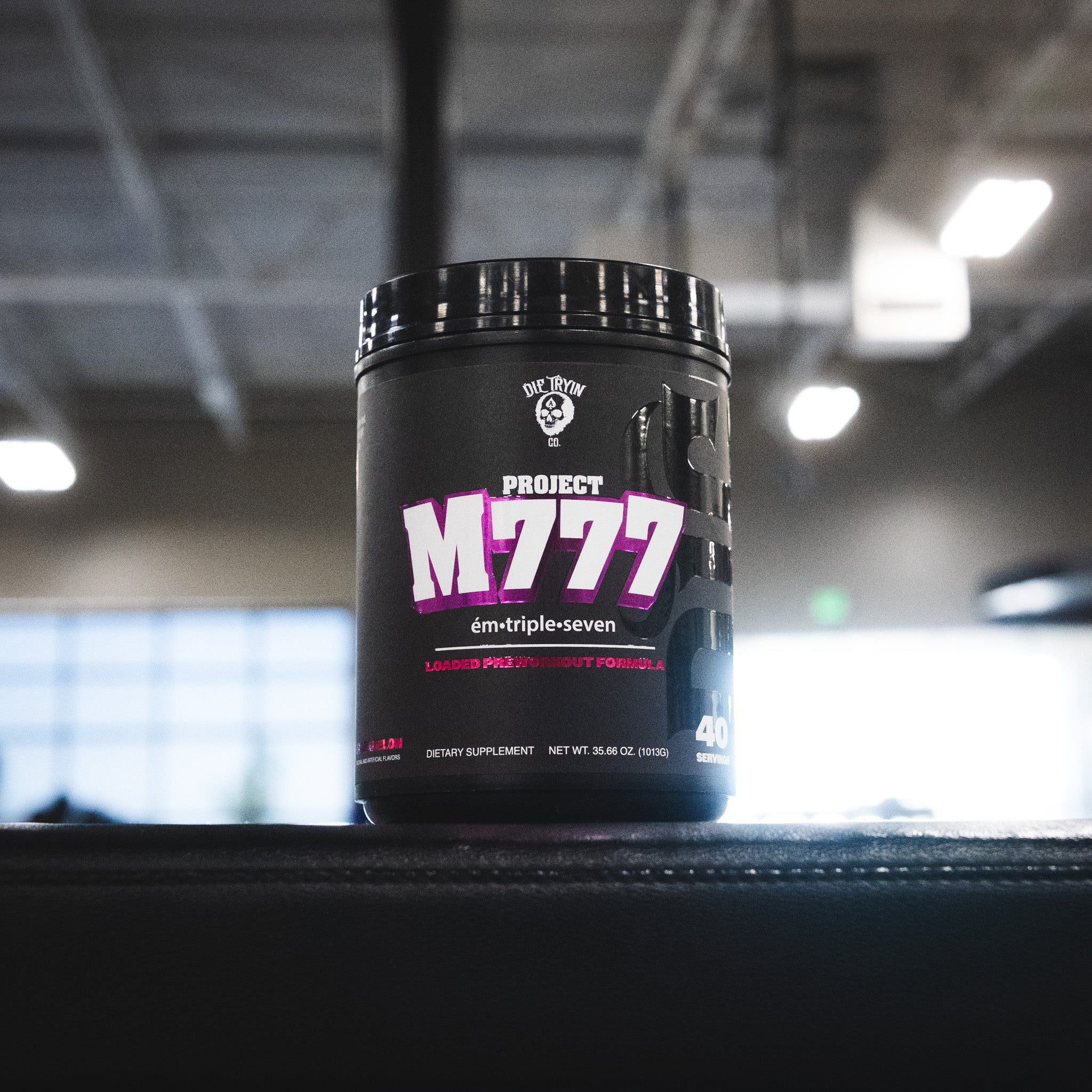
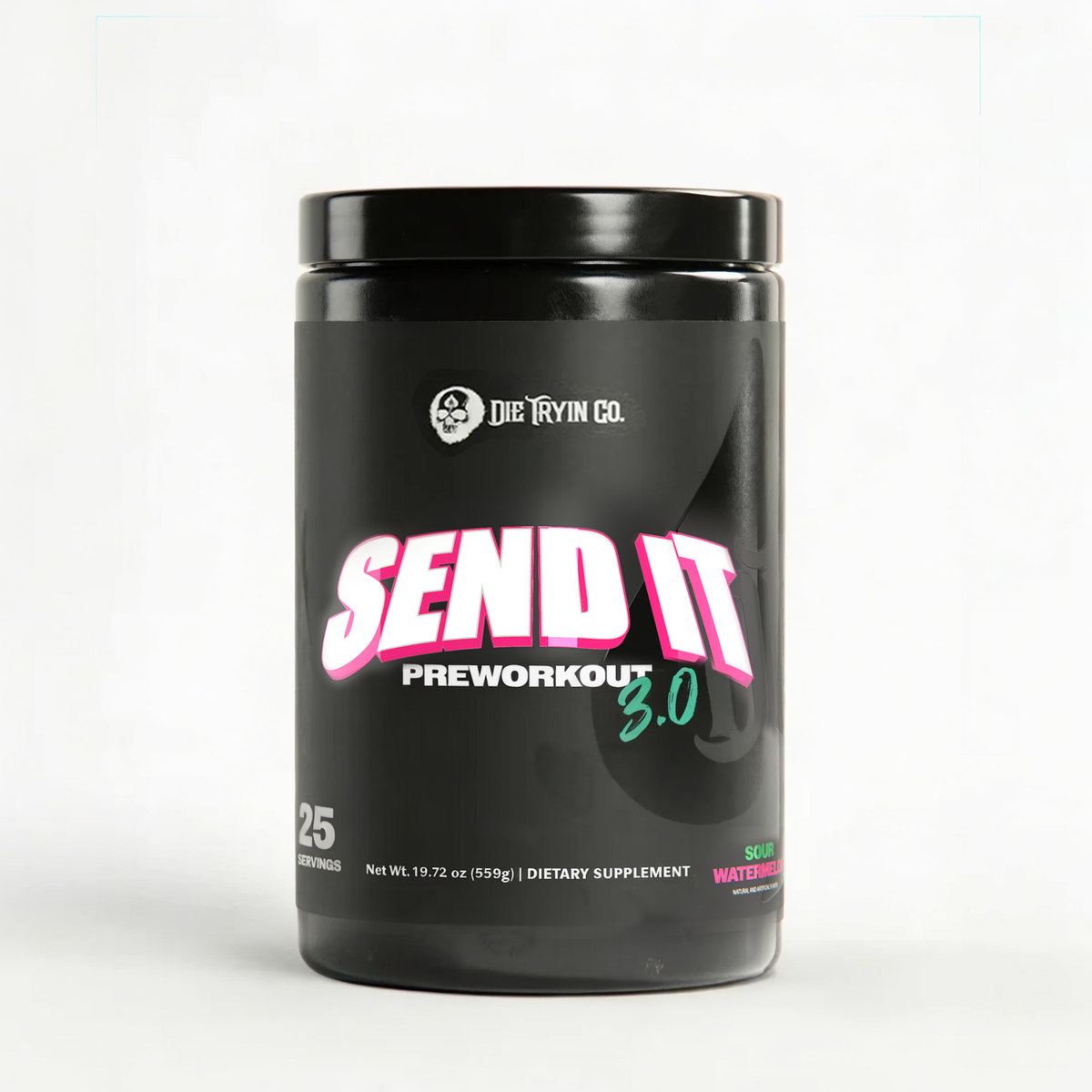
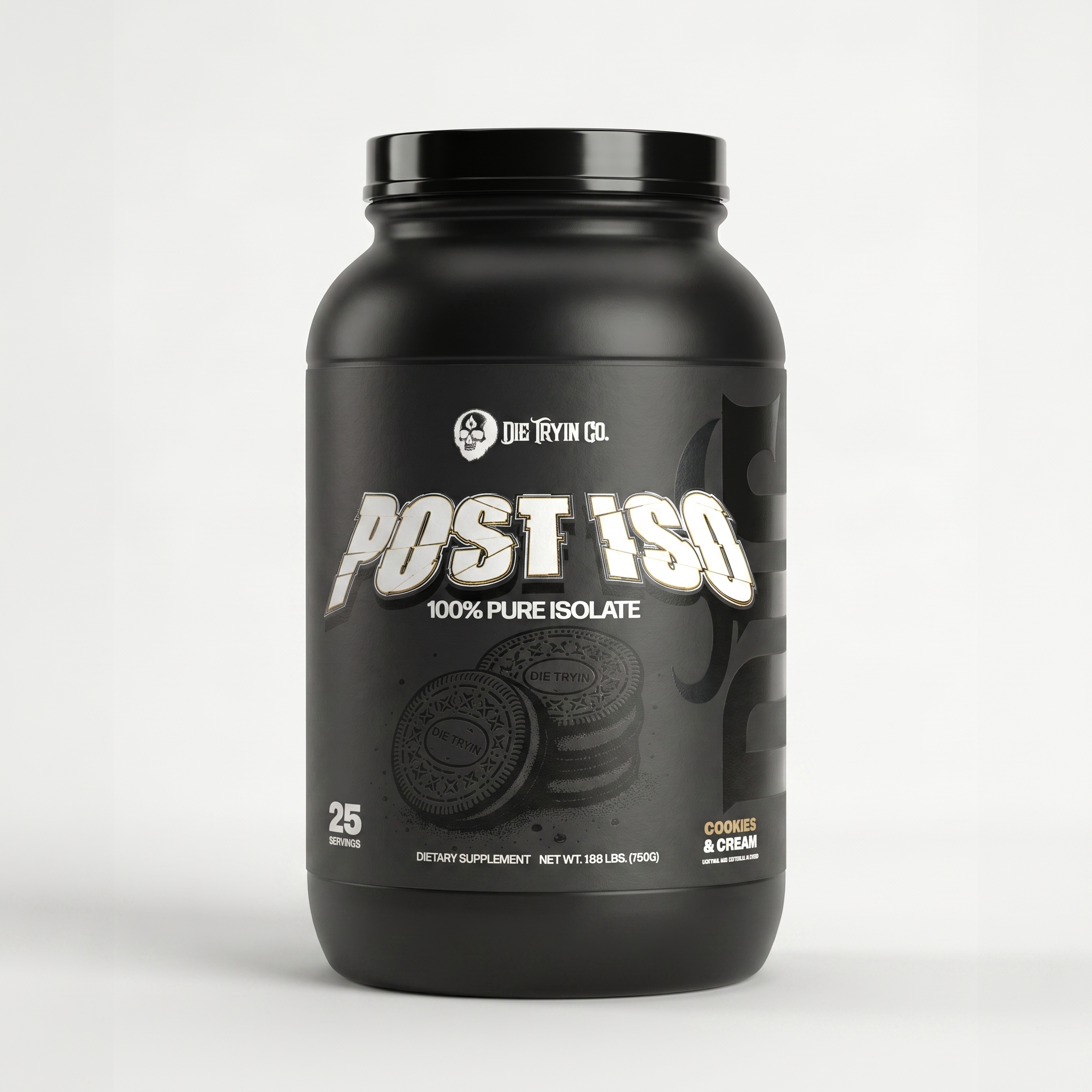
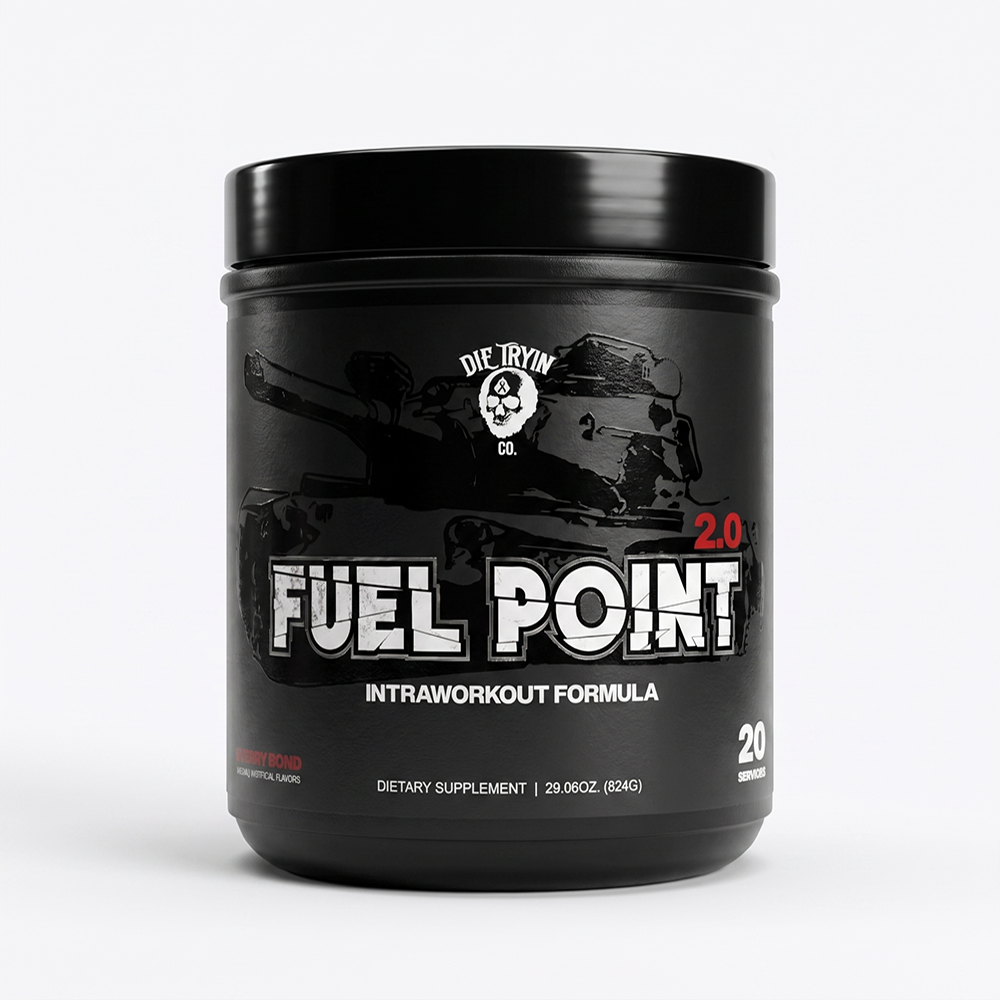
Die Tryin Co. flavor systems use sucralose, sometimes alongside acesulfame potassium, in flavoring amounts. It is on the label of Project M777, the flavored Post Iso options, and Fuel Point 2.0, listed exactly where every brand lists it, under other ingredients.
Every active ingredient in those formulas is dosed on the label with nothing hidden in a blend. We hold the sweetener to the same standard we hold the actives: tell you what is in it and let the evidence carry the argument. If you want no sweetener at all, Creatine Monohydrate comes unflavored, and the full breakdown of how to read a pre-workout label lives in our Ultimate Guide to Pre-Workout.
FREQUENTLY ASKED QUESTIONS
Does sucralose break a fast?
It carries no meaningful calories, so it does not break a caloric fast. If you fast for strict insulin control, the acute data is mixed enough that purists stick to water and unflavored products. Pick your standard and be consistent.
Does sucralose kill gut bacteria?
At realistic human doses, the best controlled trial found no measurable change in two weeks. Rodent studies used far larger doses, and the Cell trial suggests responses vary person to person. Research suggests flavoring amounts are a non-issue for most healthy adults.
Is sucralose banned anywhere?
No major regulator has banned it. The World Health Organization's 2023 guidance on non-sugar sweeteners was about their usefulness for long-term weight control, not about toxicity, and it explicitly was not a safety ruling.
Is sucralose worse than aspartame?
Different molecules with different chemistry, both cleared at their intake limits by the same review processes. Aspartame carries a genuine warning for people with PKU, a rare genetic condition. Sucralose carries no equivalent.
Should I avoid sucralose while cutting?
The evidence does not support cutting it for fat loss reasons. A sweetened scoop that keeps you off a 400-calorie snack is doing its job. If you suspect you respond poorly, test your own glucose rather than guessing.
READY TO GEAR UP?
Every label we print shows every dose. Read them yourself: Project M777 for max-effort days, Post Iso for recovery, unflavored Creatine if you want zero sweeteners in the stack. Not sure where to start? Take the quiz and build from there.
ALWAYS FORWARD.

GEAR THAT FITS THIS POST
The products this article actually talks about. Real doses, disclosed labels, veteran owned.


Read more

What actually works in pre-workout — ingredients, doses, timing, and how to pick the right one. Cut through the marketing. Get the real answer.
Your gut lining runs the same creatine energy system as your muscles. Here is what the research shows on stomach upset, IBS, colitis and leaky gut, and exactly where the human evidence stops.

Creatine gummies can work if the creatine is actually in them, and lab tests keep finding it often is not. Here is why a scoop of Creatine Monohydrate powder still wins.
Flavor doesn't change what creatine does; taking it every day is what counts. How to pick flavored or unflavored, what to mix it with, and how long it lasts once mixed.
Whey protein concentrate now costs more than four times its early-2023 low. Here is what is driving it, what the 2027 forecasts actually say, and how to pay less per gram of protein without getting...
Four days, 1,400 miles on the road, 17 new products and 500 new customers. Here is what went down at the Die Tryin Co. booth at the 2026 Olympia World Fitness Expo.