





SusCarb (Highly Branched Cyclic Dextrin)
By Jon Klipstein, U.S. Army Combat Veteran & Founder of Die Tryin Co.
Science reviewed by Onur Oncer, BS Physiology and peer-reviewed published researcher.
THE CARB BUILT TO GET OUT OF YOUR STOMACH
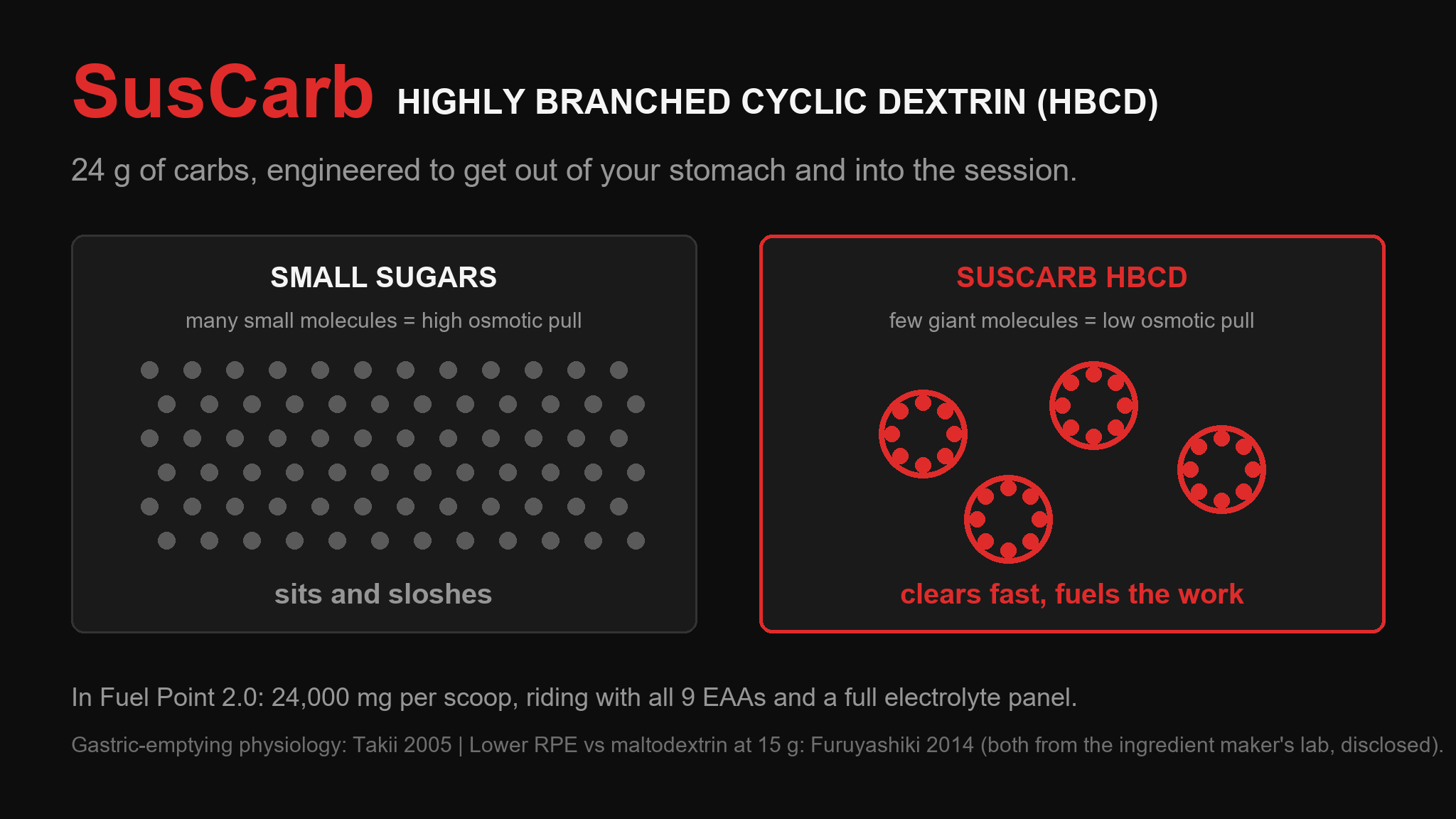
SusCarb® is a brand-name carb. Its technical name is highly branched cyclic dextrin, or HBCD for short. It is made from waxy maize (corn) starch and built into big, tightly packed ring-shaped molecules instead of lots of small sugar pieces.
Size is the whole point. A few big molecules pull far less water than a pile of small sugars, so a serious carb dose clears your stomach fast instead of sloshing around through your training.
Let's be clear: intra-workout carbs, the carbs you drink during training, are not a new idea. Carbs are the most established fuel in sports nutrition, full stop. The problem HBCD is built to solve is delivery. How do you drink 24 grams mid-session without your gut punishing you for it?
| Dose | Context | |
|---|---|---|
| In the studies | 15 g HBCD (endurance effort study) · drinks mixed at 10% carbs (stomach-emptying study) | Grams of HBCD itself |
| Fuel Point 2.0 | 24,000 mg (24 g) per scoop | Comes with all 9 essential amino acids (EAAs), glutamine, taurine and a full set of electrolytes (the salts you sweat out) |
Both rows use the same unit: grams of the carb itself. The study doses come from the papers. The 24 g is printed on the Fuel Point 2.0 label.
WHAT THE RESEARCH SHOWS
An ultrasound study in healthy volunteers measured directly how fast different carb drinks left the stomach. Among the carb drinks, the fast lane belonged to the ones with a low pull on water. HBCD's giant molecule is what lets a strong carb drink, with lots of carbs per sip, stay in that low-pull zone. Smaller sugars at the same strength would stall.
For training, a study during endurance exercise compared 15 g of HBCD with maltodextrin (a common carb powder). Each person tried both drinks, and neither they nor the researchers knew which was which. Effort climbed as the session went on with both drinks, but it climbed less with HBCD at the 30- and 60-minute marks. The gap was big enough that luck was an unlikely explanation.
Where the evidence stops: both studies came out of the lab of the company that invented HBCD. You should know that when you read them. Both are small. Neither proves HBCD builds more muscle or gets you more reps than a cheaper carb. The settled science is that carbs fuel training. What HBCD adds is delivery: a carb built to sit easy in your stomach at a real dose. We build the formula on that, tell you where the research came from, and print the grams.
WHY IT ANCHORS FUEL POINT 2.0
Mid-workout fuel only works if you actually drink it, and nobody keeps sipping a drink that sits like wet cement. SusCarb is the base layer of Fuel Point 2.0. Its 24 g of carbs sit light in your stomach. That leaves room for the amino acids (EAAs) and electrolytes in the same scoop without making the drink heavy. When those carbs matter, and when they don't, is covered in our carb timing breakdown.
If you are pregnant, managing a medical condition or taking medication, clear any supplement with your doctor first.
FREQUENTLY ASKED QUESTIONS
What is SusCarb?
A brand of highly branched cyclic dextrin (HBCD): a large carb from waxy maize (corn) starch with a weak pull on water. It is built to leave your stomach fast and fuel training without a heavy gut.
How is HBCD different from dextrose or maltodextrin?
Molecule size and pull on water: small sugars like dextrose (plain glucose) pull hard on water at a real dose, which slows your stomach and can bloat you mid-set. HBCD packs the same carbs into a far bigger molecule with a weak pull, so the drink leaves your stomach fast.
When do I drink it?
During training: long sessions, two-a-days and hard endurance work are where 24 g of mid-workout carbs earn their place. A 30-minute arm day does not need them.
Does HBCD spike insulin or break a fast?
It is 24 g of real carbs, so yes: it is fuel, not a zero-calorie trick. If you train fasted on purpose, this is the product you skip on those days.
READY TO GEAR UP?
Every dose above is printed on the label, measured as the exact ingredient in your scoop. See every ingredient we use in the Ingredient Index, or take the 60-second quiz to match a formula to your training.
ALWAYS FORWARD.

GEAR THAT FITS THIS POST
The products this article actually talks about. Real doses, disclosed labels, veteran owned.
Read more
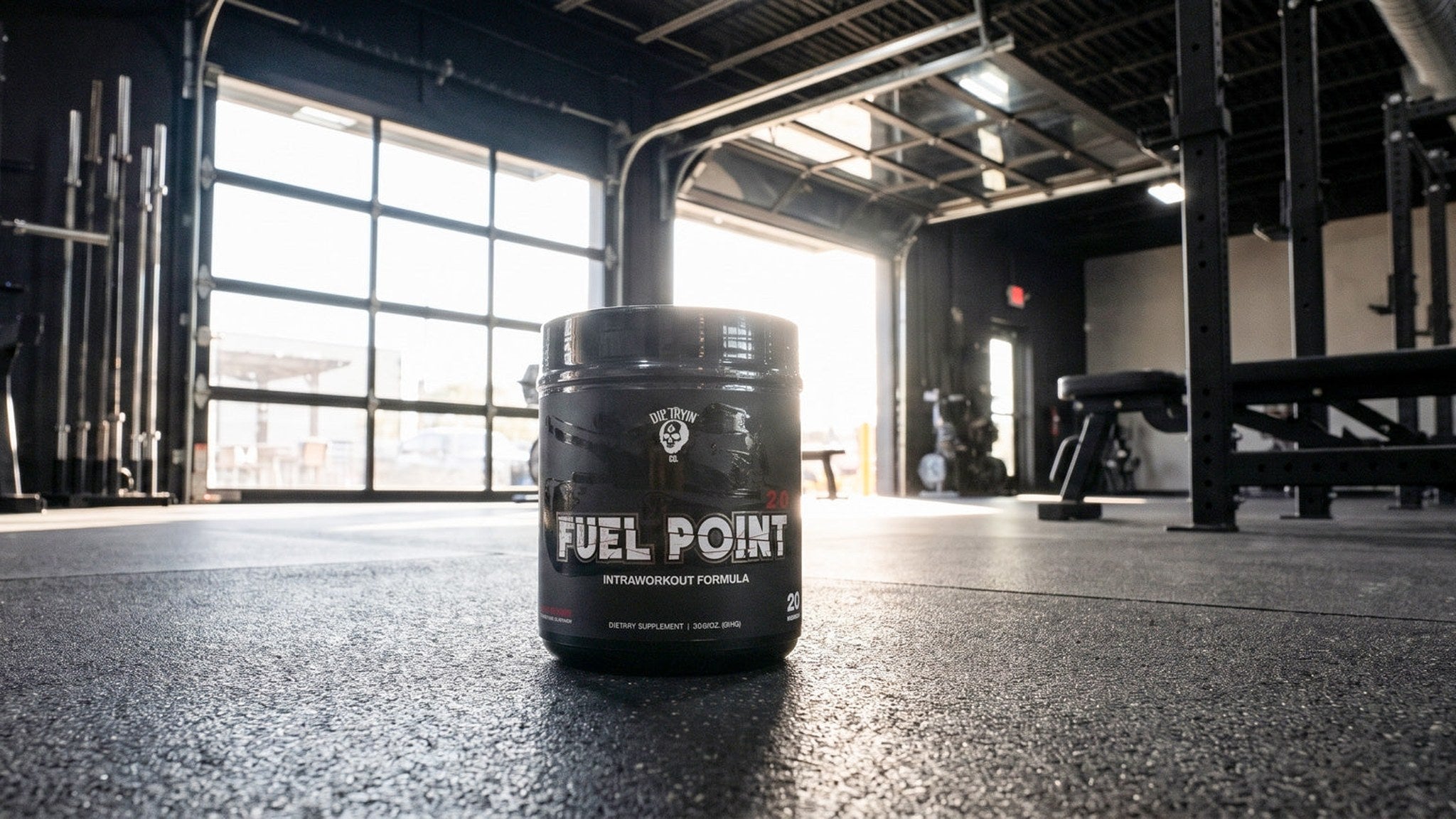
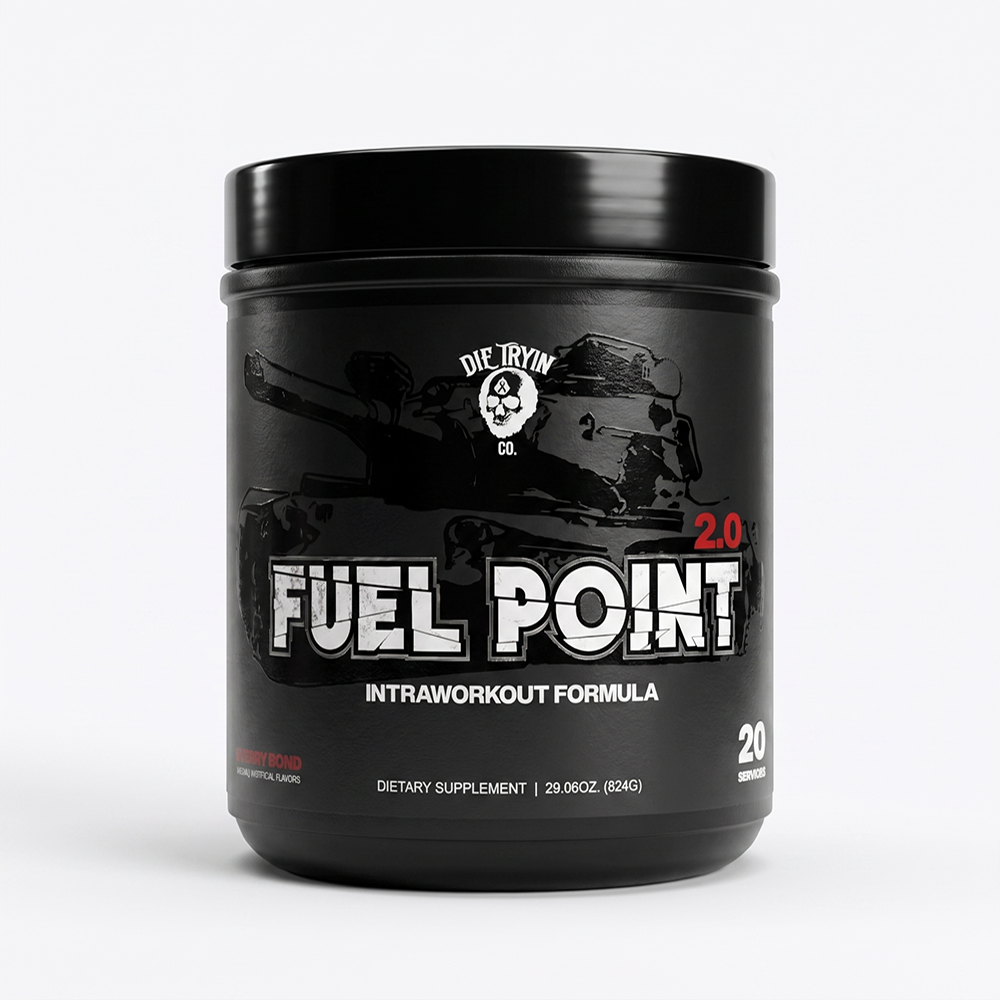
Most people buy carbs, aminos and electrolytes as three separate tubs. Fuel Point 2.0 is one scoop that does all three jobs, with every dose printed where you can read it.

Carb timing matters less than the industry claims and more than the skeptics admit. Here is where the line actually sits.
Your gut lining runs the same creatine energy system as your muscles. Here is what the research shows on stomach upset, IBS, colitis and leaky gut, and exactly where the human evidence stops.

Creatine gummies can work if the creatine is actually in them, and lab tests keep finding it often is not. Here is why a scoop of Creatine Monohydrate powder still wins.
Flavor doesn't change what creatine does; taking it every day is what counts. How to pick flavored or unflavored, what to mix it with, and how long it lasts once mixed.
Whey protein concentrate now costs more than four times its early-2023 low. Here is what is driving it, what the 2027 forecasts actually say, and how to pay less per gram of protein without getting...