



Huperzine A
By Jon Klipstein, U.S. Army Combat Veteran & Founder of Die Tryin Co.
Science reviewed by Onur Oncer, BS Physiology and peer-reviewed published researcher.
THE OTHER HALF OF THE FOCUS STACK
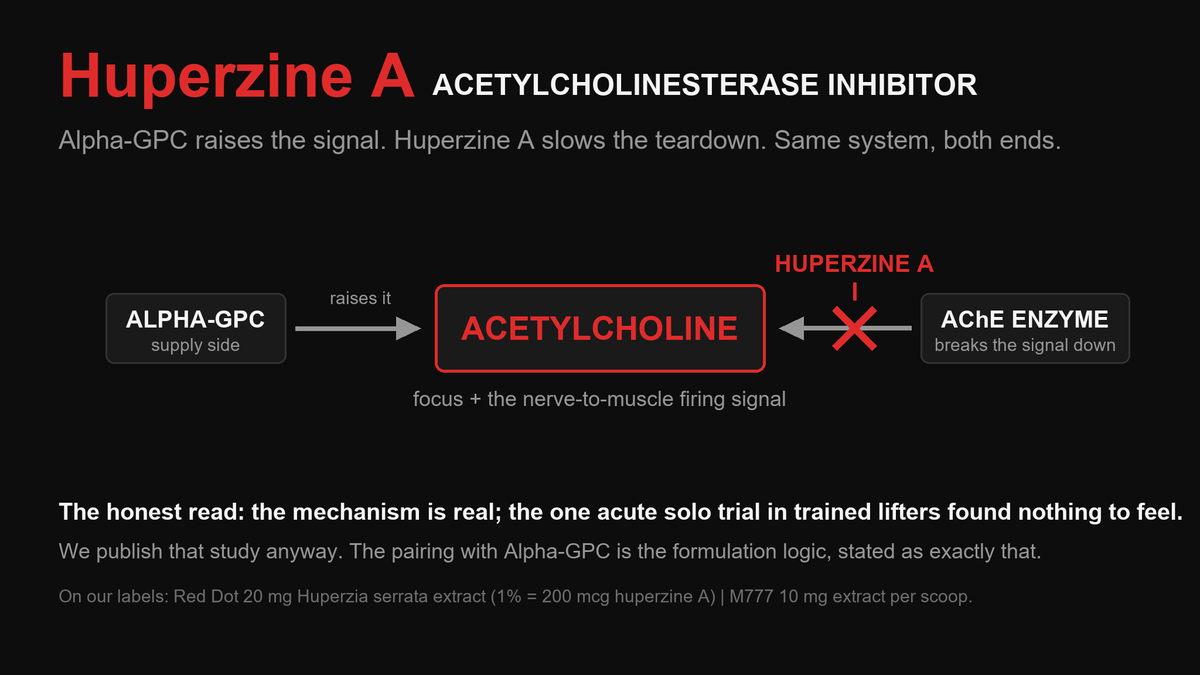
Huperzine A is a natural compound from a plant called Chinese club moss. Labels list the plant by its Latin name, Huperzia serrata. It does one job. Your nervous system uses a chemical messenger called acetylcholine. Your body also makes a cleanup enzyme that breaks that messenger down. Huperzine A slows the cleanup. The slowdown wears off on its own. It does not shut the enzyme down for good.
Acetylcholine plays a part in focus, and it carries the signal from your nerves to your muscles. Slow its breakdown and that signal hangs around longer.
That is why it never travels alone in our formulas. Alpha-GPC works the supply side. It gives your body the raw material to make acetylcholine. Huperzine A works the other side. It slows the cleanup. Raise the level, then hold it. One system, hit from both ends.
WHAT THE RESEARCH SHOWS
Scientists have a good handle on how it works. A review of how it acts in the body shows huperzine A is a strong, temporary brake on the cleanup enzyme. It improved memory in animal studies and in human clinical trials. Here is the context most pre-workout brands skip. Nearly all the research on people was done in Alzheimer's and dementia patients, in medical settings.
A 2021 paper pulled together six earlier reviews of the research. In the Alzheimer's studies, it found better thinking and better daily functioning. But it rated the studies behind those reviews as low quality, and it called the overall evidence too thin to settle the question. It found little to no evidence for two other conditions: dementia caused by poor blood flow in the brain, and thinking problems that fall short of dementia.
There is also one direct sports test. We show it to you because most brands selling huperzine will not. In this trial, 15 trained adults took one dose of huperzine A by itself before testing. The dose was 200 mcg, a tiny amount (more on units below). On another day, in random order, they took a dummy dose (a placebo). Nobody in the room knew which was which. Huperzine A came out no different from the dummy dose on every thinking test and on every strength and performance test. It was also no different on heart rate, or on how hard the work felt while they were doing it. People actually rated the huperzine session as harder afterward.
So here is the straight story. The studies on Alzheimer's and dementia patients do not tell us what it does for healthy lifters. The one trial in people who train used a single dose with nothing else, and it showed no benefit. That trial did not test how we actually use it: next to Alpha-GPC, as the half of the stack that keeps acetylcholine around. It also gave the dose only once, while you take a pre-workout session after session. We paired the two on purpose, based on how each one works in your body. That is why it is in the formula, and we tell you so. We stand behind two things, how it works and the amount printed on the label, and we promise nothing beyond that. You get to see every study either way.
If you are pregnant, managing a medical condition or taking medication, clear any supplement with your doctor first.
One more honesty note, on units, because this ingredient needs it. Huperzine A itself is measured in micrograms (mcg), and a microgram is one-thousandth of a milligram. Labels list the weight of the whole plant extract (the concentrated material taken from the plant) in milligrams (mg):
| Product | On the label | What the number counts |
|---|---|---|
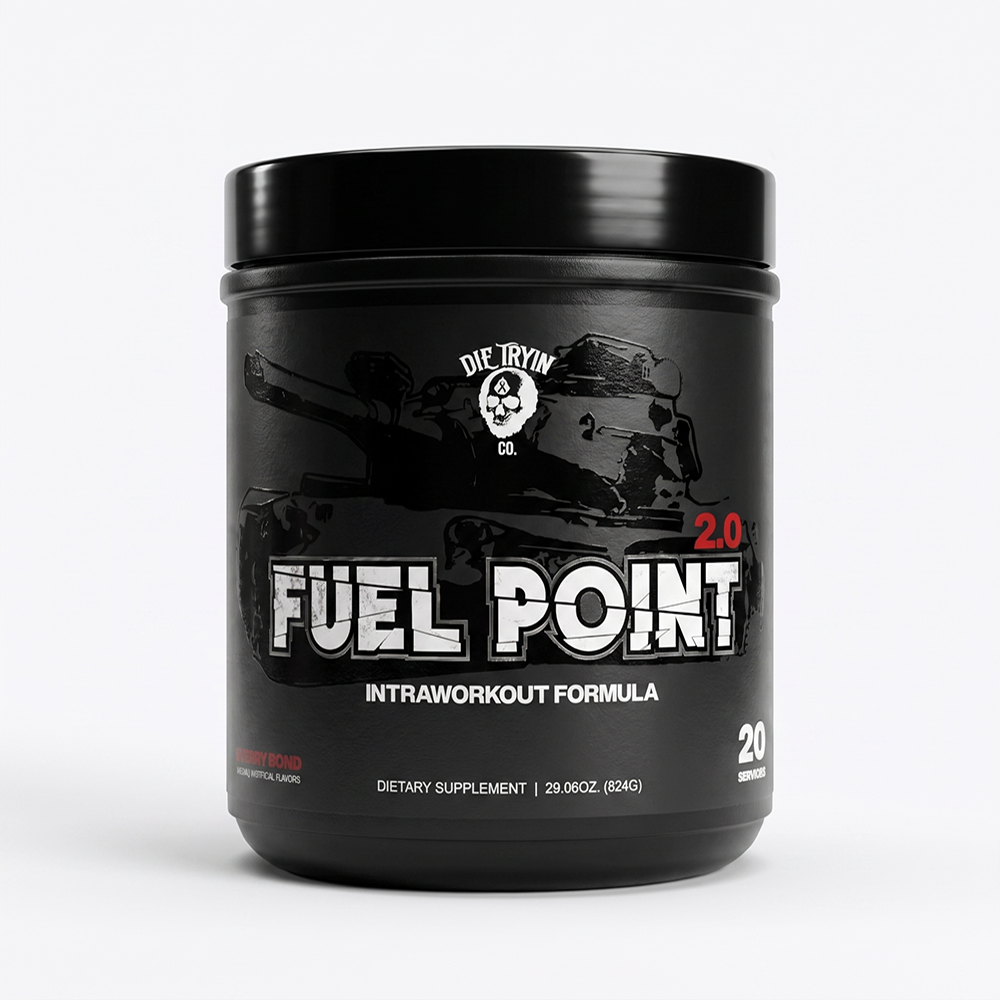
| Red Dot | 20 mg Huperzia serrata extract (1% huperzine A) | The weight of the whole extract. Huperzine A is 1% of that, or 0.2 mg. That equals 200 mcg |
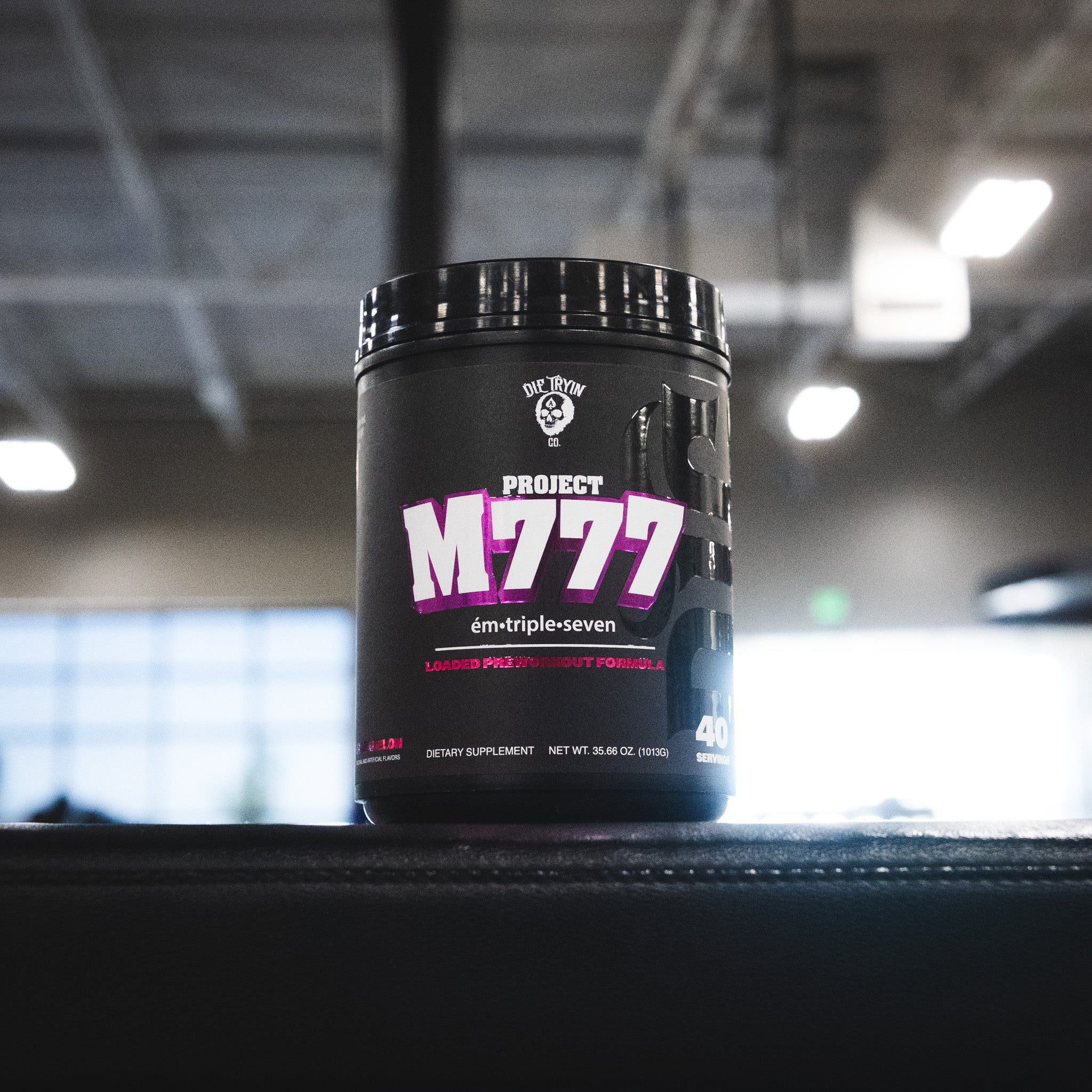
| Project M777 (full 2-scoop serving) | 20 mg Huperzia serrata (huperzine A) | The weight of the whole extract in a full 2-scoop serving (10 mg per scoop). The label does not say what percent is huperzine A, so we cannot give the exact amount. We will not guess |
FREQUENTLY ASKED QUESTIONS
What is huperzine A?
A compound from a plant called Chinese club moss (Huperzia serrata) that temporarily slows acetylcholinesterase, the enzyme that breaks down acetylcholine. Acetylcholine is a messenger that plays a part in focus and muscle signals, so less breakdown means more of it stays around longer.
Is huperzine A a stimulant?
No. It works through acetylcholine and acts nothing like caffeine, so it fits both M777's full stim stack and zero-caffeine Red Dot.
Why is it paired with Alpha-GPC?
They work the same system from opposite ends: Alpha-GPC supplies the raw material for acetylcholine, and huperzine A slows the enzyme that clears it. The full focus layer is broken down in the essential pre-workout ingredients guide.
Why are the doses so small?
Huperzine A is potent: even a tiny dose, measured in micrograms, acts on its target enzyme. Labels give the weight of the whole plant extract in milligrams, and only a small fraction of that is huperzine A, so we show the math when the percent is listed and never guess.
READY TO GEAR UP?
Every amount above matches what is printed on the label of the product you get. See every ingredient we use in the Ingredient Index, or take the 60-second quiz to match a formula to your training.
ALWAYS FORWARD.
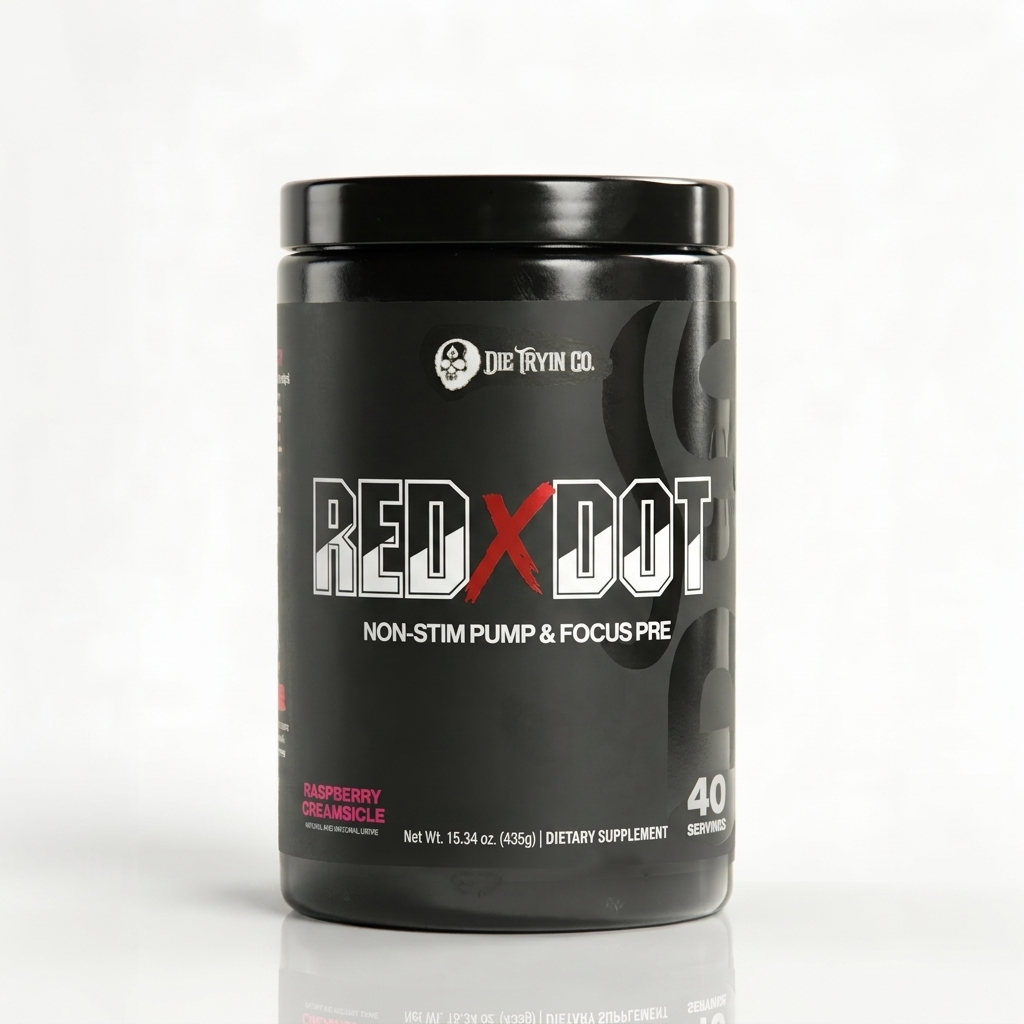
GEAR THAT FITS THIS POST
The products this article actually talks about. Real doses, disclosed labels, veteran owned.

Read more
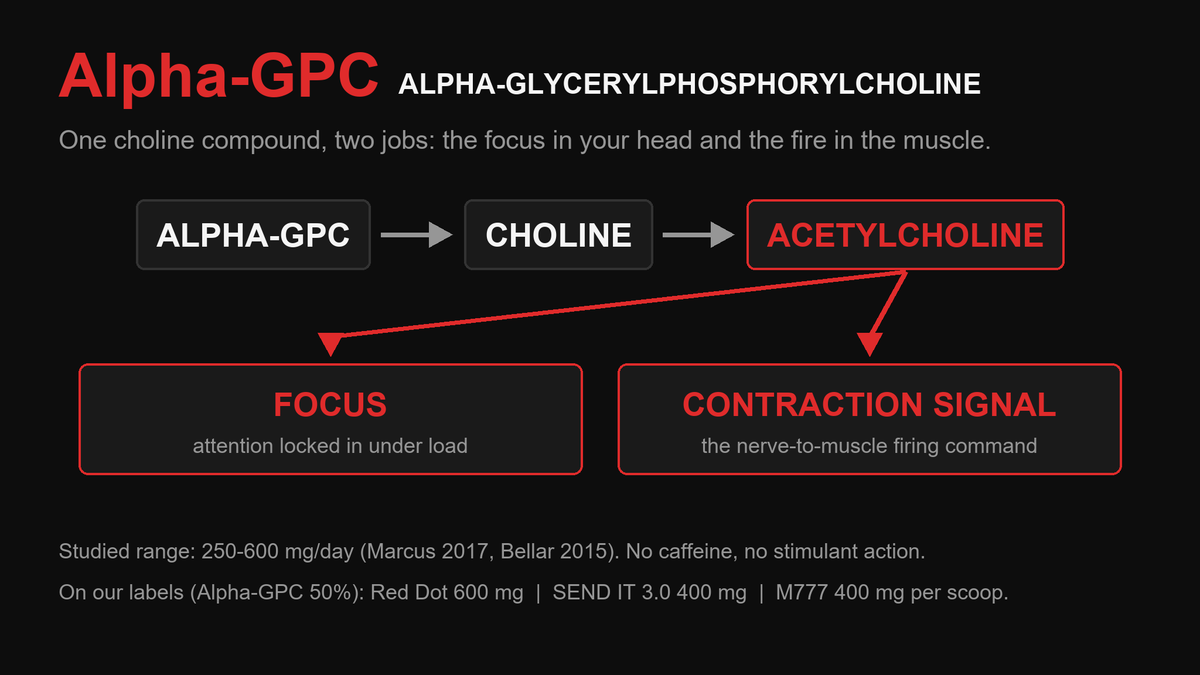
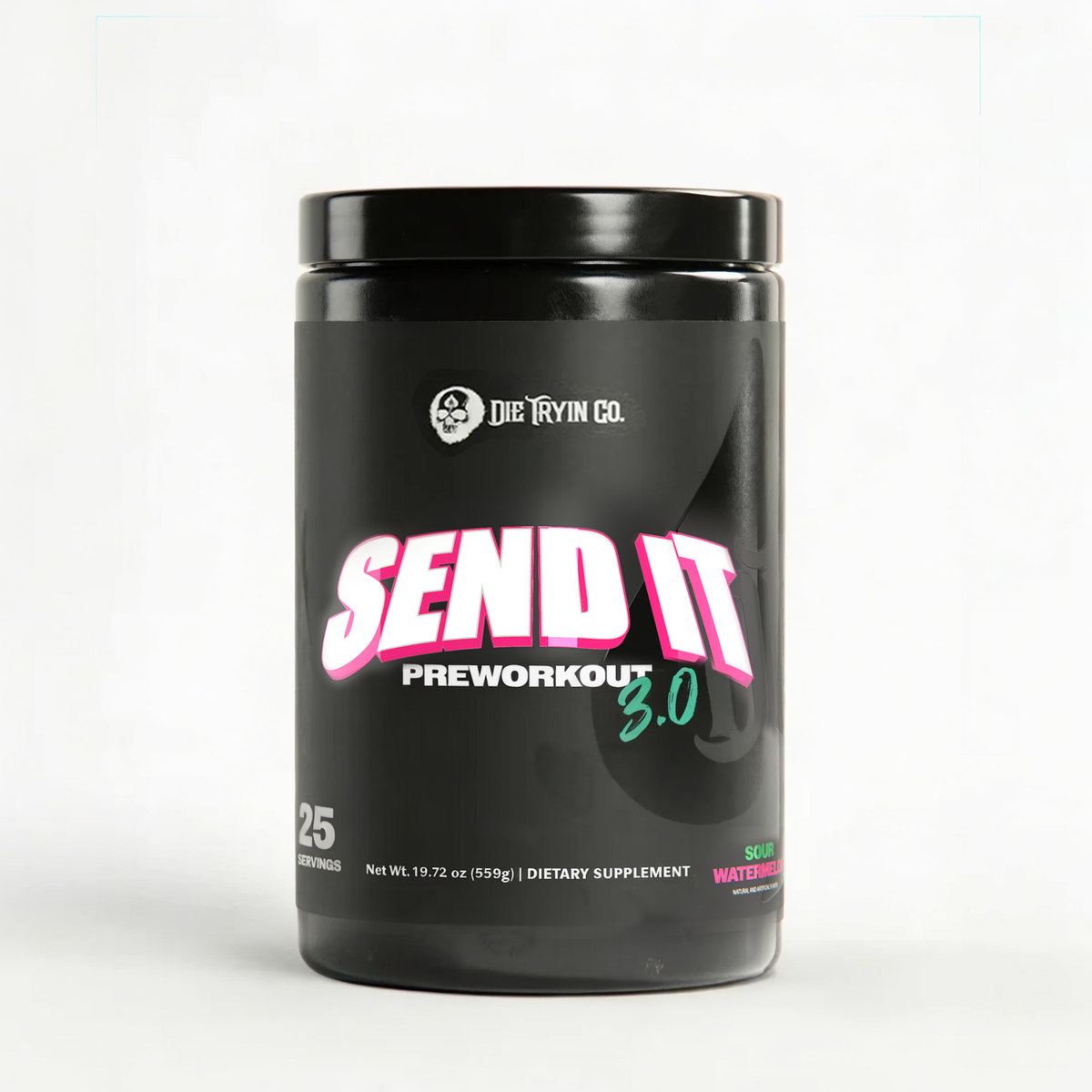
The focus ingredient that also talks to your muscles: what Alpha-GPC does, what the trials show, and the doses in Red Dot, SEND IT 3.0, and M777.
The ingredients that actually move the needle in your pre-workout — and the ones that don't. What works, why, and at what dose. Veteran-owned, no marketing fluff.
Your gut lining runs the same creatine energy system as your muscles. Here is what the research shows on stomach upset, IBS, colitis and leaky gut, and exactly where the human evidence stops.

Creatine gummies can work if the creatine is actually in them, and lab tests keep finding it often is not. Here is why a scoop of Creatine Monohydrate powder still wins.
Flavor doesn't change what creatine does; taking it every day is what counts. How to pick flavored or unflavored, what to mix it with, and how long it lasts once mixed.
Whey protein concentrate now costs more than four times its early-2023 low. Here is what is driving it, what the 2027 forecasts actually say, and how to pay less per gram of protein without getting...