



Periodization: Train in Phases, Peak on Purpose
By Jon Klipstein, U.S. Army Combat Veteran & Founder of Die Tryin Co., and Chelsea Rodgers, IFBB Pro & Die Tryin Co. Athlete
STOP TRAINING AT RANDOM
Here's the truth: most lifters do not have a program, they have a playlist. Same exercises, same weights, effort decided by mood, repeated until progress quietly stops. Periodization is the fix, and it is nothing more complicated than organizing your training into phases so that stress, recovery, and progress are planned instead of accidental.
Powerlifters resting three minutes between sets while bodybuilders rest sixty seconds is not two groups disagreeing, it is two groups periodizing for different goals. This guide covers what the research actually shows, the main models, and a simple 12-week structure you can start Monday.
WHAT PERIODIZATION MEANS
Strip the textbook language and periodization is three decisions made in advance: what quality you are building right now (muscle, strength, or peak performance), how hard and how heavy this week is allowed to be, and when you will back off so the gains you stimulated can actually show up. The alternative, maximum effort on everything forever, works for a few months and then delivers you straight into the wall our overtraining guide describes.
A concrete example makes it real. A lifter running a hypertrophy phase might squat 8-12 reps with 60 seconds of rest, chasing the pump and the volume. Twelve weeks later, that same lifter in a strength phase squats triples at a much heavier load with three full minutes between sets, and the short-rest version would actively sabotage that goal. Same lifter, same exercise, completely different session, because the phase decides the rules.
| MODEL | HOW IT WORKS | BEST FOR |
|---|---|---|
| Linear | Weight climbs, reps drop, week over week for a full block | Beginners; anyone running their first structured program |
| Undulating | Heavy, moderate, and light days rotate within each week | Intermediate and advanced lifters chasing strength |
| Block | Focused blocks in sequence: volume, then strength, then peak | Competitors peaking for a meet or show date |
WHAT THE RESEARCH ACTUALLY SHOWS
A meta-analysis of 18 studies comparing periodized to non-periodized resistance training found periodized plans produced greater 1RM strength gains, a moderate effect, with undulating models showing the most favorable results (Williams et al., 2017). Variation in the training stimulus, planned rather than random, appears to matter for getting stronger.
Now the honest boundary, because we do not oversell. A later meta-analysis restricted to volume-equated studies found the strength advantage held, and undulating beat linear in trained lifters, but muscle hypertrophy showed no difference between periodized and non-periodized plans (Moesgaard et al., 2022). For pure size, total volume and effort are the levers, and periodization is mainly how you keep pulling those levers month after month without burning out. For strength, the phases themselves do real work.

REST PERIODS ARE PART OF THE PLAN
Rest between sets is a periodization variable, not a personality trait. Short rests around 60 seconds drive metabolic stress, the pump, the burn, the roadmap-vein look, and they suit hypertrophy phases where the goal is fatiguing muscle with moderate loads. Long rests of two to three minutes let your nervous system recharge so the next set moves maximal weight, which is exactly what a strength phase needs.
Neither is superior, they are tools for different phases, and switching them deliberately as your phase changes is half the point. The full breakdown lives in our rest periods guide.
DELOADS: THE PHASE NOBODY WANTS AND EVERYBODY NEEDS
Every serious periodization scheme builds in planned easy weeks, because adaptation happens during recovery, not during the workout. Cut volume roughly in half every fourth to sixth week, keep the movements crisp, leave the gym feeling insultingly fresh. Skipping deloads until your joints force one is the most common way lifters turn a good program into a stall, and the forced version always costs more weeks than the planned version would have. Schedule it like a training day, because it is one. The case for them, and how to run one, is in our deload guide.
WHICH PHASE DO YOU NEED RIGHT NOW?
Diagnose it from your last month of training. If your top-end lifts feel strong but you have not added bodyweight or size in months, you need an accumulation phase: more sets, moderate loads, short rests, food to match. If your muscles are full but your heavy singles feel like a coin flip, you need a strength phase: fewer, heavier sets with full recovery between them. If everything feels heavy, sleep is bad, and motivation is scraping the floor, you do not need a new phase at all, you need the deload you have been skipping.
One more honest diagnostic: if you cannot answer what you lifted in each exercise three weeks ago, phase selection is not your problem yet. Tracking is. A phase you did not write down is a phase you cannot repeat, adjust, or beat.
A SIMPLE 12-WEEK STRUCTURE
Weeks 1-4, build: moderate loads, 8-12 reps, short rests, push volume up each week. Week 5, deload. Weeks 6-9, strength: heavier loads, 4-6 reps, rests stretch to two or three minutes, volume drops while intensity climbs. Week 10, deload. Weeks 11-12, realize: low volume, heavy crisp singles, doubles and triples, then test your lifts and start the next cycle a little heavier than the last one started.
Two execution notes that make or break it. First, the build phase should end with you slightly hungry for more, not buried, if week four requires heroics, week six will be a crater. Second, when the strength phase starts, resist the urge to keep the accumulation volume as well: dropping total sets is what buys the intensity. Lifters who try to keep everything usually keep nothing.
Run it on any sensible split, our PPL vs upper/lower breakdown will settle that choice, and track every session, because a phase you did not write down is a phase you cannot repeat or beat. Discipline beats motivation, and a calendar is discipline in paper form.
FREQUENTLY ASKED QUESTIONS
Do beginners need periodization?
Not much of it. A beginner adding weight to the bar every week is already running the simplest linear progression there is. Structured phases start paying off once those easy weekly gains stop.
Which periodization model is best?
The 2017 meta-analysis found undulating models most favorable for strength in trained lifters, but the honest answer is that any planned structure beats no structure, and the best model is the one you will actually follow for a full cycle.
Does periodization build more muscle?
Volume-equated research says no, size comes down to total work and effort. Periodization earns its keep by keeping you progressing and un-injured long enough to accumulate that work.
How long should a training phase last?
Three to six weeks per phase is the common range. Long enough to adapt to the stimulus, short enough that you never fully stagnate on it.
Can I periodize if I just train for general fitness?
Yes, and you probably should. Even alternating a harder month with an easier month, or rotating rep ranges across the week, captures most of the benefit with none of the spreadsheet anxiety.
What happens if I miss a week mid-phase?
One missed week is noise, rejoin the plan where the calendar says you should be, maybe five percent lighter. Two or more missed weeks, repeat the last completed week before moving on. Never punish a missed week with an extra-hard comeback session, that math always loses.
READY TO GEAR UP?
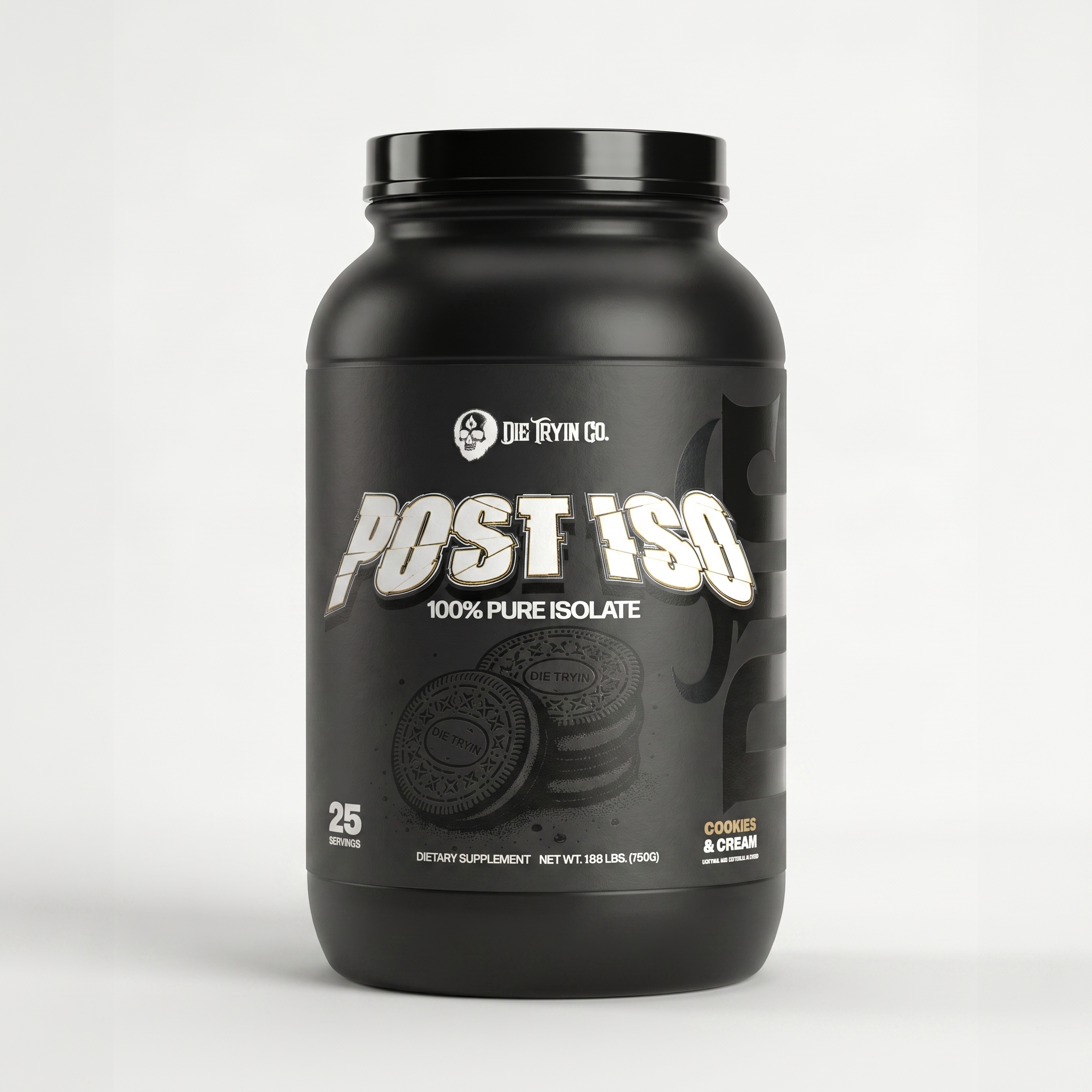
The supplements that support a periodized year are the unglamorous ones taken daily. Creatine Monohydrate through every phase, Post Iso to hit protein targets, and a pre-workout matched to the day's demands via the quiz. Plan the year, then execute the week in front of you.
ALWAYS FORWARD.
Read more
Most lifters asking if they're overtraining are actually overreaching, and there are two kinds. Here's how to tell which one you're in, and what to do about it.
The 60-second rest rule costs you reps you needed. Here is what the research actually supports.
Recovery is the other half of adaptation. The signals you need a deload, and exactly how to run one without losing progress.

There's no perfect split — only the one you'll stick to. PPL vs. upper/lower broken down, plus how to choose the best workout split for your week.
Flavor doesn't change what creatine does; taking it every day is what counts. How to pick flavored or unflavored, what to mix it with, and how long it lasts once mixed.
Whey protein concentrate now costs more than four times its early-2023 low. Here is what is driving it, what the 2027 forecasts actually say, and how to pay less per gram of protein without getting...

GEAR THAT FITS THIS POST
The products this article actually talks about. Real doses, disclosed labels, veteran owned.