




VO2 Max: The Fitness Number That Predicts How Long You Live
By Jon Klipstein, U.S. Army Combat Veteran & Founder of Die Tryin Co.
Science reviewed by Onur Oncer, BS Physiology and peer-reviewed published researcher.
THE FITNESS NUMBER THAT OUTPREDICTS YOUR BLOODWORK
Listen up. Most lifters can tell you their bench, their bodyweight, and their bodyfat percentage. Almost none of them can tell you their VO2 max, and it's the number with the strongest claim on how long they're going to be around to lift at all.
VO2 max is your body's ceiling for using oxygen during hard work. It's a single number that captures how well your lungs, heart, blood, and muscle tissue cooperate under load. That's why it tracks with health outcomes better than most things people actually worry about.
Here's the truth, and it's uncomfortable: being unfit is a bigger mortality risk factor than several diagnoses people take medication for.
| RISK FACTOR | ADJUSTED HAZARD RATIO FOR ALL-CAUSE MORTALITY |
|---|---|
| Low fitness (vs. elite fitness) | 5.04 |
| Smoking | 1.41 |
| Diabetes | 1.40 |
| Coronary artery disease | 1.29 |
| Below average vs. above average fitness | 1.41 |
WHAT THE NUMBER ACTUALLY MEASURES
VO2 max is expressed in millilitres of oxygen per kilogram of bodyweight per minute. It's the ceiling on how much oxygen your body can take in, move, and use when you're working as hard as you can.
Two systems set that ceiling. The first is delivery: how much blood your heart moves per beat, how much total blood you have, and how much oxygen it carries. The second is utilisation: how effectively the mitochondria inside your muscle actually extract and burn that oxygen once it arrives. Training improves both, which is why the number responds to work rather than to wishing.
Because it's scaled to bodyweight, the number also moves when your bodyweight does. Losing fat raises VO2 max without any change in your engine, and gaining muscle can lower it slightly on paper while you're objectively fitter. That's worth knowing before you panic at a number that shifted during a bulk.
WHERE THOSE NUMBERS COME FROM
According to PubMed, Mandsager and colleagues followed 122,007 patients referred for treadmill exercise testing at the Cleveland Clinic, tracking all-cause mortality across 1.1 million person-years with a median follow-up of 8.4 years (JAMA Netw Open, 2018). Risk-adjusted mortality fell as cardiorespiratory fitness rose, at every level.
Two findings stand out. First, the gap between the least fit and the most fit group was larger than the gap associated with smoking, diabetes, or coronary artery disease. Second, and this one surprised the researchers themselves, there was no observed upper limit of benefit. The fittest people in the study, the top 2.3%, still had lower mortality than the merely "high" group. The idea that you can be too fit for your own good didn't show up in the data.
One honest note on the measurement: that study quantified fitness as peak metabolic equivalents on a treadmill test, which is a direct practical proxy for VO2 max rather than a lab gas-exchange measurement. The concept being measured is the same one.
HOW TO GET YOUR NUMBER
Three options, in descending order of accuracy:
- Lab test. Mask, treadmill or bike, graded protocol to exhaustion, actual gas exchange measured. This is the real number and everything else is an estimate of it.
- A decent wearable. Most modern watches estimate VO2 max from heart rate and pace data. The absolute value may be off, but the trend is usually reliable, and trend is what you actually care about.
- The heart-rate field estimate. A commonly used shortcut is VO2 max ≈ 15 × (max heart rate ÷ resting heart rate). A max HR of 180 and a resting HR of 60 gives 15 × 3 = 45 ml/kg/min.
Be honest about that last one. It's a rough proxy built on the relationship between resting heart rate and fitness, and it can miss by a wide margin, especially if you don't know your true max heart rate. Use it as a ballpark and a way to watch your resting heart rate drift down over months. Don't treat it as a lab result, and don't make health decisions off it.
HOW TO ACTUALLY RAISE IT
This is the good news. VO2 max is one of the most trainable things about you, and the returns are biggest for the people starting lowest.
According to PubMed, Milanović and colleagues meta-analysed 28 controlled trials covering 723 participants (Sports Med, 2015). Against non-exercising controls, steady endurance training raised VO2 max by about 4.9 ml/kg/min and interval training by about 5.5. Head to head, intervals edged out steady work by roughly 1.2. Both produced large improvements, and the least fit participants improved the most.
Read the size of those numbers against each other. The gap between intervals and steady cardio is about 1.2. The gap between doing something and doing nothing is about 5. The modality argument that dominates every fitness forum is a rounding error next to actually showing up. Do both:
- Intervals, 1-2x per week. Hard efforts of roughly 2-4 minutes at a pace you can't hold a conversation through, with equal or slightly shorter rest. Rower, bike, incline treadmill, sled. Four to six rounds is plenty.
- Easy aerobic work, 2-3x per week. Conversational pace, 30-45 minutes. This is the base that makes the hard days possible, and it's the part lifters skip.
- Keep lifting. None of this replaces the barbell. Cardio and strength are not competitors unless you program them like they are, which we broke down in how cardio benefits lifters.
- Give it 8-12 weeks. This is a slow-moving number. Judge it quarterly, not weekly.
NO SUPPLEMENT RAISES YOUR VO2 MAX
We sell supplements, so take this seriously coming from us: nothing on our shelf, or anyone else's, meaningfully raises your VO2 max. That number is built by training adaptation in your heart, blood, and mitochondria over months. There's no powder that does it.
What supplements can honestly do is help you complete the training that raises it. Better hydration means you finish the interval session instead of bailing at round four. Available carbohydrate means the long aerobic day doesn't turn into a death march. That's a real contribution, and it's a much smaller claim than the industry usually makes. Basics beat hype.
FREQUENTLY ASKED QUESTIONS
What's a good VO2 max?
It depends heavily on age and sex, so chase your own trend rather than a universal target. The practical framing from the Mandsager data is that every step up the fitness ladder lowered mortality risk, with no ceiling found. Wherever you are, higher was better.
Can lifting alone raise my VO2 max?
Barely, and not reliably. Resistance training builds strength and muscle but it isn't a strong stimulus for maximal oxygen uptake. If your entire training week is heavy sets with long rests, this number is probably lower than you'd like.
Is HIIT better than steady cardio?
Slightly, per the Milanović meta-analysis. But the difference between the two was small next to the difference between training and not training. Use intervals for efficiency and steady work for volume and recoverability. Doing only intervals is how people burn out.
How often should I test it?
Every 8-12 weeks at most. VO2 max changes slowly, and testing it weekly just gives you noise to worry about.
Will cardio kill my gains?
Not at reasonable volumes with sensible scheduling. Problems come from stacking hard intervals right next to heavy leg days and under-eating. Separate them, feed the work, and both adaptations coexist fine.
Does age cap how much I can improve?
Age lowers the ceiling, it doesn't remove the trainability. In the Mandsager subgroup analysis, the benefit of elite fitness over merely high fitness was still present in patients 70 and older. The number is worth training at every age.
READY TO GEAR UP?
Conditioning work is where hydration and fuel stop being optional:
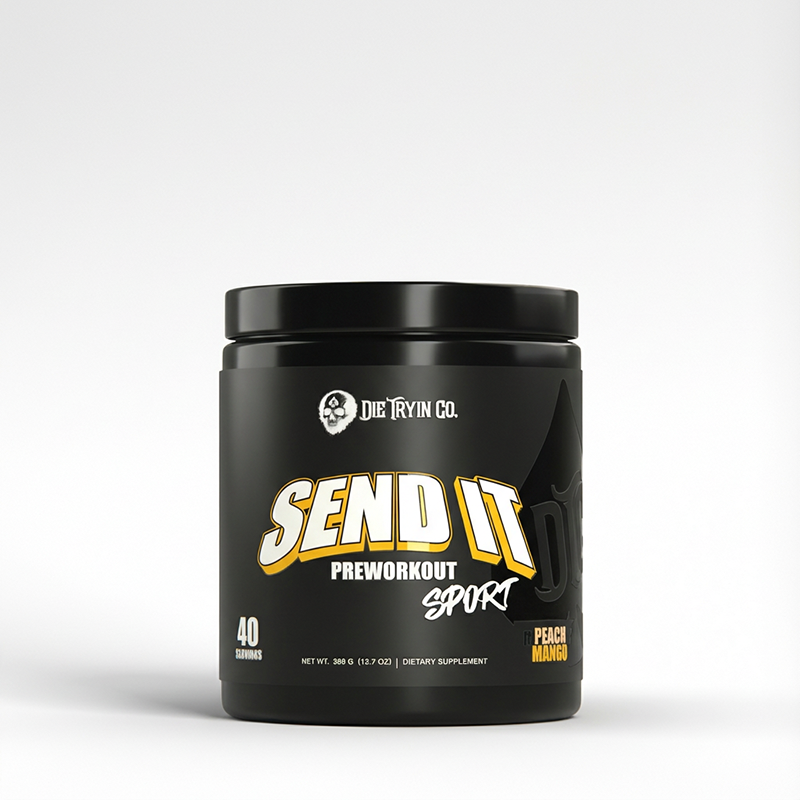
- SEND IT Sport — built for longer sessions with a lower stimulant load (145mg caffeine), so it fits conditioning days instead of overshooting them.
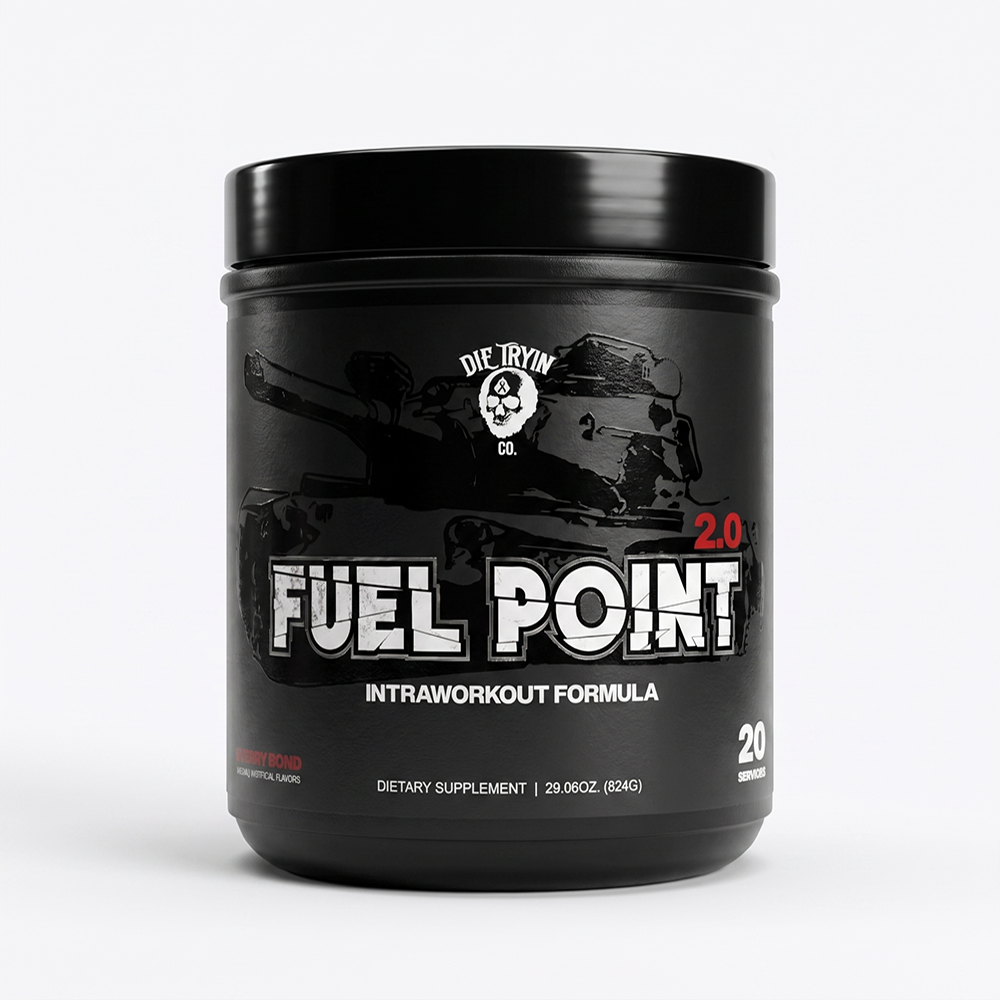
- Fuel Point — clean intra-workout carbs for the long aerobic days that build your base.
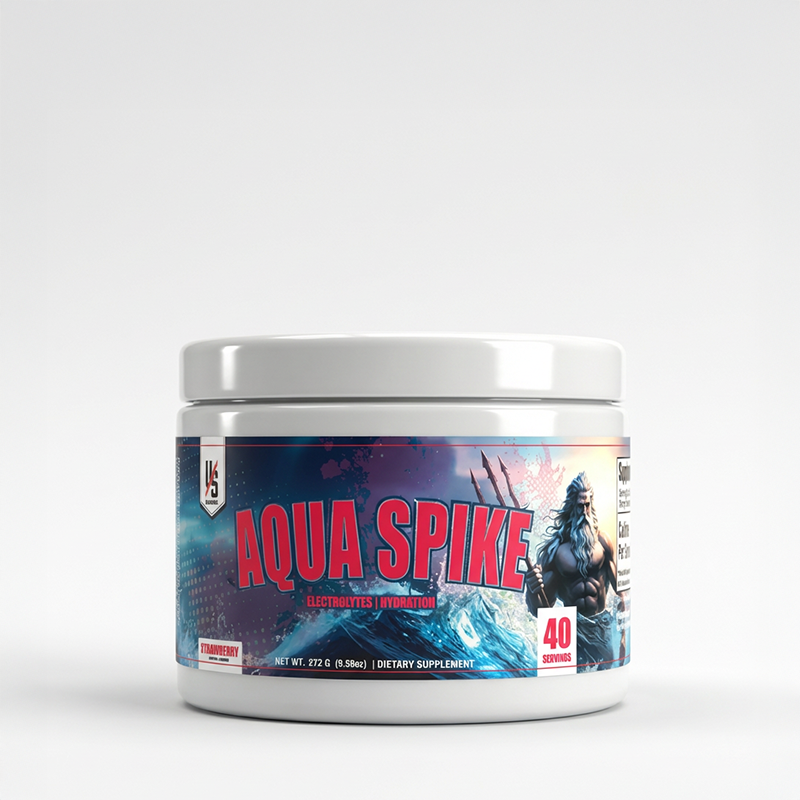
- Aqua Spike v2 — hydration and electrolytes. Interval work makes this matter more than any capsule.
- Omega — EPA and DHA for general internal health, covered honestly in omegas for internal health.
- Micronized Creatine Monohydrate — 5g daily. It won't raise your VO2 max, but it protects the strength work you're doing alongside it.
- Stainless Steel IceShaker — keeps your intra cold through a long session.
- Not sure where to start? Take the quiz.
Train the number nobody brags about. Consistency beats intensity, and this one only moves for people who keep showing up.
ALWAYS FORWARD.
GEAR THAT FITS THIS POST
The products this article actually talks about. Real doses, disclosed labels, veteran owned.
Read more
Cardio is not the enemy of your gains. The lifter case for conditioning: what it does for recovery, work capacity, and health.

Fish oil is the most-skipped foundational supplement in lifting. Here's what omega-3s actually do, the ALA/EPA/DHA difference, and why most fish oils underdeliver.
Your gut lining runs the same creatine energy system as your muscles. Here is what the research shows on stomach upset, IBS, colitis and leaky gut, and exactly where the human evidence stops.

Creatine gummies can work if the creatine is actually in them, and lab tests keep finding it often is not. Here is why a scoop of Creatine Monohydrate powder still wins.
Flavor doesn't change what creatine does; taking it every day is what counts. How to pick flavored or unflavored, what to mix it with, and how long it lasts once mixed.
Whey protein concentrate now costs more than four times its early-2023 low. Here is what is driving it, what the 2027 forecasts actually say, and how to pay less per gram of protein without getting...