


Omegas for Internal Health: The EPA/DHA Lifters Need
By Jon Klipstein, U.S. Army Combat Veteran & Founder of Die Tryin Co.
Science reviewed by Onur Oncer, BS Physiology and peer-reviewed published researcher.
FISH OIL ISN’T SEXY — AND THAT’S WHY MOST LIFTERS SKIP IT
Pre-workout, creatine, protein, BCAAs (EAAs are the upgrade, but that’s a different post) — those get the marketing. Fish oil doesn’t. It’s the “eat your vegetables” of the supplement world. Boring, foundational, and the thing most lifters skip because it doesn’t move the needle on next week’s training session.
That’s a mistake. Omega-3s are one of the most-researched supplement categories in human nutrition, and the benefits stack across joints, cardiovascular health, eye and brain function, and the body’s normal inflammatory response — all things that matter more, not less, the older you get and the heavier you train.
Here’s what omega-3s actually do, what makes a good fish oil different from the cheap stuff on the shelf, and how to plug Omega into your daily stack.
WATCH JON BREAK DOWN OMEGA
This video is from our Die Tryin Co. archive. UXO Supplements is now Die Tryin Co. — same crew, new name.
What Jon says in the video (transcript)
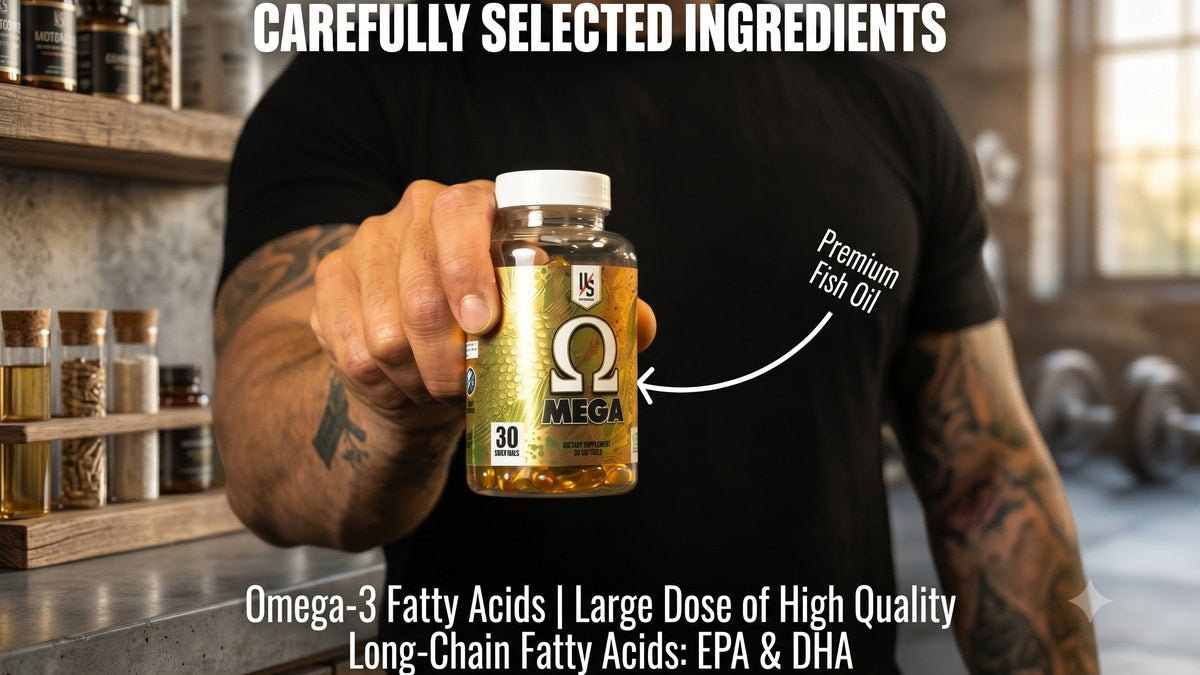
“So today we’re talking through our Omegas. The issue with some of the Omega products out on the market today is they give you short-chain fatty acids in the form of ALA, versus long-chain fatty acids like we give you in here with EPA and DHA. The issue with ALA is you have to consume a lot more of that fatty acid because it ends up converting in your body to EPA and DHA — so you don’t get the same benefits of the smaller amounts.
So we go above and beyond that by giving you a high amount of both EPA and DHA, which is going to give you the expected benefits. There’s a lot of clinical research out there around omega-3’s ability to support eye health, joint support, reduced inflammation, and it also has some healthy cholesterol benefits. Because of that, this is something that I take every single day — especially now that I’ve gotten back into running. This stuff is a lifesaver for the health of my knees.
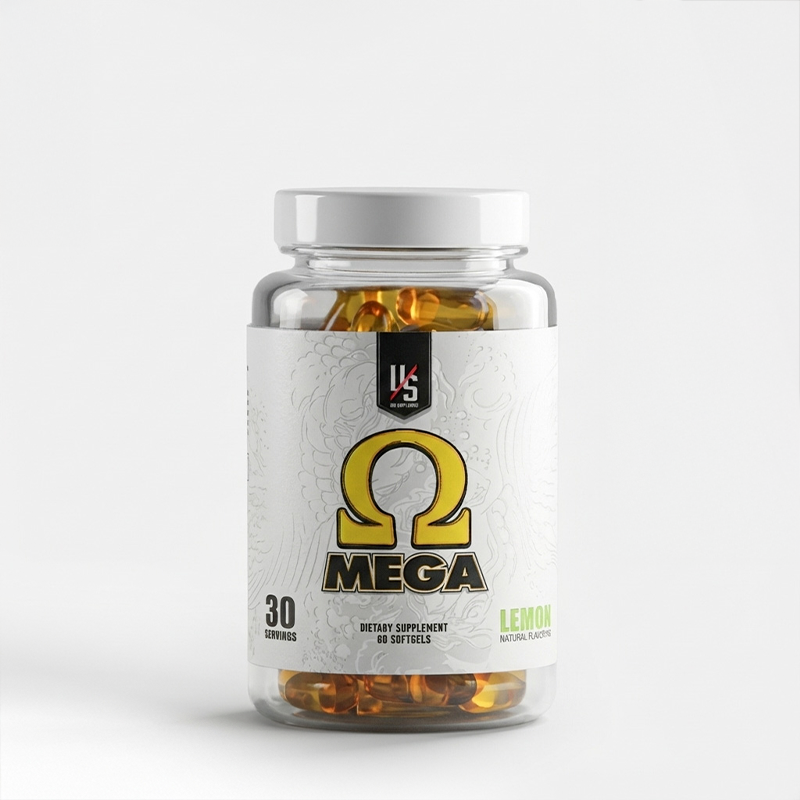
Now our Omegas have also been tested for impurities. Some of the cheaper products out on the market use rancid fish, which has been known to cause fish burps and a nasty aftertaste. With ours being sourced from wild pelagic cold-water fish — fresher source — you’re not going to have that nasty aftertaste. And we lemon coat every pill to give it a better flavoring profile. So go check out our Omega — the new sexy label, look at that koi fish all over it. It’s sexy. Copy on the website today.”
WHAT OMEGA-3S ACTUALLY DO
Omega-3s are essential fatty acids — meaning your body can’t produce them, you have to eat them. They’re structural components of cell membranes throughout your body, especially concentrated in the brain, retina, joints, and cardiovascular system. The 2025 ISSN Position Stand on Long-Chain Omega-3 PUFAs is the most comprehensive recent review of omega-3 benefits for athletes and active populations. The benefits worth tracking:
Joint comfort. Omega-3s support the body’s normal inflammatory response, which translates to noticeably less joint achiness in lifters who train heavy or for years. Jon mentions his knees specifically — runners and lifters with cumulative joint mileage often feel the difference within a few weeks of consistent supplementation. The ISSN Position Stand confirms decreased subjective muscle soreness following intense exercise as one of the established benefits.
Cardiovascular health. EPA and DHA may support healthy cholesterol ratios (HDL/LDL balance), blood pressure within normal ranges, and overall cardiovascular function. The ISSN Position Stand specifically notes omega-3 supplementation may enhance cardiovascular function during aerobic-type exercise — relevant for athletes running, cycling, or doing conditioning work.
Eye and brain function. DHA is the most abundant omega-3 in the retina and a major structural component of the brain. Adequate intake supports vision and cognitive function over time. The Position Stand also notes prophylactic omega-3 supplementation may offer neuroprotective benefits for athletes exposed to repeated head impacts — relevant for combat sports, contact sports, and tactical athletes.
Immune support. Omega-3s influence multiple immune cell responses in athletic populations. Heavy training stresses the immune system; consistent omega-3 intake helps offset that load.
Sleep quality. An underappreciated benefit confirmed in the ISSN review: omega-3 supplementation is associated with improved sleep quality. For lifters trying to optimize recovery, sleep is the foundation.
One honest note on muscle building: The ISSN Position Stand explicitly states omega-3 supplementation may NOT confer a muscle hypertrophy benefit in young adults specifically — but combined with resistance training, it may improve strength in a dose- and duration-dependent manner. Omega-3 isn’t a muscle-building supplement. It’s a foundational health and recovery supplement that lets you train hard for longer.
ALA vs. EPA vs. DHA — THE CHAIN-LENGTH EDUCATION
This is the technical piece most lifters don’t know — and it’s the reason a $5 fish oil and a quality one aren’t actually substitutes for each other.
Omega-3 isn’t one molecule. It’s a family of three:
ALA (alpha-linolenic acid) — the short-chain omega-3. Found in plant sources like flax, chia, and walnuts. The cheapest form because it’s plant-derived. The catch: your body has to convert ALA into EPA, then EPA into DHA, to actually use it. That conversion is biologically inefficient. Less than 10% of dietary ALA gets converted to EPA, and less than 1% to DHA. The math doesn’t work for active populations.
EPA (eicosapentaenoic acid) — one of the two long-chain omega-3s. Found in fish and marine sources. EPA drives the anti-inflammatory effects most lifters notice in their joints. No conversion needed — your body uses it directly.
DHA (docosahexaenoic acid) — the other long-chain omega-3. Also from fish/marine sources. DHA is what your retina and brain are built from. No conversion needed.
This is the argument Jon makes in the video. Cheap fish oils high in ALA require you to take significantly more to reach the same biological effect as a smaller dose of direct EPA + DHA. A high-EPA + high-DHA fish oil at a clinical dose just works better. The label tells you which one you’re buying — check the EPA and DHA content per serving, not the total “fish oil” or “omega-3” weight.
WHY DTC OMEGA IS DIFFERENT
The fish oil category is one of the most variable in supplement quality. Cheap fish oils can be rancid (oxidized), low in actual EPA + DHA, contaminated with heavy metals, and uncoated — which is why most people who’ve tried fish oil quit after a few weeks of fish burps and aftertaste.
Die Tryin Co. Omega solves the four standard fish-oil problems:
1. Source: wild pelagic cold-water fish. Pelagic = open-water, free-swimming. Cold-water = naturally higher omega-3 concentration. Wild = not farmed. Fresher source = less oxidation, less contamination, more actual EPA + DHA per capsule.
2. Lemon-coated capsules. The single biggest reason people quit fish oil is the aftertaste and the fish-burp problem. Lemon coating solves it. Same content, no aftertaste, no morning regret.
3. High EPA + DHA concentration. Direct, bioavailable long-chain omega-3s — not loaded with ALA filler that your body can’t efficiently convert.
4. Tested for impurities. Heavy metals (mercury, lead) accumulate in fish — especially larger predator fish. Third-party testing for impurities matters. Cheap brands skip this step because it costs money.
The result is a fish oil you’ll actually take every day, with the EPA + DHA content that delivers the joint, cardiovascular, eye, and recovery benefits the research backs.
HOW TO USE OMEGA
Daily, with food. Take it with a meal that contains some fat — omega-3s are fat-soluble and absorb better with dietary fat present. Breakfast or dinner works fine.
Consistency > perfect timing. Omega-3 levels in cell membranes build slowly over weeks. Missing a day here or there doesn’t hurt; missing it for months means starting over. Make it part of the morning or evening routine.
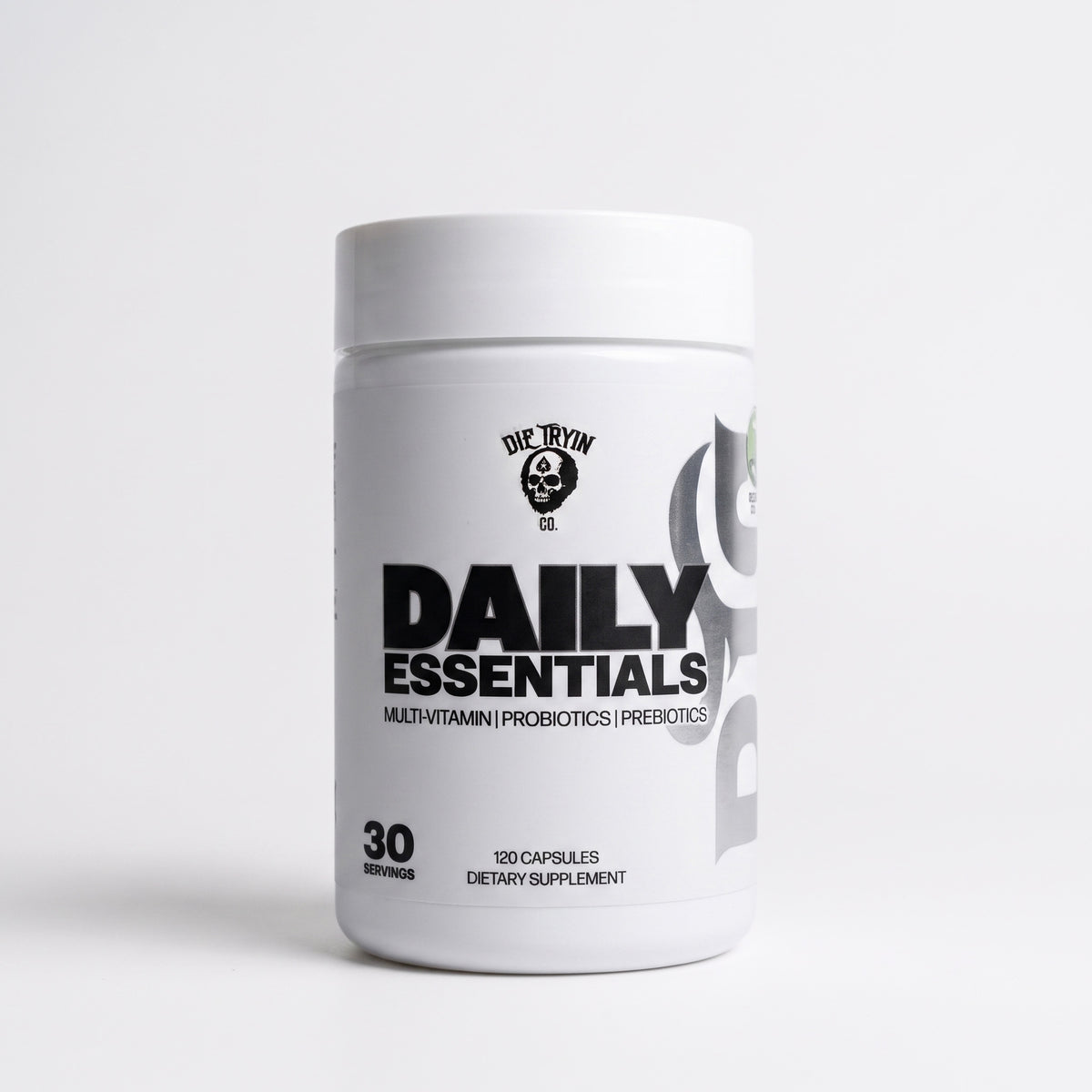
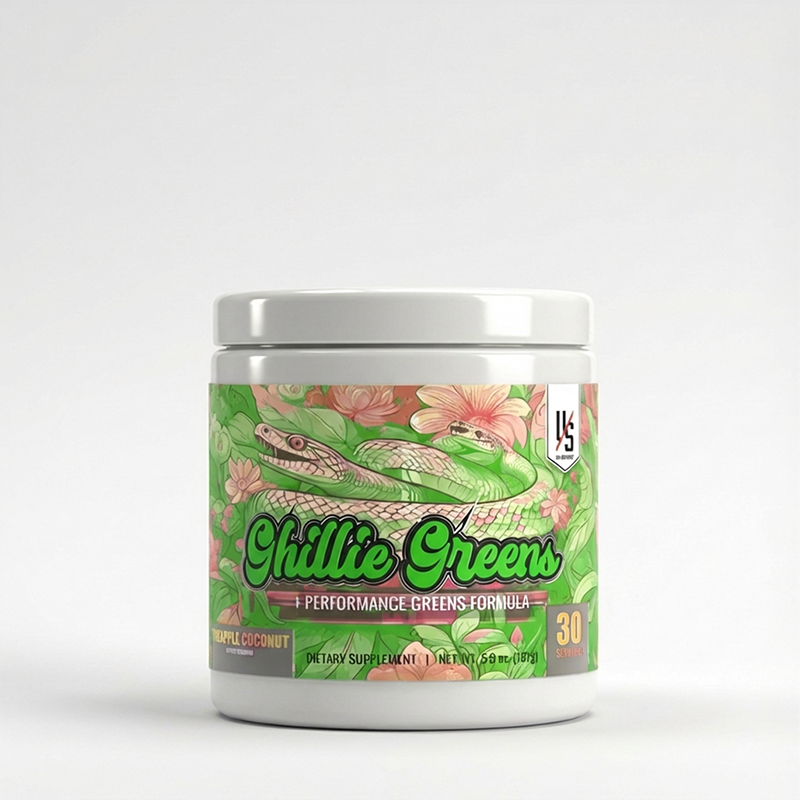
Pair with the rest of the daily-health stack. Omega-3 covers fatty acids and the inflammatory/joint/cardiovascular angle. Daily Essentials covers the vitamin and mineral foundation. Ghillie Greens covers micronutrients from food-derived sources. Together they form the boring-but-foundational daily health layer most lifters under-build.
Cycle? No. Unlike some performance supplements, omega-3 doesn’t need cycling. It’s a structural nutrient. Take it indefinitely.
WHERE OMEGA FITS IN THE FULL DTC STACK
Omega-3 is a daily-health foundation, not a training-specific tool. It sits in a different layer of the stack than your pre-workout or your post-workout protein.
Daily Health Layer: Omega, Daily Essentials, Ghillie Greens. Foundational. Take every day, training or not.
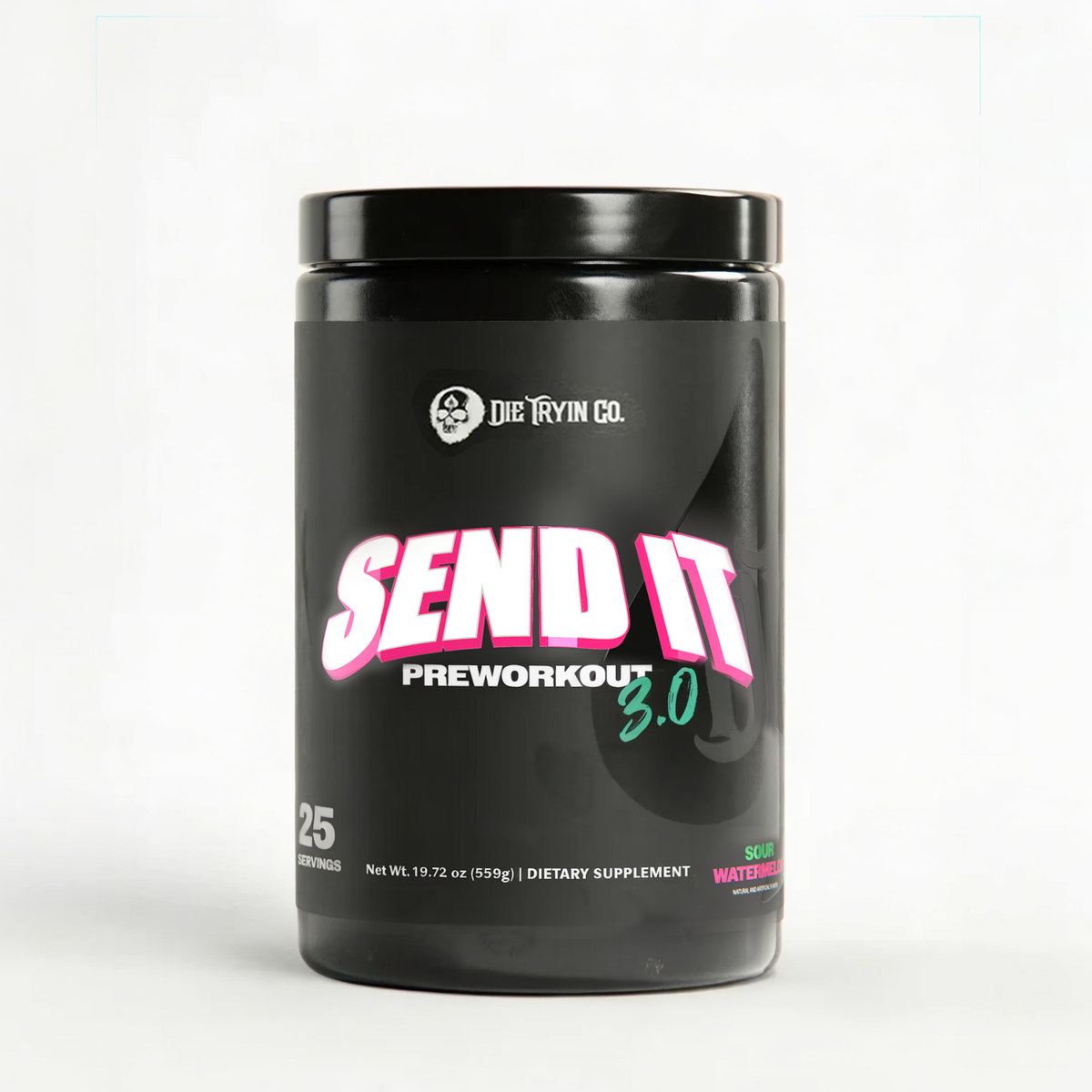
Training Layer: SEND IT 3.0 (pre-workout), Creatine (daily for saturation). Performance-specific.
Recovery Layer: Post Iso (whey protein), sleep, food. Locks in the adaptation.
Skip the daily health layer and you’ll feel it eventually — in joint aches that don’t resolve, recovery that drags out, immune dips during heavy training blocks. Build that base first; the training and recovery layers work better on top of it.
The connection to recovery and hormonal health is real and bidirectional. Anti-inflammatory support from omegas reduces the cortisol burden of chronic training stress — covered in depth in our post on balancing cortisol, stress, and sleep. The full framework on the recovery and hormonal-health side lives in the Recovery pillar and the Men’s Hormonal Health pillar. For the training-side framework, the Muscle Building pillar and Fat Loss pillar cover where omega-3 fits as a foundational layer.
FAQ
How long until I notice anything?
Two to six weeks for joint comfort changes for most lifters. Cell-membrane omega-3 levels build slowly over time. Don’t expect day-three results — this is a long-game supplement.
Can I just eat fish instead?
Yes, if you’re eating cold-water fatty fish (salmon, sardines, mackerel) 2-3 times per week. Most lifters don’t. Supplementation is the easier solution if your diet isn’t already there.
What about plant-based ALA sources like flax?
ALA from flax, chia, walnuts is healthy — but the conversion rate to EPA and DHA is poor (less than 10% to EPA, less than 1% to DHA). For active populations, direct EPA + DHA is significantly more bioavailable.
Will Omega give me fish burps?
No — the lemon coating on every capsule prevents the aftertaste and reflux that drive most people away from fish oil. This is the difference between a quality fish oil and a $5 bottle from a discount shelf.
How does Omega differ from cheap drugstore fish oil?
Four ways: source (wild pelagic cold-water fish vs. farmed/rancid), EPA + DHA concentration (high and direct vs. low and ALA-heavy), capsule coating (lemon vs. uncoated = fish burps), and impurity testing (third-party tested vs. unverified).
Should I take Omega on rest days too?
Yes. Omega-3 is a daily foundational supplement, not a training-specific one. Take it every day regardless of whether you train.
Is it safe to take with other supplements?
Yes — Omega pairs cleanly with all DTC products and most third-party supplements. The fat-soluble vitamins in Daily Essentials absorb better when taken with omega-3, so pairing them at the same meal is actually advantageous.
Can I take Omega for fat loss?
Not directly — omegas aren’t a fat-loss supplement. But the joint support and anti-inflammatory benefits indirectly help fat-loss phases by keeping you training consistently and recovering between sessions. For direct fat-loss tools, see our Incendiary line and the Fat Loss pillar.
READY TO GEAR UP?
Build the foundation. Add Omega to the daily stack with Daily Essentials and Ghillie Greens for the full internal-health coverage. Then layer your training and recovery supplements on top.
Not sure what your stack should look like? Take the quiz — we’ll build it around your training, your goals, and where you are right now.
ALWAYS FORWARD.

GEAR THAT FITS THIS POST
The products this article actually talks about. Real doses, disclosed labels, veteran owned.

Read more
Chronic high cortisol breaks sleep, drives belly fat, and tanks recovery. The honest physiology + evidence-based strategies to normalize HPA axis function.
The no-BS recovery playbook — sleep, stress, nutrition, modalities, and the framework that ties it all together. Recovery is where growth actually happens.
The honest playbook for healthy testosterone — sleep, body composition, training, stress, and what the research really says about boosters. No hype.

The complete playbook for building muscle that actually lasts. Training, nutrition, recovery, and the supplements that move the needle — no hype.
The no-BS playbook for losing fat without losing muscle. Energy balance, protein, training, sleep, and the supplements that actually help.
Your gut lining runs the same creatine energy system as your muscles. Here is what the research shows on stomach upset, IBS, colitis and leaky gut, and exactly where the human evidence stops.