

How to Boost Testosterone Naturally: The Complete Guide
By Jon Klipstein, U.S. Army Combat Veteran & Founder of Die Tryin Co.
Science reviewed by Onur Oncer, BS Physiology and peer-reviewed published researcher.
THE TRUTH ABOUT TESTOSTERONE
Testosterone might be the most marketed-around hormone in the supplement industry. Every shelf has a "test booster." Every ad promises more muscle, more drive, more everything. Most of it is garbage.
Here's the truth most of those companies won't tell you: the things that actually move your testosterone aren't in a bottle. They're in your sleep, your training, your body composition, your stress, and your diet. The research is clear and consistent on this — and it doesn't sell many "test boosters."
This guide is the honest version. What testosterone actually does. Why it drops — and why, for most men under 40, the cause is lifestyle, not pathology. The natural levers that genuinely work. What the research really says about the booster industry (including the small handful of ingredients that DO have evidence). And the part nobody selling you a pill wants to emphasize: when low testosterone is a real medical issue that needs a doctor, not a supplement.
This guide is written for men, since testosterone is the primary male sex hormone and these questions are overwhelmingly male-driven. Women have their own hormonal health needs — that's a separate topic for a separate guide.
No hype. No false promises. Just the truth about testosterone.
WHERE TO START — WHAT'S ACTUALLY MOVING YOUR TESTOSTERONE
Quick answer before the deep dive. Match the lever to your situation.
| LIFESTYLE LEVER | IMPACT ON T | WHAT TO DO | DTC SUPPORT |
|---|---|---|---|
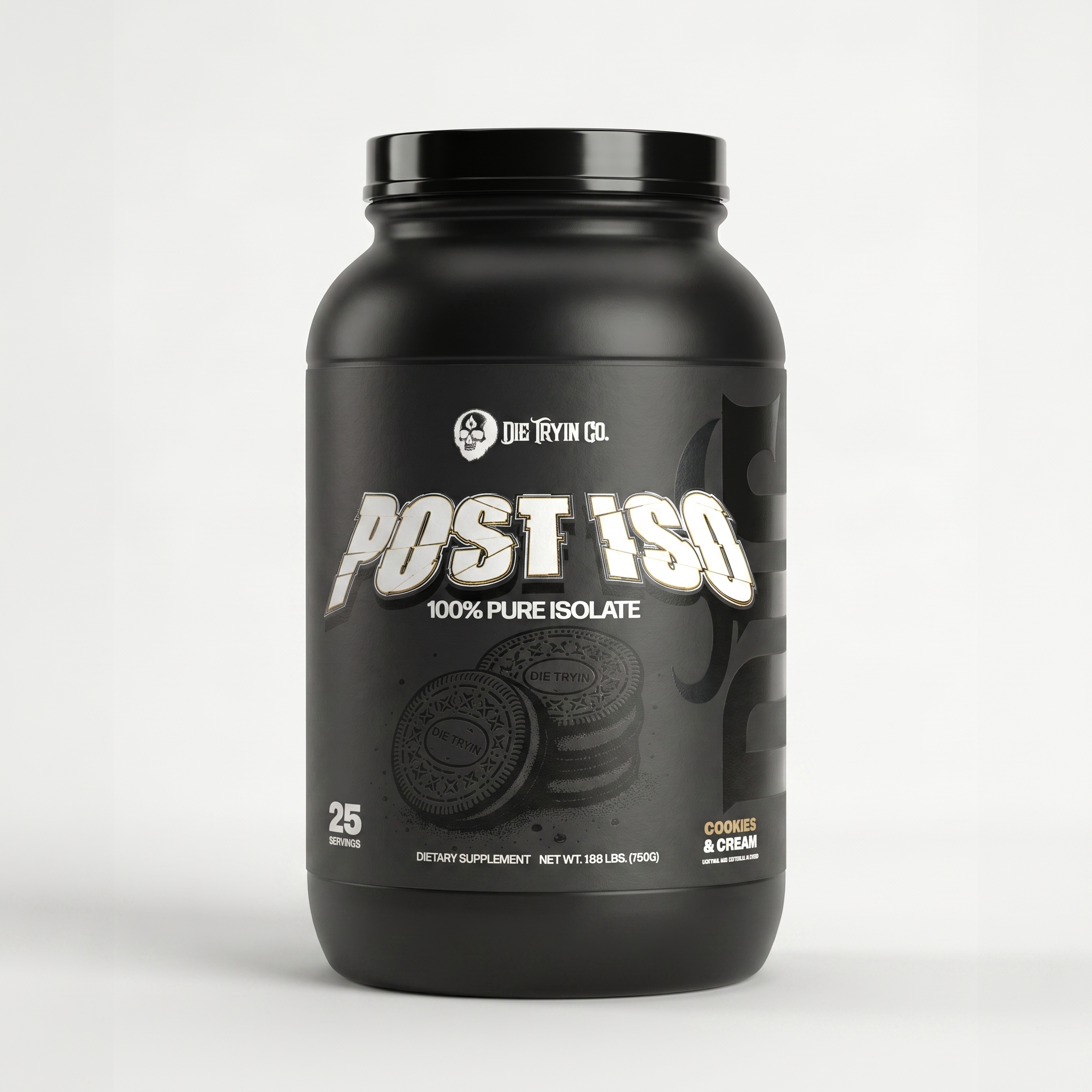
| Sleep — the biggest free lever | Major | 7-9 hrs consistent, dark cool room, caffeine cutoff 8 hrs before bed | Post Iso for pre-sleep protein |
| Body fat — strongest predictor | Major | Lose excess via sustainable cut | See the fat loss pillar for the framework |
| Training — resistance + compound | Major | Lift heavy 3-5x/week, consistently, for years | Creatine + Post Iso for muscle support |
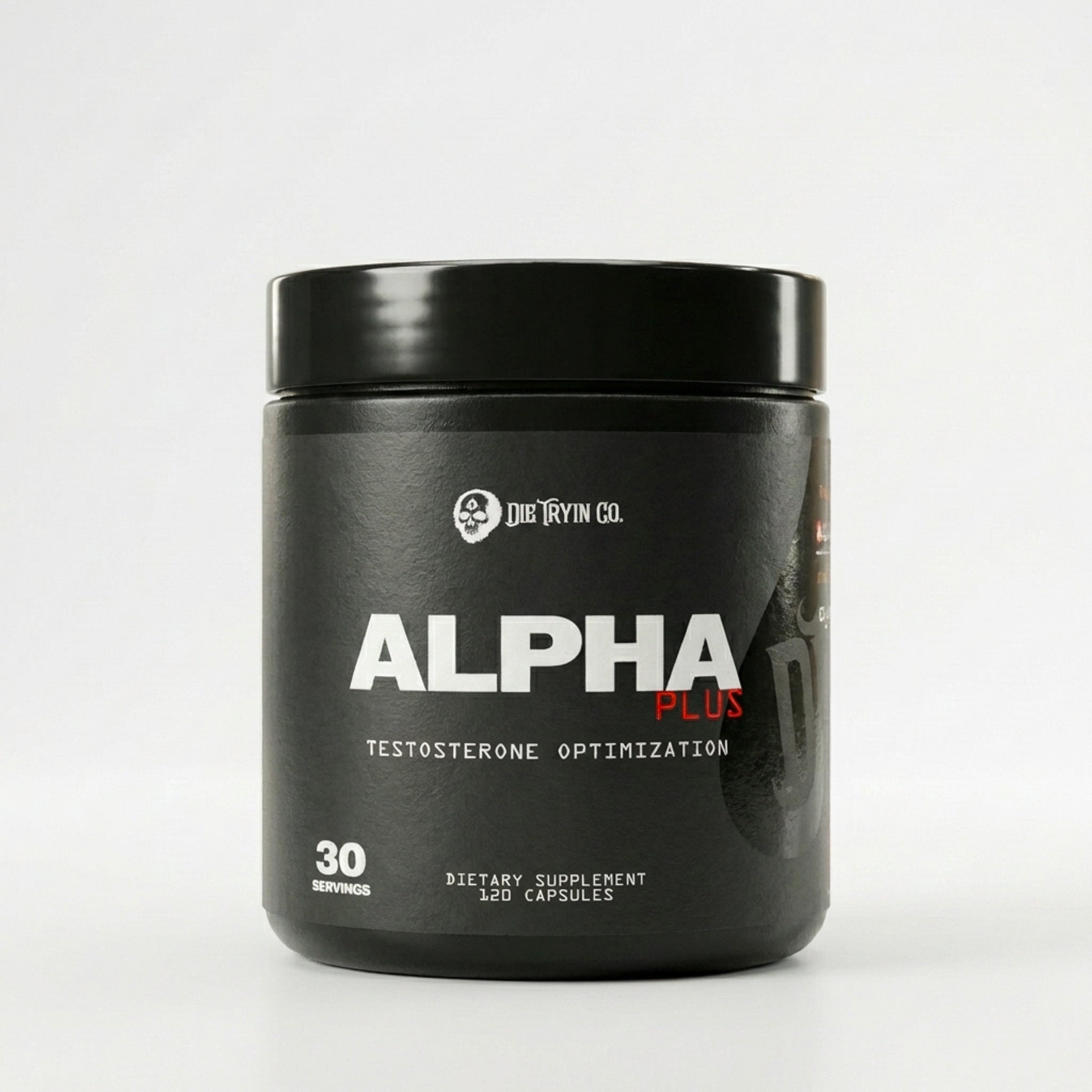
| Stress — chronic cortisol suppresses T | Major | Sleep + downtime + deload training during stress spikes | Alpha+ (KSM-66 stress angle) |
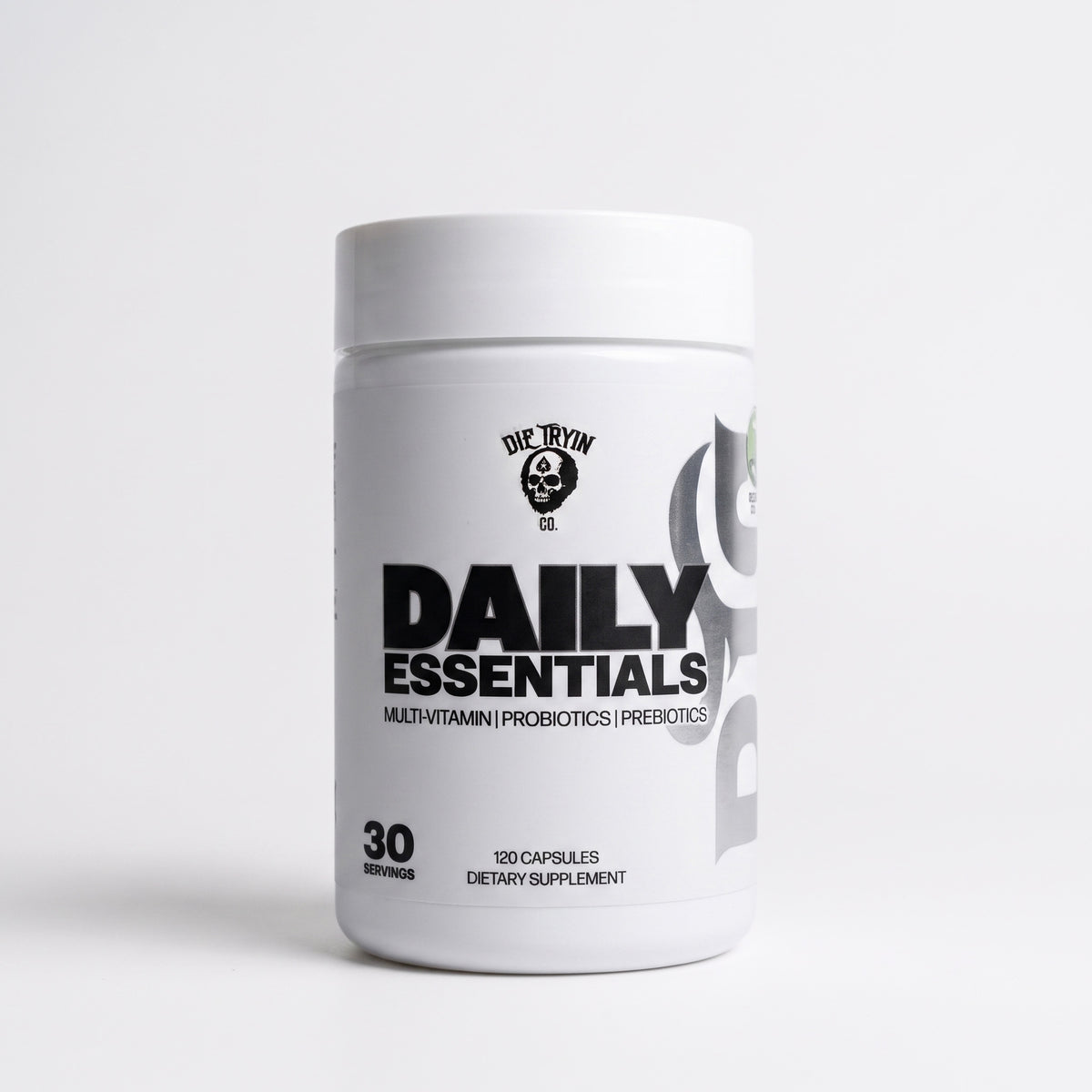
| Dietary fat + micronutrients | Foundation | Don't go ultra-low-fat; cover vitamin D, zinc, magnesium | Daily Essentials + Omega |
| Persistent symptoms (low libido, fatigue, mood) | Could be medical | Get bloodwork — see a qualified physician | None replaces a medical workup |
Now the deep dive on each piece.
WHAT TESTOSTERONE ACTUALLY DOES
Testosterone is the primary male sex hormone, but its job goes far beyond what most people think.
In men, testosterone supports:
- Muscle and strength — it's a key signal for muscle protein synthesis and the development of lean mass and strength
- Libido and sexual function — its most well-known role
- Mood and drive — low testosterone is associated with low mood, irritability, and reduced motivation
- Energy and well-being — healthy levels support energy; low levels often show up as fatigue
- Bone density — testosterone supports bone health throughout life
- Body composition — it influences how the body partitions fat and muscle; lower levels are associated with higher body fat, especially around the midsection
What's a "normal" range? Total testosterone in adult men typically falls roughly in the 300-1,000 ng/dL range, though labs and individuals vary widely. There's a lot of natural variation between healthy men, and where you fall is influenced heavily by age, genetics, and lifestyle. A single number out of context means little — symptoms and trends matter more than one isolated reading.
Testosterone naturally varies through the day (highest in the morning), across the lifespan, and in response to your training, sleep, stress, and body composition. That variability is normal.
Here's the important framing: testosterone is not a dial you crank to the moon for better results. It's a hormone that functions best within a healthy range, supported by a healthy lifestyle. For the vast majority of men, the goal isn't sky-high testosterone — it's healthy, well-supported testosterone and the lifestyle that produces it. We covered this in depth in our testosterone booster breakdown.
That distinction matters, because the entire "more testosterone equals more everything" marketing machine is built on a misunderstanding of how the hormone actually works.
WHY TESTOSTERONE DROPS — THE REAL CAUSES
If your testosterone is lower than you'd like, the cause is usually not a mystery — and usually not something a supplement fixes.
Age. Testosterone gradually declines with age, starting around 30, at roughly 1% per year on average. This is normal and gradual. It's also frequently used by marketers to sell panic to men in their 30s and 40s who are actually within a perfectly healthy range.
The bigger drivers — lifestyle. For most men under 40 (and plenty over), the larger factors aren't age at all. They're modifiable:
- Poor sleep. Testosterone is largely produced during sleep. Chronically sleeping 5-6 hours measurably lowers it. One of the single biggest controllable factors.
- High body fat. Excess body fat, particularly around the midsection, is strongly associated with lower testosterone. Fat tissue converts testosterone to estrogen, and excess body fat is one of the most consistent predictors of low testosterone in men.
- Chronic stress. Sustained high cortisol suppresses testosterone. Stress and testosterone sit on a seesaw, and chronic stress keeps it tilted the wrong way. Cortisol wrecks more than your gains.
- Sedentary living. Lack of physical activity, especially resistance training, is associated with lower testosterone. Movement and muscle support healthy levels. The full hypertrophy framework lives in the muscle-building pillar.
- Poor diet and micronutrient gaps. Diets too low in fat can lower testosterone. Deficiencies in vitamin D, zinc, and magnesium are linked to lower levels.
- Excess alcohol. Chronic heavy drinking lowers testosterone through multiple pathways.
- Certain medications and health conditions. Some medications and underlying conditions affect testosterone — which is exactly why bloodwork and a doctor matter when symptoms are real.
The honest takeaway: for the average man feeling "off," the cause is far more likely to be some combination of bad sleep, high body fat, chronic stress, and a sedentary lifestyle than a hormone problem requiring a supplement. Stress affects far more than mood.
That's actually good news — because it means the most powerful levers are in your control. The next section covers exactly what to do. Start with sleep.
HOW TO SUPPORT TESTOSTERONE NATURALLY — WHAT ACTUALLY WORKS
The natural levers that support healthy testosterone are unglamorous, free or cheap, and backed by consistent research. Here they are, in rough order of impact.
1. Sleep — the biggest free lever. Testosterone is produced largely during sleep. Going from 5 hours to 7-9 hours of quality sleep is one of the most reliable ways to support healthy levels. If you fix nothing else, fix your sleep. A solid sleep schedule is foundational. The full recovery protocol lives in the recovery pillar.
2. Get to a healthy body fat. Since excess fat (especially abdominal) is strongly tied to lower testosterone, losing excess body fat is one of the most effective natural levers available. You don't need to get shredded — moving from excess body fat toward a healthy composition consistently supports better levels. Pair fat loss with adequate protein intake to protect the lean mass that sustains healthy hormonal function.
3. Lift weights. Resistance training supports healthy testosterone, builds the muscle that improves body composition, and improves insulin sensitivity. Heavy, compound-focused training is the most effective style. Consistency over years beats any short-term spike.
4. Manage stress. Since chronic cortisol suppresses testosterone, genuinely managing stress — through sleep, downtime, training, and lifestyle — protects your hormonal health. This isn't soft advice; it's biochemistry.
5. Eat enough dietary fat. Very low-fat diets can reduce testosterone. According to PubMed, the ACSM Joint Position Stand on Nutrition and Athletic Performance (Thomas et al. 2016) supports adequate dietary fat intake as part of a balanced diet. Don't fear fat — include quality sources like olive oil, eggs, fatty fish, and nuts. Omega-3s in particular support overall internal health.
6. Cover the key micronutrients. Three stand out:
- Vitamin D — functions more like a hormone than a vitamin; deficiency is common and associated with lower testosterone
- Zinc — deficiency is linked to lower testosterone; common in heavy sweaters and restrictive diets
- Magnesium — supports sleep and is linked to healthy testosterone
Correcting a genuine deficiency in these can help. Mega-dosing them when you're already sufficient does not push testosterone higher — more is not better here. A quality multivitamin covers the floor.
A note on adaptogens. Some ingredients like ashwagandha (KSM-66) have modest research for supporting stress management and, in some studies, testosterone in stressed or deficient individuals. The effect is real but modest, and works largely through the stress pathway — not a magic booster. Here's the honest take on KSM-66.
The honest hierarchy: sleep, body composition, training, and stress management do the heavy lifting. Dietary fat and micronutrients matter when you're deficient. Everything else is marginal. Nail the big levers before chasing the small ones.
THE TESTOSTERONE-BOOSTER INDUSTRY — WHAT THE RESEARCH REALLY SAYS
Here's the section the supplement industry doesn't want you to read.
Walk into any supplement store and you'll find a wall of "testosterone boosters" promising more muscle, more drive, more everything. The overwhelming majority of them do not meaningfully raise testosterone. That's not our opinion — it's what the research shows.
According to PubMed, a 2023 systematic review of testosterone boosters (Morgado et al.) in the International Journal of Impotence Research examined 27 commonly marketed booster ingredients across 52 studies. The headline finding: most fail to raise testosterone. Take the most popular examples:
- D-Aspartic Acid (D-AA) — one of the most common "test booster" ingredients. According to PubMed, a systematic review on D-aspartic acid (Roshanzamir & Safavi 2017) found inconsistent results in humans, with some studies suggesting it may even lower testosterone at higher doses. It's in countless products anyway.
- Tribulus terrestris — a staple of "test booster" labels for decades. The evidence that it raises testosterone in humans is essentially absent.
- Most proprietary "test matrix" blends — combinations of underdosed ingredients hidden in proprietary blends, sold on marketing rather than evidence.
But here's the nuance most of the "boosters are all junk" argument misses. The same Morgado 2023 review didn't dismiss the entire category. It identified a small handful of ingredients with real supporting evidence — and they're the same handful built into evidence-based products like Alpha+:
- Ashwagandha (Withania somnifera) — flagged as "possibly effective" for healthy men in the review. Works largely through the stress pathway.
- Tongkat Ali (Eurycoma longifolia) — flagged as "possibly effective" for both healthy men AND men with late-onset hypogonadism.
- PrimaVie Shilajit — the specific purified Shilajit extract — flagged as "possibly effective" for men with late-onset hypogonadism.
This is the actual honest take. Most boosters are garbage. But a small number of ingredients have real (if modest) evidence in specific populations. The effects don't match the "skyrocket your T" marketing — but they're real, and they're nothing like Tribulus or D-AA.
Why does the industry keep selling the junk? Because "testosterone booster" sells. The category prints money on hope and marketing, not results.

The Die Tryin Co. position: we'd rather tell you the truth than sell you a fantasy. Most "test boosters" are a waste of money. Where a product helps is in covering nutritional gaps and supporting the lifestyle that actually moves the needle — and where modest evidence-backed ingredients fit, we use them at clinical doses with full label transparency. No proprietary blends. No mystery doses. No "skyrocket your T" promises.
If a product promises to skyrocket your testosterone, that's your signal to keep your wallet closed.
THE HORMONAL HEALTH FRAMEWORK — 6 STEPS
Here's the no-BS framework. Six steps. The boring stuff that actually works.
Step 1 — Sleep 7-9 hours, consistently.
The single biggest free lever. Testosterone is produced largely during sleep. Protect it like it matters, because it does.
Step 2 — Get to a healthy body fat.
Excess fat is one of the most consistent drivers of low testosterone. You don't need to get shredded — moving toward a healthy body composition supports healthy levels. Our complete fat loss guide lays out how.
Step 3 — Lift weights consistently.
Heavy, compound-focused resistance training supports testosterone, builds muscle, and improves body composition and insulin sensitivity. Consistency over years is what counts. Build the training side here.
Step 4 — Eat enough fat and cover micronutrients.
Don't go ultra-low-fat. Include quality fats. Cover vitamin D, zinc, and magnesium through diet and a quality multivitamin. Correct deficiencies — don't mega-dose.
Step 5 — Manage stress.
Chronic cortisol suppresses testosterone. Genuine stress management — sleep, downtime, training, lifestyle — protects your hormonal health. The discipline behind consistent stress management lives in the training mindset pillar.
Step 6 — Get bloodwork if you have symptoms.
This is the step the supplement industry skips. If you have persistent symptoms — low libido, fatigue, low mood, loss of muscle, erectile issues — don't self-diagnose and self-treat with supplements. Get actual bloodwork and talk to a doctor. (More on that next.)
Six steps. Five of them are lifestyle. One of them is "see a professional." Notice what's not on the list: a magic pill. Run the framework for a few months before assuming a hormone problem needs anything more than a better lifestyle. Recovery ties it all together.
WHEN TO SEE A DOCTOR + WHERE SUPPLEMENTS HONESTLY FIT
This is the most important section in this guide, and the one nobody selling you a "test booster" wants to emphasize.
Low testosterone can be a real medical condition. Clinical hypogonadism — genuinely low testosterone with symptoms — is real, diagnosable, and treatable. But it's diagnosed with bloodwork and managed by a doctor, not guessed at and self-treated with supplements off a shelf.
See a doctor if you have persistent symptoms like low libido, erectile dysfunction, chronic fatigue, depressed mood, or loss of muscle and strength despite training. These can have many causes — some hormonal, some not, some serious. A proper medical workup matters, and it's the responsible first move, not the last resort.
TRT (testosterone replacement therapy) is a medical decision. For men with genuine clinical deficiency, TRT can be significant under medical supervision. It is not a performance shortcut, it carries real risks and trade-offs, and it should never be started based on marketing or bought from unregulated sources. That's a conversation with a qualified physician, full stop.
Where supplements honestly fit. Not as testosterone boosters that override your physiology. They fit as support for the lifestyle and nutrition that actually move the needle:
- A quality multivitamin like Daily Essentials covers the micronutrient floor — including the vitamin D, zinc, and magnesium tied to healthy testosterone
- Omega supports overall and hormonal health as part of adequate dietary fat
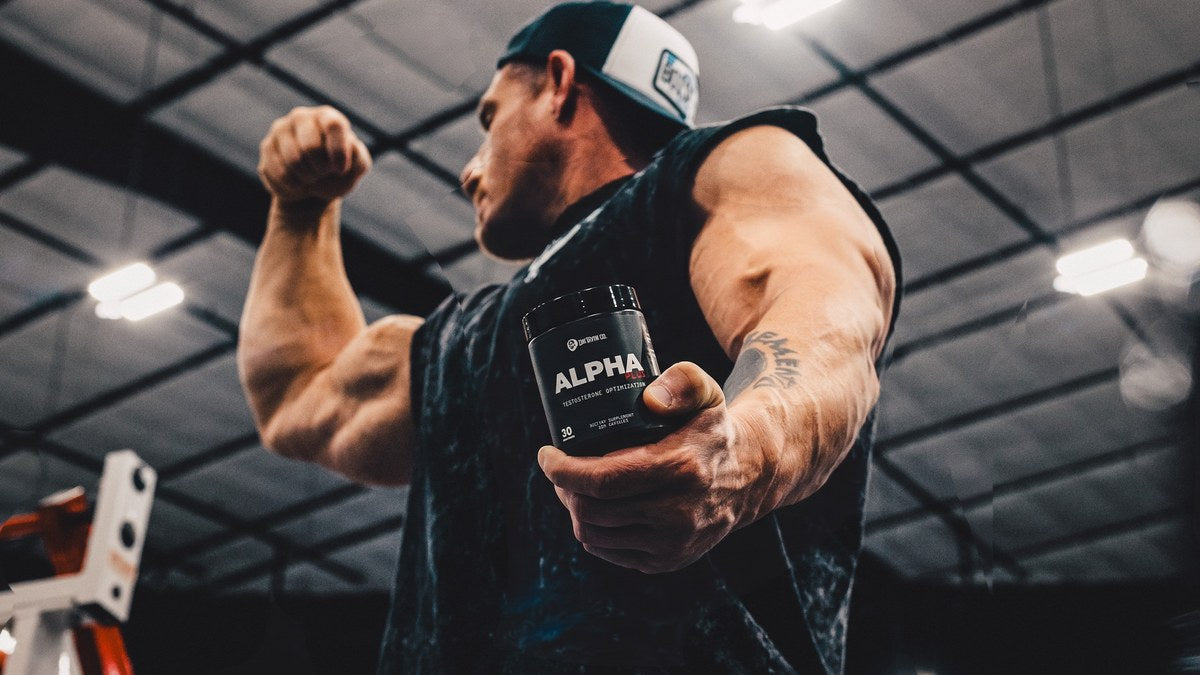
- Products like Alpha+ use the small handful of ingredients with real evidence — KSM-66 Ashwagandha, Tongkat Ali, PrimaVie Shilajit — at clinical doses with full label transparency, to support the foundation. They don't override your physiology or replace medical care.
Note: this video is from our UXO Supplements era — we've since rebranded to Die Tryin Co. Same team, same standards, same athletes.
"Keeping your testosterone levels in a normal healthy range — that's going to help impact your mood, your focus, your sleep, your natural energy levels. Because as we get older our testosterone levels begin to decline, and it's important to have something in our corner to help keep them in a normal healthy range." — Die Tryin Co.

That's the honest framing. Supplements support a healthy lifestyle. They don't replace sleep, training, body composition, or a doctor. Anyone telling you otherwise is selling you something. Read our full testosterone booster breakdown for the deeper dive.
MEN'S HORMONAL HEALTH FAQ
What's a normal testosterone level?
Total testosterone in adult men typically falls roughly in the 300-1,000 ng/dL range, with wide natural variation. A single number out of context means little — symptoms, trends, and how you feel matter more. Only a doctor interpreting your bloodwork can tell you what your numbers mean.
Do testosterone boosters actually work?
The overwhelming majority don't meaningfully raise testosterone. The 2023 Morgado systematic review found most common ingredients have no good evidence of working in humans. A small handful — ashwagandha, Tongkat Ali, PrimaVie Shilajit, HMB, betaine — showed modest "possibly effective" results in specific populations. Effects are real but nothing like the "skyrocket your T" marketing.
How can I raise my testosterone naturally?
Sleep 7-9 hours, get to a healthy body fat, lift weights consistently, manage stress, eat enough dietary fat, and cover key micronutrients. These lifestyle levers are far more effective than any supplement — and they're mostly free.
What are the signs of low testosterone?
Common symptoms include low libido, erectile issues, chronic fatigue, low mood, and loss of muscle and strength despite training. But these symptoms have many possible causes — the only way to know if testosterone is involved is bloodwork ordered by a doctor.
Does lifting weights raise testosterone?
Resistance training supports healthy testosterone and, more importantly, improves the body composition and insulin sensitivity that sustain healthy levels long-term. The acute post-workout spike is small and temporary — the real benefit is the consistent lifestyle effect over months and years.
Should I consider TRT?
That's a decision for you and a qualified physician, based on bloodwork and symptoms — not something to self-prescribe. For men with genuine clinical deficiency, TRT under medical supervision can help. It carries real risks and trade-offs and should never be sourced from unregulated channels.
Does testosterone always decline with age?
Testosterone declines gradually with age, around 1% per year after 30 on average. But lifestyle factors often matter more than age for men under 40 — many "age-related" symptoms are really sleep, body fat, and stress problems in disguise.
Do any supplements actually help testosterone?
Correcting genuine deficiencies in vitamin D, zinc, and magnesium can help men who are deficient. Ashwagandha, Tongkat Ali, and PrimaVie Shilajit have modest research support per the 2023 Morgado review. Beyond those, most "boosters" don't work. Supplements fill nutritional gaps and support a healthy lifestyle — they don't override your physiology.
READ MORE ON HORMONAL HEALTH & RECOVERY
- Testosterone Booster: Is It Right for You? What the Research Says
- How Stress and Cortisol Wreck Gains
- Effects of Stress on Mental Well-Being
- Sleep & Fat Loss
- No Weight Loss Plan Is Complete Without Solid Sleep
- Omegas for Internal Health
- The KSM-66 Difference
- How to Lose Fat and Keep Muscle: The Complete Guide
- How to Build Muscle: The Complete Guide
- How Much Protein Do You Need? The Complete Guide
- How to Recover From Workouts: The Complete Guide
READY TO GEAR UP?
The Die Tryin Co. internal-health lineup supports the foundation — it doesn't make false promises:
- Alpha+ — KSM-66 Ashwagandha, Tongkat Ali, PrimaVie Shilajit, DIM, and Albion-chelated Mg + Zn at clinical doses with full label transparency
- Daily Essentials — covers the vitamin D, zinc, and magnesium floor
- Omega — quality omega-3s for overall internal health
Not sure what fits? Take the quiz. And if you have real symptoms, see a doctor first — no supplement replaces a proper workup.
ALWAYS FORWARD.
GEAR THAT FITS THIS POST
The products this article actually talks about. Real doses, disclosed labels, veteran owned.

Read more
The no-BS playbook for losing fat without losing muscle. Energy balance, protein, training, sleep, and the supplements that actually help.
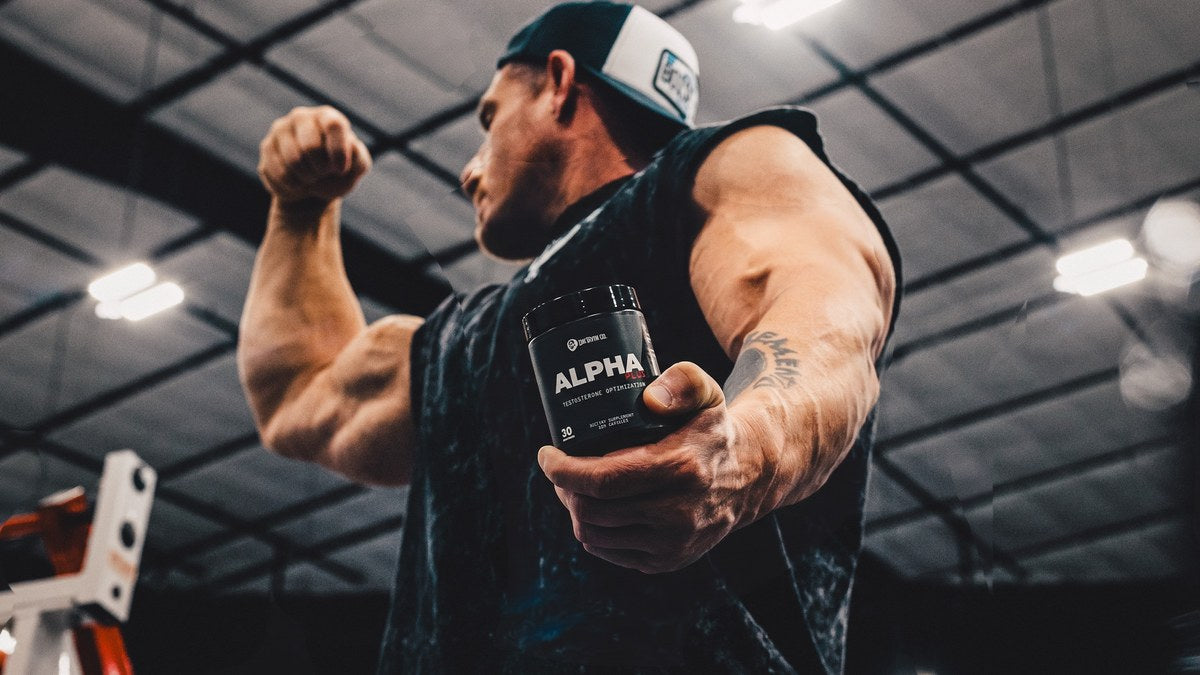
Most testosterone boosters don't work. Here's what the 2023 systematic review actually found — and what real-world habits move testosterone naturally.

Cortisol is not your enemy. Chronic, unmanaged stress is, and the difference matters.

The complete playbook for building muscle that actually lasts. Training, nutrition, recovery, and the supplements that move the needle — no hype.

Short sleep does not necessarily stall your weight loss. It changes what you lose, and the scale will not warn you it is happening.
The no-BS recovery playbook — sleep, stress, nutrition, modalities, and the framework that ties it all together. Recovery is where growth actually happens.