


Testosterone Booster: Is It Right for You?
By Jon Klipstein, U.S. Army Combat Veteran & Founder of Die Tryin Co.
Science reviewed by Onur Oncer, BS Physiology and peer-reviewed published researcher.
Listen up. The testosterone-booster industry is a graveyard of bottles that don't do what their labels say. Tribulus. D-aspartic acid. ZMA. DHEA. Stack after stack of "natural T-boosters" with marketing budgets bigger than their evidence base.
The truth is uncomfortable: most testosterone boosters don't raise testosterone. The research shows it. Honest brands say it. The rest sell hope to men in their 30s and 40s who don't realize they're being sold lifestyle problems disguised as supplement deficits.
Here's what testosterone actually is, what actually moves it, and where supplements fit in the picture.

WHAT TESTOSTERONE ACTUALLY DOES
Testosterone is the primary male sex hormone, but its job extends far past puberty-class explanations. It supports muscle mass, bone density, red blood cell production, mood regulation, cognitive function, libido, and motivation. Normal total testosterone in healthy adult men ranges roughly 300-1,000 ng/dL — though the "normal" range is genuinely debated in clinical literature.
Levels decline with age. Total testosterone drops roughly 1% per year after 30 in most men. Free testosterone — the bioavailable fraction not bound to sex hormone-binding globulin (SHBG) — drops faster. By 75, most men have meaningfully less circulating testosterone than they did at 25.
Low testosterone isn't always a disease. But when symptomatic, it's correlated with increased abdominal fat, decreased muscle mass, reduced libido, mood changes, fatigue, and worse insulin sensitivity. That's the medical reality. The marketing reality is something else.
DO TESTOSTERONE BOOSTERS WORK? IT DEPENDS WHAT YOU'RE BUYING
This is where the brand has to be honest with you. A 2023 systematic review in the International Journal of Impotence Research looked at the most-marketed "testosterone-boosting" supplement ingredients. The finding: only HMB and betaine had meaningful direct-elevation evidence. Most of the rest didn't hold up.
D-aspartic acid is one of the most-marketed T-booster ingredients of the past decade. The systematic review on D-aspartic acid and testosterone found it did not produce meaningful testosterone increases in healthy human subjects. The supplement industry has known this for years. The marketing didn't change.
Tribulus terrestris, ZMA, DHEA, and most "herbal anabolic" formulas marketed for direct testosterone elevation have similarly thin or contradictory evidence in healthy men. If a product front-page-features those ingredients with T-raising claims, it's selling marketing, not biology.
What has more solid evidence is the support side of the equation: specific patented extracts at clinical doses, targeting upstream factors like stress, cortisol, hormonal balance, and micronutrient sufficiency rather than promising direct hormone elevation. KSM-66 ashwagandha (the specific patented form, not generic), PrimaVie shilajit (clinical-grade, not generic), Tongkat Ali at adequate dose, and fenugreek extract at 500mg+ all have published research — though the effects work through indirect mechanisms more than direct T-elevation.
WHAT ACTUALLY MOVES THE NEEDLE
Here's what research actually shows moves testosterone in non-deficient men:
- Sleep. 7-9 hours nightly. One night of restricted sleep can drop next-day testosterone meaningfully. Sleep affects every hormone in the body, testosterone included.
- Resistance training. Especially compound lifts under load. Acute T spikes from heavy training don't translate to chronic elevations, but maintained lean mass and metabolic health do.
- Body composition. Excess abdominal fat lowers testosterone via aromatization to estrogen. Getting body fat into a reasonable range (15-20% for most men) recovers what you've lost without any supplement.
- Stress management. Chronically elevated cortisol suppresses testosterone production. Stress is a hormone problem before it's anything else.
- Micronutrient sufficiency. Vitamin D, zinc, and magnesium deficiencies suppress testosterone. Correcting deficiencies (not megadosing past sufficiency) helps.
- Adequate dietary fat. Cutting dietary fat below ~20% of calories for months can suppress testosterone. Cholesterol is a testosterone precursor.
None of that is sexy. None of it sells $59 bottles. All of it works.
WHERE ALPHA+ FITS — AND WHAT'S IN IT
The honest answer: supplements support the foundation. They don't replace it.
If your sleep is garbage, your training is inconsistent, your body fat is 25%+, you're under chronic stress, and your diet is unstructured — no testosterone supplement will fix that. Anyone selling you one is selling false hope.

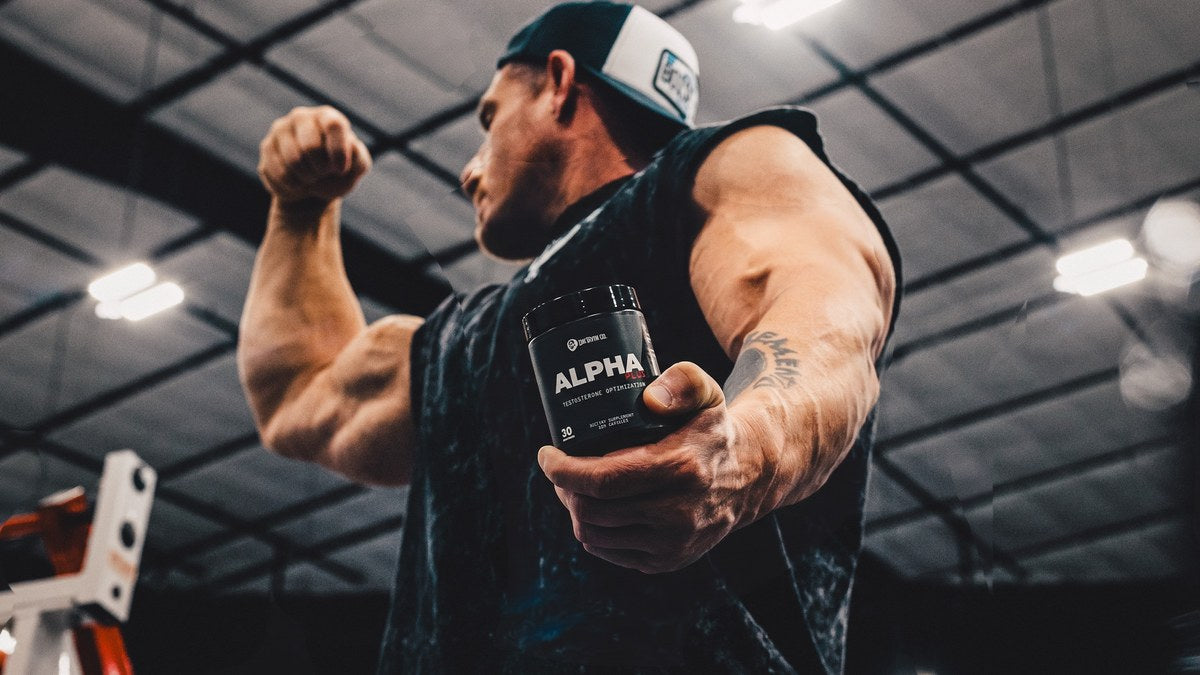
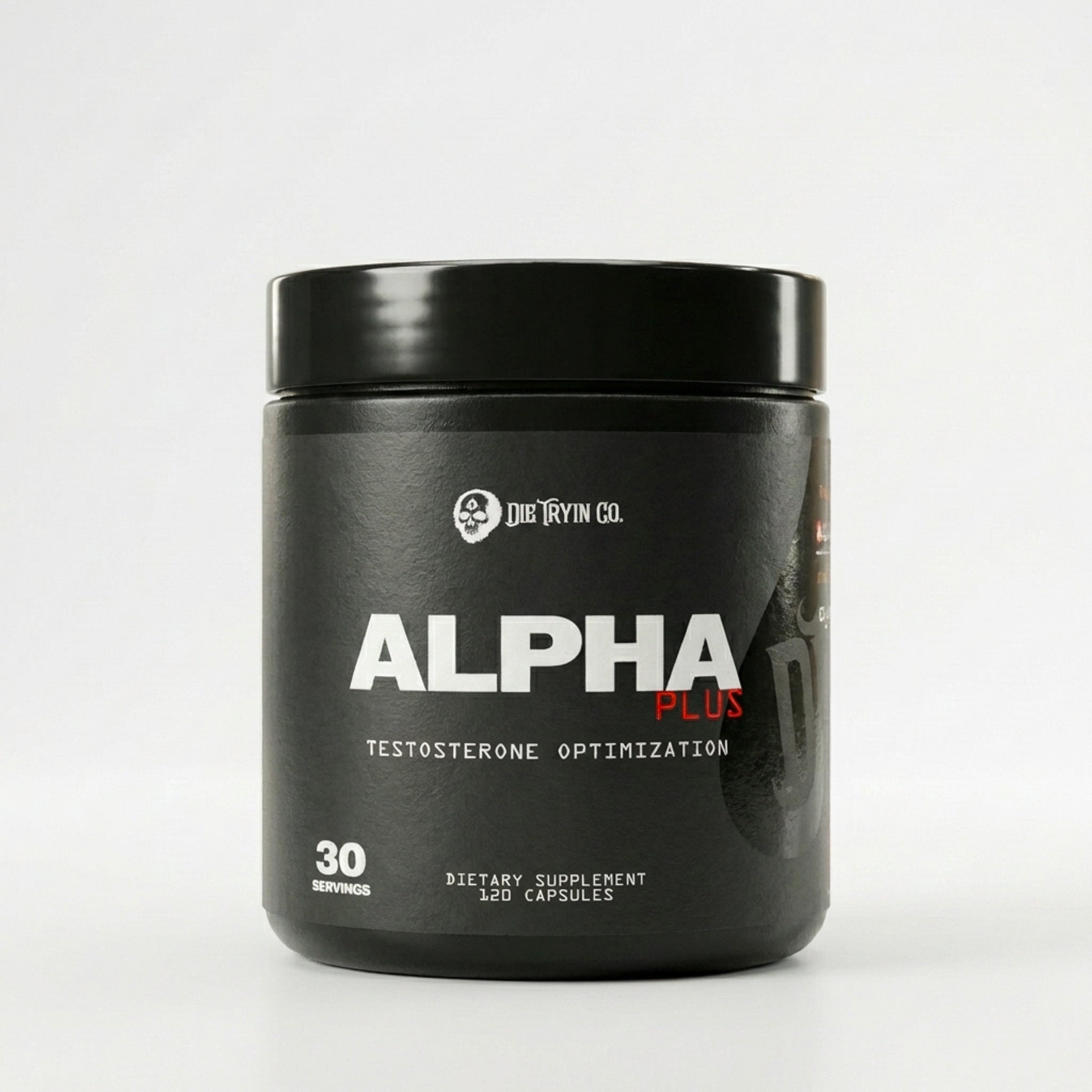
If the foundation is solid, certain supplements can support the upstream factors that influence hormonal health — stress, cortisol, libido, aromatase activity, estrogen metabolism, and micronutrient sufficiency. Alpha+ is built on that principle. The full label:
- 600mg KSM-66® Ashwagandha — the patented extract with published research, for stress, mood, and indirect hormonal support
- 500mg Fenugreek Seed Extract — above fairy-dust thresholds, for aromatase inhibition and libido
- 300mg Tongkat Ali Extract — for stress hormone management
- 200mg PrimaVie® Purified Shilajit — the clinical-grade patented form with its own published RCT
- 150mg DIM (3,3'-Diindolylmethane) — estrogen metabolite modulator; shifts estrogen processing toward less-active forms
- 40mg Albion® Magnesium Bisglycinate + 12mg Albion® Zinc Bisglycinate — patented chelated mineral forms covering the micronutrient floor most active men miss (zinc at 109% DV)
- 5mg BioPerine® Black Pepper Extract — patented absorption enhancer (≥95% piperine)
Patented, dose-disclosed, no proprietary blends. Six distinct mechanisms — stress, aromatase, estrogen metabolism, hormonal support, micronutrient floor, absorption — instead of one debunked claim about direct T-elevation.
What you won't see promised on a Die Tryin Co. label: that any supplement is a magic switch for testosterone. That's not how the biology works for non-deficient men. What you will see: research-backed ingredient forms at clinical doses, third-party testing, and the honest framing that supplements support a foundation — they don't replace it.
Want a real-world take? Here's one member's 30-day run on Alpha+:
FREQUENTLY ASKED QUESTIONS
How do I know if I have low testosterone?
Symptoms alone aren't diagnostic. Get a blood test — total testosterone, free testosterone, SHBG, and ideally estradiol. Best timing is morning (testosterone peaks around 8 AM). If you're symptomatic and the labs show low T, work with a doctor — not a supplement marketer. Testosterone deficiency is a real medical condition; the appropriate treatment is medical, not supplemental.
Do natural testosterone boosters actually work?
It depends on the ingredient. Generic tribulus, D-aspartic acid, ZMA, DHEA, and cheap herbal blends marketed for direct testosterone elevation have weak or contradictory evidence in healthy men. Specific patented extracts have more support — KSM-66 ashwagandha (not generic) for stress and indirect hormonal effects, PrimaVie shilajit (not generic) for hormonal support, fenugreek extract at 500mg+ for libido and aromatase effects, and adequate-dose Tongkat Ali for stress hormones. The trap is buying products that front-page direct T-raising claims based on the debunked ingredients. The opposite trap is dismissing the whole category.
What about TRT (testosterone replacement therapy)?
That's a medical decision between you and a doctor. TRT for clinically diagnosed hypogonadism is well-supported in the medical literature. TRT as a lifestyle optimization tool for men with normal levels is more controversial and outside the scope of supplements. If you're considering it, do it under medical supervision — not based on a supplement company's blog post.
How fast can lifestyle changes move testosterone?
Sleep improvements can move testosterone within days. Body composition changes take months. Resistance training adaptations build over years. The lifestyle changes that move testosterone don't move fast, but they move durably — which is the opposite of how most supplements work.
Why does Die Tryin Co. sell Alpha+ if most T-boosters don't work?
Because there's a real difference between marketing-grade T-boosters (cheap generic ingredients with claims that outrun the science) and research-grade hormone-support formulas (specific patented extracts at clinical doses, targeting multiple upstream mechanisms). Alpha+ is the second category. The label: 600mg KSM-66 ashwagandha, 500mg fenugreek extract, 300mg Tongkat Ali, 200mg PrimaVie shilajit, 150mg DIM, 40mg Albion magnesium and 12mg Albion zinc bisglycinate (patented chelated forms), and 5mg BioPerine for absorption. Seven distinct support angles, no proprietary blends, every dose disclosed.
Should I talk to a doctor about my testosterone?
Yes — if you're symptomatic, get blood work and work with a physician. Symptoms of low testosterone overlap with stress, depression, sleep deprivation, and overtraining. A doctor can sort that out; a supplement company can't. Statements on this site about dietary supplements have not been evaluated by the FDA; products are not intended to diagnose, treat, cure, or prevent any disease.
READY TO GEAR UP?
Build the foundation first. Then layer the support:
- Hormone-support formula → Alpha+
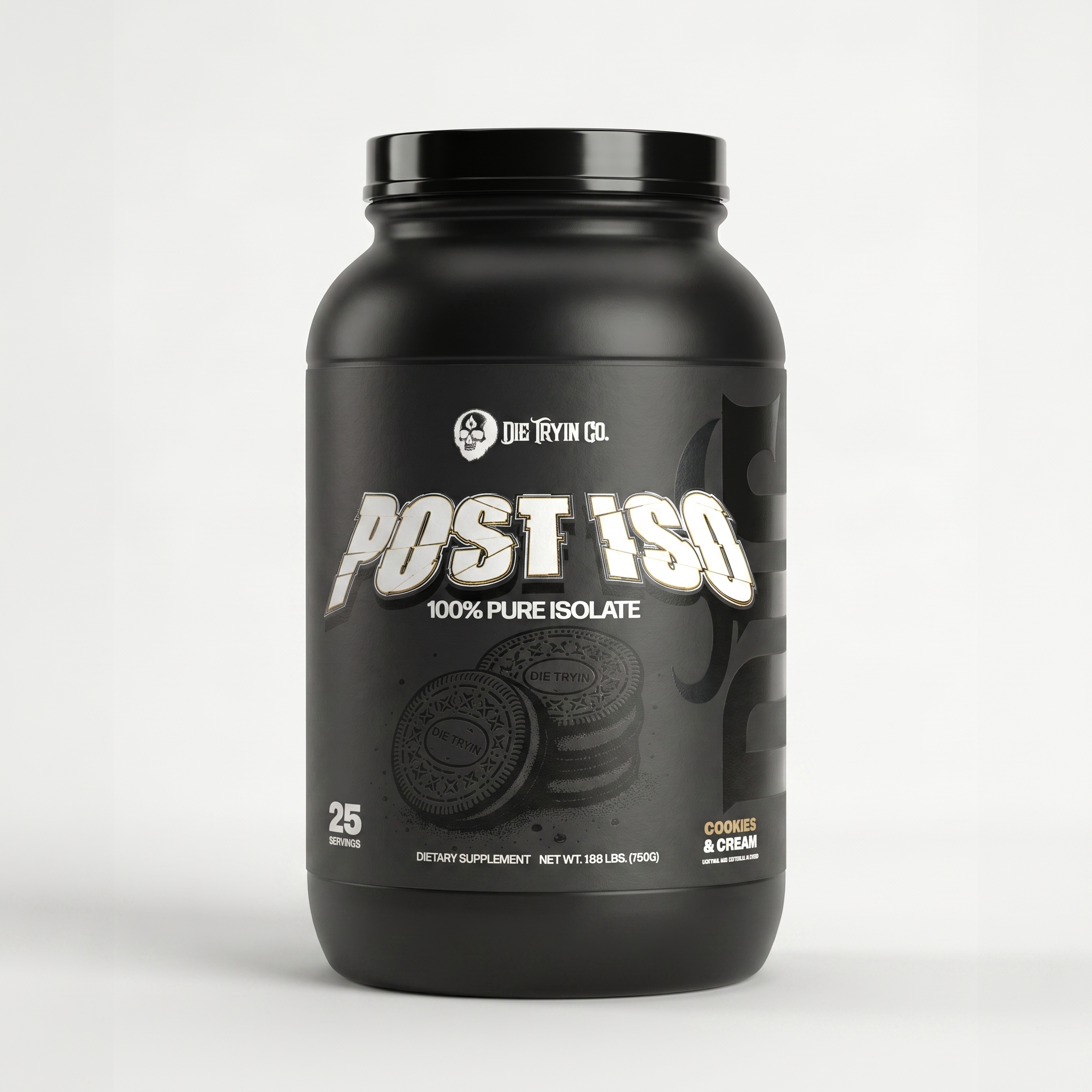
- Protein for body composition → Post Iso (Whey Isolate)
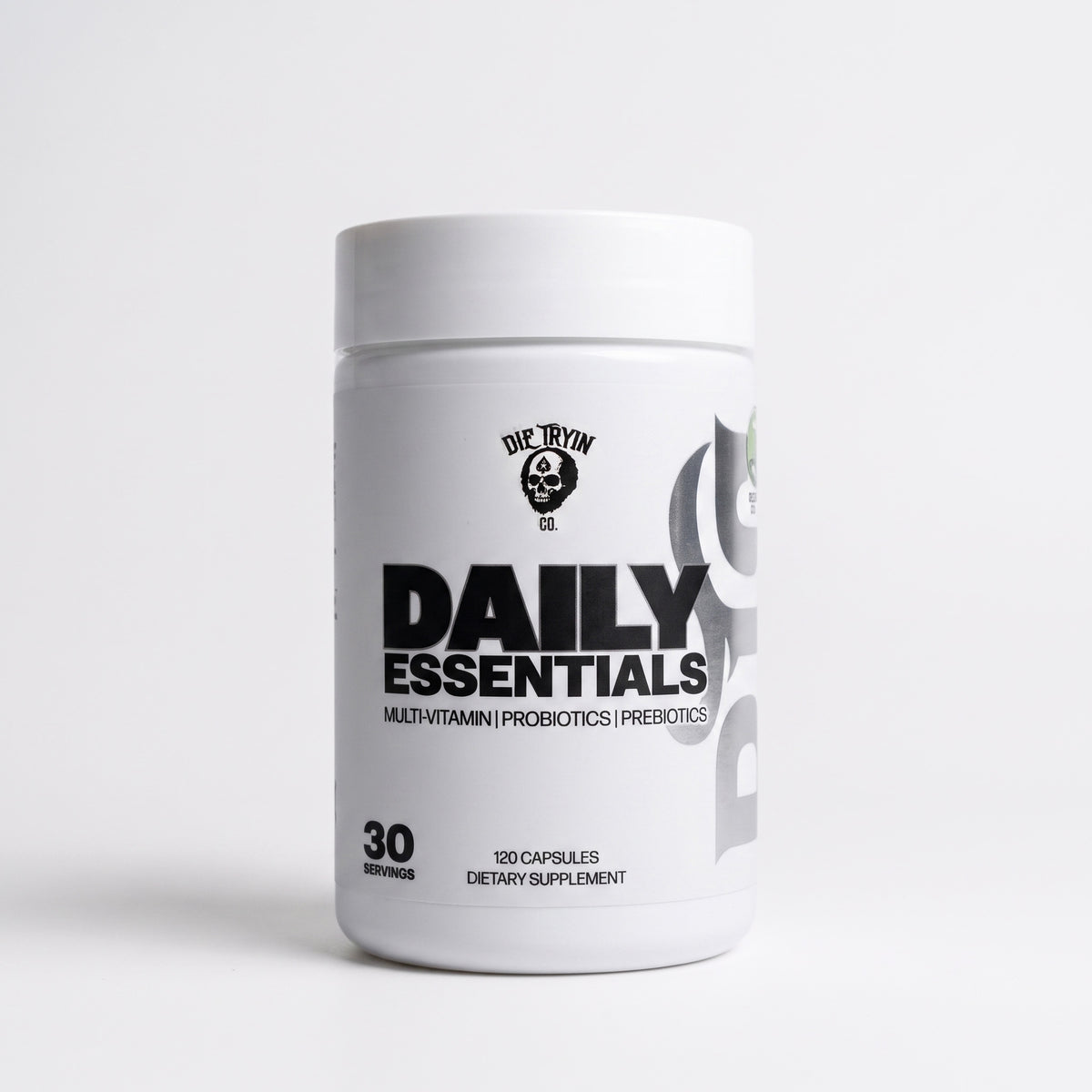
- Multivitamin / micronutrient floor → Daily Essentials
Not sure where to start? Take the quiz and get a stack matched to your training.
Sleep. Lift. Eat properly. Manage stress. The supplement comes last.
ALWAYS FORWARD.
GEAR THAT FITS THIS POST
The products this article actually talks about. Real doses, disclosed labels, veteran owned.
Read more
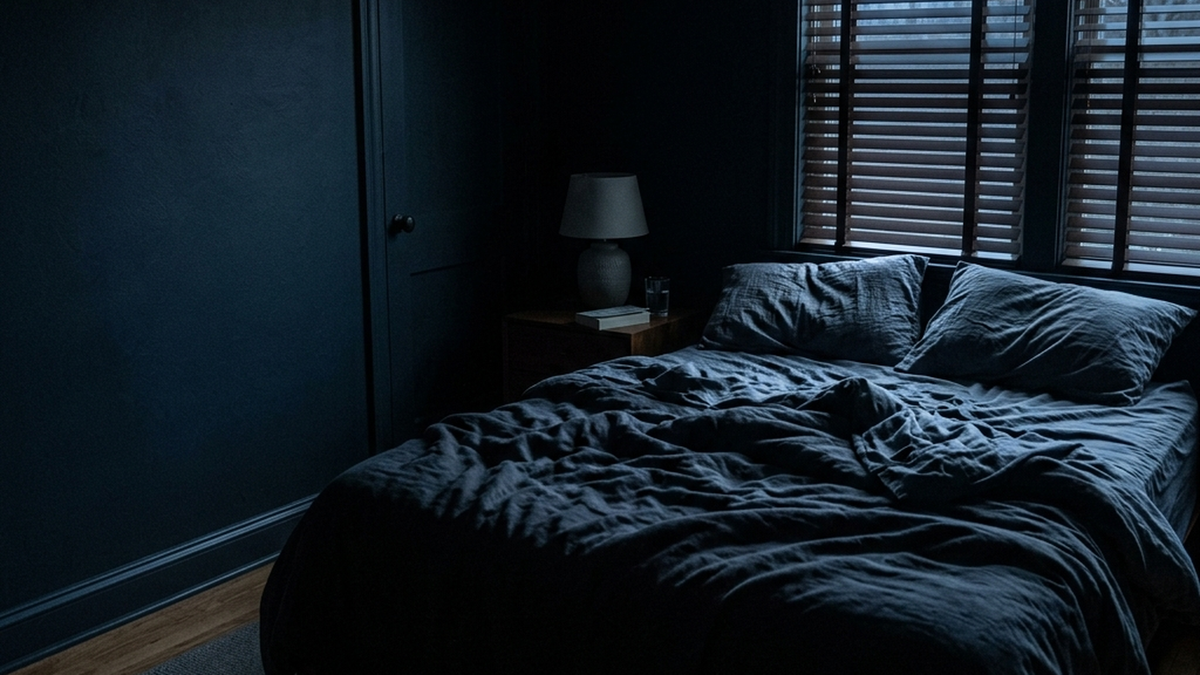
Short sleep does not necessarily stall your weight loss. It changes what you lose, and the scale will not warn you it is happening.

Cortisol is not your enemy. Chronic, unmanaged stress is, and the difference matters.
Your gut lining runs the same creatine energy system as your muscles. Here is what the research shows on stomach upset, IBS, colitis and leaky gut, and exactly where the human evidence stops.

Creatine gummies can work if the creatine is actually in them, and lab tests keep finding it often is not. Here is why a scoop of Creatine Monohydrate powder still wins.
Flavor doesn't change what creatine does; taking it every day is what counts. How to pick flavored or unflavored, what to mix it with, and how long it lasts once mixed.
Whey protein concentrate now costs more than four times its early-2023 low. Here is what is driving it, what the 2027 forecasts actually say, and how to pay less per gram of protein without getting...