





Energy Balance: What Exercise Really Moves
By Jon Klipstein, U.S. Army Combat Veteran & Founder of Die Tryin Co.
Science reviewed by Onur Oncer, BS Physiology and peer-reviewed published researcher.
FAT LOSS, NO BS
Here's the deal. Every fat loss method that has ever worked, from carnivore to keto to counting points, worked through the same ledger: energy in versus energy out. The interesting question is not whether the ledger is real. It is how much your training actually writes on the out side, because that number is smaller and stranger than the fitness industry tells you.
This is the physics post. What a real exercise dose does on its own, why the casual dose does almost nothing, where some of your burn quietly disappears, and how to build the week so the ledger works for you instead of on you.
| APPROACH | WHAT THE DATA SHOWS | VERDICT |
|---|---|---|
| Guideline-level cardio (150 min/week) | Good for the heart, generally inadequate for meaningful weight loss on its own | Health floor, not a fat loss plan |
| Serious exercise dose (2,000+ kcal/week) | 4-6% bodyweight lost in 10 months with no diet change in a supervised trial | Works, but demands 5 sessions a week |
| Diet alone | Moves the scale fastest, and takes muscle with it when nothing pushes back | Effective, sloppy |
| Deficit from food + lifting | Largest fat loss with lean mass preserved across 114 trials | The play |
WHAT EXERCISE ALONE CAN ACTUALLY DO
The best-controlled answer comes from the Midwest Exercise Trial-2: 141 overweight adults, supervised sessions burning 400 to 600 calories, five days a week, ten months, no dietary instruction at all. The exercisers lost 4 to 6 percent of bodyweight while controls gained (Donnelly et al., 2013). So the it-is-impossible-to-outrun-your-fork crowd overstates its case. Training alone moves the ledger.
Now read the price tag. That result took roughly 2,000 to 3,000 calories of verified weekly output, five supervised sessions, for most of a year. That is triple the public health guideline, and it is exactly why a major review of the exercise-for-weight-loss literature concluded that guideline-level activity, 150 moderate minutes a week, is generally inadequate for clinically significant weight loss without caloric restriction (Swift et al., 2018). Two easy jogs do not buy a physique. They buy cardiovascular health, which matters, and almost nothing on the scale.
THE PART OF YOUR BURN THAT DISAPPEARS
Here is the genuinely unsettled science, printed the way it stands. One camp, led by Pontzer's group, argues total daily expenditure is partly constrained: in their 2026 Current Biology analysis of exercise interventions, total burn rose only about 30 percent of what simple addition predicts, because the body compensates by spending less elsewhere. Another camp pushed back in 2025 in PNAS with data showing activity adding to total expenditure linearly, no ceiling detected. Research is genuinely split on how big compensation is, and anyone who tells you this question is settled is selling something.
What both camps agree on is what matters for your plan: the calories your watch says you burned and the calories that actually land on the ledger are not the same number, and the gap grows when you pair heavy cardio with aggressive dieting. The practical move is to treat training burn as a bonus you never spend in the kitchen. Build the deficit from food. Let the training buy performance, muscle and margin.
WHERE EXERCISE ACTUALLY DOMINATES: KEEPING IT OFF
Here is the part of the literature that gets buried under the losing-weight arguments. The same review that called guideline-level activity inadequate for losing weight found that high activity levels are one of the strongest predictors of keeping weight off once it is gone. People who maintain large losses long term report activity far above the public health minimums, often an hour a day of accumulated movement.
The mechanism is the ledger again. After a diet, you are a smaller person with a smaller daily burn, holding the appetite of the person you used to be. Training widens that shrinking out-column and lets maintenance calories stay livable instead of monastic. So the honest division of labor reads like this: the deficit does the losing, the training does the keeping. Most people run it backwards, try to train off the weight while eating loose, then quit the gym the day the diet ends. That is the exact opposite of what the evidence supports.
There is a second, less discussed line in the out-column: everything you do that is not training. Walking, standing, taking the stairs, the fidgeting researchers call NEAT. It can swing several hundred calories between an active day and a desk-bound one, it tends to quietly collapse when people diet hard, and defending it, a step floor, walking meetings, parking far, costs zero recovery. Cheap calories are still calories.
WHY THE BARBELL IS NON-NEGOTIABLE IN A DEFICIT
A meta-analysis of 114 trials in overweight and obese adults found the resistance-plus-restriction combination delivered the biggest fat loss while holding lean mass, and resistance training alone was the single best tool for adding lean mass in this population (Lopez et al., 2022). A deficit decides that mass will be lost. Lifting decides what kind. Skip it and the scale drops while the physique stays soft, which is how people diet themselves smaller without ever looking harder.
THE WEEK THAT RESPECTS THE LEDGER
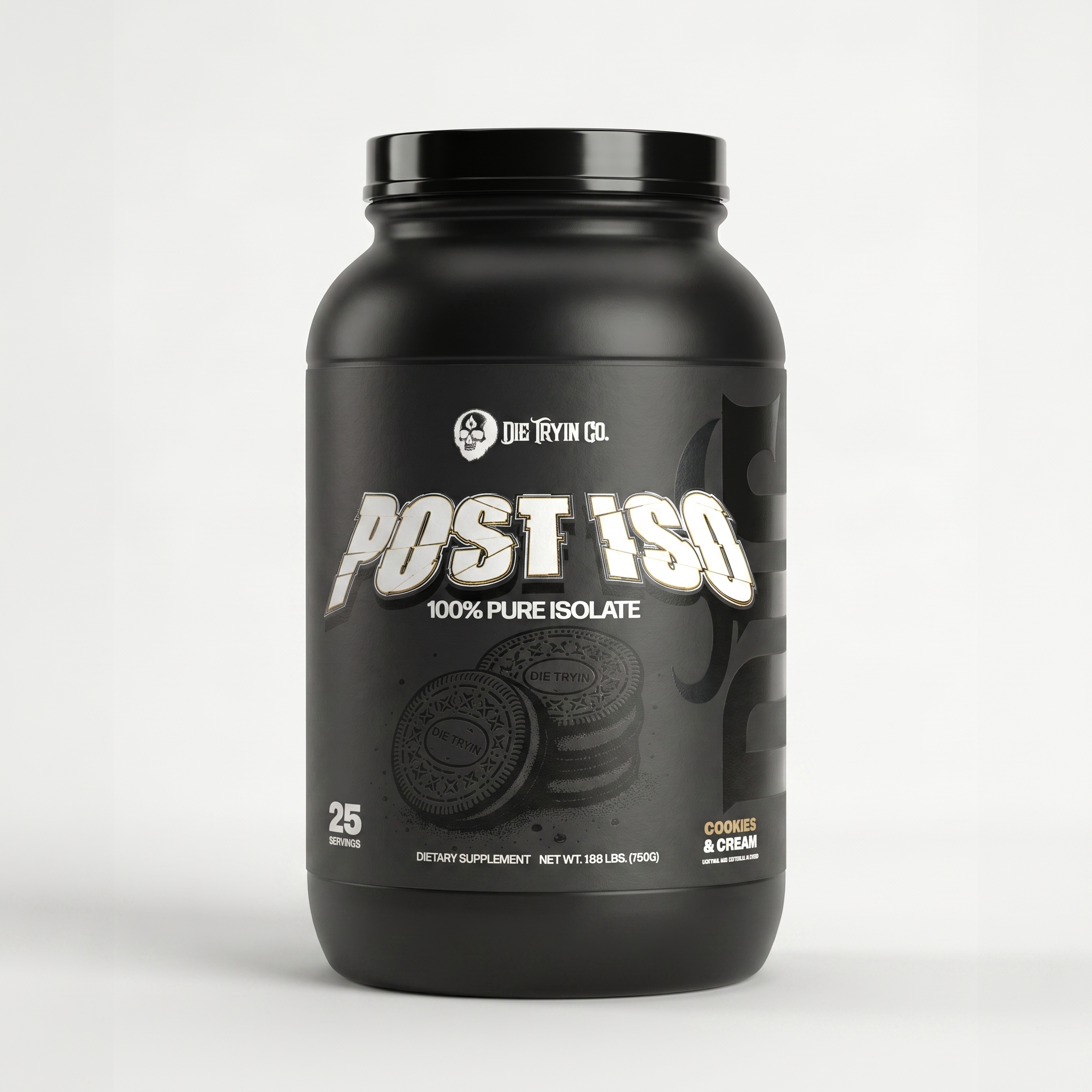
Build it in this order. First, set the deficit from food, a few hundred calories, boring and sustainable, per the full playbook in the fat loss guide. Second, lift three or four days because that defends the muscle. Third, add conditioning for the health and the extra margin, two or three sessions, and treat every calorie it burns as unspendable. Protein stays high, 2.3-3.1 grams per kilogram of lean mass (about 1.0-1.4 g per pound of lean mass, not total bodyweight), with Post Iso covering the gap on training days.
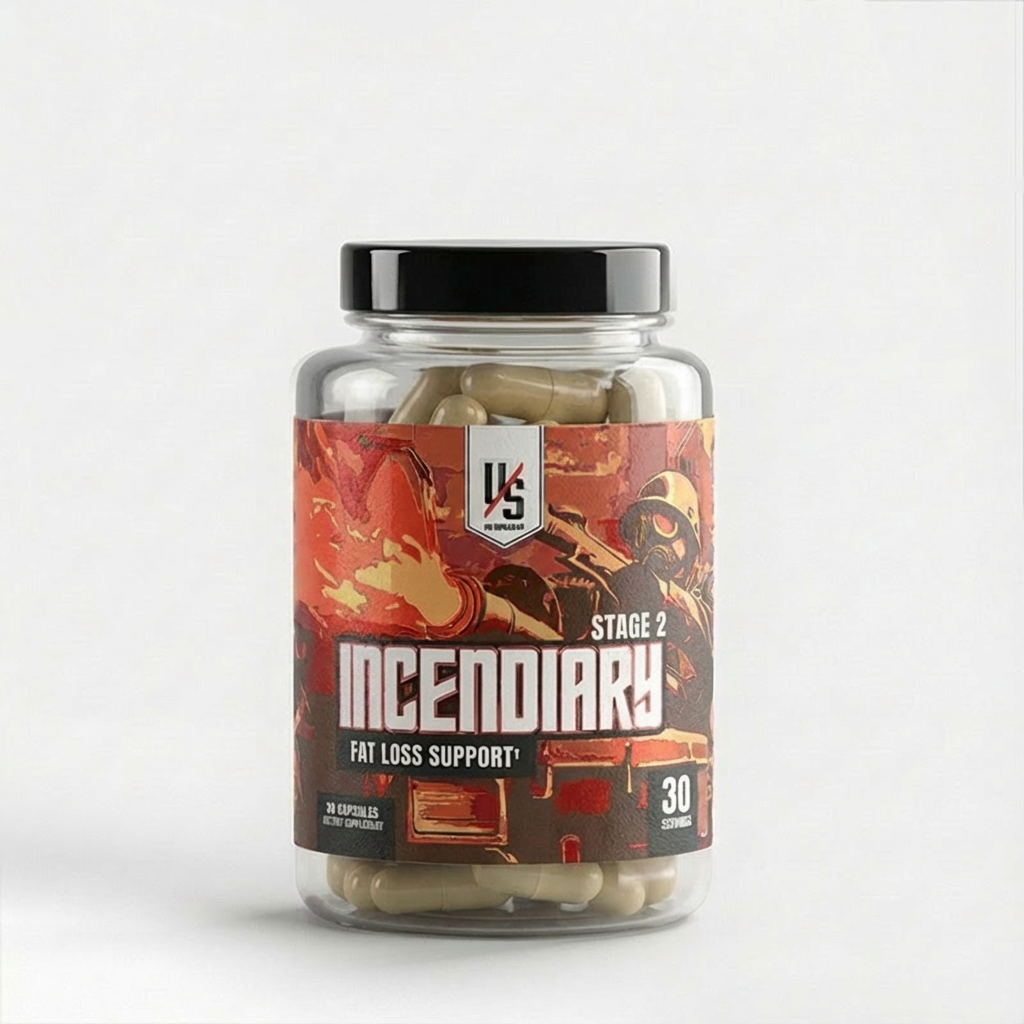
On the supplement side, keep the claims as honest as the ledger. Creatine Monohydrate preserves training quality in a deficit. Incendiary Stage 2 carries 500 mg of MitoBurn L-BAIBA, a stimulant-free ingredient formulated to support a healthy metabolism, and we publish exactly what the research does and does not show about it. No pill creates a deficit. The ledger does not accept coupons.
FREQUENTLY ASKED QUESTIONS
Is a calorie really just a calorie?
For the ledger, close enough. For behavior, no: protein is more filling and costs more energy to digest, and food quality drives how easy the deficit is to hold. The ledger sets the rules, food choice sets the difficulty.
How big should my deficit be?
Research and coaching practice converge on modest: roughly 300 to 500 calories, or about half a percent to one percent of bodyweight per week. Bigger deficits trade muscle and adherence for speed, and usually lose the trade.
Why does my watch say I burned 800 calories but I am not losing?
Wearable burn estimates run high, and part of any real burn gets compensated by the body spending less elsewhere. Both errors point the same direction. Trust the scale trend over weeks, not the watch.
Is HIIT better than steady cardio for fat loss?
Per minute, it burns more and it fits a busy week. Per week, the research shows total energy out is what matters, and the best conditioning is whichever kind you will actually repeat.
Can I lose fat without any cardio?
Yes. A food deficit plus lifting covers the physics and protects the muscle. Conditioning earns its place for heart health, work capacity and the extra margin, not because fat loss is impossible without it.
READY TO GEAR UP?
Set the deficit, defend the muscle, tell the truth about the ledger: Post Iso for the protein anchor, Creatine to keep training quality up, Incendiary Stage 2 for stimulant-free metabolic support. Go deeper: six real fat loss strategies and how to combine lifting and cardio. Not sure where to start? Take the quiz.
ALWAYS FORWARD.

GEAR THAT FITS THIS POST
The products this article actually talks about. Real doses, disclosed labels, veteran owned.

Read more

The no-BS playbook for losing fat without losing muscle. Energy balance, protein, training, sleep, and the supplements that actually help.

How Do I Burn Fat Quicker? Since starting the company, we have received a lot of questions regarding ways to lean out (or the most common
Cardio does not kill gains. Bad scheduling does. Here is how to run both without paying for it.
Your gut lining runs the same creatine energy system as your muscles. Here is what the research shows on stomach upset, IBS, colitis and leaky gut, and exactly where the human evidence stops.

Creatine gummies can work if the creatine is actually in them, and lab tests keep finding it often is not. Here is why a scoop of Creatine Monohydrate powder still wins.
Flavor doesn't change what creatine does; taking it every day is what counts. How to pick flavored or unflavored, what to mix it with, and how long it lasts once mixed.