


zumXR Extended-Release Caffeine
By Jon Klipstein, U.S. Army Combat Veteran & Founder of Die Tryin Co.
Science reviewed by Onur Oncer, BS Physiology and peer-reviewed published researcher.
THE CAFFEINE CURVE, NOT THE CAFFEINE SPIKE
zumXR® is a brand-name extended-release caffeine, which means it lets its dose out slowly. You will also hear this called slow-release or time-release. Same thing. It is regular caffeine wrapped in a coating that breaks down bit by bit. So part of your dose kicks in later instead of all at once. That is the whole idea, and it is a good one.
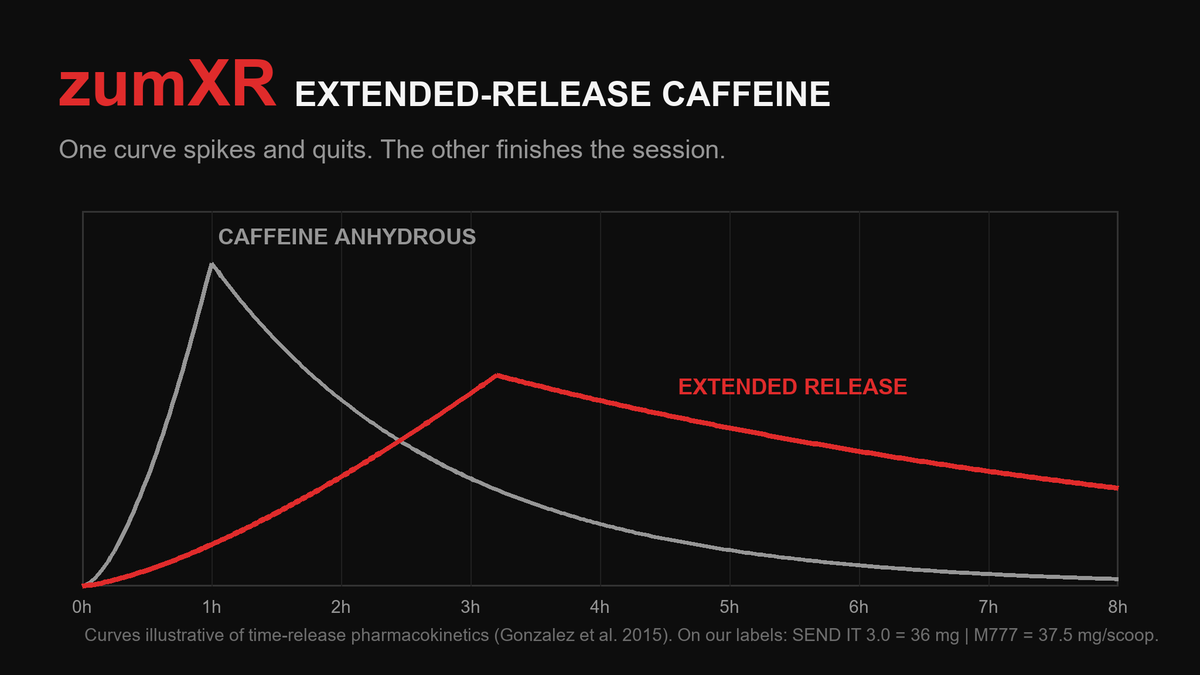
Here's the truth: the problem with most pre-workouts is not the peak. It is the drop-off. One big hit of fast caffeine kicks in fast and wears off just as fast. The back half of a long session pays for it.
Here is exactly how we use it. Real doses, printed on the label.
| Product | Fast caffeine | zumXR extended-release | Total |
|---|---|---|---|
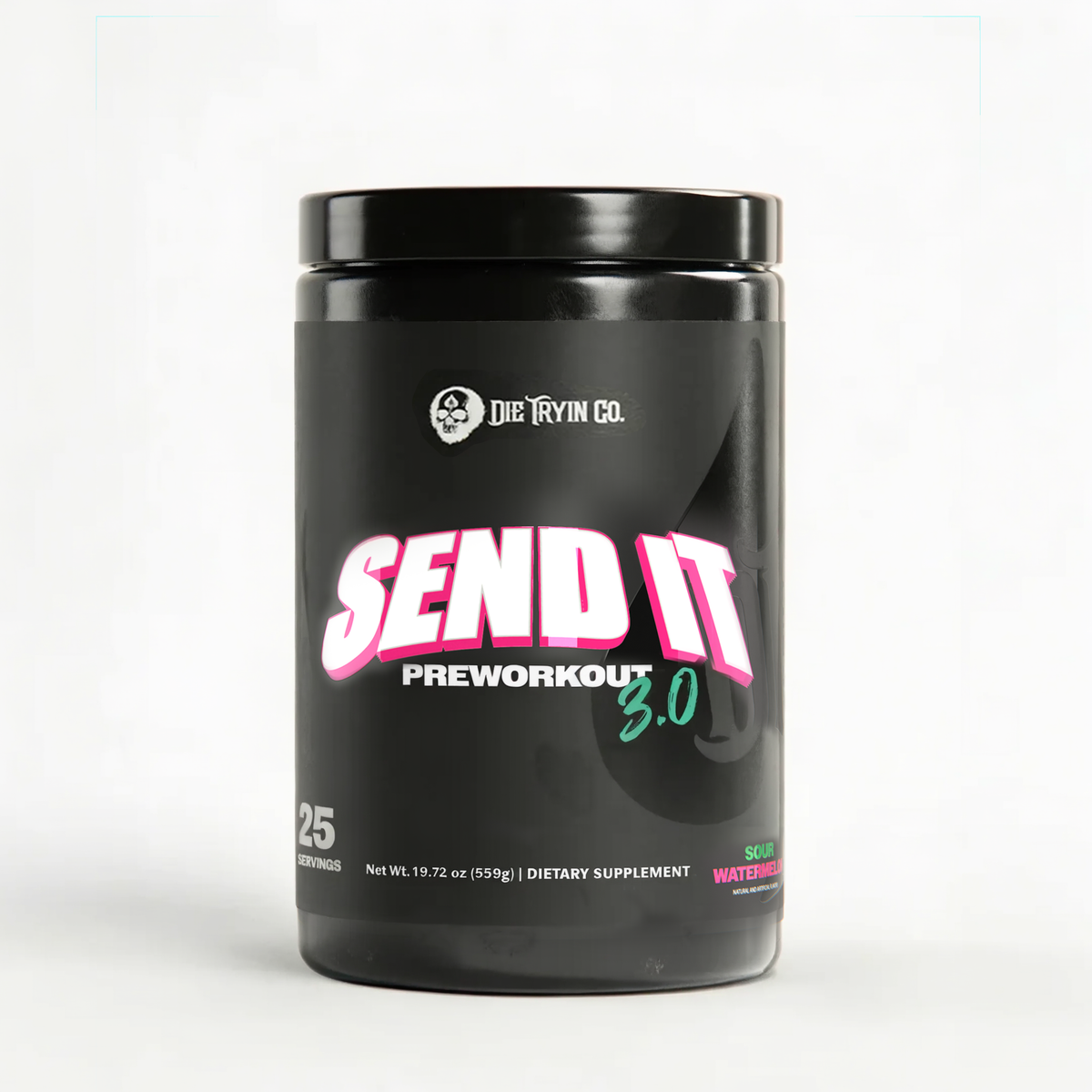
| SEND IT 3.0 | 250 mg natural caffeine | 36 mg | about 286 mg |
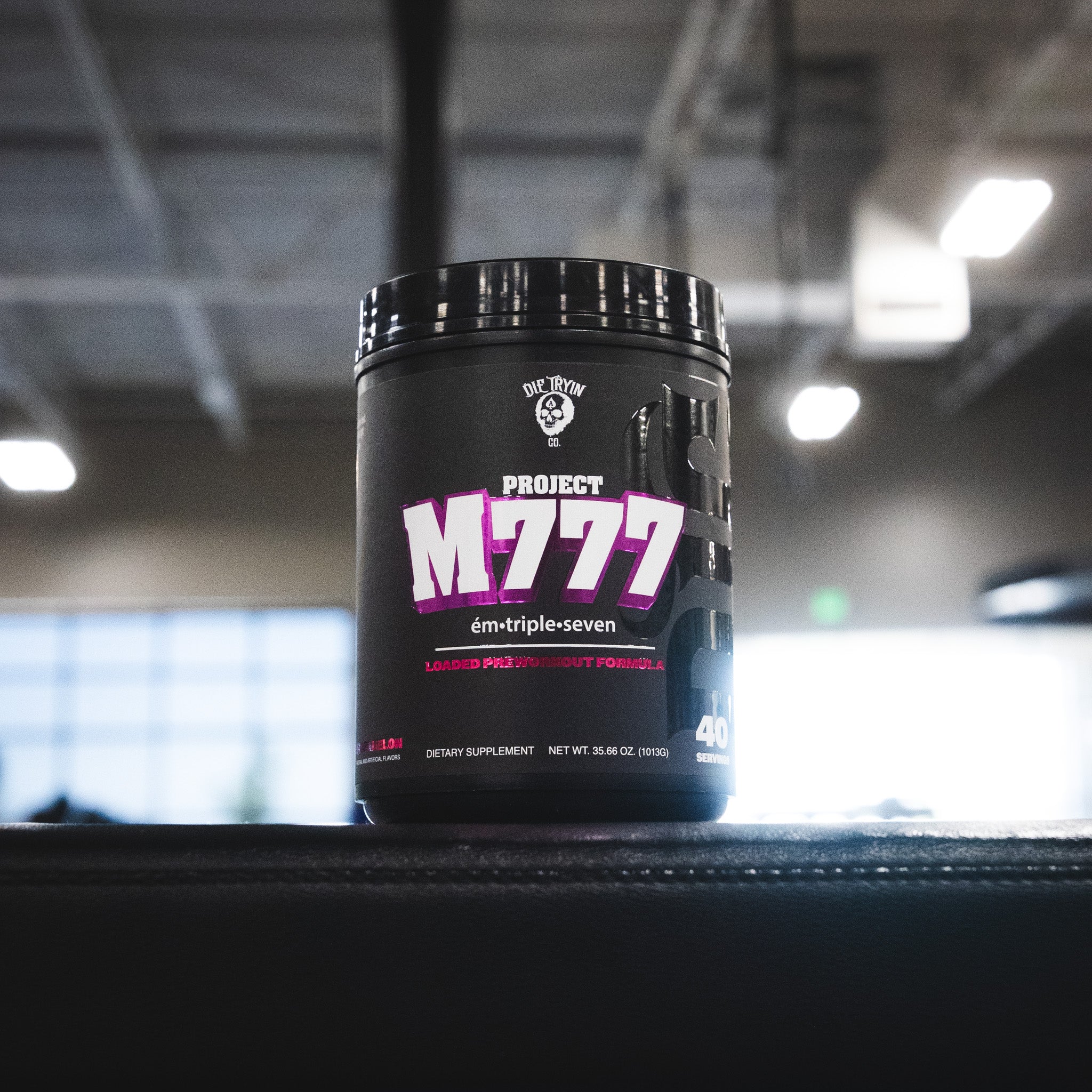
| Project M777 (full 2-scoop serving; one scoop is half) | 350 mg natural caffeine | 75 mg | 425 mg |
WHAT THE RESEARCH SHOWS
Caffeine itself is the most battle-tested performance ingredient there is. In 2021, the International Society of Sports Nutrition reviewed the research and put out its official position on caffeine. It confirms caffeine helps strength, sprint and endurance work. The doses that work land around 3 to 6 mg for every kilogram you weigh, taken about an hour before training. For a 180-pound lifter, that is roughly 245 to 490 mg.
The time-release question has been tested head to head. A 2015 study gave the same volunteers time-release caffeine and regular caffeine on different days, then tracked them for eight hours. Neither the volunteers nor the researchers knew which pill was which. From hour two to hour five, people had more caffeine in their blood on regular caffeine. At hour eight, they had more caffeine left in their blood on time-release. Time-release also kept their reactions quicker from hour five to hour eight, after regular caffeine's early boost had faded. So it builds slower and lasts longer. That is slow release doing exactly what the coating promises.
Where the evidence stops: that study tested a time-release caffeine, not zumXR by name. zumXR stands on that research plus caffeine's own mountain of data. We picked it for its slow release and put it in at a set amount printed on the label. The label shows how much of the caffeine is fast and how much is slow.
WHY THE SPLIT DOSE IS THE POINT
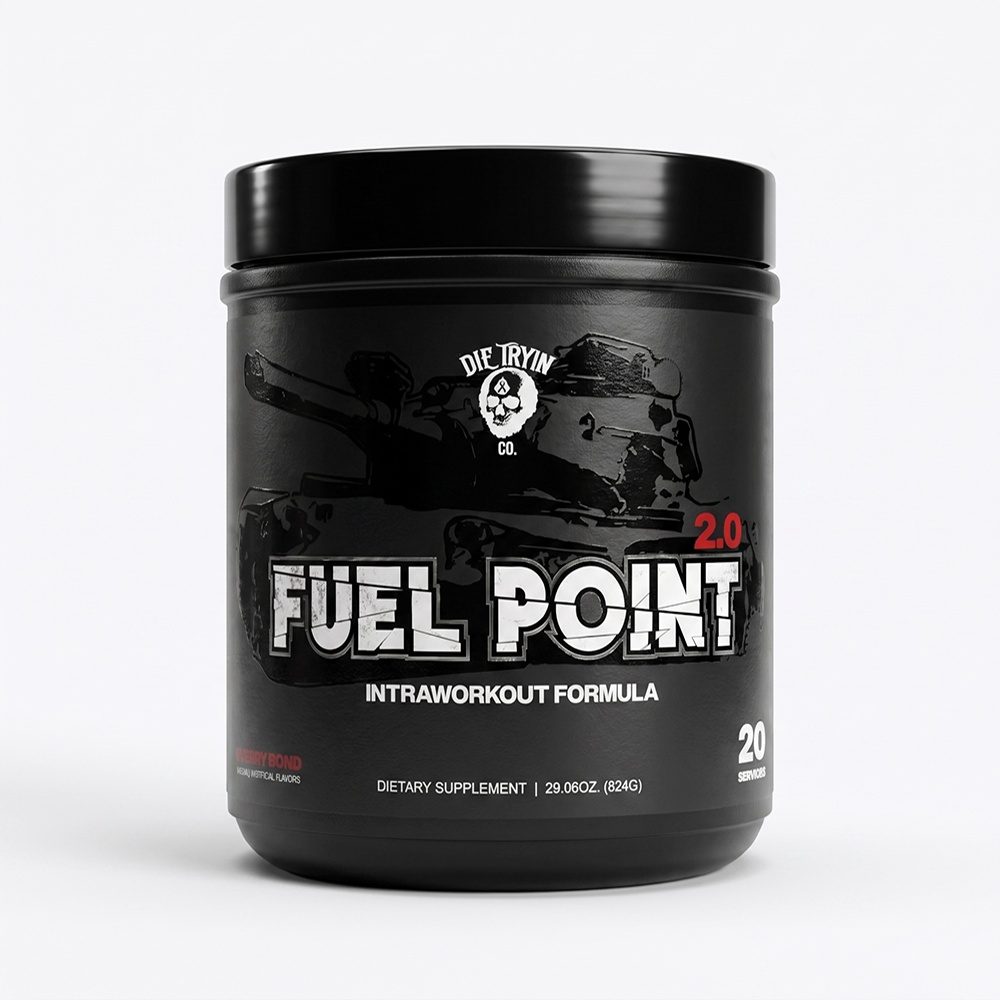
SEND IT 3.0 is built as a daily driver. The 250 mg of fast caffeine hits the way a pre-workout should. The 36 mg of zumXR is there to soften the comedown on long sessions. M777 runs the same setup at high-stim strength.
Both products print the full caffeine split on the label, because a number you cannot check is a number you should not trust. Check the amounts on every tub you own. Our guide to reading a pre-workout label shows how, using L-Citrulline (a pump ingredient) as the example.
M777's full 2-scoop serving is for experienced users only. If you are pregnant, managing a medical condition (especially heart rhythm or blood pressure) or taking medication, clear any supplement with your doctor first.
FREQUENTLY ASKED QUESTIONS
What is zumXR extended-release caffeine?
It is caffeine wrapped in a coating that breaks down slowly, so it kicks in later than regular fast caffeine. It is used alongside fast caffeine, not instead of it.
Does extended-release mean weaker?
No, it is the same caffeine, milligram for milligram, just on a delay. It is the smaller part of the dose because its job comes later: fast caffeine starts the work and zumXR stretches it out.
Will it keep me up at night?
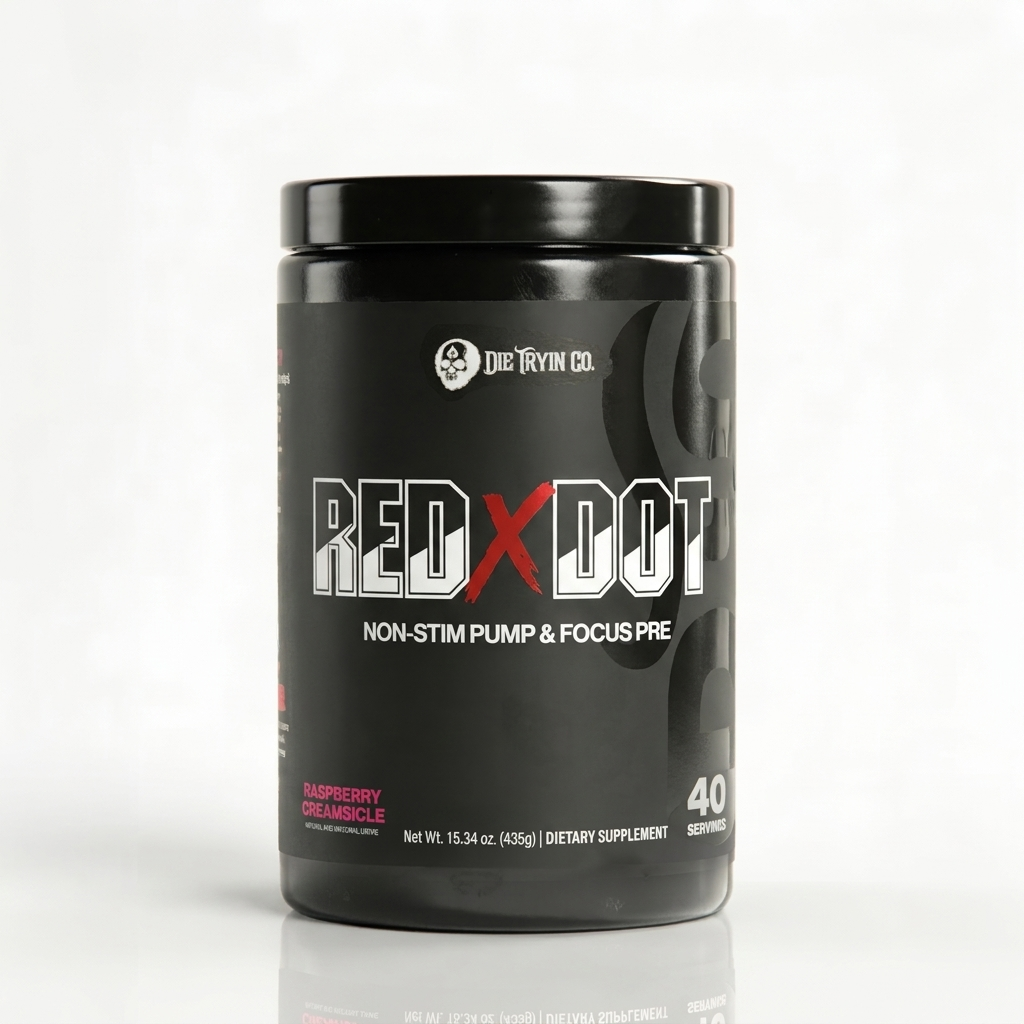
It can, because caffeine is caffeine and a later release means a later finish. For evening training, skip stimulants entirely: Red Dot has zero caffeine and 9,000 mg of pure L-Citrulline for the pump.
How much total caffeine is in SEND IT 3.0?
About 286 mg per scoop: 250 mg of fast natural caffeine plus 36 mg of slow zumXR. The complete pre-workout guide shows how to match that to your body weight and how much caffeine you are used to.
READY TO GEAR UP?
Every product amount above is printed on the label, in the same form that goes into the tub. See every ingredient we use in the Ingredient Index, or take the 60-second quiz to match a formula to your training.
ALWAYS FORWARD.
GEAR THAT FITS THIS POST
The products this article actually talks about. Real doses, disclosed labels, veteran owned.

Read more
Two tubs both say 9 g of citrulline. One gives you 9 g, the other gives you 6 g. The 2:1 ratio explained, plus the 2024 trial that tested whether the malate does anything at all.
What actually works in pre-workout — ingredients, doses, timing, and how to pick the right one. Cut through the marketing. Get the real answer.
Your gut lining runs the same creatine energy system as your muscles. Here is what the research shows on stomach upset, IBS, colitis and leaky gut, and exactly where the human evidence stops.

Creatine gummies can work if the creatine is actually in them, and lab tests keep finding it often is not. Here is why a scoop of Creatine Monohydrate powder still wins.
Flavor doesn't change what creatine does; taking it every day is what counts. How to pick flavored or unflavored, what to mix it with, and how long it lasts once mixed.
Whey protein concentrate now costs more than four times its early-2023 low. Here is what is driving it, what the 2027 forecasts actually say, and how to pay less per gram of protein without getting...